When I first drove to Glacier National Park, there were 26 named glaciers within the park’s boundaries. According to the U.S. Geological Survey, there are now roughly 25. Scientists project that within the lifetimes of people alive today, there may be none left.
That number — and its direction — is the first thing I think about when I recommend Glacier to someone who hasn’t been. Go soon. Go before the glaciers in Glacier National Park are gone. The park will still be extraordinary without them — the mountains, the lakes, the 700+ miles of trails aren’t going anywhere. But seeing Grinnell Glacier still exists, still calves, still reflects the sky from a distance of yards rather than pages of a history book, is a specific and available experience. It won’t always be.
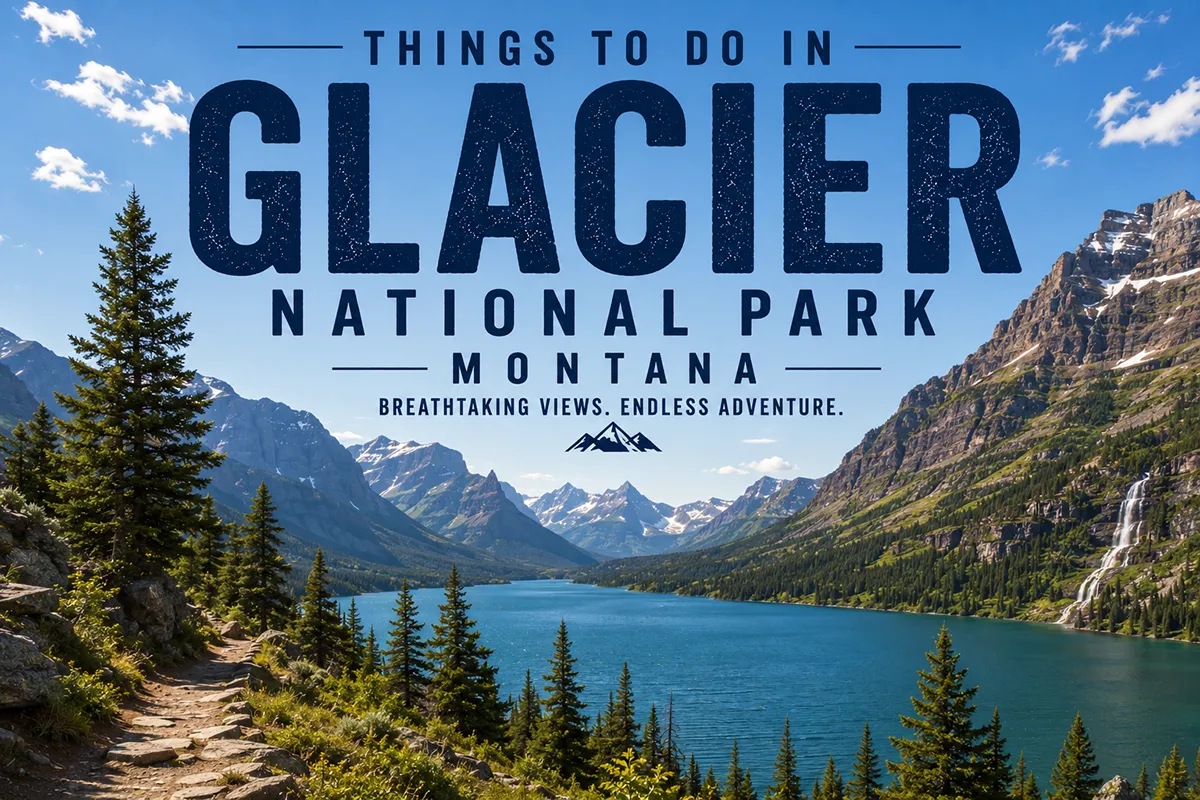
Glacier is one of just two true national parks in Montana (the other is Yellowstone), and it is the park I’d send a first-time visitor to without hesitation. This guide covers the best activities across the park’s five distinct areas, what’s changed for 2026, and the specific experiences that most travel guides completely miss.
Quick Answer — Things to Do in Glacier National Park Montana
Glacier’s essential experiences: drive Going-to-the-Sun Road (50 miles, Logan Pass at 6,646 feet), hike the Highline Trail (11.6 miles along the Garden Wall above Logan Pass — one of the most spectacular trails in North America), reach Grinnell Glacier (10.6-mile round trip, one of the park’s most accessible remaining glaciers), kayak or take a boat tour on Lake McDonald, attend a Native America Speaks program (Indigenous tribal members sharing cultural knowledge — one of the most distinctive and overlooked Glacier experiences), explore Two Medicine for quieter crowds, and drive the North Fork road to Polebridge.
Critical 2026 changes: No vehicle reservations required. Logan Pass parking limited to 3 hours starting July 1. Shuttle is now a reservation-only express system (book at Recreation.gov). International visitors 16+ pay an additional $100 non-resident surcharge effective January 2026.
- Glacier National Park covers just over one million acres in northwestern Montana — the “Crown of the Continent” and half of the world’s first International Peace Park
- ~25 named glaciers remain — down from 26 in recent years; scientists predict they may be gone within decades
- 2026 access changes: No vehicle reservations; Logan Pass 3-hour parking limit (July 1+); shuttle is reservation-only express via Recreation.gov
- New in 2026: International visitors (16+) pay a $100 non-resident surcharge per person in addition to the park entry fee
- Highline Trail and Grinnell Glacier remain the signature hikes; for the full trail breakdown see our Glacier hiking guide
- Two Medicine and the North Fork are the least-crowded areas and most travel guides skip them entirely
- For the complete Montana outdoor adventure context, see our things to do in Montana guide
Liked this article?
Add Roaming Montana as a preferred source so you see more of our articles and guides on Google.
Understanding Glacier: Five Distinct Park Areas
Glacier is not one experience — it’s five, organized around five distinct entrances and access corridors, each with a different character, different wildlife concentrations, and different crowd levels.
West Entrance (West Glacier): The busiest entrance. Leads to Lake McDonald, Apgar Village, and the Going-to-the-Sun Road western approach. This is where most visitors start.
St. Mary (East Entrance): The second busiest. The eastern end of Going-to-the-Sun Road. St. Mary Lake, Rising Sun, and access to Logan Pass from the east side.
Many Glacier (Northeast): The wildlife-dense northeast corner. Swiftcurrent Lake, Josephine Lake, the Many Glacier Hotel, and the Grinnell Glacier trailhead. Grizzly bears, mountain goats, and moose are regularly visible here.
Two Medicine (Southeast): The quietest of the accessible areas. Two Medicine Lake, Running Eagle Falls, Scenic Point, and a boat tour that most visitors never take. Genuinely less crowded than any GTSR-adjacent area.
North Fork (Northwest): The most remote. Dirt road access, Polebridge (no electricity, the Mercantile, the Northern Lights Saloon), Bowman Lake, and Kintla Lake. Cell service nonexistent. The least-visited and most genuinely wild section of the park.
For complete lodging strategy by area, see our Glacier National Park where to stay guide. For RV travelers, see our Columbia Falls and West Glacier RV parks guide.
2026 Critical Updates: What Changed, What Didn’t
Most travel guides have outdated or incorrect Glacier access information. Here’s the current 2026 state:
Vehicle reservations: NOT required in 2026. This is a significant change from the timed-entry reservation system that operated in previous years. You can enter the park without a pre-purchased vehicle reservation.
Logan Pass parking: Limited to 3 hours starting July 1, 2026. This is a new 2026 restriction. Hikers planning the full Highline Trail from Logan Pass should use the shuttle system.
Shuttle system: Reservation-only express, new for 2026. The shuttle no longer runs as a simple hop-on hop-off system. It now operates express routes only:
- West side: Apgar Visitor Center and Lake McDonald Lodge
- East side: St. Mary Visitor Center and Rising Sun
- Tickets purchased online at Recreation.gov (not available on the shuttle itself)
- 60-day advance reservations opened May 2, 2026 at 8 AM MDT
- Rolling daily availability: remainder available at 7 PM for next-day entry
Entrance fee: $35 per vehicle ($25 November through April). No cash accepted.
America the Beautiful Pass: $80/year, covers entry to all 2,000+ federal public lands. Excellent value if you’re visiting multiple national parks.
International visitors (NEW January 2026): Visitors ages 16 and up who are not US residents now pay an additional $100 per person non-resident surcharge on top of the standard entrance fee. A $250 non-resident annual pass is also available. Only morethanjustparks.com has this information in the current SERP — most guides miss it entirely.
Cell service reality: Reliable around Apgar/West Glacier. Limited at Logan Pass, Many Glacier, and St. Mary. Nonexistent in the North Fork and most backcountry. Download offline maps before you enter the park.
For the complete Going-to-the-Sun Road operational picture, see our Going-to-the-Sun Road guide.
All 30 Things to Do in Glacier National Park Montana
Going-to-the-Sun Road:
- Drive the 50-mile Going-to-the-Sun Road ⭐
- Logan Pass visitor center + Hidden Lake Overlook hike
- Jackson Glacier Overlook pull-off
- St. Mary Lake and Wild Goose Island viewpoints
Hiking (Inside the Park): 5. Highline Trail — the signature hike ⭐ 6. Grinnell Glacier Trail — Many Glacier ⭐ 7. Avalanche Lake via Trail of the Cedars 8. Running Eagle Falls — Two Medicine ⭐ 9. Scenic Point — Two Medicine 10. Iceberg Lake — Many Glacier 11. Cracker Lake — Many Glacier 12. Swiftcurrent Lake nature trail — Many Glacier 13. Bowman Lake — North Fork
Wildlife Watching: 14. Many Glacier grizzly bears, mountain goats, moose ⭐ 15. Logan Pass mountain goat viewing (Hidden Lake area) 16. Two Medicine elk and bighorn sheep
Water Activities: 17. Boat tours — Many Glacier (Swiftcurrent + Josephine Lakes) ⭐ 18. Boat tour — Two Medicine Lake ($23/adult) ⭐ 19. Lake McDonald kayaking and canoeing 20. Middle Fork Flathead River rafting (outside park) 21. Fly fishing
Cultural and Historic: 22. Native America Speaks program ⭐ 23. Historic Swiss-chalet lodge tours (Many Glacier Hotel, Lake McDonald Lodge) ⭐ 24. Red Jammer bus tour
Unique Experiences: 25. North Fork / Polebridge exploration ⭐ 26. Stargazing — dark sky viewing 27. Huckleberry cocktails at St. Mary Village ⭐ 28. Waterton Lakes National Park (Canada, Peace Park)
Outside the Park (Extensions): 29. Jewel Basin hiking area ⭐ 30. Flathead National Forest alternative hiking
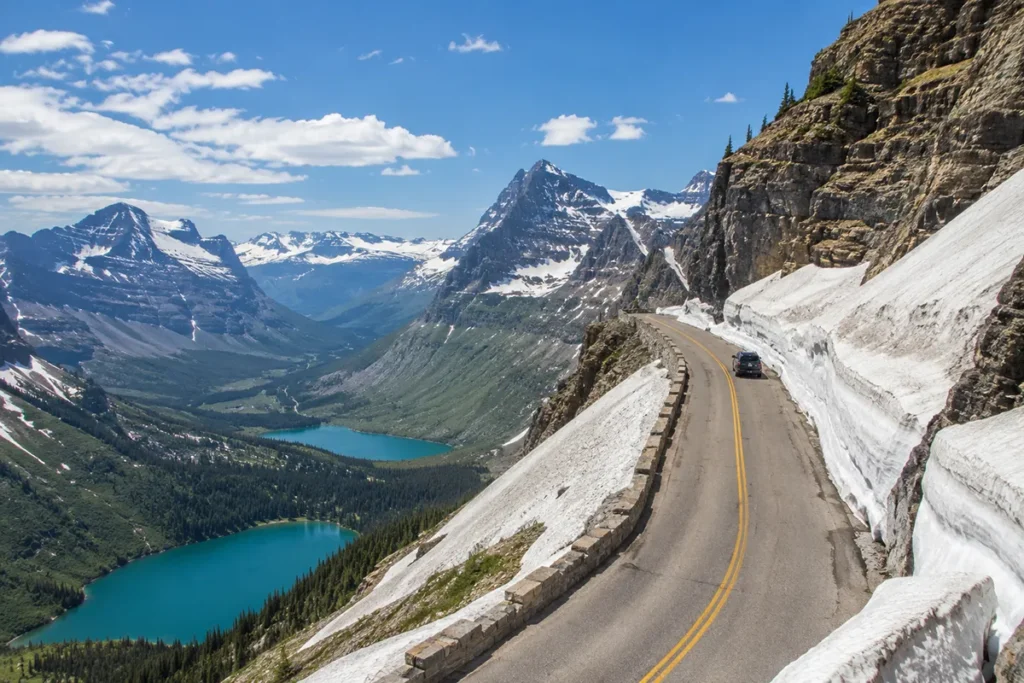
Going-to-the-Sun Road: The Essential 50 Miles ⭐
The Going-to-the-Sun Road is the spine of the park — 50 miles connecting West Glacier to St. Mary over the Continental Divide at Logan Pass (6,646 feet). It’s one of the most spectacular scenic drives in North America, and most of Glacier’s marquee stops are along this corridor.
The road typically opens fully by mid-June and closes in mid-October, depending on snow. Lower sections near Lake McDonald and St. Mary are accessible year-round.
Key stops along GTSR (west to east):
- Apgar Village — park entry, visitor center, boat rentals, Apgar Village Lodge
- Lake McDonald — Glacier’s largest lake, 9.4 miles long, clear water with colored stones on the bottom
- Sacred Dancing Cascade and Johns Lake Loop — accessible west-side short hikes
- Avalanche Creek — trailhead for Trail of the Cedars + Avalanche Lake
- The Loop — hairpin turn, trailhead for Highline Trail alternative approach
- Logan Pass — Continental Divide, visitor center, Hidden Lake trailhead, Highline trailhead
- Siyeh Bend — east-side wildflower meadows
- Jackson Glacier Overlook — road-visible view of Jackson Glacier, one of the easiest glacier views in the park
- Sun Point — St. Mary Lake overlook, Virginia Falls trail access
- St. Mary — east entrance, visitor center, St. Mary Lake
For the complete operational guide, shuttle strategy, and historical context of the Going-to-the-Sun Road, see our dedicated Going-to-the-Sun Road guide.
Hiking: Glacier’s Greatest Attraction
Highline Trail ⭐
Glacier’s most spectacular hike. 11.6 miles from Logan Pass to The Loop, cutting along the face of the Garden Wall above the Going-to-the-Sun Road at elevations reaching 6,900+ feet.
The trail requires no technical climbing — it’s a maintained hiking trail — but the exposure is genuinely dramatic. The Garden Wall drops away steeply on one side; the path is cut directly into the cliff face for the first mile. A fixed cable assists hikers at the most exposed section.
Rewards: jaw-dropping alpine views across the Logan Pass basin, wildflower meadows in July and August, frequent mountain goat sightings, possible grizzly bear sightings below in the meadows, and the gradual descent from high alpine to forest as the trail completes its western sweep.
Logistics: Park at the Logan Pass visitor center (remember the 3-hour limit starting July 1) or take the reservation-only shuttle from Apgar VC or Lake McDonald Lodge. Hikers who don’t want to backtrack take the shuttle from The Loop back to Logan Pass.
earthtrekkers.com notes: “Stretching 11.6 miles from Logan Pass to The Loop, this iconic cliffside trail delivers jaw-dropping alpine views, wildflower-filled meadows, and frequent wildlife sightings — all with surprisingly modest elevation gain.”
Grinnell Glacier — Reach an Actual Glacier ⭐
If the Highline is Glacier’s most spectacular hike, the Grinnell Glacier Trail is its most emotionally resonant.
10.6 miles round trip, 1,600 feet of elevation gain from the Many Glacier Hotel area. The trail passes Swiftcurrent Lake, Josephine Lake, a waterfall, and eventually climbs to the Grinnell Glacier viewpoint — where the actual glacier, one of roughly 25 remaining in the park, is visible and approachable.
The turquoise color of Josephine Lake, fed by glacial meltwater, is one of the most vivid blues I’ve encountered anywhere in Montana. The glacier itself — its surface visible, crevasses identifiable, the meltwater streams running off its face — is an encounter with geological time that photographs fail to adequately convey.
Boat shortcut: Purchase one-way boat tickets across Swiftcurrent Lake and Lake Josephine to significantly shorten the hike. morethanjustparks.com notes the logistics: “The only parking for this hike is at the Many Glacier Hotel. However, you can only park there if you are a hotel guest or have an activity reservation.” The shuttle from Many Glacier provides alternative access — take the hikers’ shuttle in, use the boat, and time your return.
Avalanche Lake — Most Accessible Watercourse Hike
Trail of the Cedars is a paved, wheelchair-accessible loop through a spectacular old-growth cedar and hemlock forest — one of the most ecologically distinct spots in the park. At its far end begins the Avalanche Lake Trail, a 4.6-mile round trip to a glacially formed lake with waterfalls cascading down the surrounding peaks.
This is the correct recommendation for visitors with young children, limited mobility for the first section, or a morning to spare rather than a full day.
Hidden Lake Overlook — From Logan Pass in an Hour
From the Logan Pass Visitor Center, the Hidden Lake Overlook Trail climbs through alpine meadows to an overlook above Hidden Lake and Bearhat Mountain — approximately 3 miles round trip with 460 feet of elevation gain.
Mountain goats are frequently visible at close range. This is Glacier’s most accessible alpine experience for visitors without a full hiking day.
For all hike distances, difficulty ratings, seasonal conditions, and insider route notes, see our complete Glacier National Park hiking guide.
Many Glacier: The Wildlife-Dense Northeast ⭐
The Many Glacier area — the northeast corner of the park accessed via Highway 89 north of Babb — is Glacier’s premier wildlife corridor. Grizzly bears are regularly visible from the Many Glacier Hotel parking lot (use binoculars, not your car as a closer vehicle).
Mountain goats navigate the cliffs above Swiftcurrent Lake. Moose wade through the wetlands at the lake margins. Black bears, bighorn sheep, and golden eagles round out a wildlife inventory that few areas in the continental US can match.
Boat tours on Swiftcurrent and Josephine Lakes provide the most efficient access to the Grinnell Glacier hike’s upper section — and the boat tour itself offers close water-level views of the surrounding peaks that the trail doesn’t duplicate. TripAdvisor reviewers consistently recommend the combination: take the first boat shuttle out, hike to the glacier, return on the afternoon boat.
Iceberg Lake (4.7-mile round trip, 1,200-foot elevation gain) is the Many Glacier area’s other signature hike — a glacially carved lake that holds floating icebergs well into summer, fed by snowfields above that maintain year-round ice in the lake.
Cracker Lake (12.4 miles round trip) offers turquoise water in a dramatic canyon — one of Glacier’s most intensely colored lakes and one of its least-visited despite the ease of access.
Two Medicine: The Crowd Escape ⭐
Here is the Glacier area that most travel guides mention in passing and none develop properly.
The Two Medicine area is the southeast corner of the park — accessed via East Glacier Park Village and Highway 49. The crowds that jam Logan Pass and Many Glacier simply don’t reach Two Medicine in the same density.
Running Eagle Falls (Trick Falls) — a 0.6-mile round trip from the Two Medicine parking area to a waterfall that displays two outlets at different water levels, creating a “trick” effect where the upper falls disappear in late summer when the snowmelt that feeds them is exhausted. One of the easiest waterfall hikes in the park.
Boat tour on Two Medicine Lake ($23/adult) — morethanjustparks.com specifically recommends it: the Two Medicine Lake boat tour provides access to the upper end of the lake with views of the surrounding peaks that the shore trail doesn’t offer. Combined with Running Eagle Falls and a side trip to Scenic Point, this makes Two Medicine a complete day.
Scenic Point (6.2 miles round trip, 2,300 feet of elevation gain) delivers one of the best panoramic views in the park — overlooking Two Medicine Lake, the prairie extending to the east, and the peaks of the Lewis Range above. The elevation gain is earned but unambiguous.
From East Glacier Park Village, Two Medicine is the most natural and least-crowded first Glacier experience.
Native America Speaks — Glacier’s Most Overlooked Experience ⭐
The National Park Service’s Native America Speaks program brings Indigenous tribal members into Glacier’s visitor centers and campfire programs to share cultural knowledge, oral history, and traditional perspectives on the land. The program represents one of the most distinctive aspects of Glacier’s interpretation — and not one major travel blog has built it out as a dedicated visitor experience.
The NPS website notes: “Indigenous tribal members share knowledge as part of the Native America Speaks program.”
Glacier sits on the traditional territories of the Blackfeet Nation, the Confederated Salish and Kootenai Tribes, the Upper Pend d’Oreille, and other Indigenous peoples whose relationship with this landscape predates the park’s 1910 establishment by thousands of years.
The Native America Speaks program provides the cultural and historical context for understanding Glacier as a living landscape, not just a scenic backdrop.
Check the current program schedule at the Apgar, St. Mary, and Many Glacier visitor centers. Programs typically run in summer evenings at campfire amphitheaters.
Historic Swiss Chalet Lodges — 100-Year-Old Buildings ⭐
Here’s the Glacier historical experience that twowanderingsoles.com covers and no other major travel blog develops: the park’s historic lodges were deliberately designed in the Swiss chalet style — a direct response to Glacier’s early nickname, “America’s Switzerland.”
The lodges built in the early 1910s and 1920s feature gabled roofs, ornate decorative moldings, exposed timber beams, wraparound balconies, and large mountain-facing windows — a deliberate architectural program to evoke Alpine hospitality in a Montana wilderness.
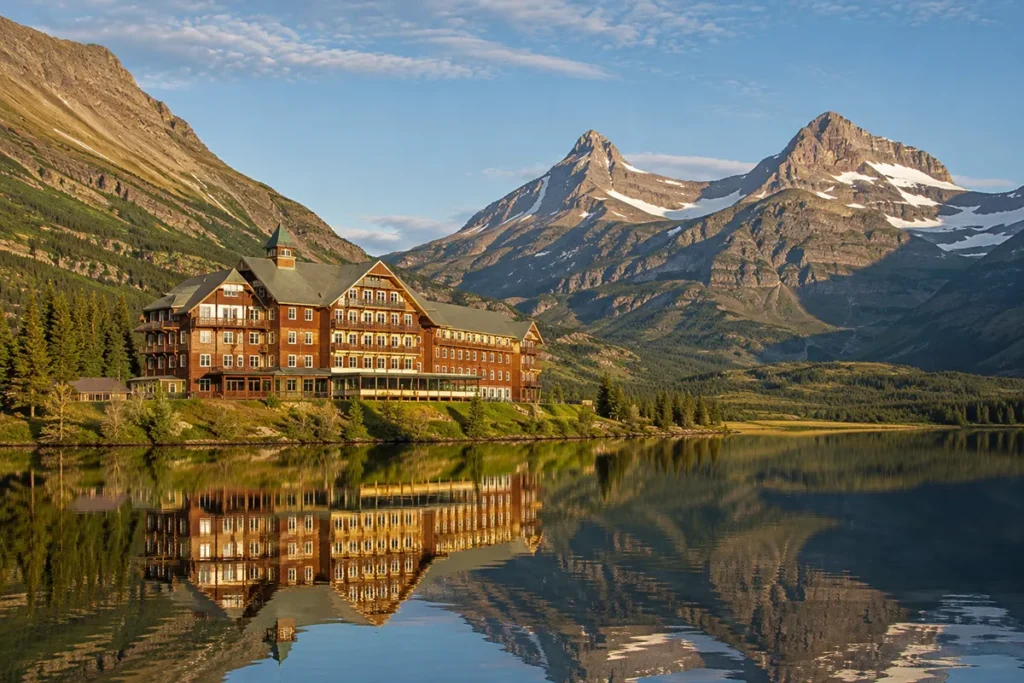
Many Glacier Hotel (1915) is the most striking — a six-story Swiss-style building on the shore of Swiftcurrent Lake, with the surrounding peaks visible from every lakefront room. Non-staying guests can walk through the public areas, eat at the restaurant, and drink at the bar in a building that has barely changed in over a century.
Lake McDonald Lodge (1913) on the western shore of Lake McDonald offers a different character — a Mission-style exterior housing an Arts and Crafts interior with hunting trophies and native art acquired during the lodge’s early decades. The lobby is one of the most photographed interiors in the park.
St. Mary Village hosts the Snowgoose Grille and Mountain Bar — where twowanderingsoles.com specifically recommends the huckleberry cocktail selection: huckleberry margarita, huckleberry lemon drop, huckleberry gin rickey, huckleberry mule, and spiked huckleberry lemonade. Celebrating a day of hiking with a huckleberry cocktail in a building overlooking St. Mary Lake is the specific Glacier dining experience most guides skip.
For complete lodging details, availability, and insider booking tips, see our Glacier National Park where to stay guide.
North Fork and Polebridge: The Most Remote Experience ⭐
If any area of Glacier represents the park at its most genuinely wild, it is the North Fork — the northwestern section accessible via a dirt road from Columbia Falls or Whitefish, ending at the community of Polebridge.
Polebridge is the entry point to the North Fork area and is itself a destination. There is no electricity. The Polebridge Mercantile (a general store that has operated continuously since the 1910s) bakes pastries in a wood-fired oven — the huckleberry bear claws are specifically legendary among North Fork regulars. The Northern Lights Saloon provides the evening social option.
Bowman Lake — morethanjustparks.com: “Drive to Bowman Lake in the North Fork for the most remote lakeside camping in the park.” Bowman Lake is 30+ miles inside the North Fork road, almost entirely unpaved. The reward: a glacially carved lake of extraordinary clarity in a setting with no services, minimal crowds, and the specific silence of a park area that demands significant effort to reach.
Kintla Lake is even more remote — another 15 miles up the road from Bowman. Few visitors in the park ever reach Kintla.
Cell service: zero. Navigation: download offline maps before leaving the West Glacier area. The North Fork road is not suitable for large RVs or vehicles pulling trailers without prior research.
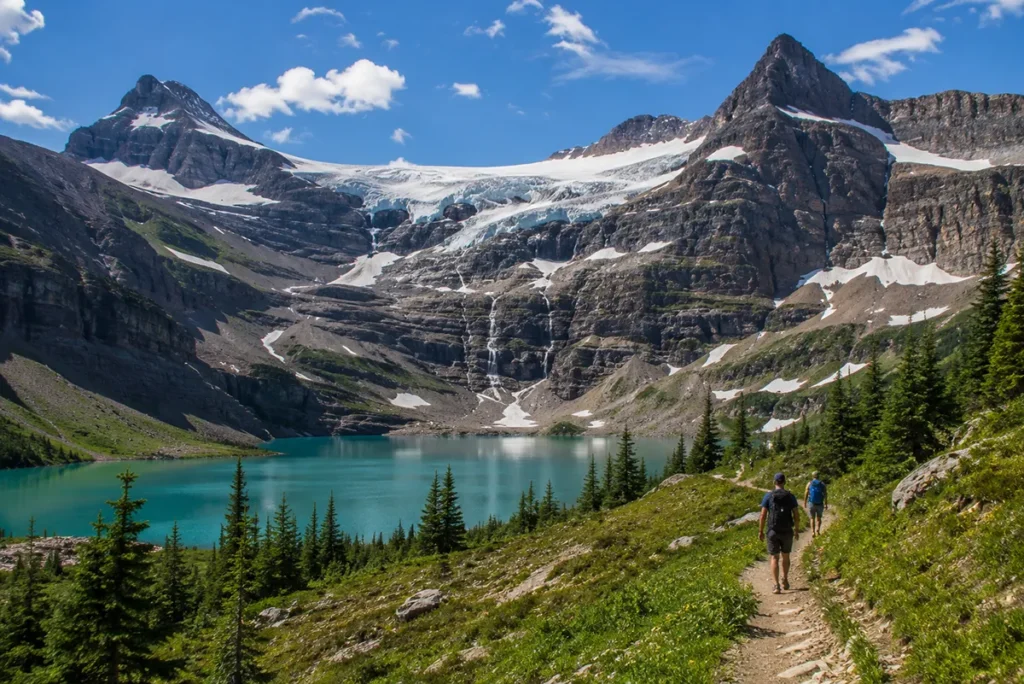
Water Activities: Glacier’s Rivers and Lakes
Middle Fork Flathead River Rafting
The Middle Fork of the Flathead River forms the park’s southern boundary — and the rafting on it is some of the best in northwest Montana. Multiple outfitters (Glacier Guides, Great Northern, River Wild) run half-day and full-day trips ranging from Class II–III technical to scenic float options.
gatherandgotravel.com specifically notes: “Great Northern and River Wild offer inflatable kayak or funyak half-day adventures on single and double craft. Glacier Guides offers multi-day combo trips that include some kayaking.”
For guided rafting options and multi-day combinations, see our Montana guided tours guide.
Lake McDonald Kayaking
Lake McDonald — 9.4 miles long, the park’s largest lake — is navigable by kayak and canoe with the specific reward of the colored stones visible on the bottom in the shallower sections.
Boat rentals are available at Apgar Village. The lake’s clarity and the mountain backdrop make a morning of paddling one of the most visually spectacular in the park.
Fly Fishing
Multiple rivers and lakes within and adjacent to the park hold cutthroat trout, bull trout, and whitefish. Guided fly fishing trips depart from Whitefish and West Glacier with access to both park waters and the Flathead River system.
Stargazing: Glacier’s Dark Skies
Northwestern Montana’s distance from major light pollution sources makes Glacier National Park one of the finest stargazing destinations in the Mountain West. twowanderingsoles.com: “Basically anywhere in Glacier will be a great place for stargazing on a clear night. Lay out a blanket and be prepared to be blown away.”
The north-facing orientation of the North Fork, the elevation of Logan Pass, and the prairie sky above the St. Mary area all produce distinctive dark-sky conditions.
The Milky Way is visible as a structural band, not a faint suggestion. The park’s remoteness from urban light domes ensures this remains the case throughout summer.
Guided stargazing programs are occasionally offered at the park’s campfire amphitheaters — check the visitor center program schedules upon arrival.
Outside the Park: The Uncrowded Alternatives
Jewel Basin Hiking Area ⭐
Here is the Glacier-adjacent outdoor experience that no major travel blog has covered: Jewel Basin is a 15,000-acre hiking and camping area in the Flathead National Forest, located halfway between Glacier and Bigfork on the northeastern shore of Flathead Lake — approximately 30 miles from the West Glacier entrance.
gatherandgotravel.com: “Top post-snowmelt day hikes include the 6.2 out-and-back Birch Lake Trail and the 6.0-mile Mount Aeneas Summit Trail.”
Jewel Basin sees a tiny fraction of Glacier’s visitation despite having exceptional alpine hiking, multiple high mountain lakes, and summit views that encompass the Flathead Valley, Glacier’s peaks to the north, and the Bob Marshall Wilderness to the south.
For visitors who want Glacier-quality hiking without Glacier’s crowds — or who need an alternative when Glacier parking is genuinely impossible in peak July — Jewel Basin is the correct answer.
Flathead National Forest
Adjacent to Glacier’s western and southern boundaries, the Flathead National Forest covers 2.4 million acres with over 2,600 miles of hiking trails, one million+ acres of designated wilderness (the Bob Marshall Wilderness complex), 22 species of fish, and wildlife including lynx, grizzly bears, and timber wolves.
morethanjustparks.com is specific about the Flathead’s quality: “Want Glacier without the crowds? The Flathead National Forest sits right next to the park and sees a tiny fraction of the visitation.”
The Bob Marshall Wilderness, the Great Bear Wilderness, and the Scapegoat Wilderness form a connected complex that represents the largest wilderness area in the lower 48 states outside of Alaska. Remote, demanding, and completely uncrowded.
Waterton Lakes: The Canadian Side of the Peace Park
Waterton Lakes National Park in Alberta, Canada shares the Glacier boundary — together, they form the Waterton-Glacier International Peace Park, the world’s first international peace park (established 1932).
Waterton Lakes is accessible by car via US-89 north from St. Mary to the Canadian border, then north through Waterton townsite. A Canadian Parks pass is required; US America the Beautiful passes are not valid.
The Prince of Wales Hotel on the ridge above the townsite is one of the most dramatically positioned hotels in North America — a Swiss chalet building overlooking the entire Waterton Valley and into Montana.
Waterton Lake itself extends from the Canadian townsite south across the border into the remote Goat Haunt area of Glacier — a seldom-visited piece of the park that can be reached by boat from the Canadian side or by trail from the US side.
twowanderingsoles.com: “Waterton Lake is a long and narrow lake that sits on the US-Canada border and crosses into each side. On the Montana side, Waterton Lake is in the remote and seldom-visited part of the park called Goat Haunt.”
The Disappearing Glaciers: Visiting While They’re Here
This is the climate context that no travel blog for Glacier has incorporated as a reason-to-visit-now — and the most honest thing I can say about the park.
The U.S. Geological Survey has been tracking Glacier’s glaciers since the early 1900s through the Repeat Photography Project — photographing the same vantage points decade after decade, documenting the retreat. The photographs are available on the NPS website and are among the most viscerally compelling climate change documentation in any national park.
When Glacier was established in 1910, it had approximately 150 glaciers. As of the most recent surveys, roughly 25 named glaciers remain. The scientists who study them project that most or all of Glacier’s named glaciers may be gone within the coming decades under current climate trajectories.
This doesn’t make Glacier less worth visiting. The park will remain extraordinary — the mountains, the lakes, the wildlife, the 700 miles of trails don’t disappear with the glaciers.
But hiking to Grinnell Glacier and standing within yards of a glacier face, watching the meltwater pour off, is an experience with a time limit. Visit while that experience is still available.
The NPS Repeat Photography Project images are viewable at the Apgar Visitor Center and online.
Things to Do in Glacier by Traveler Type
For First-Time Visitors
Drive Going-to-the-Sun Road (mandatory — do this first, everything else builds from it), hike Hidden Lake Overlook from Logan Pass (3 miles RT, mountain goats), visit Many Glacier for wildlife watching from the hotel parking lot, attend a Native America Speaks evening program, take a boat tour on Swiftcurrent/Josephine Lakes.
For Serious Hikers
Highline Trail (11.6 miles, Logan Pass to The Loop — the signature), Grinnell Glacier (10.6 miles, Many Glacier — emotional + physical reward), Iceberg Lake (Many Glacier, 9.4 miles), Scenic Point (Two Medicine, 6.2 miles, 2,300 ft gain). For the complete trail guide with distances, elevation, and conditions, see our Glacier hiking guide.
For Families
Trail of the Cedars (paved, wheelchair accessible, cedar forest), Avalanche Lake (4.6 miles RT from Trail of the Cedars, moderate), Hidden Lake Overlook (3 miles, easily managed for fit kids 7+), Running Eagle Falls (0.6 miles RT, Two Medicine — easiest waterfall in the park), Lake McDonald boat rentals, horseback riding (Swan Mountain Outfitters).
For Wildlife Enthusiasts
Many Glacier at dawn and dusk (grizzly bears most visible in early morning), Logan Pass and Hidden Lake Overlook (mountain goats at close range), Two Medicine (bighorn sheep, elk), North Fork (black bears, wolves, moose).
For Unique Experiences
Native America Speaks evening programs, North Fork / Polebridge (wood-fired Mercantile pastries, Northern Lights Saloon, Bowman Lake remote camping), Red Jammer historic bus tour, huckleberry cocktails at St. Mary Village, Jewel Basin (uncrowded Glacier-quality hiking), Waterton Lakes / Goat Haunt (the Canadian Peace Park side).
For Budget Travelers
Free shuttle (reservation required, but no additional cost), Trail of the Cedars (free, no fitness requirement), Running Eagle Falls (free, 0.6 miles), Avalanche Lake (free), wildlife watching from Many Glacier Hotel parking lot (free). Entrance fee ($35/vehicle, America the Beautiful Pass at $80/year covers all parks).
For the best seasonal timing, see our best time to visit Montana guide.
Gateway Towns and Practical Planning
Getting to Glacier
Glacier Park International Airport (FCA) in Kalispell serves the western side — the most practical commercial option for visitors focusing on Going-to-the-Sun Road and Lake McDonald.
For gateway town details and day-trip logistics from the west side, see our Whitefish things to do guide and Kalispell things to do guide.
The Amtrak Empire Builder stops at West Glacier and East Glacier Park — a genuinely unique way to arrive, connecting with the same rail heritage that shaped the park’s development.
Lodging Strategy
Book 6+ months in advance for in-park lodges (Many Glacier Hotel, Lake McDonald Lodge). Gateway town lodging in Whitefish, Kalispell, and Columbia Falls provides more availability at typically lower rates. For full lodging strategy and booking realities, see our Glacier lodging guide.
What Competitors Miss About Glacier
After reviewing every travel guide currently ranking for this keyword, here are the gaps this post fills:
The 2026 shuttle system — Multiple guides have outdated information. The 2026 shuttle is reservation-only express via Recreation.gov, not the previous hop-on hop-off. The 3-hour Logan Pass parking limit is new and critical for hikers.
The $100 international surcharge — Effective January 2026. Only one competitor guide covers it. International visitors planning based on old price information will have a significant surprise at the gate.
Native America Speaks program — One of Glacier’s most distinctive interpretive offerings. Indigenous tribal members sharing knowledge at visitor center campfire programs. No travel blog has built this out.
Two Medicine as a dedicated day — Running Eagle Falls, Scenic Point, the $23 boat tour, and genuine crowd relief. Most guides mention Two Medicine in a list. It deserves its own day.
North Fork and Polebridge — The wood-fired Mercantile bear claws, the Northern Lights Saloon, Bowman Lake’s remote camping. The most genuinely wild accessible section of the park. Almost no travel blog covers it with the specificity it deserves.
The glaciers are disappearing — The NPS Repeat Photography Project documents this. Scientists project significant or total loss within decades. Visiting Grinnell Glacier while it exists is a reason to go now, and no travel guide frames it this way.
Swiss chalet lodge architecture — The “America’s Switzerland” nickname led to a deliberate architectural program for the park’s historic lodges. The buildings are 100+ years old and you can dine in them without a room reservation.
Jewel Basin — 15,000 acres of Glacier-quality hiking halfway between the park and Bigfork, tiny fraction of the park’s visitation. The crowd escape no guide mentions.
Huckleberry cocktails at St. Mary Village — A fun, specific Glacier food experience (huckleberry margarita, gin rickey, mule, lemon drop, lemonade) at the Snowgoose Grille and Mountain Bar.
Final Thoughts
I’ve hiked the Highline Trail on a Tuesday in late August and had the first two miles almost entirely to myself. I’ve also been on the GTSR in July when cars were backed up to Apgar. The difference a few weeks and an early start makes in Glacier is absolutely staggering.
The park deserves more than a single visit. The five areas — Lake McDonald, Logan Pass, Many Glacier, Two Medicine, North Fork — each have their own character, their own wildlife concentrations, their own hiking that rewards days of attention. The lodges are 100 years old. The glaciers are fewer than they were.
There are roughly 25 named glaciers left. Grinnell Glacier is among the most accessible. Go hike to it. Stand near it. The meltwater running off its face is going somewhere, and where it’s going is the answer to a question about time.
Questions about Glacier National Park? Drop them in the comments. For the broadest context on Montana outdoor adventures, see our things to do in Montana guide.
Frequently Asked Questions
What are the best things to do in Glacier National Park Montana?
Glacier’s essential activities: drive Going-to-the-Sun Road (50 miles, Logan Pass at 6,646 feet), hike the Highline Trail (11.6 miles along the Garden Wall — Glacier’s signature hike), reach Grinnell Glacier (10.6 miles round trip in Many Glacier — see an actual remaining glacier), take a boat tour on Swiftcurrent and Josephine Lakes (Many Glacier), attend a Native America Speaks program (Indigenous cultural interpretation at visitor centers), explore Two Medicine for quieter crowds (Running Eagle Falls, Scenic Point, boat tour), and drive to Polebridge in the North Fork.
Do I need a vehicle reservation for Glacier National Park in 2026?
No. Vehicle reservations are NOT required for Glacier National Park in 2026 — this is a change from the timed-entry system used in previous years. You can drive into the park without a pre-purchased reservation. However, note that Logan Pass parking is limited to 3 hours starting July 1, 2026, and the shuttle system is now reservation-only express (tickets purchased at Recreation.gov). Enter early to avoid parking lot capacity limits.
How do I get the 2026 Glacier National Park shuttle?
The 2026 Glacier shuttle is a reservation-only express system — tickets must be purchased at Recreation.gov before you arrive. The shuttle does not accept walk-up purchases. Express routes run from Apgar Visitor Center and Lake McDonald Lodge on the west side, and from St. Mary Visitor Center and Rising Sun on the east side. Advance reservations open 60 days out (started May 2, 2026); daily rolling availability opens at 7 PM MDT for next-day tickets.
What is the entrance fee for Glacier National Park in 2026?
The standard entrance fee is $35 per vehicle, valid for 7 days. From November through April, the fee drops to $25. No cash is accepted — payment must be by card. International visitors (non-US residents) ages 16 and up pay an additional $100 per person non-resident surcharge effective January 2026; a $250 annual non-resident pass is also available. The America the Beautiful annual pass ($80) covers entry to all 2,000+ federal public lands and is excellent value for multi-park trips.
What is the Highline Trail in Glacier National Park?
The Highline Trail is an 11.6-mile trail from Logan Pass to The Loop, traveling along the face of the Garden Wall above Going-to-the-Sun Road at elevations reaching 6,900+ feet. The trail requires no technical climbing but includes an exposed cliffside section where a fixed cable assists hikers. Highlights include alpine wildflower meadows (peak late July–August), mountain goat sightings, dramatic Garden Wall views, and frequent grizzly bear sightings in the meadows below. Hikers typically take the shuttle back from The Loop to avoid the 11+ mile round trip.
Where is Two Medicine in Glacier National Park?
Two Medicine is the southeast area of Glacier National Park, accessed from East Glacier Park Village via Highway 49. It’s significantly less crowded than the Going-to-the-Sun Road corridor or Many Glacier. Activities include Running Eagle Falls (0.6 miles round trip — one of the easiest hikes in the park), a boat tour on Two Medicine Lake ($23/adult), and the Scenic Point hike (6.2 miles, 2,300 feet of elevation gain, panoramic views). Two Medicine is the correct recommendation for visitors who want a genuine Glacier experience without peak-season crowds.
What is the North Fork area of Glacier?
The North Fork is the northwest section of Glacier National Park, accessed via a mostly unpaved road through the Flathead Valley from Columbia Falls or Whitefish. The community of Polebridge (no electricity, wood-fired Mercantile bakery, Northern Lights Saloon) is the gateway. Bowman Lake and Kintla Lake are the primary destinations — morethanjustparks.com calls Bowman Lake “the most remote lakeside camping in the park.” Cell service is nonexistent throughout. The North Fork is Glacier at its most genuinely wild and is almost completely absent from standard travel guides.