A small county museum on Montana’s Hi-Line somehow holds the country’s largest Assiniboine collection, an ornate bar with an actual bullet hole from the Wild West era, and genuine artifacts connected to the Titanic. None of that is a typo.
- Valley County Pioneer Museum in Glasgow has told Northeastern Montana’s history since 1972 under the theme “From Dinosaur Bones to Moonwalk”
- The museum holds the largest Assiniboine collection in the entire country, alongside major exhibits on the Fort Peck Dam, Lewis and Clark, and even the Titanic
- The Stan Kalinski Room houses 220 taxidermy specimens and a bullet-scarred bar once tied to Buffalo Bill Cody
- Hyper-local touches, like a local high school exhibit that plays the school song when you enter, give this museum a genuinely distinctive personality
- This is one of the best museums in Montana that proves a small county museum can be genuinely comprehensive rather than a modest afterthought
Liked this article?
Add Roaming Montana as a preferred source so you see more of our articles and guides on Google.
Fifty Years of “Dinosaur Bones to Moonwalk”
The Valley County Historical Society established this museum in 1972, and the organizing theme they chose has stuck ever since: “From Dinosaur Bones to Moonwalk,” a progressive history tracing Valley County’s story from prehistoric times through the space age.
That’s a genuinely ambitious scope for a county museum, and the collection actually delivers on it. Supported jointly by Valley County, the Historical Society, and a dedicated Friends of the Museum group, the institution has grown well beyond a typical small-town pioneer collection into something visitors consistently describe as surprisingly comprehensive.
One thing that comes through in nearly every visitor account: genuine local pride runs through this place. The people running it keep adding new exhibits and clearly care about getting the details right, which shows in how deep some of the more specific collections actually go.
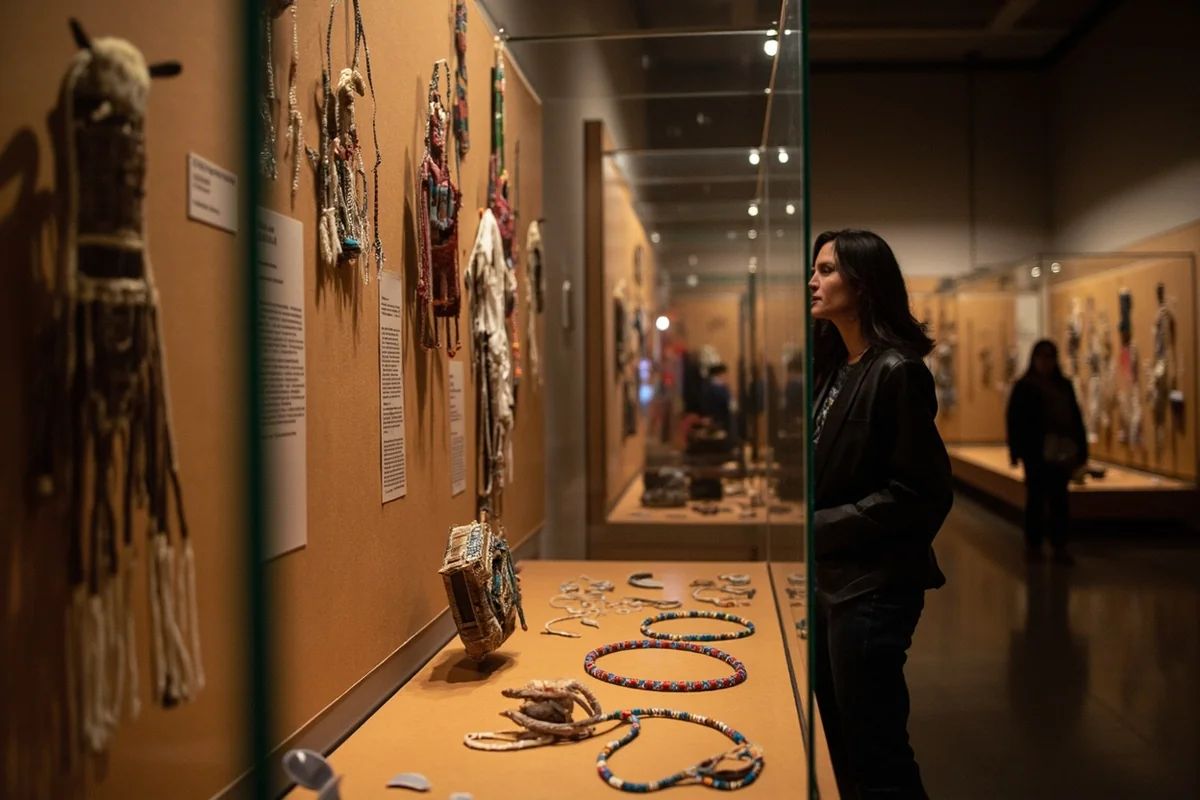
The Largest Assiniboine Collection in the Country
This is the single most significant credential this museum holds, and it’s worth knowing before you walk in. Valley County Pioneer Museum houses the largest Assiniboine collection anywhere in the United States.
The Assiniboine, a Native American nation originally from the Northern Great Plains, have a documented cultural presence in this region that the museum treats with real depth rather than a passing mention.
The Chief First to Fly collection specifically anchors this section, giving visitors genuine material culture and historical context rather than a generic “Native American artifacts” display case.
For a county museum in a town this size to hold the single largest collection of its kind nationally is a genuinely remarkable distinction, and it deserves far more attention than it typically gets in casual travel mentions.
A Bullet-Scarred Bar and 220 Taxidermy Specimens
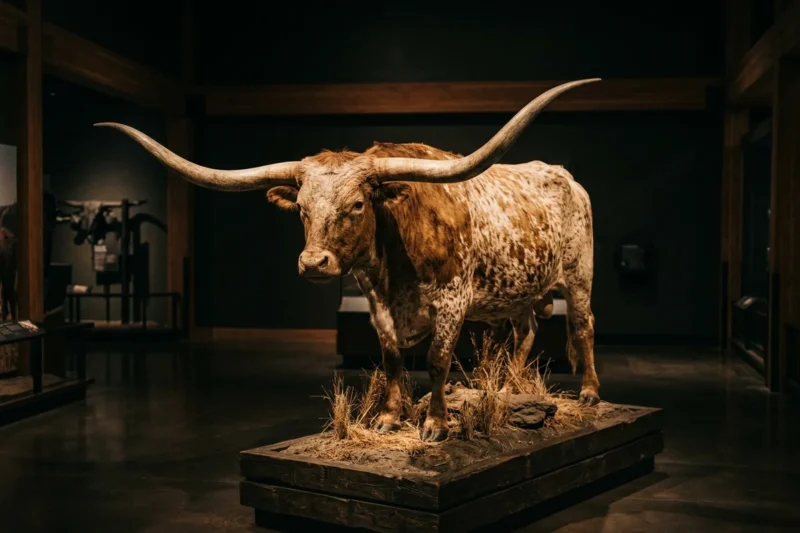
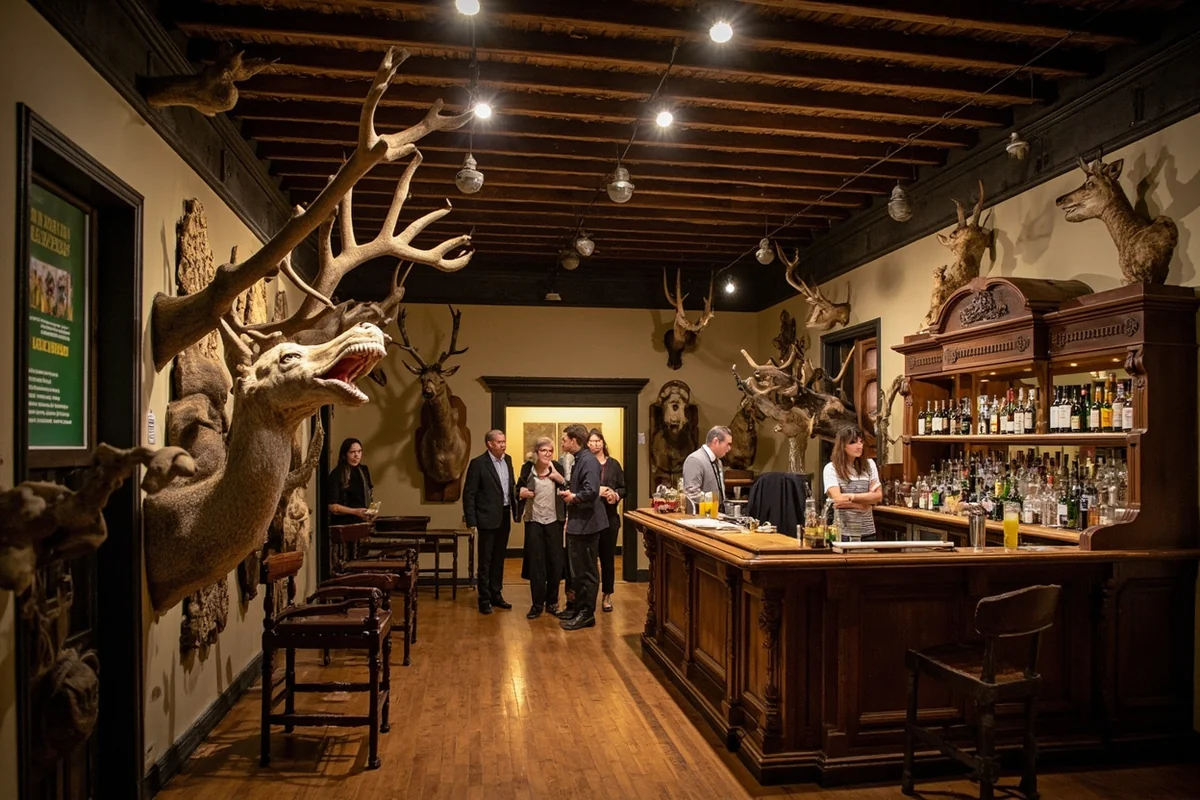
The Stan Kalinski Room is the museum’s most talked-about single space, and it earns that reputation. Specially designed at 30 feet by 70 feet, the room houses a collection of roughly 220 animal and bird mounts alongside saddles, horns, antlers, and furs.
The centerpiece is an ornate bar with a direct connection to Buffalo Bill Cody, still bearing an actual bullet hole and embedded lead slug from the Wild West era it came from.
Nearby sits a mounted buffalo head with its own specific story: it came from an animal butchered for a celebration honoring President Franklin D. Roosevelt during his visit to the region in the 1930s — the same era, and arguably the same broader New Deal moment, that brought Fort Peck Dam’s massive construction project to this part of Montana.
The taxidermy collection goes well beyond standard big-game mounts. You’ll find an albino mule deer, a white fox, specimens of the extinct Audubon sheep subspecies, 20-foot snake skins, and record-size elk, giving you a genuinely comprehensive cross-section of the region’s wildlife history in one purpose-built room.
Fort Peck Dam, Lewis and Clark, and Genuine Titanic Stories
Beyond the Assiniboine collection and the taxidermy room, the museum covers a genuinely wide sweep of additional history.
A dedicated section documents the construction of Fort Peck Dam, the massive New Deal-era project that reshaped this entire stretch of northeastern Montana during the Great Depression.
If you’ve already visited the Fort Peck Interpretive Center, this gives you a complementary, county-level perspective on the same historic project.
Lewis and Clark exhibits document the expedition’s passage through this stretch of the Missouri River, and railroad and agriculture displays trace how the Hi-Line’s economy actually developed.
Then there’s the detail that surprises everyone: genuine stories connected to the Titanic. It’s a genuinely unexpected thread to find woven into a Montana pioneer museum’s collection, and it’s exactly the kind of specific, unexplained oddity that makes small county museums worth visiting in person rather than just reading about online. [verify current exhibit details on the specific Titanic connection with museum staff]
The Hyper-Local Touches That Give This Museum Its Personality
What genuinely sets this museum apart from a standard regional history collection is how far it leans into distinctly local, almost intimate community pride.
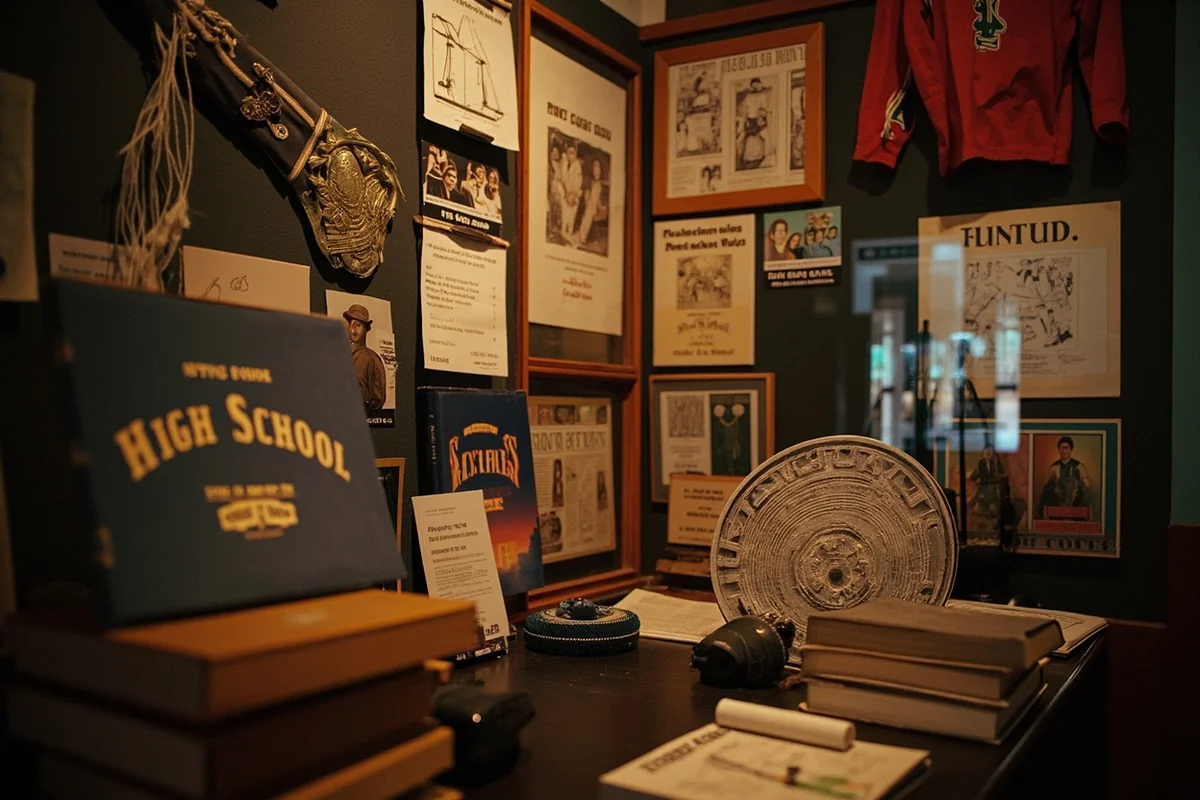
Step into the exhibit dedicated to the local high school, and the school song actually starts playing. You can browse cheerleading uniforms for the Scotties mascot and flip through yearbooks going back decades.
A separate section covers local Boy Scout and Girl Scout troops, and another displays old toys that once belonged to area residents, several with handwritten notes from donors explaining the object’s personal backstory.
That level of hyper-local specificity is rare even among small-town museums, and it’s part of why more than one visitor has described the place as having a genuine, infectious sense of community pride that larger, more polished institutions can’t quite replicate.
A Restored Caboose and a Growing Second Building
Across the street from the main museum, a machinery lot holds old tractors and other remnants of the region’s agricultural past.
A restored Great Northern Railroad caboose sits among them, and reviewers specifically mention getting a personal tour from a volunteer who used to actually work on the railroad — the kind of firsthand knowledge you can’t get from a placard alone.
The museum is also actively expanding. A 1920s homestead home is currently being restored as part of a “new building” project, giving visitors a preview of the town’s earlier era even while the work remains in progress.
That ongoing investment says something real about the museum’s continued growth, nearly five decades after it first opened. [verify current status of the homestead restoration project]
Visiting With Kids
This museum works genuinely well for families, and the range of content across dinosaur bones, taxidermy, and space-age history gives kids of very different interests something to latch onto within the same visit.
The Stan Kalinski Room’s taxidermy collection tends to be the clear favorite for younger visitors, especially the more unusual specimens like the albino mule deer and the 20-foot snake skins.
The restored caboose across the street gives kids a genuinely hands-on, climb-through experience, especially when a knowledgeable volunteer is on hand to explain how it actually operated.
The high school exhibit’s interactive school-song moment tends to delight kids too, even those with no direct connection to Glasgow itself — there’s something universally fun about a museum exhibit that makes noise when you walk in.
Given the museum’s genuinely substantial size across the main building, the machinery lot, and the caboose, I’d budget real time here rather than expecting a quick 30-minute stop, especially if you’re traveling with kids who want to explore every room at their own pace.
Frequently Asked Questions
Is the Titanic connection a joke, or a genuine historical exhibit?
It’s presented as a real part of the museum’s collection, though the specific backstory isn’t always widely documented online. Ask staff directly for the fullest explanation during your visit.
How does the Assiniboine collection compare to what’s on display at other Montana museums?
This museum’s specific distinction is holding the largest Assiniboine collection in the entire country, which sets it apart even from other strong Montana museums covering different tribal nations’ histories and material culture.
Is the museum accessible for visitors with mobility limitations?
[verify current accessibility accommodations directly with the museum before visiting]
Can we do genealogical research here?
Yes — the museum maintains extensive genealogical archives and a substantial library covering Montana and Valley County history, including works by Montana authors. Contact the museum directly to confirm current research access procedures.
Is there anywhere to eat nearby?
Downtown Glasgow has local dining options within easy reach of the museum along Highway 2, making it simple to turn your visit into a fuller stop in town.
- The largest-Assiniboine-collection-in-the-country distinction rarely gets mentioned, despite being a genuinely major credential for a small county museum.
- The Titanic connection almost never comes up in generic travel content, even though it’s exactly the kind of surprising detail that makes a visit memorable.
- The FDR-era buffalo head and its direct tie to Fort Peck Dam’s construction history rarely gets connected to the broader New Deal story most visitors only encounter at the dam itself.
- The hyper-local exhibits — the high school room, the Scout troops, the personal toy collection — get dismissed as filler, when they’re actually what gives this museum its distinctive, memorable character.
Personal Tips: What I Wish I Knew
- Check the current seasonal hours carefully. The museum closes entirely in January and runs reduced hours outside the May–September peak season, so don’t assume a consistent year-round schedule.
- Ask for the caboose tour if a knowledgeable volunteer is available. A former railroad worker’s firsthand commentary adds real depth beyond what you’d get exploring on your own.
- Budget more time than you’d expect for a small-town museum. Between the main building, the machinery lot, and the taxidermy room alone, this genuinely takes longer than a quick 30-minute stop.
- Ask staff directly about the Titanic connection. It’s specific enough, and unusual enough, that it’s worth getting the full story from someone who can actually explain it.
- Check on the homestead restoration project’s progress if you’re a repeat visitor — it sounds like a genuinely worthwhile addition once complete.
How This Fits a Missouri River Country Road Trip
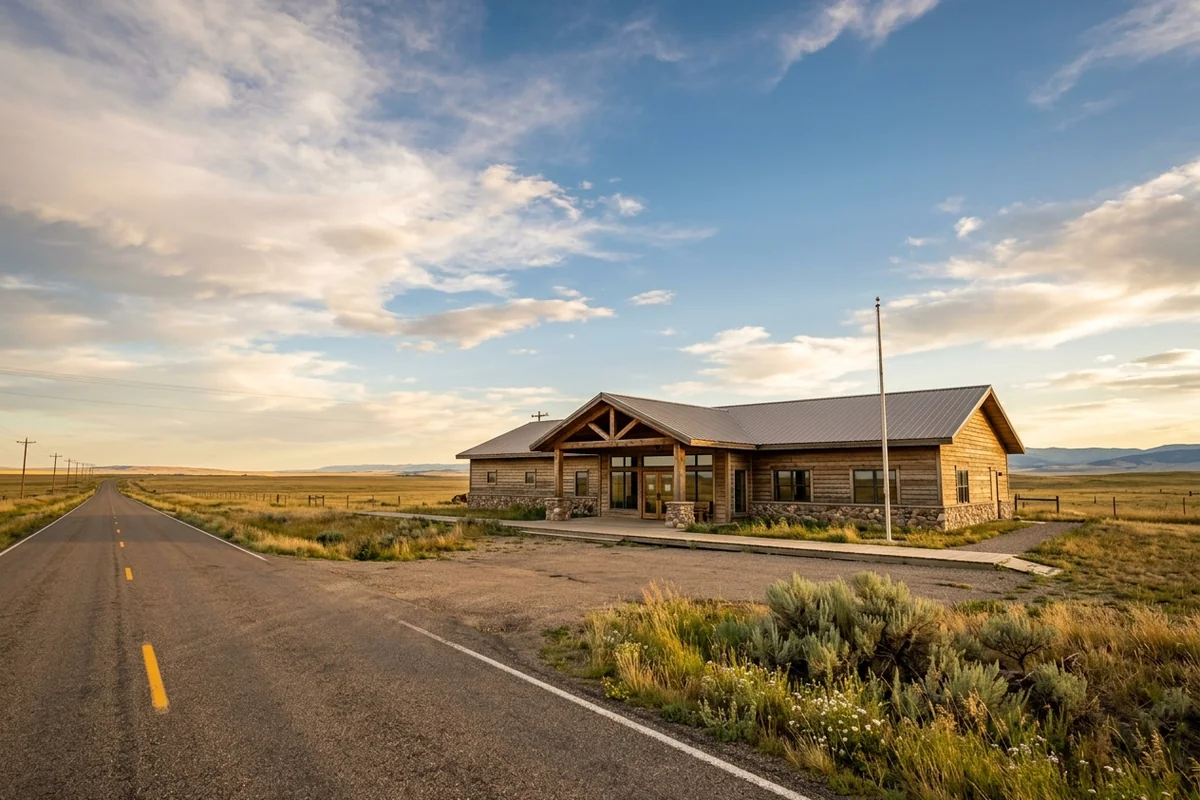
Glasgow sits along U.S. Highway 2 on Montana’s Hi-Line, close enough to Fort Peck that pairing the two makes an easy, natural day of regional New Deal and pioneer history.
If you’re exploring this quieter stretch of northeastern Montana, our Fort Peck Interpretive Center guide covers the dam-construction side of this same history in more depth, and our MonDak Heritage Center guide in Sidney rounds out another strong Missouri River Country stop.
If Native American history and material culture specifically interest you, comparing this museum’s Assiniboine collection with the Museum of the Plains Indian in Browning gives you two genuinely distinct tribal perspectives from opposite corners of the state.
Our Montana museums guide maps how this stop connects to the rest of the state’s cultural landscape.
Practical Info
| Address | 54109 U.S. Highway 2, Glasgow, MT 59230 |
| Phone | (406) 228-8692 |
| January | Closed |
| February–April | Wednesday–Saturday, 10 a.m.–4 p.m. |
| May–September | Monday–Saturday, 9 a.m.–5 p.m. |
| October–December | Wednesday–Saturday, 10 a.m.–4 p.m. |
| Admission | Historically around $3 adults, $2 students, free under 6 [verify current pricing] |
| Time needed | 2–3 hours |
| Good for | History enthusiasts, families, anyone who loves genuinely eclectic small museums |
| Nearby pairing | Fort Peck Interpretive Center, downtown Glasgow |
Final Thoughts
Valley County Pioneer Museum is proof that a small Hi-Line town can build something genuinely comprehensive out of community pride and five decades of steady collecting.
The largest Assiniboine collection in the country, a bullet-scarred Buffalo Bill Cody bar, and honest-to-goodness Titanic stories all sit under one roof alongside a high school exhibit that plays the fight song when you walk in.
Museums like this one rarely make it onto any “best of Montana” shortlist compiled from a distance, and that’s exactly the gap this kind of hyper-specific, community-built institution fills.
You don’t stumble onto the largest Assiniboine collection in the country by accident, and you definitely don’t expect to find Titanic artifacts alongside it on a random drive down Highway 2 — but that’s precisely the kind of surprise that makes Montana’s smallest museums worth seeking out deliberately.
Pin this for your Missouri River Country trip planning, and ask about that Titanic connection while you’re there — I still want the full story myself. If you’ve gotten the personal caboose tour from a former railroad worker, I’d love to hear what stood out in the comments.