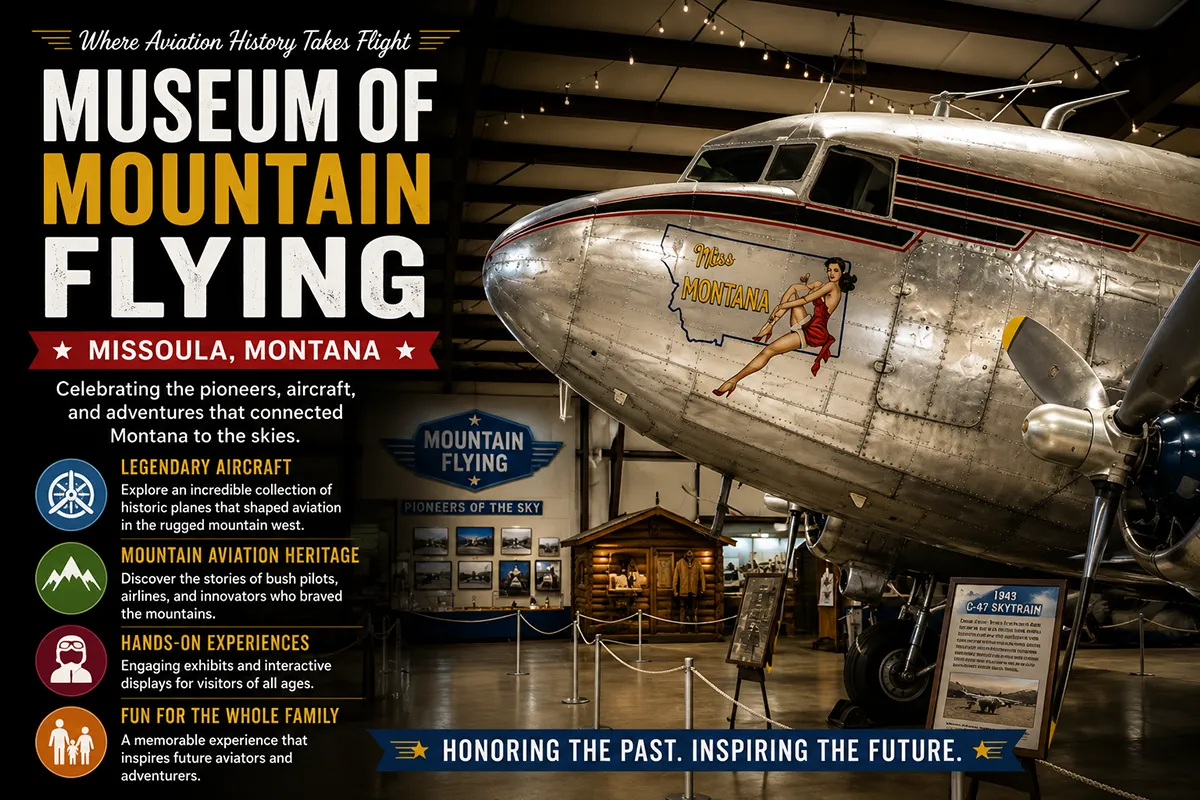
You can climb aboard a DC-3 that flew smokejumpers into one of the deadliest wildfires in American history, and the same plane later crossed the Atlantic for the 75th anniversary of D-Day. It’s parked in a hangar just outside Missoula, and you can walk right up to it.
- Museum of Mountain Flying sits at Missoula’s airport and preserves the history of Johnson Flying Service, the region’s pioneering mountain aviation company
- The centerpiece aircraft, “Miss Montana,” is a fully restored DC-3/C-47 tied directly to the tragic 1949 Mann Gulch fire and named Montana’s official state plane in 2023
- The collection includes rare aircraft, smokejumper artifacts, and hands-on access most aviation museums don’t offer
- Open daily Memorial Day through Labor Day, with a small entrance fee
- This is one of the best museums in Montana for anyone who wants to understand how Montana’s wildland firefighting and remote mountain access actually developed
Liked this article?
Add Roaming Montana as a preferred source so you see more of our articles and guides on Google.
Built From a Boneyard
Most museums start with a collection someone wants to display. This one started with salvage.
In 1993, three men — Stan Cohen, Dick Komberec, and Steve Smith — bought 2.8 acres at Missoula’s airport that had become a literal boneyard of old Johnson Flying Service aircraft and buildings. Johnson Flying Service wasn’t a minor regional operator.
It was the premier mountain flying company in the Northern Rockies, and its pilots pioneered techniques for flying and dropping cargo, and eventually smokejumpers, into terrain most aviators wouldn’t touch.
The founders borrowed a hangar for a temporary museum while planning something more permanent.
In the meantime, they acquired a C-47 with a genuinely heavy history attached to it — the same aircraft that had dropped twelve smokejumpers into the 1949 Mann Gulch fire, a wildfire that killed thirteen firefighters and remains one of the deadliest events in American wildland firefighting history.
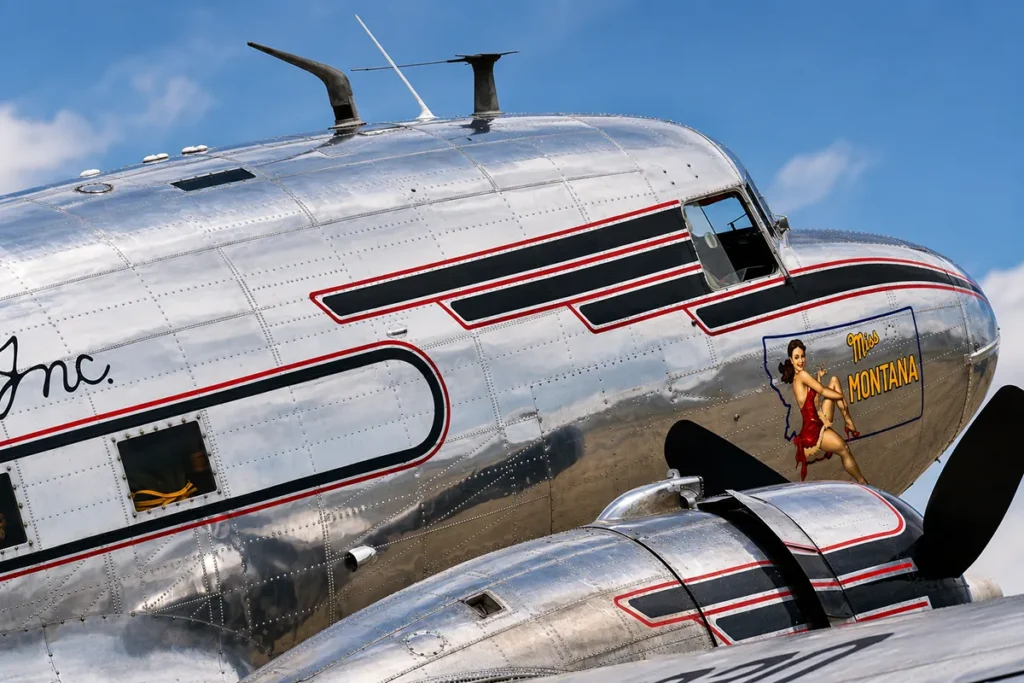
That plane became the museum’s centerpiece. Today it’s known as Miss Montana.
Miss Montana’s Remarkable Second Act
The museum moved into its purpose-built, 18,500-square-foot hangar in August 2002 and opened to the public that October. That gave Miss Montana a proper permanent home. It didn’t end her story.
In 2019, Miss Montana flew all the way to Normandy, France, joining a formation of vintage aircraft for the 75th anniversary of D-Day. A plane that once carried smokejumpers into a Montana wilderness fire crossed the Atlantic Ocean under her own power, decades after her original service.
In May 2023, the Montana state legislature made it official: Miss Montana became the state’s designated official plane. That’s a genuinely rare honor for a museum aircraft, and it reflects how central this specific plane’s story has become to how Montana understands its own aviation history.
Aircraft You Can Actually Get Close To
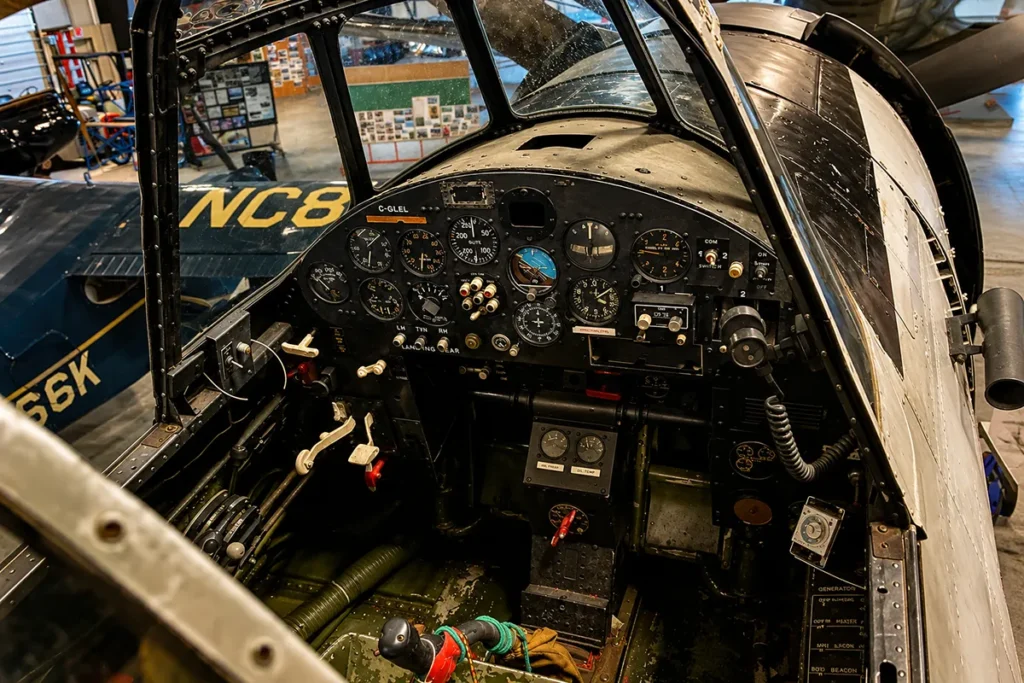
This isn’t a museum where everything sits roped off behind glass. Multiple visitors specifically mention climbing up into Miss Montana and exploring the interior firsthand, which is a genuinely different experience than viewing a static aircraft display from a distance.
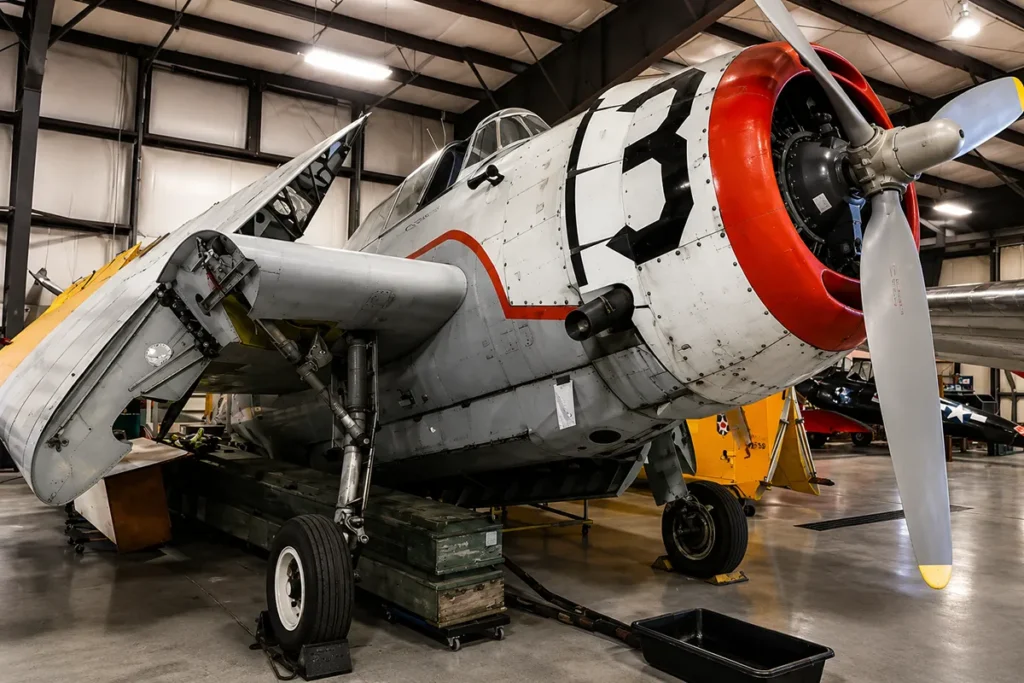
Beyond Miss Montana, the collection includes a TBM-3 Avenger, a Navy torpedo bomber with a winding history: built in 1950, it served with the U.S. Navy, then the Royal Canadian Navy, then fire services in Idaho and Nebraska, then Johnson Flying Service itself, before finally landing at the museum in 2011.
NC8865, another historic aircraft, has an equally layered past. It started out hauling miners and supplies in Idaho, joined the Johnson Flying Service fleet in 1958 to carry smokejumpers and cargo, and returned to Missoula for display in March 2013. It’s one of only six aircraft of its type still flying anywhere in the world.
The museum also holds a Travel Air 6000 that once belonged to Johnson Flying Service, a Piper Cub, a one-third-scale flyable Red Baron replica, and — as of a November 2024 acquisition — an A-26 that appeared in the 1985 Steven Spielberg film “Always,” about aerial wildland firefighters.
A Genuinely Odd Artifact: A 1925 Yellowstone Bus
Not everything here has wings. Shortly after the museum opened in 2002, it received a 1925 White bus with its own unusual history.
The bus was originally built for use in Yellowstone National Park. Johnson Flying Service later purchased it to transport Montana State University students to Hale Field for flight training during World War II.
It’s a small detail, but it says something about how interconnected Montana’s early aviation, tourism, and wartime training infrastructure actually was. A bus meant for shuttling Yellowstone tourists ended up ferrying future pilots instead.
Smokejumping History Told From the Air Side
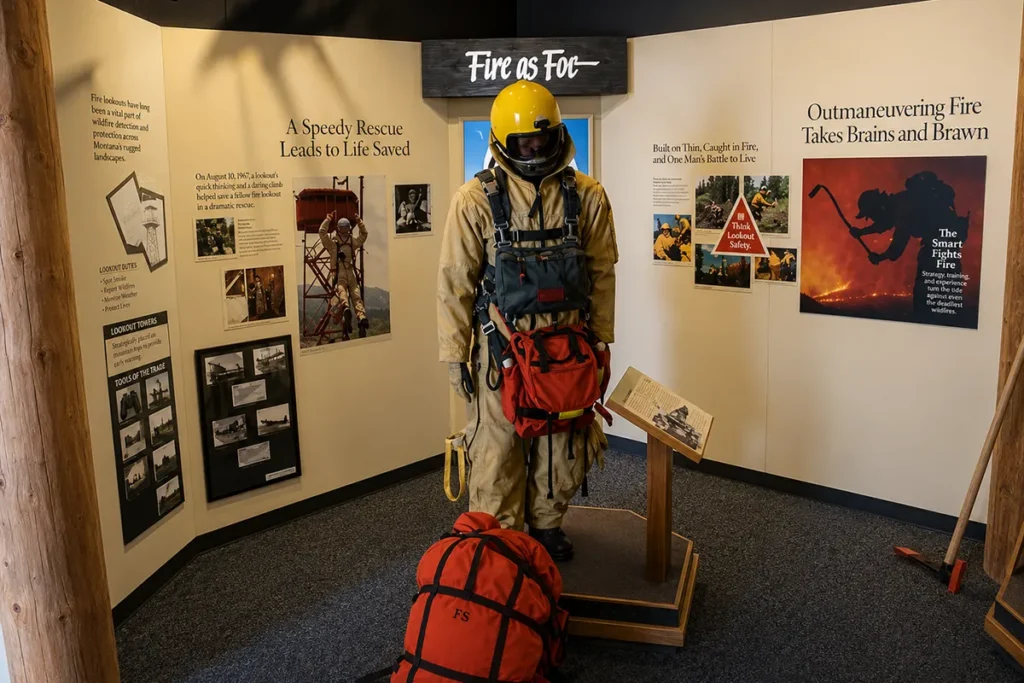
Most Montana smokejumper history gets told from the jumper’s perspective — training, gear, the physical act of parachuting into remote fire terrain. This museum tells the other half of that story.
Interpretive displays throughout the hangar cover the aircraft and pilots who made smokejumping possible in the first place. Without pilots willing to fly low and precise over mountainous, often smoke-obscured terrain, the entire smokejumping program couldn’t have functioned.
The Mann Gulch connection ties directly into this. Understanding what happened to the C-47 and its crew that day adds real weight to a part of Montana’s wildland fire history that a lot of visitors only know in the abstract.
If you want the broader context on how wildfire has shaped the state, our Montana wildfires guide fills in more of that picture.
The Museum Is Expanding
As of late 2024, the museum announced plans to open a second location at Glacier Park International Airport in Kalispell.
That branch is set to include an aircraft maintenance technician training program, extending the museum’s mission beyond just preservation and into active workforce development for the aviation industry. [verify current status and opening timeline of the Kalispell branch]
That expansion says something about how this small, volunteer-driven institution keeps finding new ways to stay relevant more than three decades after it started as a literal salvage yard.
Why Johnson Flying Service Actually Mattered
It’s worth understanding the company behind this museum, because its story goes well beyond Missoula’s local aviation scene.
Johnson Flying Service operated as the region’s dominant mountain aviation contractor for decades, flying supply drops, firefighting support, and eventually smokejumper transport across some of the most demanding flying terrain in the country.
Before reliable roads reached deep into the Northern Rockies’ backcountry, aircraft like these were often the only practical way to move people and supplies in and out of remote fire camps and wilderness areas.
That work required a specific kind of piloting skill most commercial aviation never demanded: precise low-altitude flying through mountain valleys, unpredictable downdrafts, and smoke-obscured visibility, often to reach a drop zone with no real margin for error.
The pilots who mastered mountain flying in this era effectively wrote the playbook that later generations of Forest Service and wildland firefighting aviation still draws on.
Understanding that context changes how you look at the aircraft in this hangar. These aren’t generic vintage planes — they’re the specific tools that made modern wildland firefighting logistics possible in mountainous terrain.
Visiting With Kids
This museum works well for kids with any interest in planes, history, or firefighting, though the format leans more toward reading and looking than hands-on interaction.
The ability to actually climb aboard Miss Montana is the clear highlight for most young visitors — it’s a rare chance to stand inside a real historic aircraft rather than viewing one from behind a rope line.
Volunteer staff are consistently described as patient and engaging with younger visitors, often adding context beyond what’s on the printed placards.
If your kids are very young or need more interactive engagement to stay interested, I’d budget a shorter visit and pair it with something more physically active nearby rather than expecting the full collection to hold their attention for an hour straight.
Quick Questions I Get Asked
Can we actually go inside Miss Montana, or is it just viewed from outside?
Visitors have consistently been able to climb aboard and explore the interior, which is a genuinely unusual level of access for a museum aircraft this historically significant. Policies can shift, so it’s worth confirming when you arrive.
Is this the same as the Smokejumper Visitor Center?
No — they’re separate facilities covering complementary halves of the same story. This museum focuses on the aircraft and pilots; the Smokejumper Visitor Center focuses on the jumpers themselves and their training. Visiting both gives you the full picture.
Is the museum volunteer-run?
Yes, largely. That’s part of why hours are seasonal and somewhat limited compared to a larger institutional museum, and also why the on-site knowledge from staff tends to be so personal and detailed.
Is there anywhere to eat near the museum?
The museum sits out near the airport rather than downtown Missoula, so I’d plan to eat before or after your visit in town rather than expecting dining options immediately on-site.
Most Missoula travel content mentions this museum in a single line, if at all, usually overshadowed by the nearby Smokejumper Visitor Center. A few specific gaps:
- Miss Montana’s D-Day flight and state plane designation rarely get mentioned, even though they’re genuinely remarkable, recent developments.
- The hands-on access gets undersold. Most guides don’t mention that you can actually climb aboard Miss Montana rather than just viewing it from outside a rope line.
- The Mann Gulch fire connection is almost never explained, losing one of the more emotionally significant threads running through the collection.
- The 2024 Kalispell expansion is recent enough that most existing content hasn’t caught up to it at all.
Personal Tips: What I Wish I Knew
- Pair this with the Smokejumper Visitor Center nearby. Together they give you both the ground and air perspective on Montana’s wildland firefighting history.
- Budget about an hour, more if you’re genuinely into aviation history or want to talk with the volunteer staff, who are consistently described as knowledgeable and generous with their time.
- This is a seasonal museum. It’s reliably open Memorial Day through Labor Day; outside that window, hours are limited or by appointment, so call ahead.
- Younger kids may need extra engagement. A few reviewers mention younger children getting a little bored with the self-guided, read-heavy format — pairing a visit with the hands-on aircraft access helps.
- Ask about current special aircraft visits. Traveling historic warbirds occasionally stop at the museum for public viewing, and it’s worth checking their calendar before your trip.
How This Fits a Missoula Visit
Missoula’s aviation history doesn’t get nearly the attention its outdoor recreation scene does, but it’s a genuinely rich thread if you know where to look.
The museum sits at the east end of Missoula International Airport, about six miles from downtown. Our Missoula guide covers the rest of what’s worth doing in town, and if you need a place to stay nearby, our Missoula hotels guide rounds out your trip planning.
If you’re building a broader Montana museum itinerary, our Montana museums guide maps how this stop connects to the rest of the state’s cultural landscape.
Practical Info
| Address | 5843 Museum Way, Missoula, MT 59808 |
| Phone | (406) 721-3644 |
| Season | Memorial Day weekend through Labor Day (some sources note into mid-September) |
| Hours | Daily, 10 a.m.–4 p.m. during season |
| Admission | Small entrance fee [verify current pricing at museumofmountainflying.com] |
| Time needed | 1–1.5 hours |
| Good for | Aviation enthusiasts, wildfire and smokejumper history buffs, families with older kids |
| Nearby pairing | Smokejumper Visitor Center, rest of our Missoula guide |
Final Thoughts
Museum of Mountain Flying tells a story most Montana visitors never hear: that the state’s wildland firefighting, remote wilderness access, and even wartime pilot training all ran through the same small group of mountain aviators.
Miss Montana’s journey from a Mann Gulch tragedy to a D-Day anniversary flight to official state plane status is the kind of arc you couldn’t invent.
If you’re at all interested in how Montana’s rugged geography shaped its history, this museum belongs on the same short list as our guides to Grant-Kohrs Ranch and other sites where the landscape itself dictated how people had to solve problems.
Few places make that connection between terrain and ingenuity as vividly as a hangar full of aircraft built specifically to conquer Montana’s mountains from the air.
Pin this for your Missoula trip planning. If you’ve climbed aboard Miss Montana yourself, I’d love to hear what it felt like standing inside a piece of history like that in the comments.