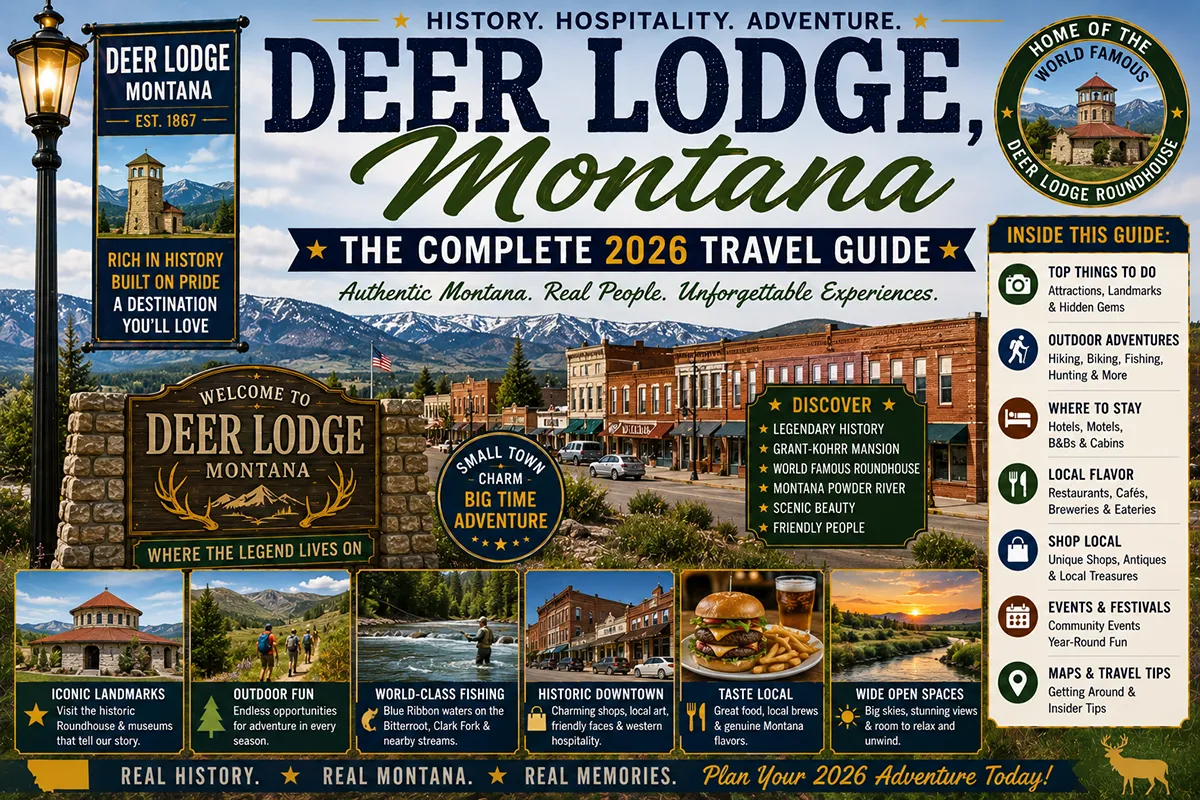
Deer Lodge has a prison wall twenty feet high, a ranch that once ran an empire of cattle across the open range, and a Main Street that fits both in the same mile.
TL;DR
- Deer Lodge (population 2,938 at the 2020 census) is the Powell County seat in the Deer Lodge Valley on Interstate 90, and one of the most history-dense small towns in Montana.
- The two headline stops are the Old Montana Prison complex, with five museums on about 9 acres, and Grant-Kohrs Ranch National Historic Site, a National Park Service working ranch with free admission to the grounds.
- Most visitors spend one full day. A second day makes sense for Main Street, the Milwaukee Road history, nearby hot springs, and day trips to Anaconda and Philipsburg.
- The town sits in a dry, high valley with big temperature swings, so plan layers in any season.
- Many online claims about Deer Lodge are exaggerated or inconsistent. This guide sticks to sourced numbers and flags what is unclear.
Deer Lodge is the kind of town that most travelers see from I-90 as a shape on the horizon: a tall stone tower at one end of town, a long valley floor, and mountains in every direction. Pull off, and the details start to stack up.
The town sits on the Clark Fork at the north end of the valley that gave it its name. The valley was a favored camping place for several tribes long before trappers or settlers arrived. That older layer is easy to miss on a quick stop. Cattle, railroads, a state prison, and a small college all shaped Deer Lodge after 1860, and each left buildings that are still standing.
Deer Lodge belongs to Southwest Montana and to the wider list of Montana cities and towns. This guide covers the prison, the ranch, the street, the valley, and how to put them together into a trip that does not feel like a checklist.
Liked this article?
Add Roaming Montana as a preferred source so you see more of our articles and guides on Google.
Deer Lodge at a Glance
| Detail | What sources support |
|---|---|
| County | Powell County (county seat) |
| Population | 2,938 (2020 census); 3,111 (2010) |
| Elevation | About 4,530 feet. Sources give 4,530 (regional tourism) and 4,538 (Wikipedia) |
| Area | Under 2 square miles |
| Incorporated | 1888 |
| Climate | Dry and continental, about 14.5 inches of precipitation a year; record high 108°F and record low minus 42°F |
| Interstate | I-90; the main business route runs through town |
| Nearest commercial airport | Bert Mooney Airport in Butte |
The elevation matters less than the weather. Deer Lodge is among the lower-lying towns in southwest Montana, so winters are cold but summers can run hot.
A Name With Layers
The name Deer Lodge is older than the town. Regional tourism says Native people called the area Soo-ke En Carne, “the Lodge of the White-tailed Deer,” and French trappers translated it as La Loge du Chevreuil, which pioneers shortened to Deer Lodge. The name comes from Warm Springs Mound, whose natural salt attracted deer. The trapper Warren Ferris counted more than 100 Pend d’Oreille lodges in the valley in 1831.
The town itself went through several names, including Cottonwood, LaBarge City, and Idaho City, before becoming Deer Lodge in 1894. Johnny Grant, a Canadian fur trader, built the first permanent structures in the valley around 1859 and 1860 and moved to the Deer Lodge site in 1861. Lewis and Clark passed nearby in 1805 and 1806 without entering the valley.
Old Montana Prison
The prison complex at the south end of Main Street is the largest single reason to stop, and the one that surprises first-time visitors most. For a more detailed history, see the Old Montana Prison Museum guide and the broader Montana state prison history article.
The basics. The site has held a prison since 1871, according to regional tourism. Wikipedia places a territorial prison in Deer Lodge in 1869, so the exact start date depends on how it is counted. The prison housed the state’s most serious offenders for more than a century and was replaced by a newer facility outside town; the modern Montana State Prison sits about 3.5 miles west. The old site is now a museum complex of about 9 acres.
The wall and the cellblock. Warden Frank Conley, who led the prison around the turn of the twentieth century, put inmates to work because he believed labor would prevent riots. Inmates quarried and shaped local sandstone for the perimeter wall, which stands 20 feet high and extends 4 feet underground. Cellblock 1, built in 1912, is brick and sandstone, with a battlement roof, towers, and arched windows.
The five museums. Admission to the prison covers the following:
| Museum | What it holds |
|---|---|
| Prison Museum | Cell tiers, the theater, and the history of the institution |
| Montana Auto Museum | More than 160 cars, from early automobiles onward |
| Yesterday’s Playthings | An antique toy collection |
| Frontier Montana | Old West memorabilia, including a large black powder rifle collection that the site describes as the largest north of Cody, Wyoming |
| Powell County Museum | Local history |
Hours and cost. Regional tourism lists hours of 10 a.m. to 4 p.m., without listing days or seasonal changes. Admission was listed as $15 for adults, $8 for ages 10 to 15, and free for those under 10, with 20% discounts for AARP members, veterans, active military, and AAA members. Plan on at least two to three hours.
Ghost tours. The site is widely described as haunted and has appeared in television programs, and ghost tours have been advertised. Dates, prices, and booking details were not confirmed in the sources reviewed.
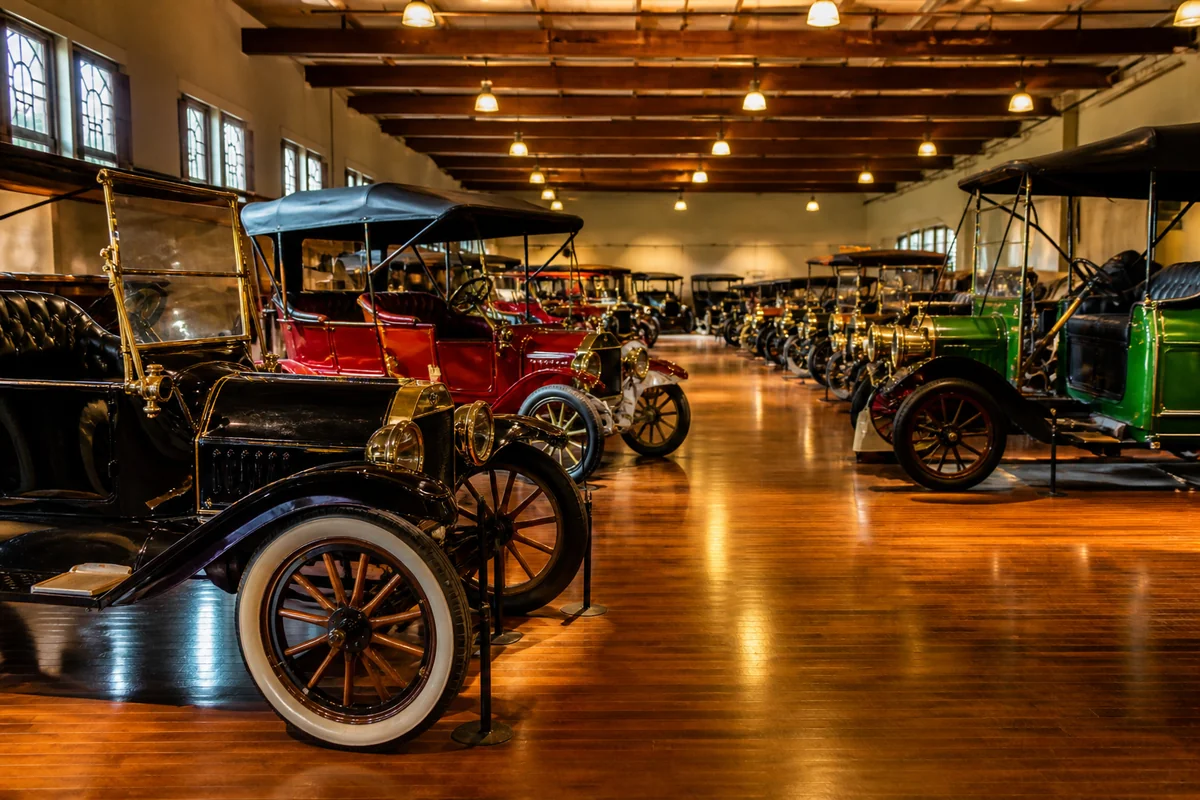
Desert John’s Saloon
Regional tourism lists Desert John’s Saloon as part of the museum group: an antique bar whose contents date to the Civil War era. It is a small stop, worth a few minutes if you are already on the grounds.
Grant-Kohrs Ranch National Historic Site
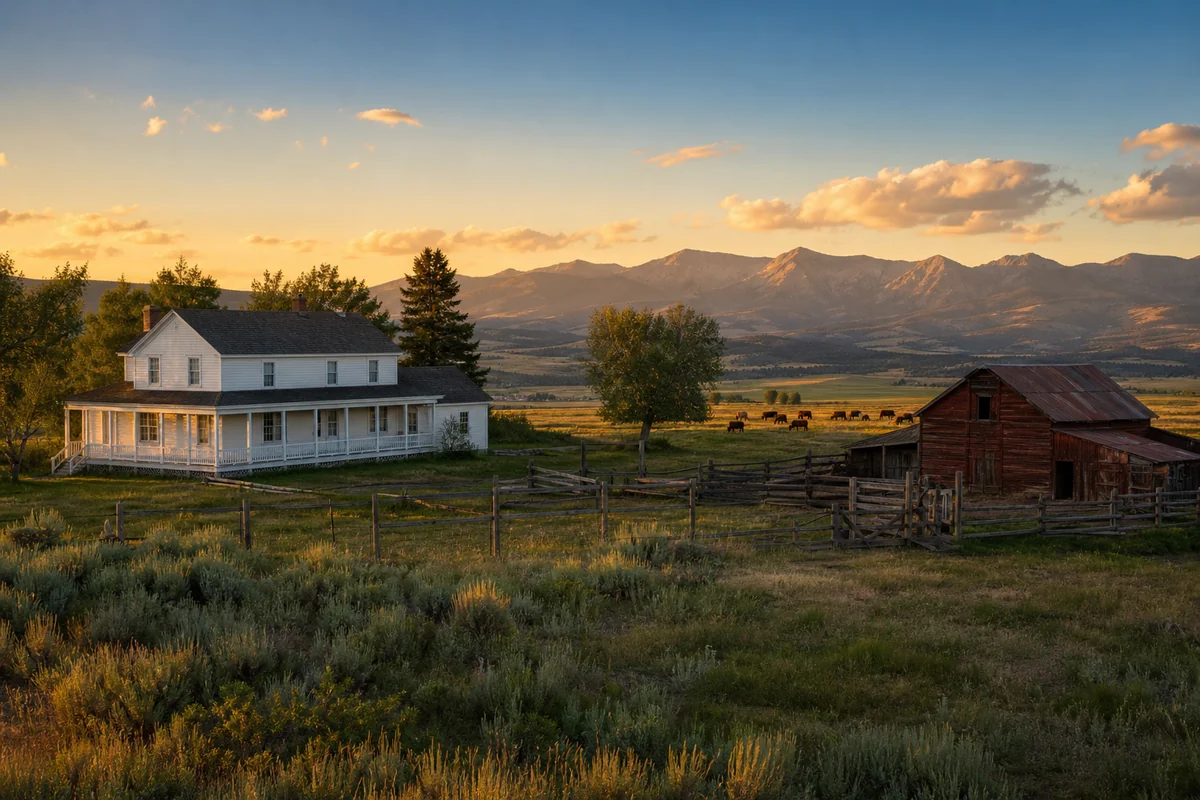
If the prison is Deer Lodge’s grim side, the ranch is its generous one. Grant-Kohrs Ranch is a National Park Service site at 266 Warren Lane, run as a working ranch. The grounds cover just over 1,600 acres and include 88 historic buildings, according to the National Trust for Historic Preservation.
The story. Johnny Grant established the ranch in 1862, and the front section of the ranch house dates to that year. Conrad Kohrs bought it in 1866 or 1867, depending on the source, and built the cattle operation into one of the largest in the West. Regional tourism says the herd reached about 50,000 head in the 1880s and the ranch shipped as many as 10,000 head a year to Chicago. The NPS describes a “10 million acre cattle empire” that the ranch once headquartered. Kohrs added the rear portion of the ranch house in 1891. Congress established the national historic site in 1972 to explain the frontier cattle era.
What visitors do. The ranch keeps cows, horses, and chickens. The herd includes Hereford, Shorthorn, and Texas Longhorn cattle, breeds popular in the Open Range Era. A ranger-led tour of the main ranch house is the main guided option, scheduled through the visitor center, and the grounds can be explored on a self-guided basis. Plan three to four hours. Summer brings demonstrations such as haying and branding, along with Junior Ranger programs for children.
Practical notes. RVs and trailers can park in the visitor center lot, which has pull-through parking. Call 406-846-2070 for current conditions.
Main Street and the Milwaukee Road
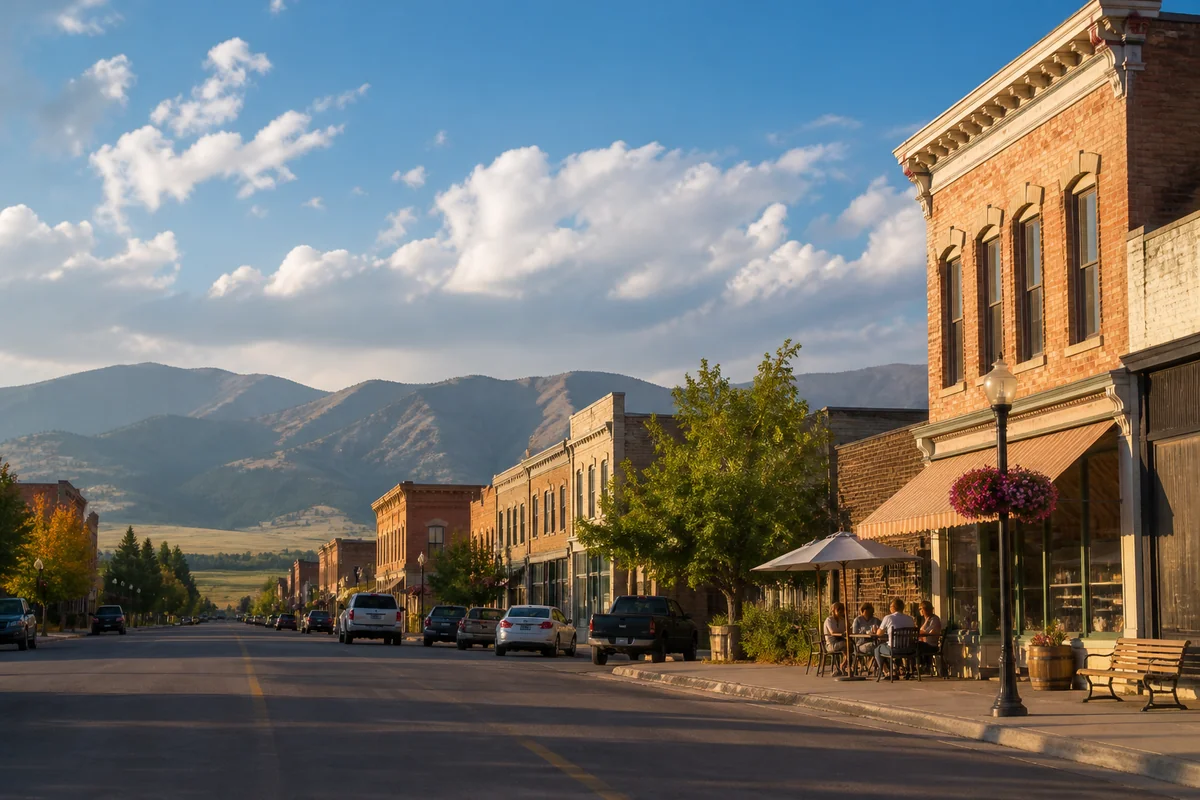
Deer Lodge’s historic downtown is walkable and low-key. It includes boutiques, an antique store, and the Grant Coffee and Ice Cream Shoppe, which occupies a space dating to 1916. The owners were restoring the neighboring Grant Hotel at last report, and renovation turned up old bottles, playing cards, and a newspaper article.
The railroad. The Milwaukee Road made Deer Lodge a division headquarters in 1910. The railroad’s Puget Sound Extension, linking Chicago to Seattle, was completed when a last spike was driven on May 19, 1909, about 17 miles west near Gold Creek. A monument now stands in Deer Lodge near the south end of the prison complex, rededicated on August 2, 2003. Passenger service ended in 1964, and the western extension closed in 1980. Some guides call the Milwaukee “the last major transcontinental railroad built in America,” a claim that is common but not confirmed in the sources reviewed.
The college. The College of Montana, the state’s first institution of higher learning, was established in Deer Lodge in 1878, according to Wikipedia.
A famous native. Regional tourism notes that former NBA coach Phil Jackson is from Deer Lodge.
Around the Valley
Warm Springs Mound
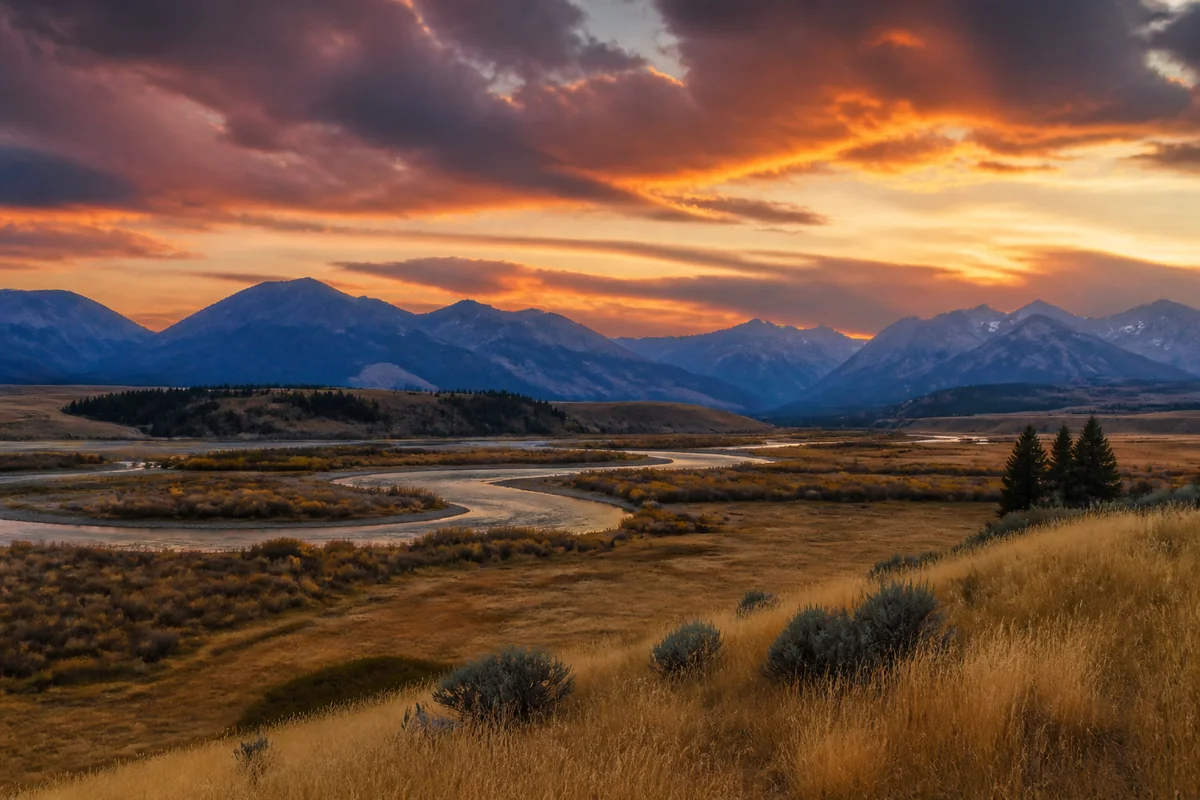
Warm Springs Mound is a warm spring about 16 miles south of Deer Lodge, near the Montana State Hospital, and it gave the town its name. It is better understood as a landmark than a destination.
Warm Springs Wildlife Management Area
Regional tourism lists the Warm Springs WMA as a birding destination near Deer Lodge. It was once a Superfund site. Fishing, hiking, and picnicking are possible.
Farther Out
The regional tourism office lists several additional places “in the Deer Lodge area,” all of them farther away and best treated as longer day trips:
- Garnet Ghost Town: About 30 preserved buildings from a gold camp, with self-guided trails.
- Sculpture in the Wild (Lincoln): A 26-acre sculpture park opened in 2014.
- Little Blackfoot River: Wade fishing in the upper half; private land in the lower half.
- Highway 141 across the Garnet Mountains: A scenic drive between Avon and Helmville.
For more old mining sites, see Montana ghost towns.
Where to Stay and Eat
Regional tourism’s Deer Lodge page lists no specific lodging or dining, only general categories. The usual choices are a few motels in town, chain hotels, and campgrounds, with larger inventories in Butte and Anaconda. A KOA is listed for the area.
For food, Main Street has a coffee and ice cream shop and a handful of cafes and bars. Names and hours change, so confirm before planning a meal around one. In the off-season, many places close early. In Drummond, about 40 minutes away, a diner known for its menu of 135 burgers draws road-trippers.
Deer Lodge by Season
Spring. Windy and unsettled. The prison and ranch are open, but ranch demonstrations are limited.
Summer. The best season for the ranch, with haying and branding programs, and for walking Main Street. Heat can reach the high 90s.
Fall. Quiet and clear. Crowds thin, and light on the sandstone wall is excellent.
Winter. Cold, with a record low of minus 42°F. Check the prison’s and ranch’s winter schedules before driving in.
For wider planning, see the best time to visit Montana.
Plans That Work
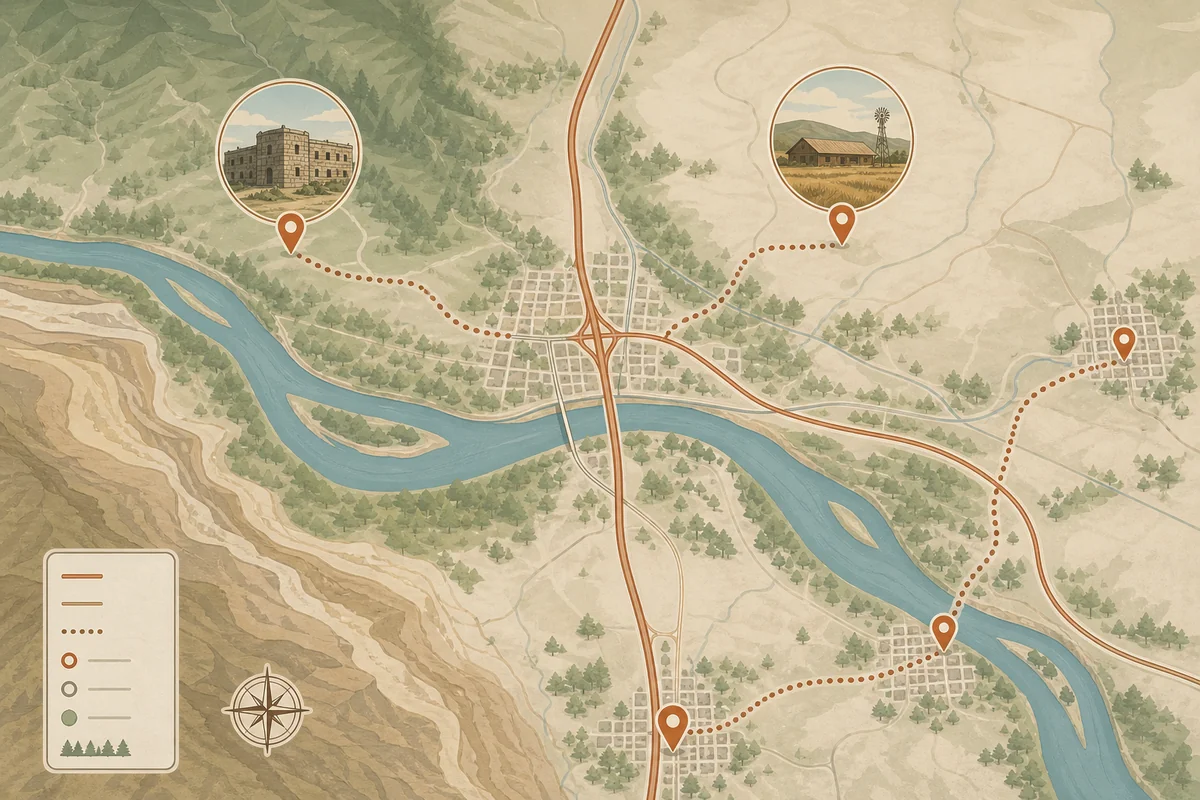
One day. Morning at the Old Montana Prison, lunch on Main Street, afternoon at Grant-Kohrs Ranch, and an evening walk past the railroad monument.
Two days. Add Warm Springs, the Main Street shops, and a drive to Anaconda for the Smelter Stack.
Three days. Add Philipsburg and the Pintler Scenic Route, or a day at Garnet.
Nearby Towns
- Anaconda (about 25 miles): The Smelter Stack and the Washoe Theatre. See Anaconda.
- Butte (about 35 to 40 miles east): The mines. See Butte.
- Philipsburg: Reached from Anaconda along the Pintler route. See Philipsburg.
- Helena: Visit Helena suggests a day loop through Drummond, Philipsburg, Anaconda, and Deer Lodge. See Helena.
- Hot springs: Fairmont Hot Springs lies between Anaconda and Butte. See Montana hot springs.
- Other museums: See best museums in Montana.
Getting There
Deer Lodge is directly on Interstate 90, with the town’s main street also serving as the business route.
| From | Direction from Deer Lodge | Approximate distance |
|---|---|---|
| Butte | Southeast on I-90 | About 35 to 40 miles |
| Anaconda | South and east | About 25 miles |
| Missoula | West on I-90 | About 80 miles |
| Helena | East and north | About 80 miles |
| Philipsburg | Via I-90 to Drummond, then Highway 1 south | About 50 to 60 miles |
Bert Mooney Airport in Butte is the nearest commercial airport. A car is essential.
What Visitors Wish They Knew
- Start early at the prison. The complex takes longer than most people expect.
- Check museum days and tour times. The sources reviewed list hours but not days.
- Bring layers. Temperature swings are large in this valley.
- Ask about discounts. Several groups qualify for the prison’s 20% reductions.
- Do not skip the ranch. It is the quieter half of the day and often the favorite.
- Treat ghost-tour claims carefully. Confirm any tour in advance.
- Cross-check numbers. Dates and distances vary by source.
Practical Info
| Item | Details |
|---|---|
| Best season | Late spring through early fall |
| Time needed | One full day; two for a relaxed visit |
| Fees | Prison admission charges; ranch grounds are free in the sources reviewed |
| Difficulty | Easy and mostly flat |
| What to bring | Layers, sun protection, water, camera |
| Nearby | Anaconda, Butte, Philipsburg, Warm Springs |
Conclusion
Deer Lodge is a town where the stone wall and the open range sit side by side, and where a single day can go from the tight cells of a century-old prison to the wide pastures of a working ranch. It deserves more than a gas stop.
Save this guide for your Southwest Montana trip planning, and leave questions in the comments, especially if hours or tours have changed. For more places, browse the full list of Montana cities and towns or build a route through Southwest Montana.
Frequently Asked Questions
What is Deer Lodge, Montana known for?
The Old Montana Prison, Grant-Kohrs Ranch National Historic Site, the Montana Auto Museum, and its role as the Powell County seat.
How many people live in Deer Lodge?
2,938 at the 2020 census.
How much does the Old Montana Prison cost?
Regional tourism listed adult admission at $15, ages 10 to 15 at $8, and children under 10 free.
How many museums are at the Old Montana Prison?
Five, including the Prison Museum, Montana Auto Museum, Yesterday’s Playthings, Frontier Montana, and Powell County Museum.
Is Grant-Kohrs Ranch free?
Sources reviewed describe the grounds as free, with tours scheduled through the visitor center.
How long do you need in Deer Lodge?
One full day covers the prison and the ranch. Two days leaves room for Main Street and nearby stops.
Is the Old Montana Prison haunted?
It is widely described that way and has appeared on television, but there is no way to confirm it. Ghost tours have been advertised, so check in advance.
How far is Deer Lodge from Butte?
About 35 to 40 miles.
Where did the name Deer Lodge come from?
From Warm Springs Mound, whose natural salt attracted deer, via Native and French names meaning “lodge of the white-tailed deer.”