I once snowshoed five miles up Cave Gulch Road in late January to spend a night in a 130-year-old miner’s cabin at Garnet — and I’d do it again next week if I could get the lottery draw.
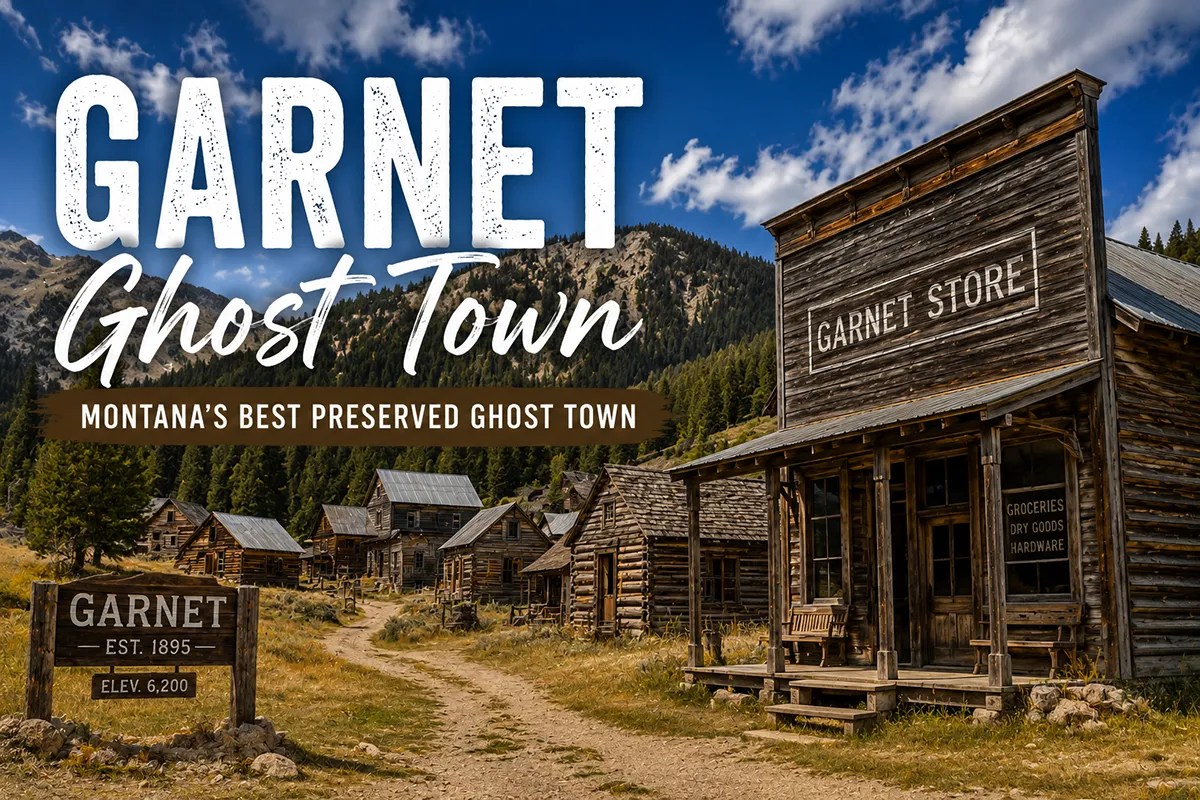
Garnet is Montana’s best-preserved and most authentic ghost town, hidden 11 miles up a gravel road in the Garnet Range east of Missoula. The Bureau of Land Management runs it, the entry fee is around $5 per person, and 30+ original buildings still stand — many with original furniture inside. Open year-round, but wheeled vehicles can only access it May 1 through mid-December. In winter, snowshoes, skis, or snowmobiles are the only way in, and you can actually rent an original miner’s cabin overnight if you win the BLM lottery. Below: the full visitor’s guide, including both access routes, building-by-building tours, and how to book the winter cabins.
Liked this article?
Add Roaming Montana as a preferred source so you see more of our articles and guides on Google.
Why Garnet Hits Different Than Other Montana Ghost Towns
If you’ve already read my Montana ghost towns guide or my Bannack ghost town deep-dive, you know I’d send most first-time visitors to Bannack. But Garnet is the one I keep going back to.
Here’s the difference. Bannack is preserved as a state park, with rangers, scheduled events, and a visitor center that handles thousands of tourists a year. It’s the most visited ghost town in Montana. Garnet is managed by the Bureau of Land Management — quieter, more remote, less programmed, and considerably less crowded.
Bannack feels like a museum you can walk through. Garnet feels like a town you happened to stumble across deep in the mountains.
Travel + Leisure named Garnet one of “America’s Coolest Ghost Towns.” That label is fine, but it undersells what makes the place work. Garnet is the closest thing in Montana to time travel. You drive 11 miles up a washboard gravel road. You park.
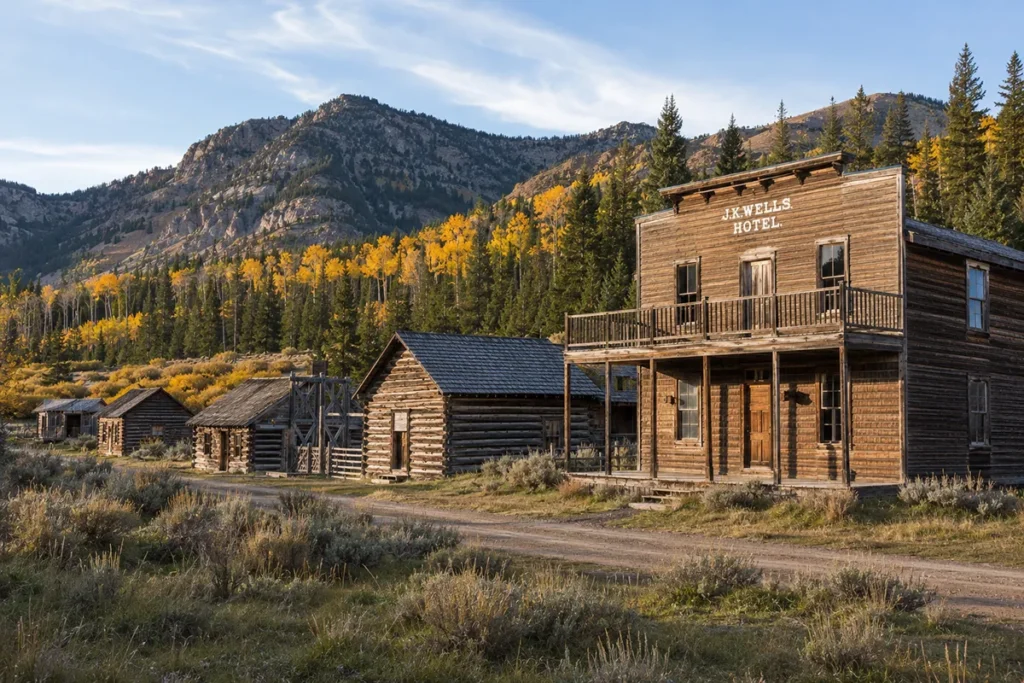
You walk into the visitor center and pay a few dollars. Then you walk out, and suddenly you’re standing in a town where 1,000 people lived in 1898 — and the J.K. Wells Hotel is right there, three stories of original construction, with hotel registers still visible through dusty windows.
I’ve visited Garnet four times across summer, fall, and twice in winter. This guide is built from those visits and from the official BLM and Garnet Preservation Association sources. Anything time-sensitive (fees, hours, road dates) I’ve marked [verify] — these change year to year.
A Quick History — From Boomtown to Ghost Town in 15 Years
The Garnet story is one of the shorter boom-and-bust arcs in Montana mining. Gold was found in the Garnet Range area in the 1860s, but the early placer mining was small-scale and didn’t draw large populations. The big change came in the early 1890s when Sam Ritchey discovered a rich gold vein at the Nancy Hanks Mine.
Word spread fast. By 1898, Garnet had over 1,000 residents, four stores, four hotels, two barber shops, a butcher shop, a candy store, and — most impressively — 13 saloons.
The town built itself in a hurry, mostly without proper foundations, because everyone was more interested in extracting gold from the ground than building things to last on top of it.
That hurry is why Garnet looks the way it does today. Many of the buildings sit slightly off-square. Floors aren’t level. Doorframes have warped. You can see the rush in the construction.
Then came the decline. By the early 1900s the easy gold was gone, and a major fire in 1912 destroyed about half the business district. Most residents simply left.
By the 1940s, Garnet was effectively empty. The BLM took over management in the 1970s, and the Garnet Historic District was added to the National Register of Historic Places in 2010.
What’s preserved today is roughly 30 structurally sound buildings — log cabins, hotels, saloons, stores, and outbuildings — in a state of what historians call arrested decay. They’re stabilized but not restored. The peeling paint, sagging porches, and weathered wood you see is original. Nothing has been painted, polished, or remade to look new.
For more context, see my piece on the Montana gold rush and the key historical events that shaped Montana.
Two Routes Into Garnet — Which One Should You Take?
This is where every other guide falls short. There are two access roads, and the choice matters depending on the season, the weather, and what you’re driving.
Route 1 — Highway 200 / Garnet Range Road (recommended for most visitors)
From Missoula, take I-90 east about 5 miles to Exit 109 (Highway 200 toward Bonner and Great Falls). Continue on Highway 200 for about 30 miles east, then turn south on Garnet Range Road between mile markers 22 and 23. Follow signs for approximately 11 miles to the Garnet parking area.
- Total distance from Missoula: ~46 miles
- Total driving time: ~75 minutes
- Gravel portion: 11 miles
- Road surface: Wide gravel, well-graded, some washboard sections after dry weather
- Sedan-friendly: Yes, in dry conditions. Take it slow.
- RVs: Discouraged but possible
- Open: May 1 through December 15 [verify]
This is the easier road and the one I always recommend for first-time visitors.
Route 2 — Bear Gulch Road from I-90 (for the scenic detour)
Take I-90 to either the Drummond or Bearmouth exit. Follow the North-side frontage road to Bear Gulch Road. Continue 7.5 miles up Bear Gulch to the Cave Gulch Road junction. Garnet is 4 miles up Cave Gulch from there.
- Total gravel mileage: ~12 miles
- Road surface: Narrower, steeper, more winding than Garnet Range Road
- RVs and trailers: Strongly discouraged — one-lane in places
- High-clearance recommended
- Open: Same season window as Route 1
This route is more remote, more scenic, and the one most locals take. It’s also where you start the winter snowshoe/ski approach — Cave Gulch Road is where you park and walk in once the snow shuts down vehicle access.
Which route when?
| Condition | Recommended Route |
|---|---|
| First visit, sedan, summer | Highway 200 |
| Want the scenic route | Bear Gulch / Cave Gulch |
| Recent heavy rain | Highway 200 (better drainage) |
| Pulling a trailer | Highway 200 (Bear Gulch is too tight) |
| Winter approach to cabins | Cave Gulch (park at trailhead) |
For more on driving Montana’s backroads in cold weather, see my Montana winter driving guide.
Walking Through Garnet — The Buildings to See
Garnet has about 30 standing structures. Here’s what to prioritize.
J.K. Wells Hotel — Garnet’s signature building
The J.K. Wells Hotel is the three-story wood-frame building you’ll see first from the parking area. It dominates the town visually and was the social heart of Garnet during the boom.
The hotel housed a large dining room on the ground floor, private bedrooms on the second floor, and a communal sleeping area on the third floor for miners who couldn’t afford rooms.
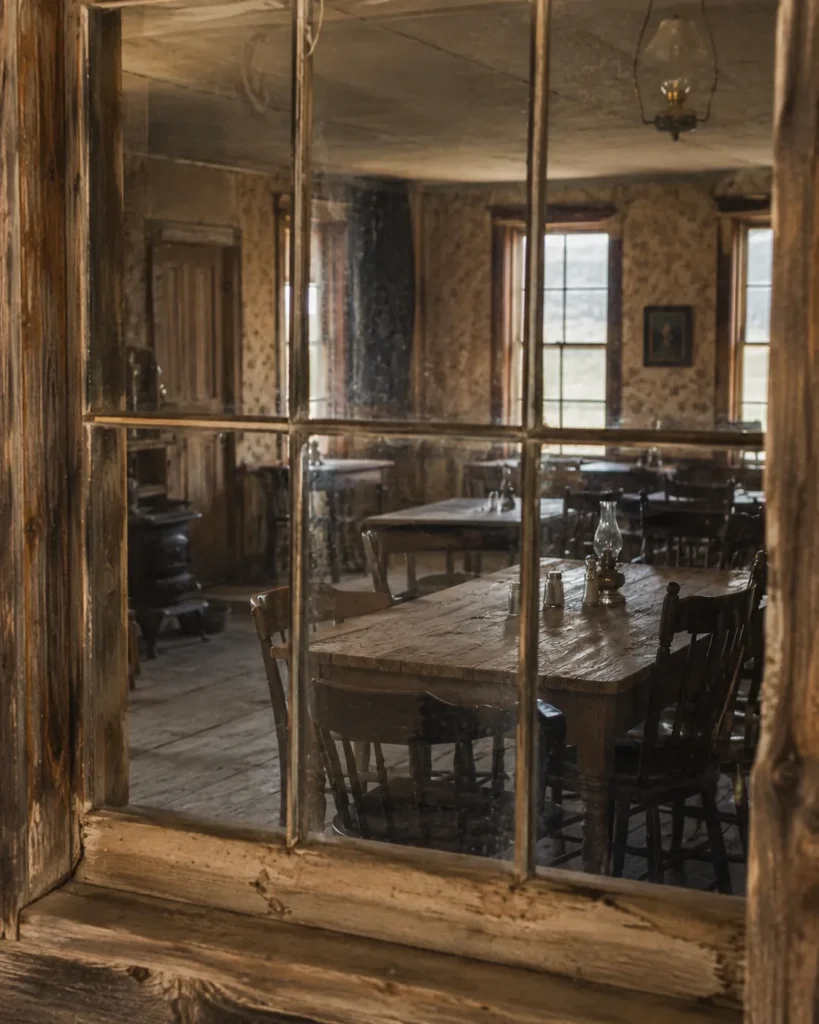
The interior is closed to entry to protect the structure, but windows on the ground floor are positioned so you can see directly into the dining area with original tables, chairs, and counter still in place. The light through the dusty glass is exceptional in mid-morning.
Kelly’s Saloon
The two-story wood-frame Kelly’s Saloon stands across the main street. It was one of Garnet’s 13 saloons and one of the most popular — partly because of the gambling, partly because the second floor was used for what 1890s mining-town residents politely called “company.”
The saloon is one of the buildings with documented paranormal reports. According to the BLM staff I’ve spoken with, occasional sounds of laughter and music have been reported here, particularly in winter when few visitors are present. Believe what you want — Kelly’s at dusk in late October is one of the most atmospheric spots in any Montana ghost town.
The General Store
Smaller than the hotel but worth time. Many of the original shelves are still in place, and you can see fragments of stock through the windows — cans, bottles, the kind of mining-camp dry goods that don’t survive at most preserved sites.
Miners’ Cabins (uphill from main street)
A row of small log cabins sits on a small hill above the main street. These are where most of Garnet’s working population lived. Most are open to enter. They’re cramped, dark, and give you the most honest sense of how miners actually lived — far more than the romantic hotel rooms downstairs at the J.K. Wells.
A few cabins still contain original furniture or stove fragments. One in particular near the top of the row has a bunk frame, a small table, and a wood stove all still in place. I can’t tell you which one because part of the magic is finding it.
The Dahl and McDonald Cabins (the winter rentals)
Two of the cabins on the upper slope — the Dahl Cabin and the McDonald Cabin — are the ones the BLM rents out to overnight visitors in winter. More on that below. In summer, you can see them from the trail and walk around them, but they’re locked to non-renters.
Outbuildings, mine shaft remnants, and the cemetery trail
Several mine-related structures sit at the edge of town. The Sierra Mine interpretive trail starts from the visitor center area and loops you past mining equipment and lode claims. The trail takes about an hour and offers views back down to the town.
The Best Part — Winter Cabin Rentals (How to Actually Book Them)
This is what makes Garnet unique among Montana ghost towns. From December 1 through April 30, the BLM rents two original miners’ cabins to overnight visitors. There is nothing else like it in Montana — you can spend the night in a 130-year-old cabin, in the middle of an actual ghost town, accessible only by snowshoe, ski, or snowmobile.
The Two Cabins
| Cabin | Sleeps | Rate (per night) [verify] | Notes |
|---|---|---|---|
| Dahl Cabin | Up to 6 people | ~$40/night | Larger, has propane heat, more room |
| McDonald Cabin | Up to 4 people | ~$30/night | Smaller, more rustic |
Both cabins have:
- Wood stove for heat (firewood provided)
- Propane lanterns and cooktop
- Beds and bedding frames (bring your own sleeping bag and bedding)
- Outhouse nearby
- Potable water source nearby
- No electricity
- No indoor plumbing
- No cell service
How to Book — The Lottery Process
The cabins are popular enough that the BLM uses a lottery system for the most desirable weekends.
- Lottery application deadline: First Friday in November [verify]
- Lottery results notification: By November 21 [verify]
- After November 21: Remaining dates available first-come, first-served by calling BLM Missoula Field Office at (406) 329-3914 [verify]
The application form is available on garnetghosttown.org. You submit it with your check by mail to the BLM at 3255 Fort Missoula Road, Missoula MT 59804 [verify].
Getting There in Winter
Wheeled vehicles cannot drive to Garnet between roughly December 15 and April 30. The winter approach options:
- Cave Gulch Road approach: Park at the marked winter trailhead and snowshoe, ski, or snowmobile in. Approximately 5 miles to town.
- Garnet Range Road approach: Park at the gate and ski in. This is longer (closer to 7-8 miles) and less commonly used.
You’re hauling whatever you need on your back or sled. Plan for cold — overnight temperatures at 6,000 feet in January routinely drop below 0°F. The cabins heat up well with the wood stove once you arrive, but the trip in is the workout.
Bear and Food Storage Rules (Don’t Skip This)
This is the rule most casual visitors don’t know about. All food and trash must be stored inside the cabin in the rodent-proof container or refrigerator. Food cannot be left in your vehicle within half a mile of Garnet. This rule exists because the Garnet Range is active bear country, and the cabins have a history of mouse problems.
Violating storage rules is grounds for being banned from future rentals.
Practical Visitor Info
| Topic | Details |
|---|---|
| Location | Garnet Range, ~30 miles east of Missoula |
| Coordinates | 46.8268°N, 113.3360°W |
| Elevation | ~6,000 feet |
| Managed by | Bureau of Land Management (Missoula Field Office) |
| Phone (BLM) | (406) 329-3914 [verify] |
| Entry fee | ~$3-$5 per person over age 15 (sources vary — some report $10 in 2024) [verify] |
| Free with | National Park senior pass, military pass, federal interagency pass [verify] |
| Visitor center hours (summer) | Daily, late May–September, 9:30 a.m. – 4:30 p.m. [verify] |
| Vehicle access window | May 1 – December 15 (approximate, weather-dependent) |
| Winter access | Snowshoe, ski, or snowmobile only |
| Cell service | None at the town site |
| Pets | Not allowed at dispersed camping; check current building rules for leashed dogs |
| Restrooms | Pit toilets near visitor center |
| Drinking water | Spigot available near visitor center in summer; bring your own in winter |
| Food/concessions | None — bring everything |
| RV access | Discouraged; not recommended on Bear Gulch route |
Best Times to Visit
| Season | Experience | My Take |
|---|---|---|
| Late spring (mid-May to June) | Road opens, snowmelt, fresh greens | Quiet and beautiful; visitor center may have limited hours early |
| Summer (July–August) | Peak season, full visitor center, warmest days | Busiest, but still nothing like Bannack-busy |
| Early fall (September) | Cool days, golden light, sparse crowds | My favorite. September weekdays at Garnet are sublime. |
| Late fall (October–early Nov) | Aspens turning, road open until mid-Dec, very few visitors | Excellent if you don’t mind cold mornings |
| Winter (Dec–Apr) | Cabin rentals only; snowshoe/ski access | Bucket-list experience if you can win the lottery |
Garnet vs Bannack — The Comparison Visitors Actually Want
First-time visitors constantly ask which one to visit. Here’s the head-to-head.
| Factor | Garnet | Bannack |
|---|---|---|
| Management | BLM (federal) | Montana State Parks |
| Number of buildings | ~30 | ~60 |
| Building access | Most viewable from outside; some can be entered | Most can be entered freely |
| Crowd level | Low to moderate | Moderate to high |
| Historical significance | Mid-importance (gold rush boom town) | Very high (Montana’s first capital, vigilante story) |
| Access difficulty | 11 miles gravel | Paved access |
| Entry fee | ~$5/person [verify] | ~$8/vehicle [verify] |
| Winter access | Snowshoe/ski/snowmobile only | Year-round vehicle access |
| Overnight stay possible | Yes — cabin rentals Dec–Apr | Yes — campground only |
| Best for | Solitude, authenticity, winter adventure | First-timers, families, historical depth |
| Camera-friendly | Excellent | Excellent |
My honest take: If you can only visit one, make it Bannack. If you can visit both, do Bannack first to learn the gold rush story, then Garnet to feel what an actual abandoned mining town is like. If you’re a serious history or photography traveler, Garnet should be at the top of your list.
What I Wish I’d Known Before My First Visit
Cell service is gone the moment you turn off Highway 200. Download offline maps before you leave Missoula or Drummond. Tell someone your plan.
The visitor center has a four-page interpretive brochure with a map of each building and a short history note. Pick it up before you start walking. It transforms the visit from “old buildings” to “stories with addresses.”
Don’t rush. Most visitors do Garnet in 90 minutes. Plan three to four hours minimum. The buildings reward slow attention, the surrounding trails reward exploration, and there’s nowhere to sit and eat lunch outside the town site.
Bring your own food and water. There is no food, no gas, and no real services from the moment you leave Highway 200 until you return.
Go on a weekday. Even in peak summer, Garnet on a Tuesday or Wednesday is dramatically quieter than on a weekend.
Pack layers. At 6,000 feet, summer afternoons can be 80°F and summer mornings can be in the 40s. I’ve had snow flurries at Garnet in late September.
Talk to the BLM staff. During summer, rangers and volunteers are usually around the visitor center. Ask them which buildings have the most interesting interior details. They know the place better than any guidebook.
If you want the winter cabin experience, plan a year ahead. The lottery deadline is first Friday in November for the following winter season. Don’t wait until December.
Photography Tips
A few things I’ve learned from shooting Garnet:
Best overall light: Late afternoon, around 90 minutes before sunset. The town faces generally south, and the light hits the J.K. Wells Hotel face-on in golden hour.
Best vantage point for the town: Halfway up the Sierra Mine Trail, looking back down. You get the full town in frame with mountain ridges behind.
Best interior shots: Through the J.K. Wells Hotel dining room windows in mid-morning. The dusty glass softens the light beautifully.
Best detail shots: Door frames, hinge details, weathered siding on the miners’ cabins above the main street. A 50mm lens at f/2.8 or wider handles the low-light interiors well.
What to avoid: Mid-day light from June through early August flattens everything. The town photographs much better in early morning, late afternoon, or in light overcast.
After Garnet — Things to Do Nearby
The Garnet area is on the Garnet Back Country Byway, a network of forest service roads with over 100 miles of summer hiking and winter skiing trails. A few easy pairings:
- Blackfoot River Valley — excellent fly fishing, scenic drives, and the river immortalized in A River Runs Through It. About 30 minutes back toward Missoula.
- Coloma Ghost Town — a much less preserved ghost town in the same Garnet Range. For die-hard ghost town visitors only — most buildings are ruins.
- Missoula — 45-60 minutes back; breweries, restaurants, the Clark Fork riverfront, museums. See my piece on things to do in Missoula.
- Bannack Ghost Town — about 3.5 hours south, but the natural pairing if you’re doing a ghost town circuit. See my Bannack ghost town guide.
- Ovando — a tiny town along Highway 200, worth a quick stop for a coffee and a look at one of the more authentic small-town Montana experiences.
For the bigger picture of southwest Montana ghost towns, see my full Montana ghost towns guide.
Frequently Asked Questions
Where is Garnet Ghost Town?
Garnet is located in the Garnet Range of western Montana, about 30 miles east of Missoula and 11 miles up Garnet Range Road from Highway 200. Coordinates: 46.8268°N, 113.3360°W. Elevation about 6,000 feet.
How much does it cost to visit Garnet Ghost Town?
The day-use fee is approximately $5 per person over age 15, though some sources have reported $10 in recent years. The BLM accepts federal interagency, senior, and military passes. Cash is recommended.
Is Garnet Ghost Town open year-round?
Yes, the town is technically open year-round. But wheeled vehicle access is only possible from approximately May 1 through December 15. From mid-December through April 30, the only way in is by snowshoe, cross-country ski, or snowmobile.
Can you stay overnight at Garnet Ghost Town?
Yes — two original miners’ cabins (the Dahl Cabin and the McDonald Cabin) are available for overnight rental from December 1 through April 30. Rates are approximately $40 and $30 per night respectively. Booking is done by lottery (deadline first Friday in November) and then first-come-first-served after November 21. Contact BLM Missoula Field Office at (406) 329-3914.
Is Garnet Ghost Town worth visiting?
Yes, especially for history travelers, photographers, and visitors who want a less crowded experience than Bannack. Garnet has the most intact, non-commercial ghost town atmosphere in Montana. Travel + Leisure has named it among “America’s Coolest Ghost Towns.”
Is Garnet Ghost Town haunted?
Garnet has documented paranormal reports — Kelly’s Saloon and several miners’ cabins generate the most stories, including sounds of music and laughter heard during quiet winter months. See my guide to Montana’s most haunted places for more.
Can you drive an RV to Garnet?
Discouraged. The Garnet Range Road from Highway 200 is the more RV-friendly of the two routes, but the road is gravel, rough, and narrow in places. RVs and trailers are not recommended via the Bear Gulch/Cave Gulch route from I-90.
Are pets allowed at Garnet?
Pets are not permitted at the BLM dispersed camping site adjacent to Garnet. Check current rules for the day-use area and trails before visiting with a dog.
How long should I spend at Garnet?
A focused visit takes 2-3 hours. Plan 4 hours if you want to walk the Sierra Mine Trail or other surrounding paths. Many visitors regret rushing through.
What’s the difference between Garnet and Bannack?
Bannack is a state park with paved access, more buildings (60+), more visitors, and a more documented historical narrative (first territorial capital, vigilante story). Garnet is BLM-managed, harder to reach, less crowded, and offers winter overnight cabin stays. For most first-time visitors, Bannack is the priority. For repeat ghost town travelers, Garnet is the must-visit.
Final Thoughts
Garnet is the Montana ghost town that gets under your skin slowly. On a first visit, you might walk away thinking it’s “smaller than expected” — Garnet doesn’t have the dramatic main street of Bannack or the polished living-history atmosphere of Virginia City.
But come back a second time. Spend four hours instead of two. Pick up the interpretive brochure and read each building’s story before you walk in. Go in September, or even better, win the winter cabin lottery and spend a night.
That’s when Garnet starts working on you. The wind through the empty windows of Kelly’s Saloon. The dusty late-afternoon light in the J.K. Wells Hotel dining room. The miners’ cabins arranged in their tight row above the main street, where 1,000 people once lived and now nobody does.
This is what an actual abandoned mining town feels like. Bannack tells you the story. Garnet shows you the silence afterward.
If you’re planning a trip, my recommendation: pick a Tuesday or Wednesday in mid-September, take the Highway 200 route, arrive when the visitor center opens, and don’t leave for four hours.
Drop your questions or your own Garnet stories in the comments. And if you’ve got a winter cabin trip booked — I want to hear about it.
Sources: