

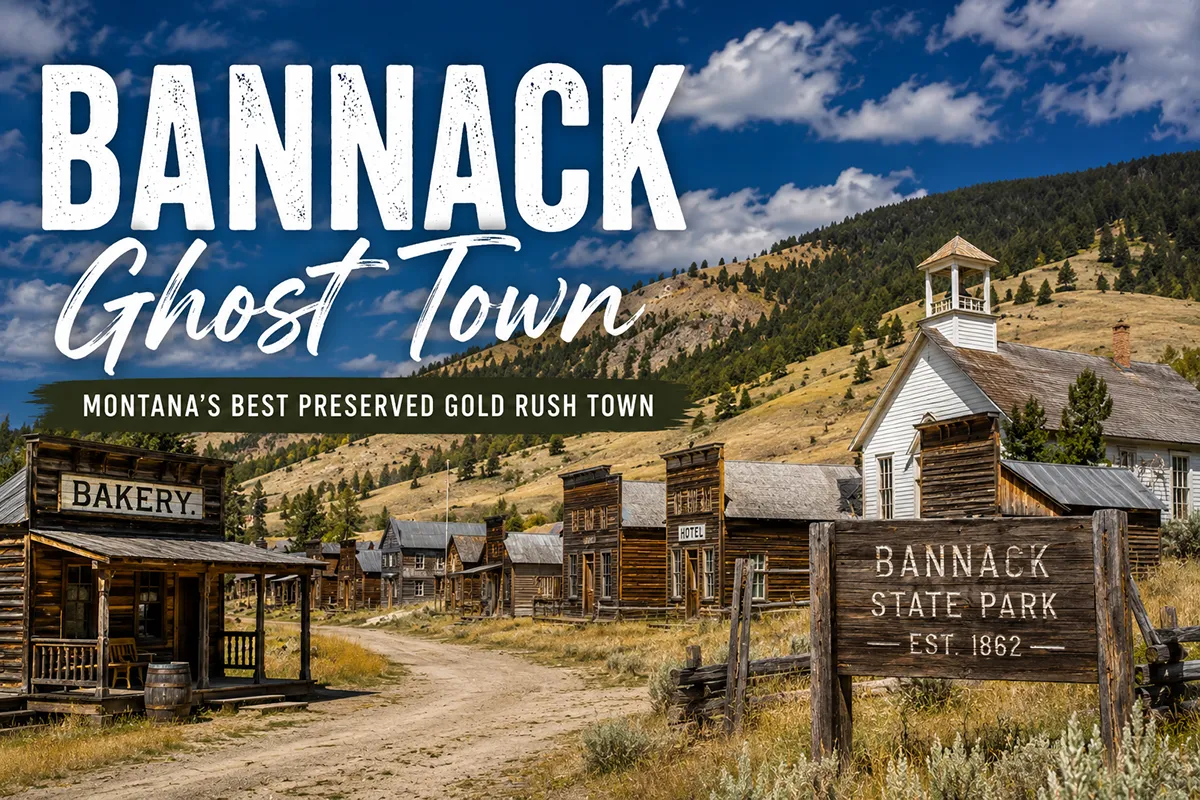
I once stood on the exact spot where Montana’s most notorious sheriff was hanged from his own gallows on a January morning in 1864 — and not another soul was within shouting distance.
Bannack is Montana’s most preserved ghost town and the state’s first territorial capital, with 60+ original structures from the 1862 gold rush still standing. It’s now a state park about 25 miles west of Dillon. You can walk into most of the buildings, the entry fee is around $8 per vehicle [verify], and the best visits are in May, September, or during Bannack Days in late July. Below: everything you need to know about getting there, what to see, and what most visitor guides leave out.
Liked this article?
Add Roaming Montana as a preferred source so you see more of our articles and guides on Google.
Why Bannack Is the Ghost Town You Should Visit First
If you’ve read my Montana ghost towns guide, you already know I’d send most first-time visitors to Bannack before anywhere else. Here’s why.
Other Montana ghost towns are impressive in their own way. Garnet has authenticity and solitude. Virginia City has living history and summer programming. Granite has dramatic ruins.
But Bannack is the only place in the state where you can walk through 60+ original buildings, freely enter most of them, and stand on the actual gallows where a sitting sheriff was hanged for secretly running a road agent gang. The history is dense, the preservation is remarkable, and the access is the easiest of any ghost town in this guide.
I’ve been to Bannack five times across multiple seasons — twice in summer, twice in shoulder season, and once during the Ghost Walks in late October. Each visit told me something different about the place. This guide is built from those visits and as much practical detail as I could pack in. Fees and hours marked [verify] should be confirmed before you go.
A Quick History — The Strike That Started It All
On July 28, 1862, a prospector named John White and a small group of companions struck gold along Grasshopper Creek. The news traveled fast. By the end of that year, hundreds of miners had arrived. By 1863, the population had swelled to over 3,000.
Bannack became the first major gold strike in what would become Montana Territory, and in 1864 it was named the first territorial capital. That distinction lasted barely a year — the capital was moved to Virginia City in 1865 as the bigger Alder Gulch strike pulled the political center east. But Bannack continued as a working mining town for decades. Dredging operations continued into the 1930s. The last residents left in the 1970s.
What’s striking about Bannack’s preservation is that it never had a “second life” as anything other than what it was. It wasn’t rebuilt as a tourist town like Virginia City. It wasn’t commercialized like some Colorado ghost towns. It just slowly emptied out, and Montana Fish, Wildlife & Parks took over management in 1954, maintaining the buildings in a state of what historians call “arrested decay.”
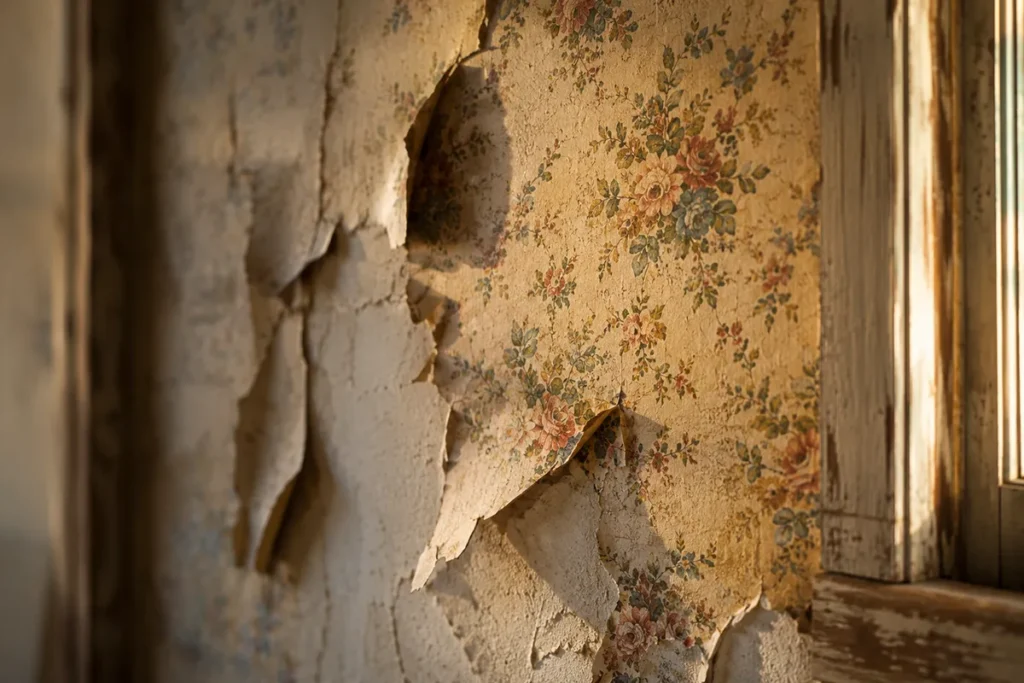
That phrase matters. The buildings aren’t restored. They’re stabilized — kept from falling down further, but not painted, polished, or made to look new. The peeling wallpaper in the Hotel Meade is original. The warped floorboards in the schoolhouse are the same ones kids walked on in the 1880s. This is what makes Bannack feel like a real place instead of a movie set.
For deeper context, my full piece on the Montana gold rush covers the wider story.
The Sheriff Who Was a Bandit — Henry Plummer’s Story
If you visit Bannack and don’t read about Henry Plummer beforehand, you’ll miss half of what makes the place remarkable.
In May 1863, the citizens of Bannack elected Henry Plummer as their sheriff. He was charming, educated, and well-spoken — by some accounts the most respectable man in the camp. He’d had legal troubles before (a manslaughter conviction in California), but he carried himself like a lawman.
What the people of Bannack didn’t know — or at least most of them didn’t know — was that Plummer was allegedly the head of a road agent gang that called themselves “the Innocents.”
Travelers leaving Bannack and Virginia City with gold dust started disappearing. Stagecoaches were robbed with disturbing precision, as if the bandits knew exactly which coaches were carrying valuables and when. Suspicion fell on Plummer’s deputies. Then on Plummer himself.
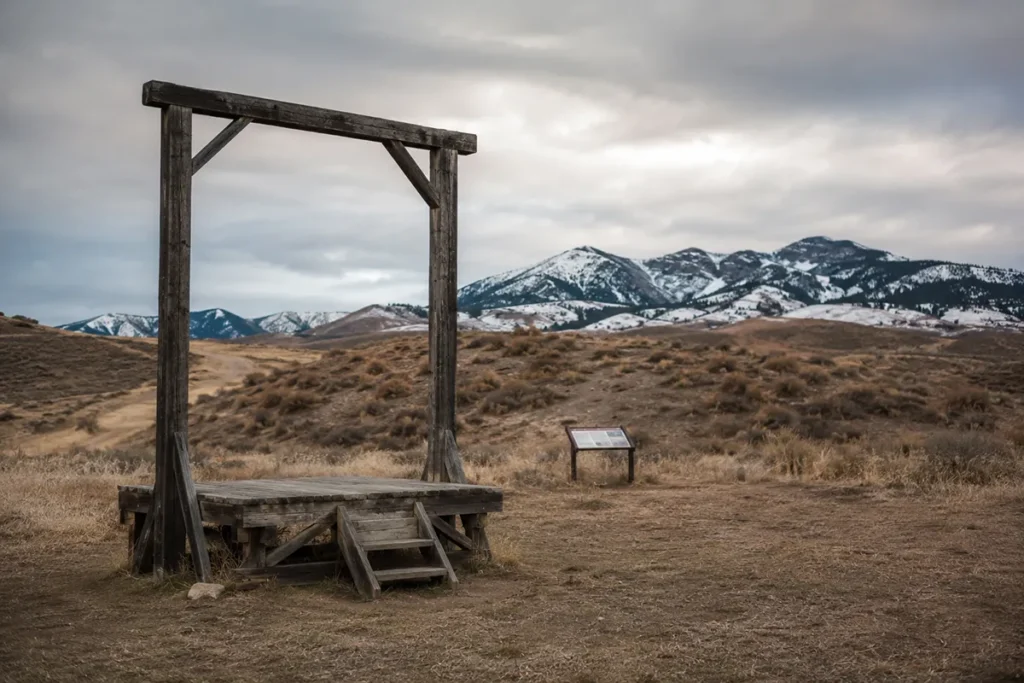
In late 1863, a secret group calling themselves the Montana Vigilantes formed in Virginia City and Bannack. Between December 1863 and February 1864, they hanged 22 men. Plummer was hanged in Bannack on January 10, 1864 — on the same gallows he had built to enforce the law.
I’ve stood on that spot. There’s a marker. It’s quiet. The wind moves through the empty buildings and you can read the sequence of events on the interpretive sign, and what hits you is that this didn’t happen long ago in story form — it happened right here, in this dirt, on a January morning when it was probably 15 below.
Historians still argue about whether Plummer was guilty. Most modern scholarship leans toward yes, but some recent work suggests he may have been the victim of mob justice driven by his rivals.
Either way, the vigilante movement effectively ended highway robbery in southwest Montana within months. You can read more about the broader context in my piece on key historical events in Montana.
Walking Through Bannack Today — The Buildings You Can Actually Enter
This is the part most guides get wrong. They list “60+ original buildings” without telling you which ones to spend time in. Here’s what I’d prioritize on a first visit.
The Hotel Meade (don’t skip the second floor)
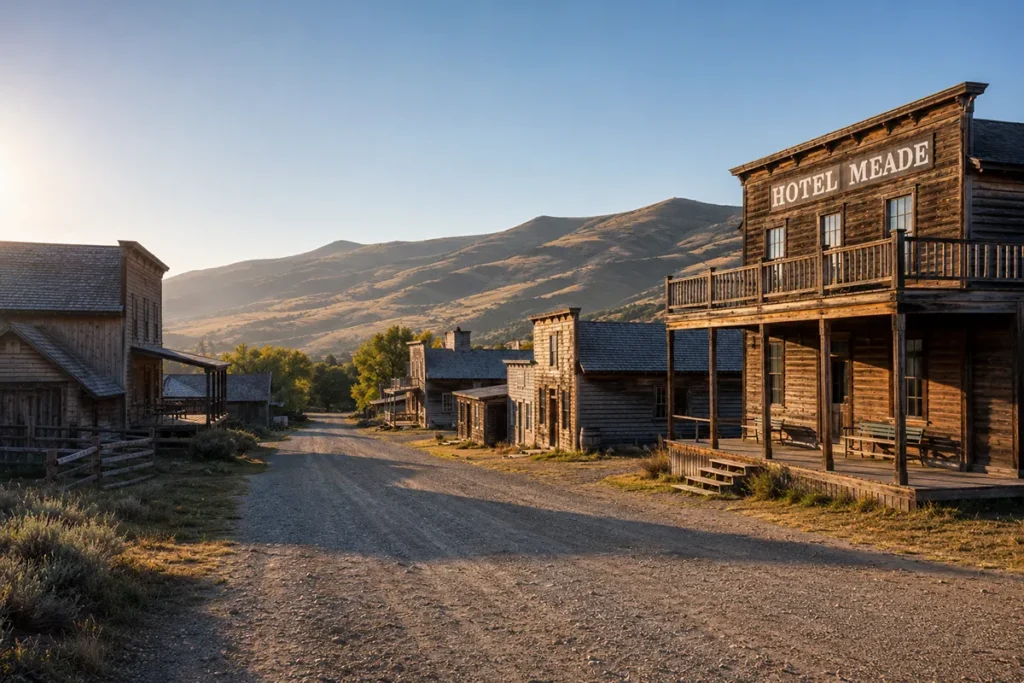
The two-story Hotel Meade is the most prominent building on Main Street and the one most visitors photograph. It started life in 1875 as the Beaverhead County Courthouse. When the county seat moved to Dillon in 1881, the courthouse was converted into a hotel and operated until the 1940s.
You can walk freely through both floors. Go upstairs. Most visitors stay on the ground floor and miss the second-story rooms, where original wallpaper still hangs in long peeling strips.
There’s a particular room in the southeast corner where I sat for ten minutes on my first visit, just looking out the window at the same view someone would have had in 1890. That’s when Bannack got under my skin.
Masonic Lodge & Schoolhouse (the two-in-one building)
This is one of the more unusual structures — a two-story building with the schoolhouse on the ground floor and the Masonic Lodge on the second floor. Both are open. The schoolroom still has its blackboard and a few period desks. The Masonic Lodge is more spartan, but the climb up the narrow staircase feels exactly like what it would have felt like in the 1880s.
The Methodist Church
Small, simple, with an intact bell tower. The interior is plain — pews and a pulpit. It’s the kind of space that benefits from a quiet five minutes alone, which is easy to get if you visit on a weekday morning.
Bachelor’s Row (the small cabins)
A line of small one-room cabins along the south end of the street. Most visitors blow past these and head for the bigger buildings. Don’t. The cabins give you the most honest sense of how single miners actually lived — cramped, dark, cold-prone, and stacked together for warmth and safety. A few still have furniture or stove fragments.
The Gallows
A reconstructed gallows stands near the spot where Henry Plummer was hanged. Interpretive signs explain the sequence of events. This is the most loaded ground in the park, and most visitors walk past it without realizing what they’re looking at. Slow down here.
The Jail
A small log structure with iron bars. You can step inside. It’s tighter than you expect and the temperature drops noticeably when you walk through the door — possibly because of how thick the log walls are.
Buildings to skip if time is short
Some structures are closed to the public or in a state where you can only peer through the windows. That’s fine — you don’t need to see everything. Two hours of focused exploration covers the highlights. Three to four hours lets you slow down.
Bannack Days — The Third Weekend in July
If you’re going to visit Bannack only once and you want the maximum experience, plan for Bannack Days, held the third weekend in July every year.
The town fills with reenactors in period costume, horse-drawn wagons, blacksmithing demonstrations, gold panning contests, and a stagecoach ride. Live music plays in the streets. Frontier-era food gets cooked over open fires.
I went in 2023 [verify current date] and the difference between Bannack-empty and Bannack-Bannack-Days was striking. The town gets crowded — easily 2,000+ visitors over the weekend — but it’s the only time the buildings genuinely feel “alive.”
My honest take: Bannack Days is wonderful for first-time visitors and families. But if you want the contemplative, eerie ghost-town experience that makes Bannack special, come in May or September instead. You can’t have both atmospheres at once.
This is one of the highlights of visiting Montana in July if your trip dates line up.
Ghost Walks & the Paranormal Side
In late October, Bannack hosts evening Ghost Walks by lantern light. Rangers lead small groups through specific buildings while telling documented stories of unexplained events that visitors and staff have reported over the decades.
These aren’t theatrical “scary actors jump out at you” tours — they’re closer to history-meets-folklore, told quietly in places where things have happened.
I went in October 2022 [verify]. The Meade Hotel at night by lantern light is genuinely unsettling, and I’m a skeptic. Whether you believe in paranormal activity or not, the walks are excellent storytelling and the atmosphere is exceptional. They sell out — buy tickets at least a few weeks ahead.
Bannack regularly appears in lists of the most haunted places in Montana. The Meade Hotel and the schoolhouse get the most reports. The story of the little girl who allegedly drowned in the creek and is said to appear in white on the second floor of the Meade is the most frequently retold.
Practical Visitor Info
| Topic | Details |
|---|---|
| Location | 4200 Bannack Rd, Dillon, MT 59725 (~25 miles west of Dillon) |
| Coordinates | 45.1611°N, 112.9956°W |
| Elevation | 5,837 feet |
| Park size | 1,529 acres |
| Entry fee | ~$8/vehicle for non-residents; free for MT residents with state park entry on vehicle registration [verify] |
| Visitor center hours | Daily, Memorial Day through Labor Day. Limited off-season hours [verify] |
| Buildings access | Year-round (buildings remain unlocked during daylight) |
| Bannack Days | Third weekend of July |
| Ghost Walks | Late October (buy tickets in advance) |
| Phone | (406) 834-3413 [verify] |
| Pets | Allowed on leash |
| Accessibility | Limited — boardwalks are uneven, several buildings have steps. Main Street is walkable. |
| Camping | 28-site campground on park grounds; also group picnic site and hike-in/bike-in site |
| Vehicle access | Paved road to the parking area; standard passenger car friendly |
| Cell service | Spotty to none — download offline maps in Dillon |
| Restrooms | Yes, at visitor center and campground |
| Food/water | Bring your own. Closest food/gas is back in Dillon. |
Getting There
Bannack is in Beaverhead County, about 25 miles west of Dillon and roughly 240 miles south of Helena.
From Dillon: Take I-15 south to Exit 59 (Highway 278 toward Jackson). Follow Highway 278 west for about 21 miles, then turn south on Bannack Bench Road and follow signs to the park. The road into Bannack is paved the whole way.
From Bozeman: About 2 hours 45 minutes via I-90 west to Three Forks, then south on Highway 41/55 and I-15 to Dillon. Then west on Highway 278.
From Missoula: About 3 hours 30 minutes via I-90 east, then south through Butte on I-15 to Dillon.
From West Yellowstone: About 2 hours 30 minutes via Highway 287 and I-15.
The drive from Dillon to Bannack is itself part of the experience. The Beaverhead Valley opens up wide, with the Pioneer Mountains to the north and rolling sage country in every other direction. You’ll see pronghorn most of the year and elk in the lower elevations during late fall.
Best Times to Visit — Season by Season
| Season | What to Expect | My Take |
|---|---|---|
| Winter (Dec–Mar) | Park open, buildings accessible, but cold and often snowy. Visitor center hours are limited. | Beautiful and very quiet, but bring serious cold-weather gear. |
| Early Spring (Apr–early May) | Variable weather, mud season possible, snowmelt | Skip unless you live nearby — wet ground and cold |
| Late Spring (mid-May) | Visitor center opens around Memorial Day, weather warming, wildflowers | One of my favorite times — accessible, uncrowded |
| Summer (June–Aug) | Peak season, full programming, hot afternoons | Pack water. Mornings and evenings best. Bannack Days = busiest weekend |
| Early Fall (Sep) | Cool mornings, warm afternoons, golden light, no crowds | My #1 recommendation. September Tuesdays at Bannack are magic. |
| Late Fall (Oct) | Ghost Walks weekend(s), shorter days, colder | Ghost Walks are worth the trip on their own |
| Late Fall (Nov) | Park open but cold and empty | Skip unless you want true solitude and don’t mind freezing |
What I Wish I’d Known Before My First Visit
Things that aren’t in the brochures.
Bring a flashlight. Several buildings have dark interior corners and basements that you can technically explore but that aren’t lit. A small flashlight or phone light dramatically improves what you see in the Meade Hotel’s interior rooms and the schoolhouse storage spaces.
Go straight to the Meade Hotel first. Most tour groups loop around the perimeter and arrive at the Meade last, when they’re tired. I’d reverse that. The Meade is the most layered building and rewards fresh attention.
Talk to the rangers. The visitor center staff are knowledgeable — many are seasonal historians or grad students with deep specialty knowledge. Ask about Plummer. Ask about the Meade. Ask what’s behind specific doors. The ten minutes you spend in conversation will reshape your visit.
Wear actual hiking shoes. I made the mistake of wearing trail runners on my first visit and the uneven boardwalks and dust got into everything. The boardwalks are original in many places, with raised nails and worn edges.
Pack a picnic. There’s nowhere to buy food in the park. There’s no food in the closest neighboring town either. Dillon has restaurants, but you’ll lose 45 minutes round-trip. Bring lunch and eat at the picnic area or by the creek.
Visit the cemetery. Boot Hill is a short walk from the main town site. The graves include a few road agents and some surprisingly recent burials of people who lived in Bannack into the 20th century. It’s quiet, contemplative, and most day-trippers don’t bother.
Allow more time than you think. Most online guides say “2 hours.” That’s enough for a fast pass, but if you actually want to absorb the place, plan for 4 hours minimum. I’ve spent full days here and still found new details.
Photography Tips
Bannack rewards photographers more than any other Montana ghost town. A few specifics I’ve learned:
Best light: Early morning. The sun rises behind the eastern hills and hits the front of the Hotel Meade and Main Street at a low angle for about 90 minutes after sunrise. That window is the most flattering light of the day.
Best vantage point: From the rise above the cemetery, looking back toward Main Street. You get the full sweep of the town with the hills behind it. Most people don’t walk up there.
Interiors: The Meade Hotel’s second floor has excellent natural light through the windows in late afternoon. The peeling wallpaper photographs beautifully against side-lit walls. Use a wide aperture (f/2.8 or wider) if you have it, or bring a tripod.
Gear: A 24-35mm lens covers most of what you need. A 50mm prime is ideal for portraits of weathered wood and architectural details. Don’t bring a heavy zoom — you’ll be on your feet for hours.
What to avoid: Mid-day light (11am-3pm) flattens everything. The buildings look better in side-light than direct overhead sun.
Where to Stay Near Bannack
You have three main options, depending on your travel style.
On-site camping. Bannack State Park has a 28-site campground plus a hike-in/bike-in site. Sites are basic but well-maintained, with fire rings, picnic tables, and pit toilets. Reservations are recommended in summer. The campground sits about a quarter-mile from the town site, so you can walk into “town” at night, which is the closest experience to actually staying in a ghost town that you’ll have in Montana.
Dillon (25 miles east). Several chain hotels and a few independent options, plus restaurants and a brewery. Best practical base. See my things to do in Dillon guide for more.
Jackson Hot Springs (35 miles west). If you want to combine Bannack with a soak, Jackson Hot Springs Lodge has rooms and a hot pool. Less developed than Dillon but more atmospheric.
What Else to Do in the Area
Bannack pairs well with several other southwest Montana stops if you have multiple days:
- Virginia City and Nevada City (90 minutes east) — the obvious pairing, since they share the gold rush story. See my Virginia City ghost town deep-dive.
- Big Hole National Battlefield (1 hour west) — site of the 1877 Nez Perce War battle, sobering and historically essential.
- Lewis & Clark Caverns (1.5 hours northeast) — Montana’s premier limestone cave system, worth half a day.
- Pioneer Mountains Scenic Byway (starts near Wise River) — a beautiful 49-mile drive that takes most of a day to do right.
- Garnet Ghost Town (3 hours northwest) — if you want to do back-to-back ghost towns, see my Garnet Ghost Town guide.
Frequently Asked Questions
Is Bannack the best ghost town in Montana?
For most first-time visitors, yes. It has the most preserved structures (60+), the most accessible terrain, the most documented history, and the most freedom to explore. Garnet is a close second for travelers who prioritize authenticity and solitude over scale.
How much does it cost to visit Bannack?
Around $8 per vehicle for non-Montana residents [verify]. Montana residents pay the state park entry through their vehicle registration. The Bannack Days weekend has separate or additional fees.
Can you go inside the buildings at Bannack?
Yes — most buildings are open to the public during daylight hours. You can walk freely through both floors of the Hotel Meade, the schoolhouse, the Masonic Lodge, the church, the jail, and several cabins. A few structures are closed for preservation reasons.
Is Bannack actually haunted?
That depends on what you believe. Bannack consistently ranks among the most-reported paranormal sites in Montana, with the Meade Hotel and the schoolhouse generating the most stories. The park’s Ghost Walks in October share documented accounts. Believe what you want — the atmosphere is genuinely strong.
How long should I spend at Bannack?
Two hours minimum for a fast pass. Four hours for a proper visit. A full day if you want to slow down, walk to Boot Hill cemetery, picnic by the creek, and explore the back streets.
Is Bannack open year-round?
The grounds and buildings are accessible year-round during daylight hours. The visitor center has limited off-season hours, generally closing or shortening hours from Labor Day through Memorial Day [verify].
Can you camp at Bannack?
Yes. The state park has a 28-site campground with basic amenities (pit toilets, fire rings, picnic tables). Reservations are recommended in summer. There’s also a group picnic area and a hike-in/bike-in site.
Is Bannack family-friendly?
Very much so. Kids tend to love the freedom to explore real old buildings, and the history lends itself to stories. Bannack Days is especially good for families. Watch for uneven flooring and steps in older structures.
What’s the difference between Bannack and Virginia City?
Bannack is a genuine abandoned ghost town preserved by the state. Virginia City is a “living” ghost town where about 200 people still live and which operates as a summer tourist destination with shops, restaurants, and performances. Bannack feels older and emptier; Virginia City feels more like a small frontier town that never quite stopped.
Was Henry Plummer guilty?
Most historians say yes, but the case has been debated for over 150 years. Recent revisionist work has suggested he may have been a victim of vigilante overreach, but the dominant view remains that he was running the road agent gang while serving as sheriff.
Final Thoughts
I keep coming back to Bannack. Most ghost towns are interesting once. Bannack is interesting every time because the more you know about Montana’s gold rush history, the more layers reveal themselves in those buildings. The Plummer story alone could keep a historian busy for a decade.
If you’re planning a trip, my honest recommendation is this: pick a Tuesday or Wednesday in mid-September, drive in early, park, and walk straight to the Hotel Meade. Spend an hour in that building before you do anything else. Then walk down to the gallows site and read the marker. Then go everywhere else.
That’s the order of operations that gave me the most out of Bannack, and it’s the one I’d give to a friend.
If you make the trip, drop me a note in the comments and let me know what hit you hardest. For most visitors, it’s something they didn’t expect — a particular building, a specific story, a moment in a quiet room. That’s the thing about Bannack. It’s still working on people 160 years later.
Pin this guide for your trip, and check out my full Montana ghost towns guide if you want to combine Bannack with other stops.

Bannack Days were so much Fun! I listened to the Cowboy singers and also enjoyed the GunFight!!! Thank you Bannack Staff and Volunteers!