Somewhere between the Huey helicopter kids can climb into and the alien autopsy display sits a genuine, National Register-listed 65-foot logging towboat named Paul Bunyan. Nothing about that sentence makes sense until you’ve actually walked through this place.
- Miracle of America Museum in Polson holds an estimated 300,000+ artifacts spread across roughly 40 buildings on a 4.5-acre site
- Founded in 1981 by Gil and Joanne Mangels, it’s earned the nickname “Smithsonian of the West” for its sheer scale and range
- Highlights include Teddy Roosevelt’s saddle, 70+ antique motorcycles, 500+ firearms, a full pioneer village, and a genuinely eclectic mix of military vehicles and roadside oddities
- Open 9 a.m. to 5 p.m. daily, year-round, with no seasonal closure — a rarity among Montana’s small museums
- This is one of the best museums in Montana that rewards a slow, unhurried wander rather than a checklist-style visit
Liked this article?
Add Roaming Montana as a preferred source so you see more of our articles and guides on Google.
Less a Museum, More One Man’s Life Project
Most museums get built by institutions, boards, and curatorial committees. This one got built by two people, largely one man’s relentless collecting instinct, over more than four decades.
Gil and Joanne Mangels founded Miracle of America Museum in 1981 as a nonprofit, and Gil has remained the driving force behind the collection ever since, personally acquiring the vast majority of what’s on display through purchases and donations.
Unlike a museum staffed with specialists each curating their own department, this reflects one person’s genuinely comprehensive, almost obsessive vision of what “American history” means.
That distinction matters for how you should approach a visit. This isn’t a polished, professionally sequenced exhibit experience. It’s closer to walking through the world’s best-organized barn sale, built by someone who kept absolutely everything and found a way to display it all.
Teddy Roosevelt’s Saddle and the Presidential Corner
Among the museum’s genuinely significant historical artifacts sits Teddy Roosevelt’s actual saddle, part of a broader collection of presidential memorabilia and Old West gear.
It’s a small detail in a museum this vast, easy to miss if you’re moving quickly, but it’s exactly the kind of specific, verifiable artifact that separates this collection from a generic roadside curiosity shop.
Alongside it, general-store displays and national park history exhibits trace a broader arc of how ordinary Americans actually lived and traveled across the decades this museum covers.
Iron Steeds and Leather Britches: The Motorcycle Collection
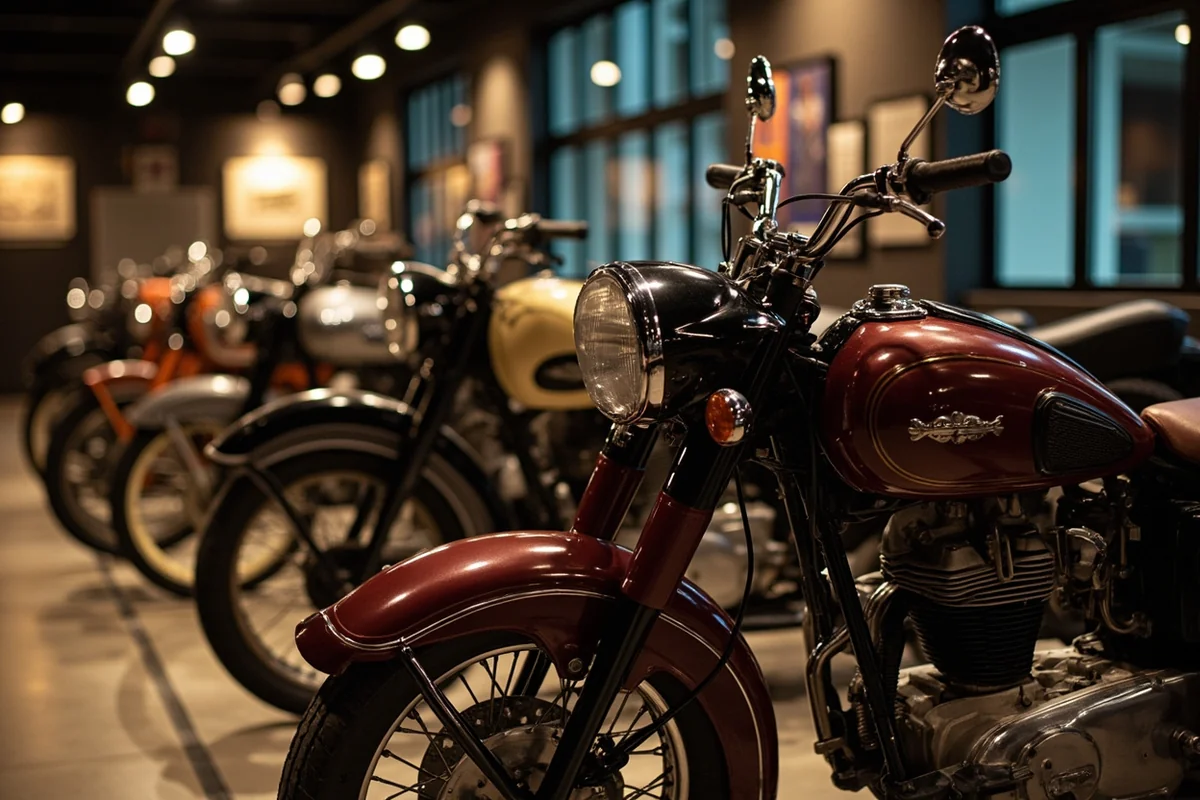
If you’re arriving on two wheels yourself, this exhibit alone might justify the stop. “Iron Steeds & Leather Britches” showcases more than 70 antique motorcycles alongside upward of 3,000 individual pieces of motorcycling memorabilia.
Some of the bikes on display are genuinely rare, drawing dedicated motorcycle enthusiasts off Highway 93 specifically to see them. Beyond motorcycles, the museum’s bicycle collection includes a penny-farthing — the old-fashioned bike with the giant front wheel — alongside classic tandem bikes, children’s bikes, and even military-issue bicycles.
A Full Pioneer Village You Can Walk Through
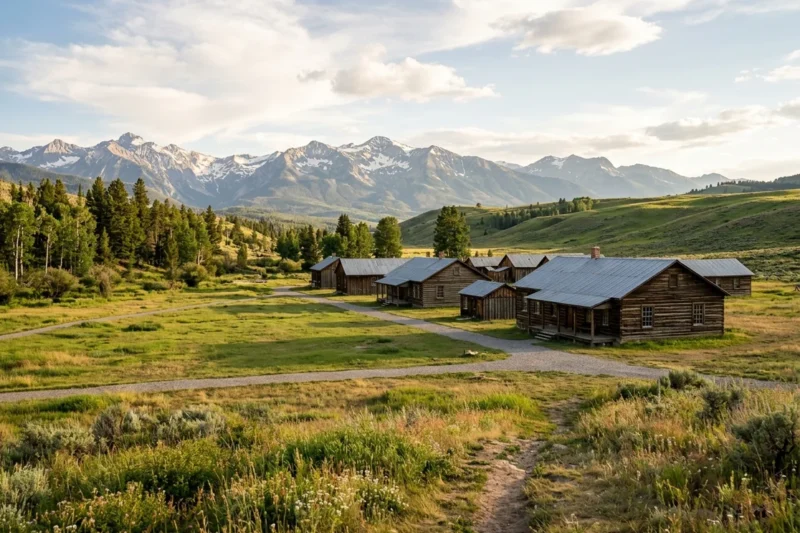
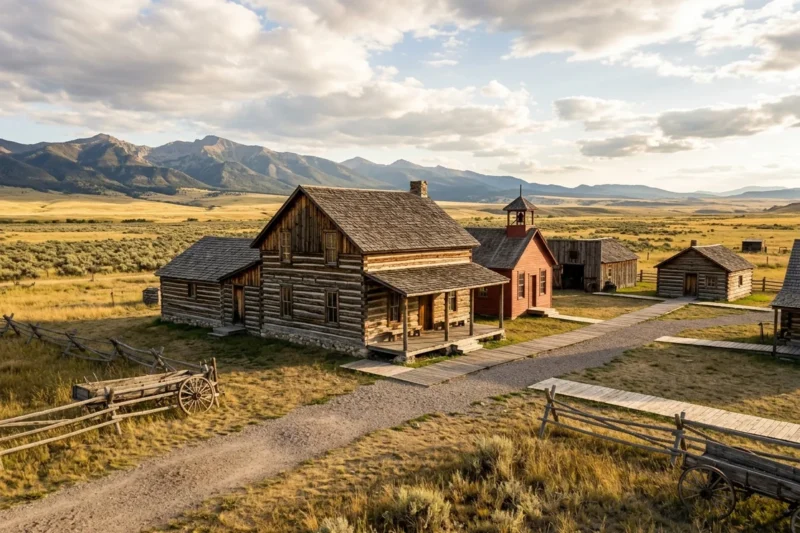
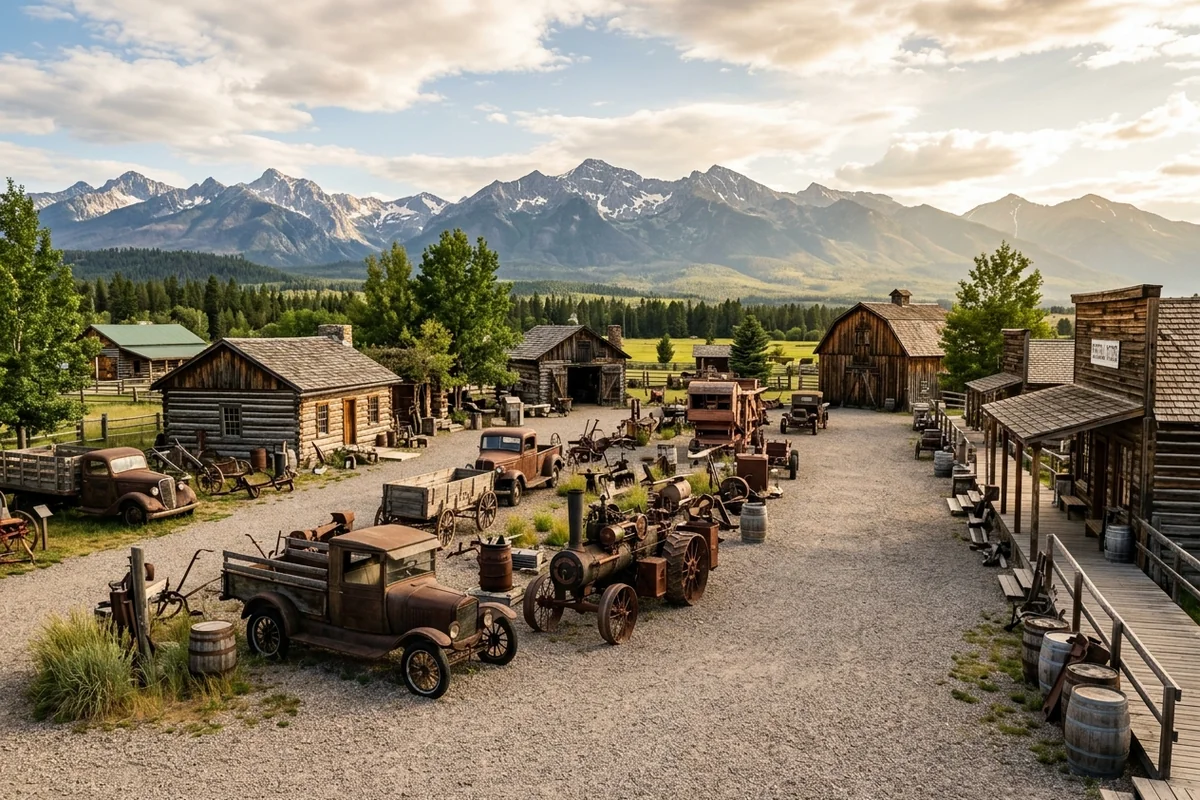
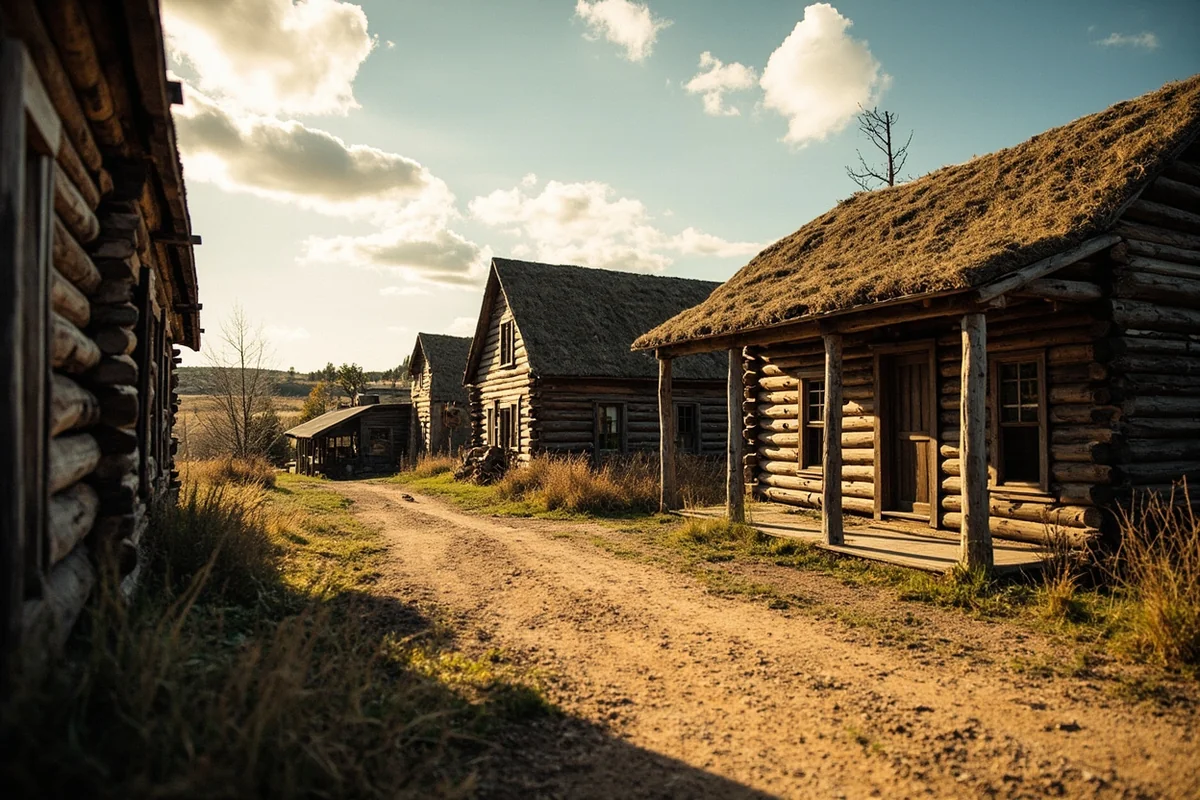
Step outside the main building and you’re in a genuine reconstructed pioneer village, one of the most substantial parts of the entire complex.
An original sod-roofed log cabin anchors the village, surrounded by a general store, a one-room schoolhouse dating to 1912, a firehouse, and dedicated shops for a blacksmith, barber, tailor, carpenter, and saddle maker.
Each building is furnished with period-appropriate artifacts that would have genuinely been used in that trade during the era it represents, rather than generic props.
One Yelp reviewer specifically counted 15 to 20 buildings in this section alone, illustrating an old schoolhouse, a vintage motel, a hair salon, and a pharmacy among other reconstructed settings.
Walking through building after building like this gives you a far more tactile sense of frontier daily life than reading wall placards in a single indoor gallery ever could.
Military History, From Minuteman to Desert Storm
The museum’s military collection is genuinely substantial, tracing American conflicts from the Revolutionary War through Desert Storm.
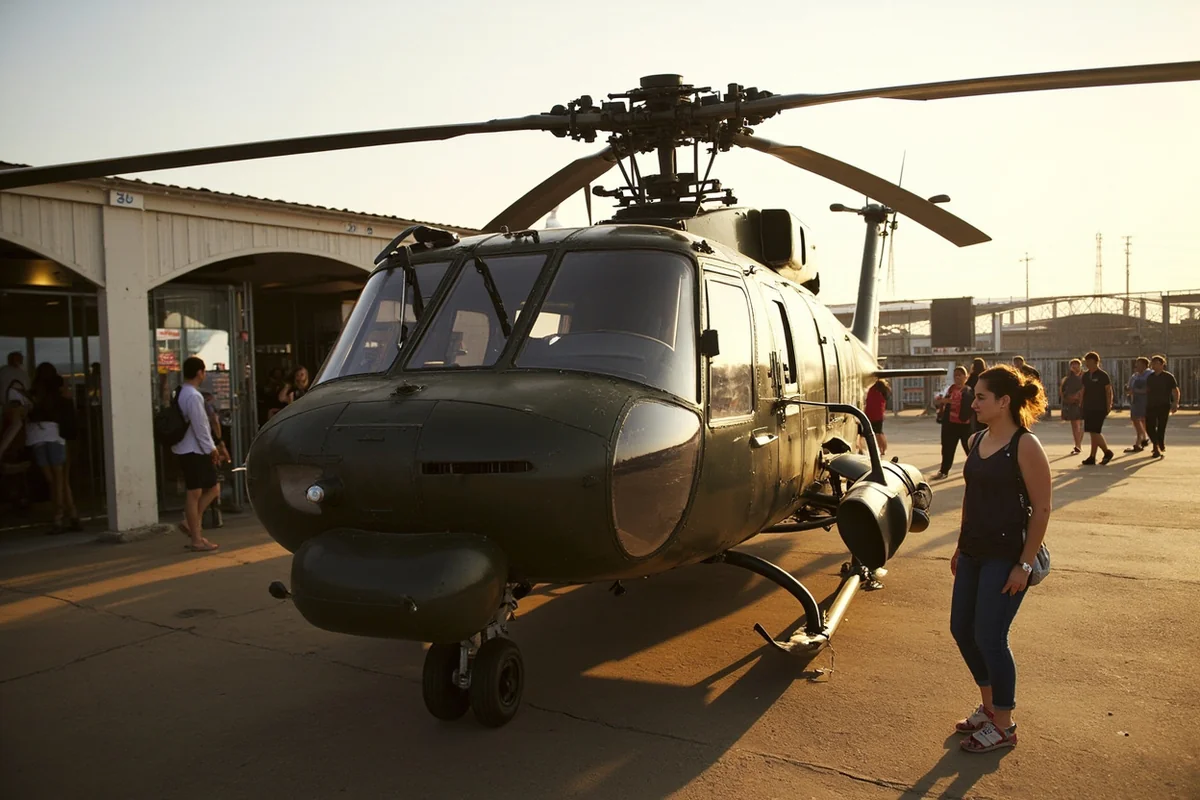
More than 30 military vehicles sit on display, alongside two jet airplanes — including an A-7D Corsair — and four additional aircraft. Kids are specifically permitted to climb into a Vietnam-era Huey helicopter and sit in an army jeep, a level of hands-on access that’s genuinely rare for artifacts this significant.
Firearms enthusiasts will find over 500 pieces spanning an “evolution of firearms” display, covering Revolutionary War weapons, Civil War arms, and outlaw-era guns alongside more modern pieces.
If Montana’s broader approach to firearms interests you beyond this collection, our Montana gun laws guide covers the state’s current legal framework.
The Genuinely Strange Stuff
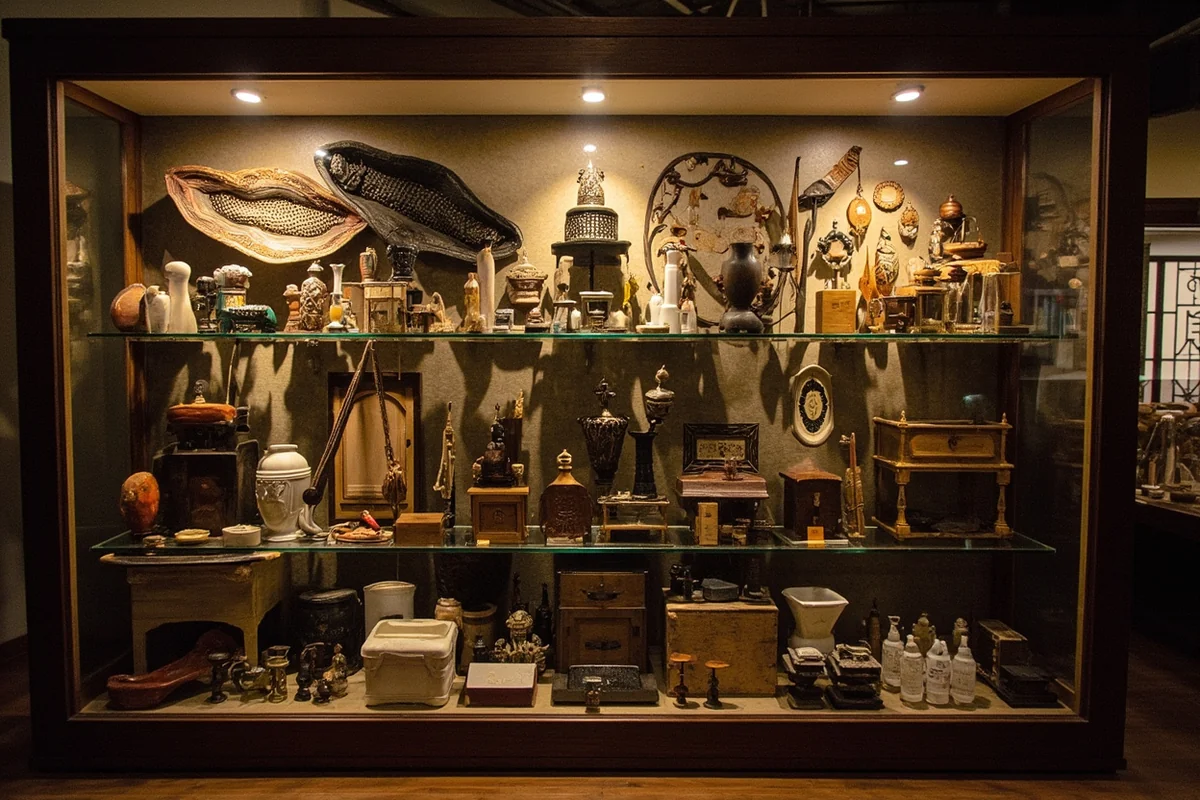
I’d be doing this museum a disservice if I only covered the historically significant pieces, because a huge part of its charm is the sheer, unfiltered strangeness scattered throughout.
You’ll find a Viking ship replica, a preserved two-headed calf, an “alien autopsy” display, and a winged monkey prop reportedly connected to The Wizard of Oz. UFO-themed exhibits let kids climb inside for photos. A vintage Duart permanent wave machine sits near an old soda fountain and a genuine moonshine still.
The Montana State Fiddlers Hall of Fame, somewhat improbably, calls this complex home as well. None of this is curated with any particular narrative logic — it’s simply what one collector’s decades of acquisition produced, displayed with genuine enthusiasm rather than academic restraint.
A Fair Word About the Museum’s Point of View
I try to be direct about this rather than let a review read as uncritical enthusiasm. More than one visitor has noted that the museum reflects a particularly personal, patriotic point of view — unsurprising, given that founder Gil Mangels is a war veteran whose own experience shaped much of the military collection specifically.
That’s not a criticism of the artifacts themselves, which are genuinely extensive and often quite significant.
But it’s worth knowing going in that this is one collector’s specific vision of American history, told with real sincerity and pride, rather than an institutionally curated, multi-perspective museum exhibit. Visitors looking for a more academically balanced or critically framed presentation of American history should adjust their expectations accordingly.
Visiting With Kids
This is genuinely one of the more hands-on history museums you’ll find anywhere in Montana, and that makes it a strong pick for families with kids who get restless in look-but-don’t-touch environments.
Climbing into the Huey helicopter and sitting in the army jeep are the clear highlights for most young visitors, alongside the UFO exhibits kids can climb inside for photos. Player pianos scattered throughout the buildings add another layer of interactive fun beyond just the vehicles.
Given the sheer size of the property, I’d plan a rough route with kids rather than trying to see all 40 buildings in one pass. Picking three or four sections that sound most interesting to your specific kids, then letting curiosity guide the rest of the visit, tends to work better than an exhaustive top-to-bottom tour with younger children.
Frequently Asked Questions
Is the whole museum really outdoors, or is most of it inside?
It’s a genuine mix. The main building holds a large indoor collection, while the pioneer village and much of the vehicle collection sit outdoors across the 4.5-acre courtyard and grounds.
Is this appropriate for all ages, given some of the stranger exhibits?
Generally yes — the “alien autopsy” and similar oddball displays are presented in a lighthearted, roadside-attraction spirit rather than anything genuinely disturbing, and most families report the museum working well across a wide age range.
How does this compare to a more traditional history museum, like Montana Historical Society in Helena?
They’re fundamentally different experiences. The Montana Historical Society offers a polished, professionally curated institutional narrative. Miracle of America Museum offers one collector’s decades of personal acquisition, displayed with genuine passion rather than academic sequencing. Both are worth visiting, but set your expectations accordingly for each.
Is there anywhere to eat on-site?
The museum itself doesn’t run a restaurant, though restroom and shower facilities are available on the grounds — a detail RV travelers in particular tend to appreciate. Plan to eat in Polson before or after your visit.
Are there restrooms and accessibility accommodations?
Yes, the site is described as handicapped accessible with public restrooms available, though given the scale and mix of indoor and outdoor terrain, I’d call ahead if you have specific mobility concerns about navigating the full grounds.
- The sheer scale genuinely surprises most first-time visitors, and most generic listings don’t convey just how much time this place actually takes to see properly.
- The founder’s personal, patriotic curatorial lens rarely gets mentioned, leaving some visitors caught off guard by the museum’s specific point of view.
- The year-round, no-seasonal-closure hours are a genuine rarity among rural Montana museums, and that’s almost never flagged as a distinguishing feature.
- Specific highlight artifacts, like Teddy Roosevelt’s saddle or the National Register-listed towboat, get lost in generic “eclectic collection” descriptions.
- The two annual events, WinterFest and Live History Days, rarely get mentioned, despite being genuinely good reasons to time a visit around.
Personal Tips: What I Wish I Knew
- Grab a museum map before you start wandering. With roughly 40 buildings, it’s genuinely easy to miss entire sections if you don’t have a general sense of the layout going in.
- Budget at least two to three hours, more if you’re a motorcycle, military history, or Americana enthusiast. This isn’t a quick stop by any reasonable measure.
- Bring cash or a card for the gift shop, which stocks postcards, books, patches, and souvenir coins connected to the collection.
- Time your visit around Live History Days in August if you can. Antique vehicle rides and old-time craft demonstrations add a genuinely different, more interactive dimension to the standard self-guided visit.
- Set expectations for kids appropriately. The hands-on elements — climbing into the Huey helicopter, sitting in the army jeep — make this one of the more genuinely kid-friendly history museums in the state, but the sheer volume of material can also overwhelm younger attention spans if you try to see everything in one go.
How This Fits a Flathead Lake Visit
Miracle of America Museum sits about two miles south of Polson, just off Highway 93 on Memory Lane, making it an easy stop whether you’re heading toward or away from Flathead Lake. Travel agencies have reportedly ranked it the second-biggest reason to visit Polson, trailing only the lake itself.
If you’re exploring the broader Mission and Flathead Valley region, pairing this with the Glacier Art Museum in nearby Kalispell gives you a genuinely wide range of Montana museum experiences in one trip — from Gil Mangels’ sprawling personal collection to a more traditionally curated fine-art gallery.
For more offbeat Montana stops in the same spirit, our Montana bucket list post has additional ideas, and our Montana museums guide maps how this stop fits into the state’s broader museum landscape.
Practical Info
| Address | 36094 Memory Lane, Polson, MT 59860 |
| Phone | (406) 883-6804 |
| Hours | Daily, 9 a.m.–5 p.m., year-round |
| Admission | $10 adults, $5 children 2-12, free under 2 [verify current pricing] |
| Time needed | 2–4 hours |
| Good for | Motorcycle and military history enthusiasts, families, road trippers, anyone who loves an eclectic collection |
| Nearby pairing | Flathead Lake, Glacier Art Museum in Kalispell |
Final Thoughts
Miracle of America Museum isn’t trying to be a polished, institutionally balanced history museum, and it’s more interesting precisely because it doesn’t pretend otherwise.
Forty-plus buildings of one man’s genuine, decades-long devotion to collecting American history sit just off Highway 93, and no amount of description quite prepares you for turning a corner and finding a Viking ship next to a Huey helicopter next to a 1912 schoolhouse.
Museums like this one are increasingly rare. Most institutions eventually professionalize, smooth out their rough edges, and adopt the careful, balanced framing modern museum studies expects.
This one has stayed stubbornly personal instead, and that’s exactly why it’s worth the detour even if you’ve already seen Montana’s bigger, better-funded history museums.
Pin this for your Flathead Lake trip planning, and budget more time than you think you’ll need. If you’ve found something in this collection that genuinely surprised you, I’d love to hear about it in the comments.