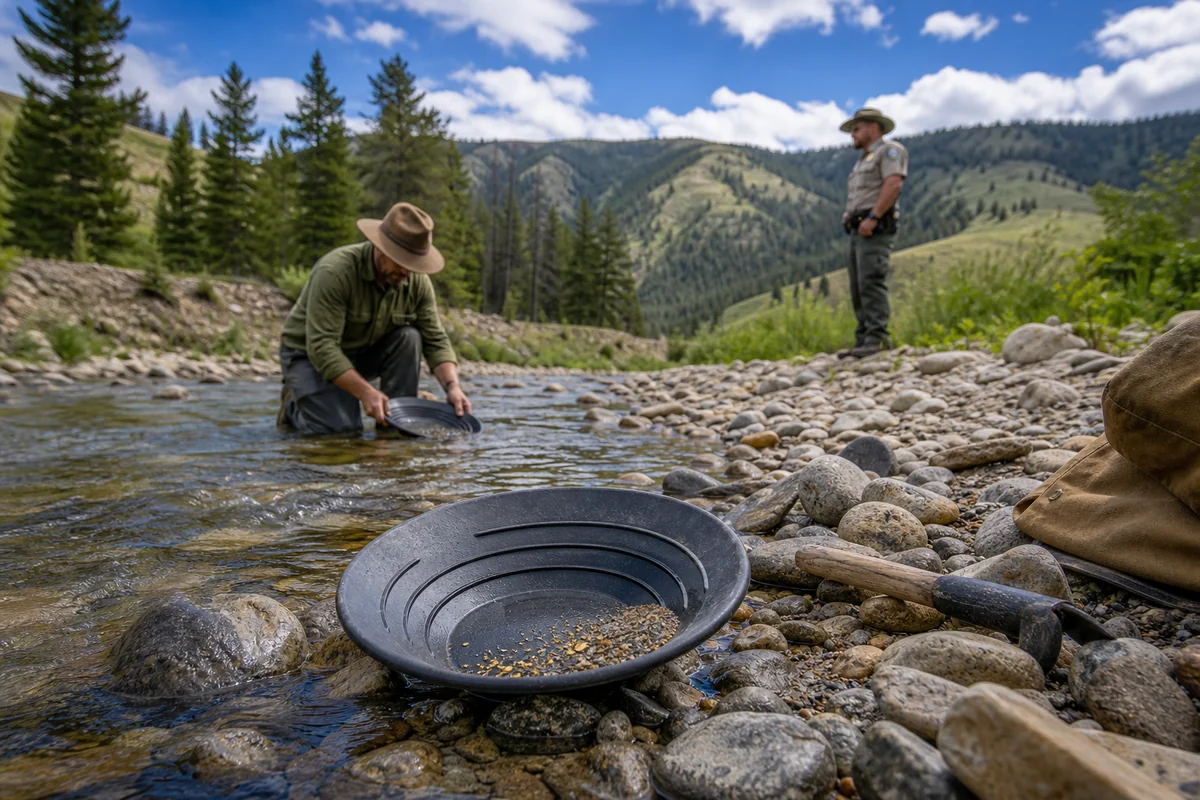
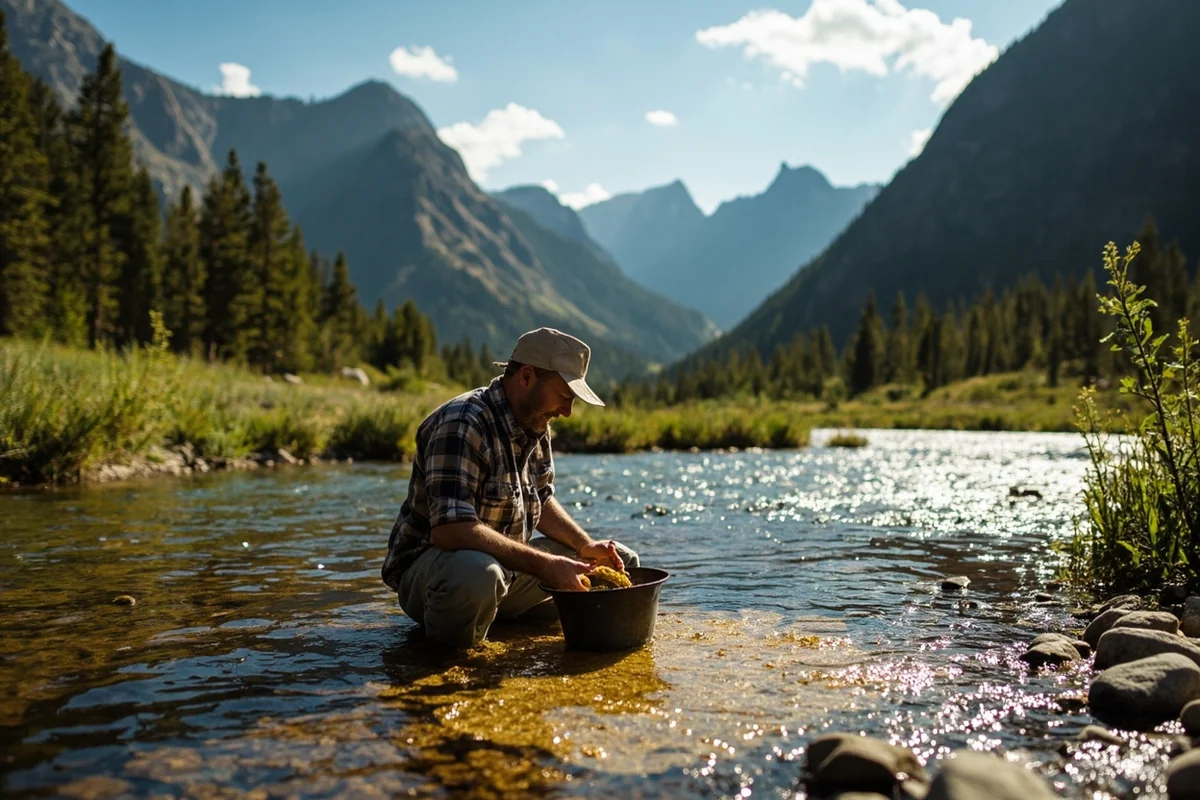
Last summer, I stood knee-deep in Alder Gulch near Virginia City, swirling my pan in the cold mountain water, when a fellow prospector told me about a guy who’d been fined $500 the week before. His crime? Panning in the wrong spot without understanding Montana’s gold panning laws.
That conversation changed my entire approach to recreational prospecting in Big Sky Country. Understanding Montana laws before you start digging isn’t just smart—it’s essential if you want to keep your gold and avoid legal headaches.
- Recreational gold panning is legal on most public lands in Montana, but you need to know which agency manages the land
- Motorized equipment, sluice boxes, and dredges require additional permits in most areas
- Private claims are everywhere—always check claim status before panning
- National Forests generally allow casual prospecting; National Parks absolutely prohibit it
- State lands require a recreational use license, and some areas have seasonal restrictions
- Fines for illegal prospecting can exceed $1,000 plus equipment confiscation
Liked this article?
Add Roaming Montana as a preferred source so you see more of our articles and guides on Google.
Why Roaming Montanald Panning Laws Matter More Than You Think
When I first started prospecting in Montana back in 2019, I assumed public land meant free access. I couldn’t have been more wrong.
Montana’s gold panning regulations involve a complex web of federal, state, and local jurisdictions. One wrong assumption can turn a fun weekend adventure into an expensive legal mess.
During my recent trip to Helena National Forest, I watched a ranger politely but firmly explain to a family from California that their small sluice box required a Plan of Operations permit. They had no idea.
That’s why I’ve put together this comprehensive guide. I’ve spent years learning these regulations the hard way, through conversations with BLM officers, forest rangers, and fellow prospectors who’ve made costly mistakes.
The Legal Landscape: Who Controls What
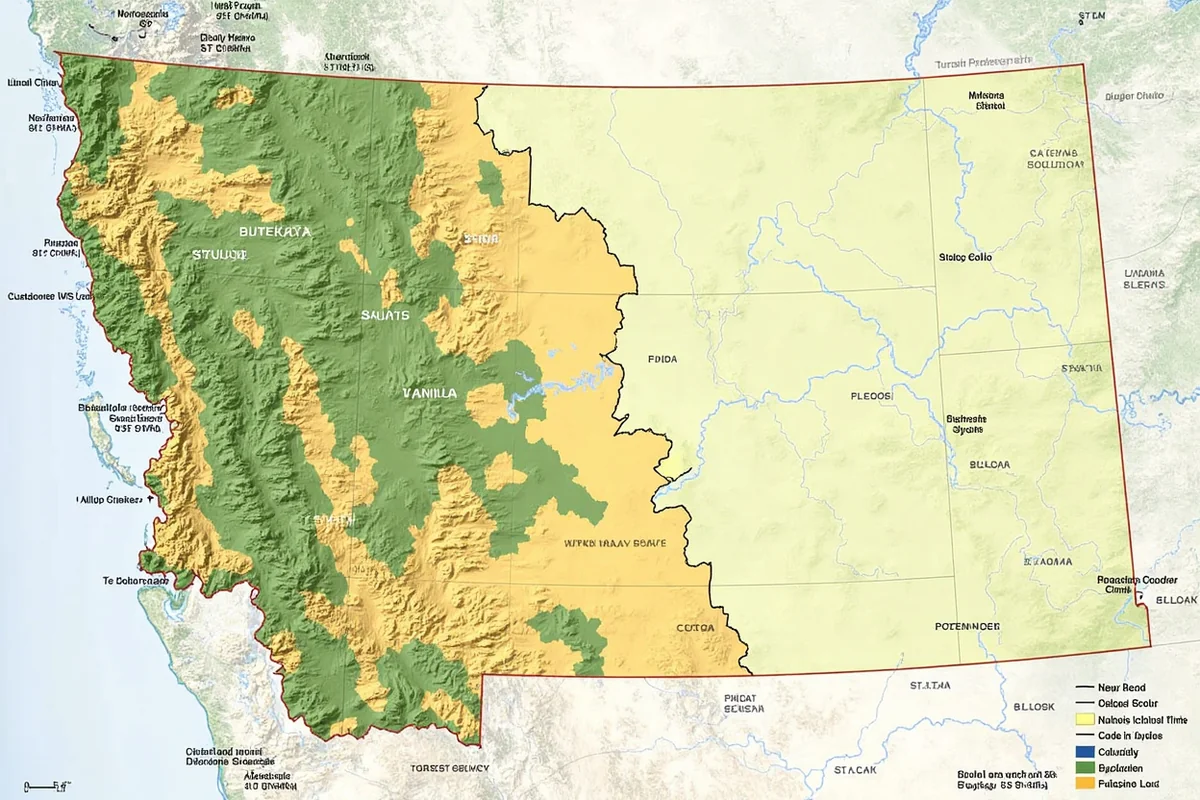
Montana’s 147,000 square miles contain a patchwork of land ownership that directly affects where and how you can pan for gold.
Bureau of Land Management (BLM) Lands
The BLM manages approximately 8 million acres in Montana. These areas generally offer the most accessible recreational gold panning opportunities.
On BLM land, casual prospecting with a gold pan, small hand tools, and non-motorized equipment is typically allowed without permits. The key word here is “casual.”
When I was prospecting near Dillon last fall, a BLM ranger stopped by and explained their definition clearly. You can use a pan, a shovel, a pick, and even a small sluice box in most cases.
However, anything that disturbs more than a minimal amount of material—roughly defined as what one person can move by hand in a day—requires a Notice of Intent or Plan of Operations.
National Forest Lands
Montana’s national forests, including Helena-Lewis and Clark, Lolo, Bitterroot, and Flathead, follow U.S. Forest Service regulations.
I’ve found forest service rangers to be incredibly helpful when I’ve approached them with questions. Last summer at the Helena Ranger District office, a ranger spent 20 minutes explaining exactly where I could and couldn’t prospect.
The Forest Service allows recreational panning with hand tools on most lands. But here’s the catch—many areas fall within active mining claims, wilderness areas, or protected riparian zones.
Before panning in any national forest, I always stop at the local ranger district office. They maintain maps showing claim locations and restricted areas.
State Trust Lands
Montana’s Department of Natural Resources and Conservation (DNRC) manages 5.2 million acres of state trust lands. These areas have their own rules.
On my first attempt to pan on state land near Drummond, I learned you need a State Land Recreational Use License. It costs $20 annually for residents and $35 for non-residents as of 2024.
Even with a license, gold panning regulations on state land can be restrictive. Some parcels prohibit any form of mineral extraction, while others allow hand panning only.
National Parks and Monuments
Here’s an absolute rule I cannot stress enough: gold panning is completely illegal in all national parks and monuments.
This includes Glacier National Park, Little Bighorn Battlefield, and Grant-Kohrs Ranch. No exceptions. No permits available. Just don’t do it.
I’ve seen tourists at Glacier with gold pans in their cars, assuming they can prospect in streams. Rangers take this seriously—violations can result in fines up to $5,000 and even criminal charges.
Understanding Mining Claims in Montana
Mining claims are the single biggest source of confusion—and legal trouble—for recreational prospectors in Montana.
Montana has over 37,000 active mining claims according to BLM records. Many popular creeks and rivers are entirely claimed.
How Claims Work
When someone files a valid mining claim, they gain exclusive rights to extract minerals from that land, even on public property.
Panning on an active claim without permission constitutes trespassing and theft of mineral resources. Both are criminal offenses in Montana.
Last spring, I met a prospector near Philipsburg who’d been doing this for decades. He told me he always carries printouts from the BLM’s LR2000 database showing claim status for every area he visits.
How to Check Claim Status
Before any prospecting trip, I check claims using the BLM’s LR2000 system (available online) or the Montana DEQ’s Mining Information Portal.
The process takes about 15 minutes once you know what you’re doing. Enter the township, range, and section where you want to prospect.
If the area shows active claims, you have two options. First, you can find another location. Second, you can contact the claim holder and ask permission.
I’ve had good luck asking permission. Many claim holders will allow recreational panning if you’re respectful and honest about your intentions. Some even enjoy meeting fellow enthusiasts.
Locatable vs. Non-Locatable Minerals
Gold is a “locatable mineral” under the 1872 Mining Law, meaning anyone can stake a claim on unappropriated federal land.
This legal framework means that even unmarked land might have pending claims. Always verify current status within a week of your trip, as new claims can be filed quickly.
Equipment Restrictions You Need to Know
What you bring to the stream matters just as much as where you go. Different equipment triggers different legal requirements.

Always Legal (On Approved Land)
Basic hand equipment is almost universally permitted for recreational prospecting on appropriate public lands:
- Gold pans (any size)
- Classifiers and screens
- Snuffer bottles and tweezers
- Small hand shovels and trowels
- Crevicing tools
- 5-gallon buckets
I carry all of these on every trip. They’re light, effective, and keep me on the right side of the law.
Requires Additional Permits or Restrictions
The following equipment typically requires permits, notices, or is prohibited entirely in many areas:
| Equipment | Typical Requirement |
|---|---|
| Sluice boxes | Often allowed, but check specific location rules |
| Highbankers | Usually requires Notice of Intent or permit |
| Suction dredges | Heavily restricted; requires 310 permit and often prohibited |
| Motorized equipment | Plan of Operations required on most federal land |
| Power sluices | Same as motorized equipment |
Suction Dredging: The Most Regulated Activity
If you’re planning to use a suction dredge in Montana, prepare for paperwork.
Montana requires a 310 permit for any activity that physically alters a stream bed. This includes suction dredging, regardless of dredge size.
You’ll need to apply through the local Conservation District. The process takes 30-60 days and includes public notice periods.
Even with approval, many streams are entirely closed to dredging due to fish spawning seasons, endangered species habitat, or water quality concerns.
When I explored dredging options near Libby two years ago, I discovered the Kootenai River drainage was completely off-limits during summer months. The permitting office was helpful but honest—recreational dredging opportunities are limited in Montana.
Seasonal and Environmental Restrictions
Gold panning regulations don’t just vary by location—they also change throughout the year.
Fish Spawning Closures
Many productive gold streams in Montana close to all in-stream activity during fish spawning seasons.
Bull trout, a threatened species, spawn in late summer through fall. Cutthroat trout spawn in spring and early summer.
I’ve learned to plan my prospecting trips around these closures. A ranger near Missoula told me that even hand panning during spawning season can result in citations in sensitive areas.
High Water Restrictions
Some areas prohibit prospecting during high water periods, typically May through early July.
This makes sense from both safety and environmental perspectives. Fast-moving spring runoff increases erosion and disturbs streambeds more than normal flows.
I actually prefer prospecting in late summer and early fall anyway. Lower water levels expose more gold-bearing gravels and make panning safer and more productive.
Wilderness Area Rules
Montana contains several designated wilderness areas where prospecting rules differ from regular national forest land.
Generally, pre-existing claims within wilderness areas may continue operations with restrictions. New claims cannot be filed, and casual prospecting is often prohibited or heavily restricted.
The Bob Marshall Wilderness, Absaroka-Beartooth Wilderness, and others fall under these rules. Check with the managing agency before visiting.
What Happens If You Break the Law
I’ve seen enforcement actions happen, and they’re not pleasant for anyone involved.
Typical Violations and Penalties
Prospecting on an active mining claim without permission can result in trespassing charges (up to $500 fine) plus civil liability for any minerals removed.
Operating motorized equipment without permits on federal land can bring fines of $1,000 or more, plus equipment confiscation.
Prospecting in a national park is a federal offense with fines up to $5,000 and potential imprisonment.
Disturbing protected waterways without a 310 permit can result in state charges with fines ranging from $100 to $10,000 depending on the damage.
How Enforcement Works
In my experience, Montana rangers and BLM officers typically educate first and cite second—if you’re honest and cooperative.
Last summer, I watched a ranger approach some novice prospectors using a small dredge in a restricted creek near Butte. He explained the violation, had them pack up, and let them go with a warning.
However, he made clear that repeat offenses or obvious disregard for regulations would result in citations. And claim holders who catch trespassers often pursue civil remedies aggressively.
Best Practices I’ve Learned Over the Years
After countless trips across Montana, here’s what I do before every prospecting adventure.
My Pre-Trip Checklist
- Check BLM LR2000 for active claims in my target area
- Verify land ownership using Montana Cadastral mapping
- Call or visit the local ranger district office
- Check for seasonal closures related to fish spawning
- Confirm current fire restrictions (they can close access roads)
- Print relevant maps and claim documentation
This might seem excessive, but it’s saved me from wasted trips and potential legal trouble multiple times.
On-Site Best Practices
Even when you’re legal, good practices keep you out of trouble and maintain access for future prospectors.
Always fill your holes. I’ve seen areas closed to prospecting specifically because previous visitors left dangerous pits and disturbed stream banks.
Pack out everything you bring in. Leave the site better than you found it if possible.
If someone questions your right to be there—whether a ranger, claim holder, or fellow prospector—be polite and show your documentation. Most disputes stem from misunderstandings.
Legal Gold Panning Locations I Recommend
Based on my personal experience, these areas offer good legal prospecting opportunities as of my most recent visits.
Libby Creek Recreation Gold Panning Area
This is the only officially designated recreational gold panning area in Montana. The Kootenai National Forest maintains it specifically for public prospecting.
When I visited last September, the creek was running low and clear. I found small flakes and a few pickers after working a gravel bar for about three hours.
The area allows hand panning and hand sluicing. No motorized equipment is permitted. There’s no fee, but you’ll need to sign in at the registration box.
Alder Gulch (with caution)
The Virginia City area offers some public prospecting opportunities, but be extremely careful about claim boundaries.
Much of Alder Gulch is claimed or on private land. I stick to areas clearly identified as open for public use and always verify before starting.
Helena National Forest
Various streams in the Helena-Lewis and Clark National Forest allow recreational panning. I’ve had good experiences in the Elkhorn Mountains.
Stop at the Helena Ranger District office for current information on open areas and any seasonal restrictions.
Related Montana Laws Worth Knowing
While you’re planning your prospecting trip, a few other Montana regulations might affect your experience.
If you’re camping in remote areas, understanding Montana gun laws and Montana open carry laws helps you stay compliant while protecting yourself in bear country.
Many prospectors also carry knives for various camp tasks. Montana knife laws are relatively permissive, but it’s worth knowing the basics.
For evening relaxation at camp, be aware of Montana’s open container laws and the legal drinking age in Montana if you’re traveling with younger adults.
Montana also has some weird and unusual laws that might surprise you, though most won’t affect your prospecting trip.
Finally, if you’re relocating to Montana for more prospecting opportunities, Montana’s marital property laws differ from many other states.
Resources for Staying Legal
I’ve compiled the resources I use most frequently for trip planning.
Government Contacts
- BLM Montana State Office: (406) 896-5000
- Montana DNRC: (406) 444-2074
- U.S. Forest Service Northern Region: (406) 329-3511
- Montana DEQ Mining Bureau: (406) 444-4970
Online Tools
- BLM LR2000 (claim records): www.blm.gov/lr2000
- Montana Cadastral (land ownership): svc.mt.gov/msl/mtcadastral
- Montana GIS Portal: geoinfo.msl.mt.gov
Final Thoughts on Prospecting Legally in Montana
Montana remains one of the best states for recreational gold panning, but only if you respect the rules.
The legal framework exists to protect waterways, ensure fair access to mineral resources, and preserve these opportunities for future generations.
During my most recent trip to Libby Creek, I spent a peaceful afternoon working a small section of stream. I found enough color to fill a small vial and left knowing I’d done everything right.
That peace of mind makes the preparation worthwhile. There’s nothing like panning in Big Sky Country without worrying about a ranger tapping your shoulder.
Do your homework, respect the regulations, and Montana’s gold-bearing streams will provide countless hours of legal, rewarding adventure.

Frequently Asked Questions
Is gold panning legal on public land in Montana?
Yes, recreational gold panning is legal on most Bureau of Land Management (BLM) and National Forest lands in Montana, but you’ll need to verify the specific area isn’t already claimed. I always check the BLM’s LR2000 database before heading out to confirm there are no active mining claims on my planned spot. State parks and private property are off-limits without explicit permission.
Do I need a permit for gold panning in Montana?
For simple hand panning on public lands, Montana doesn’t require a permit, making it perfect for casual prospectors and families. However, if you plan to use motorized equipment like suction dredges, you’ll need permits from the Montana DEQ and potentially the Army Corps of Engineers. I recommend starting with just a pan and classifier to stay within recreational guidelines.
What are the best rivers for gold panning in Montana?
The Grasshopper Creek near Bannack, Libby Creek in the Kootenai National Forest, and the Missouri River near Helena are among Montana’s most productive gold panning locations. I’ve had the best luck at Libby Creek, which has a designated public panning area about 150 miles northwest of Missoula. Confederate Gulch and Alder Gulch also have historic gold deposits worth exploring.
What equipment do I need to bring for gold panning in Montana?
At minimum, bring a 14-inch gold pan, a classifier screen, a snuffer bottle, small vials for your finds, and waterproof boots or waders. I also pack a small shovel, knee pads, and a 5-gallon bucket to make the work more comfortable during long sessions. Expect to spend $30-75 for a quality beginner kit at outdoor retailers or Montana mining supply shops.
What is the best time of year to go gold panning in Montana?
Late summer through early fall, specifically August through October, offers the best gold panning conditions when water levels are lower and more gravel bars are exposed. Spring runoff from March through June makes many creeks too dangerous and murky for productive panning. I prefer September when the crowds thin out and the weather is still comfortable in the 50-70°F range.
Can I keep the gold I find while panning in Montana?
Yes, any gold you find through recreational panning on open public lands is yours to keep, though commercial-scale operations require proper mining claims and permits. Most recreational panners find small flakes and flour gold worth a few dollars per outing, though Montana’s history includes significant nugget finds. I keep my finds in small glass vials as souvenirs rather than trying to sell them.
Are there guided gold panning tours available in Montana?
Several outfitters near Virginia City, Helena, and Libby offer guided gold panning experiences ranging from $25-75 per person for 2-3 hour sessions. These tours are ideal for beginners because guides provide equipment, teach proper technique, and take you to proven locations on legally accessible claims. I recommend booking ahead during summer months as popular tours like those near Bannack State Park fill up quickly.
Sources: