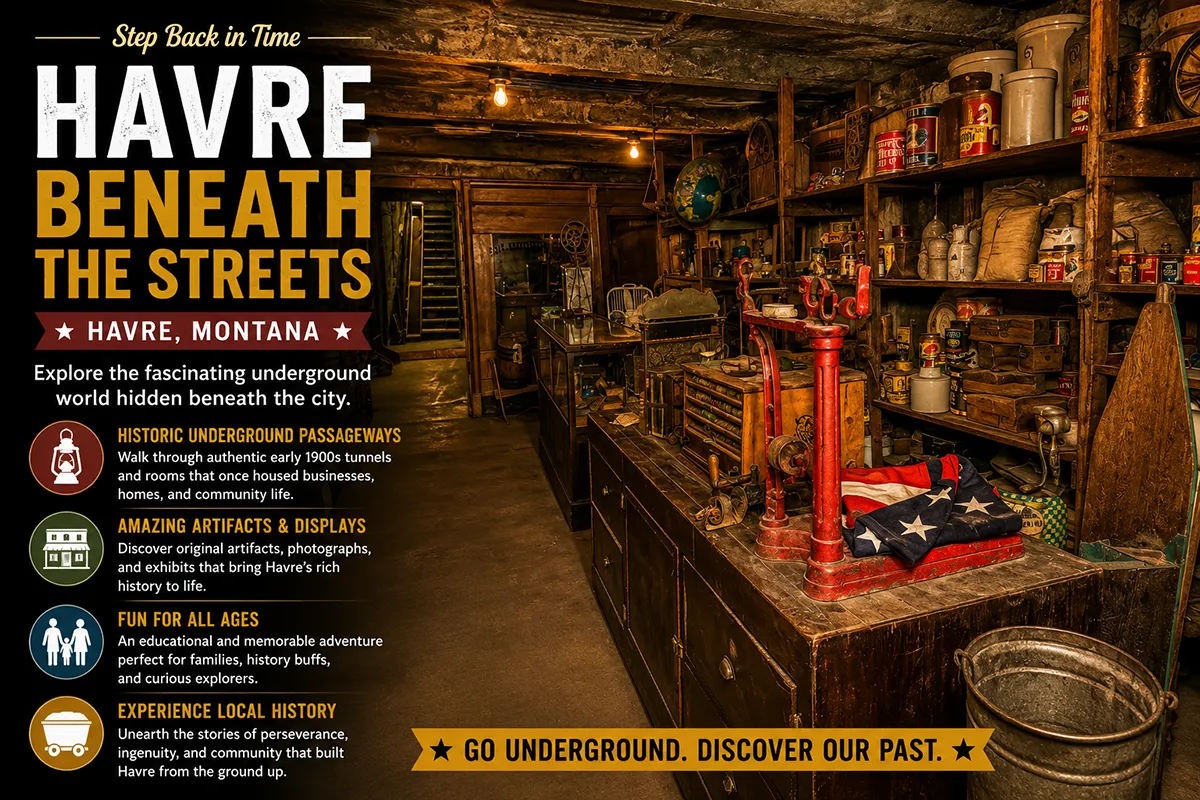
In 1904, fire destroyed most of downtown Havre. Instead of shutting down while the town rebuilt, business owners just moved underground and kept working. Some of those rooms are still down there, and you can walk through them.
- Havre Beneath the Streets is a guided underground tour through recreated businesses that operated beneath the city after a devastating 1904 fire
- You’ll see a saloon, a Chinese laundry, an opium den, a bordello, and more, all furnished with period artifacts
- Tours are guided only, run about an hour, and require reservations
- Admission is $17 for adults, $9 for kids 6-12, free for kids 5 and under
- This is one of the best museums in Montana for anyone who wants Old West history that isn’t sanitized for a family brochure
Liked this article?
Add Roaming Montana as a preferred source so you see more of our articles and guides on Google.
The Fire That Sent a Town Underground
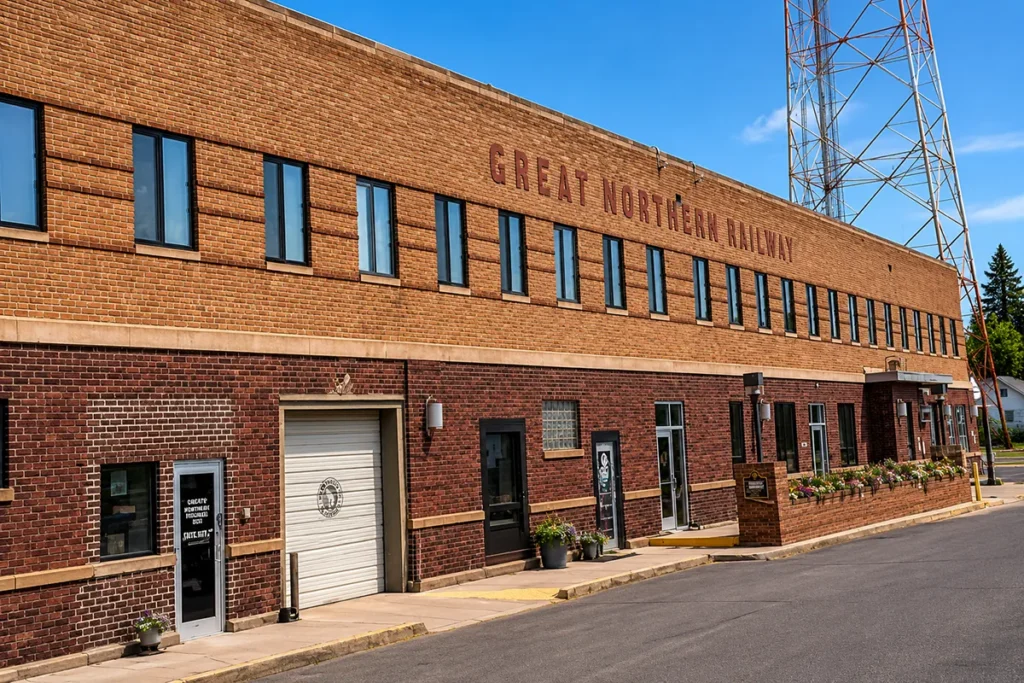
Havre grew up as a Great Northern Railway supply depot, and by the early 1900s it had a genuinely bustling business district. In 1904, a massive fire tore through downtown and destroyed most of it.
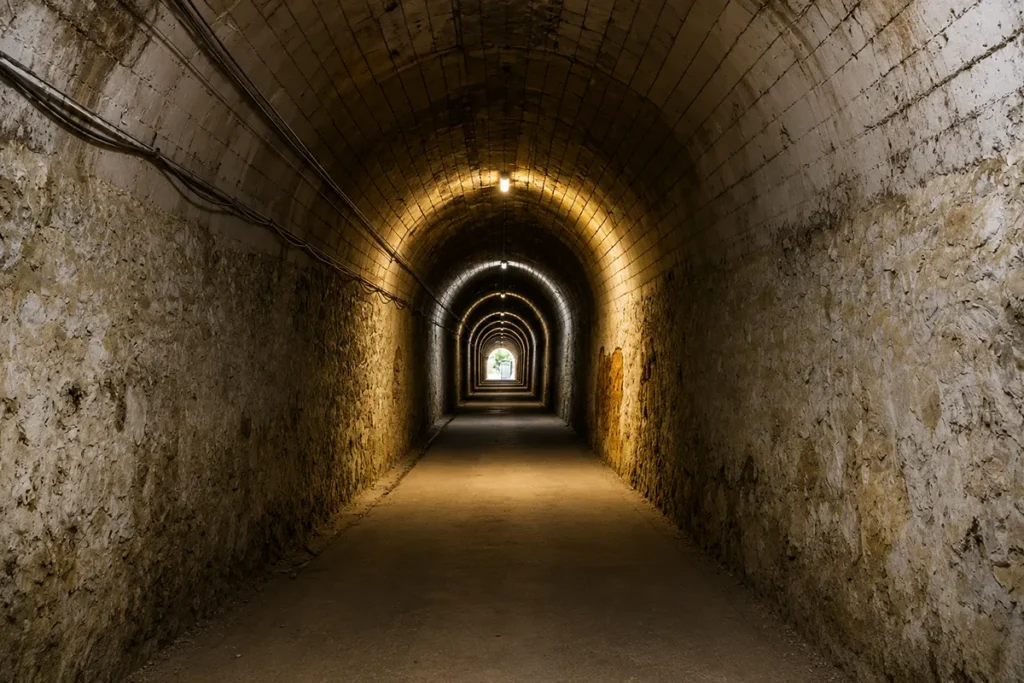
Rebuilding took time. Rather than close down entirely, shop owners, bakers, butchers, gamblers, and working girls moved their businesses into the basements and tunnels beneath the burned buildings and kept going.
The full story is a little more layered than the fire alone. Some of those tunnels didn’t start as emergency retail space — they were originally built as part of a heating system connecting downtown buildings. Others connected to railroad property specifically, giving Asian railroad workers, who faced open discrimination in some Havre establishments above ground, a safer place to live and work.
Fire forced the underground into fuller use as functioning commercial space. That combination of practical infrastructure and social necessity is a more honest version of the story than “quirky underground mall” alone.
What You’ll Actually See on the Tour
This isn’t a self-guided wander. Tours are guided only, and that’s genuinely the right call given how much context each room needs to make sense.
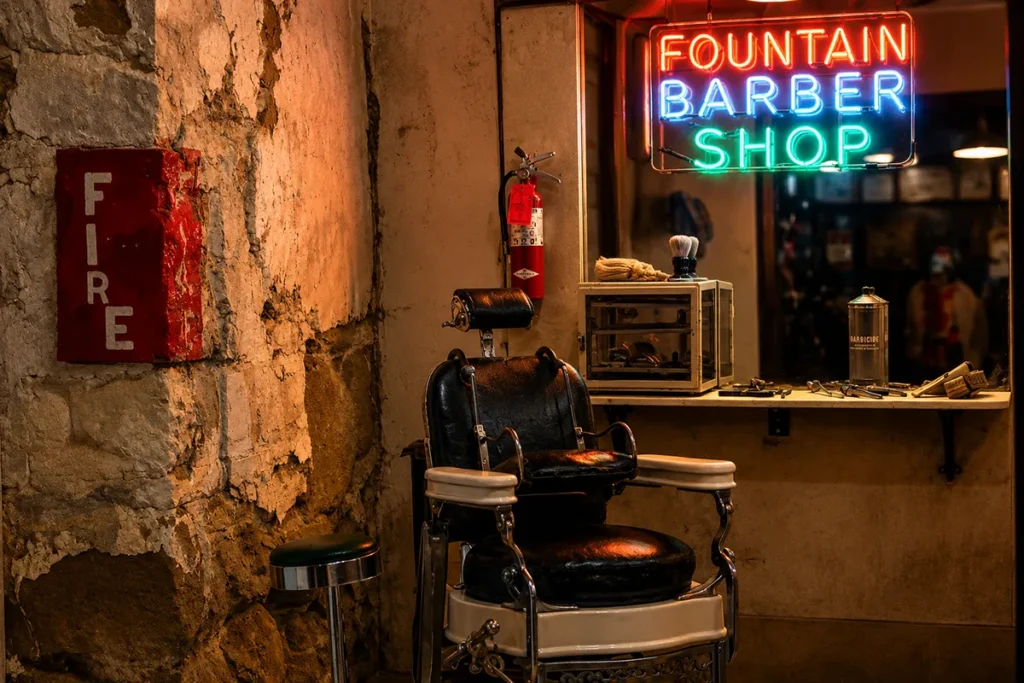
You’ll walk through the Sporting Eagle Saloon, a turn-of-the-century honky tonk where cowboys gambled and drank. The Wah Sing Laundry preserves a piece of Havre’s Chinese immigrant business community. Shorty Young’s Office and the Gourley Brothers Bakery round out the more conventional commercial spaces.
Then things get more unvarnished. The tour includes an opium den — one of three known to have existed in Havre’s early days — and a bordello, both presented honestly rather than glossed over. Some tour versions also include a butcher shop, an ice cream parlor, and a Chinese restaurant space.
Every room is furnished with real period antiques, not generic props. Guides walk you through the specific function of each space and the people who actually worked there.
A Railroad Museum at the End of the Tour
The tour doesn’t end in the bordello. It wraps up in a small railroad museum, a nice tonal shift after the rowdier stops earlier in the walk.
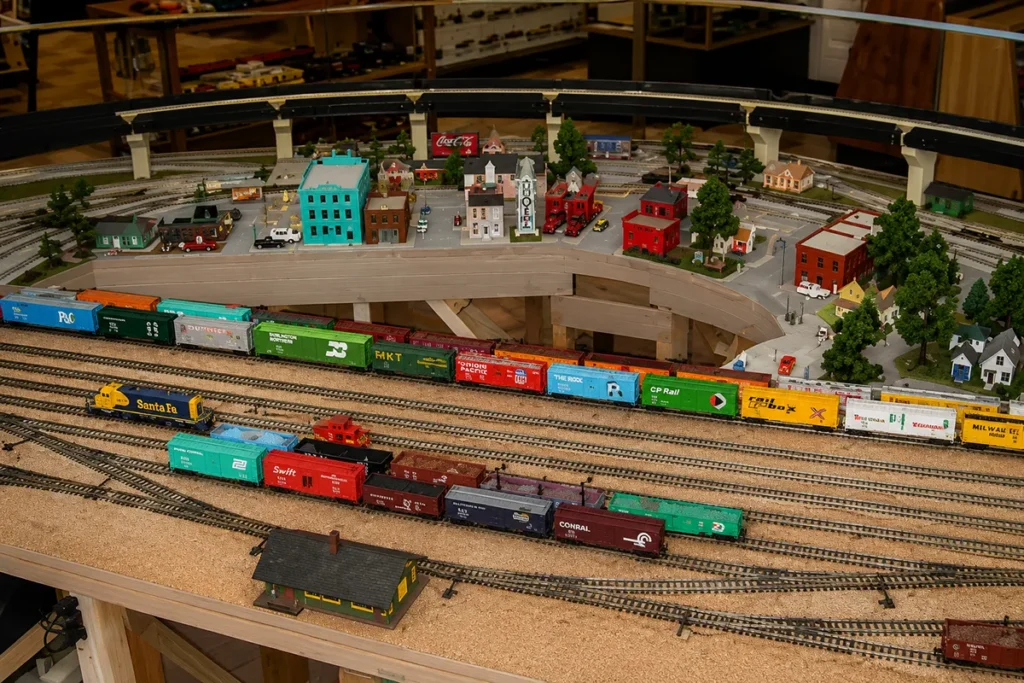
This section holds genuine antiques from the Great Northern Railway, the line that put Havre on the map in the first place and is now part of the modern BNSF Railway system. A large table with operational model trains gives kids something hands-on to enjoy after an hour of mostly looking and listening.
It’s a smart way to close the experience. You leave having gone from frontier vice to the industrial backbone that actually built the town.
How This Project Actually Came Together
Havre Beneath the Streets didn’t exist as a tourist attraction until relatively recently. In the 1990s, Lyle Watson and Frank DeRosa, along with a group of local volunteers, decided to restore the neglected underground and turn it into something visitors could actually experience.
The project took four years. Decades of neglect meant serious cleanup and decluttering before any of it was presentable. It finally opened to the public in 1999.
Today, a nonprofit organization runs the site, and it’s become one of the defining reasons travelers stop in Havre at all rather than just passing through on Highway 2.
Havre’s Bigger Railroad Story
Understanding why Havre exists at all helps explain why this underground history is so rich in the first place.
The Great Northern Railway needed supply depots across Montana’s northern tier, and Havre became one of the most important.
That railroad presence brought a genuinely diverse workforce, including significant numbers of Chinese laborers who did much of the difficult, dangerous construction and maintenance work.
That workforce faced real discrimination in many Montana railroad towns during this era, and Havre was no exception.
The underground tunnels connected to railroad property gave some of these workers a degree of safety and autonomy they didn’t always have above ground — a detail that adds real weight to the Wah Sing Laundry stop on the tour.
Havre’s identity as a railroad town persists today. If you’re interested in the region’s broader frontier and railroad history beyond just the underground tour, the H. Earl Clack Museum nearby covers regional fossils and frontier artifacts in more depth, and it’s also a stop on the Montana Dinosaur Trail.
Visiting With Kids
This tour sits in a slightly different category than most family museum stops, and it’s worth thinking through before you book.
Older kids and teenagers tend to find the underground setting and the rougher frontier history genuinely fascinating — it reads more like an adventure than a typical museum walk-through.
The railroad museum finale with its operational model trains gives younger kids something to look forward to throughout the tour.
That said, the bordello room specifically isn’t aimed at very young children, and a thoughtful guide will handle it tastefully without being explicit.
I’d use your own judgment based on your kids’ ages and maturity rather than assuming this is automatically all-ages content the way a standard local history museum would be.
Quick Questions I Get Asked
Is the underground tour physically demanding?
Not particularly — it’s mostly level walking through tunnels and rooms, though the underground setting means uneven or slightly damp ground in places. It’s not a strenuous visit, but comfortable, closed-toe shoes are a good idea.
Can we take photos during the tour?
Photography is generally welcome throughout, though it’s worth confirming with your specific guide, since policies can shift for certain exhibits or during busy tour groups.
How does this compare to the Seattle Underground Tour?
Several visitors who’ve done both describe Havre’s version as the stronger experience, with more detailed guide commentary and better-preserved individual rooms, despite Havre being the far smaller and less internationally known town.
Is there anywhere to eat or stay nearby?
Havre has a range of local cafés, classic Montana diners, and a handful of motels and inns, making it a reasonable overnight stop if you’re working your way along the Hi-Line rather than trying to do it all in one long driving day.
Most Montana travel content treats this as a quick “quirky roadside stop” without engaging with what actually makes it worth visiting. A few specific gaps:
- The heating-tunnel and railroad-worker-safety origin rarely gets mentioned. Most guides repeat the fire story alone, missing the more complicated layers underneath it.
- The content isn’t flagged clearly for families. The bordello room specifically isn’t ideal for very young children, and that’s worth knowing before you book.
- Guide quality gets treated as consistent, when reviewers note real variation — some guides are exceptional storytellers, others are still building their knowledge. That’s worth setting expectations around.
- The railroad museum ending rarely gets mentioned, even though it’s a genuinely satisfying close to the tour.
Personal Tips: What I Wish I Knew
- Book ahead, especially in peak summer. Reservations are recommended, and tour slots are limited by group size.
- The tour runs about an hour. Plan the rest of your Havre stop around that block of time rather than assuming a quick 20-minute pass-through.
- Consider the bordello content before bringing young kids. It’s handled tastefully, but it’s still worth a heads-up conversation beforehand.
- Winter access is more limited. Tour times shrink and days of operation reduce outside the summer season, so call ahead if you’re visiting off-season.
- Pair this with the H. Earl Clack Museum and Bear Paw Battlefield if you’re spending a full day in the Havre area — together they cover frontier commerce, natural history, and Nez Perce War history within a short drive of each other.
How This Fits a Hi-Line Road Trip
Havre sits along U.S. Highway 2, Montana’s Hi-Line route across the state’s northern tier. It’s a natural stopping point whether you’re heading east from Glacier National Park or working your way west toward North Dakota.
This tour is exactly the kind of stop that makes a Hi-Line road trip memorable rather than just a long, flat drive between bigger destinations.
Bear Paw Battlefield, roughly 40 miles south of Havre, marks the site of the final battle and surrender of Chief Joseph and the Nez Perce in 1877 — a genuinely significant piece of Northern Plains history worth pairing with your underground tour if you have the extra hour to drive out.
If deeper Indigenous history interests you beyond that single battlefield, our Museum of the Plains Indian guide covers a fuller collection near Glacier’s eastern entrance.
Our Montana bucket list post covers other offbeat stops in the same spirit as this one, and our 21 Montana attractions guide rounds out more ideas if you’re building a longer northern Montana route.
Havre also sits within reach of the Montana Dinosaur Trail’s H. Earl Clack Museum stop, if you’re chasing that trail across the state as part of a longer itinerary.
The trail’s western stops, covered in our guides to Two Medicine Dinosaur Center and Old Trail Museum, sit a few hours southwest and make a natural extension of the same road trip.
If you’re mapping out museums across the whole state, our Montana museums guide shows how this stop fits into the bigger picture.
Practical Info
| Ticket office | 3rd Ave, south of Norman’s Ranch Wear, Havre, MT 59501 |
| Phone | (406) 265-8888 |
| Summer hours | Office 9 a.m.–5 p.m. daily; tours roughly 9:30 a.m.–3:30 p.m. |
| Winter hours | Office 10 a.m.–4 p.m., Monday–Saturday; tours roughly 10:30 a.m.–2:30 p.m. [verify current seasonal hours] |
| Admission | $17 adults, $9 kids 6-12, free 5 and under, $13/person for groups of 15+ [verify current pricing] |
| Time needed | About 1 hour |
| Good for | History enthusiasts, Hi-Line road trippers, adults and older kids |
| Nearby pairing | H. Earl Clack Museum, Bear Paw Battlefield |
Final Thoughts
Havre Beneath the Streets works because it doesn’t clean up its own history. A fire, a discriminatory above-ground business climate, and a town’s refusal to just shut down while it rebuilt all combine into an hour-long tour that’s genuinely unlike anything else in Montana.
Most Hi-Line road trips treat Havre as a gas-and-go stop between bigger destinations. An hour underground is enough to change that impression entirely, and it’s the kind of story that sticks with you longer than most scenic overlooks do.
Pin this for your Hi-Line trip planning. If you’ve been down into the tunnels, I’d love to hear which room surprised you most in the comments.