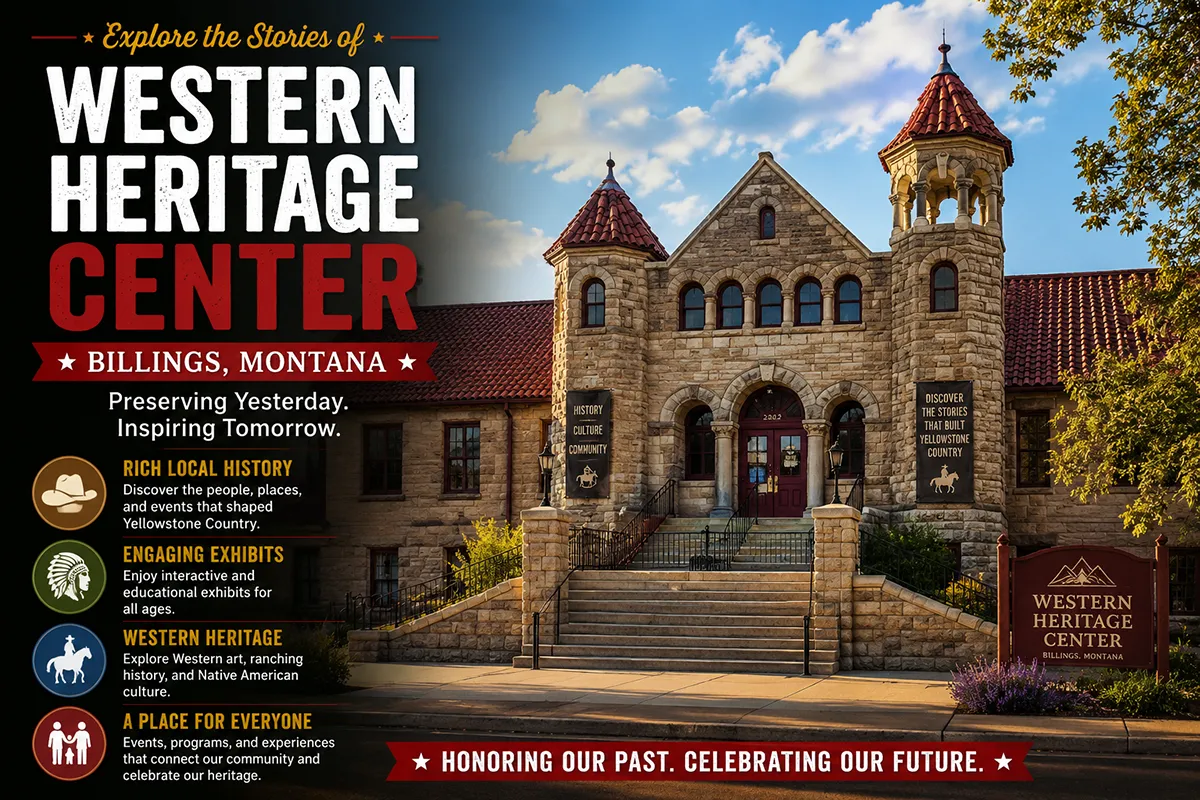
A group of Billings citizens once stopped a wrecking crew to save this building. Fifty-plus years later, it’s one of only six museums in Montana accredited by the American Alliance of Museums.
- Western Heritage Center sits inside the former Parmly Billings Memorial Library, a Richardsonian Romanesque landmark built in 1901
- It’s one of six Montana museums accredited by the American Alliance of Museums, and Montana’s first Smithsonian-affiliated museum
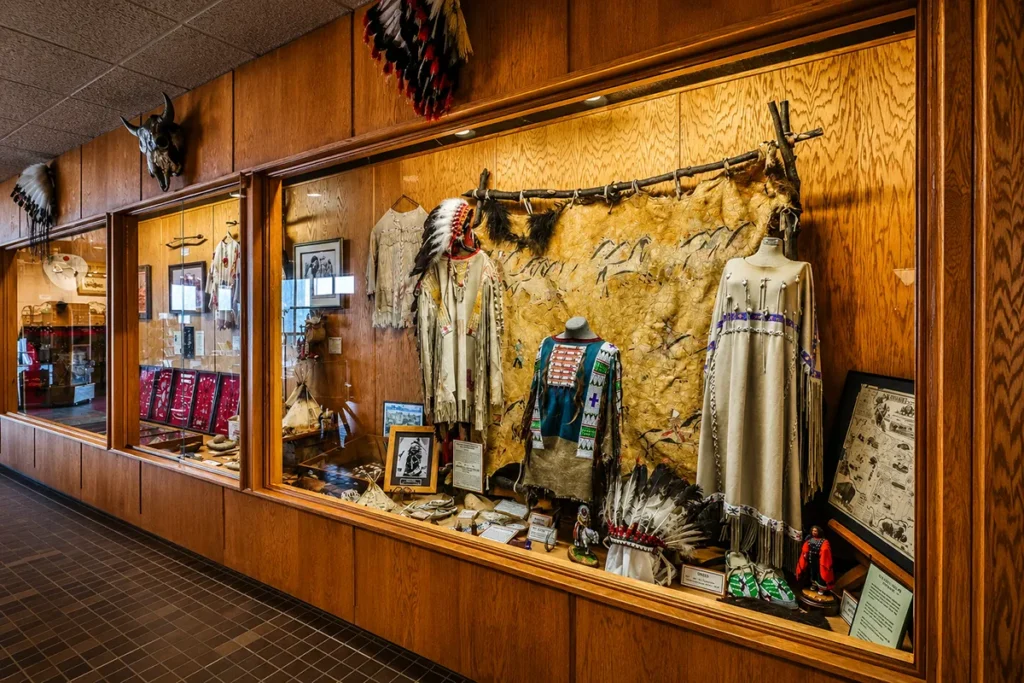
- The collection holds more than 40,000 artifacts and photographs, with a particular focus on Crow and Northern Cheyenne tribal history
- Admission is just $5, and the museum runs a genuinely fun walking tour called “Bars, Brothels and Bok Choy”
- This is one of the best museums in Montana for anyone who wants deep regional history without a full day’s time commitment
Liked this article?
Add Roaming Montana as a preferred source so you see more of our articles and guides on Google.
A Building Almost Lost to a Wrecking Ball
The Western Heritage Center didn’t start as a museum. It started as a rescue mission.
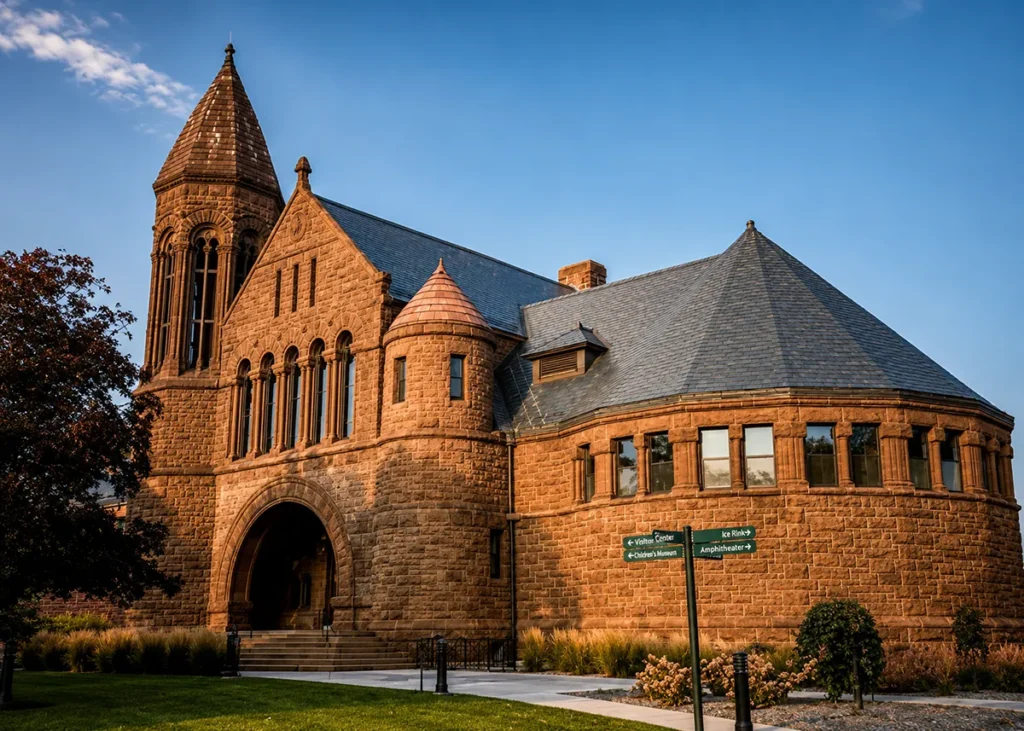
In 1971, a group of Billings citizens organized to prevent the historic Parmly Billings Memorial Library from being torn down. The building, completed in 1901, is a genuine architectural landmark — a Richardsonian Romanesque sandstone structure with twin towers, listed today on the National Register of Historic Places.
Rather than let the building disappear, that group of citizens turned it into a community center to display a private collection of Western artifacts. That modest beginning has grown into a serious regional institution over the past five decades.
Serious Institutional Credentials for a Small Museum
Don’t let the modest size fool you. This museum has built genuine national-level credibility over the years.
It’s one of just six museums in Montana accredited by the American Alliance of Museums. In 2002, it became the first Smithsonian Institution-affiliated museum anywhere in the Northern Plains.
The museum received the Montana Governor’s Humanities Award in 2001 — only the second organization ever to receive an honor usually reserved for individual contributions.
Between 2004 and 2009, it received federal funding from the U.S. Department of the Interior specifically for the American Indian Tribal Histories Project, an effort dedicated to preserving Crow and Northern Cheyenne tribal histories.
That grant-funded project shows up directly in the museum’s ongoing focus today. The permanent collection puts real, sustained attention on Crow and Northern Cheyenne history, not just as a single gallery topic but as a throughline across multiple exhibits.
What’s Actually Inside
The museum holds more than 40,000 historic artifacts and photographs, including over 6,000 images documenting life along the Yellowstone River. Add in more than 400 recorded oral histories, and you get a collection built as much from firsthand voices as from physical objects.
Eight permanent exhibits anchor the collection, supplemented by roughly a dozen traveling exhibits that rotate through on loan from and to other institutions. You’ll find Native American beadwork, historic firearms, saddles, clothing and textiles, and vintage advertising memorabilia throughout the galleries.
Western-themed art by James Kenneth Ralston is a highlight worth seeking out specifically. Recent rotating exhibits have covered everything from Montana’s women ranchers to a genuinely compelling show called “Sinners and Saints,” profiling notable and often overlooked women from the state’s history.
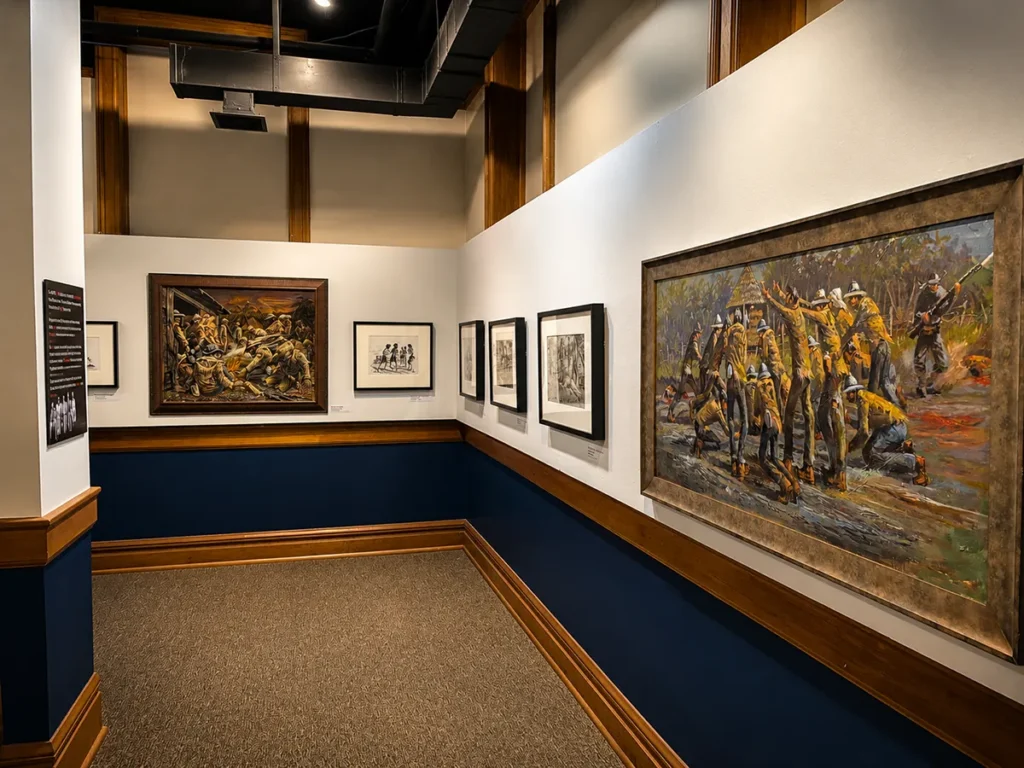
Bars, Brothels, and Bok Choy
This is my favorite thing about the Western Heritage Center, and it’s the kind of program most static travel guides never mention.
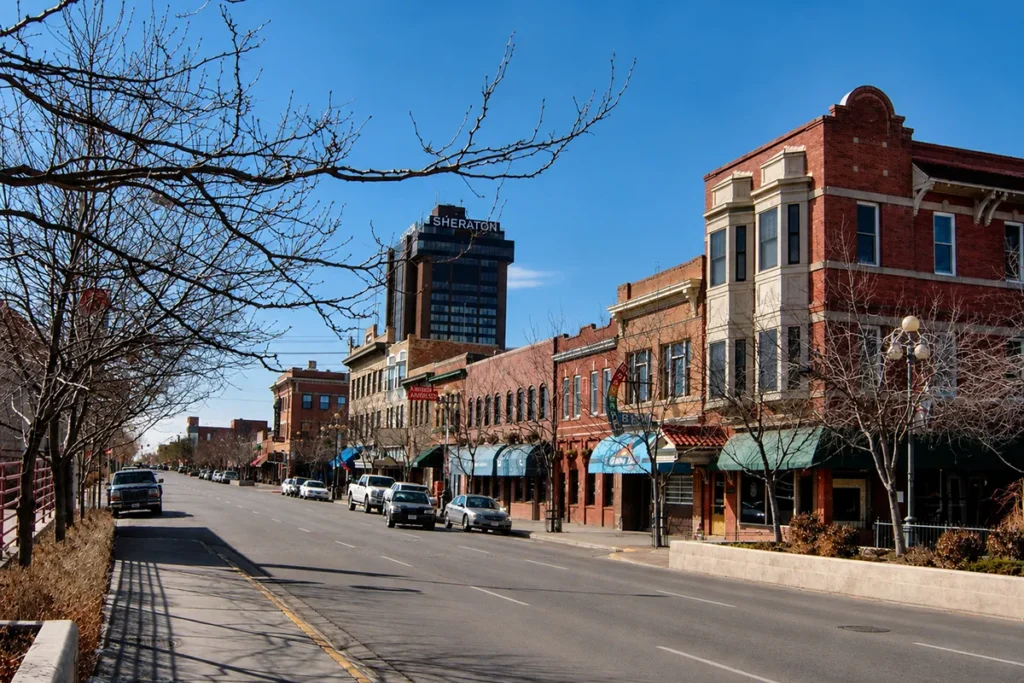
The museum runs a walking tour series called “Hoof It with a Historian.” One specific tour, titled “Bars, Brothels and Bok Choy,” walks visitors through downtown Billings’ rowdier early history — saloons, red-light districts, and the immigrant communities that shaped the city’s early commercial life.
Most of the original buildings covered on the tour no longer exist. That doesn’t make the tour less interesting. Guides are genuinely knowledgeable, and the stories fill in a version of Billings history that a standard gallery visit wouldn’t cover on its own.
The museum also runs a monthly “High Noon” lecture and video series, giving repeat visitors a real reason to check back throughout the year rather than treating this as a one-and-done stop.
The Yellowstone River Valley Story
It helps to understand why this particular stretch of Montana has so much history worth preserving.
The Yellowstone River Valley has been home to Crow and Northern Cheyenne communities for generations, long before Billings existed as a city. European and American settlement arrived comparatively recently, bringing railroads, ranching, and rapid town growth in the late 1800s.
That collision of long-standing Native presence and fast-moving American settlement is exactly what the Western Heritage Center’s collection tries to capture.
It’s not one single narrative. It’s several overlapping ones, sometimes in tension, told through photographs, oral histories, and everyday objects rather than a single simplified timeline.
The museum’s federally funded work on Crow and Northern Cheyenne tribal histories between 2004 and 2009 reflects a deliberate choice to treat those communities as central to the region’s story, not a side note to the settler narrative. That’s a meaningfully different approach than a lot of regional history museums take, even today.
Visiting With Kids
This museum skews a bit more toward adult and older-kid visitors than some of the state’s larger, more interactive institutions. A few Tripadvisor reviewers have specifically noted that younger children may find the pace slower than a hands-on science museum.
That said, the rotating exhibits keep things fresh, and a knowledgeable staff member can usually tailor a visit toward whatever your kids find most interesting.
If your children are curious about Montana’s Native history or the state’s ranching past specifically, this museum will hold their attention better than a general “kid-friendly” museum built around interactive gadgets alone.
I’d pair a Western Heritage Center stop with something more physically active nearby, like a walk through downtown Billings or a visit to a park, to balance out the museum’s more contemplative pace.
Quick Questions I Get Asked
Is this the same as Yellowstone Art Museum?
No — they’re separate institutions a short distance apart in downtown Billings. Western Heritage Center focuses on regional history and Native American heritage, while Yellowstone Art Museum focuses on contemporary regional art. Many visitors do both in the same day.
Is the museum wheelchair accessible?
The main galleries are generally accessible, though as with any converted historic building, it’s worth calling ahead if accessibility is a specific concern.
How does this compare to Range Riders Museum in Miles City?
Both cover Yellowstone River Valley and ranching-era history, but Range Riders Museum is a sprawling 13-building complex built directly by working cowboys, while Western Heritage Center is a single-building, gallery-style museum with a stronger academic and archival focus. If you can only visit one, let your route decide — both are worth the stop.
Is parking difficult in downtown Billings?
Street parking and nearby lots are generally available, though downtown Billings can get busy during weekday business hours. A weekend visit tends to be easier for parking.
How the Museum Actually Stays Funded
It’s worth understanding how a museum this small sustains this level of institutional ambition.
Western Heritage Center receives partial funding through Montana’s coal severance tax, a portion of tax revenue collected on coal mined in the state and deposited into Montana’s cultural and aesthetic projects trust fund.
That’s a genuinely distinctive funding mechanism, tying a fossil-fuel industry tax directly to the preservation of regional history and culture.
Beyond that public funding stream, the museum relies on memberships, the modest $5 admission fee, and grant funding for specific projects like the multi-year tribal histories initiative.
It’s a patchwork funding model typical of small nonprofit museums across Montana, but one that’s clearly worked well enough to sustain over fifty years of continuous operation.
The museum also actively partners with a wide range of regional organizations: the Montana Historical Society, Yellowstone County government, the Billings Chamber of Commerce, Billings Parks and Recreation, and even Yellowstone National Park itself.
That web of partnerships helps explain how a single-building museum in downtown Billings maintains national-level accreditation standards on a genuinely modest budget.
What Other Guides Get Wrong
Most Billings travel content treats this museum as a minor add-on to Yellowstone Art Museum or Moss Mansion nearby. A few specific gaps show up repeatedly:
- The AAM accreditation and Smithsonian affiliation rarely get mentioned, even though they place this museum in genuinely rare company for its size.
- The walking tour program is almost never flagged as a standalone activity, despite being one of the more memorable things the museum offers.
- The Crow and Northern Cheyenne history focus gets treated as one exhibit among many, when it’s actually been a sustained, federally funded institutional priority for years.
- The building’s own rescue story gets skipped entirely, even though it explains why this specific 1901 library still stands in downtown Billings today.
Personal Tips: What I Wish I Knew
A few things would have made my own first visit smoother, and they’re the kind of details you won’t find on the museum’s official site.
- Budget an hour to ninety minutes. This isn’t a half-day museum, and that’s fine — treat it as a focused stop rather than an all-day commitment.
- Ask about walking tour schedules when you arrive. They don’t run daily, so if “Bars, Brothels and Bok Choy” interests you, check timing before you plan your day around it.
- The $5 admission is genuinely a bargain. Museums for All and Blue Star Museums participation also means reduced or free admission for SNAP recipients and active military.
- Check the season before visiting in winter. The museum’s operating calendar has run roughly March through December in recent years, so don’t assume January or February access.
- Pair this with Moss Mansion and Yellowstone Art Museum for a full downtown Billings culture day — all three sit close enough together to walk between.
How This Fits a Billings Visit
Billings is Montana’s largest city, and it doesn’t always get the tourist attention that Bozeman or Missoula pull in. That’s a mistake if you’re interested in regional history.
This museum’s downtown location makes it easy to pair with other nearby stops. A short walk or drive takes you to Moss Mansion, a preserved Victorian-era home, and to the Yellowstone Art Museum, which covers contemporary regional art rather than historical artifacts. Together, the three form a genuinely complete downtown Billings culture day.
Our Billings guide covers the rest of what’s worth building into your visit. If Montana’s institutional approach to Indigenous history is a particular interest, pairing this stop with the Montana Historical Society Museum‘s Homeland Gallery in Helena gives you both a regional and a statewide framing of the same broader history.
Our Museum of the Plains Indian guide is a natural complement too, if the Crow and Northern Cheyenne history angle particularly interests you — that museum goes deeper into Blackfeet material culture from a different corner of the state, giving you two distinct tribal perspectives across a longer Montana trip.
If you’re building a broader Montana museum itinerary, our Montana museums guide maps how this stop connects to the rest of the state’s cultural landscape.
Practical Info
| Address | 2822 Montana Ave, Billings, MT 59101 |
| Phone | (406) 256-6809 |
| Hours | Tuesday–Saturday, 10 a.m.–5 p.m. |
| Season | Roughly early March–late December [verify current seasonal schedule] |
| Admission | $5 for adults; free for members, SNAP recipients (Museums for All), and active military (Blue Star Museums) [verify current pricing] |
| Time needed | 1–1.5 hours |
| Good for | History enthusiasts, Crow and Northern Cheyenne history research, downtown Billings day trips |
| Nearby pairing | Moss Mansion, Billings guide |
Final Thoughts
Western Heritage Center is proof that a museum doesn’t need to be enormous to matter. Six decades of careful, federally recognized institutional work sit inside a library building that almost didn’t survive to see any of it.
That combination of a rescued landmark building, genuine national accreditation, and a sustained commitment to Crow and Northern Cheyenne history is rare for a museum this size anywhere in the country, not just in Montana. It’s worth the hour, even on a tight Billings itinerary.
Pin this for your Billings trip planning. If you’ve taken the “Bars, Brothels and Bok Choy” walking tour, I’d love to hear which stop surprised you most in the comments.