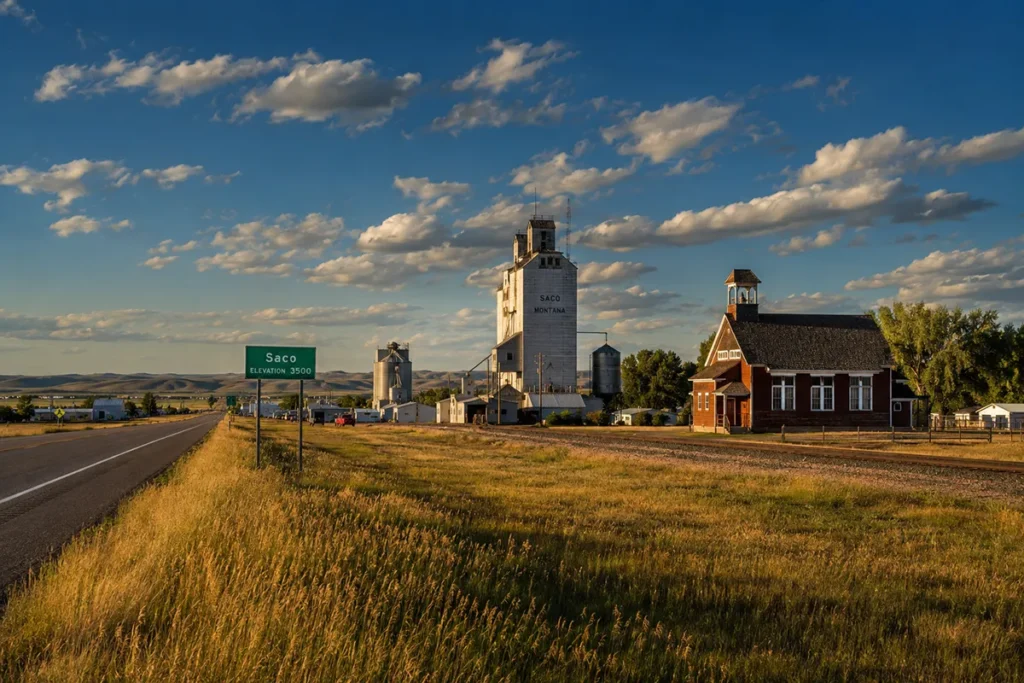
In 1961, before there was a National Historic Preservation Act, before there was a National Register of Historic Places, a group of women in tiny Saco, Montana decided to move and restore a one-room schoolhouse.
The school was the 1916 Huntley School — a simple wood-frame building that had served homesteaders in Phillips County during the early 20th century. The building had been built on land donated by Percy Huntley — a Northern Pacific Railway telegraph operator who had moved his family to the Saco area early in the 1900s.
That family included a young son named Chet.
By 1961, Chet Huntley was one of the most famous newscasters in America. He had been co-anchoring NBC’s Huntley-Brinkley Report since 1956 — broadcasting nightly from New York City while David Brinkley reported from Washington, D.C. The program would ultimately ran until 1970, making Chet Huntley a household name across the United States.
The Saco Garden Club recognized the connection. They moved the Huntley School from its original homestead-era location to a new site in town, restored it carefully, and turned it into a museum interpreting both Phillips County homesteading history and the early life of one of America’s most famous journalists.
Their work was five years ahead of the 1966 National Historic Preservation Act that would create the National Register of Historic Places.
The Saco Garden Club restoration represents one of the earliest documented examples of organized rural Montana historic preservation — and a substantively important early case of women leading preservation efforts in the state.
The Huntley School still stands today as the Saco Chamber of Commerce and Agriculture Museum. The building represents one of the most architecturally substantive small-town heritage attractions on the entire Montana Hi-Line.
TL;DR
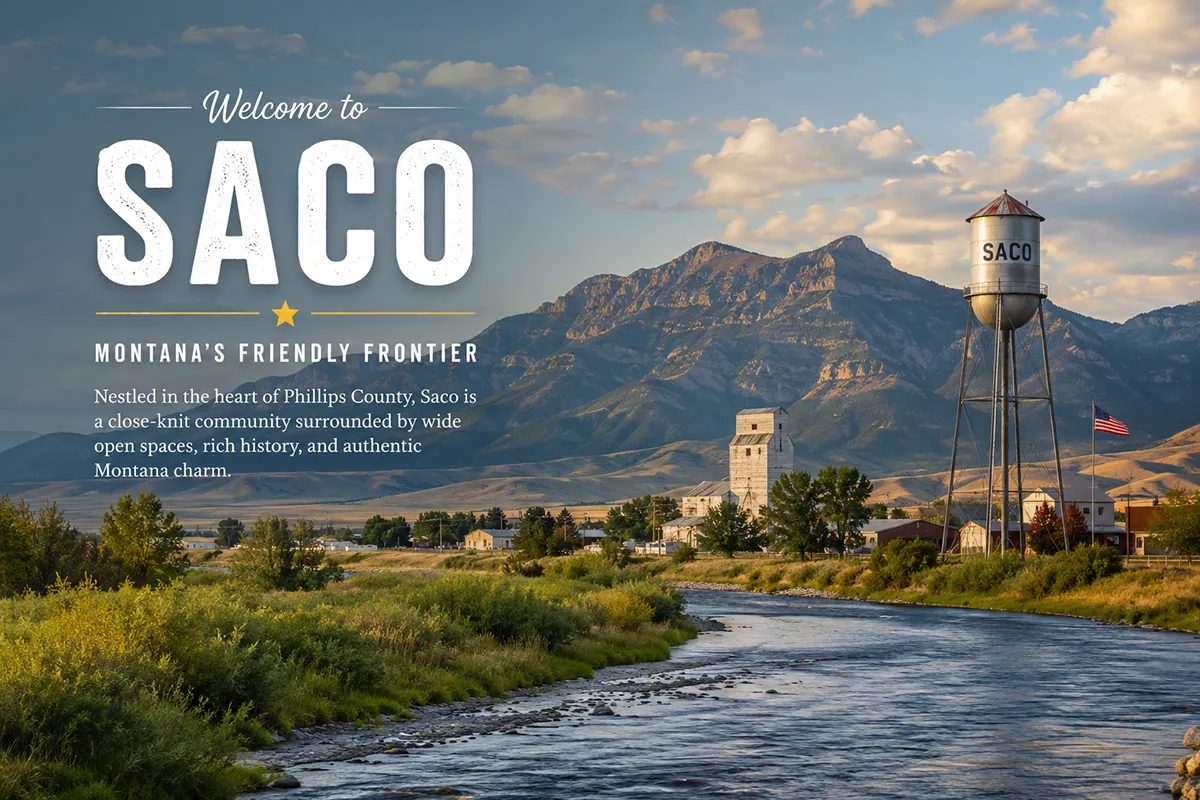
- Saco (~150-200) is in Phillips County on US Highway 2, about 25 miles east of Malta (county seat) and 50 miles west of Glasgow.
- The town’s Saco Chamber of Commerce and Agriculture Museum is housed in the 1916 Huntley School — named for the father of NBC newsman Chet Huntley.
- The school was moved and restored by the Saco Garden Club in 1961 — five years before the National Historic Preservation Act.
- Chet Huntley co-anchored the NBC Huntley-Brinkley Report from 1956 to 1970. He was actually born in Cardwell, Montana (not Saco), but spent part of his childhood in the Saco area attending the Huntley School.
- The historic Sleeping Buffalo Rock — a sacred glacial erratic carved by Plains Indians as a buffalo hunt symbol — sits along US-2 near Saco. It was relocated from its original site at the Cree Crossing on the Milk River.
- The Sleeping Buffalo Hot Springs — about 10 miles west of Saco — has American Legion roots dating to a 1931 executive order by President Hoover and is on the market in late 2025.
- The nearby Nelson Reservoir supports fishing, swimming, boating, and camping.
- The nearby Bowdoin National Wildlife Refuge is a major Hi-Line waterfowl destination.
- Best for: Hi-Line historic preservation, hot springs visitors, Chet Huntley admirers, Sleeping Buffalo Rock travelers, Nelson Reservoir recreation.
Liked this article?
Add Roaming Montana as a preferred source so you see more of our articles and guides on Google.
Saco at a Glance
| Population (estimated) | ~150-200 |
|---|---|
| County | Phillips County |
| Region | North-Central Montana (Hi-Line, Milk River Valley) |
| Elevation | 2,178 ft |
| Distance to Malta (county seat) | ~25 miles west on US-2 (~30 min) |
| Distance to Glasgow | ~50 miles east on US-2 |
| Distance to Dodson | ~45 miles west |
| Distance to Havre | ~110 miles west |
| Distance to Sleeping Buffalo Rock (US-2) | ~10 miles west |
| Distance to Sleeping Buffalo Hot Springs | ~12 miles northwest |
| Distance to Nelson Reservoir | ~10 miles northwest |
| Founded | Early 20th century (Great Northern Railway) |
| Huntley School built | 1916 |
| Huntley School moved/restored | 1961 (Saco Garden Club) |
| Best for | Huntley School, Sleeping Buffalo, Nelson Reservoir, Hi-Line stops |
What Makes Saco Different
Three interconnected stories define Saco’s character: Chet Huntley, the Sleeping Buffalo, and the Saco Garden Club’s pioneering preservation work.
The Huntley Family
Percy Huntley was a telegraph operator for the Northern Pacific Railway.
His work involved frequent transfers between small Montana communities. Between approximately 1905 and 1925, the Huntley family moved through Cardwell (where Chet was born on December 10, 1911), Saco, Willow Creek, Logan, Big Timber, Norris, Whitehall, and Three Forks.
In each town, the family put down enough roots for the children to attend school. In Saco — where Percy Huntley owned the land that would become the Huntley School site — the family was substantially established for at least part of Chet’s early childhood.
Percy Huntley donated the land for the new one-room schoolhouse that was built in 1916. The school was named after the family in recognition.
Chet’s NBC Career
Chet Huntley graduated from Whitehall High School and attended Montana State College in Bozeman. He later transferred to the Cornish College of the Arts in Seattle and ultimately graduated with a degree in Speech and Drama from the University of Washington in 1934.
His first broadcasting job was at Seattle’s KBCB radio — writer, announcer, and sales representative for $10 a month.
Huntley moved up through the broadcasting industry over the next two decades. By 1956, NBC had paired him with David Brinkley as co-anchors of the new evening news program that would dominate American television news for the next 14 years.
The Huntley-Brinkley Report opened with one of the most recognizable signoffs in American broadcasting history: “Good night, Chet. Good night, David. And good night, for NBC News.” The program ran from October 1956 until July 1970, when Huntley retired and returned to Montana to develop the Big Sky resort. He died in 1974.
The Saco Garden Club’s 1961 Preservation Work
By 1961, Chet Huntley was famous nationally.
The Saco Garden Club — a women’s organization in Phillips County — recognized that the abandoned Huntley School represented a unique opportunity. The school had been built on Huntley family land. It had been attended by one of America’s most famous newscasters. The building itself was an architecturally substantive 1916 one-room rural schoolhouse.
They moved the building to a new site in Saco.
They restored it.
They interpreted it as a heritage attraction — both for the Huntley story and for the broader homestead-era schooling experience that defined early 20th-century rural Montana.
The work happened five years before the 1966 National Historic Preservation Act that established the National Register of Historic Places.
This sequence matters. The Saco Garden Club women were doing organized historic preservation before there was a federal program supporting such work, before there were standards, before there were funding mechanisms. They acted on their own initiative.
It represents one of the earliest documented examples of organized rural Montana historic preservation and a substantively important case study of women’s preservation leadership.
Sleeping Buffalo Rock
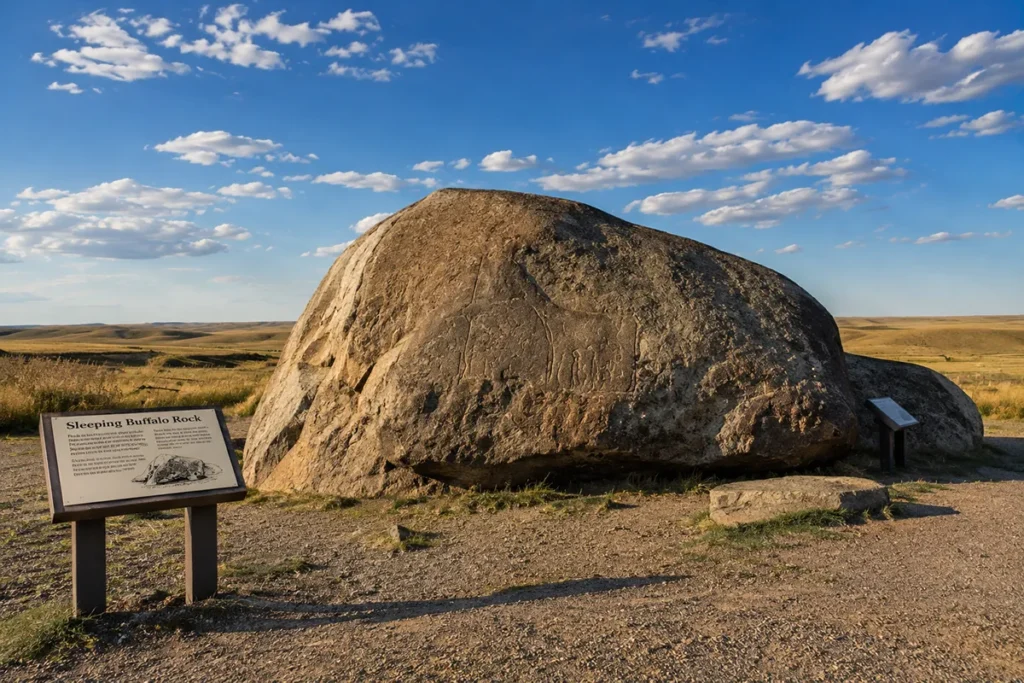
About 10 miles west of Saco on US-2, there’s a large boulder.
It’s a glacial erratic — carried south from Canada by the Cordilleran Ice Sheet during the last ice age and deposited when the glacier retreated approximately 10,000 years ago. The boulder is shaped roughly like a sleeping buffalo.
Long before European-American settlement, the Plains Indians carved spiritual markings into the boulder. They danced around it the night before buffalo hunts. They touched it before going into battle. The rock was — and remains — a sacred site.
The rock was originally located several miles north of US-2 at the Cree Crossing on the Milk River. Sometime in the 20th century, it was moved to its current location along the highway approximately 15 miles east of Malta. The relocation was controversial; many Indigenous community members felt the removal from the original site was a desecration.
Sleeping Buffalo Hot Springs
Approximately 12 miles northwest of Saco — and named after the sacred rock — is the Sleeping Buffalo Hot Springs.
The hot springs were first noted by rancher Elbert Davison as having potential medicinal qualities. Davison built a small pool that brought relief to his son who had polio. The healing connection inspired the Saco American Legion Post #79 to organize community efforts to develop the springs for public use.
In 1931, President Herbert Hoover issued an executive order creating Public Water Reserve No. 141 to protect the springs.
In 1932, the federal government transferred the well to the American Legion for recreational development. By the mid-1930s, the American Legion Health Pool was open. New Deal-era Montana guidebooks promoted the pool for its recreational and “curative” waters.
In the second half of the 20th century, the American Legion transferred the property to private owners, who expanded the operation under the name Sleeping Buffalo Hot Springs. The springs have operated continuously since.
As of fall 2025, the property is on the market.
For broader trip context, see my Montana cities and towns hub, Montana hot springs directory, and Famous people from Montana overview.
The Top 6 Things to Do In & Around Saco
1. Huntley School / Saco Chamber of Commerce and Agriculture Museum
The signature attraction.
The 1916 one-room Huntley School — moved and restored by the Saco Garden Club in 1961 — now serves as the Saco Chamber of Commerce and Agriculture Museum.
The building interprets Phillips County homesteading history, early 20th-century rural education, and the connection to the Chet Huntley broadcasting career.
Free admission; hours vary seasonally. Even when closed, the exterior is photograph-worthy.
2. Sleeping Buffalo Rock
Located approximately 10 miles west of Saco along US Highway 2.
The sacred glacial erratic — carved by Plains Indians as a buffalo hunt symbol — sits in a roadside pullout with interpretive markers.
The current location is not its original site (the rock was moved here from Cree Crossing on the Milk River sometime in the 20th century), but the boulder itself remains substantively significant for understanding Plains Indian spiritual heritage.
3. Sleeping Buffalo Hot Springs
Approximately 12 miles northwest of Saco.
The hot springs have operated continuously since the mid-1930s American Legion Health Pool. Current facilities typically include outdoor pools, indoor pools, and modest food service.
As of fall 2025, the property is on the market — verify current operating status before visiting.
See best natural hot springs in Montana for broader context.
4. Nelson Reservoir
The Bureau of Reclamation reservoir northwest of Saco supports fishing, swimming, boating, camping, picnicking, and waterfowl viewing.
Walleye, perch, northern pike, and largemouth bass are the primary fishery. Public boat ramp and lakeside camping available.
5. Bowdoin National Wildlife Refuge
The federal wildlife refuge between Saco and Malta is one of Montana’s most substantive Hi-Line waterfowl destinations.
Spring and fall migrations bring large numbers of ducks, geese, sandhill cranes, and shorebirds. Year-round resident populations of pelicans, herons, and grebes. A 15-mile self-guided auto tour route provides excellent viewing opportunities.
6. US-2 Hi-Line Drive
Saco sits midway on the eastern Hi-Line corridor between Malta and Glasgow.
The full Hi-Line drive — US Highway 2 from the North Dakota border at Bainville to West Glacier in the west — is one of America’s classic cross-state routes. See Montana railroads for broader corridor context.
Where to Stay
Saco has limited dedicated lodging.
Most travelers base in Malta (30 minutes west) or at Sleeping Buffalo Hot Springs (when operating).
| Lodging | Vibe | Price | Best For |
|---|---|---|---|
| Malta hotels (30 min W) | Phillips County seat selection | $90–160 | Most travelers |
| Sleeping Buffalo Hot Springs (12 min NW) | Historic hot springs | $130–230 | Spa-focused (verify status) |
| Glasgow lodging (1 hr E) | Larger town selection | $100–200 | Eastern base |
| Vacation rentals (Saco area) | Limited; ranch and farm stays | $130–250 | Hunters, photographers |
Where to Eat
- Local Saco cafes and bar — verify current operations
- Sleeping Buffalo Hot Springs restaurant (when operating)
- Malta dining (30 min W) — broader Hi-Line selection
- Glasgow restaurants (1 hr E) — additional options
Getting There & Around
From Malta: 25 miles east on US-2, about 30 minutes.
From Glasgow: 50 miles west on US-2, about 1 hour.
From Havre: ~110 miles east on US-2, about 2 hours.
From Dodson: ~45 miles east on US-2, about 1 hour.
From Lewistown: ~140 miles north, about 2.5 hours.
Cell service: Generally available in Saco and along US-2. Reduced on surrounding ranch roads.
When to Visit
Summer (June-August): Best driving conditions; warmest weather; Nelson Reservoir at peak; full Bowdoin Refuge access.
Fall (September-October): Outstanding Hi-Line light; bird migration through Bowdoin Refuge; harvest season.
Winter (December-March): Severe Hi-Line weather; Sleeping Buffalo Hot Springs is particularly substantive in cold conditions (verify operating status).
Spring (April-May): Bird migration through Bowdoin Refuge; the prairie greens up; quieter shoulder season.
Personal Tips
Don’t perpetuate the “born in Saco” misconception. Chet Huntley was born in Cardwell, Montana on December 10, 1911, not in Saco. He attended the Huntley School in Saco as a child during one of his family’s many moves. The Saco connection is genuine but not a birth connection.
Take the Saco Garden Club’s work seriously. The 1961 restoration of the Huntley School is one of the earliest documented examples of organized rural Montana historic preservation — five years before the National Historic Preservation Act created the federal framework for such work. The women’s leadership in this preservation effort deserves substantive recognition.
Visit Sleeping Buffalo Rock thoughtfully. The sacred status of the boulder for Plains Indian communities — particularly the Aaniih (Gros Ventre) and Nakoda (Assiniboine) of the nearby Fort Belknap Indian Reservation — means visitors should approach with respect. Don’t climb on the rock. Don’t deface or damage it. Recognize that the relocation from the original Cree Crossing site remains controversial.
Verify Sleeping Buffalo Hot Springs operating status. The property has been on the market in fall 2025. Operating hours and ownership status may change. Call ahead before driving in.
Combine with Bowdoin NWR. A morning at Bowdoin National Wildlife Refuge followed by a Huntley School visit and an afternoon at Sleeping Buffalo Hot Springs makes a substantive Hi-Line day. Bring binoculars for the refuge.
Use Malta as your base. Saco has minimal services. Malta 30 minutes west has full hotels, restaurants, and the Phillips County Museum (with displays on the Sleeping Buffalo Rock and broader county heritage).
Saco Quick Facts
| Population (estimated) | ~150-200 | | County | Phillips County | | Region | North-Central Montana (Hi-Line) | | Founded | Early 20th century (Great Northern Railway) | | Huntley School built | 1916 | | Huntley School name origin | Land donated by Percy Huntley (Chet Huntley’s father) | | Huntley School moved/restored by Saco Garden Club | 1961 | | Saco Garden Club preservation pre-dated NHPA by | 5 years (NHPA 1966) | | Chet Huntley born | December 10, 1911 (Cardwell, MT — not Saco) | | Chet Huntley NBC Huntley-Brinkley Report | 1956-1970 | | Chet Huntley died | 1974 | | Chet Huntley biography | “Good Night Chet” by Lyle Johnston (2003) | | Sleeping Buffalo Rock origin | Glacial erratic deposited ~10,000 years ago | | Sleeping Buffalo Rock relocated from | Cree Crossing on Milk River | | Sleeping Buffalo Rock current location | US-2, ~15 mi E of Malta | | Sleeping Buffalo Hot Springs Public Water Reserve No. 141 | Established 1931 by Pres. Herbert Hoover executive order | | American Legion Post #79 control | 1932 | | American Legion Health Pool open | Mid-1930s | | Sleeping Buffalo Hot Springs status (fall 2025) | On the market | | Average summer high | 84°F | | Average winter low | -8°F |
Conclusion
Saco is a 150-200 person Phillips County Hi-Line town with substantively important heritage on multiple fronts.
The 1916 Huntley School — moved and restored by the Saco Garden Club in 1961, five years before the National Historic Preservation Act — connects directly to Chet Huntley, NBC’s legendary co-anchor of the Huntley-Brinkley Report.
The Sleeping Buffalo Rock 10 miles west preserves substantively important Plains Indian sacred heritage. The Sleeping Buffalo Hot Springs 12 miles northwest carries American Legion New Deal-era recreational history extending from a 1931 executive order by President Herbert Hoover.
The Saco Garden Club women who organized the 1961 preservation work — without federal support, without National Register guidance, without any of the infrastructure that would emerge in the late 1960s — represent one of the more substantive but underappreciated heritage stories on the entire Montana Hi-Line.
The next time you’re driving US-2 between Malta and Glasgow, take 30 minutes for Saco.
Have a Saco question? Drop it in the comments — I read every one.
Frequently Asked Questions
Is Saco Montana worth visiting?
Saco is worth visiting primarily for the Huntley School (the 1916 one-room schoolhouse named for NBC newsman Chet Huntley’s father, restored by the Saco Garden Club in 1961, now the Saco Chamber of Commerce and Agriculture Museum), the Sleeping Buffalo Rock historic site 10 miles west on US-2, Sleeping Buffalo Hot Springs 12 miles northwest, Nelson Reservoir for fishing and recreation, and Bowdoin National Wildlife Refuge for bird watching.
Was Chet Huntley born in Saco Montana?
No — Chet Huntley was born in Cardwell, Montana on December 10, 1911, not in Saco. His father Percy Huntley was a Northern Pacific Railway telegraph operator whose job required frequent moves; the family lived in Cardwell, Saco, Willow Creek, Logan, Big Timber, Norris, Whitehall, and Three Forks during Chet’s childhood. He attended the Huntley School in Saco during the family’s time in that community. The school was named after the Huntley family because Percy Huntley had donated the land for the school’s construction. Chet eventually graduated from Whitehall High School and went on to a legendary broadcasting career, co-anchoring NBC’s Huntley-Brinkley Report from 1956 to 1970.
What is the Huntley School in Saco?
The Huntley School is a one-room schoolhouse built in 1916 on land donated by Percy Huntley (the father of NBC newsman Chet Huntley) to serve homesteading children in Phillips County, Montana. In 1961, the Saco Garden Club moved the abandoned schoolhouse to a new site in town, restored it, and turned it into a museum interpreting both Phillips County homesteading history and the early life of Chet Huntley. The building now houses the Saco Chamber of Commerce and Agriculture Museum. The 1961 preservation work pre-dated the federal National Historic Preservation Act by five years — making it one of the earliest documented examples of organized rural Montana historic preservation and a substantively important case of women’s preservation leadership in the state.
What is the Sleeping Buffalo Rock?
The Sleeping Buffalo Rock is a large glacial erratic boulder — deposited approximately 10,000 years ago by the retreating Cordilleran Ice Sheet — that was carved by Plains Indians as a sacred symbol for buffalo hunting. Indigenous communities historically danced around the rock the night before hunts and touched it before going into battle, believing this brought good fortune. The boulder was originally located at the Cree Crossing on the Milk River but was moved sometime in the 20th century to its current location in a US Highway 2 roadside pullout approximately 15 miles east of Malta. The relocation remains controversial within Indigenous communities. The rock is associated particularly with the Aaniih (Gros Ventre) and Nakoda (Assiniboine) peoples of the nearby Fort Belknap Indian Reservation.
What are the Sleeping Buffalo Hot Springs?
Sleeping Buffalo Hot Springs is a hot springs resort about 12 miles northwest of Saco, Montana, named after the nearby Sleeping Buffalo Rock historic site. The springs’ commercial history began when rancher Elbert Davison built a small pool that brought relief to his son who had polio. In 1931, President Herbert Hoover issued an executive order creating Public Water Reserve No. 141 to protect the springs. In 1932, the federal government transferred control to Saco American Legion Post #79 for recreational development. The American Legion Health Pool opened in the mid-1930s. The property was later transferred to private owners who expanded the operation under the current name. As of fall 2025, the property is on the market — verify current operating status before visiting.
How far is Saco from Malta Montana?
Saco is approximately 25 miles east of Malta (the Phillips County seat) on US Highway 2 — about a 30-minute drive. From Glasgow (the Valley County seat to the east), Saco is about 50 miles west on US-2, approximately 1 hour. Malta serves as the practical urban anchor for the broader Saco area, with hotels, restaurants, and the Phillips County Museum.
Who was Chet Huntley?
Chet Huntley (December 10, 1911 — March 20, 1974) was an American television newscaster best known for co-anchoring NBC’s Huntley-Brinkley Report from October 1956 until July 1970. Born in Cardwell, Montana, Huntley grew up in multiple small Montana communities (including Saco) before graduating from Whitehall High School and the University of Washington in 1934. He worked his way up through radio and television broadcasting before joining NBC. The Huntley-Brinkley Report — featuring Huntley reporting from New York City and David Brinkley reporting from Washington, D.C. — dominated American television news for 14 years. Their famous signoff was: “Good night, Chet. Good night, David. And good night, for NBC News.” After retiring in 1970, Huntley returned to Montana to develop the Big Sky Resort south of Bozeman. He died in 1974. See famous people from Montana for additional context.