Most travel sites treat Seeley Lake as an afterthought inside a town listing — a bullet point wedged between a quilt shop and a snowmobile trail. I’ve spent enough time on this actual lake, in every season, to tell you that’s backwards. The lake is the reason the town exists, not the other way around.
Seeley Lake anchors a chain of a dozen or so lakes in the Clearwater River drainage, an hour northeast of Missoula along Highway 83. This guide covers the lake itself — swimming beaches, the Clearwater Canoe Trail, fishing seasons, camping options, and how the lake transforms into a genuine winter destination once it freezes. It’s a fuller, lake-focused picture than the thin town-directory treatment this place usually gets.
Liked this article?
Add Roaming Montana as a preferred source so you see more of our articles and guides on Google.
Seeley Lake by the Numbers
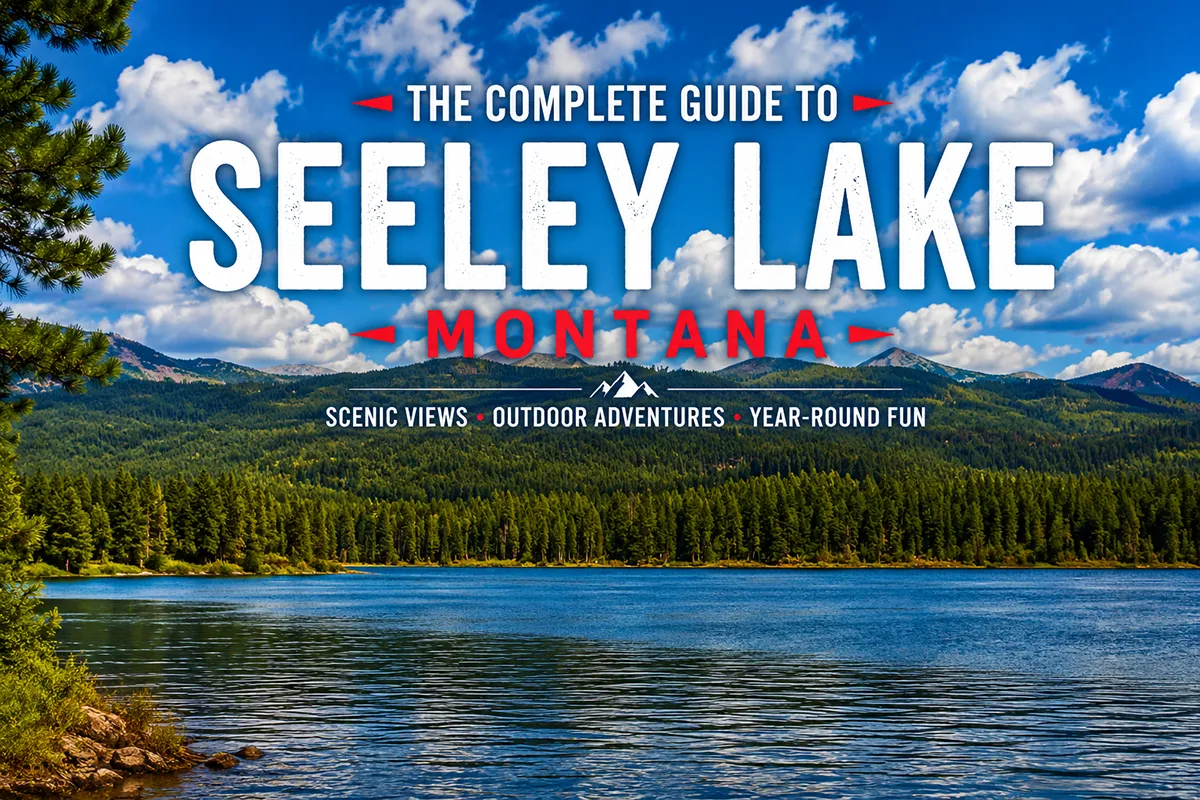
Seeley Lake covers roughly 1,000 acres, making it noticeably larger than its neighbor Holland Lake up the highway, though smaller and calmer than the big lakes further north like Flathead.
It sits at about 4,029 feet elevation in the Seeley-Swan Valley, flanked by the Mission Mountains to the west and the Swan Range to the east — one of Montana’s most scenic drives runs right along its shore on Highway 83.
Swimming and Beach Access
The main public swimming access is at Seeley Lake State Recreation Area on the lake’s north end, with a sandy beach, picnic area, and boat launch.
I’ve brought a cooler and spent a full afternoon here more than once — the water warms up reasonably well by August compared to some of the higher-elevation lakes in this region, though it’s never going to feel like a southern lake.
The Clearwater Canoe Trail
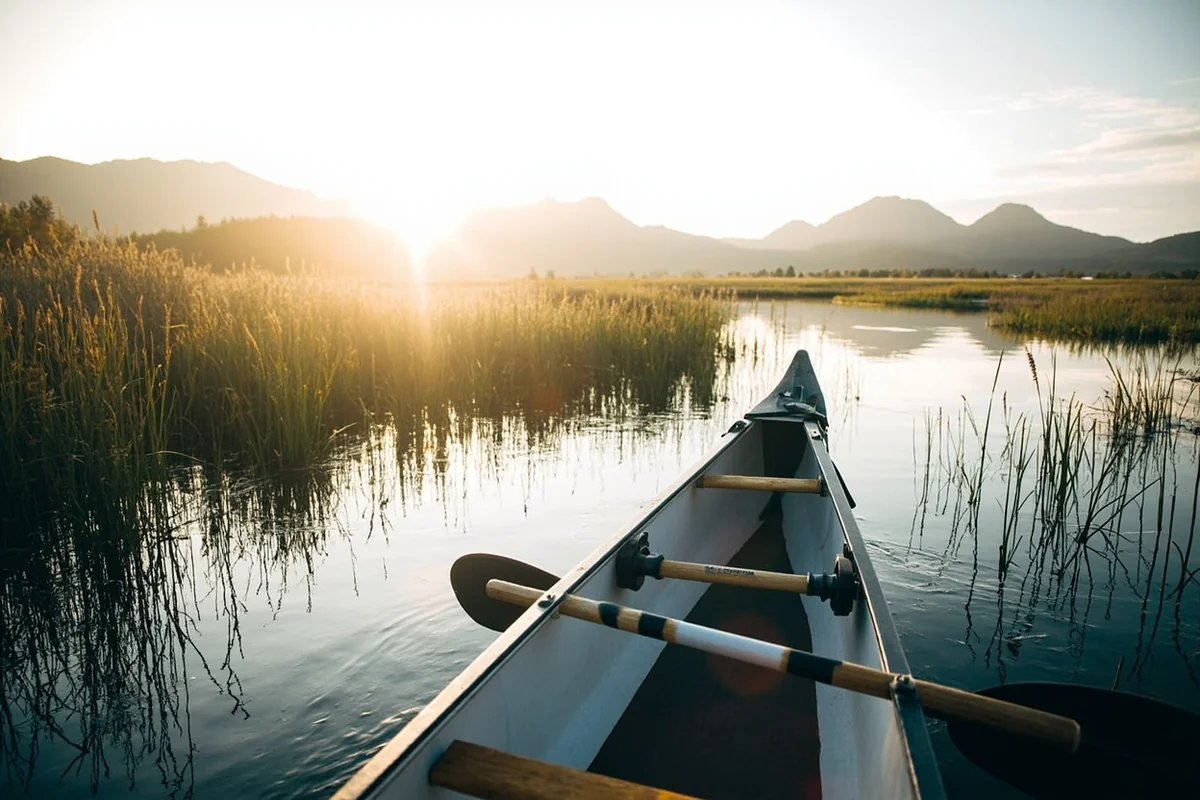
This is, in my opinion, one of the most underrated paddling experiences in western Montana, and it starts right at the north end of Seeley Lake.
The Clearwater Canoe Trail is a roughly 3.5-mile marked paddle route through the Clearwater River’s slow-moving channels and marshland before it empties into the lake, and it’s one of the best wildlife-watching paddles I’ve done anywhere in the state.
I’ve spotted moose, osprey, and painted turtles on a single slow float down this route, and the current does most of the work if you paddle it in the direction the water flows, making it accessible for beginners and families.
I’d allow two to three unhurried hours for the full route including stops to just drift and watch for wildlife.
Fishing Seeley Lake
The lake holds kokanee salmon, rainbow trout, largemouth bass, and northern pike, and it’s popular enough with local anglers that I’ve seen boats out on the water before sunrise on summer weekdays.
Ice fishing is also popular once the lake freezes solid, typically by mid-winter, with locals setting up shelters near the north end. A standard Montana fishing license covers the lake.
Boating and the Chain of Lakes
Seeley Lake connects, loosely, to a broader chain of lakes in the Clearwater drainage including Salmon Lake, Lake Alva, and several smaller lakes further south — part of why this valley carries the “Seeley-Swan” name as a defined recreation corridor.
Motorized boats, waterskiing, and personal watercraft are all common on Seeley Lake itself, more so than on quieter neighbors like Holland Lake, since Seeley’s larger size and more developed access points draw more boat traffic.
Camping Around Seeley Lake
Several Forest Service campgrounds ring the lake, including options directly on the shoreline with lake-view sites.
I’ve camped here in early September and had noticeably more elbow room than a July weekend would offer, with the added benefit of fewer mosquitoes and cooler nights for sleeping.
Reservations for the more popular sites fill up during peak summer, so I’d book ahead through recreation.gov if you have specific dates in mind [verify current site availability and fees].
Seeley Lake in Winter
This is the part of Seeley Lake’s story that almost never makes it into a typical summer-focused travel guide, and it’s a significant omission.
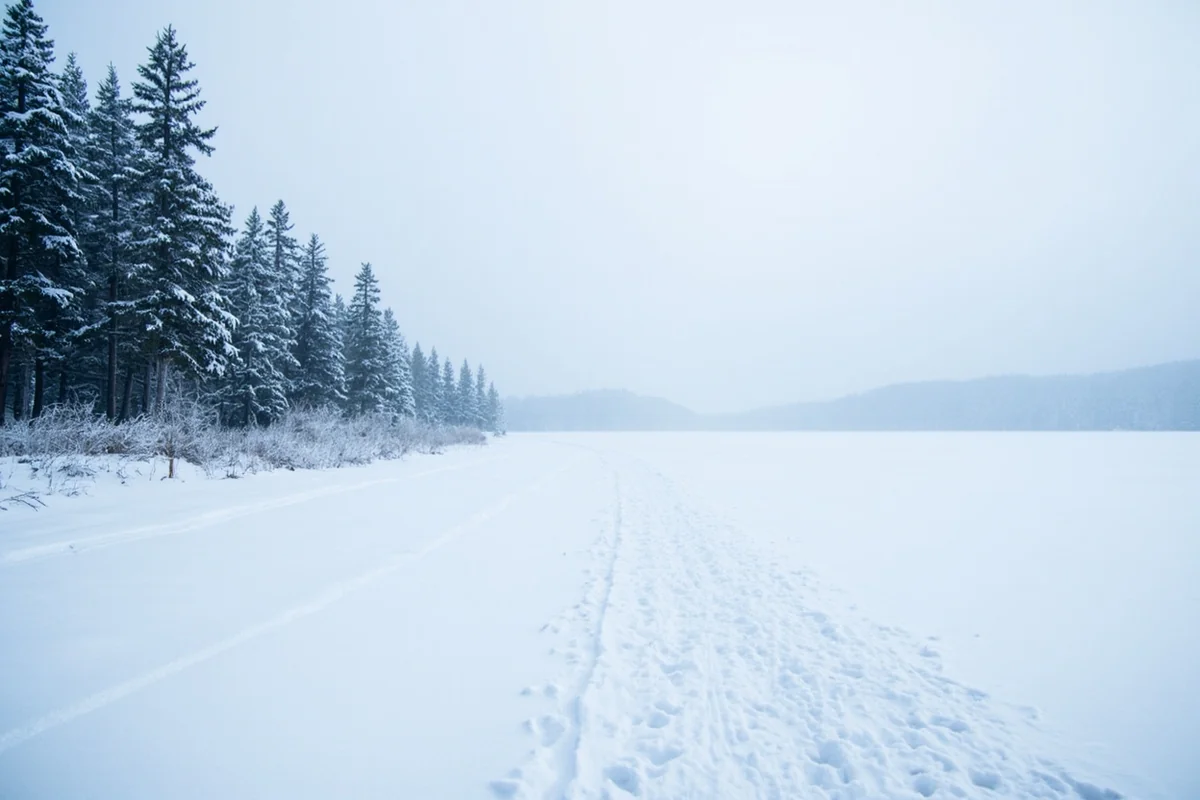
Once the lake freezes and the region’s snowpack builds up, Seeley Lake becomes a genuine winter recreation hub — the surrounding trail network turns into a well-regarded cross-country ski system, and more than 350 miles of groomed snowmobile trails fan out from the area.
I’ve cross-country skied along the lake’s edge on a still, cold February morning with frost coating every tree branch, and it’s a completely different experience from the summer paddling scene, arguably just as worthwhile.
The Seeley Lake Historical Museum
For a rainy-day or off-water activity, the Seeley Lake Historical Museum and Visitor Center covers the area’s logging and homestead history, which gives useful context for a valley that was built on timber long before it became a recreation destination.
It’s a small, volunteer-run operation, so I’d check current hours before making a special trip [verify current hours].
A Logging Town That Became a Lake Town
Seeley Lake’s namesake town grew up around the timber industry, and the Seeley Lake Historical Museum’s homestead and logging exhibits reflect that history well.
It’s a useful reminder that most of the lakes strung along Highway 83 — Seeley, Salmon, Lake Alva, and others in the Clearwater chain — were shaped as much by 20th-century resource extraction as by the glaciers that originally carved their basins.
Old logging roads still crisscross the surrounding national forest land, many of them now repurposed as the hiking and mountain biking trails that draw summer visitors.
Getting Here from Missoula
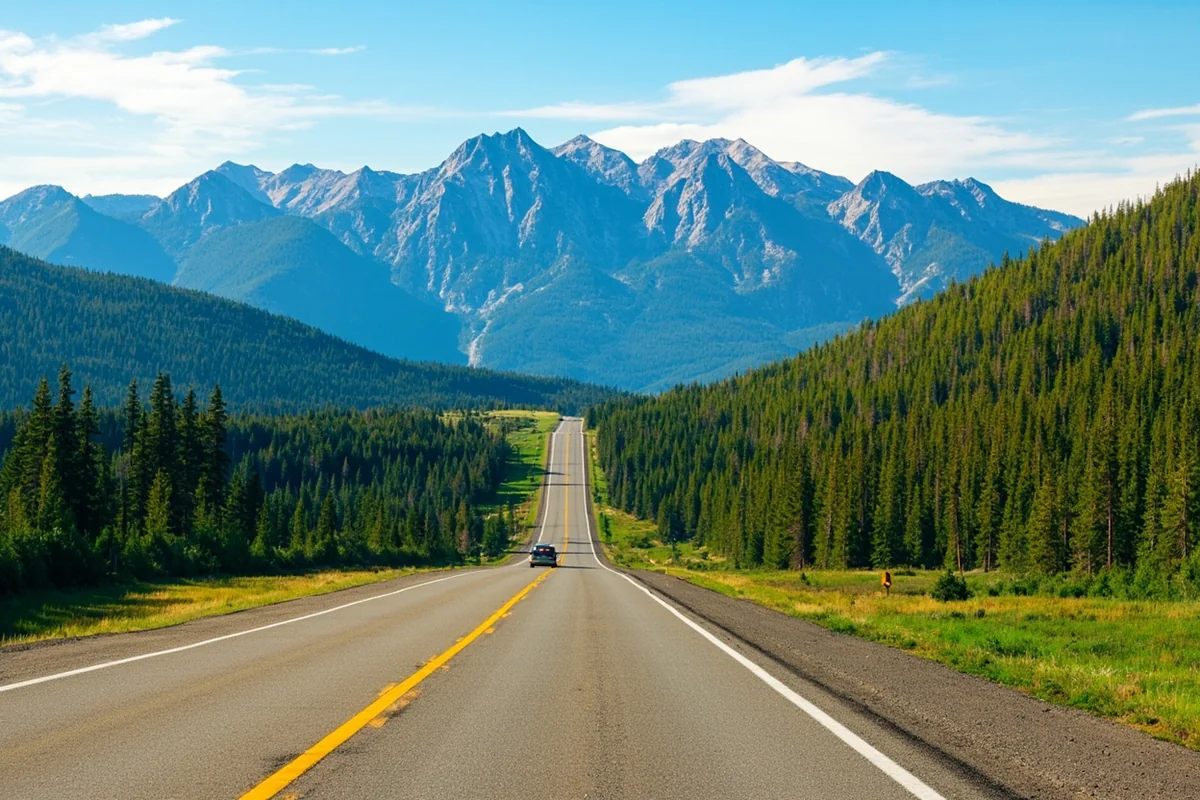
Most visitors approach Seeley Lake from Missoula, about an hour southwest via Highway 83, a drive I never get tired of making regardless of season — the road hugs the base of the Mission Mountains for a good stretch and offers some of the best casual mountain views of any regularly-traveled highway in the state.
If you’re combining a trip with a guided outfitter experience, several guided tour operators based in the valley run everything from fishing trips to wildlife-viewing excursions.
Personal Tips / What I Wish I Knew
Paddle the canoe trail in the morning. Wind picks up on the open lake by early afternoon in summer, and the marshland channels of the canoe trail are far more pleasant to navigate in calm conditions.
Don’t skip the winter season if you’re a skier. I underestimated this place for years, assuming it was purely a summer lake, and the groomed ski trail network here changed my mind completely — see my Montana in winter guide for what else the season brings to this part of the state.
Pair it with Holland Lake and Salmon Lake. All three are close enough along Highway 83 to combine into one memorable Seeley-Swan day, each with a distinctly different character.
September is the sweet spot. Warm enough for the lake to still feel inviting, cool enough that the bugs have mostly died down, and quiet enough that campgrounds and the canoe trail feel like your own.
Wildlife Around Seeley Lake
The forests surrounding the lake support a healthy population of white-tailed deer, black bears, and the occasional moose, particularly around the marshy inlets that feed the Clearwater Canoe Trail.
I’ve also had good luck spotting bald eagles fishing along the lake’s edge in early morning, especially in late summer when kokanee are running and providing an easy meal.
This is also within grizzly range, though sightings directly on the lake itself are less common than in the more remote country further up the Swan Valley.
Seasonal Events Worth Planning Around
The Seeley Lake area hosts a handful of small community events throughout the year, including summer outdoor theater performances that occasionally set up in the area as part of Montana Shakespeare in the Parks’ touring schedule — a genuinely charming way to spend an evening if the timing lines up with your visit.
I’d check the Seeley Lake Chamber of Commerce’s current event calendar before finalizing travel dates if local events are part of your trip planning [verify current event schedule].
Golf and Other Non-Water Activities
For a lake-focused destination, Seeley Lake also has a small local golf course that I’ve heard good things about from locals, and the surrounding trail network supports mountain biking throughout the summer on many of the same paths that become ski trails in winter.
It’s a good option for a rest day between more strenuous lake activities, or for a non-water-loving member of a group who still wants to be outside.
What to Pack
Bug spray is non-negotiable here in June and early July, when mosquito populations around the marshy inlets can be significant, especially on the Clearwater Canoe Trail.
I’d also pack layers regardless of season — mornings on the water can be genuinely chilly even in July, warming up considerably by midday once the sun clears the surrounding ridgelines.
For winter visits, real cold-weather gear is essential; temperatures in this valley can drop well below zero on clear winter nights.
Practical Info: Seeley Lake
| Lake size | Approximately 1,000 acres |
| Location | Seeley-Swan Valley, off Highway 83, about an hour northeast of Missoula |
| Clearwater Canoe Trail | About 3.5 miles, easy, 2–3 hours |
| Best season | July–September for water activities; December–March for cross-country skiing |
| Camping | Multiple Forest Service campgrounds around the lake, some directly on the shoreline |
| Fishing license | Standard Montana state fishing license |
| Nearby towns | Condon, Greenough, Ovando |
Frequently Asked Questions
Is Seeley Lake good for swimming?
Yes, especially at the Seeley Lake State Recreation Area on the north end, though water temperatures stay on the cool side even in peak summer.
What is the Clearwater Canoe Trail?
A roughly 3.5-mile marked paddle route through slow-moving marshland channels that feed into Seeley Lake’s north end, known for excellent wildlife viewing and suitable for beginners.
Is Seeley Lake open in winter?
The lake area is very much a winter destination, with an extensive groomed cross-country ski trail network and over 350 miles of snowmobile trails in the surrounding valley.
How far is Seeley Lake from Missoula?
About an hour’s drive northeast via Highway 83.
Is Seeley Lake bigger than Holland Lake?
Yes, Seeley Lake covers roughly 1,000 acres compared to Holland Lake’s approximately 400 acres, and it sees more boat traffic as a result of its larger size and more developed access.
A Note on Development and Access
Compared to Flathead Lake or Whitefish Lake, Seeley Lake has stayed relatively low-key in terms of shoreline development, with more of its perimeter still bordered by national forest land than private cabins.
That balance is part of what keeps the lake feeling accessible and unhurried even during the busier parts of summer — public access points remain plentiful rather than squeezed between private docks the way they can be on some of the state’s more heavily developed lakes.
Final Thoughts
Seeley Lake deserves a bigger spotlight than the thin, town-directory-style treatment it usually gets online.
Between the canoe trail, the fishing, and a winter season most visitors never think to plan around, this is a lake worth building a multi-season relationship with rather than a single summer afternoon.
I’ve watched this valley through spring runoff, peak summer boat traffic, quiet fall mornings, and deep winter snowpack, and it holds up in every one of those versions of itself, which is more than I can say for most lakes I’ve visited across this state.
A Full Four Seasons
Between the summer paddling, fall’s quiet campgrounds, and a genuine winter cross-country ski and snowmobile network, Seeley Lake is one of the few Montana lakes I’d confidently recommend visiting in any of the four seasons and still coming away with a distinct, worthwhile experience each time.
Most lakes in this state have one clear “best” season and a handful of shoulder months to tolerate around it; Seeley Lake genuinely doesn’t work that way.
For the neighboring lakes in this valley, see my guide to Holland Lake, or check out the complete guide to Montana’s best lakes for the rest of the region.
Come once in summer and once in winter if you can manage it — you’ll come away thinking of it as two genuinely different lakes entirely, each worth the separate trip.