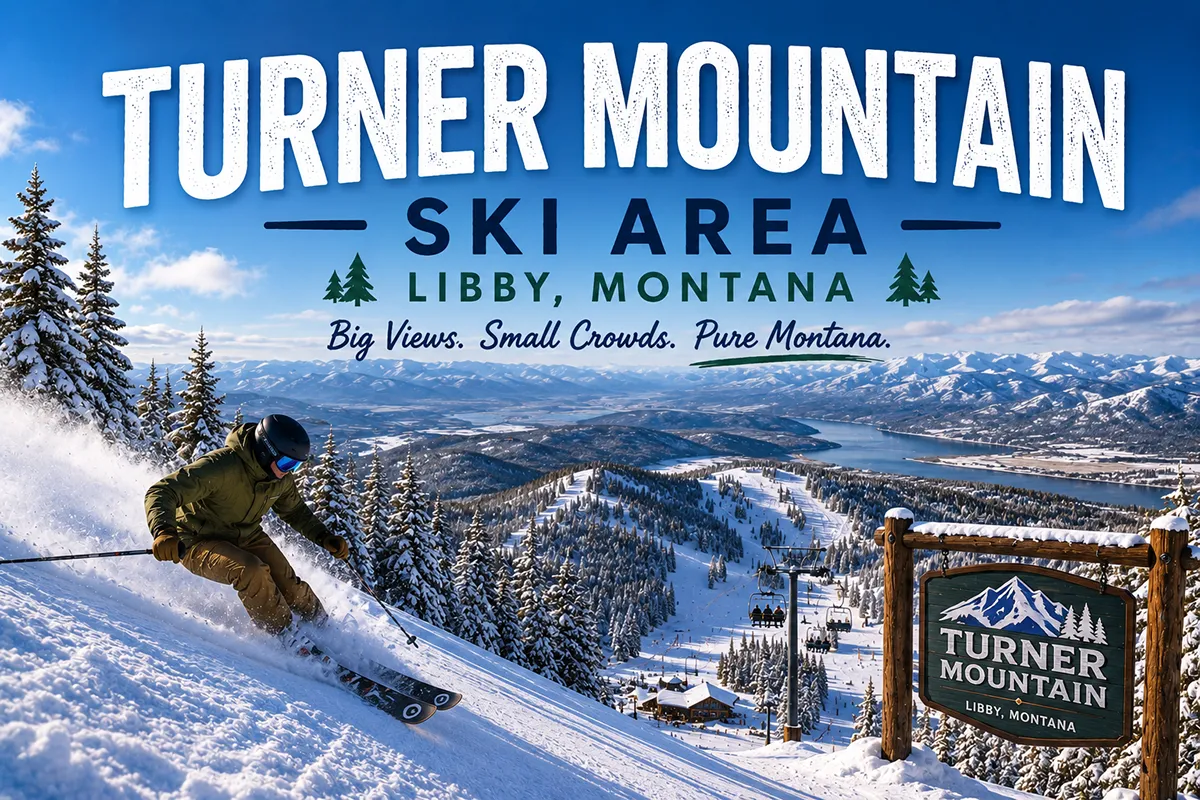
The first time I rode Turner Mountain’s lone double chair, the lift operator handed me a piece of duct tape — “just in case.” That should tell you most of what you need to know about this place.
- Turner Mountain is a nonprofit, volunteer-run ski area 22 miles north of Libby in Montana’s far northwest corner
- 2,110-foot vertical drop, ~1,000 acres, one double chairlift, 22 named runs — and roughly 60–70% of those runs are black diamond
- Lift tickets in recent seasons have run $25–$45 depending on the day [verify current price] — one of the cheapest chair-served ski tickets in America
- Open Friday through Sunday plus holidays, typically December through March
- Ski Magazine once called it “the best lift-assisted powder skiing in North America” — and that’s not marketing copy
- The right trip if you’re an advanced skier chasing emptiness, steepness, and value; the wrong trip if you want amenities, snowmaking, or a base village
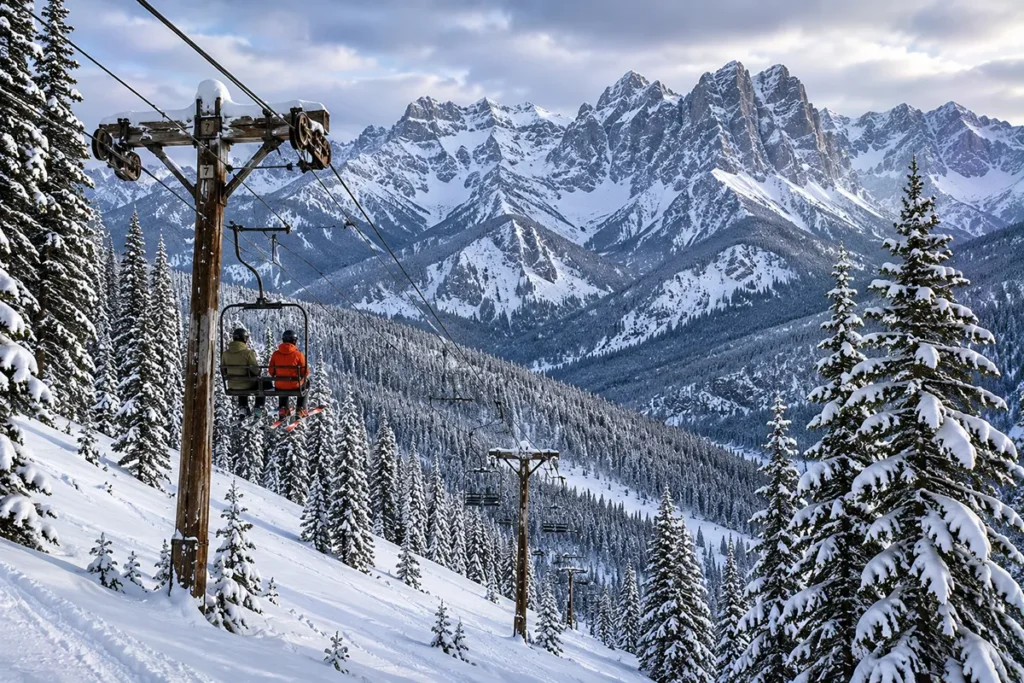
Liked this article?
Add Roaming Montana as a preferred source so you see more of our articles and guides on Google.
Why I Drove Four Hours Out of My Way
The first time I tried to explain Turner Mountain Ski Area to a friend from Colorado, I ran into the same problem every Montana skier hits when they try to describe small Montana ski areas to out-of-state skiers.
The numbers sound modest. One chair. About 1,000 acres of terrain. No high-speed lifts. No snowmaking. No base village. By Colorado standards, Turner sounds like a community hill.
By skiing standards, Turner is something different entirely.
The vertical drop is 2,110 feet — more than Aspen Mountain, more than Deer Valley, more than Mammoth’s main lifts. About 60–70% of the marked runs are black diamond.
The mountain catches a serious chunk of snow each year — somewhere between 200 and 375 inches depending on which source you trust and which year you’re looking at — and that snow stays in good shape because almost nobody is on it.
Ski Magazine’s quote about Turner offering “the best lift-assisted powder skiing in North America” has been kicking around for years, and it shows up on basically every article about the place.
There’s a reason it stuck. When you stand at the top of Turner on a good snow day and look down at runs nobody has skied yet at 1 PM, you understand why people drive four hours to be here.
This is part of our complete guide to Montana ski resorts — and Turner is the resort I send experienced skiers to when they want the most authentic mountain experience left in the lower 48.
Where Turner Mountain Actually Is
Turner sits in Lincoln County in Montana’s far northwest corner, in the heart of what Montanans call “Kootenai Country.”
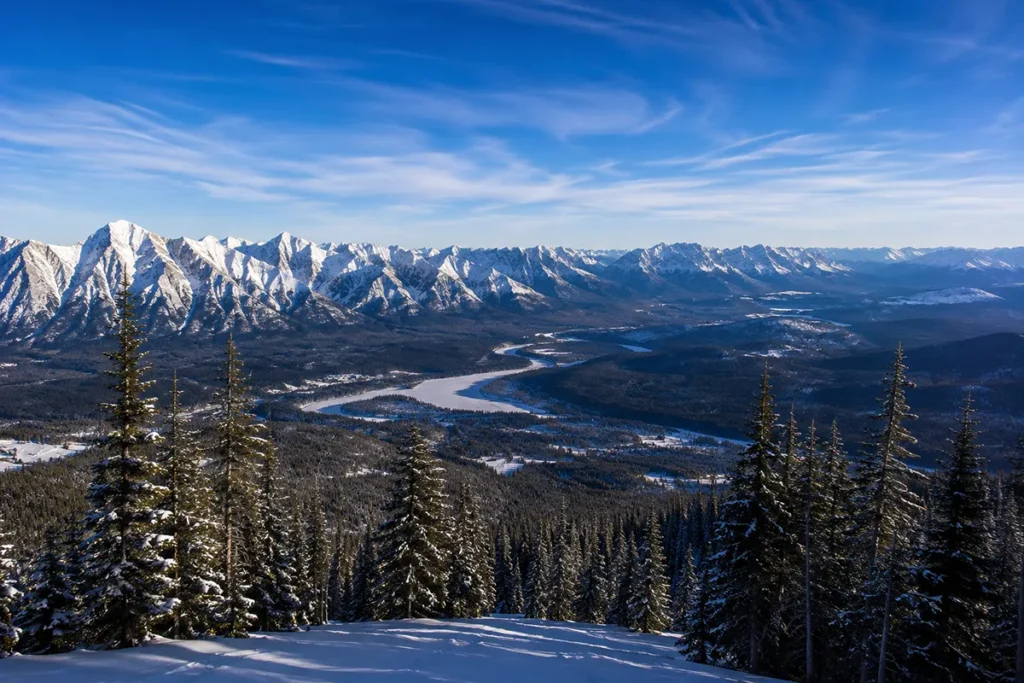
This is a part of the state most travelers never reach — thickly-forested mountains, the Kootenai River, dense rain-shadow forest, and a population density that makes the rest of Montana feel crowded.
Getting there:
- From Libby: 22 miles north on Pipe Creek Road (about 40 minutes)
- From Kalispell: about 2.5 hours west
- From Whitefish: about 2 hours west
- From Missoula: about 4 hours northwest
- From Spokane, WA: about 3 hours northeast
- From Glacier Park International (FCA): about 2.5 hours
- From Spokane International (GEG): about 3 hours — the closest major airport with reliable winter service
Amtrak’s Empire Builder runs right through Libby with a station downtown, and some adventurous skiers actually use the train. The route from Seattle or Portland to Libby is one of the most scenic winter train rides in the country.
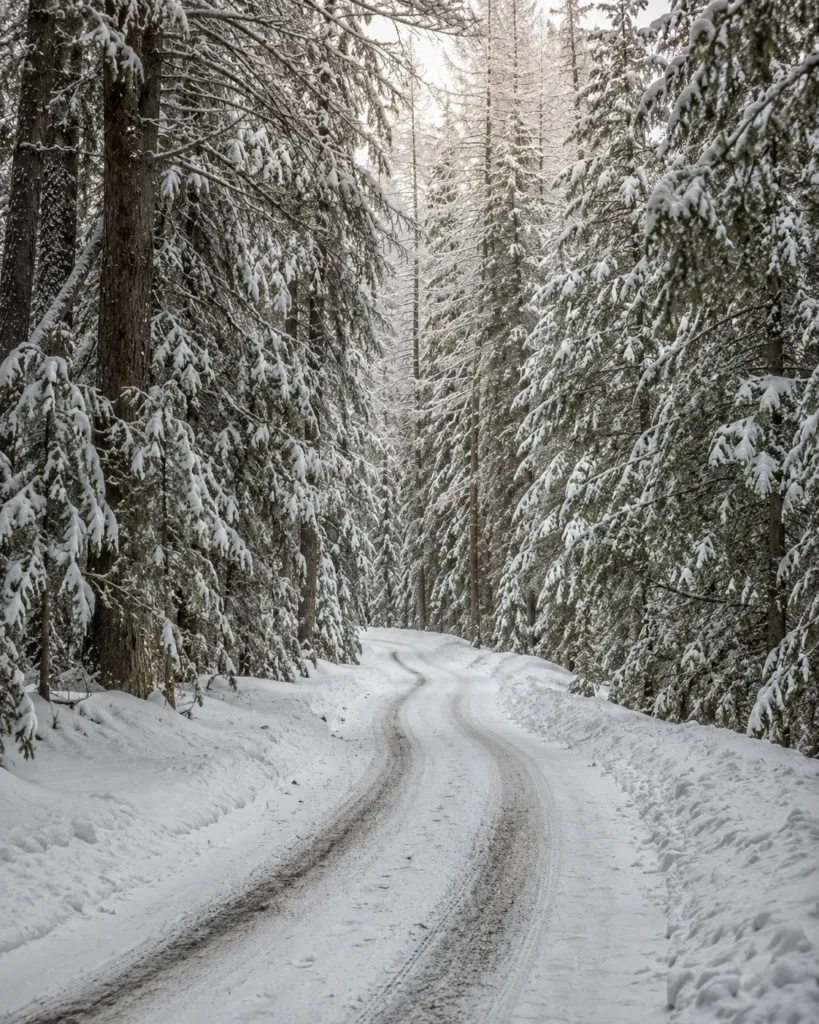
The drive in from Libby on Pipe Creek Road is part of the experience. You climb steadily through old-growth cedar and larch, with the Kootenai National Forest closing in on both sides.
The road can drift over in storms, and there’s almost no plowing priority. Don’t drive this road in winter without snow tires and a full tank of gas.
The Terrain: Why Turner Skis Bigger Than the Map Looks
Here’s the thing about Turner that the trail map doesn’t capture. The mountain has 22 named runs and one chairlift. Look at the trail map and it seems like an afternoon’s worth of skiing.
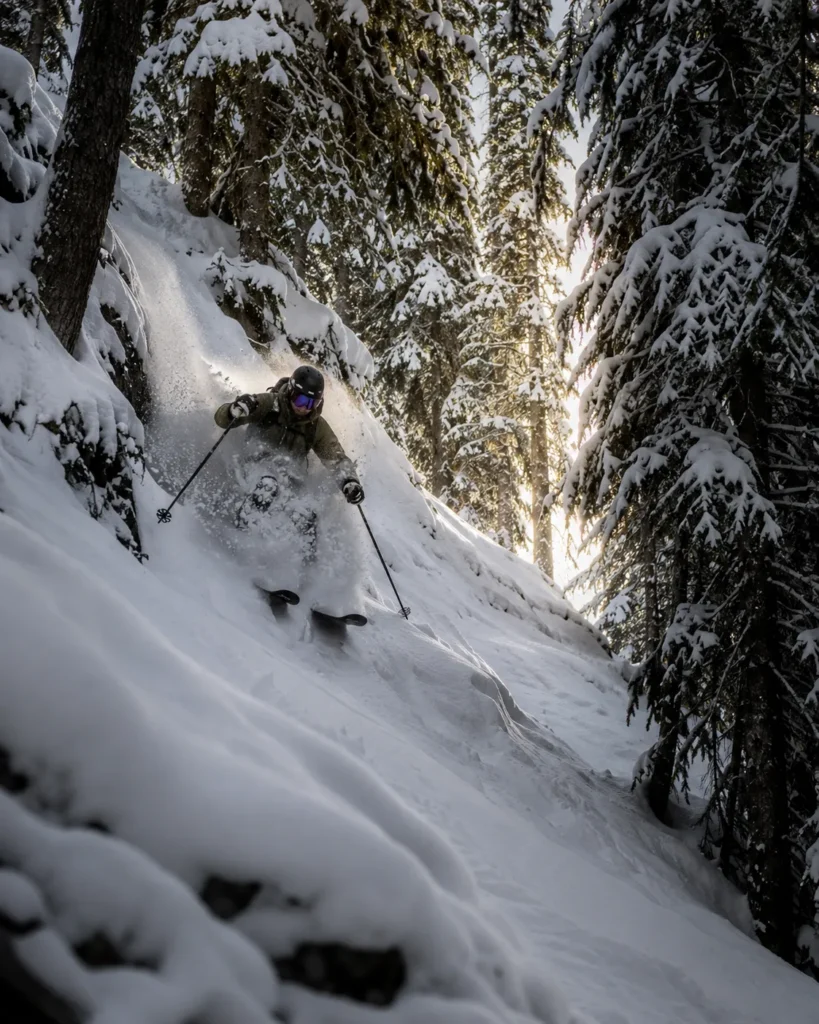
Then you stand at the top, drop into the trees on the skier’s-left side, and realize the named runs are essentially boundary markers for an enormous tree-skiing zone. The terrain between the named runs is where Turner actually lives.
The numbers on terrain difficulty:
- 60–70% Black diamond (advanced/expert)
- 20–30% Intermediate
- 10% Beginner
That terrain breakdown is unusual for any chair-served ski area in the U.S. Most resorts try to balance their terrain — 25/50/25 is typical. Turner just is what it is, and what it is is steep.
The runs range across what locals call “the front side” (looker’s view from the base) and dip into chutes and tree zones on either side. The longest run is about 2 miles top to bottom. The pitch on the steeper named runs is real — these aren’t generously rated blacks, they’re legitimate ones.
A few specific zones worth knowing:
- Lower mountain has the meaningful intermediate and beginner terrain — gentle, accessible from the chair midstation
- Upper mountain trees (both sides of the named runs) hold powder for days because almost nobody hits them
- The natural bumps on the steeper runs form quickly and are part of the experience — Turner doesn’t groom most of the steep terrain
This isn’t a mountain for people learning to ski. Sources put beginner terrain at roughly 10% of the named runs, and even that beginner terrain is more challenging than a beginner zone at most resorts.
If you’re not comfortable on at least intermediate terrain in mixed conditions, ski Lookout Pass or Whitefish instead.
The History: How a Volunteer Hill Survived 65 Years
This part matters because it explains why Turner is what it is.
Turner Mountain opened in 1960 after a dedicated group of Libby skiers spent the late 1950s scouting the mountain and building infrastructure. A rope tow and a small warming shelter went in that first season. The mountain has operated nearly every winter since, almost entirely on volunteer labor.
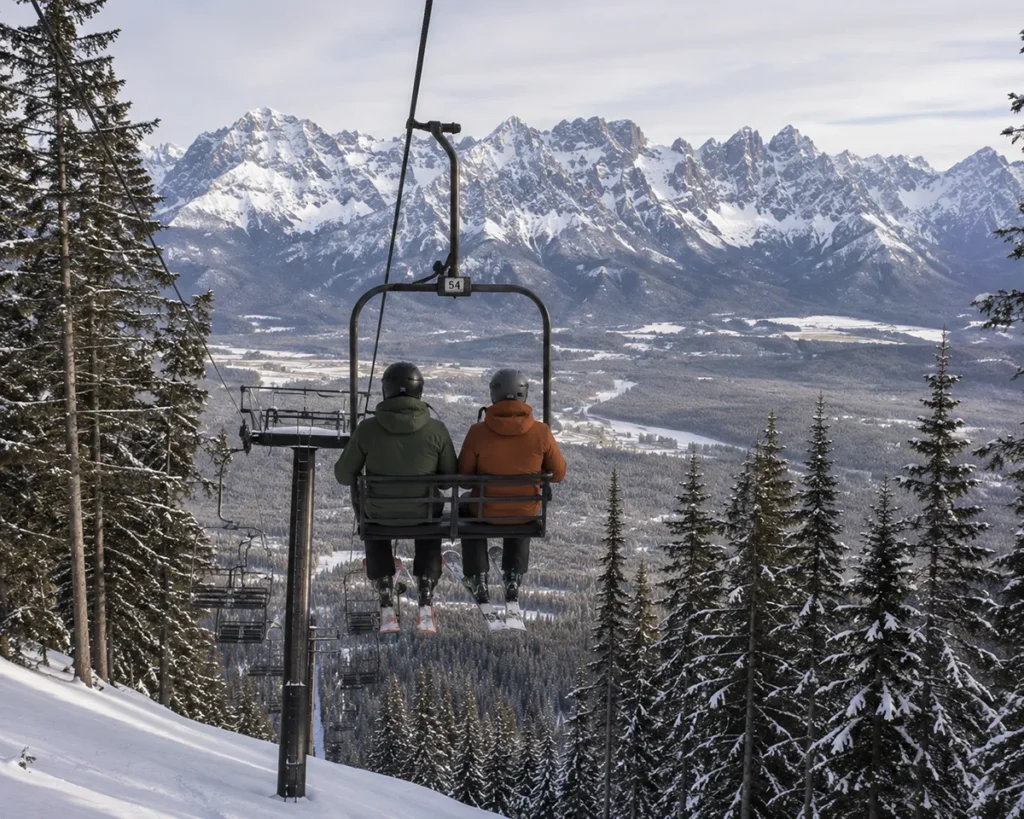
In 2001, volunteers installed a 120-chair double — replacing what locals fondly called “the world’s longest T-bar.” That double chair is still the only lift at Turner, and it’s part of the personality.
You ride up slowly. You get cold. You have a long conversation with whoever’s next to you. You eventually arrive at the top.
The mountain operates as a 501(c)(3) nonprofit, run primarily by volunteers. There’s a tiny paid crew — a few lift operators, a cook, a rental shop clerk — but ski patrol, maintenance, and most of the day-to-day work is volunteer. Turner is one of three nonprofit ski areas in Montana, along with Bear Paw Ski Bowl and Bridger Bowl.
This nonprofit model is the reason Turner’s lift tickets cost what they cost. There’s no shareholder return to optimize. There’s no destination-resort markup. The mountain charges enough to keep itself running and not a dollar more.
Lift Tickets, Hours, and the Honest Reality of Operations
Turner pricing varies by season, and a few different numbers float around online. Here’s what you can plan around, with the standard caveat to verify on the resort’s site before driving.
Lift tickets [verify current price]:
- Full-day adult: typically in the $25–$45 range depending on season and recent pricing
- Half-day adult: typically around 75% of full-day
- Discounts for kids and seniors
Operating schedule:
- Friday through Sunday + holidays during the season
- Hours typically 9:30am to 4:00pm (sometimes shorter as the season progresses)
- Season runs roughly mid-December through mid-March, depending on snow
Pass affiliations:
- Turner is independent — no Ikon, no Epic, no Indy Pass
- Season passes are available directly through Turner Mountain
Payment: Confirm current payment methods on the resort site before driving — small Montana ski areas often have limited card processing infrastructure, so bringing cash is wise.
Rentals:
Rentals are available at Turner itself, but inventory is limited. If you wear an unusual size or are picky about gear, rent in Libby (or in Kalispell on your way in) and bring your own setup.
What’s at the Base (and What Isn’t)
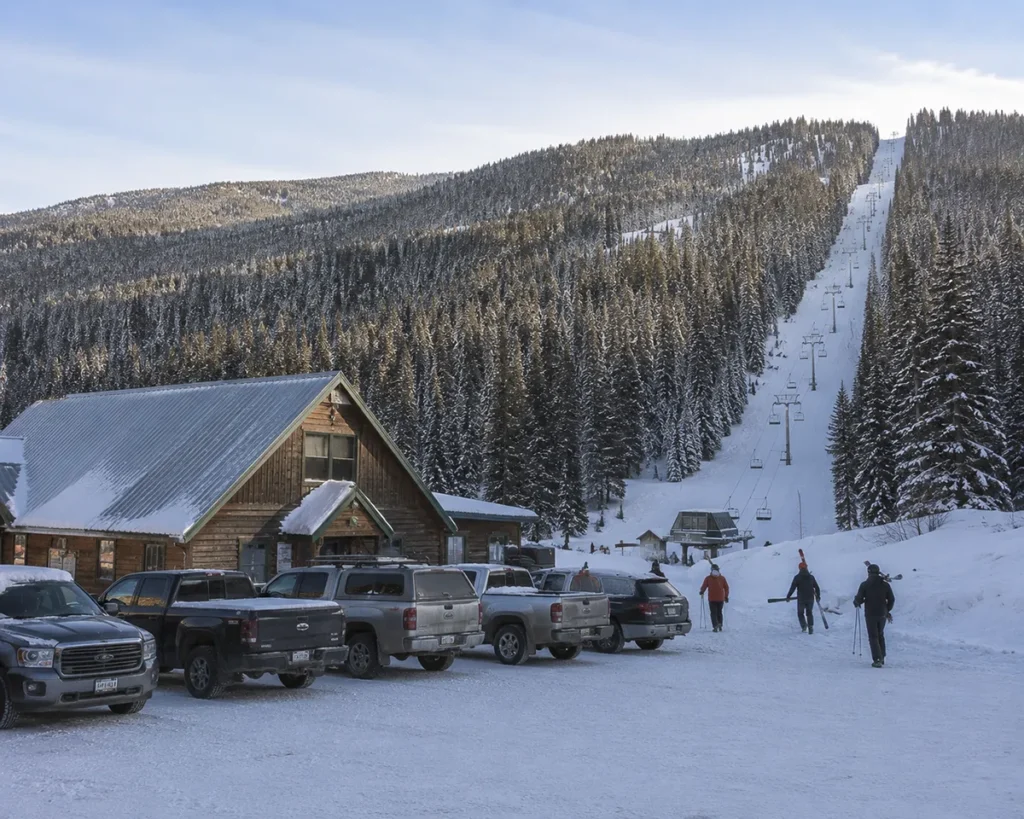
Turner’s base area is honest about what it is. The base lodge has a full-service snack bar, a small rental shop, restrooms, and a warming area with seating. The food is straightforward — chili, burgers, hot drinks, breakfast sandwiches — and reasonably priced.
What you won’t find at the base:
- A ski school in the formal sense
- A demo center or boot fitting
- Multiple dining options
- Slopeside lodging or condos
- Boutique retail
- Aprés-ski bar scene
What you will find:
- The lift operator who probably also fixed someone’s binding that morning
- A cook who knows the regulars by name
- A guestbook of skiers from places like Norway, Japan, and New Zealand who somehow heard about the place
- Conversation that doesn’t end when the chair stops loading
If you want amenities, ski Whitefish instead. If you want the experience that amenities replaced, Turner is one of a handful of places left.
What I Wish I Knew Before Skiing Turner
A few things I’d tell my pre-Turner self.
Check the wind forecast before driving four hours. The chair won’t run in high wind, and the road in is exposed enough that storms can shut down the drive entirely. Call ahead the morning of, or check the resort’s Facebook page, which gets updated more reliably than the website.
The cold is a real factor. Northwest Montana in January and February can hit -20°F to -30°F with wind chill. The chair is slow, which means more cold exposure per lap. Bring more layers than you think you need, hand warmers, and a real balaclava. See my Montana winter clothing guide and how cold Montana gets.
Plan for a half-tank stop in Libby on the way out, not just on the way in. The drive from Turner back south can take longer than expected if conditions deteriorate, and once you’re past Libby heading toward Kalispell there are stretches with limited services.
Don’t ski alone in the trees if you’re new to the mountain. The tree zones between named runs are where the best skiing is — but they’re also where you can end up in a creek drainage or a downed-tree zone if you don’t know the mountain. Ride up with someone who’s skied Turner before, or stick to named runs the first day.
Hit it after a storm. Turner’s appeal scales dramatically with snow. On a low-snow week the front-side runs ski fine but the tree zones don’t open up. On a powder day, the entire mountain transforms. Watch the forecast and time your drive.
The locals are the best part. Strike up a conversation on the chair. Compliment the cook. Tip generously. The volunteer crew at Turner is the reason the mountain exists, and they’re some of the best people you’ll meet skiing anywhere.
Where to Stay When You Ski Turner
Turner has no on-mountain lodging. Your bases:
Libby (22 miles south)
Libby is the obvious choice — small town with a handful of motels, a few B&Bs, and vacation rentals. The town itself is part of the experience: historic main street, deep ties to the Kootenai National Forest, and home to one of Montana’s most underrated waterfalls in Kootenai Falls just outside town. See my Libby Montana guide for more.
Kalispell or Whitefish (~2 to 2.5 hours)
If you want more lodging options and a town with restaurants and nightlife, base in Kalispell or Whitefish. The trade-off is the daily commute. Some skiers do a Whitefish-Turner combo trip — ski Whitefish three days, drive to Libby for one day at Turner, then back.
Troy (about 30 miles west of Libby)
Even smaller than Libby but with a few cabin and motel options. Closer to some Idaho ski terrain if you want to combine with Lookout Pass.
How Turner Fits Into a Bigger Montana Ski Trip
Turner is one of three Montana resorts that I think genuinely justifies a special-purpose visit even when you’re not local: alongside Lost Trail Powder Mountain and Bridger Bowl. Each is its own kind of pilgrimage.
Some itinerary ideas:
- The Northwest Montana Loop: Whitefish (3 days), Turner (1 day), Blacktail Mountain (1 day). About a week. Best for advanced skiers who want to experience the full range of northwest Montana resorts.
- The Cheap-and-Steep Tour: Turner Mountain + Bear Paw Ski Bowl + Maverick Mountain — three of the cheapest, weirdest, most independent ski areas in the country. Best for collectors who want bragging rights and authentic culture more than amenities.
- The Snow-Following Trip: Watch the forecasts, then drive to whichever Montana mountain just got hit hardest. Turner is often the answer when northwest Montana storms align right.
For the full picture of how Turner fits with the other 17 Montana ski areas, see my complete Montana ski resorts pillar.
Turner Mountain Ski Area: At-a-Glance
| Vertical Drop | 2,110 ft |
|---|---|
| Skiable Acres | ~1,000 (sources vary 400–1,000+) |
| Top Elevation | 5,952 ft |
| Base Elevation | 3,842 ft |
| Annual Snowfall | ~250 inches (range 200–375 across sources) |
| Terrain Breakdown | ~60–70% Advanced/Expert, 20–30% Intermediate, 10% Beginner |
| Trails | 22 named runs |
| Longest Run | ~2 miles |
| Lifts | 1 double chair (installed 2001) |
| Lift Ticket | $25–$45 range [verify current price] |
| Pass Affiliation | Independent — no Ikon/Epic/Indy |
| Operating Days | Friday, Saturday, Sunday + holidays |
| Hours | ~9:30am–4:00pm |
| Season | Mid-December to mid-March (snow dependent) |
| Ownership | 501(c)(3) nonprofit — volunteer-run |
| Nearest Town | Libby, 22 miles south |
| Nearest Airport | Glacier Park International (FCA) ~2.5 hr; Spokane International (GEG) ~3 hr |
Lift ticket prices, hours, and operating schedule change every season — verify on the Turner Mountain Ski Area official website before driving out.
What to Do in Libby When You’re Not Skiing
Libby itself is worth a day if you’re already up here. Some local options:
- Kootenai Falls — one of Montana’s most dramatic waterfalls, with a swinging bridge crossing, about 10 miles west of Libby
- Libby Heritage Museum — small but well-curated, with deep coverage of the area’s logging and mining history
- Kootenai National Forest — over 2 million acres of national forest land surrounding Libby, with cross-country ski and snowshoe options
- Libby Dam — major Army Corps engineering project on the Kootenai River, with views worth a brief stop
- Lake Koocanusa — the long reservoir north of Libby, frozen in winter and beautiful in light
If you’re putting together a broader Kootenai Country itinerary, see my Libby Montana guide.
Final Thoughts on Turner Mountain
I’ve skied every operating area in Montana. Turner is the one that most clearly explains why I think Montana skiing matters in a way that Colorado skiing increasingly doesn’t.
The mountain has more vertical than Aspen, runs harder than most resort terrain, and charges 10% of what Vail does. The lift is old. The lodge is small. The drive is long. Some seasons start late. Some days get wind-canceled. None of those things are bugs — they’re the price of admission, and the reason Turner stays the way it is.
If you’re an advanced skier who’s started to find destination ski culture exhausting, drive to Turner. If you’re a Montanan who hasn’t been yet, go. If you’re an East Coast transplant who’s been missing the mom-and-pop hills you grew up on, Turner will feel like coming home in a way you might not expect.
The mountain exists because volunteers show up every weekend. Tip the cook. Compliment the lift operator. Don’t trash the place. Drive safely on the way back. Pin this guide for your next trip, and drop any questions in the comments — I read every one and will happily help you plan the Turner Mountain trip you’re considering.
Frequently Asked Questions
Where is Turner Mountain Ski Area?
Turner Mountain is located 22 miles north of Libby, Montana, in the far northwest corner of the state. It’s in Lincoln County, deep in Kootenai Country, near the Idaho border. The nearest major airport is Glacier Park International (FCA) in Kalispell, about 2.5 hours east, or Spokane International (GEG), about 3 hours west.
How much is a lift ticket at Turner Mountain?
Lift tickets at Turner Mountain are among the cheapest chair-served tickets in Montana, with full-day adult prices typically in the $25–$45 range depending on the season. [Verify current pricing on the Turner Mountain Ski Area official website before driving out.]
What kind of skier is Turner Mountain best for?
Turner is best for advanced and expert skiers — roughly 60–70% of the named runs are black diamond, and the best skiing is in tree zones that don’t appear on the trail map. Strong intermediates will enjoy parts of the mountain. Beginners should ski elsewhere (Lookout Pass or Whitefish are better learning environments).
When is Turner Mountain open?
Turner Mountain typically operates Friday, Saturday, Sunday, and holidays, from mid-December through mid-March, with exact opening and closing dates dependent on snow conditions. Hours are usually about 9:30am to 4:00pm.
Is Turner Mountain on the Ikon, Epic, or Indy Pass?
No. Turner Mountain is independent and does not participate in the Ikon, Epic, or Indy Pass. Season passes and day tickets must be purchased directly from Turner Mountain.
Does Turner Mountain have on-mountain lodging?
No. There is no lodging at Turner Mountain itself. Most visitors base in Libby (22 miles south) for proximity, or Kalispell/Whitefish (about 2 to 2.5 hours east) for more lodging options.
How big is Turner Mountain compared to other Montana ski areas?
Turner is small in lift infrastructure (one chairlift) but offers about 1,000 acres of skiable terrain and a 2,110-foot vertical drop — comparable in vertical to mid-sized Western ski areas. It’s much smaller than Big Sky or Whitefish, but offers more vertical than many community ski areas.
Can I rent skis at Turner Mountain?
Yes, there is a small on-site rental shop at Turner Mountain. Inventory is limited, so if you have specific sizing requirements or want demo-quality gear, rent in Libby or Kalispell on your way in.
What is the closest town to Turner Mountain?
Libby, Montana, is the closest town, 22 miles south on Pipe Creek Road. Libby has motels, restaurants, gas stations, and groceries, and serves as the practical base for any Turner Mountain ski trip.
Is the drive to Turner Mountain dangerous in winter?
Pipe Creek Road from Libby to Turner is a remote mountain road that gets significant snow and limited plowing. Snow tires (and ideally AWD or 4WD) are essential, especially after storms. Check Montana road conditions at 511.mt.gov before driving, and never attempt the road on summer tires. See my Montana winter driving guide for the full picture.