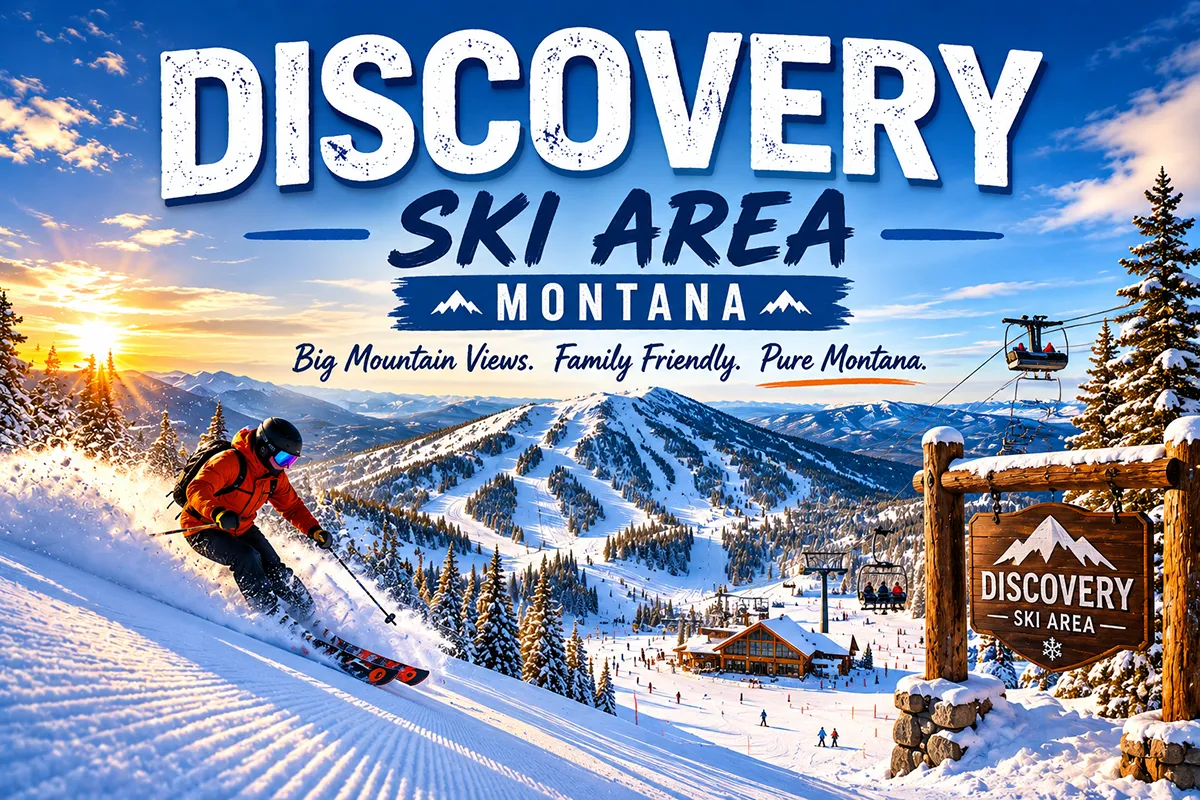
I once skied Discovery on a Tuesday in February when the lift attendant looked surprised to see me — like I’d accidentally walked into someone’s living room.
- Discovery Ski Area sits between Philipsburg and Anaconda in southwest Montana, on Rumsey and Jubilee mountains
- 2,200 skiable acres, 2,388-foot vertical drop, 67 named trails — terrain stats that put it in the same conversation as some big-name destination resorts
- Front face is groomed cruiser terrain perfect for beginners and intermediates; the backside is one of the toughest expert zones in Montana with a dozen double black diamonds
- Lift tickets typically run around $59 for a full day [verify current price] — one of the best values in American skiing
- Indy Pass partner in recent seasons [verify current season]
- Locals call it “Disco” — and they go out of their way to keep it under the radar
Liked this article?
Add Roaming Montana as a preferred source so you see more of our articles and guides on Google.
Why Locals Call It “Disco” — And Why They Don’t Want You to Know About It
Most Montana ski writers will tell you Discovery is the state’s best-kept secret. I’m here to confirm that and then explain why.
By the numbers, Discovery shouldn’t be a secret. It has a vertical drop similar to Alta, more skiable acreage than Deer Valley, and a dozen genuine double black diamond runs on the backside.
The lift ticket costs roughly a fifth of what you’d pay at most Colorado destination resorts. On paper, this is a real ski mountain with real terrain.
In practice, it’s a place where you can have an entire bowl to yourself on a Saturday in January.
The reason Discovery flies under the radar comes down to three things: (1) it’s not on a major airline route, (2) it doesn’t have on-mountain lodging, and (3) the locals genuinely prefer it stay that way.
The Pitcher family, who own and operate the mountain, have publicly said their goal is to keep Discovery the same — small in spirit, no matter how big it gets in infrastructure.
This is part of our complete guide to Montana ski resorts — and if you want my honest opinion, Discovery is one of the three resorts in that guide I’d send a serious skier to first.
Where Discovery Actually Is
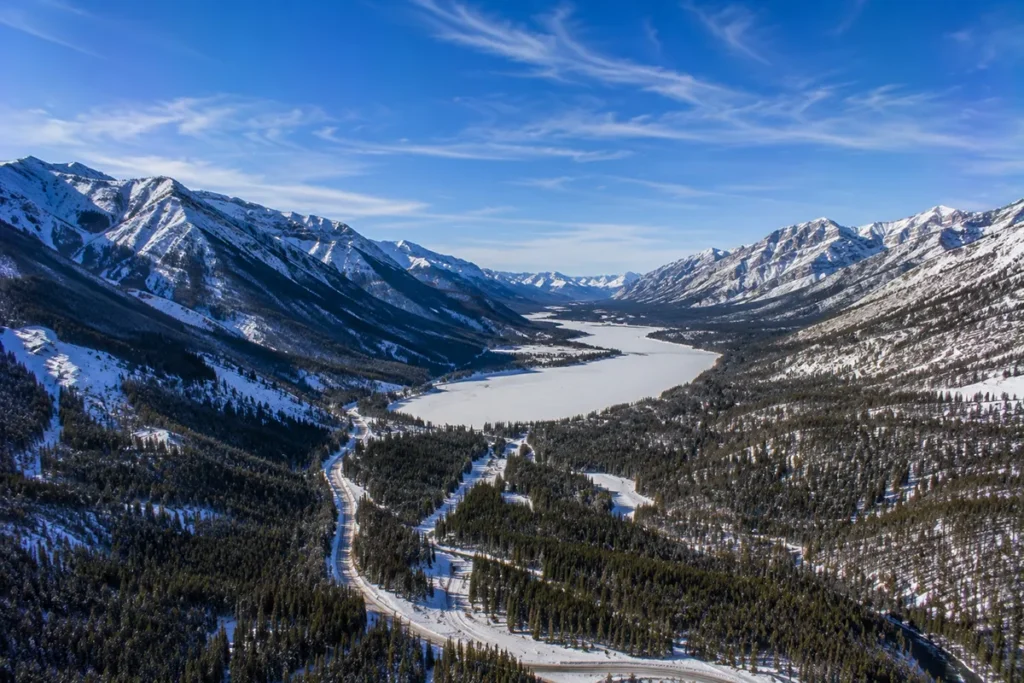
Discovery sits high in the Flint Creek Range in southwest Montana, on the west side of the Continental Divide. The mountain is built across Rumsey Mountain and Jubilee Peak, with terrain spreading across what the resort calls three or four distinct faces.
Getting there:
- From Philipsburg: about 25 miles southwest (45 minutes)
- From Anaconda: about 25 miles east-ish (45 minutes)
- From Butte: 45 miles southeast (about 1 hour)
- From Missoula: 95 miles west (about 90 minutes)
- From Bozeman: roughly 2.5 hours
- From Helena: about 1.5 hours
The nearest commercial airport is Missoula International (MSO), about 90 minutes away. Some skiers fly into Bozeman (BZN) instead — the drive is longer but the airport has more direct flights to major hubs.
The drive in from Philipsburg climbs through the Flint Creek Valley with views that are reason enough to take the trip even if you weren’t skiing.
I usually approach from the Philipsburg side because the town is one of my favorite small towns in Montana and worth a half day in its own right — preserved historic main street, the famous Sweet Palace candy shop, Philipsburg Brewing Company, and access to the Gem Mountain Sapphire Mine just south of town.
The Terrain: Front vs. Back (And Why You Need to Know the Difference)
Here’s the thing about Discovery that most write-ups gloss over: the mountain has two completely different personalities depending on which side of the ridge you’re on.
The Front Face — Beginner and Intermediate Paradise
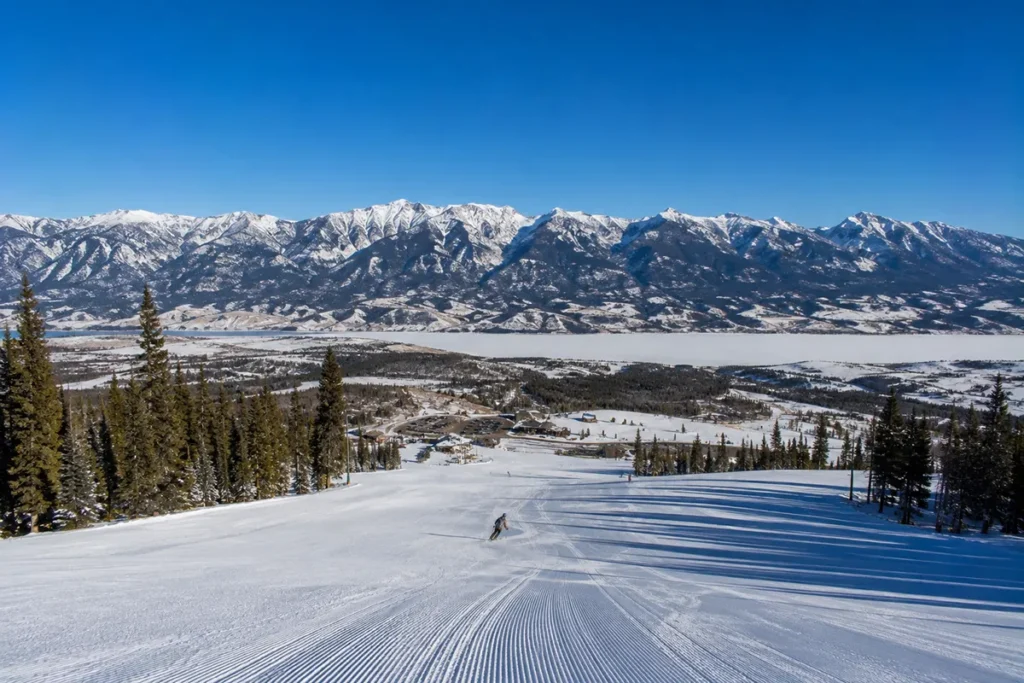
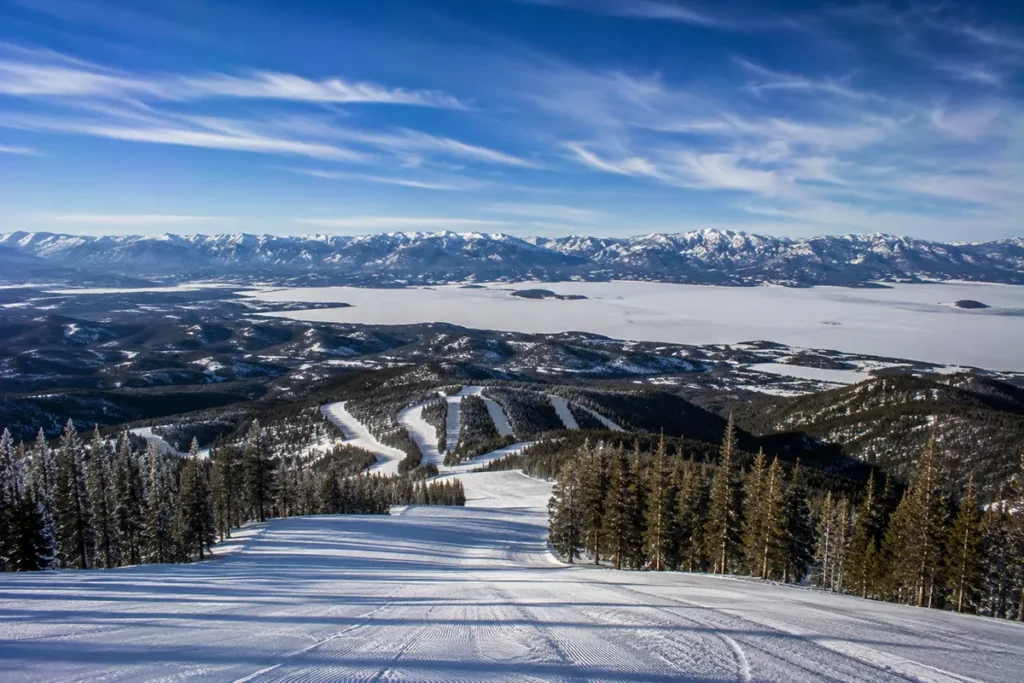
The front (south-facing) side of Discovery is the side most visitors see first. It’s accessed by the Anaconda Triple Chair (Rumsey Mountain) and the Jubilee Double Chair (Jubilee Peak), and it’s the side I’d send my mom to ski.
Wide, well-groomed cruisers. Long beginner runs that genuinely go somewhere. A magic carpet near the base for first-time skiers. A terrain park off the Jubilee lift.
The front face is the reason Discovery has a reputation as a great family mountain. A beginner can spend an entire weekend on this side and never feel like they’re skiing the same run twice.
Intermediates can carve open groomers with views across to the Anaconda-Pintler Wilderness on one side and Georgetown Lake on the other.
If you’re traveling with mixed-ability skiers, this is where you base your day.
The Backside — Where the Mountain Gets Serious
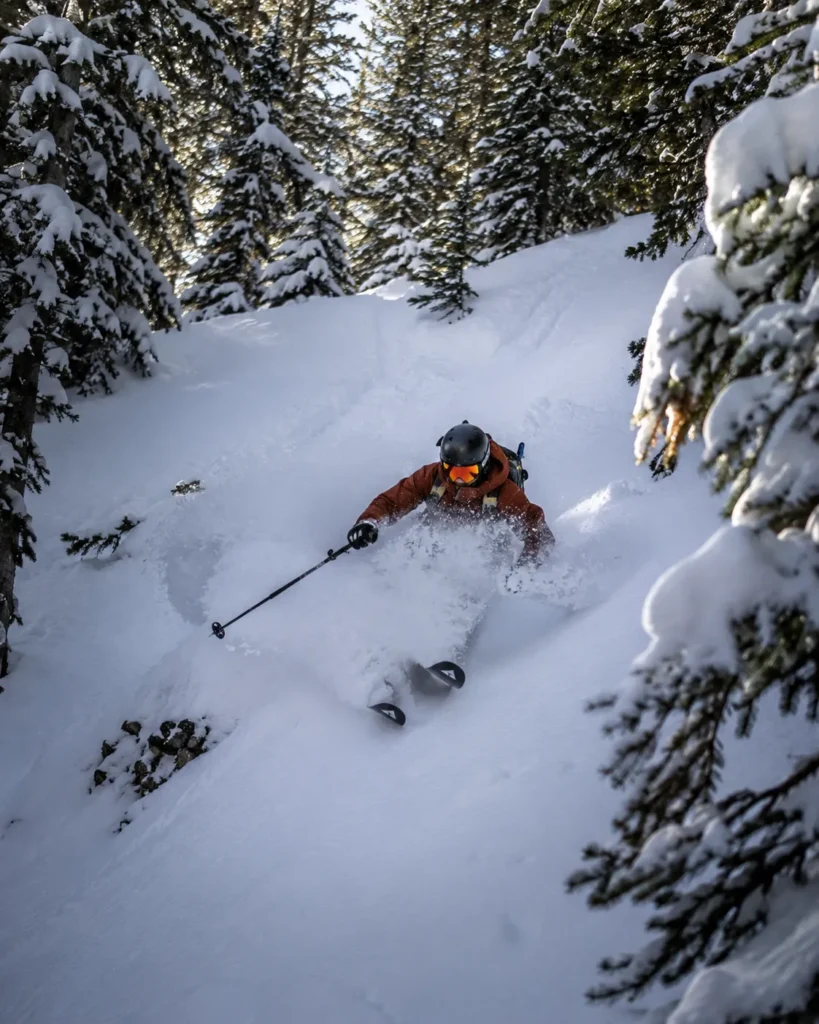
The backside of Discovery is a different mountain. Limelight Mountain and Granite Chair access north-facing terrain that includes some of the steepest lift-served runs in Montana. The East Bowl. The dozen-plus double black diamonds the front-side crowd never sees.
When I took my first run off Limelight on a clean snow day, I genuinely had to stop and recalibrate. The pitch is real. The terrain is real. The trees on either side of the named runs hide enough technical lines to keep an advanced skier entertained for days.
What surprises most first-time backside visitors is that nobody else is there. On a Saturday afternoon at any major resort, this kind of terrain would have a line of people circling the chair. At Discovery, you ride up with one other person — maybe.
A few notes on the backside:
- The snow holds longer here because the north-facing aspect doesn’t get cooked by the sun
- There’s no ski patrol presence at the same density as the front — ski with a partner if you’re going into the trees
- Conditions can vary dramatically between the front and the back on the same day; check the morning report
- You’ll want to know your way around before charging into the East Bowl on a powder day
The Stats: How Discovery Stacks Up
Here are the numbers, with the caveats that lift ticket prices change every season and skiable acreage figures vary slightly across sources.
| Vertical Drop | 2,388 ft |
|---|---|
| Skiable Acres | 2,200 |
| Top Elevation | 8,158 ft |
| Base Elevation | 6,480 ft |
| Annual Snowfall | ~215 inches |
| Terrain Breakdown | 20% Beginner, 25% Intermediate, 55% Advanced/Expert |
| Trails | 67 named runs |
| Longest Run | 1.5 miles |
| Lifts | 5 triples, 2 doubles, 1 surface (8 total) |
| Lift Ticket (full day) | ~$59 [verify current price] |
| Pass Affiliation | Indy Pass partner [verify current season] |
| Operating Days | Daily during peak season; weekends only in early/late season |
| Season | Typically mid-December through early April |
| On-Mountain Lodging | None — stay in Philipsburg or Anaconda |
Two numbers to put in context: a 2,388-foot vertical drop puts Discovery in the same range as Alta, Snowbird, and Aspen Highlands. A 2,200-acre footprint makes it bigger than Aspen Mountain and Deer Valley. And the lift ticket costs roughly one-third to one-fifth of what those mountains charge.
The annual snowfall is more modest — 215 inches isn’t 400 like Big Sky — but the snow that does fall stays in good shape on the north-facing backside, and the front side gets meaningful coverage by mid-season.
Discovery Compared to the Other 17 Montana Ski Areas
A reasonable question I get from visitors planning a Montana ski trip: how does Discovery compare to the other resorts? Quick honest take.
Vs. Big Sky: Big Sky is bigger in every dimension and has the best alpine terrain in the lower 48. Discovery has roughly a fifth of Big Sky’s lift tickets prices and a tenth of the crowds. If you can only afford one ski day per Montana trip, Big Sky. If you can afford a week, mix in Discovery for the price-to-experience win.
Vs. Whitefish: Whitefish has the better town, more snow, and more amenities. Discovery has emptier slopes and a meaningfully cheaper ticket. For a first Montana ski trip with non-skiing partners, choose Whitefish. For pure ski-day value, Discovery.
Vs. Bridger Bowl: Bridger Bowl is the most direct comparison — both nonprofit-leaning, both with serious expert terrain, both with strong local culture. Bridger has more snow (“cold smoke” powder), better ridge terrain, and more crowds. Discovery has emptier slopes and (usually) a cheaper ticket.
Vs. Lost Trail Powder Mountain: Lost Trail gets more snow and feels even more remote, but Discovery has more terrain variety and operates a full week during peak season. If your trip happens to hit a powder storm, Lost Trail. Otherwise, Discovery.
Vs. Turner Mountain and Bear Paw Ski Bowl: Turner and Bear Paw are more authentically tiny — community-run, weekend-only operations. Discovery is genuinely a mid-sized resort with multiple chairs and a full-week schedule.
For a complete side-by-side, see the Montana ski resorts pillar guide.
What I Wish I Knew Before Skiing Discovery
A handful of things I’d tell my pre-Discovery self.
The drive in is more variable than you expect. The road from Philipsburg climbs steadily, and weather conditions can change between town and the parking lot. Snow tires aren’t optional in January and February. See my Montana winter driving guide.
Eat breakfast in Philipsburg or Anaconda before you drive up. The on-mountain dining is fine — honest, well-priced lodge food — but it’s not a destination. Both towns have great breakfast spots that are worth the morning detour.
The backside skis better than the front in late season. Once March hits and the front face starts going slushy in the afternoon, the north-facing backside terrain stays in much better shape. If you’re planning a spring trip, ride the backside lifts more.
Don’t skip a midweek visit if you can swing it. I’ve skied Discovery on a Tuesday with maybe 30 other people on the whole mountain. The locals all know this. Weekends bring families from Butte and Missoula; midweek brings a strange and wonderful emptiness. For more on timing, see my Montana in March guide.
Limelight scares people. Ski with someone who knows it the first time. The chair is short, the runs from the top are committing, and there isn’t a “warm-up” pitch — you go from the lift straight into legitimate steep terrain. If you’re a strong intermediate trying to push your skills, ride Granite Chair first to scout, then go to Limelight when you’re ready.
No on-mountain lodging means you commute. Plan to stay in Philipsburg, Anaconda, or even Butte and drive in each day. Philipsburg is my preferred base — quirky, walkable, and has the best food and lodging within an easy drive of the mountain.
Where to Stay When You Ski Discovery
Discovery has no on-mountain lodging. You have three main bases:
Philipsburg (~25 miles northwest)
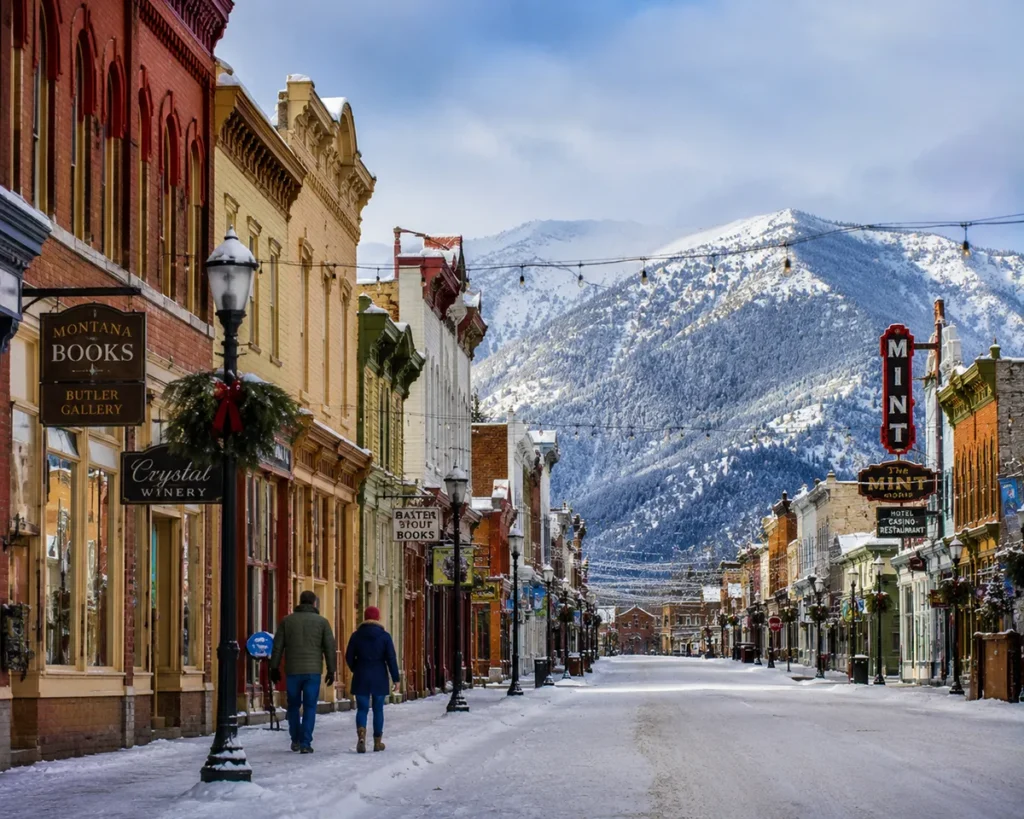
My personal pick. Philipsburg is a preserved historic mining town with great food, the Philipsburg Brewing Company, the Sweet Palace, and a handful of well-kept lodging options (historic hotels, vacation rentals, and a few B&Bs). Population sits under 1,000. The walkable main street is lit up at night and feels straight out of a Western. See my Philipsburg guide.
Anaconda (~25 miles east)
Anaconda is bigger and has more lodging variety, including chain hotels. The town has its own deep history — the Anaconda Copper Mining Company shaped this place — and the Smelter Stack on the hill is a landmark visible from the highway. Strong choice if you want more dining options.
Butte (~1 hour southeast)
Butte gives you the most lodging and dining options in southwest Montana but requires a longer commute. Best if you’re combining a ski trip with broader sightseeing — things to do in Butte is worth a look.
Missoula (~90 minutes west)
If you’re flying into MSO and want to base in a real city, Missoula works — but it’s a longer commute than I’d want every morning of a ski trip. Better as the start/end of a longer southwest Montana itinerary.
Things to Do Around Discovery When You’re Not Skiing
Discovery makes a great anchor for a multi-day southwest Montana trip. A few non-ski options nearby:
- Gem Mountain Sapphire Mine — south of Philipsburg, you can dig your own Montana sapphires (some operations winter-limited; verify before driving)
- Philipsburg Brewing Company — small craft brewery in the historic main street
- The Sweet Palace — old-school candy store in Philipsburg with a 1900s-era interior
- Georgetown Lake — between Philipsburg and Anaconda, ice fishing in winter
- Anaconda Smoke Stack State Park — the historic copper smelter site
- Granite Ghost Town State Park — abandoned silver mining town near Philipsburg
For a broader southwest Montana itinerary, see my guide to southwest Montana.
Final Thoughts on Discovery
I’ve skied every operating area in Montana, and Discovery is the one I most consistently send people to when they ask me where to go.
Not because it’s the biggest, the snowiest, or the most prestigious — none of those — but because it’s the resort that most fully delivers on the promise of Montana skiing: real terrain, real value, real culture, and the consistent feeling that you’ve gotten away with something.
For a first-time Montana visitor with one ski day to spare and limited budget, Discovery is the right answer more often than not. For an advanced skier who knows what they want — empty backside terrain, no lift lines, and a $59 ticket — Discovery is hard to beat anywhere in North America.
The locals would prefer I’d left this guide unwritten, and I understand why. If you go, ski with intention. Tip the lift operators. Eat at the lodge. Stay in Philipsburg or Anaconda and spend a few dollars in town. The mountain stays the way it is because the people who love it keep showing up.
Pin this guide before your trip, and drop your questions in the comments below — I read every one and will help you figure out whether Disco fits your itinerary.
Frequently Asked Questions
Where is Discovery Ski Area in Montana?
Discovery Ski Area is in Granite County in southwest Montana, between the towns of Philipsburg (25 miles northwest) and Anaconda (25 miles east). The nearest commercial airport is Missoula International (MSO), about 90 minutes away.
How big is Discovery Ski Area?
Discovery has 2,200 skiable acres, a 2,388-foot vertical drop, and 67 named runs across multiple mountain faces. That makes it one of the larger ski areas in Montana — bigger than Aspen Mountain and Deer Valley by acreage.
How much does it cost to ski at Discovery?
Full-day adult lift tickets at Discovery typically run around $59 in recent seasons, which is one of the best values in American skiing. Discovery has been an Indy Pass partner in recent seasons. [Verify current pricing and pass affiliation on the Discovery Ski Area official website.]
Is Discovery good for beginners?
Yes. The front face of Discovery (accessed by the Anaconda Triple Chair and Jubilee Double Chair) has gentle groomed runs perfect for beginners, plus a magic carpet near the base for first-timers. About 20% of the terrain is rated beginner, with another 25% intermediate.
Is Discovery good for expert skiers?
Yes — and this is the part most visitors don’t expect. The backside of Discovery (accessed by Limelight and Granite chairs) has some of the steepest lift-served terrain in Montana, including a dozen-plus double black diamond runs. Roughly 55% of Discovery’s terrain is rated advanced or expert.
Does Discovery Ski Area have on-mountain lodging?
No. There is no lodging directly at the mountain. Most skiers base in Philipsburg or Anaconda, both about 25 miles from the resort, or in Butte (about an hour away).
Is Discovery on the Ikon or Epic Pass?
No. Discovery has been a partner on the Indy Pass in recent seasons, which lets you ski multiple independent ski areas across the country for a single pass price. It is not on the Ikon or Epic Pass. [Verify current Indy Pass partnership status each season.]
When does Discovery Ski Area open and close?
Discovery typically opens in mid-December and stays open through early April, depending on snow conditions. The resort often operates weekends only at the start and end of the season, with full daily operations during peak winter months.
What’s the best time to visit Discovery?
Mid-January through early March offers the best snow conditions. For the best combination of snow, longer days, and less crowded slopes, target mid- to late-February midweek. Spring skiing (March) is especially good on the north-facing backside terrain.
How does Discovery compare to Big Sky or Whitefish?
Big Sky and Whitefish are larger destination resorts with more amenities, more snowfall, and significantly higher lift ticket prices. Discovery has comparable acreage to Whitefish but with a fraction of the crowds and at a much lower price point. For a full comparison, see our complete Montana ski resorts guide.