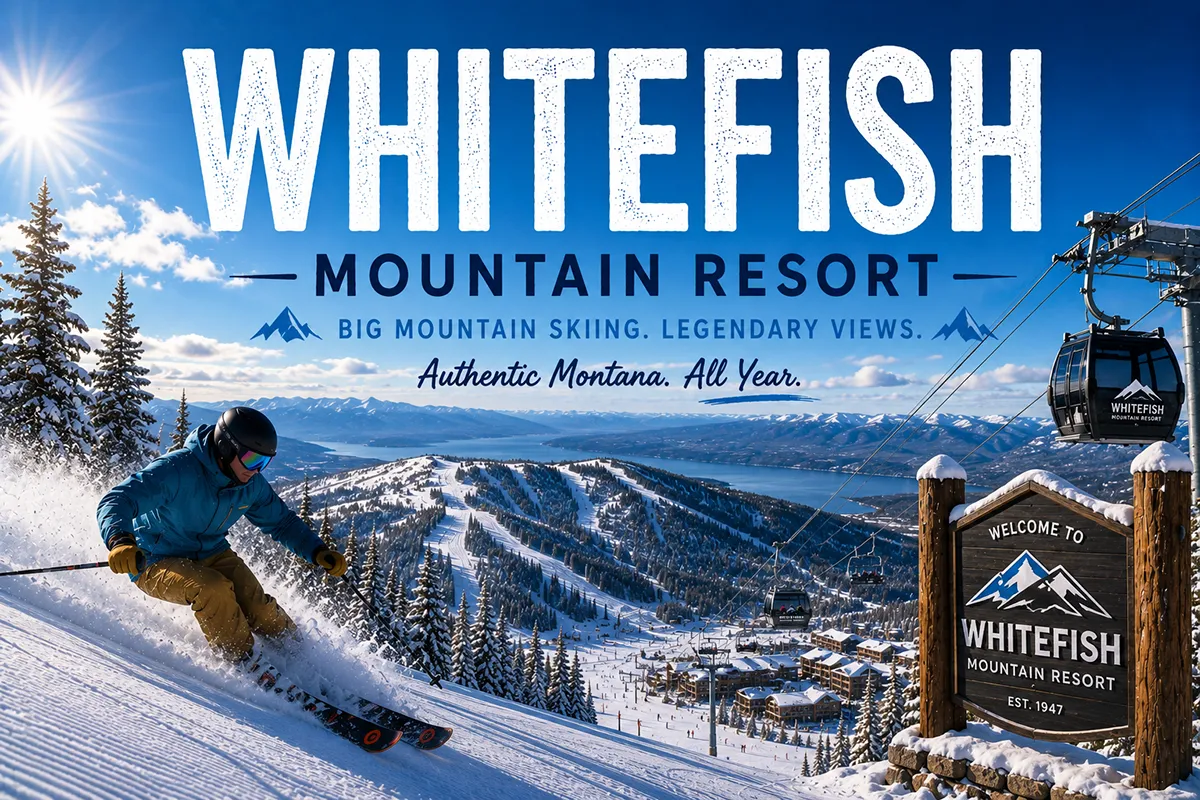
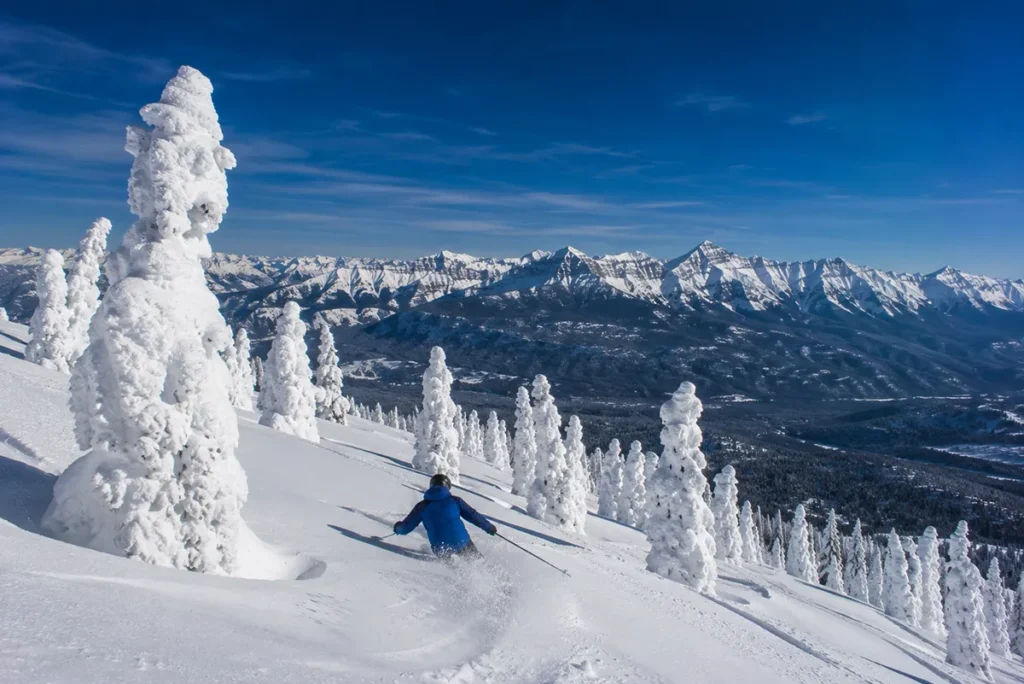
The first thing I noticed standing at the top of Whitefish Mountain on a January morning was that I couldn’t see most of the mountain. The fog had rolled in overnight and frozen onto every tree it touched, turning the forest into a field of white statues. Locals call them snow ghosts. I called my husband to come move our flights.
- Whitefish Mountain Resort sits on Big Mountain in northwest Montana, just 4 miles from the town of Whitefish and about 19 miles north of Glacier Park International Airport
- 3,020 skiable acres, 2,353-foot vertical drop, 93+ named trails — and roughly 300 inches of snow per year
- 14 lifts including the Snow Ghost Express high-speed six-pack (2022) and Big Mountain Express (2007)
- Full-day adult lift tickets typically run $55–$110 depending on the date [verify current price] — roughly one-third the cost of similarly-sized destination resorts
- Kids 6 and under ski free
- Independent — not on the Ikon, Epic, or Indy Pass. Whitefish has deliberately stayed independent
- The right trip if you want one resort that does it all: real ski-town culture, all-abilities terrain, deep snow, and prices that won’t ruin your budget
Liked this article?
Add Roaming Montana as a preferred source so you see more of our articles and guides on Google.
Why Whitefish Is My Top Recommendation for First-Time Montana Skiers
I’ve skied every operating resort in Montana, and when friends ask me where they should anchor their first Montana ski trip, my answer has been the same for years: Whitefish.
Not because it’s the biggest — Big Sky wins that competition by a wide margin. Not because it has the deepest snow on the planet — Pacific moisture brings 300 inches a year, which is generous but not record-breaking. And not because it has the most extreme terrain — Bridger Bowl and Big Sky both deliver harder skiing.
Whitefish wins on the total package. Real ski-town culture in a town where people actually live year-round. Legitimate terrain across every ability level. Snow that falls heavy and frequently. Lift tickets at roughly one-third the cost of comparable destination resorts.
A 30-minute drive to one of America’s most spectacular national parks. And — increasingly important in 2026 — a resort that has deliberately kept itself independent of the mega-pass ecosystem that has reshaped most of American skiing.
This is part of our complete guide to Montana ski resorts — and if you’re trying to decide where to anchor a Montana ski week, this post will tell you exactly why Whitefish is, more often than not, the right answer.
Where Whitefish Mountain Resort Actually Is
Whitefish Mountain Resort is built on Big Mountain in the Flathead National Forest, in Flathead County in northwest Montana.
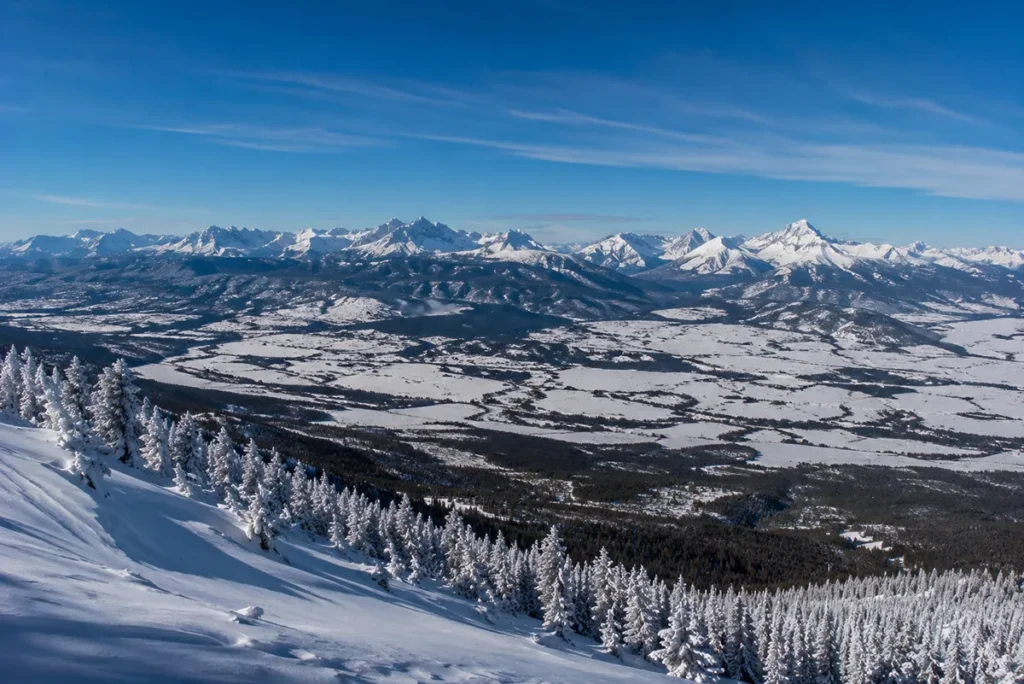
The resort sits in one of the most remote locations of any major U.S. ski destination — about 60 miles south of the Canadian border, and isolated from the main mountain ski circuits of Colorado and Utah.
Getting there:
- From the town of Whitefish: 4 miles up Big Mountain Road (about 10 minutes)
- From Glacier Park International Airport (FCA): about 19 miles, roughly 30 minutes — one of the most direct airport-to-resort drives in American skiing
- From Kalispell: about 21 miles south
- From Columbia Falls: 16 miles east — gateway to Glacier National Park
- From Missoula: about 140 miles south (2.5–3 hours)
- From Spokane, WA: about 260 miles west (4.5 hours)
Glacier Park International (FCA) is the primary airport, and it punches above its weight for a small regional airport. Direct flights from Seattle, Minneapolis, Chicago, Denver, Atlanta, and several other major hubs operate during ski season. The 30-minute airport-to-resort drive — versus an hour or more at Big Sky — is one of Whitefish’s quiet superpowers.
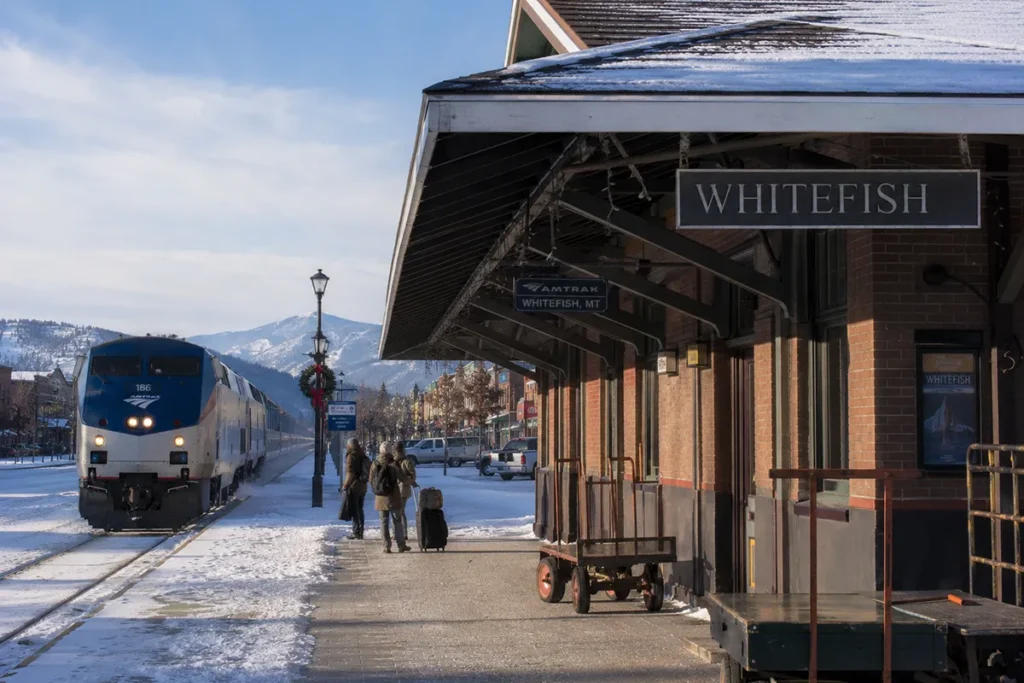
You can also reach Whitefish by train. Amtrak’s Empire Builder stops daily at the historic Whitefish station in the heart of town. It’s one of the few American ski resorts you can genuinely visit without a car.
The Terrain: What Big Mountain Actually Skis Like
Whitefish’s footprint is large by any standard — 3,020 skiable acres spread across three distinct faces of Big Mountain. The terrain breakdown skews more advanced than visitors expect.
Approximate terrain breakdown:
- Beginner: ~15%
- Intermediate: ~35%
- Advanced: ~40%
- Expert: ~10%
That’s 50% advanced or expert terrain — not a learner’s mountain by any stretch. But the 15% beginner and 35% intermediate adds up to enough cruising terrain that mixed-ability groups can ski together comfortably.
The Front Side (East Face)
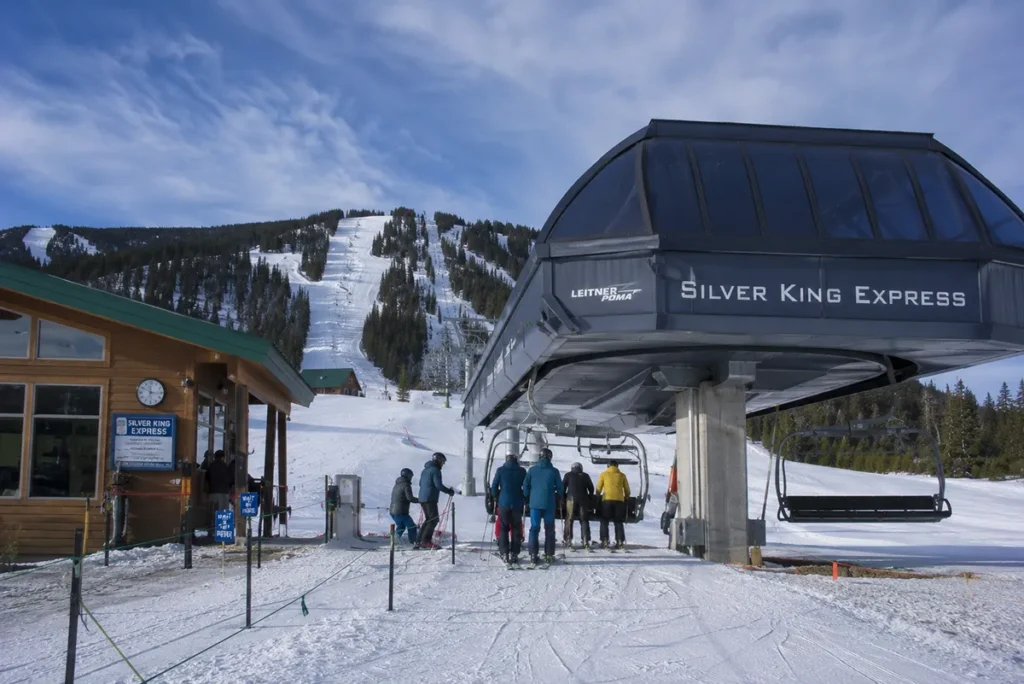
The east-facing front side is where most visitors spend their days. The Big Mountain Express high-speed quad (2007) and the newer Snow Ghost Express high-speed six-pack (2022) handle the heavy lifting.
Long groomed cruisers, intermediate trails through the trees, and a long progression of greens make this the right base for any family with mixed skill levels.
The runs here — Toni Matt, Hellfire (the longest run on the mountain at 2.52 miles), Inspiration — are some of the most enjoyable intermediate-friendly trails in the western U.S. The pitch is genuine without being intimidating, and the trails go on long enough to feel like real skiing.
Hellroaring Basin (The North Side)
Hellroaring Basin is where Whitefish gets serious. The north-facing terrain accessed via Chair 8 (the relocated Hellroaring lift) holds snow longest, features the resort’s steepest groomed runs, and accesses tree-skiing zones that locals will lower their voices to describe.
What I love about Hellroaring is that the named runs are essentially boundary markers for an enormous zone of tree skiing.
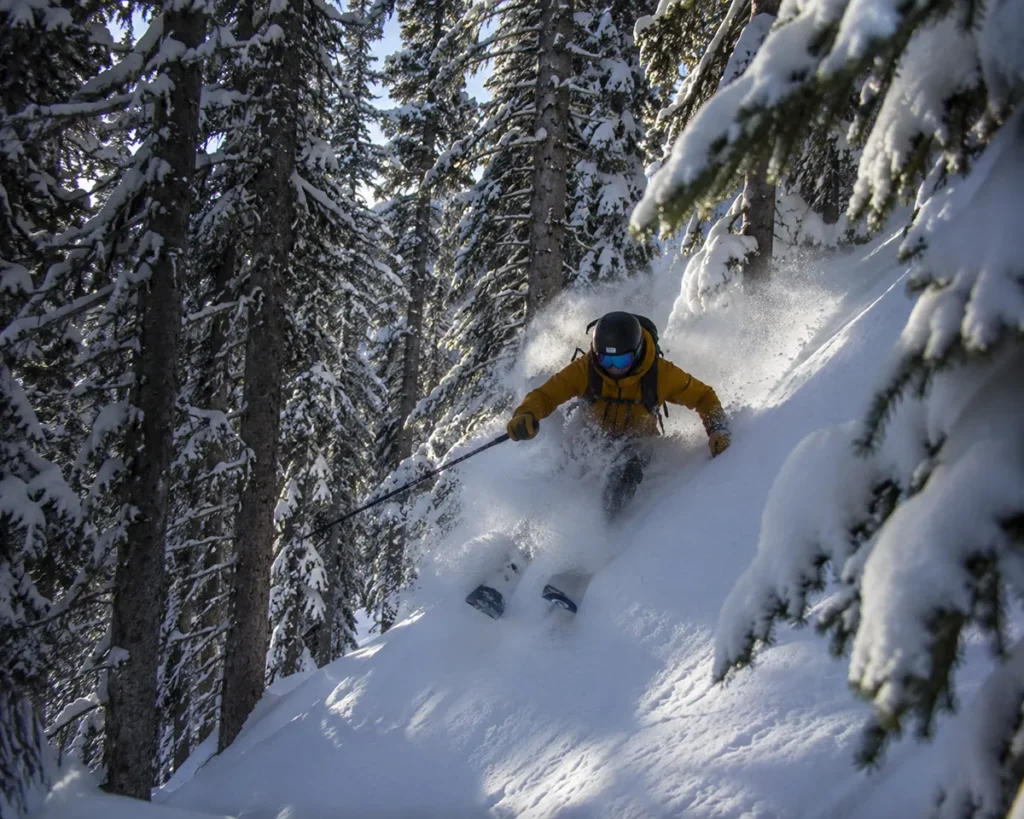
Drop into the trees on either side of any of the marked runs and you can ski for hundreds of vertical feet in glades that don’t appear on the trail map. The snow holds for days because most casual visitors stay on the named trails.
Picture Chutes in Hellroaring offers some of the steepest skiing on the mountain — natural cliff drops, narrow chutes, and committed lines that are real expert terrain. This isn’t Lone Peak Tram territory, but it’s the closest Whitefish gets, and it’ll keep advanced skiers entertained for a week.
The Backside (West Face)
The west side of Big Mountain is the quietest part of the resort. North Bowl and the west-side glades hold snow well and rarely see crowds, even on weekends. This is the side I go to when the front side gets busy.
Night Skiing
This is one of Whitefish’s underrated features. Friday and Saturday nights, the lower mountain lifts run for night skiing — usually until 8:30 or 9:00pm depending on the season.
The lit terrain isn’t the whole mountain (the upper-mountain lifts close earlier), but you get genuine skiing on illuminated runs with a totally different atmosphere.
My favorite Whitefish move is an afternoon-to-evening session: ski 1pm to 4pm, dinner at the base lodge or in town, then return for empty groomers under the lights from 6pm to 9pm. The night-skiing crowds are minimal even on weekends.
The Snow: Pacific Powder and Why It Skis Differently
Whitefish’s snow has a personality. Pacific weather systems push moisture up from the coast, dump it into the upslope on Big Mountain, and produce snow that’s noticeably heavier than the dry continental powder of Colorado, Utah, or even Big Sky.
What that means practically:
- The powder is wonderful in trees and bowls — the heavier moisture content makes for stable, fun glades skiing
- The powder can be challenging on groomed runs when conditions are warm — heavy snow can pile up and slow you down
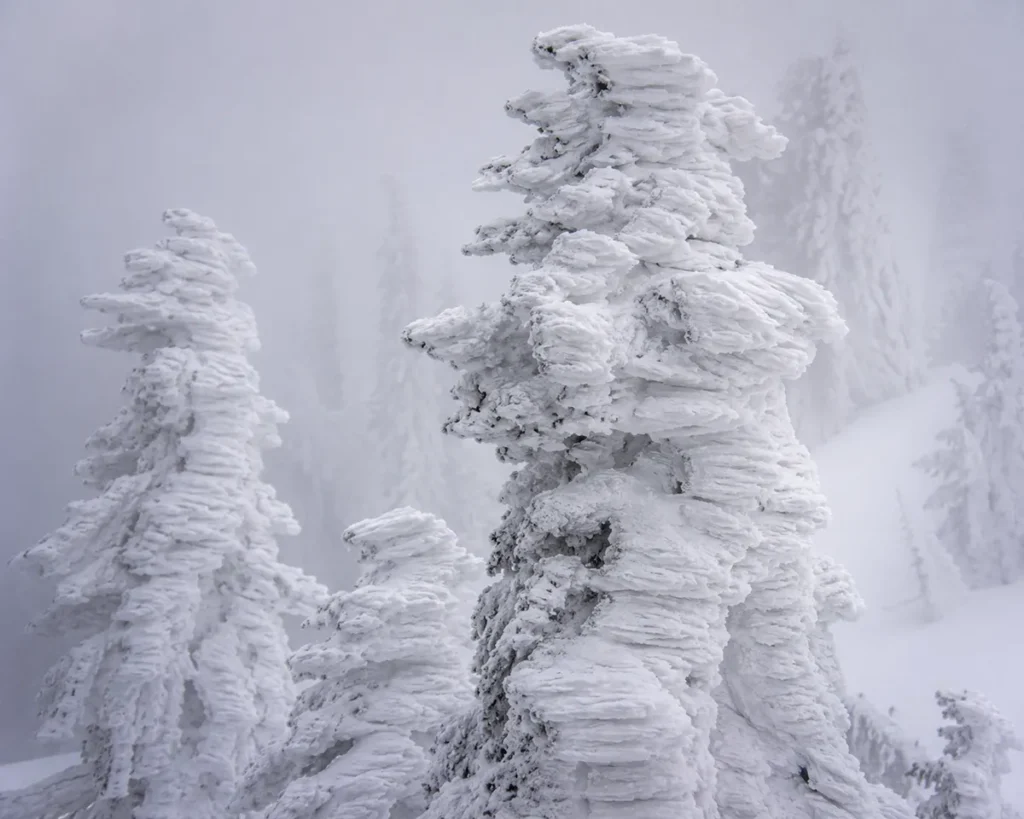
- Visibility is often low — Pacific moisture brings fog, snow, and the rime ice that creates the snow ghosts
- Bluebird days are rarer than at Big Sky or Bridger Bowl — Whitefish gets a lot of weather
The snow ghosts themselves are worth a paragraph. These are evergreen trees encased in rime ice from the near-constant fog at upper elevations.
They form because the fog hangs low and freezes onto every surface. By mid-winter, the upper mountain becomes a forest of white statues that look genuinely otherworldly. Do not ski close to them — they look soft but are rock-hard blocks of ice that will end your ski day.
For more on the cold and the moisture, see how cold Montana gets and Whitefish in winter.
Lift Tickets, Passes, and the Independent Stance
Whitefish’s pricing is one of the best stories in American skiing — and it’s not an accident.
Full-day adult lift tickets typically run $55–$110 depending on the date and how far in advance you book. Buy online 48+ hours in advance for roughly a 10% discount. [Verify current pricing on skiwhitefish.com.]
A few things to know:
- Kids 6 and under ski FREE at Whitefish. They still need to pick up a complimentary lift ticket at the window, but there’s no charge.
- Junior tickets (ages 7–12) typically run around $41
- Seniors (65–69) get discounted rates
- Ages 70+ ski at deeply discounted prices (last reported around $32)
- Multi-day tickets save money for week-long trips
- Season passes are exceptional value for anyone in the region — Whitefish has been one of the most affordable destination-resort season passes in the U.S. for years
The Independent Stance
Whitefish is one of the very few large U.S. ski resorts that has deliberately chosen to stay independent. The resort is not on the Ikon Pass, the Epic Pass, or the Indy Pass.
In a 2025 Powder Magazine interview, Whitefish president Nick Polumbus said the mega-pass companies have approached the resort and Whitefish has “swiped left.”
The reasoning, as he put it, is that independence allows the resort to retain a sense of character that has been stripped away from much of the industry.
The resort’s majority owner is billionaire Bill Foley, who also owns the Vegas Golden Knights.
Foley lives in Whitefish part of each year, and the financial backing has allowed the resort to invest in lift infrastructure (the Snow Ghost Express six-pack came online in 2022, and the Hellroaring chair was relocated for earlier-season access) without the pressure of mega-pass economics.
What this means for you as a visitor: lift tickets are still affordable at the window, the crowds remain manageable compared to Ikon and Epic destinations, and the resort isn’t trying to optimize for the highest-paying customer demographic. It’s the closest thing to what destination skiing used to feel like 20 years ago.
The Town of Whitefish: Why It Matters
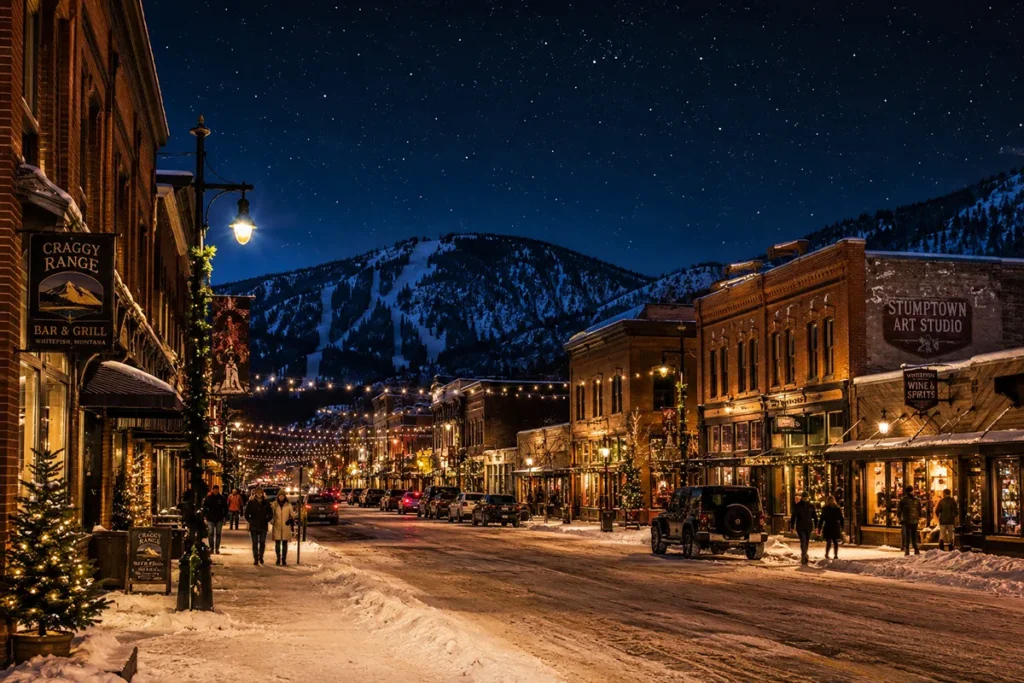
Most destination ski resorts have engineered villages built specifically for ski tourism — Vail’s pedestrian village, Beaver Creek, Big Sky’s Mountain Village. Whitefish has something different: a real town that exists for its own reasons, with a ski resort attached.
The town of Whitefish (population around 8,000) sits 4 miles down the mountain from the resort. Historic main street (Central Avenue) runs through downtown with preserved early-1900s buildings, locally-owned restaurants, multiple craft breweries (Great Northern Brewing, Bonsai Brewing, Sunrift Brewing among others), bookstores, gear shops, and the kind of casual community feel that doesn’t exist at most modern ski destinations.
A few specifics worth knowing:
- The Lodge at Whitefish Lake and similar properties offer ski-and-stay packages
- Downtown lodging is plentiful — boutique hotels, Airbnbs, and historic properties
- The SNOW bus runs a free shuttle service between downtown Whitefish and the resort during ski season — you genuinely don’t need a car if you’re staying in town
- Dining is excellent for a town this size — multiple high-quality restaurants spanning casual to fine dining
The town also serves as a year-round community, which means the businesses are sustainable, the restaurants don’t close in shoulder season, and locals are genuinely happy to see you. This is rarer than it sounds.
For more on the town itself, see my dedicated guides to the town of Whitefish, things to do in Whitefish, and where to stay in Whitefish.
What I Wish I Knew Before Skiing Whitefish
A few things I’d tell my pre-Whitefish self.
Plan for low-visibility days. Whitefish gets a lot of fog and weather. On low-visibility days, the lower-mountain tree-skiing terrain is your friend — the trees provide reference points the open runs lack. Goggles with low-light lenses are mandatory. Bring two pairs of goggles, period.
Don’t underestimate the cold. The base area sits at about 4,500 feet and the top of Big Mountain is at 6,800 feet — meaningfully lower than Big Sky’s elevations. But the northern latitude and Pacific moisture mean wind chills routinely hit -10°F to -20°F in January and February. See my Montana winter clothing guide.
Stay in town, not at the resort. This is contrarian advice, but I almost always tell visitors to stay in downtown Whitefish rather than at the resort base. The free SNOW bus shuttle is reliable, the downtown food and culture are dramatically better, and lodging is meaningfully cheaper. You get the resort experience by day and the real-town experience by night. See where to stay in Whitefish.
Combine with Glacier National Park. Even in winter, the Glacier National Park west entrance at West Glacier is only about 30 miles east of Whitefish. The Going-to-the-Sun Road is closed in winter, but cross-country skiing, snowshoeing, and wildlife watching are spectacular. Adding a non-ski day in Glacier is one of the best winter Montana experiences available.
Night skiing changes the trip. Most visitors don’t bother with the Friday/Saturday night skiing. They should. The empty groomers under the lights, the dinner-and-ski rhythm, and the dramatically different atmosphere make this one of Whitefish’s standout features.
Drive the SNOW bus, don’t drive yourself. Big Mountain Road from town to the resort is icy and narrow in winter. The SNOW bus runs every 30 minutes during ski season, is free, and lets you skip the parking lot completely. Use it.
Spring skiing here is spectacular. Late March and early April at Whitefish often combines deep snowpack with longer days and softer afternoon snow. The mountain typically stays open until early April. See Montana in March for broader spring context.
Where to Stay: Mountain vs. Town vs. Down Valley
Three honest options.
At the Resort (Base Area)
Slope-side lodging at Big Mountain — Kandahar Lodge, Morning Eagle Lodge, Hibernation House, and various condos. Ski-in/ski-out convenience, walkable to base-area dining (limited but present), and quiet at night.
Best for: Visitors who want maximum ski-time efficiency, families with young children where transit logistics matter, and anyone who doesn’t want to drive in winter conditions.
Tradeoff: Limited dining options at the base, you’re committing to the mountain experience without the town life, and prices run higher than equivalent lodging in town.
Downtown Whitefish (4 miles down)
This is my recommendation for most visitors. Downtown Whitefish has historic hotels (The Lodge at Whitefish Lake, Firebrand Hotel, Pine Lodge), boutique B&Bs, and a strong vacation rental market. The free SNOW bus shuttle runs to the resort every 30 minutes.
Best for: Almost everyone. You get the resort by day and the town by night, with lower lodging costs and dramatically better dining options.
Tradeoff: Slight commute to the lifts (20 minutes via shuttle, or about 15 minutes by car). Manageable.
Kalispell or Columbia Falls (20–25 minutes south)
The cheapest lodging in the area. Both Kalispell and Columbia Falls have chain hotels and vacation rentals that run significantly cheaper than downtown Whitefish.
Best for: Budget travelers, larger groups needing multiple rooms, RV travelers, and anyone combining Whitefish with broader Flathead Valley exploration.
Tradeoff: Longer commute to the mountain (40+ minutes), and you’re missing the in-town walkability.
For broader Whitefish lodging strategy, see where to stay in Whitefish and winter Airbnbs in Montana.
Whitefish Compared to the Other 17 Montana Ski Areas
The natural comparisons:
Vs. Big Sky Resort: Big Sky has more terrain, more vertical, the Lone Peak Tram, and amenities Whitefish can’t match. Whitefish has the better town, half the lift ticket price, no mega-pass obligation, and a more authentic feel. For first-time visitors with mixed-ability groups, Whitefish wins. For experts chasing the biggest possible terrain, Big Sky.
Vs. Bridger Bowl: Bridger Bowl is the local Bozeman move — cheaper, more ski-bum culture, legendary “cold smoke” powder. Whitefish has more amenities, more snow on average, a far better town, and easier airport access. Bridger requires the Bozeman ecosystem to work; Whitefish stands on its own.
Vs. Blacktail Mountain: Blacktail is 45 minutes south of Whitefish and operates as a small community mountain. Many Whitefish trips include a day at Blacktail just for the views of Flathead Lake. They complement rather than compete.
Vs. Turner Mountain: Turner is 2 hours west of Whitefish and is the inverse experience — tiny, steep, volunteer-run. A common move is to anchor in Whitefish for a few days and drive over to Turner for one day of extreme contrast.
For the full picture, see the Montana ski resorts pillar guide.
Whitefish Mountain Resort: At-a-Glance
| Vertical Drop | 2,353 ft |
|---|---|
| Skiable Acres | 3,020 |
| Top Elevation | 6,817 ft |
| Base Elevation | 4,464 ft |
| Annual Snowfall | ~300 inches |
| Terrain Breakdown | 15% Beginner, 35% Intermediate, 40% Advanced, 10% Expert |
| Trails | 93+ named runs |
| Longest Run | 2.52 miles (Hell Fire) |
| Lifts | 14 total — 11 chairs (incl. 1 six-pack and 3 high-speed quads) + 1 T-bar + 2 conveyor carpets |
| Lift Ticket | $55–$110 range [verify current price] |
| Kids 6 & Under | Ski FREE (require complimentary ticket) |
| Pass Affiliation | Independent — not on Ikon, Epic, or Indy |
| Night Skiing | Friday & Saturday nights on lower mountain |
| Season | Typically early December through early April |
| Owner | Bill Foley (majority owner) |
| Nearest Town | Whitefish, 4 miles |
| Nearest Airport | Glacier Park International (FCA), ~19 miles / 30 min |
| Train Access | Amtrak Empire Builder daily at Whitefish station |
Lift ticket prices and operating dates change annually — verify on skiwhitefish.com before booking.
Things to Do Around Whitefish When You’re Not Skiing
One of Whitefish’s biggest advantages is the surrounding area. A few non-ski options:
- Glacier National Park — the West Glacier entrance is 30 miles east. Winter offers cross-country skiing, snowshoeing, and uncrowded wildlife watching. See best Glacier National Park hikes for warmer-season ideas.
- Whitefish Lake — frozen in winter, beautiful in light
- Big Mountain summit gondola — operates in summer for sightseeing rides
- Local breweries — Great Northern, Bonsai, Sunrift, and others
- Spa day — multiple spas in town and at the resort
- Snowshoeing and Nordic skiing — extensive trails at the resort and in the surrounding national forest
- Day trip to Polebridge — the famously remote unincorporated community on the North Fork of the Flathead River
For the complete non-ski breakdown, see things to do in Whitefish and Whitefish in winter.
Final Thoughts on Whitefish Mountain Resort
If you’ve read this guide and any of the others in this series, you know I try to be honest about tradeoffs. Whitefish has a small number of real ones — Pacific weather brings foggy days that limit visibility, the resort isn’t as huge as Big Sky, and the cold can be aggressive in mid-winter.
But here’s what I keep coming back to. Whitefish is the resort that most fully delivers on what destination skiing is supposed to be — real terrain, real snow, real town, real value, and a stubborn commitment to staying independent of the mega-pass ecosystem that has flattened so much of the American ski industry into the same experience.
For your first Montana ski trip, I’ll send you here more often than anywhere else. For an experienced skier who wants the most well-rounded resort experience in the state, I’ll send you here. For a family trip where everyone needs different terrain and the non-skiing partners need a town to enjoy, I’ll send you here.
Big Sky has more terrain. Bridger Bowl has cheaper tickets and harder skiing. The small Montana resorts have more soul per acre. But Whitefish delivers the most complete package in the state — and arguably in the country, for what it offers at the price.
Pin this guide before your trip planning kicks into gear, and drop your questions in the comments below. I read every one and will happily help you decide if Whitefish is the right anchor for your Montana ski week — and if so, how many days to spend at the resort vs. exploring the surrounding area.
Frequently Asked Questions
How big is Whitefish Mountain Resort?
Whitefish Mountain Resort has 3,020 skiable acres, a 2,353-foot vertical drop, and 93+ named trails across three faces of Big Mountain. The summit elevation is 6,817 feet. It’s one of the largest ski resorts in Montana — second only to Big Sky by acreage.
How much does a lift ticket at Whitefish cost?
Full-day adult lift tickets at Whitefish typically run $55–$110 depending on the date, with discounts for advance online purchases. Kids 6 and under ski FREE (they still need a complimentary lift ticket). Junior tickets (ages 7–12) run around $41, and seniors get discounted rates. [Verify current pricing on skiwhitefish.com.]
Is Whitefish on the Ikon, Epic, or Indy Pass?
No. Whitefish Mountain Resort is independent and has deliberately chosen not to affiliate with any mega-pass system. In a 2025 interview, Whitefish president Nick Polumbus told Powder Magazine that the resort has “swiped left” on mega-pass offers in order to retain its independent character. Day tickets and season passes are sold directly through Whitefish.
Is Whitefish good for beginners?
Yes. About 15% of Whitefish’s terrain is beginner-rated, with dedicated learner areas near the base served by the conveyor carpets and gentler chairs. The ski school is well-staffed and has season-long programs for both beginners and improving skiers. Kids 6 and under ski free, which makes Whitefish especially family-friendly.
Is Whitefish good for experts?
Yes — particularly in Hellroaring Basin on the north side of the mountain. Hellroaring features the steepest groomed runs, the natural cliff drops of Picture Chutes, and extensive tree-skiing zones. About 50% of Whitefish’s terrain is rated advanced or expert.
What is the Snow Ghost Express?
The Snow Ghost Express is Whitefish’s flagship lift — a high-speed six-pack chairlift built in 2022 that serves the front side of Big Mountain. It significantly reduced lift line wait times and improved uphill capacity compared to the older fixed-grip lifts.
Are the “snow ghosts” at Whitefish real?
Yes. The snow ghosts are evergreen trees encased in thick rime ice that forms from the near-constant fog at upper elevations on Big Mountain. They look soft and magical but are actually rock-hard blocks of ice — do not ski close to them. They’re a unique feature of Whitefish’s Pacific-influenced winter climate.
Can I do night skiing at Whitefish?
Yes. Whitefish offers night skiing on Friday and Saturday nights during the regular ski season, with lower-mountain lifts open until about 8:30 or 9:00pm depending on the time of year. It’s one of the few major Montana ski resorts with regular night skiing.
How close is Whitefish to Glacier National Park?
About 30 miles to Glacier’s West Glacier entrance — roughly a 45-minute drive. Many Whitefish ski trips include a day in Glacier National Park for cross-country skiing, snowshoeing, or wildlife watching. The Going-to-the-Sun Road is closed in winter but the western edge of the park is accessible.
How does Whitefish compare to Big Sky?
Big Sky has nearly double the skiable acres (5,850 vs. 3,020), a much taller vertical drop (4,350 ft vs. 2,353 ft), and the Lone Peak Tram. Whitefish has roughly half the lift ticket prices, a meaningfully better town, no mega-pass requirements, and an easier airport-to-resort drive. For first-time Montana visitors with mixed groups, Whitefish is usually the right answer. For expert skiers chasing the biggest possible terrain, Big Sky. See our complete Montana ski resorts guide for the full comparison.
Can I get to Whitefish by train?
Yes. Amtrak’s Empire Builder stops daily at the historic Whitefish train station in downtown Whitefish, with service from Seattle/Portland in the west and Minneapolis/Chicago in the east. It’s one of the few American ski destinations you can genuinely reach without a car, especially if you’re staying downtown and using the free SNOW bus shuttle to the mountain.