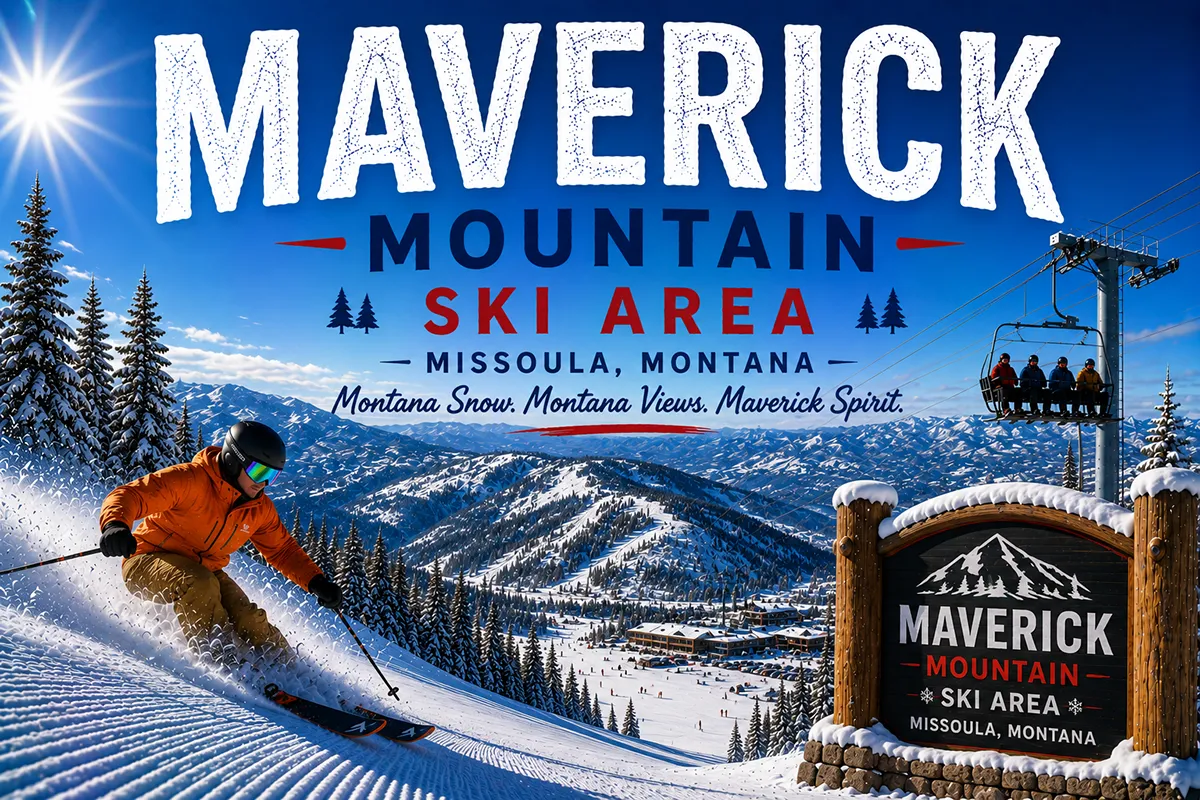
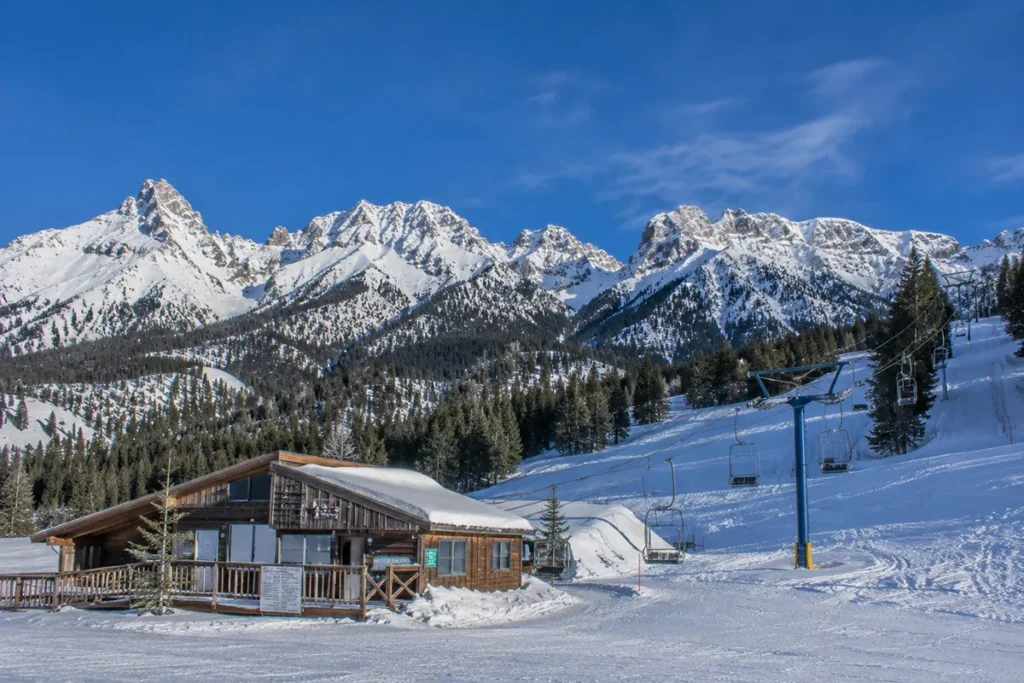
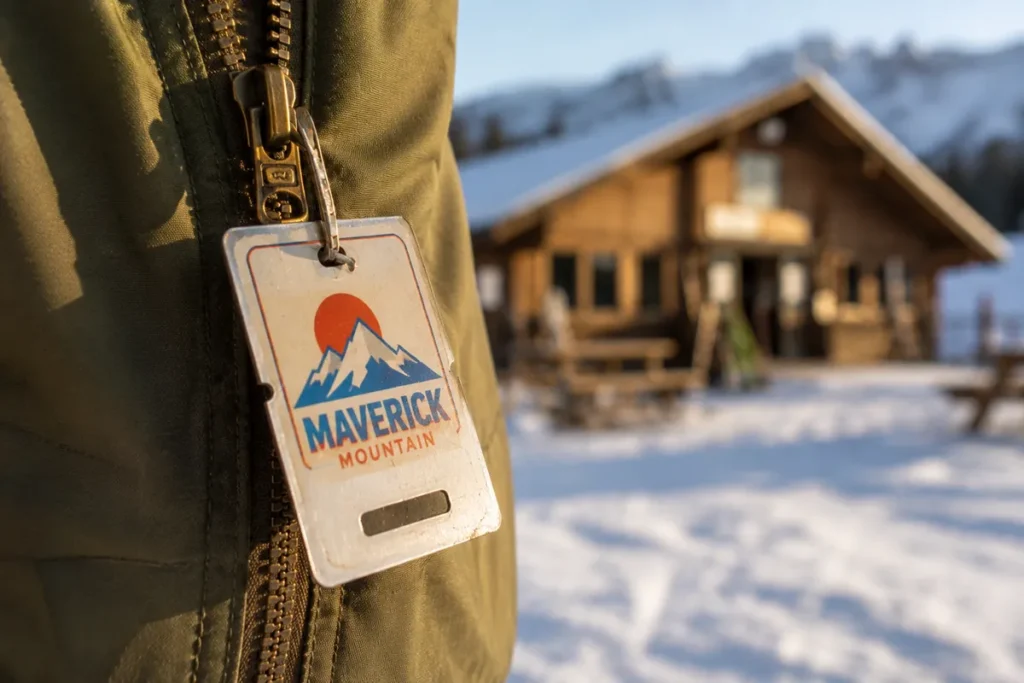
The lift tickets at Maverick Mountain are still metal wickets — the kind you clip onto a zipper pull. The lift attendant checked mine with the same gesture they probably used in 1981. The chair next to me on the way up held the owner’s brother, who was hauling a duffel bag of clean towels for the bar.
- Maverick Mountain Ski Area sits in Polaris, Montana at 6,500 feet in the Pioneer Mountains — about 40 miles northwest of Dillon
- 210 acres of designated skiable terrain plus extensive off-piste, 24 named runs, ~2,020 vertical feet of lift-served terrain (one of the higher vertical drops in Montana for a small mountain)
- One double chair plus a handle tow — and metal wicket lift tickets that haven’t changed since the early days
- Roughly 180 inches of natural snowfall annually, no snowmaking
- Family-owned since 1948 — one of Montana’s longest-tenured family ownerships
- Operates Thursday through Sunday (some sources cite slightly different schedules — verify before driving)
- Independent — not on the Ikon, Epic, or Indy Pass
- 15 minutes from Elkhorn Hot Springs — one of the best ski-day-then-hot-springs combinations in Montana
- The right trip if you want a tiny, authentic, family-owned Montana ski experience; the wrong trip if you need amenities, snowmaking, or fast lifts
Liked this article?
Add Roaming Montana as a preferred source so you see more of our articles and guides on Google.
Why Maverick Mountain Is the Honest Family-Owned Ski Experience
There are 18 ski areas in Montana. Most have evolved with the times — adding high-speed quads, building base villages, joining mega-passes, or just gradually professionalizing into modern destination operations. Maverick Mountain has done basically none of this.
The mountain has been operating since 1948. It’s still family-owned. The lift is still a fixed-grip double chair. The lift tickets are still metal wickets.
The base lodge — the Thunder Bar — is still the kind of place where local ranchers, doctors, and families gather for meals made with ingredients from nearby producers. Marketing speak doesn’t apply. This is genuinely just a small Montana ski mountain that has chosen to stay small.
What separates Maverick from the smaller community-only resorts (Bear Paw, Bear Paw — to be clear, there are only a couple of similar operations in Montana) is that Maverick has a remarkable 2,020 vertical feet of lift-served terrain.
That’s more vertical drop than Bridger Bowl, more than Whitefish, more than most destination resorts in the country. On 210 acres. Served by one chair. The numbers shouldn’t work, but they do.
This is part of our complete guide to Montana ski resorts — and Maverick is the answer for a specific kind of Montana ski day that no destination resort can deliver.
Where Maverick Mountain Actually Is
Maverick Mountain sits in the Beaverhead-Deerlodge National Forest in Beaverhead County, in the Pioneer Mountains of far southwestern Montana. The resort is at Polaris, Montana — a census-designated place with a population of approximately 67 people.
Getting there:
- From Dillon, Montana: 38–40 miles northwest on Highway 278 to the Pioneer Mountains Scenic Byway to Polaris (about 1 hour drive in good conditions)
- From Bozeman: about 130 miles southwest (about 2.5 hours)
- From Butte, Montana: about 80 miles southwest (about 1 hour 45 minutes)
- From Missoula: about 175 miles south (about 3 hours)
- From Idaho Falls, ID: about 165 miles north (about 3 hours)
Bozeman Yellowstone International (BZN) is the practical commercial airport — about 2.5 hours away. Idaho Falls Regional (IDA) is another option from the south. There is no closer commercial airport.
The Pioneer Mountains Scenic Byway
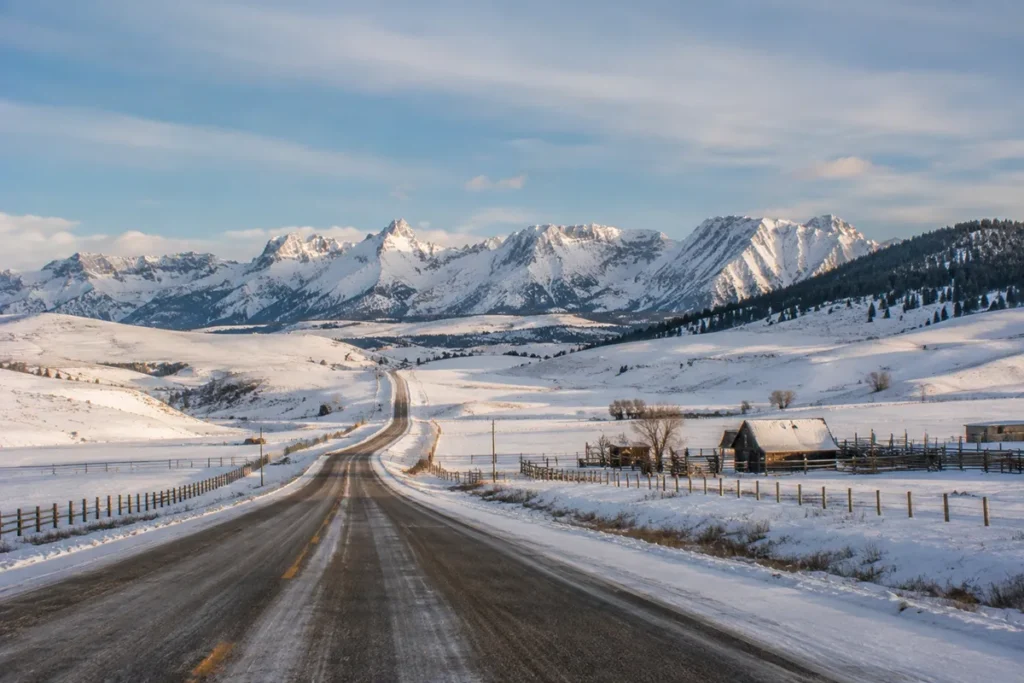
This is one of Montana’s quieter scenic drives — a paved 49-mile route through the Pioneer Mountains from Wise River in the north to Polaris in the south, passing Maverick Mountain at roughly the southern end.
The drive itself is beautiful, with the Pioneer Mountains rising on both sides, dense conifer forests, and the Grasshopper Creek valley.
Important winter note: The Pioneer Mountains Scenic Byway between Wise River and Polaris is NOT plowed in winter — most of the route closes seasonally.
You’ll need to approach Maverick from the south via Dillon and Highway 278, not from the north via Wise River. Confirm road conditions before traveling.
The drive from Dillon takes you through ranchland and progressively into the mountains. Snow tires and AWD/4WD are strongly recommended in winter conditions. See my Montana winter driving guide.
The History: 1948 to Today, One Family Through
Maverick Mountain opened for skiing in 1948 — one of the older still-operating ski areas in Montana, though not as old as Showdown (1936) or Bear Paw (1960). The mountain has been family-owned ever since, with consistent ownership stewardship through generations.
What’s worth knowing about the mountain’s history:
- The lodge has evolved gradually over the years but retains a 1950s-era community ski mountain character
- The Thunder Bar at the base lodge has been a central gathering place for the southwestern Montana community for decades
- The fixed-grip double chair is the only lift to the upper mountain — no high-speed quads were ever installed
- Metal wicket lift tickets continue to be used — a detail that’s both nostalgic and oddly practical for a small ski operation
- No snowmaking has ever been added — the mountain operates entirely on natural snowfall
The continuous family ownership over 75+ years is unusual even by Montana’s family-owned ski area standards. This isn’t a corporate-rebranded mountain; it’s a genuinely family-run business that has chosen to maintain its character through every wave of industry consolidation.
The Terrain: How Maverick Skis
The official acreage at Maverick is 210 designated skiable acres with 24 named runs, but this number underplays what’s actually available.
The mountain has substantial off-piste opportunities — tree skiing zones and natural-feature terrain not on the trail map but skiable by anyone willing to scope it out. Some sources cite 450 acres when this off-piste terrain is included.
Approximate terrain breakdown:
- 27% Beginner
- 37% Intermediate
- 18% Advanced
- 18% Expert
That’s a balanced, almost classic ski-area distribution — meaningful learning terrain, plenty of intermediate cruising, and legitimate expert terrain for the days you want to push your skills.
The Lift System
Maverick has one double chair plus a handle tow:
- The Double Chair climbs about 2,020 vertical feet from the 6,500-foot base to the 8,520-foot summit area. This is fixed-grip (not high-speed) — the ride takes around 12-15 minutes depending on chair-loading speed.
- The Handle Tow serves the beginner Discovery Area near the base
For a mountain with one chair, the 2,020-foot vertical drop is remarkable. Most single-chair operations have meaningful but more limited vertical (Turner Mountain at 2,110 ft is the closest comparison). Maverick puts you on top of a real mountain on one ride.
The Terrain
A few specific zones worth knowing:
- Discovery Area — the beginner zone served by the handle tow at the base. Gentle terrain, learner-friendly.
- Rock ‘n Roll — the expert run that’s the calling card for advanced skiers
- Tree skiing zones — both formally designated glades and informal tree zones that hold snow after storms
- Long groomed cruisers — multiple intermediate runs that take advantage of the full 2,020 vertical drop
- Cross-country trails — a network of XC trails around the resort, separate from the alpine area
The combination of beginner terrain (for kids learning), intermediate cruising (for the family), and legitimate expert runs makes Maverick a genuinely all-abilities mountain despite its small footprint.
The Snow Story: 180 Inches and Zero Snowmaking
Maverick receives approximately 180 inches of natural snowfall annually — modest by Montana standards (Lost Trail gets 300+, Big Sky 400+) but enough for a respectable ski season at a small mountain with limited skier traffic.
Critical context: Maverick has no snowmaking infrastructure. Every flake on the slopes is natural. This means:
- Opening and closing dates depend entirely on snow conditions — typically early/mid-December through April, but variable
- Lean snow years can delay openings and shorten seasons
- Big snow years extend the operation well into spring
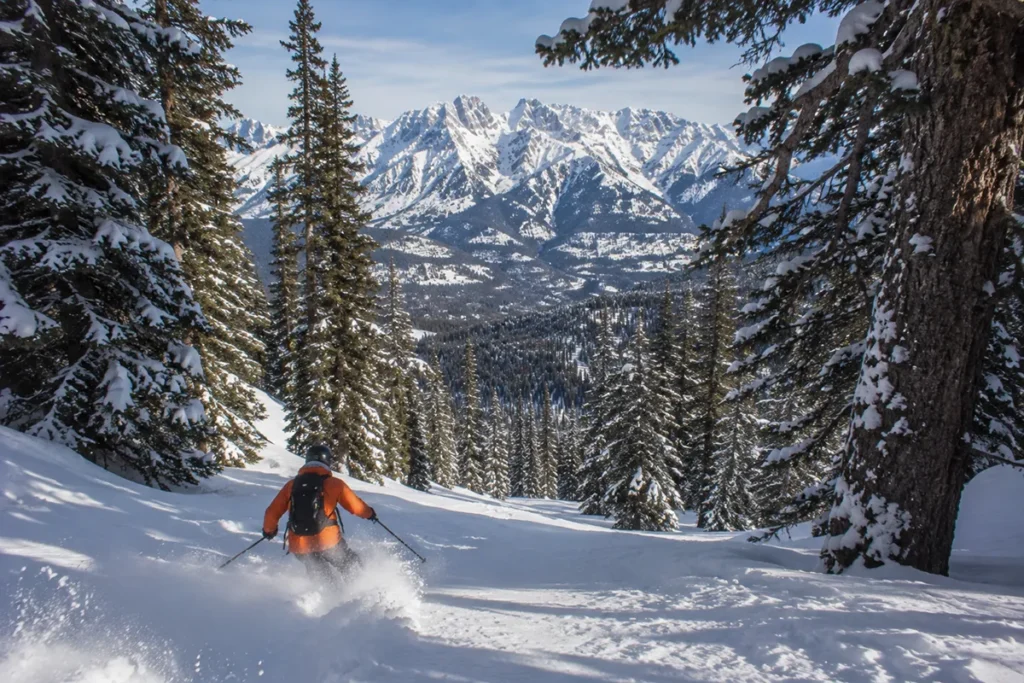
- Mid-season conditions are usually excellent — modest skier traffic means powder lasts much longer than at busier resorts
The Pioneer Mountains location means continental snowpack — light, dry powder rather than heavier coastal snow. The combination of light snow + low skier traffic means you can find fresh tracks several days after a storm, similar to what happens at Lost Trail Powder Mountain.
Lift Tickets, Passes, and Operating Reality
Maverick pricing has historically been among Montana’s most affordable, reflecting the family-owned operating model and the resort’s commitment to remaining accessible to local Montana families.
Lift Tickets
Full-day adult lift tickets at Maverick Mountain are typically in the $40-$50 range depending on the date. [Verify current pricing on skimaverick.com.] Multi-day discounts, season passes, and youth/senior discounts are available.
The metal wicket lift ticket system is itself notable — Maverick is one of the few remaining ski areas in the country that hasn’t switched to RFID cards or paper-based ticket systems. Keep your wicket attached securely — lift attendants check them at every lift load.
Pass Affiliations
Maverick Mountain is independent — not on the Ikon, Epic, or Indy Pass. The mountain sells day tickets and season passes directly. Season passes are exceptional value for any skier within a reasonable drive of the Pioneer Mountains.
Operating Schedule
Maverick typically operates Thursday through Sunday during the regular season. Sources vary slightly on the exact schedule — some current marketing references Wednesday-Sunday — so always verify the current operating days before driving, especially for holiday weeks when the schedule expands.
Hours are typically 9:30am to 4:00pm. The season runs roughly mid-December through early April, depending entirely on natural snowfall.
The Thunder Bar: The Lodge That Makes the Trip
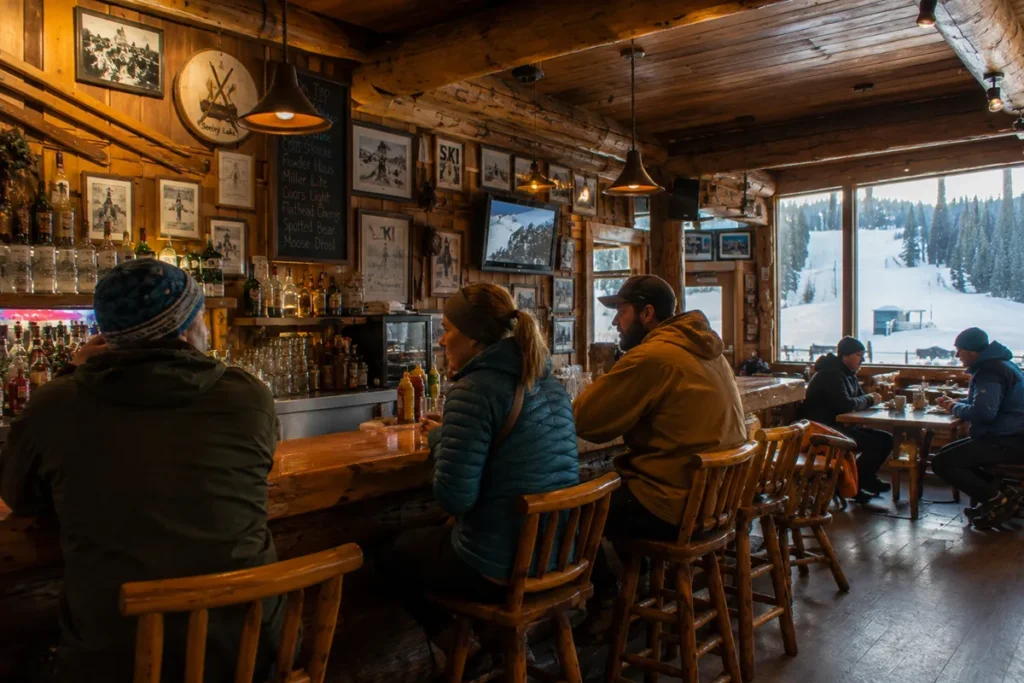
Most “small Montana ski areas” have a lodge that exists to serve the skiing. Maverick has it inverted — the Thunder Bar at the base lodge is half the reason to come.
The bar serves food made with ingredients from nearby producers — straightforward Montana fare with attention to local sourcing that wasn’t always present at small mountain lodges.
Reviewers consistently single out the food quality as unexpectedly excellent for a small ski area. Beef from local ranches, comfort food at fair prices, and a community atmosphere that draws ranchers, doctors, and families from the surrounding region.
The Thunder Bar is also the social anchor of the resort. Spend an hour at the bar between morning and afternoon ski sessions and you’ll meet the local Polaris community — typically warm, often opinionated about the mountain, and almost always happy to chat with visitors.
This combination of authentic mountain culture + actually-good food + community-anchored bar is rare even among Montana’s small ski areas. Even people who don’t ski much enjoy the Thunder Bar experience.
What I Wish I Knew Before Skiing Maverick
A few things I’d tell my pre-Maverick self.
Verify operating days before driving. The Thursday-Sunday schedule (some sources say Wednesday-Sunday) means you can’t just show up any day during the regular season. This is the single most important practical fact for any Maverick trip.
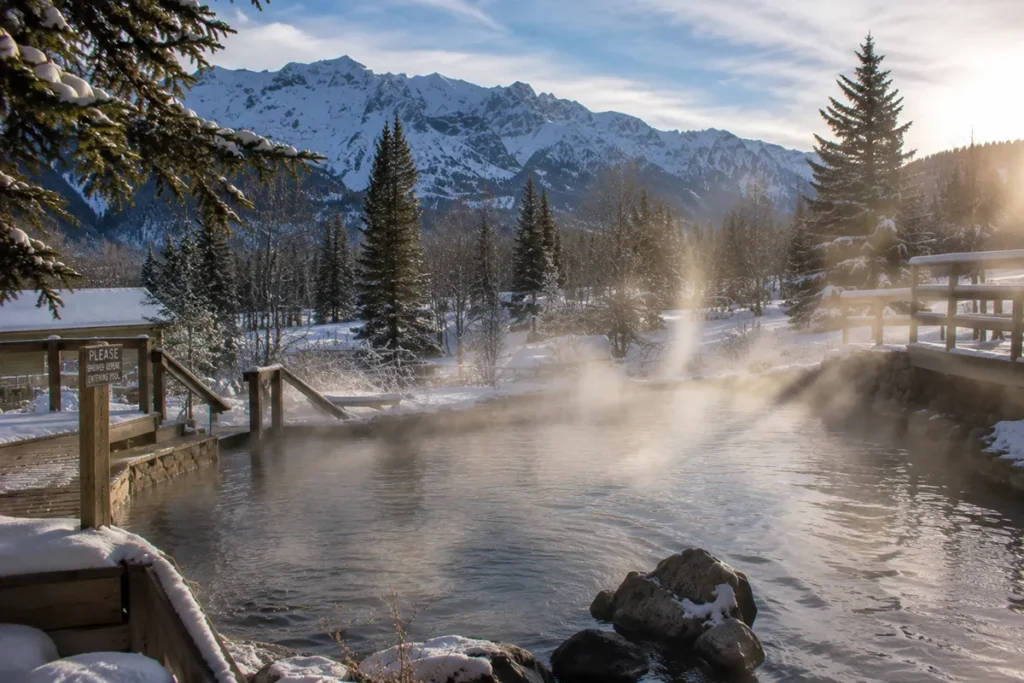
Plan an Elkhorn Hot Springs combo. This is the move. Elkhorn Hot Springs sits 15 minutes south of Maverick on the same road. Ski Maverick all day, then drive 15 minutes to a hot springs soak. This is one of Montana’s best ski-day-then-hot-springs combinations, and it’s specifically what defines a Maverick weekend for most visitors.
Stay in Dillon for substantial lodging. Dillon, Montana is the closest town with meaningful lodging options — about an hour drive from Maverick. Dillon has motels, vacation rentals, and historic accommodations. Limited cabin options also exist near Maverick itself.
Polaris is tiny. The town of Polaris has a population of around 67 people. Don’t expect a real grocery store, gas station, or significant services. Fill up in Dillon and bring snacks for the drive.
Spring skiing is excellent here. March and April at Maverick — when the natural snowpack is still deep but afternoons warm up — produce some of the best ski days of the season. The combination of long sunny days, soft snow, and zero crowds is a uniquely Maverick experience. See Montana in March for broader spring context.
The Thunder Bar food is real. Don’t skip eating in the lodge. Both for lunch breaks and especially for happy hour after skiing. The local-sourced menu items are some of the best small-ski-area food in the state.
Cross-country option — Maverick also has a network of cross-country trails around the resort, separate from the alpine area. Useful for non-alpine days or for skiers in your group who don’t want to ride the chairlift.
Combine with Dillon things to do. A multi-day Dillon-anchored trip can include Maverick skiing, Elkhorn Hot Springs, Bannack State Park (historic ghost town), and the Beaverhead Brewing Company in downtown Dillon.
Tree skiing is the move on a snowy day. The named runs get skied off first; the tree-skiing zones hold snow for days. If you’re at Maverick within 48 hours of a storm, head straight for the trees.
Maverick Compared to the Other 17 Montana Ski Areas
Quick honest comparisons.
Vs. Showdown Montana: The natural family-owned-Montana comparison. Showdown is Montana’s oldest (1936), Maverick is a few decades younger (1948). Showdown has more skiable acres (640 vs. 210), more lifts (4 vs. 2). Maverick has more vertical drop (2,020 vs. 1,400 ft) and is in a more remote/quiet location. Both are family-owned, both independent, both authentic. For Dillon-area travelers, Maverick. For Great Falls or Helena travelers, Showdown.
Vs. Bear Paw Ski Bowl: Both are tiny, family-spirit Montana mountains. Bear Paw is even smaller (~240 acres, 860 ft vertical), volunteer-run (Snow Dance Ski Association), cash-only, weekend-only. Maverick is slightly larger, family-owned (not nonprofit), credit cards accepted, more substantial vertical. For the truly tiny community-run experience, Bear Paw. For southwestern Montana family-owned skiing, Maverick.
Vs. Turner Mountain: Both have one chairlift, family-owned-feel, and remarkable vertical for small areas. Turner is even steeper (70% black diamond) and in northwest Montana. Maverick is more balanced terrain (27/37/18/18 mix) and in southwest Montana. Both are weekend-emphasis operations. For the steep-and-expert version, Turner. For the family-and-mixed-abilities version, Maverick.
Vs. Discovery Ski Area: Discovery (also in southwest Montana, about 2 hours north) is significantly larger (2,200 acres vs. 210, 2,388 ft vs. 2,020). Both are family-owned/spirit operations. For more terrain variety and bigger skiing, Discovery. For the most authentic small-mountain experience, Maverick.
Vs. Big Sky Resort: Different products entirely. Big Sky is the destination behemoth; Maverick is the family-owned community mountain. The comparison isn’t really fair — choose based on what kind of trip you want.
For the full picture, see the Montana ski resorts pillar guide.
Maverick Mountain Ski Area: At-a-Glance
| Vertical Drop | ~2,020 ft lift-served (some sources cite 1,750 ft) |
|---|---|
| Skiable Acres | 210 designated + extensive off-piste (some sources cite 450 total) |
| Top Elevation | ~8,520 ft (lift top) |
| Base Elevation | 6,500 ft |
| Annual Snowfall | ~180 inches (no snowmaking — 100% natural) |
| Terrain Breakdown | 27% Beginner, 37% Intermediate, 18% Advanced, 18% Expert |
| Trails | 24 named runs |
| Longest Run | 2 miles |
| Lifts | 1 double chair + 1 handle tow |
| Lift Ticket | Typically $40–$50 range [verify current price] |
| Pass Affiliation | Independent — not on Ikon, Epic, or Indy |
| Operating Days | Thursday–Sunday (verify; some sources cite Wed–Sun) |
| Hours | ~9:30am–4:00pm |
| Season | Mid-December through early April (snow dependent) |
| Snowmaking | None |
| Lift Tickets Format | Metal wickets |
| Owner | Family-owned since 1948 |
| Nearest Town | Polaris, MT (population ~67) |
| Nearest City | Dillon, ~40 miles southeast |
| Nearest Airport | Bozeman Yellowstone (BZN), ~2.5 hours; Idaho Falls (IDA), ~3 hours |
| Cross-Country Trails | Available — network of XC trails around resort |
| Nearest Hot Springs | Elkhorn Hot Springs, 15 minutes south |
Lift ticket prices, operating schedule, and exact skiable acreage change annually — verify current information on skimaverick.com before booking.
Things to Do Around Maverick Mountain When You’re Not Skiing
The Maverick area is remote, but a few non-ski options exist:
- Elkhorn Hot Springs — 15 minutes south on the same road, this is the must-do non-ski Maverick experience
- Dillon, Montana — historic college town with restaurants, breweries, and museums. See things to do in Dillon for the full breakdown
- Bannack State Park — Montana’s first territorial capital, a preserved ghost town about 30 miles south of Maverick (winter access varies)
- Cross-country skiing — Maverick’s XC trails plus extensive Beaverhead-Deerlodge National Forest options
- Snowmobiling — extensive groomed snowmobile trails throughout the Pioneer Mountains
- Wise River and the Big Hole Valley — north of Maverick (though the direct Pioneer Mountains Scenic Byway closes in winter, so this requires a longer route)
- Montana hot springs — broader regional hot springs options
For winter Airbnb planning, see winter Airbnbs in Montana.
Final Thoughts on Maverick Mountain
Maverick is the Montana ski mountain that proves you don’t need a big operation to have a complete ski experience.
2,020 vertical feet on one chair, 24 named runs, family-owned since 1948, metal wicket lift tickets, and a community-anchored lodge that genuinely serves the surrounding ranching community.
This isn’t a destination resort. It’s not trying to be. For most out-of-state visitors planning a primary Montana ski trip, Maverick isn’t the right answer — Big Sky, Whitefish, or Bridger Bowl deliver more for the typical destination skier.
But for a southwestern Montana traveler with a few extra days, a Dillon-anchored multi-day trip, or anyone who specifically wants to see what authentic Montana family-owned skiing looks like, Maverick is genuinely one of the best ski experiences in the state.
The combination of substantial vertical drop, balanced terrain, dependable powder longevity (because so few people ski here), the Thunder Bar community, the metal wicket lift tickets, and the Elkhorn Hot Springs combo just down the road makes a Maverick weekend something you don’t get anywhere else.
The family ownership through 75+ years means this mountain has chosen, deliberately and consistently, to remain what it is. The lifts could have been upgraded. Snowmaking could have been added.
Real estate could have been developed. None of those things happened, because the family ownership values the experience as it stands.
Pin this guide before your trip planning, and drop your questions in the comments below — I read every one and will happily help you decide if Maverick fits your itinerary, whether to combine it with Elkhorn Hot Springs and a Dillon basecamp, and how to time your visit for the best snow conditions.
Frequently Asked Questions
Where is Maverick Mountain Ski Area?
Maverick Mountain is located in Polaris, Montana, in the Pioneer Mountains of Beaverhead County in southwestern Montana. The resort is approximately 40 miles northwest of Dillon, the nearest substantial town. To reach Maverick, take Highway 278 northwest from Dillon, then the Pioneer Mountains Scenic Byway to Polaris. Bozeman Yellowstone International Airport (BZN) is the closest commercial airport, about 2.5 hours away.
How much does a lift ticket at Maverick Mountain cost?
Full-day adult lift tickets at Maverick Mountain are typically in the $40–$50 range in recent seasons, making it among Montana’s most affordable ski areas. The mountain still uses metal wicket lift tickets — one of the few ski areas in Montana still using this old-school format. [Verify current pricing on skimaverick.com.]
Is Maverick Mountain on the Ikon, Epic, or Indy Pass?
No. Maverick Mountain is independent and does not participate in any major mega-pass system. The family ownership has chosen to remain independent, with day tickets and season passes sold directly. The independence reflects the resort’s commitment to local affordability rather than destination-resort revenue maximization.
How big is Maverick Mountain Ski Area?
Maverick Mountain has 210 designated skiable acres with 24 named trails and an impressive 2,020-foot vertical drop (one of the higher verticals in Montana for a small ski area). The summit elevation is approximately 8,520 feet, with the base at 6,500 feet. The lift system consists of one fixed-grip double chair and one handle tow. By Montana standards, it’s one of the smallest ski areas — but the vertical drop punches above its weight.
Is Maverick Mountain good for beginners?
Yes — Maverick has 27% beginner terrain, with a dedicated Discovery Area served by a handle tow at the base. The mountain’s balanced terrain breakdown (27% beginner, 37% intermediate, 18% advanced, 18% expert) makes it a genuinely all-abilities mountain. Family-friendly culture and patient instructors make it a good place for kids learning to ski.
Is Maverick Mountain good for experts?
Yes, with caveats. About 18% of terrain is rated expert, including the calling-card Rock ‘n Roll run. The 2,020-foot vertical drop is meaningful, and the tree-skiing zones hold powder for days. For dedicated expert skiers, Big Sky, Bridger Bowl, or Turner Mountain offer more total terrain — but Maverick provides legitimate expert skiing within a small footprint.
What is the Thunder Bar at Maverick Mountain?
The Thunder Bar is the bar and dining room at Maverick Mountain’s base lodge. It serves food made with ingredients from nearby producers and has become a community gathering place for local ranchers, doctors, and families from the surrounding Polaris and Dillon area. Reviewers consistently note the food quality as unexpectedly excellent for a small ski area. The Thunder Bar is half the reason many people make the trip to Maverick.
When does Maverick Mountain open and close?
Maverick Mountain typically operates from mid-December through early April, depending entirely on natural snowfall — the resort has no snowmaking infrastructure. Operating days are typically Thursday through Sunday during the regular season (some sources cite Wednesday-Sunday — verify before driving). Hours are typically 9:30am to 4:00pm.
Who owns Maverick Mountain?
Maverick Mountain has been family-owned since 1948 — over 75 years of continuous family stewardship. The mountain has resisted industry trends toward consolidation, mega-pass partnerships, and infrastructure modernization in favor of maintaining its small, authentic character.
How close is Maverick Mountain to Elkhorn Hot Springs?
About 15 minutes south of Maverick Mountain on the same road. The combination of ski-then-hot-springs is one of Maverick’s signature visitor experiences and one of the best in Montana. Elkhorn Hot Springs is a natural hot springs resort with multiple pools and basic accommodations.
How does Maverick Mountain compare to Showdown Montana?
Both are family-owned Montana ski areas with deep heritage. Showdown is older (1936 vs. 1948) and larger (640 acres vs. 210). Maverick has more vertical drop (2,020 ft vs. 1,400) and is in southwest Montana near Dillon. Showdown is in central Montana near Great Falls. Both are independent (no Indy Pass), both have authentic small-mountain culture. Pick based on which region of Montana you’re anchoring in.
Where should I stay for a Maverick Mountain ski trip?
Dillon, Montana (about an hour southeast) offers the most substantial lodging options. Limited cabin and lodge accommodations exist near Maverick and at Elkhorn Hot Springs. Polaris itself has minimal services (population ~67). For a multi-day trip, base in Dillon with day trips to the mountain.