There’s a small stone chapel on a hillside 600 feet above Georgetown Lake that most visitors never notice, built in 1965 by a family in memory of their son who died at eighteen.
I stumbled onto it by accident on my second visit to this lake, and it’s stuck with me longer than almost anything else here — a quiet, human-scale detail in a place mostly known for fish counts and ski conditions.
Georgetown Lake is a 3,000-acre alpine reservoir at 6,300 feet elevation, 18 miles west of Anaconda between the Anaconda-Pintler, Flint Creek, and Sapphire ranges. This guide covers the fishing that’s earned it a reputation as one of Montana’s most prolific lakes, the four-season recreation that includes Discovery Ski Area next door, camping options, and a few overlooked details — including that hillside chapel — that most visitors drive right past.
Liked this article?
Add Roaming Montana as a preferred source so you see more of our articles and guides on Google.
Georgetown Lake by the Numbers
- Size: approximately 3,000 acres (some sources cite closer to 2,818 acres)
- Elevation: approximately 6,300-6,637 feet
- Shoreline: roughly 17-18 miles
- Location: 18 miles west of Anaconda, 10 miles south of Philipsburg, off Montana Highway 1
- Formed: 1885, when the Bi-Metallic mining company dammed Flint Creek
A Working Lake Before It Was a Recreation Lake
Georgetown Lake didn’t start as a tourist destination. It was created in 1885 when the Bi-Metallic company dammed the headwaters of Flint Creek, on a creek bed where cattle had grazed just before the water rose.
The dam was built primarily for power production and to supply water to valley ranchers, and ownership passed through a couple of local power companies before the Anaconda Company itself bought the dam in 1907, tying the lake directly into the same industrial history that shaped the town of Anaconda a few miles east.
That mining-era origin is easy to forget standing on the shore today, surrounded by lodgepole pine and views of the Pintler Mountains, but it’s part of why this lake exists at all — recreation was very much a secondary benefit of infrastructure built for entirely different reasons.
There’s a genuinely unusual engineering detail here that I think explains why the water still looks as good as it does after nearly a century and a half of use: the dam draws water from the very bottom of the lake rather than the surface, and that outflow drops nearly 700 feet through the old power plant before reaching Flint Creek Valley below.
That bottom-draw design creates a natural flushing effect, cycling the lake’s water in a way that’s actually kept it cleaner over time even as recreational development around the shoreline has increased.
It’s the kind of detail you’d never guess just by looking at the lake, but it’s a real part of why Georgetown has stayed as clear and healthy a fishery as it has.
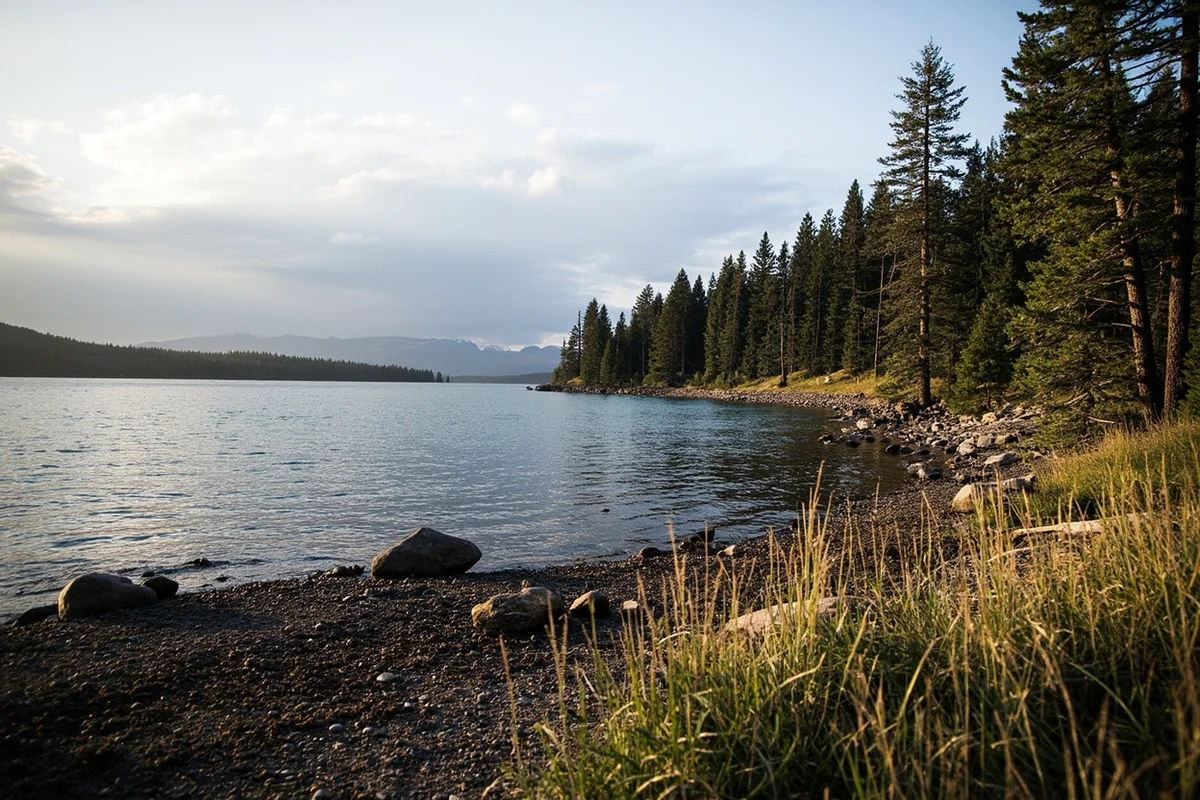
Fishing Georgetown Lake
This is the lake’s biggest draw by far, and it’s earned a reputation as one of Montana’s most prolific fisheries.
Georgetown offers close to year-round angling for trophy rainbow trout, brook trout, and kokanee salmon, with the lake generally open from the third weekend of May through the end of March.
One detail that catches visitors off guard: the lake undergoes a specific spawning closure each year, typically from April 1 through June 30, in the area between Denton’s Point Marina and the mouth of the North Fork of Flint Creek.
No fishing is permitted within 100 yards of shore in that stretch during this window, which is exactly when rainbow trout are spawning along the shallows.
I’d check current closure dates and boundaries before planning a spring trip specifically around fishing this section [verify current closure dates].
Four public boat ramps provide lake access, and I’ve had consistently good luck targeting kokanee in deeper water during summer, switching to shoreline casting for rainbow trout in the cooler shoulder seasons.
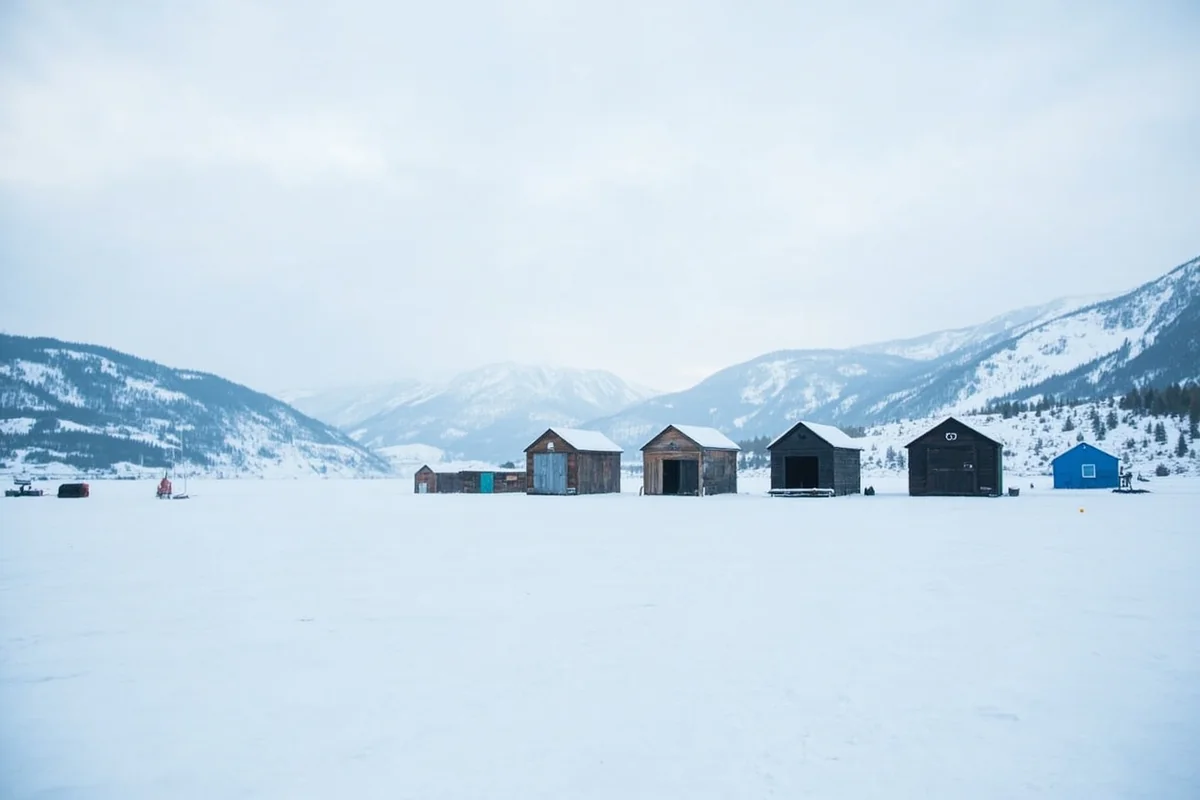
Winter at Georgetown Lake
Georgetown doesn’t shut down when the snow flies — if anything, it gets busier in a different way.
Ice fishing draws a steady crowd once the lake freezes solid, and the surrounding area offers maintained cross-country ski trails with a range of difficulty levels, accessible from parking areas near the base of nearby Discovery Ski Area.
I’ve skied a flat, beginner-friendly loop here on a still winter morning with nothing but my own breath and the occasional raven for company.
Discovery Ski Area, just a short drive from the lake, rounds out the winter picture with eight lifts and terrain for all skill levels, averaging around 215 inches of snow per season.
It tends to open earlier and close later than many Montana resorts, though it lacks slope-side lodging, meaning most visitors base themselves in Anaconda, Philipsburg, or right around the lake itself.
St. Timothy’s Chapel
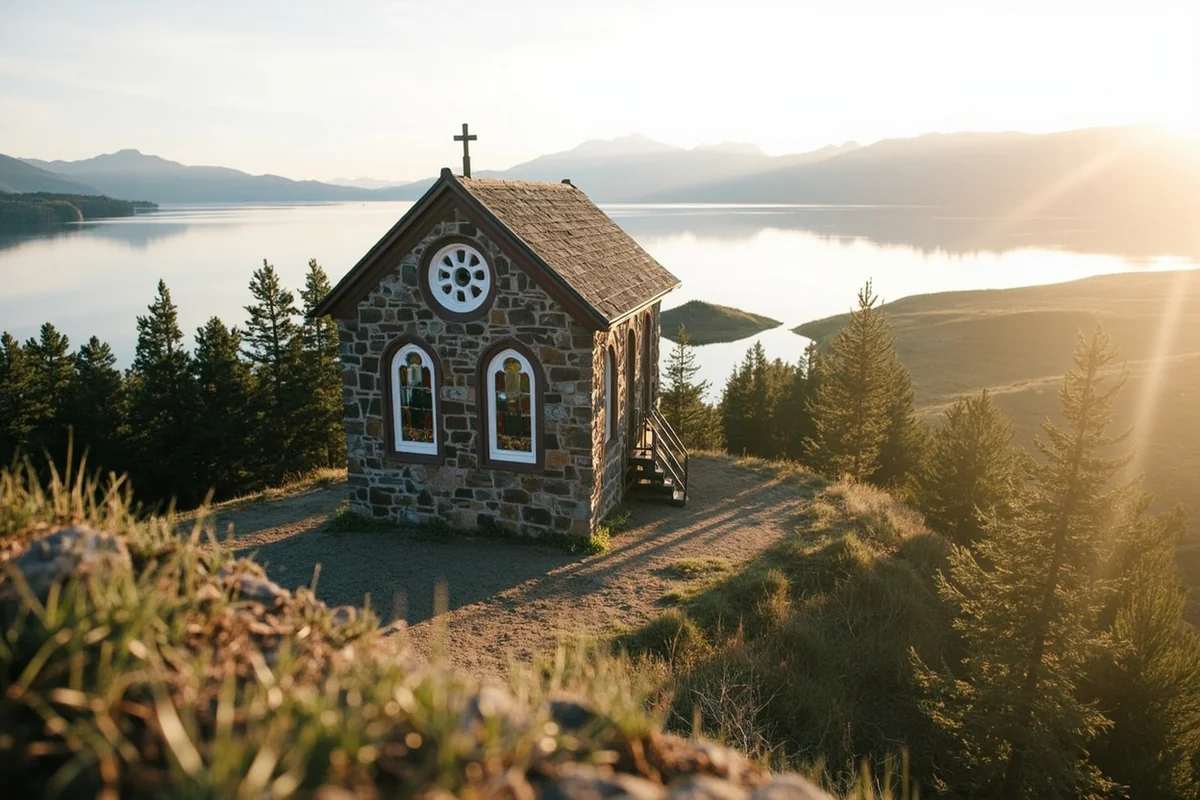
This is the detail I mentioned at the top, and I think it deserves more attention than it gets. Built in 1965 on a hillside 600 feet above the lake, St. Timothy’s Chapel was constructed by the Bowman family in memory of their son, who died in 1956 at age eighteen.
The chapel sits on the site of the former Southern Cross ghost town and was built from local natural stone with extensive clear and stained glass, framing the lake and mountains beyond in a way that makes the view itself feel like part of the architecture.
It’s affiliated with the Presbyterian Church but open to any visitor who wants to stop in. I’d budget twenty quiet minutes here if you’re driving Highway 1 past the lake — it’s easy to miss and worth the detour.
Golf at Old Works
For a non-water, non-snow activity, Old Works Golf Course in nearby Anaconda deserves a mention, even though it’s not directly on the lake.
Designed by Jack Nicklaus on the site of the old Anaconda copper smelter, it’s the only Nicklaus-designed public course in Montana, and its black sand traps — made from leftover smelting slag — give it a genuinely unique character among golf courses anywhere in the country.
The “Mile High, Mile Long” 5th hole has a reputation as one of the toughest in the state.
Camping and Lodging
Camping is available at several National Forest campgrounds around the lake, and a small lakeside community offers dining, lodging, and a handful of vacation rentals for visitors who’d rather not tent camp.
I’d book ahead for peak summer weekends and the opening weeks of ski season, since availability directly on the lake is limited compared to staying in Anaconda or Philipsburg [verify current lodging availability].
Wildlife Around the Lake
The lodgepole pine forest surrounding Georgetown Lake supports moose, elk, white-tailed deer, and bighorn sheep, and I’ve had multiple moose sightings right along the shoreline during evening drives around the lake.
Blue herons, hawks, and other birds of prey are common enough that birders regularly make dedicated stops here.
Getting to Georgetown Lake
From Butte, take I-90 west to the Anaconda exit, then continue about 20 minutes to the lake via Highway 1.
From Missoula, take I-90 east to the Drummond exit and follow Highway 1 south for around 40 miles. The Butte airport (Bert Mooney Airport) is roughly an hour away; Missoula International Airport is just under two hours.
A Lake Worth Slowing Down For
Compared to the bigger, busier lakes further west like Flathead Lake, Georgetown Lake has a smaller-scale, unhurried feel that I’ve come to appreciate more with each visit.
It doesn’t have the sailboat traffic or resort towns of the state’s more famous lakes, and that’s exactly what makes an afternoon here feel like a genuine slowdown rather than another stop on a packed itinerary.
Basing Your Trip in Anaconda or Philipsburg
Both nearby towns make solid home bases, and I’d choose between them based on what else is on your itinerary. Anaconda offers more services and direct access to Old Works Golf Course and the town’s mining history.
Philipsburg, a little further but genuinely charming, sits close to sapphire mining operations if you want to pair a lake trip with some gemstone hunting — a combination I’ve done more than once, spending a morning sluicing for sapphires before an afternoon on the water.
Timing Your Visit
Given the lake’s genuine four-season appeal, timing depends entirely on what you’re after. Summer (June through September) suits boating, fishing, and hiking; winter (December through March) suits ice fishing and skiing at Discovery.
For broader help deciding when to visit this part of the state, see my best time to visit Montana guide, or my Montana in January guide if a winter trip is on the table.
Personal Tips / What I Wish I Knew
Don’t skip St. Timothy’s Chapel just because it’s not on the standard lake itinerary. It’s one of the more genuinely moving small stops I’ve made anywhere in southwest Montana.
Check the spring spawning closure dates before planning a May fishing trip. I’ve seen visitors arrive expecting full lake access only to find a section closed for rainbow trout spawning protection.
Base yourself in Philipsburg if you want more small-town charm, Anaconda if you want more services. Both are close enough to the lake that the choice comes down to atmosphere rather than convenience.
Winter visitors should pair the lake with Discovery Ski Area. The combination of ice fishing or cross-country skiing on the lake and downhill skiing a short drive away makes for a genuinely well-rounded winter trip.
Practical Info: Georgetown Lake
| Lake size | Approximately 3,000 acres |
| Elevation | Approximately 6,300-6,637 feet |
| Fishing season | Third weekend of May through end of March; spring spawning closure typically April 1–June 30 near Denton’s Point |
| Boat ramps | 4 public ramps |
| Nearest towns | Anaconda (14-18 miles east), Philipsburg (10 miles north) |
| Winter activities | Ice fishing, cross-country skiing, adjacent to Discovery Ski Area |
| Fishing license | Standard Montana state fishing license |
Frequently Asked Questions
Is Georgetown Lake good for fishing?
Yes, it has a reputation as one of Montana’s most prolific lakes for fishing, particularly for rainbow trout, brook trout, and kokanee salmon.
Is there a fishing closure at Georgetown Lake?
Yes, a spawning closure typically runs from April 1 through June 30 in the area between Denton’s Point Marina and the North Fork of Flint Creek, with no fishing within 100 yards of shore during that window.
Is Georgetown Lake natural or man-made?
It’s man-made, created in 1885 when the Bi-Metallic mining company dammed Flint Creek, originally for power production rather than recreation.
How far is Georgetown Lake from Anaconda?
About 14-18 miles west via Montana Highway 1, roughly a 20-minute drive.
Can you ski near Georgetown Lake?
Yes, Discovery Ski Area sits a short drive from the lake, and the surrounding area also has maintained cross-country ski trails.
Why This Lake Doesn’t Get the Attention It Deserves
I think Georgetown Lake suffers from being overshadowed by its more famous neighbors — Flathead to the north, the Glacier lakes further still, the Yellowstone-adjacent waters to the south.
But taken on its own terms, few lakes in the state offer this specific combination: prolific fishing, genuine four-season recreation, mining-era history, a working ski area next door, and a small stone chapel that quietly outshines most of the “official” attractions in the area.
It’s the kind of lake that builds a following through repeat visits rather than a single splashy write-up, and I count myself firmly in that camp after enough trips here to lose count.
A Lake Shaped by Its Elevation
Sitting at roughly 6,300 feet, Georgetown Lake runs on a different calendar than most of the lakes in this guide.
It freezes earlier, thaws later, and holds a winter identity that’s arguably as strong as its summer one — a genuine rarity among Montana’s shallower lakes, most of which get treated as afterthoughts once ski season starts elsewhere in the state.
I’ve come to think of Georgetown less as a summer lake with a winter bonus and more as a genuinely bimodal destination that happens to sit conveniently between two established mountain towns.
Final Thoughts
Georgetown Lake offers something genuinely rare in Montana: a lake that works equally well as a summer fishing destination and a winter ski-adjacent basecamp, with enough layered history — from the 1885 dam to that quiet hillside chapel — to reward visitors who look past the obvious recreational draws.
For more of southwest Montana’s lakes, check out the complete guide to Montana’s best lakes for the rest of the region. And if you make the trip, don’t skip the chapel on the hill — it’s easy to drive past, and I’d genuinely regret it if you did.