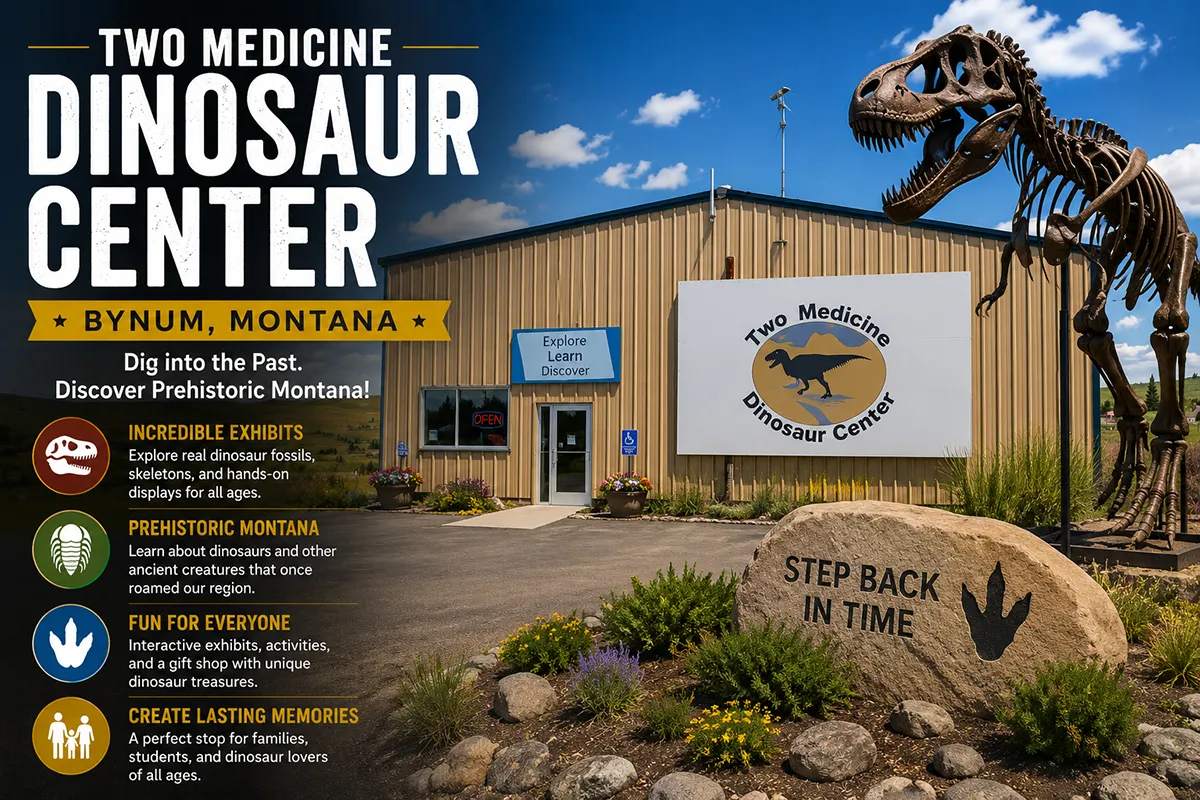
Bynum, Montana has fewer than 50 residents, and it’s home to the only independent, non-governmental museum in the state where you can show up, sign a waiver, and be excavating an actual dinosaur fossil by lunchtime. That combination — tiny town, genuinely significant science — is exactly why this stop belongs on your radar even if you’ve never heard of it before, and why it earned a spot on my running list of the best museums in Montana.
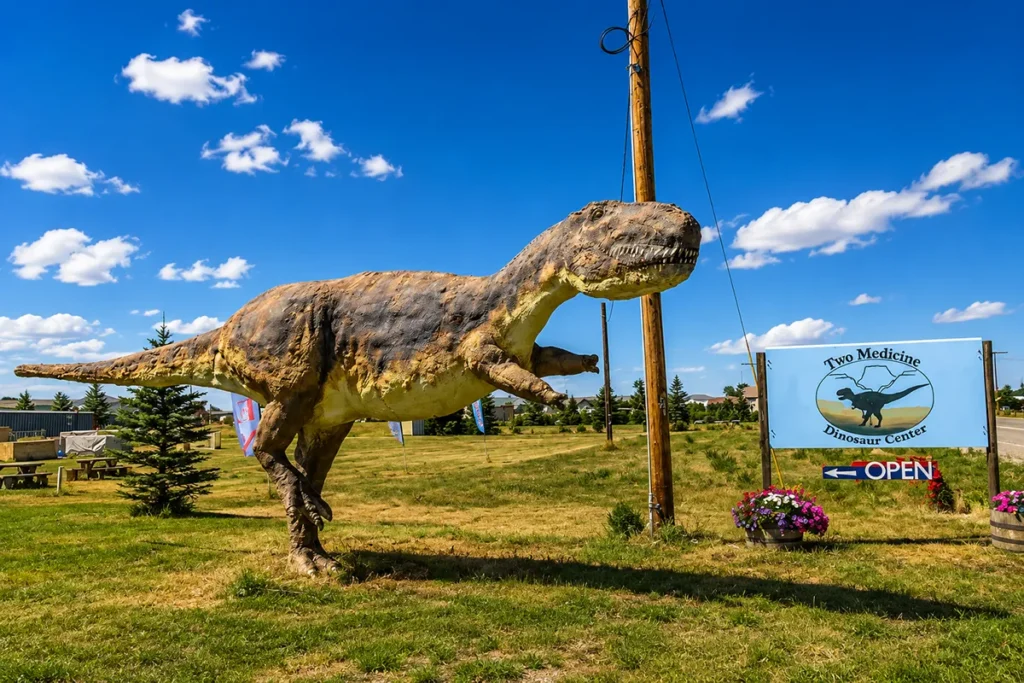
Two Medicine Dinosaur Center (officially the Montana Dinosaur Center) sits in Bynum, roughly halfway between Great Falls and Glacier National Park, on the fossil-rich Two Medicine Formation. It’s the site where the first baby dinosaur bones ever discovered in North America turned up in 1978, and today it’s the only Dinosaur Trail stop offering same-day, hands-on fossil digs alongside its museum gallery. This guide covers what a dig actually involves, the accidental discovery that put this tiny town on the paleontology map, and how to fold it into a Glacier-area road trip.
Liked this article?
Add Roaming Montana as a preferred source so you see more of our articles and guides on Google.
A Discovery That Started With a Bored Break
The story behind this museum’s existence is worth knowing before you walk in, because it explains why a town of fewer than 50 people has a globally significant paleontology site.
In 1978, Marion Brandvold Trexler — mother of museum founder Dave Trexler — was helping excavate an adult dinosaur specimen nearby when she got restless and decided to take a walk.
She ended up sitting on a hillside and noticed something unusual: tiny fossilized bones, far too small to belong to an adult dinosaur.
What she’d stumbled onto, entirely by accident, turned out to be the first baby dinosaur bones ever discovered in North America — a find that helped establish that some dinosaur species nested in colonies and cared for their young long enough for evidence to survive in the fossil record.
That single accidental discovery is a big part of why the Two Medicine Formation, the geological layer underlying this area, became recognized as one of the most scientifically important dinosaur fossil regions in the country.
The museum that grew up around it, founded by Dave Trexler, has stayed a genuinely independent, family-rooted operation rather than becoming part of a larger institutional system — which shapes almost everything about how a visit here feels compared to a bigger museum like Museum of the Rockies.
Seismo the Seismosaurus and the Museum Gallery
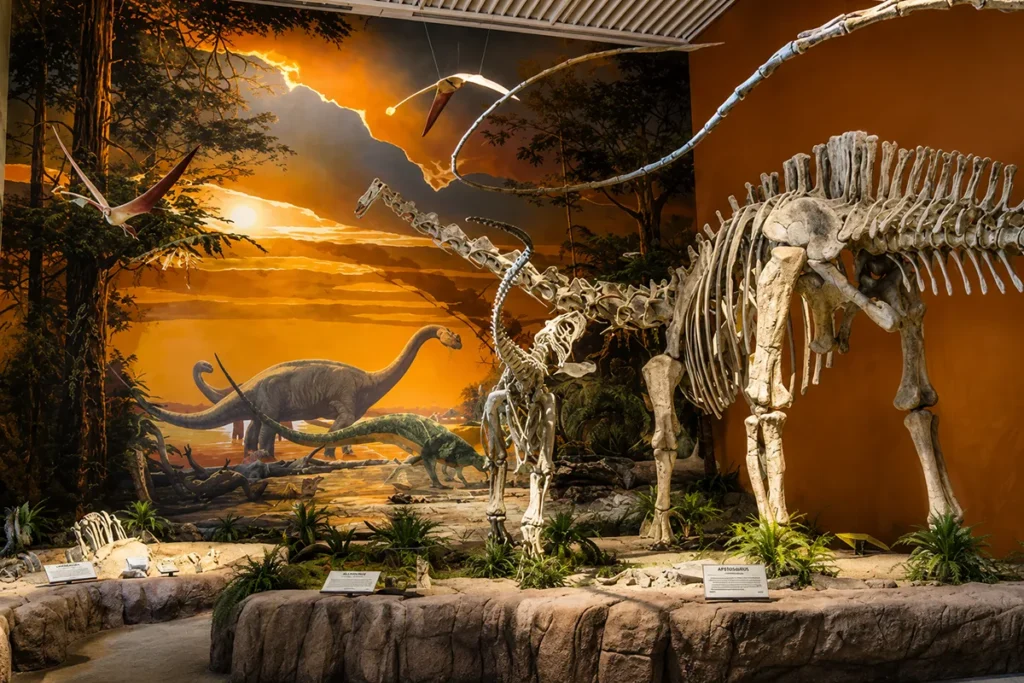
Inside, the centerpiece is Seismo — a 137-foot skeletal sculpture of a Seismosaurus, recognized by Guinness World Records for its length, suspended along the ceiling of the facility.
It’s worth clarifying upfront that Seismo is a realistic bone display built by founder Dave Trexler based on a specimen discovered in New Mexico, not an actual fossil excavated on-site — but it’s an undeniably striking visual anchor for the museum, and it gives you a genuine sense of scale that photographs of individual bones never quite capture.
Beyond Seismo, the gallery houses dinosaur, invertebrate, and plant fossils recovered specifically from the surrounding Two Medicine Formation, along with cultural artifacts from the area.
The museum’s stated philosophy is that fossils found in the Two Medicine Formation should stay local rather than being shipped off to bigger institutions elsewhere — current leadership has been vocal about wanting Montana-discovered fossils to remain in Montana collections so that Montanans and visitors alike don’t have to travel to Washington D.C., Chicago, or overseas to see material dug out of their own state’s ground.
It’s a distinctive, values-driven stance you won’t find articulated this directly at most other museums on the Dinosaur Trail.
The Actual Dig Experience
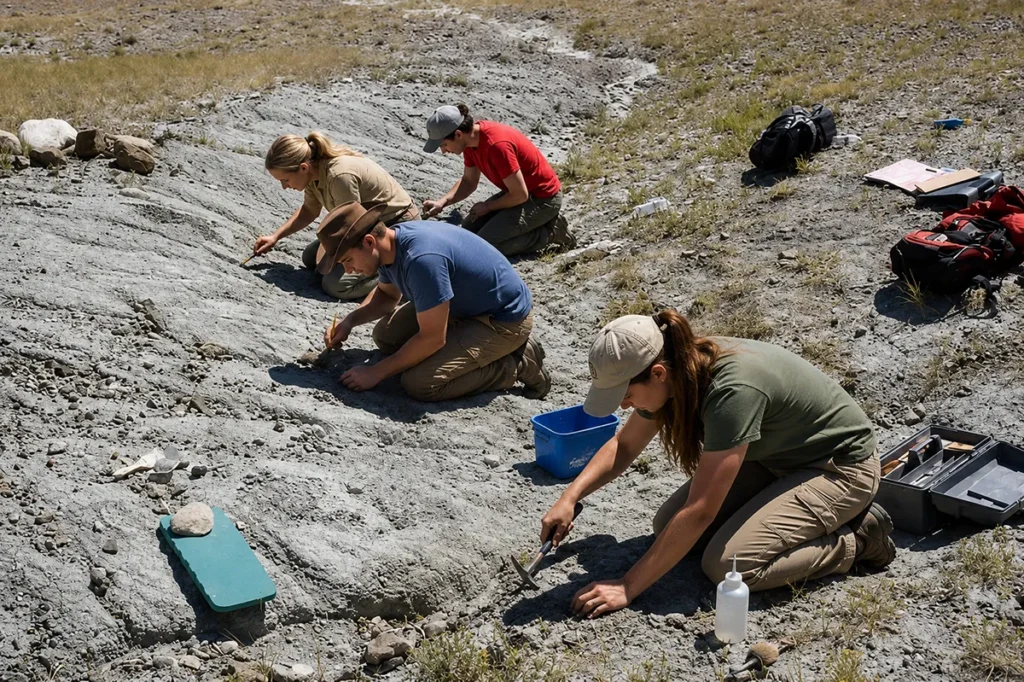
This is what sets Two Medicine Dinosaur Center apart from every other stop on the Montana Dinosaur Trail: it’s the only independent, non-governmental museum offering same-day, hands-on dinosaur fossil digs, no advance scientific training required.
Programs range from shorter half-day site tours — more accurately described as guided fossil “prospecting,” where staff teach you how to actually spot fossil material in the field, plus visits to previously worked dig sites — up through full eight-hour day digs and genuine multi-day expeditions on active paleontological sites.
Staff are explicit that this isn’t a Hollywood-style dig where you brush aside a bit of sand and reveal a fully intact skeleton.
Real fieldwork here involves carefully mapping fragment locations, documenting context, and encasing finds in plaster for safe transport — the same methodical process professional paleontologists actually use.
Groups typically run around ten people, digs run from May through September, and advance registration is required since slots fill quickly, especially in peak summer.
Special accommodations can be arranged, and the program is designed to work for both genuine paleontology enthusiasts and families just looking for a uniquely hands-on Montana day.
Half-day site tours have run in the neighborhood of $110 and full day-dig expeditions around $225, though you should treat those as a rough historical reference rather than current pricing. [verify current dig pricing and availability at tmdinosaurcenter.org or montanadinosaurdig.com before booking]
Why the Two Medicine Formation Matters
It’s worth understanding a bit about the geology that makes this specific patch of Montana so fossil-rich, because it explains why a town this small ended up hosting a globally cited paleontology site.
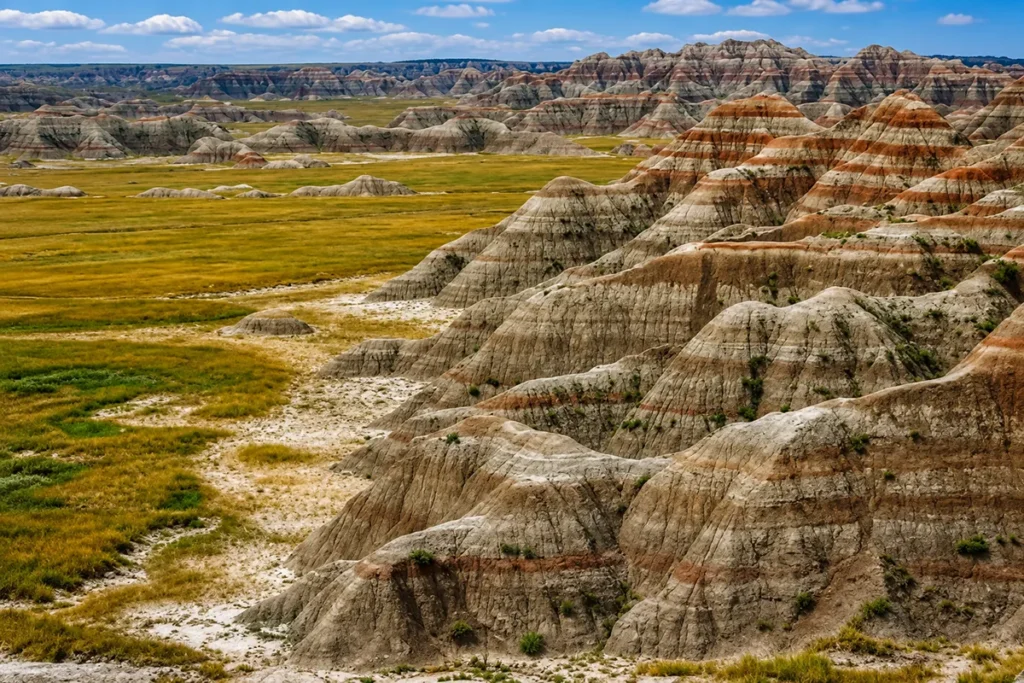
The Two Medicine Formation is a sequence of Late Cretaceous rock, roughly 74 to 80 million years old, laid down by ancient river and floodplain systems along what was then the western edge of a shallow inland sea that split North America in two.
Those floodplain conditions were ideal for rapidly burying and preserving animal remains, which is part of why this specific geological layer has produced such a disproportionate share of significant Montana dinosaur discoveries, including Maiasaura — the duck-billed dinosaur species tied directly to the Trexler family’s original nesting-colony discovery, and now Montana’s official state fossil.
Beyond Two Medicine Dinosaur Center itself, this same formation stretches under a good portion of north-central Montana, which is exactly why several other Dinosaur Trail stops — the Old Trail Museum in Choteau chief among them — draw on material from the same geological layer rather than a separate, unrelated fossil bed.
Understanding that connection makes visiting more than one Two Medicine Formation site in the same trip feel less repetitive and more like following a single continuous scientific story across several small-town museums.
Visiting With Kids
This is one of the more genuinely kid-friendly stops on the entire Dinosaur Trail, precisely because the hands-on dig programs give children an active role rather than a passive walk-through.
Even the shorter half-day prospecting tours involve real tools, real fossil identification, and a real sense of contribution rather than a staged activity — I’ve heard from more than one parent that a Two Medicine dig was the single most memorable stop of an entire Montana road trip for their kids.
That said, be realistic about attention spans and heat: a full eight-hour day dig is a serious commitment for younger children, and the half-day or three-hour prospecting options are usually the better fit for families with kids under 10.
Quick Questions I Get Asked
Do we need any prior experience to join a dig?
No — programs are designed for complete beginners, and staff teach you everything from basic fossil identification through proper excavation technique as part of the experience.
Is Seismo an actual fossil we’re looking at?
No, and it’s worth knowing before you visit so you’re not confused — Seismo is a realistic skeletal sculpture representing a species found in New Mexico, built by the museum’s founder. The actual local fossils are displayed separately in the gallery cases.
How does this compare to the Great Plains Dinosaur Museum in Malta?
Both are excellent, independent Dinosaur Trail stops, but this is the one built specifically around hands-on, same-day public digs — Malta’s museum leans more toward gallery displays of specimens like Leonardo the mummified dinosaur. If you only have time for one hands-on dig experience on your trip, this is the stop built around exactly that.
Is there cell service in Bynum?
Coverage is spotty in this part of north-central Montana generally, so I’d download any maps or directions you need before you leave Choteau or Great Falls.
Most Montana travel content mentions Two Medicine Dinosaur Center in passing, if at all, and a few specific gaps show up repeatedly:
- The accidental discovery story behind the baby dinosaur fossils rarely gets told, even though it’s one of the more genuinely compelling human-interest stories connected to any Montana museum.
- The distinction between Seismo the sculpture and actual on-site fossils gets blurred or ignored, leaving some visitors confused about what they’re actually looking at.
- The “fossils should stay in Montana” advocacy position is almost never mentioned, despite being a genuinely distinctive, current stance that sets this museum apart from bigger institutions.
- Pricing and booking details for the dig programs are frequently outdated, given how much traveler content on this specific stop hasn’t been refreshed in several years.
- The connection to the Old Trail Museum in Choteau, just 20 minutes away, rarely gets flagged as an easy same-day pairing.
Personal Tips: What I Wish I Knew
- Book your dig slot well before you arrive in Bynum, not the morning of. Groups are small by design, and popular summer dates fill up.
- Bring sun protection and sturdy closed-toe shoes regardless of which program you book. The Two Medicine Formation terrain is exposed badlands-style ground with minimal shade.
- Don’t expect much in the way of lodging or camping directly in Bynum. Given the town’s tiny size, most visitors base out of Choteau, about 20 minutes south, or continue on toward Glacier.
- Combine this with the Old Trail Museum in Choteau on the same day. The two sites cover complementary parts of the same Two Medicine Formation paleontology story, and the short drive between them makes a natural pairing.
- The Trex Agate Shop across the street is a genuinely worthwhile stop, not just a tourist-trap add-on — it’s the same family that’s been part of this area’s fossil-hunting story since 1937.
How This Fits a Glacier-Area Road Trip
Bynum sits along Highway 89, roughly halfway between Great Falls and Glacier National Park’s eastern entrances, which makes this an easy, low-detour add-on for anyone already driving that corridor rather than a destination requiring a dedicated trip.
If you’re heading on toward the park afterward, our where to stay in Glacier National Park guide covers lodging on the park’s east side.
If you’re building a Dinosaur Trail itinerary, this pairs naturally with the Old Trail Museum in nearby Choteau and with Museum of the Rockies in Bozeman if you’re doing a longer statewide loop.
For the rest of what’s worth seeing on the Great Falls side of your route, our Great Falls guide rounds out a fuller day, and our Montana museums guide maps how this stop connects to the rest of the trail and the state’s broader museum scene.
Summer road-trippers should also check our Montana in July and Montana in August guides for broader seasonal trip-planning context, since dig season overlaps almost exactly with peak Montana summer travel.
Practical Info
| Address | 120 2nd Ave S, Bynum, MT |
| Phone | (406) 469-2211 |
| Museum hours | Regular hours Memorial Day weekend–Labor Day; by appointment the rest of the year [verify current seasonal hours] |
| Dig season | Generally May–September, advance registration required |
| Booking | tmdinosaurcenter.org or montanadinosaurdig.com |
| Time needed | 1 hour for the museum alone; 3–8+ hours if you book a dig program |
| Good for | Families, aspiring paleontologists, Dinosaur Trail completionists, anyone wanting a genuinely hands-on Montana activity |
| Nearby pairing | Old Trail Museum in Choteau (20 minutes), Trex Agate Shop across the street |
Final Thoughts
Two Medicine Dinosaur Center is proof that some of Montana’s most scientifically significant sites sit in its smallest towns.
A family excavating an adult specimen, a bored afternoon walk, and a hillside full of unexpected baby dinosaur bones changed what paleontologists understood about how dinosaurs raised their young — and you can spend an afternoon doing genuine, methodical fieldwork on the same formation where it happened.
Few Montana attractions let you participate this directly in an active area of scientific research rather than just observing the results of someone else’s work behind glass, and that distinction is worth building real time into your itinerary for, rather than treating this as a quick photo stop on the way to somewhere bigger.
Pin this for your Glacier-area trip planning, and if you’ve been out on one of the multi-day digs, I’d love to hear what you found in the comments.