Choteau’s Old Trail Museum sits inside a former creamery building, and in the span of one afternoon you can touch a real dinosaur thigh bone, stand in a Pulitzer Prize-winning novelist’s actual writing studio, and learn about the ancestral trail some historians believe the first humans in the Americas actually walked.
That’s an unusual range for a small-town museum on Montana’s Rocky Mountain Front, and it’s exactly what makes it worth a spot on any list of the best museums in Montana.
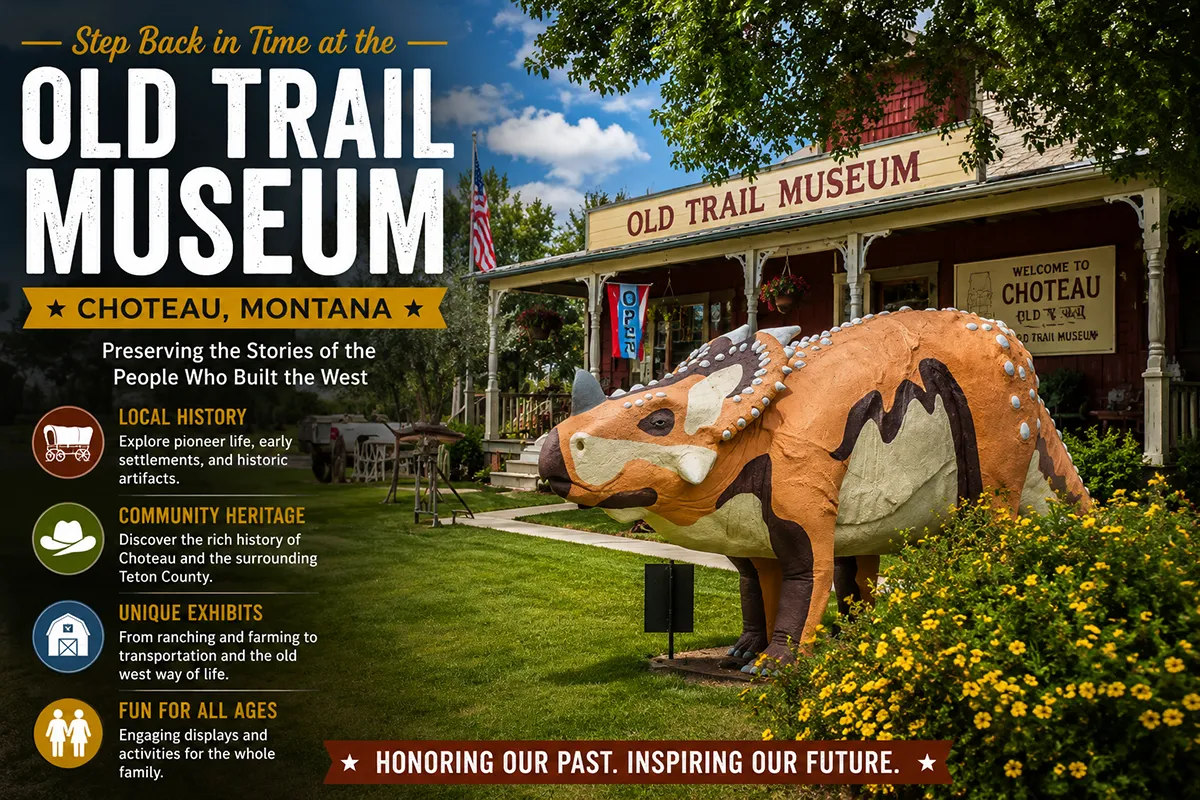
Old Trail Museum, on the north end of Choteau along Highway 89, is a community-owned nonprofit covering the natural and cultural history of the Rocky Mountain Front — dinosaur fossils, Native American and Métis history, homestead-era artifacts, and the writing legacy of author A.B. Guthrie Jr. This guide covers the museum’s boardwalk-connected building complex, its direct connection to nearby Egg Mountain and the Two Medicine Formation, and a major expansion currently underway.
Liked this article?
Add Roaming Montana as a preferred source so you see more of our articles and guides on Google.
A Museum Complex, Not a Single Building
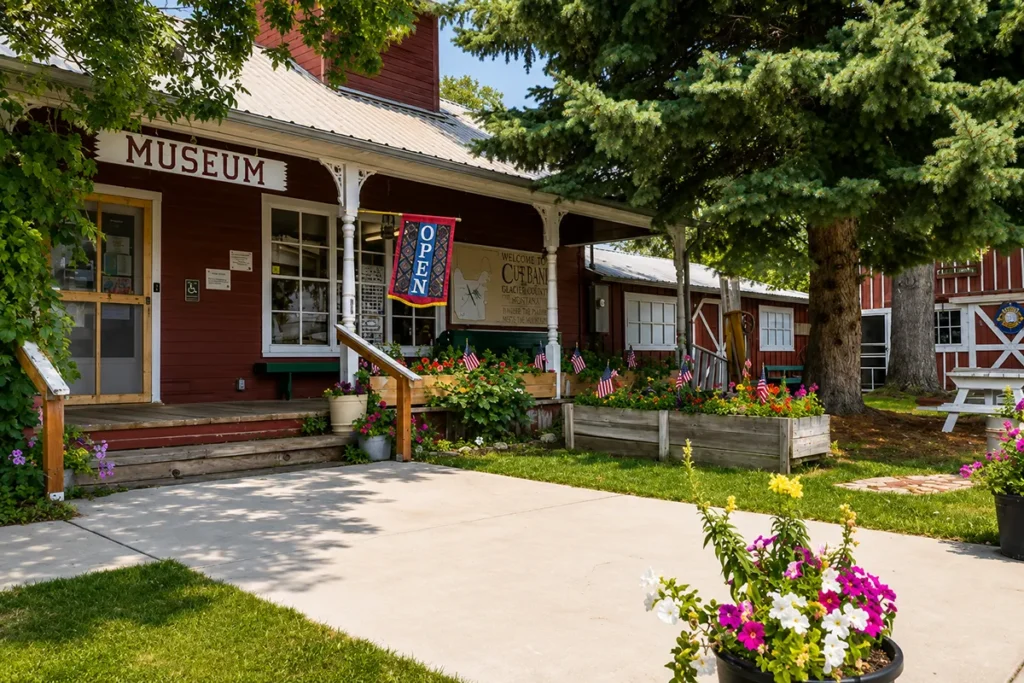
Old Trail Museum occupies the old Golden Rod Creamery building at the junction of Highway 89 and Highway 287, and the main structure is really just the starting point.
A wooden boardwalk connects the main building to six additional structures spread across the grounds: the Grizzly Cabin, the Jesse Gleason Art Studio, the Metis House, the Schoolhouse, the Ice Cream Parlor, and the Carriage House Originals gift shop.
Admission has stayed genuinely affordable — historically around $2 for adults and seniors, free for young children — which makes this one of the better budget stops on the whole Dinosaur Trail if you’re traveling with a family and watching costs across a longer Montana road trip.
Dinosaurs of the Two Medicine
The museum’s paleontology gallery is directly tied to one of the most significant dinosaur discoveries in North American history — and it’s the same story connected to the Two Medicine Dinosaur Center in nearby Bynum.
In 1978, right in the Choteau area, Marion Brandvold made the first discovery anywhere in the world of a nest of baby dinosaur bones, a find that helped establish that some dinosaur species raised their young in colonial nesting grounds.
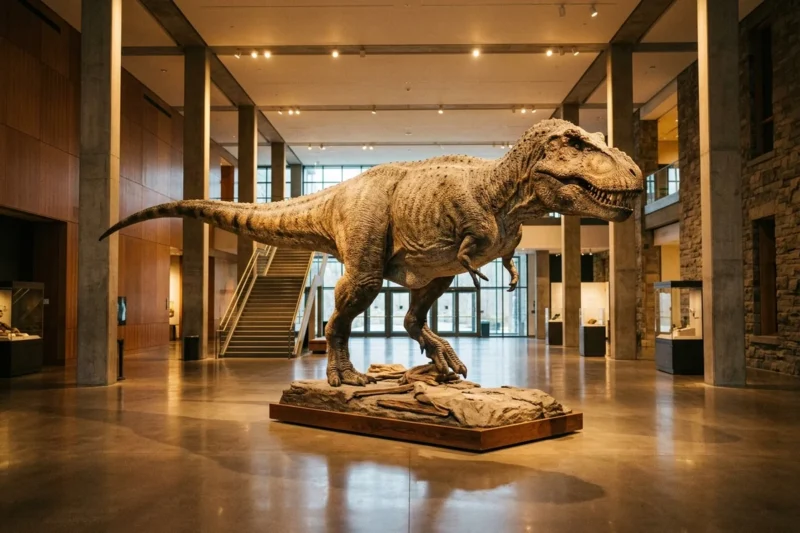
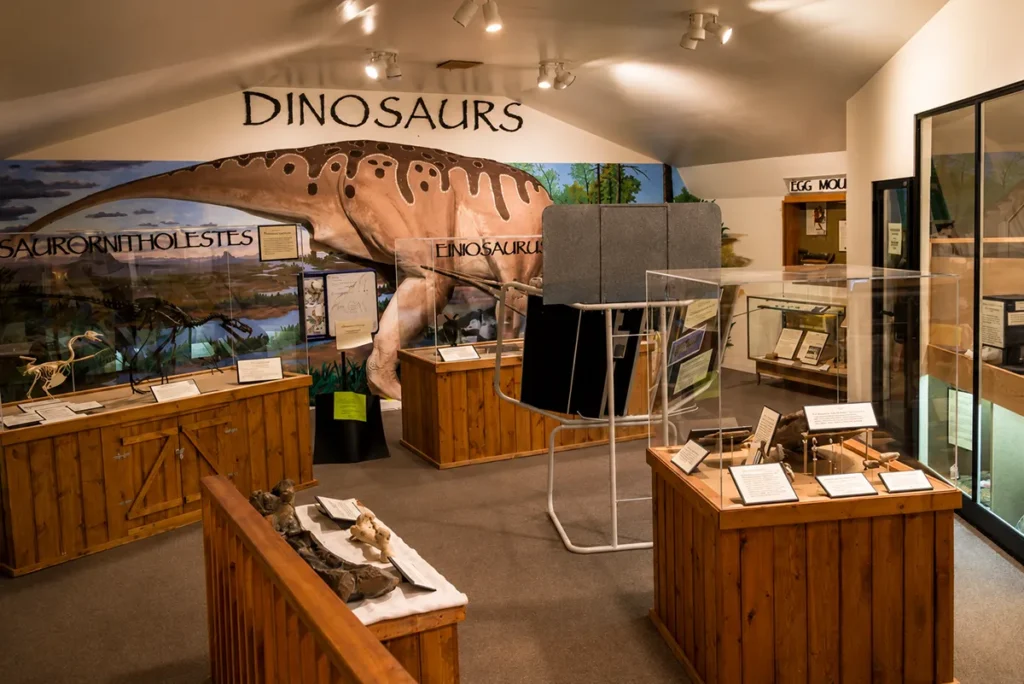
The gallery displays a life-size Maiasaura — the duck-billed dinosaur species tied to that discovery and now Montana’s official state fossil — alongside a mural recreating the prehistoric environment by local artist Jim Utsler.
Beyond the Maiasaura, exhibits include Einiosaurus and Maiasaura skulls, a full progression of Maiasaura bones from nestling through adult, and a Sauronitholestes skeleton cast.
The touch bone display is a genuine highlight for younger visitors: a real fossilized thigh bone from a duck-billed dinosaur that visitors are actually allowed to handle, a rare hands-on moment in a field usually confined to look-but-don’t-touch glass cases.
A prep lab display and geologic information about the Rocky Mountain Front and the Willow Creek Anticline round out the science side of the gallery.
The museum also runs guided tours of Egg Mountain, a fossil site frequently described as one of the most complete dinosaur nesting ecosystems ever discovered anywhere on the planet.
If that tour is running during your visit, I’d prioritize it over almost anything else on this list — seeing the actual excavation ground where this science originated adds a dimension no indoor gallery display can match. [verify current Egg Mountain tour availability and schedule]
The Grizzly Cabin and the Metis House
Two of the outbuildings deserve specific attention because they cover ground most Montana museums skip entirely.
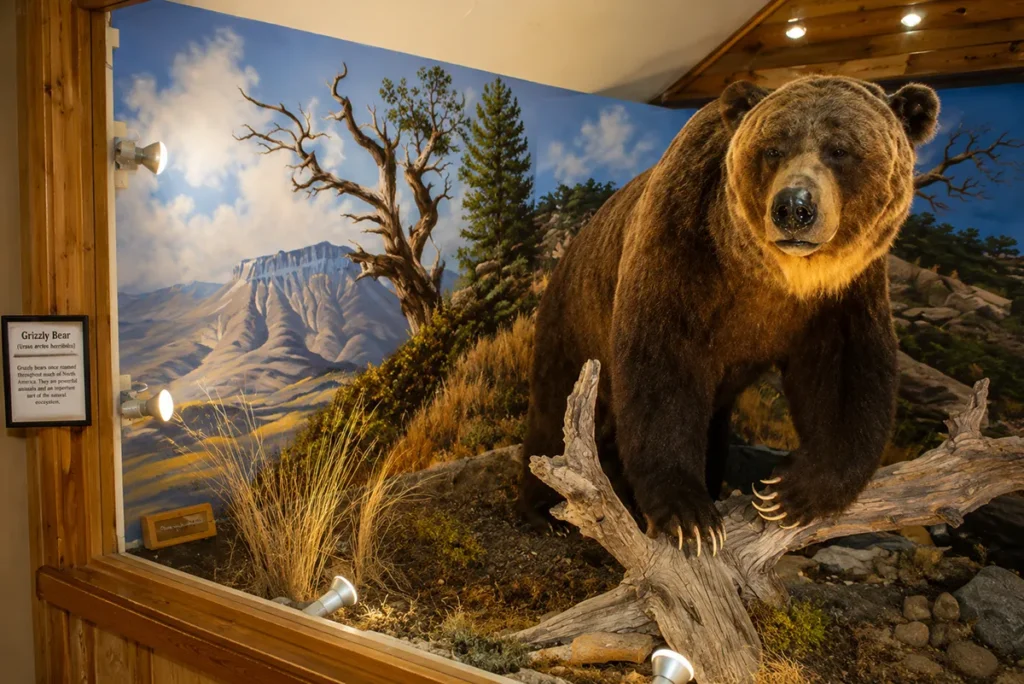
The Grizzly Cabin displays one of the last legally killed grizzly bears taken from the Rocky Mountain Front, alongside a diorama and taxidermy presentation, plus a pair of some of the oldest metal bear traps found anywhere in Montana.
It’s a frank piece of the region’s history with grizzlies rather than a sanitized one — worth knowing going in if you’re traveling with younger kids who might find taxidermy unsettling, and a useful complement to our broader Montana bear guide if grizzly country safety and behavior interest you beyond the historical exhibit.
The Metis House depicts the historically accurate living quarters of the Métis people, whose mixed European and Native heritage played a genuine, often under-told role in the early settlement of this stretch of the West.
Métis families found refuge and built community here, particularly along the South Fork of the Teton River, and this exhibit is one of relatively few dedicated Métis history displays you’ll find in any Montana museum — a distinct cultural thread from the Blackfeet history more commonly covered elsewhere in the region.
A.B. Guthrie Jr.’s Writing Legacy
The museum building itself holds a working studio exhibit dedicated to A.B. “Bud” Guthrie Jr., the Pulitzer Prize-winning author best known for “The Big Sky” and “Fair Land, Fair Land,” both set in and shaped by this stretch of Montana.
Guthrie did much of his actual writing at his home west of Choteau, with a direct view of Ear Mountain and the Rocky Mountain Front — the same landscape his novels made famous to readers who’d never set foot in Montana.
Seeing his workspace here, in the town where he actually lived and wrote, adds a layer of authenticity that a general display in our Montana authors roundup or best books on Montana list wouldn’t carry in the same way.
A Major Expansion Is Underway
Worth knowing before you visit: Old Trail Museum is in the middle of a significant capital expansion.
In 2023, the museum established the Rocky Mountain Front Interpretive Center (RMFIC) in partnership with local wildlife biologists, ecologists, meteorologists, geologists, and hunters, building a new facility dedicated to the region’s wildlife, ecology, climate, and weather.
The project, backed by a Montana Department of Commerce tourism grant, includes significant audio-visual capability for presentations and film screenings and is designed to also serve as a year-round community meeting space.
Once the associated “Choteau: Yesteryear” project is complete, the museum plans to expand its dinosaur collection and Old North Trail exhibit in the main building as well. [verify current construction status and any temporary exhibit changes before visiting]
This kind of active, community-driven institutional growth is genuinely rare for a museum this size, and it’s the kind of detail that most static travel guides simply haven’t caught up to yet.
The Old North Trail Connection
One of the more intellectually interesting threads running through this museum is its connection to the Old North Trail — a route some historians and archaeologists believe was used for millennia by Native peoples moving along the eastern edge of the Rocky Mountains, and which some researchers have connected to the broader story of how the earliest human populations may have moved into and through the Americas.
The museum’s Old North Trail exhibit covers this history, and OTM has historically run interpretive tours in July to sites tied to that trail, including Antelope Butte Cairns, vision quest sites, the Pothole Archaeological Site, and an eagle trap location. [verify current Old North Trail tour schedule and availability]
This is exactly the kind of deep, place-specific history that a museum this size can cover in a way a broader state institution can’t — the Old North Trail exhibit here isn’t a generic “Native American history” placard, it’s tied to specific, physical sites you can visit within the same afternoon if the interpretive tours are running.
Visiting With Kids
This museum tends to work well for families precisely because of its spread-out, boardwalk-connected layout — kids get to physically move between buildings rather than sitting through one long indoor gallery, which helps with attention spans in a way a single large museum hall sometimes doesn’t.
The touch bone display in the dinosaur gallery is the clear highlight for most kids I’ve watched go through, and the ice cream parlor at the end of the boardwalk gives you a built-in reward system for getting through the denser history exhibits first.
The Grizzly Cabin’s taxidermy display is worth a heads-up for sensitive younger visitors, though most kids I’ve seen find it more fascinating than upsetting.
Quick Questions I Get Asked
Is this the same museum as the one in Bynum?
No — Old Trail Museum in Choteau and Two Medicine Dinosaur Center in Bynum are separate institutions, though they’re connected by the same underlying 1978 fossil discovery story and sit just 20 minutes apart. Many visitors do both in the same day.
Is Egg Mountain part of the museum grounds?
No, Egg Mountain is a separate fossil site outside town, and access is generally through museum-organized tours rather than independent visits — check current tour availability before planning around it.
How much time should we budget?
Plan for an hour minimum, more if the Egg Mountain tour or an Old North Trail interpretive hike is running during your visit. Several visitors have told me they expected a quick stop and ended up staying much longer than planned.
Is the museum accessible for visitors with mobility limitations?
The main building is accessible, but the boardwalk system connecting the outbuildings involves some uneven ground typical of a small-town historic complex — worth calling ahead if this is a specific concern for your group.
- The Metis House gets skipped or unexplained in most general coverage, despite being one of the only dedicated Métis history exhibits in the state.
- The direct connection to the same 1978 fossil discovery covered at Two Medicine Dinosaur Center rarely gets flagged, even though pairing the two makes for one of the more scientifically coherent same-day Dinosaur Trail stops available.
- The Egg Mountain tours are almost never mentioned, despite the site’s reputation as one of the most complete dinosaur nesting ecosystems ever found.
- The RMFIC expansion project is recent enough that most existing travel content hasn’t caught up to it at all.
- The A.B. Guthrie Jr. connection gets buried, when it’s a genuinely notable literary landmark for a museum this size.
Personal Tips: What I Wish I Knew
- Budget closer to an hour than the “quick stop” most visitors expect. More than one visitor has told me they ended up spending far longer than planned once they started working through all six outbuildings.
- Ask about Egg Mountain tour availability when you arrive, since it’s not always running and it’s the single most memorable add-on if your timing lines up.
- Pair this directly with the Two Medicine Dinosaur Center in Bynum, 13 miles and about 20 minutes north — the two sites tell literally the same discovery story from complementary angles.
- The ice cream parlor is a legitimate reason to linger, not just a gift shop gimmick — a nice reward for kids after the museum’s denser exhibits.
- Check current hours before you go, since seasonal hours have shifted somewhat year to year and winter access is more limited than the long summer season.
How This Fits a Rocky Mountain Front Road Trip
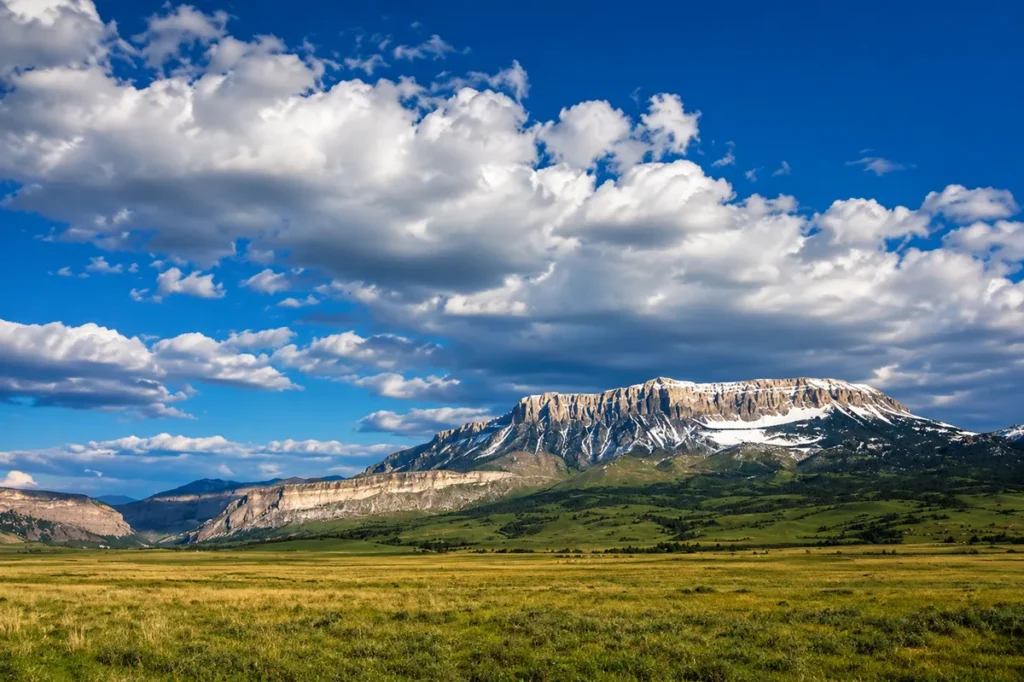
Choteau sits at the edge of the Rocky Mountain Front, where the Northern Rockies rise sharply out of the plains, and this museum works well as a cultural anchor for a broader outdoor-recreation-focused stretch of your trip.
Freezout Lake, eight miles south, is a well-regarded birding stop if wildlife-watching is part of your itinerary.
If you’re continuing on toward Glacier or working through the full Dinosaur Trail, our Two Medicine Dinosaur Center guide covers the natural next stop, and our Montana state fossil post gives more background on Maiasaura’s official designation if that’s a detail you want to dig into further.
For the wider region, our Great Falls guide rounds out a fuller multi-day itinerary, and our Montana museums guide maps how this stop fits into the state’s broader museum landscape.
Practical Info
| Address | 823 North Main Street, Choteau, MT (Highway 89 and Highway 287 junction) |
| Summer hours | Roughly Memorial Day–Labor Day, daily, approximately 9 a.m.–5 or 6 p.m. [verify current summer hours] |
| Winter hours | Reduced days and hours, roughly Tuesday–Saturday, 10 a.m.–3 p.m. [verify current winter hours] |
| Admission | Historically around $2 for adults/seniors; free for young children [verify current pricing] |
| Time needed | 1–1.5 hours |
| Good for | Families, Dinosaur Trail travelers, Montana literary and cultural history enthusiasts, budget-conscious road trips |
| Nearby pairing | Two Medicine Dinosaur Center (20 minutes), Freezout Lake birding area |
Final Thoughts
Old Trail Museum packs an unusual amount of range into one small-town complex — real paleontology tied to a globally significant discovery, an honest look at the region’s grizzly history, one of the state’s few dedicated Métis exhibits, and a working author’s studio, all connected by the same wooden boardwalk.
Give it more time than its modest size suggests, and don’t skip the outbuildings on your way to the dinosaur gallery.
Pin this for your Rocky Mountain Front trip planning, and if you’ve caught an Egg Mountain tour, I’d love to hear how it compared to the indoor gallery in the comments.