A penniless Irish immigrant who slept on a Helena bar counter spent years being laughed at by other prospectors — until he struck the gold vein that funded a cathedral, founded a bank, and made Marysville the most productive gold-mining town in the world for two decades.
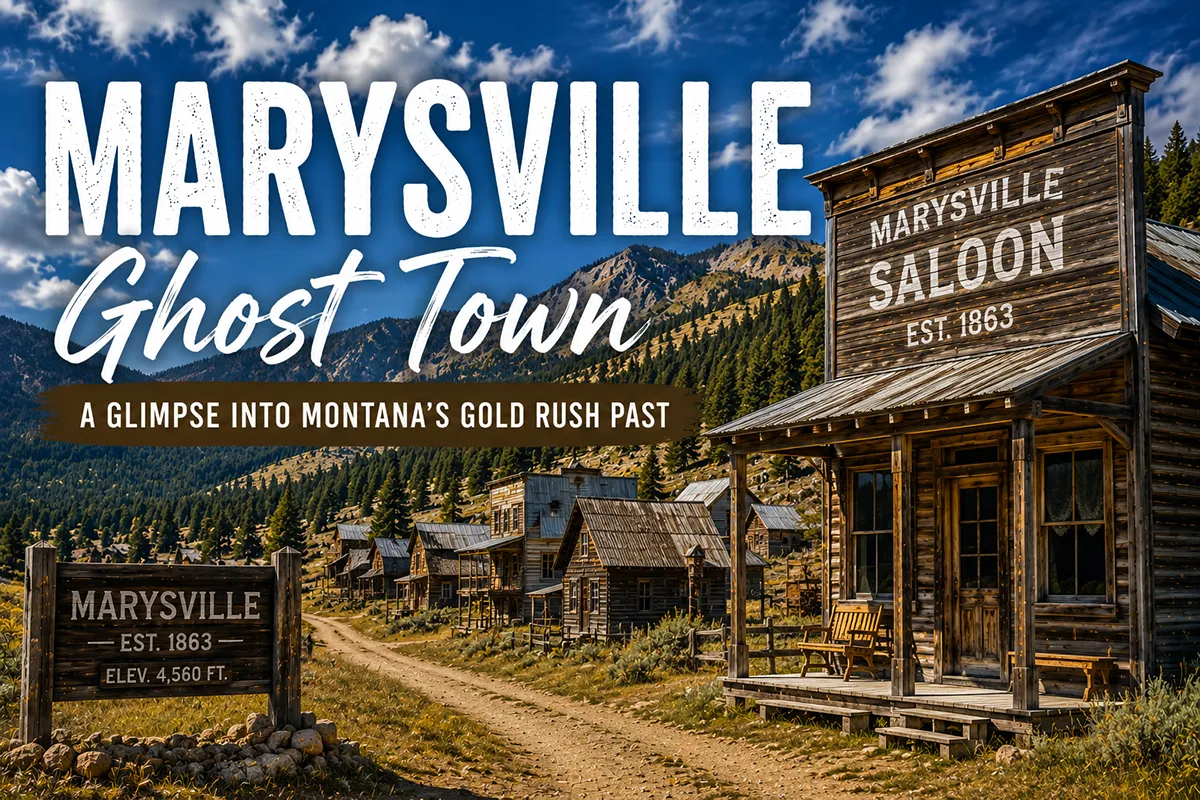
Marysville sits 21 miles northwest of Helena and is built around one of the most extraordinary stories in Montana mining — Thomas “Tommy” Cruse, an Irish immigrant who discovered the Drumlummon Mine in 1876. Marysville produced about $50 million in gold over its boom years and held 3,000–4,000 residents at peak. Today about 80 people live here in private homes alongside preserved historic buildings: the 1898 Masonic Lodge, two original churches, the Pioneer Memorial Museum, and a standing baseball field with bleachers. Access is fully paved from Helena — the easiest ghost town in Montana to visit by car. Below: Cruse’s full story, the surviving buildings, and how to combine Marysville with Helena and the nearby Great Divide Ski Area.
Liked this article?
Add Roaming Montana as a preferred source so you see more of our articles and guides on Google.
Why Marysville Is the Most Accessible Ghost Town in Montana
If you’ve read my Montana ghost towns guide or any of the sibling deep-dives, you’ve seen me set expectations for each town: Bannack is the most preserved, Garnet is the most authentic, Virginia City is the most alive, Granite is the most dramatic, Elkhorn is the smallest.
Marysville is the most accessible.
It’s a 21-mile drive from Helena on fully paved roads. There’s no gravel section, no high-clearance requirement, no closed-in-winter access window. You can drive a rental sedan from downtown Helena in 35 minutes and be walking around the surviving buildings of one of the most productive gold-mining towns in American history.
Marysville is also the easiest ghost town in Montana to misjudge. On the surface it looks unremarkable — a small mountain town with about 80 residents, a few historic buildings, some old mining ruins on the surrounding hills.
What’s not obvious unless you know the story: this town produced roughly $50 million in gold during the 1880s and 1890s, was briefly the world’s leading gold producer, and made its founder one of the most influential men in Montana’s territorial history.
I’ve visited Marysville twice — once in late summer 2023 [verify] and once in early fall 2024 [verify]. This guide is built from those visits and the deep documentation available through Western Mining History and Montana Historical Society sources.
The Tommy Cruse Story — Montana’s Most Underrated Mining Hero
Most ghost town stories revolve around a town. Marysville’s revolves around a single person.
The early years
Thomas “Tommy” Cruse was an Irish immigrant from County Cavan who arrived in Montana Territory in the early 1870s. By all accounts he was broke, undereducated, and not particularly popular with the established prospecting community. He worked placer claims along Silver Creek without much success for years. Local lore says he sometimes slept on the bar counter of a Helena saloon because he couldn’t afford lodging.
Other prospectors mocked him. He took grubstakes — small advances of food and gear from local merchants in exchange for a share of any future strike — and consistently came back empty-handed. He developed a reputation as a perpetual loser who somehow couldn’t stop trying.
The 1876 strike
In 1876, working a site upstream from his old placer claims along Silver Creek, Cruse hit a vein. The ore assayed at extraordinary grades. Within months he had recovered more than $140,000 in ore from his initial workings — astonishing money in 1876 dollars.
He named the strike the Drumlummon Mine after the Catholic parish in Ireland where he was born. He named the town that sprang up around it Marysville after one of the first women to settle there — most sources say Mary Ralston, though local accounts also credit “the first three Marys” or one of Cruse’s associates.
The boom
The Drumlummon Mine became the foundation of one of Montana’s most spectacular mining operations. By the early 1880s, Cruse had built a five-stamp mill near the mine. The Marysville Post Office opened in February 1881. The town grew explosively.
At its 1880s peak, Marysville had:
- 3,000–4,000 residents (sources vary)
- 27 saloons
- 7 hotels
- Multiple stores (grocery, drug, bakery, mercantile)
- 2 newspapers
- 2 railroads serving the town (an extraordinary detail for a mountain mining town)
- 60+ business establishments
- Multiple churches (Methodist, Catholic, others)
- A school
- A Masonic Lodge
- And, remarkably, a baseball field with proper wooden bleachers
The Drumlummon Mine alone produced about half of the ~$50 million in gold the Marysville district produced during its boom years. By many accounts, Marysville was the leading gold-producing region in the world during portions of the 1880s and 1890s.
The sale and what came after
In 1884, Cruse sold the Drumlummon Mine to an English syndicate — by various accounts for $1 million to $1.6 million in cash plus stock. He retired to Helena a wealthy man.
What he did with the money is what makes the story remarkable.
Cruse used part of his Drumlummon fortune to fund the construction of the Cathedral of St. Helena — one of the most beautiful Gothic Revival cathedrals in the American West, still a major Helena landmark today.
He founded a bank that operated in Helena for decades. He built a mansion in town. He briefly married a young woman at age 50, but she died in childbirth a year later, leaving Cruse with an infant daughter and a deep restlessness.
Unable to settle into wealthy retirement, Cruse bought back into mining — purchasing the Bald Mountain Mine and the West Belmont Mine in the Marysville area and operating them for the rest of his life. He died in 1914.
The English syndicate’s failure
The English syndicate that bought the Drumlummon eventually went bankrupt and the mine changed hands several times thereafter. Nathan Vestal bought it, sold it, and famously came back a year later to work as a laborer in the same mine he had once owned because he had spent his money.
Production continued at smaller scale until the lower levels of the Drumlummon were flooded during litigation in 1904. The mine was reopened in 1924 and continued operating until World War II.
You can read more about the broader era in my Montana gold rush piece.
What’s Still Standing in Marysville Today
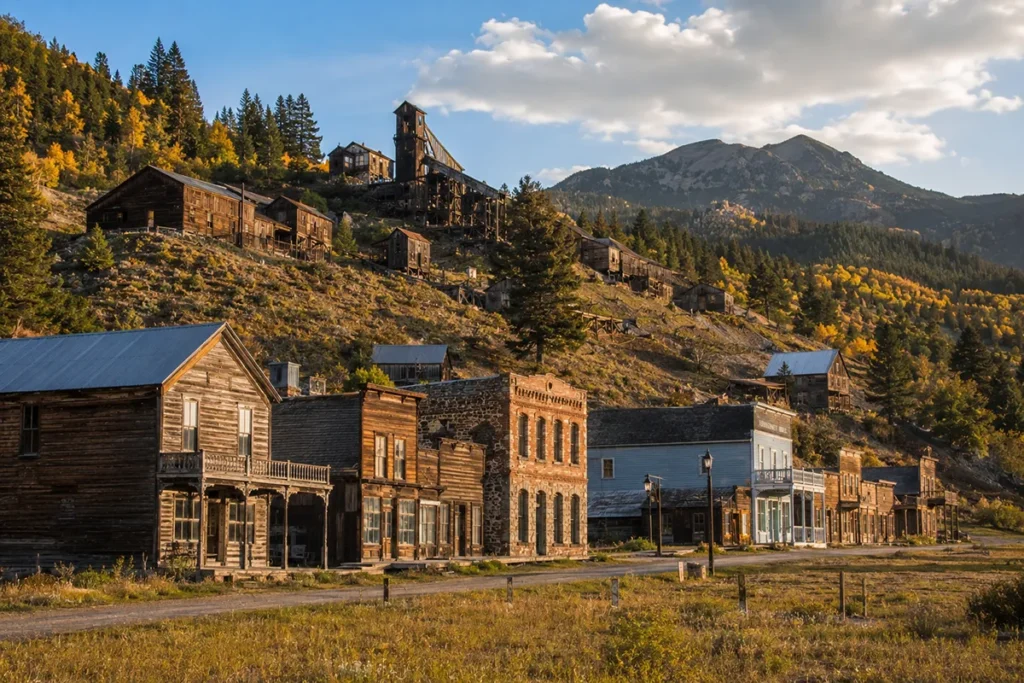
Marysville has more surviving historic buildings than most Montana ghost towns. Some are restored, some are in active private use, and some are visible ruins on private property. The notable structures:
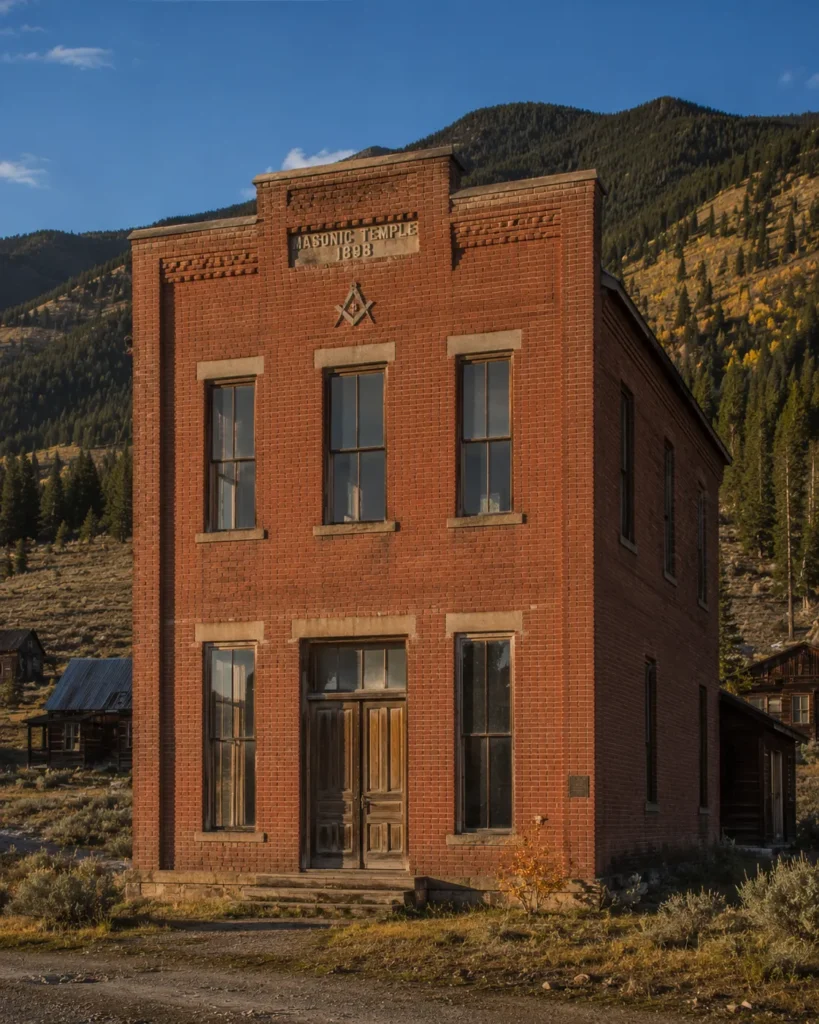
The 1898 Masonic Lodge
A striking brick building with an impressive exterior, built in 1898. The lodge housed two Masonic chapters — Mountain Star 130 and Ottawa 51. The brick construction is unusual for a Western mining town this remote. It’s been preserved and remains one of the most photographed buildings in Marysville.
Methodist-Episcopal Church of Marysville (1880s)
A historic wooden church listed on the National Register of Historic Places. Simple, well-proportioned, the kind of small-town Western church that defined frontier Montana. Sometimes open to visitors during summer.
Our Lady of Lourdes Catholic Church (1886)
The Catholic church Cruse helped fund as a smaller-scale predecessor to his later Cathedral of St. Helena project. It still stands and is a meaningful piece of the Cruse legacy. Located in town with limited visiting hours.
The Marysville Pioneer Memorial Building
A small museum about the town’s mining history, with photographs, artifacts, and documentation of the Drumlummon era. Run by local preservationists. Hours are limited — typically summer weekends, though check ahead [verify schedule].
The Betor General Store
Originally established around 1898 by Ann and Blibal Betor (Blibal was a Lebanese immigrant — another reminder that mining towns drew people from all over the world). The building deteriorated badly through the 20th century, but a well-planned restoration began in 2004 and was completed in 2018. It’s now one of the best-restored buildings in town.
The baseball field with bleachers
This is one of the more surprising survivors in Montana ghost-town country. Marysville’s baseball field, complete with wooden bleachers, is still standing on the south side of town. Most mining camps had baseball fields. Few have any physical trace today. Marysville’s is leaning, weathered, but intact enough to photograph dramatically.
Drumlummon Mine ruins
On the hillside above town, the Drumlummon Mine head frame, mill structures, and tailings are visible from various points around Marysville. Most are on private mining-claim land — view from public areas, don’t trespass.
Original miners’ cabins and houses
Scattered throughout town are original 1880s–1920s cabins and houses, in various states. Some are restored and occupied; others are vacant private property. The variety makes Marysville visually richer than ghost towns like Granite or Elkhorn that have just one or two surviving structures.
A Living Town, Not a Pure Ghost Town
Like Elkhorn, Marysville is not abandoned. About 80 people live in Marysville year-round in private homes scattered throughout the historic district. Some are descendants of original mining families. Others are newcomers who fell in love with the town and bought one of the small cabins to restore.
This matters for visitors. The unwritten etiquette:
- Stay on public roads and pathways
- Don’t enter yards or walk up to private homes
- Don’t peer into windows of occupied buildings
- Don’t climb on private mining ruins on the surrounding hills
- The Pioneer Memorial Museum and the open historic buildings welcome you; private homes don’t
- If you photograph, focus on public-facing buildings and exterior shots
The residents of Marysville are stewards of one of Montana’s most important mining history sites. They’re generally friendly to respectful visitors and protective of the town’s character.
Getting There — The Easy Drive From Helena
Marysville is 21 miles northwest of Helena, accessed by fully paved roads. The drive takes about 35 minutes.
From Helena (35 minutes)
- Take I-15 north toward Great Falls
- Take exit 200 (Lincoln Road) and head west on Lincoln Road
- Continue on Lincoln Road / Marysville Road west and northwest for approximately 14 miles
- Marysville appears on your left as you climb into the foothills
From Great Falls (~2 hours)
South on I-15 to the Helena area, then follow the Helena directions above.
From Missoula (~3 hours)
East on I-90, then north on I-15 through Butte to Helena, then the Helena directions above.
Road conditions
| Factor | Detail |
|---|---|
| Total drive (Helena to Marysville) | 21 miles |
| Drive time | 35 minutes |
| Surface | Fully paved |
| Vehicle requirement | Any car |
| Season | Year-round access |
| Winter conditions | Drivable in winter; mountain roads can be snowy/icy at higher elevations |
| Cell service | Spotty in town |
The paved access is what makes Marysville unique among Montana ghost towns. There’s no road condition gamble, no high-clearance requirement, no closed-for-the-season window. If you can drive to Helena, you can drive to Marysville.
Practical Visitor Info
| Topic | Details |
|---|---|
| Location | Marysville, MT (Lewis and Clark County) |
| Coordinates | 46.7474°N, 112.2986°W |
| Elevation | 5,413 feet |
| Population (2020 census) | ~80 |
| Entry fee | Free — no entry fee anywhere in town |
| Visitor center | None; some museum hours at Pioneer Memorial Building |
| Restrooms | None reliably public; visit before leaving Helena |
| Drinking water | None — bring your own |
| Food | The Marysville House restaurant operates in town with limited hours [verify] |
| Cell service | Spotty |
| Pets | Allowed on leash on public roads |
| Accessibility | Town is walkable on paved/dirt streets; individual historic buildings have varied accessibility |
| Camping | Not in town. Helena National Forest dispersed sites in surrounding area. |
When to Visit
| Season | Experience | My Take |
|---|---|---|
| Spring (April–May) | Mud season possible; some buildings closed | Variable |
| Summer (June–Aug) | Best weather, museum/buildings open | Excellent |
| Early fall (Sept–Oct) | Cool weather, aspens turning, low crowds | My favorite. September weekdays are perfect. |
| Late fall (Nov) | Cold, quiet | Good for solitude |
| Winter (Dec–March) | Accessible (paved road), beautiful with snow, Great Divide Ski Area open 3 miles up the road | Unique winter ghost town option |
What I Wish I’d Known Before My First Visit
Read about Tommy Cruse before you go. Marysville is interesting on its surface but transformative once you know the Cruse story. The 1898 Masonic Lodge and the 1880s churches become meaningful when you understand they were funded by the gold Cruse pulled from this hillside.
Visit the Cathedral of St. Helena before or after. The Cathedral in Helena was built with Cruse’s Drumlummon money. If you visit Marysville and then the Cathedral (or vice versa), the connection between Montana mining wealth and one of the state’s most beautiful churches becomes physical. The Cathedral is part of any good Helena tourism itinerary.
Check the Pioneer Memorial Museum hours ahead. The small town museum has limited hours, generally summer weekends. Call ahead if it’s a priority.
Don’t expect a 4-hour visit. Marysville rewards 1.5 to 2 hours on site. Walk the main road, see the Masonic Lodge and the churches, find the baseball field, peek at the Drumlummon ruins on the hillside, and you’ve done it.
Combine with Great Divide Ski Area in winter. Great Divide Ski Area is just 3 miles up the road from Marysville. In winter, you can visit the ghost town in the morning and ski in the afternoon — a combination that doesn’t exist for most other Montana ghost towns.
The Marysville House restaurant is worth checking. A local restaurant operates in town with seasonal/limited hours. If it’s open when you visit, eat there — it’s the only way to support the small living community in Marysville.
Respect private property. With 80 living residents in scattered homes, this is a working community, not a museum. Stay on roads. Take photos of public buildings. Don’t drone over occupied homes.
Combining Marysville With Other Stops
Some pairings that work well:
Half-day from Helena
Morning visit to Marysville → lunch back in Helena → afternoon at the Cathedral of St. Helena and the Montana State Capitol area.
Full day from Helena
Marysville in the morning, Elkhorn ghost town and Boulder Hot Springs in the afternoon. Two ghost towns, two stories, and a soak — a near-perfect Helena Saturday.
Winter day from Helena
Marysville in the morning, Great Divide Ski Area in the afternoon. Year-round option that’s hard to match elsewhere in Montana ghost-town country.
Helena weekend
Use Helena as your base. See things to do in Helena, then add Marysville as a half-day excursion plus the Cathedral as the meaningful connection.
Photography Tips
A few specifics from my visits:
Best overall light: Late afternoon. Marysville sits in a small valley with the Drumlummon ruins on the hillside above. The afternoon light catches both the buildings on Main Street and the mine structures on the slope.
Best vantage points:
- Standing on Main Street looking up at the Drumlummon Mine area
- From the hill above town looking down at the Masonic Lodge and churches
- The baseball field from the right angle (the bleachers lean dramatically)
Best detail shots: The brick textures of the 1898 Masonic Lodge, the original siding on the Methodist-Episcopal Church, the carved wooden window frames on the restored Betor general store, and the weathered bleachers of the baseball field.
Gear: A 24-35mm wide lens for the town and mine structures, a 50mm for architectural details and portraits of buildings, a polarizer for the Montana sky.
What to avoid: Mid-day sun flattens the brick and wood textures. Try for morning or afternoon side-light.
Frequently Asked Questions
Where is Marysville Montana?
Marysville is located 21 miles northwest of Helena, Montana, in Lewis and Clark County. It sits at 5,413 feet elevation in the foothills near the Continental Divide. Coordinates: 46.7474°N, 112.2986°W. Drive time from Helena is about 35 minutes on fully paved roads.
Is Marysville Montana a real ghost town?
Partly. Marysville was a thriving 3,000–4,000 person gold mining town in the 1880s and 1890s. Today about 80 people still live here year-round, alongside numerous preserved historic buildings and mining ruins. It’s classified as a “semi-ghost town” — far quieter than its peak but never fully abandoned.
Who founded Marysville Montana?
Thomas “Tommy” Cruse, an Irish immigrant from County Cavan, founded Marysville in 1876 after discovering the Drumlummon Mine. He named the town after Mary Ralston, one of the first women to settle there. The mine was named after the Catholic parish in Ireland where Cruse was born.
Who was Tommy Cruse?
Thomas Cruse (1836–1914) was an Irish immigrant prospector who arrived in Montana in the early 1870s. After years of failed claims and being mocked by fellow miners, he struck the Drumlummon Mine in 1876. He sold the mine to an English syndicate in 1884 for approximately $1.5 million, then funded the construction of the Cathedral of St. Helena, founded a Helena bank, and remained one of Montana’s most influential business figures until his death in 1914.
How much does it cost to visit Marysville?
Free. There is no entry fee anywhere in Marysville. The Pioneer Memorial Building museum may have a small donation request, but town access is free.
Can you visit the Drumlummon Mine?
The Drumlummon Mine workings on the hillside above Marysville are on private mining-claim property. You can view the ruins from public roads in town but cannot enter the mine area. The lower levels of the mine have been flooded since 1904.
Is Marysville worth visiting?
Yes, especially for travelers based in Helena. It’s the easiest ghost town in Montana to reach (fully paved access), and the Tommy Cruse story is one of the most remarkable in Montana mining history. Plan 1.5–2 hours on site.
How long does it take to visit Marysville?
1.5 to 2 hours is enough for a thorough visit, including walking the main streets, seeing the Masonic Lodge, both churches, the baseball field, and viewing the Drumlummon ruins from below. Round trip from Helena is roughly 3 hours including drive time.
Is Marysville open year-round?
Yes — paved access means Marysville is reachable year-round, including in winter. Some buildings have seasonal hours (the Pioneer Memorial Museum is mostly summer-only), but town access never closes.
What’s the connection between Marysville and the Cathedral of St. Helena?
Tommy Cruse used part of his fortune from selling the Drumlummon Mine to fund the construction of the Cathedral of St. Helena, one of the most architecturally significant churches in Montana. The Cathedral is in Helena, 21 miles southeast of Marysville. Visiting both is one of the most meaningful Montana history experiences possible.
Is Marysville haunted?
Marysville has fewer documented paranormal reports than Bannack or Virginia City. With 80 living residents, it has less of a true “ghost town” atmosphere. See my haunted places in Montana guide for the broader list.
Can you combine Marysville with skiing?
Yes — Great Divide Ski Area is just 3 miles up the road from Marysville, making this the only Montana ghost town that combines naturally with a winter ski trip.
Final Thoughts
Marysville is the Montana ghost town that doesn’t announce itself. There’s no state park sign, no admission booth, no programmed visitor experience.
Just a small mountain town with about 80 residents, some remarkably preserved historic buildings, and a hillside full of mining ruins from the operation that briefly made it the most productive gold-mining region in the world.
What makes it work is the Tommy Cruse story. An Irish immigrant who slept on a bar counter, who was mocked for years, who finally hit a vein in 1876 that would yield $50 million in gold and fund a cathedral that still stands as one of Montana’s most beautiful buildings.
You can walk the streets where he lived, see the mine that made him, and then drive 21 miles to Helena and stand inside the Cathedral his money built.
If you’re planning a visit, my recommendation: start in Helena. Read about Cruse the night before. Drive to Marysville on a mid-September morning. Walk the main street. See the Masonic Lodge and the churches.
Find the baseball field. Look up at the Drumlummon ruins on the hillside. Then drive back to Helena and end the day at the Cathedral of St. Helena.
That’s the order of operations that turns Marysville from “small old mountain town” into one of the most important Montana history experiences you can have.
Drop your questions or your own Marysville stories in the comments. And check out my full Montana ghost towns guide if you want to add more stops.