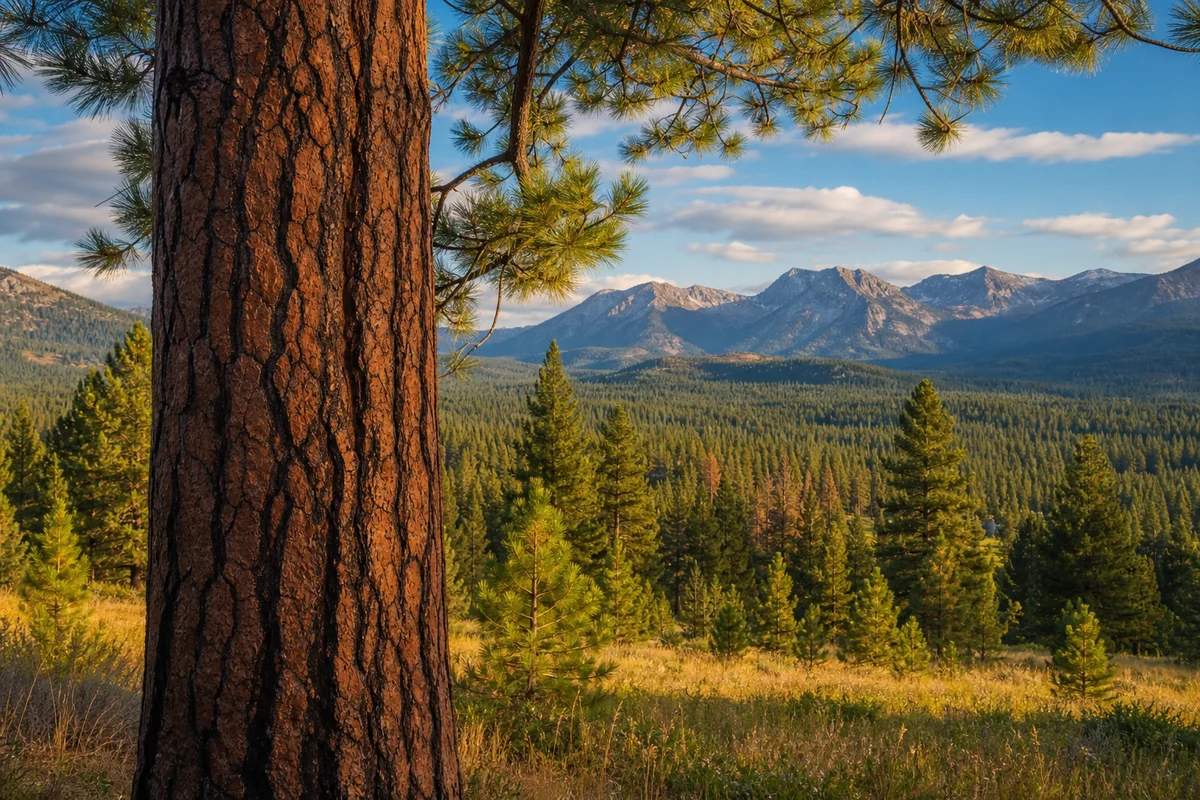
- Montana designated the Ponderosa Pine (Pinus ponderosa) as its state tree in 1949
- These trees can live 300-600 years and reach heights exceeding 200 feet
- Best places to experience them: Lolo National Forest, Flathead Lake, and the Bitterroot Valley
- The bark smells like vanilla, butterscotch, or baking cookies when warmed by sun
- Fall through early spring offers the best bark scent experience
- Peak viewing combines well with wildlife watching along Montana’s western corridors
Liked this article?
Add Roaming Montana as a preferred source so you see more of our articles and guides on Google.
Why the Ponderosa Pine Became Montana’s State Tree
During my research trip to the Montana State Capitol Building in Helena last fall, I dug through historical records about how the Ponderosa Pine earned its official designation. The story reveals a lot about Montana’s identity and the people who shaped it. In 1949, Montana schoolchildren cast their votes to select a state tree. The Ponderosa Pine won by a landslide, beating out contenders like the Douglas Fir and Western Larch. Governor John Bonner signed the designation into law, cementing the Ponderosa’s place alongside other state symbols. The choice made perfect sense — these trees blanketed the western third of Montana and represented the rugged independence Montanans hold dear. What struck me most while reading the original legislative documents was how the children’s reasoning focused on the tree’s resilience. These kids, many from ranching and logging families, understood that the Ponderosa survives fires, droughts, and bitter winters.The Scientific Story Behind the Name
The scientific name “Pinus ponderosa” comes from the Latin word for “heavy” or “weighty.” When I visited a working sawmill near Missoula during my trip, the mill operator explained that Ponderosa lumber is surprisingly dense despite appearing light. Scottish botanist David Douglas (yes, the same Douglas behind the Douglas Fir) officially named the species in 1826. He encountered these trees during his Pacific Northwest expeditions and recognized them as distinct from other pines. The “Ponderosa” name stuck because early settlers noticed how substantial the timber was for construction. Railroad ties, mine supports, and homestead buildings throughout Montana relied heavily on this species.How to Identify a Ponderosa Pine Like a Local
After spending countless hours hiking through Montana’s pine forests, I’ve developed a foolproof system for identifying Ponderosas. Once you know what to look for, they become unmistakable.The Bark: Nature’s Puzzle
Start with the bark — it’s the most distinctive feature. Young Ponderosas have dark, almost black bark that’s deeply furrowed and rough to the touch. As trees mature past 100 years, magic happens. The bark transforms into large, irregular plates that look exactly like orange and pink puzzle pieces fitted together. I remember a ranger at Lolo National Forest teaching me to look for the “black streaks” between plates. She explained these dark crevices contain old bark that hasn’t yet flaked away.The Needles: Three’s the Charm
Ponderosa needles always come in bundles of three, wrapped at the base by a papery sheath. Each needle stretches 5-10 inches long — noticeably longer than most other Montana pines. Hold a fresh needle up to light, and you’ll see it’s actually triangular in cross-section. I discovered this trick while camping near Flathead Lake, and it’s helped me avoid confusing Ponderosas with Lodgepole Pines ever since. The needles cluster at branch tips, giving mature trees a distinctive “tufted” appearance. From a distance, this creates that classic umbrella-shaped silhouette against Montana’s endless sky.The Cones: Small but Spiky
Ponderosa cones surprised me with their modest size — only 3-6 inches long, much smaller than you’d expect from such massive trees. Each scale ends in a sharp, outward-pointing prickle that will definitely poke you if you grab carelessly. Fresh cones are green to purple, maturing to a warm brown. They open on the tree to release winged seeds, unlike some pines that need fire or animal intervention. During my hikes, I’ve noticed squirrels absolutely demolishing these cones for seeds. The debris piles, called “middens,” can grow several feet tall around favorite feeding trees.The Legendary Butterscotch Scent: How to Experience It
No article about Montana’s state tree would be complete without addressing its most famous characteristic — that incredible smell. I’ve tested this in every season and location imaginable, and I have strong opinions about maximizing your scent experience.Why Does the Bark Smell Like Dessert?
The scent comes from volatile organic compounds in the bark, primarily vanillin (the same compound in vanilla beans) and other terpenes. When sunlight warms the bark, these compounds vaporize and release that distinctive aroma. Different people detect different scents. I smell butterscotch most strongly, but my hiking partner insists it’s more like fresh-baked sugar cookies. Scientists have documented reports of vanilla, caramel, and even strawberry. The Montana state flower, the Bitterroot, also has subtle aromatic qualities, but nothing compares to the Ponderosa’s intoxicating fragrance.Best Conditions for Smelling the Bark
Temperature matters enormously. I’ve found the strongest scent occurs when bark reaches 70-85°F — warm enough to volatilize the compounds but not so hot that they’ve already dissipated. Timing your visit for late morning on a sunny day works best. The morning sun has warmed the bark, but the day’s heat hasn’t peaked yet. Season affects intensity too. Fall through early spring provides the best smelling opportunities because cooler overnight temperatures “recharge” the bark with aromatic compounds. Summer visits still work, but early morning is essential.The Sniff Test: A Step-by-Step Guide
Find a mature tree with that distinctive orange puzzle-bark pattern. Young, dark-barked trees don’t produce the same scent intensity. Press your nose directly into one of the deep furrows between bark plates. This concentrates the aroma and shields you from competing forest scents. Inhale slowly through your nose. If you don’t immediately detect sweetness, try a different furrow or move around the tree — sun exposure varies by orientation. I always recommend photographing the tree you’re smelling. I have a collection of “scent champion” trees I return to on subsequent visits, and some consistently outperform others.Where to Find Montana’s Best Ponderosa Pine Forests
During my years exploring Montana, I’ve identified specific locations that offer exceptional Ponderosa Pine experiences. These aren’t random forest patches — they’re destinations worthy of special trips.Lolo National Forest: The Ultimate Ponderosa Experience
This 2-million-acre forest west of Missoula contains some of Montana’s most accessible and impressive Ponderosa stands. I’ve spent more time here than any other Montana forest, and it never disappoints. The Pattee Canyon Recreation Area offers easy trails through old-growth Ponderosas just 15 minutes from downtown Missoula. The “M” Trail up Mount Sentinel provides stunning views of mixed conifer forests with Ponderosas dominating lower elevations. For serious Ponderosa immersion, I recommend the Blue Mountain Recreation Area. The trails wind through parklike stands where you can observe the species’ natural spacing pattern — Ponderosas don’t crowd each other like some species do.Flathead Lake Area: Ponderosas Meet Water
Something magical happens where Montana’s Ponderosa forests meet the largest natural freshwater lake west of the Mississippi. The combination of massive trees and sparkling blue water creates unforgettable vistas. Wild Horse Island State Park preserves ancient Ponderosas on an island accessible only by boat. During my kayak trip there, I encountered trees that predate European settlement, their twisted forms shaped by centuries of island winds. The west shore of Flathead Lake between Polson and Bigfork features numerous pullouts where you can stop, stretch, and walk among shoreline Ponderosas. These trees take on sculptural qualities from lake-effect weather patterns.Bitterroot Valley: Where the Trees Tell Stories
The Bitterroot Valley running south from Missoula holds personal significance — it’s where I first truly connected with Ponderosa Pines. The valley’s dry climate creates ideal growing conditions, and the trees here achieve remarkable size. Lee Metcalf National Wildlife Refuge offers accessible trails through mixed forests where Ponderosas share space with other Montana native plants. The refuge’s combination of wetlands and upland forest creates diverse viewing opportunities. Further south near Darby, the Painted Rocks area features Ponderosa stands that somehow feel even more wild and remote. These forests have a different character — more open, more ancient, more Montana.Helena National Forest: Capitol Region Treasures
Visitors to Montana’s capital city can experience excellent Ponderosa forests without driving far. The Mount Helena City Park preserves forested hillsides directly adjacent to downtown. The Sleeping Giant Wilderness Study Area north of Helena contains exceptional old-growth stands. I hiked there last October and found some of the most photogenic Ponderosas I’ve encountered anywhere in the state. For those interested in how fire shapes Ponderosa ecosystems, the Helena area offers excellent examples of forests in various recovery stages following both prescribed burns and wildfires.The Ponderosa’s Role in Montana Ecology
During conversations with forest ecologists at the University of Montana, I gained deep appreciation for how Ponderosas function as ecosystem anchors. These aren’t just pretty trees — they’re critical infrastructure for Montana’s wild landscapes.Fire Adaptation: Built to Burn
That thick, corky bark serves a vital purpose beyond smelling delicious — it protects the living tissue underneath from fire. I’ve examined Ponderosas with fire scars dozens of feet tall that continue thriving decades later. The species evolved with frequent, low-intensity fires. Before fire suppression policies, flames would sweep through Ponderosa forests every 5-25 years, clearing brush and killing competing tree seedlings. Modern forest management increasingly recognizes the need to restore fire to these ecosystems. During my visit to prescribed burn sites near Seeley Lake, I witnessed firsthand how Ponderosas not only survive but thrive following properly managed burns.Wildlife Habitat: More Than Just Trees
Ponderosa forests support remarkable biodiversity. On my wildlife observation trips, I’ve documented dozens of species that depend specifically on these trees and the habitats they create. The Montana state bird, the Western Meadowlark, favors the open grasslands between Ponderosa stands. The Montana state animal, the grizzly bear, often dens in excavated cavities beneath large Ponderosa root systems. Woodpeckers, including the impressive Pileated Woodpecker, excavate nesting cavities that subsequently house owls, squirrels, and countless other species. A single large Ponderosa might support dozens of cavity nesters throughout its lifetime.The Grass Connection
Ponderosa Pines form unique associations with native bunchgrasses in Montana’s lower elevations. This “Ponderosa savanna” habitat type blends forest and grassland characteristics, creating transition zones of exceptional ecological value. The Montana state grass, bluebunch wheatgrass, thrives in these open Ponderosa stands where filtered sunlight reaches the forest floor. I’ve found excellent wildflower displays in these transitional areas during spring visits. Understanding this relationship helps visitors appreciate why Ponderosa forests feel so different from the dense fir forests of higher elevations. The openness is natural, not a sign of degradation.Practical Tips for Your Ponderosa Pine Adventure
After years of wandering Montana’s Ponderosa forests, I’ve accumulated hard-won wisdom about making the most of your visit. These aren’t suggestions you’ll find in standard guidebooks.Best Time of Year to Visit
| Season | Advantages | Considerations |
|---|---|---|
| Spring (April-May) | Strong bark scent, wildflowers, fewer crowds | Muddy trails, unpredictable weather |
| Summer (June-August) | Longest days, best trail access, warm temperatures | Fire smoke possible, afternoon thunderstorms |
| Fall (September-October) | Golden light, excellent bark scent, wildlife active | Hunting season activity, earlier darkness |
| Winter (November-March) | Dramatic contrast against snow, solitude | Cold temperatures, limited access |
What to Bring
A quality camera with zoom capability captures the bark texture that makes Ponderosas so distinctive. I recommend shooting during “golden hour” for the best color reproduction. Field guides help you identify the associated species you’ll encounter. The Trees of Montana field guide fits easily in a daypack and has helped me resolve many identification questions. Binoculars serve double duty — examining high canopy features and watching the birds that inhabit Ponderosa forests. I’ve spotted ospreys, eagles, and countless songbirds with mine.Photography Tips from the Field
Shooting upward from the base of a large Ponderosa creates dramatic perspectives that convey the tree’s size. Use a wide-angle lens if available. The bark puzzle pattern photographs best in soft, diffused light. Harsh midday sun creates contrast that obscures the subtle color variations. Include human elements for scale. A person standing beside or touching a large Ponderosa immediately communicates the tree’s impressive dimensions.The Ponderosa Pine in Montana Culture and History
Montana’s state tree has shaped human activities in the region for thousands of years. Learning this history adds layers of meaning to your forest visits.Indigenous Connections
Native American tribes throughout Montana developed deep relationships with Ponderosa Pines long before European contact. The Salish, Kootenai, and other tribes utilized virtually every part of the tree. The inner bark (cambium) provided emergency food during lean times. I’ve tasted commercially prepared versions at cultural events — it’s surprisingly sweet and starchy. Pitch served medicinal and practical purposes, from treating wounds to waterproofing baskets. The distinctive wood carved into tools, weapons, and ceremonial objects.Logging History and Modern Forestry
The timber industry shaped Montana’s economy for over a century, and Ponderosa Pine played a central role. Towns like Missoula, Kalispell, and Libby grew around sawmill operations. At the Montana Historical Society museum in Helena, I spent hours examining photographs of early logging operations. The scale of timber removal visible in those images is staggering. Modern forestry practices have evolved significantly. Sustainable harvest techniques, habitat considerations, and fire management now guide Ponderosa forest management. The Montana state motto, “Oro y Plata” (Gold and Silver), originally referenced mining, but Montana’s timber resources proved equally valuable.The State Symbol Connection
Montana’s collection of state symbols reflects the state’s natural heritage and cultural identity. The Ponderosa Pine joins other official designations in representing what makes Montana distinctive. You’ll see Ponderosa imagery on the Montana state quarter and Montana state seal. The Montana state flag incorporates natural imagery that complements the tree’s designation. Even the Montana state colors of blue and gold echo the Ponderosa’s environment — bright Montana sky and the golden grass that grows beneath these open forests.Conservation Status and Threats
During my conversations with forest health specialists, I learned about the challenges facing Montana’s Ponderosa populations. Understanding these issues deepens appreciation for the trees you encounter.Climate Change Impacts
Warming temperatures have extended the range of bark beetles, which can devastate Ponderosa stands. I’ve visited areas where beetle-killed trees stand gray and skeletal against living green survivors. Drought stress weakens trees’ natural defenses, making beetle attacks more successful. The 2017-2021 drought period hit Montana’s Ponderosas particularly hard in some areas. Shifting precipitation patterns may eventually alter Ponderosa habitat boundaries. Some projections suggest the species could migrate upslope while losing lower-elevation range.Fire Suppression Effects
Decades of aggressive fire suppression created unnatural conditions in many Ponderosa forests. Without periodic fire, shade-tolerant species like Douglas Fir invade the understory. This “thickening” increases competition for water and nutrients while creating ladder fuels that can carry fire into Ponderosa crowns. Historically, fire stayed on the ground, but modern fuel loads enable canopy fires the species isn’t adapted to survive. Forest restoration projects throughout western Montana work to reverse these effects. Thinning and prescribed fire restore more natural conditions, and I’ve seen remarkable recovery in treated areas.How Visitors Can Help
Practicing Leave No Trace principles protects forest health during your visit. Stay on established trails to avoid soil compaction around root zones. Never carve or damage bark — those wounds create entry points for disease and insects. The butterscotch scent remains just as wonderful without leaving marks. Supporting organizations like the Montana Forest Restoration Committee contributes to scientific work benefiting Ponderosa ecosystems. I became a member after learning about their research programs.Beyond the Ponderosa: Montana’s Tree Diversity
While the Ponderosa Pine holds official state tree status, Montana’s forests include remarkable diversity. Understanding this context makes Ponderosa encounters even more meaningful.Trees You’ll See Alongside Ponderosas
Douglas Fir often grows mixed with Ponderosas, particularly on north-facing slopes and higher elevations. The two species have different bark patterns and needle arrangements once you know what to look for. Western Larch (Tamarack) creates stunning golden displays each autumn when its deciduous needles change color before dropping. These trees share Ponderosa habitat at certain elevations. Quaking Aspen forms groves that contrast beautifully with Ponderosa bark colors. The white bark against puzzle-bark orange creates excellent photographic opportunities.Related Natural Attractions
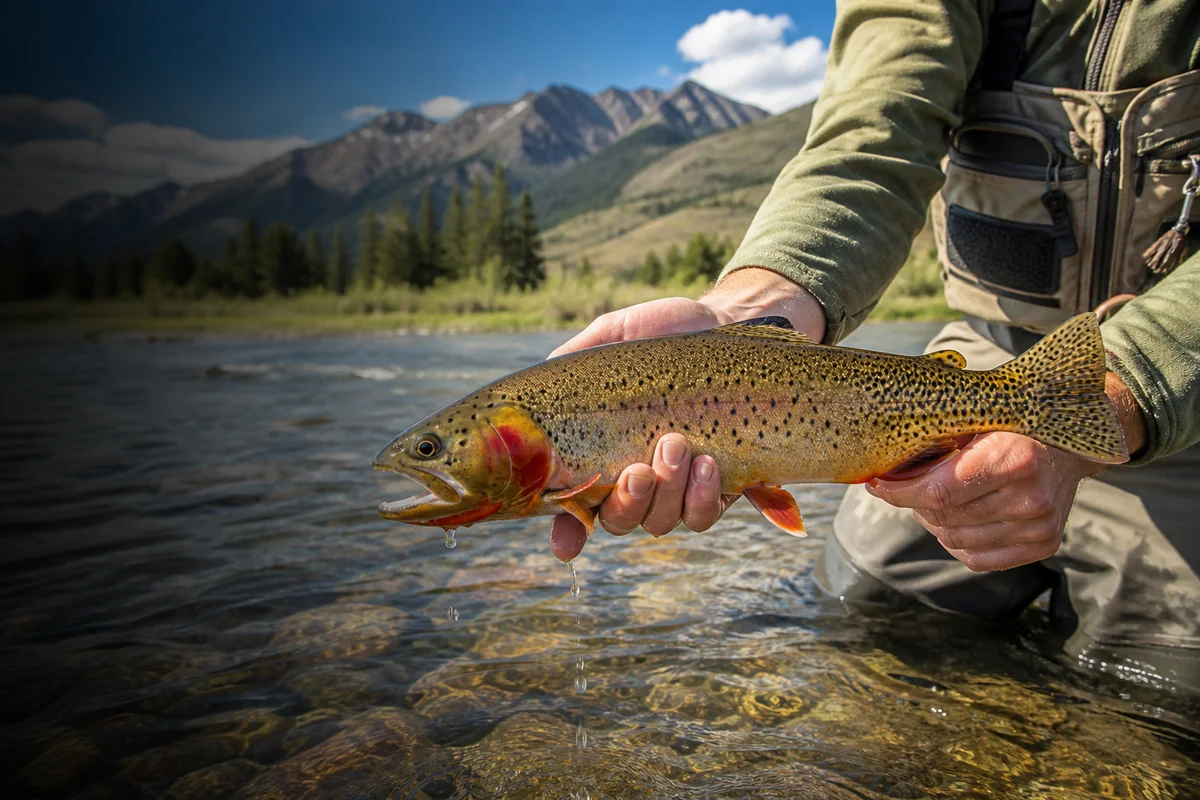
Visitors interested in Montana’s natural heritage often explore multiple themes during their trips. The Montana state fish, the blackspotted cutthroat trout, inhabits streams flowing through Ponderosa country. The Montana state fruit, the huckleberry, grows in openings within Ponderosa forests at certain elevations. I’ve picked huckleberries while hiking through mixed Ponderosa-fir forests near the Bob Marshall Wilderness. Even the Montana state fossil, the Maiasaura, connects to Ponderosa country — some of the best fossil sites occur in landscapes now dominated by these trees.Creating Your Montana Ponderosa Pine Itinerary
Based on my extensive Montana travels, here’s how I’d structure a trip focused on experiencing the state tree in its full glory.A Three-Day Ponderosa Immersion
Day one: Arrive in Missoula and explore Pattee Canyon. Hike the “M” trail at sunset for golden light through Ponderosa canopy. Day two: Drive to Flathead Lake via Highway 93. Stop at pullouts to experience Ponderosas in different settings. If time permits, arrange boat transport to Wild Horse Island. Day three: Head south through the Bitterroot Valley to Lee Metcalf Wildlife Refuge. The drive itself passes through continuous Ponderosa habitat. This route incorporates excellent dining options in Missoula and Polson while maximizing time among the trees. I’ve refined this itinerary through multiple trips.Combining With Other Montana Experiences
Ponderosa forests align well with wildlife watching trips. Elk, deer, and wild turkeys frequent these open woodlands, and I’ve had my best wildlife photography luck in Ponderosa habitat. The Montana state insect, the mourning cloak butterfly, appears in Ponderosa forests during early spring. I photographed my first one resting on sun-warmed bark near Missoula. Consider visiting during events that celebrate Montana’s heritage. Pow wows, rodeos, and cultural festivals often occur in communities surrounded by Ponderosa country. The Montana state lullaby and Montana state song reflect the same appreciation for natural beauty that makes the Ponderosa such a fitting state symbol.Final Thoughts: Why Montana’s State Tree Matters
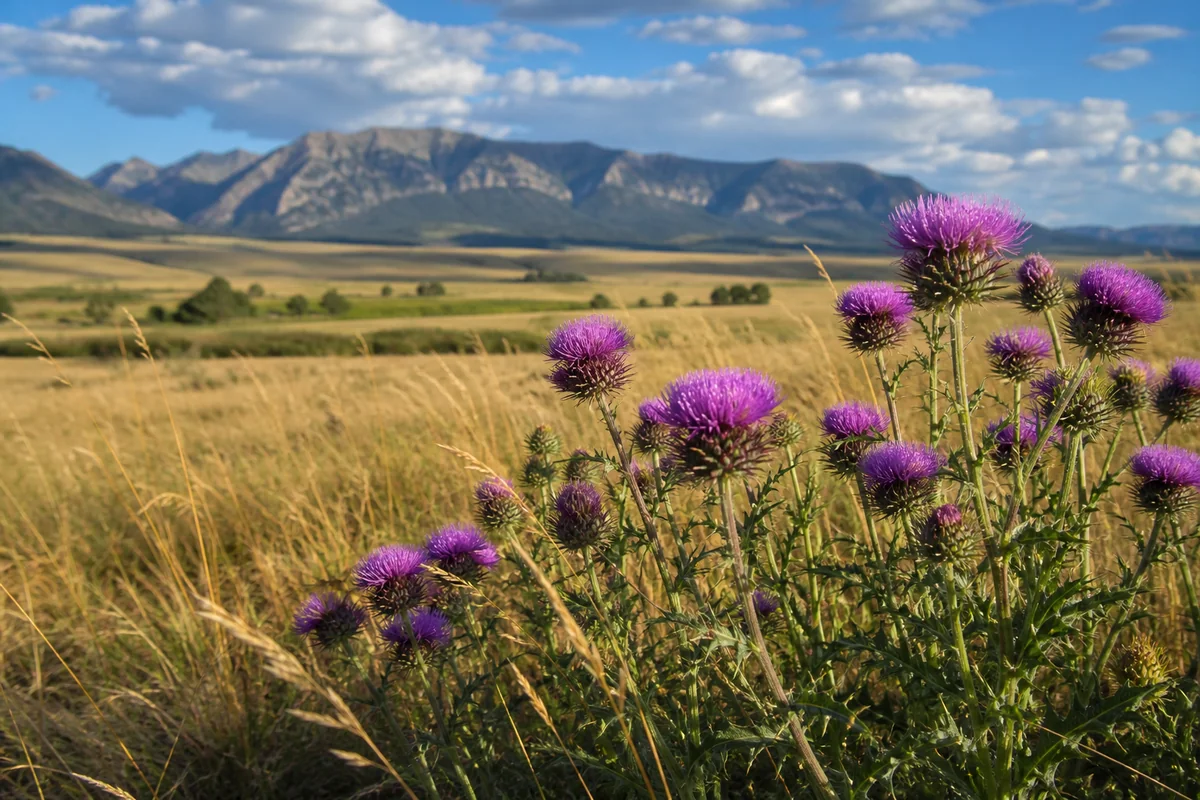
After years of exploring Montana’s Ponderosa forests, I’ve come to see these trees as living embodiments of what makes the state special. They’re tough, beautiful, and distinctly Western in character. The Ponderosa Pine represents Montana’s commitment to preserving wild places while recognizing the practical importance of its natural resources. These aren’t museum pieces — they’re working ecosystems that continue shaping Montana life. When you visit Montana’s Ponderosa country, take time to really experience these remarkable trees. Press your nose against warm bark, look up through the canopy, and let the forest work its magic on you. The state’s official symbols — from the Montana state nicknames to Montana state slogans — all point toward the same truth: this place is extraordinary. The Ponderosa Pine, standing tall against blue Montana sky, proves that point every single day. And if you’re exploring the landscape further, watch out for Montana thistles on your hikes — they’re far less pleasant to encounter than the welcoming bark of a Ponderosa Pine, and understanding which species to avoid makes your forest experience much more enjoyable.Frequently Asked Questions
What is the official state tree of Montana and why was it chosen?
The Ponderosa Pine was designated as Montana’s official state tree in 1949, chosen for its widespread presence across the state and its importance to Montana’s timber industry. These majestic trees can grow over 200 feet tall and are easily recognized by their distinctive orange-brown bark that smells like vanilla or butterscotch when you get close.
Where can I see the best Ponderosa Pine forests when visiting Montana?
I recommend visiting the Flathead National Forest, Lolo National Forest, or the Bitterroot Valley for stunning Ponderosa Pine stands. The area around Missoula and the scenic drive along Highway 93 south offer excellent viewing opportunities, with many trails winding through old-growth groves just minutes from town.
What is the best time of year to photograph Montana’s Ponderosa Pines?
Late spring through early fall offers the best conditions for photographing Ponderosa Pines, with golden morning light hitting the distinctive bark beautifully. I find September and October particularly stunning when the surrounding larch trees turn gold, creating a spectacular contrast with the evergreen pines.
Can I camp among Ponderosa Pine trees in Montana state parks?
Yes, several Montana state parks and national forest campgrounds are nestled within Ponderosa Pine forests, with sites typically costing $15-35 per night. Placid Lake State Park and numerous Lolo National Forest campgrounds offer shaded sites beneath these fragrant trees, often with first-come, first-served availability.
What hiking trails in Montana feature Ponderosa Pine forests?
The Rattlesnake Wilderness near Missoula offers easy-to-moderate trails through beautiful Ponderosa Pine stands, with trailheads just 4 miles from downtown. Blue Mountain Nature Trail and the Pattee Canyon Recreation Area are also excellent options for shorter hikes ranging from 2-6 miles through classic Montana pine forests.
How do I identify a Ponderosa Pine versus other Montana evergreens?
Ponderosa Pines have distinctively long needles in bundles of three, measuring 5-10 inches, and their bark forms puzzle-like plates in orange and brown tones. Get close and smell the bark crevices—if you detect vanilla, butterscotch, or cinnamon, you’ve found a Ponderosa, which is a fun trick I always share with fellow travelers.
Are there any Montana festivals or events celebrating the Ponderosa Pine state tree?
While there isn’t a dedicated Ponderosa Pine festival, Montana Arbor Day celebrations in April often feature educational programs about the state tree at various community events. The Montana Natural History Center in Missoula and local ranger stations throughout the state offer guided nature walks highlighting Ponderosa Pine ecology, typically free or under $10.
Sources:
- Pinus ponderosa – Wikipedia, accessed on December 11, 2025, https://en.wikipedia.org/wiki/Pinus_ponderosa
- Montana State Tree | Ponderosa Pine, accessed on December 11, 2025, https://statesymbolsusa.org/symbol-official-item/montana/state-tree/ponderosa-pine
- State Tree Ponderosa Pine – Montana Kids, accessed on December 11, 2025, https://montanakids.com/facts_and_figures/state_symbols/State_Tree_Ponderosa_Pine.htm
- Mountain Pine Beetle | U.S. Department of the Interior – DOI Gov, accessed on December 11, 2025, https://www.doi.gov/ocl/hearings/111/MountainPineBeetle_061609
- Bonner building materials facility announces closure, layoff of 100 workers, accessed on December 11, 2025, https://montanafreepress.org/2025/07/28/bonner-building-materials-facility-announces-closure-layoff-of-100-workers/
- Economist estimates up to 20% drop in timber harvest after two Missoula County mills close, accessed on December 11, 2025, https://www.mtpr.org/montana-news/2024-11-01/economist-estimates-up-to-20-drop-in-timber-harvest-after-two-missoula-county-mills-close
- State Tree – ABC the USA, accessed on December 11, 2025, https://www.abctheusa.com/montana/state-tree.html
- Ponderosa pine – Lewis & Clark National Historic Trail (U.S. National Park Service), accessed on December 11, 2025, https://www.nps.gov/lecl/learn/nature/ponderosa-pine.htm
- plant materials technical note ponderosa pine, accessed on December 11, 2025, https://nrcs.usda.gov/plantmaterials/mtpmctn10696.pdf
- Pinus ponderosa – Plant Finder – Missouri Botanical Garden, accessed on December 11, 2025, https://www.missouribotanicalgarden.org/PlantFinder/PlantFinderDetails.aspx?kempercode=c233
- Ponderosa Pine – Montana Field Guide, accessed on December 11, 2025, https://fieldguide.mt.gov/speciesDetail.aspx?elcode=PGPIN040S0
- Forests | MCA – Montana Climate Assessment, accessed on December 11, 2025, https://montanaclimate.org/chapter/forests
- Pinus ponderosa – Mount Pisgah Arboretum, accessed on December 11, 2025, https://mountpisgaharboretum.org/pinus-ponderosa/
- Pinus scopulorum (Rocky Mountain ponderosa pine) description – The Gymnosperm Database, accessed on December 11, 2025, https://www.conifers.org/pi/Pinus_scopulorum.php
- Central Rocky Mountain Ponderosa Pine Forest & Woodland – NVCS, accessed on December 11, 2025, https://www1.usgs.gov/csas/nvcs/unitDetails/836566
- Great Plains Ponderosa Pine Forest and Woodland – Montana Field Guide, accessed on December 11, 2025, https://fieldguide.mt.gov/displayEG_Detail.aspx?eg=EVFL0G216
- Living artifacts: The ancient ponderosa pines of the West – Northern Rockies Fire Science Network, accessed on December 11, 2025, https://nrfirescience.org/sites/default/files/2023-06/rmrs_2008_arno_s001.pdf
- Fire ecology of western Montana forest habitat types, accessed on December 11, 2025, https://www.fs.usda.gov/rm/pubs_int/int_gtr223.pdf
- Ponderosa Pine (Pinus ponderosa) – Montana FWP, accessed on December 11, 2025, https://fwp.mt.gov/binaries/content/assets/fwp/montana-outdoors/outdoor-portraits/2003/ponderosapine.pdf
- Great Plains Ponderosa Pine Woodland and Savanna – Montana Field Guide, accessed on December 11, 2025, https://fieldguide.mt.gov/displayES_Detail.aspx?ES=4280
- Climate Change-Driven Cumulative Mountain Pine Beetle-Caused Whitebark Pine Mortality in the Greater Yellowstone Ecosystem – MDPI, accessed on December 11, 2025, https://www.mdpi.com/1999-4907/14/12/2361
- Long-term sensitivity of ponderosa pine axial resin ducts to harvesting and prescribed burning – USDA Forest Service, accessed on December 11, 2025, https://www.fs.usda.gov/rm/pubs_journals/2024/rmrs_2024_vila_vilardell_l001.pdf
- ‘ya̲tqwełp | Plateau Peoples’ Web Portal, accessed on December 11, 2025, https://plateauportal.libraries.wsu.edu/dictionary-word/ya%CC%B2tqwe%C5%82p
- a related word. – Westbank First Nation, accessed on December 11, 2025, https://www.wfn.ca/docs/2021-06_english_to_salish.pdf
- Nez Perce – Wikipedia, accessed on December 11, 2025, https://en.wikipedia.org/wiki/Nez_Perce
- Blackfoot Surnames – Ninastako Cultural Centre, accessed on December 11, 2025, https://www.ninastako.ca/surnames
- Grammar and dictionary of the Blackfoot language in the Dominion of Canada [microform] : for the use of missionaries, school-tea – Wikimedia Commons, accessed on December 11, 2025, https://upload.wikimedia.org/wikipedia/commons/e/e6/Grammar_and_dictionary_of_the_Blackfoot_language_in_the_Dominion_of_Canada_for_the_use_of_missionaries%2C_school-teachers%2C_and_others.pdf
- Indigenous Forestry – Discover Lewis & Clark, accessed on December 11, 2025, https://lewis-clark.org/sciences/ethnography/native-agriculture/native-forestry/
- peeled Trees in the Bitterroot Mountains, Montana: Legacies of Native Land Use and Implications for The – USDA Forest Service, accessed on December 11, 2025, https://www.fs.usda.gov/rm/pubs_other/rmrs_2012_josefsson_t001.pdf
- Faul Preserve | Pinus ponderosa | Ponderosa pine | UA Campus Arboretum, accessed on December 11, 2025, https://arboretum.arizona.edu/pinus-ponderosa-ponderosa-pine
- UW Campus Tree Tours – Shore Pine (Pinus contorta var. contorta) – Google Sites, accessed on December 11, 2025, https://sites.google.com/uw.edu/schoolofenvironmentalandforest/tree-tours/native-trees/shore-pine-pinus-contorta-var-contorta
- Montana: Native Plants And Native People | Blue Mountain B&B, accessed on December 11, 2025, https://bluemountainbb.com/blog/montana-native-plants-and-native-people/
- Log Prices – INLAND FOREST MANGEMENT, accessed on December 11, 2025, https://inlandforest.com/log-prices/
- Zinke Statement on Montana Timber Businesses Closing, accessed on December 11, 2025, https://zinke.house.gov/media/press-releases/zinke-statement-montana-timber-businesses-closing
- Climate Change and Ecosystem Disruption: The Health Impacts of the North American Rocky Mountain Pine Beetle Infestation – PMC – PubMed Central, accessed on December 11, 2025, https://pmc.ncbi.nlm.nih.gov/articles/PMC3484782/
- Western Montana Forest Insects & Diseases – MT DNRC, accessed on December 11, 2025, https://dnrc.mt.gov/Forestry/Forest-Management/Final-ID-Pamphlet.pdf
- Dwarf Mistletoes of Ponderosa Pine – USDA Forest Service, accessed on December 11, 2025, https://www.fs.usda.gov/foresthealth/docs/fidls/FIDL-40-DwarfMistletoes.pdf
- Dwarf Mistletoe Ecology | Forest Pathology, accessed on December 11, 2025, https://forestpathology.org/parasitic-plants/dwarf-mistletoe/ecology/
- Pygmy Nuthatch Life History, All About Birds, Cornell Lab of Ornithology, accessed on December 11, 2025, https://www.allaboutbirds.org/guide/Pygmy_Nuthatch/lifehistory
- Pygmy nuthatch | Montana FWP, accessed on December 11, 2025, https://fwp.mt.gov/binaries/content/assets/fwp/montana-outdoors/outdoor-portraits/2021/pygmynuthatch.pdf
- Species Profile for Flammulated Owl(Psiloscops flammeolus) – ECOS, accessed on December 11, 2025, https://ecos.fws.gov/ecp/species/7728
- FLAMMULATED OWL (OTUS FLAMMEOLUS) BREEDING HABITAT ABUNDANCE IN PONDEROSA PINE FORESTS OF THE UNITED STATES – Northern Research Station, accessed on December 11, 2025, https://www.nrs.fs.usda.gov/pubs/jrnl/2009/nrs_2009_nelson_003.pdf
- Montana Statewide Assessment of Forest Conditions – MT DNRC, accessed on December 11, 2025, https://dnrc.mt.gov/_docs/forestry/Montana_Assessment_of_Forest_Conditions.pdf
- Managing for Old Growth in Frequent-Fire Landscapes – ScholarWorks at University of Montana, accessed on December 11, 2025, https://scholarworks.umt.edu/cgi/viewcontent.cgi?article=1016&context=forest_pubs
- Inside the Battle Over Old Growth in Montana’s Yaak Valley, accessed on December 11, 2025, https://www.outsideonline.com/outdoor-adventure/environment/yaak-valley-black-ram-old-growth/
- Thinning may help save old-growth pine forests | Newsroom – Oregon State University, accessed on December 11, 2025, https://news.oregonstate.edu/news/thinning-may-help-save-old-growth-pine-forests
- Fire Ecology in Ponderosa Pine-grassland – Tall Timbers, accessed on December 11, 2025, http://talltimbers.org/wp-content/uploads/2014/03/Biswell1972_op.pdf
- Abstract Introduction Distribution and plant communities Botanical and ecological characteristics Fire effects and management Ma – USDA Forest Service, accessed on December 11, 2025, https://www.fs.usda.gov/database/feis/plants/tree/pinponp/all.pdf
- Climate Past as Prologue for Ponderosa Pines | U.S. Geological Survey – USGS.gov, accessed on December 11, 2025, https://www.usgs.gov/news/national-news-release/climate-past-prologue-ponderosa-pines
- Scientists might be using a flawed strategy to predict how species will fare under climate change | University of Arizona News, accessed on December 11, 2025, https://news.arizona.edu/news/scientists-might-be-using-flawed-strategy-predict-how-species-will-fare-under-climate-change