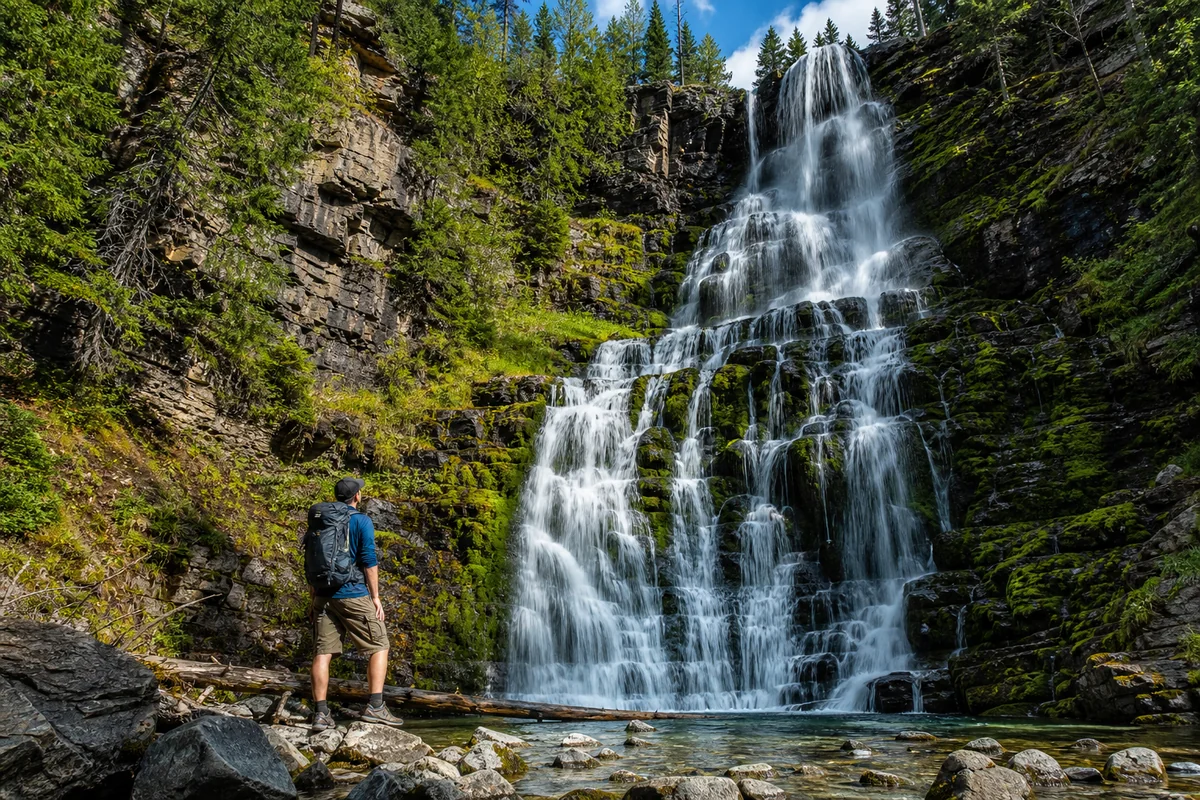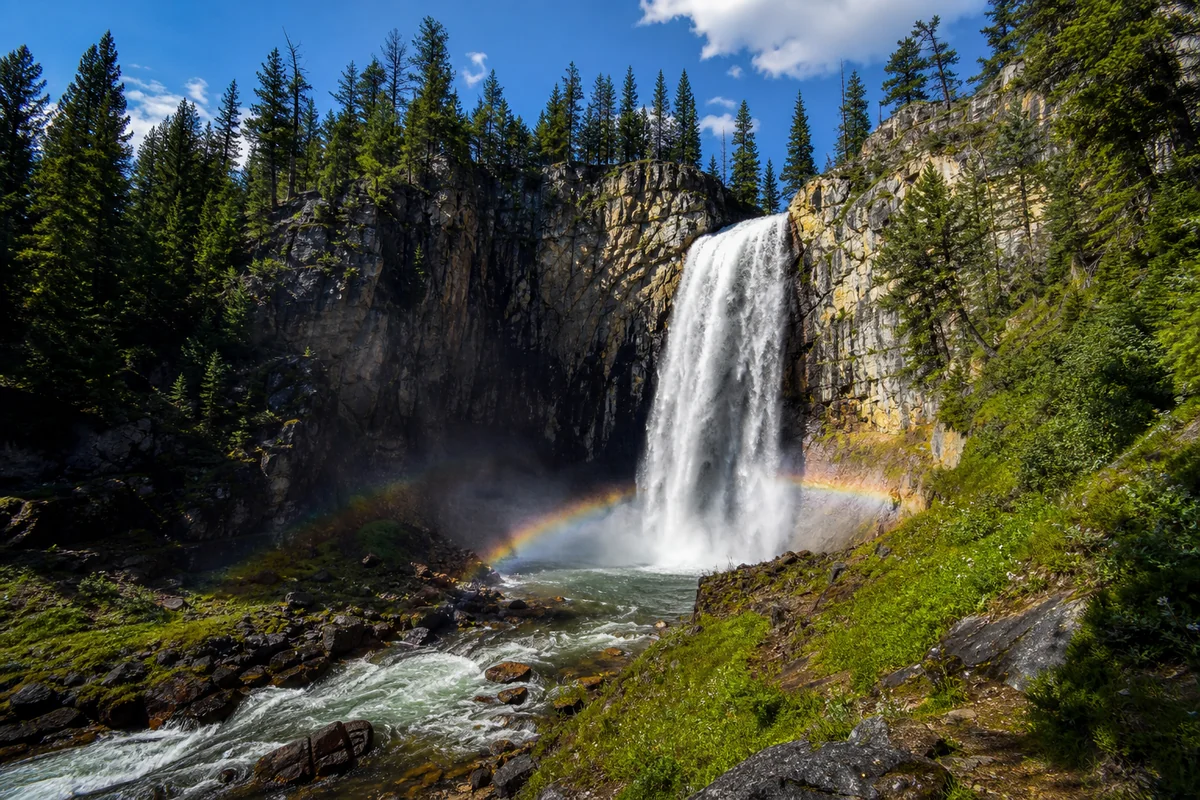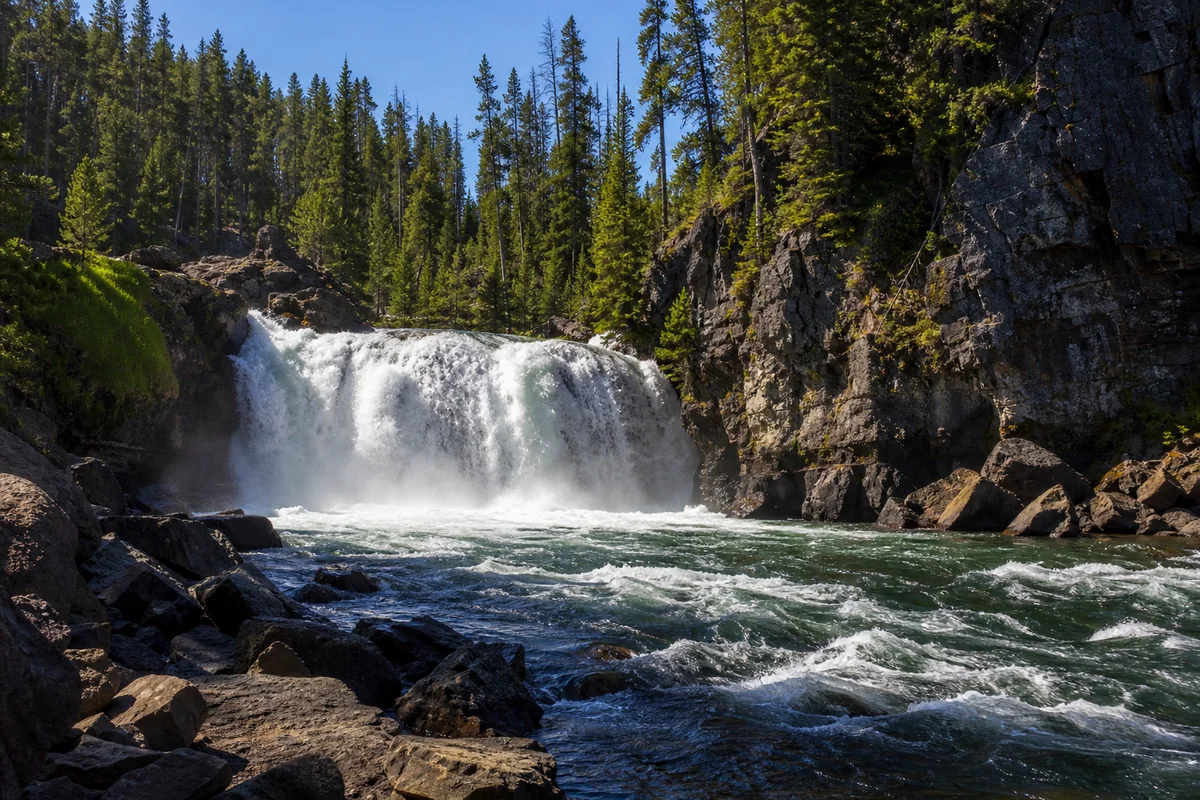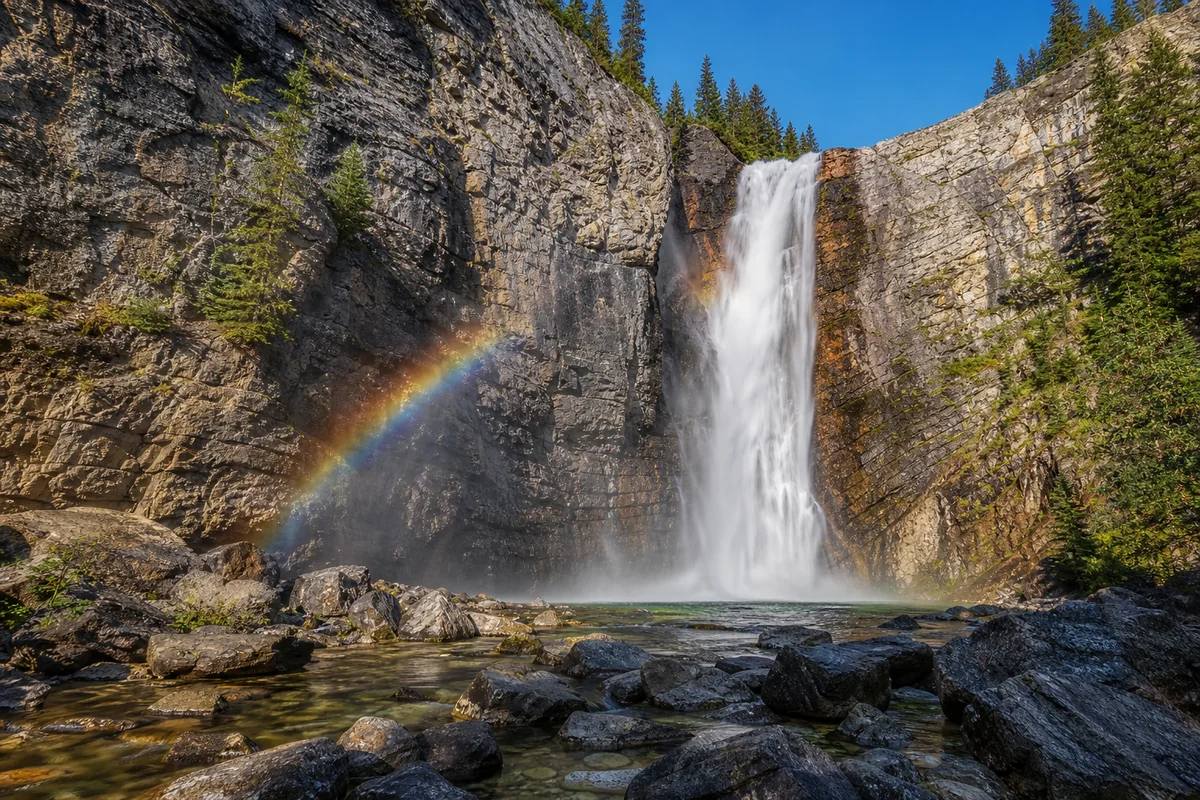
Standing at the base of Lost Creek Falls last August, I watched the afternoon sun catch the mist and throw rainbows across the granite walls while I had the entire place completely to myself.
This is what chasing Montana waterfalls is really about—those moments when you stumble upon something so breathtakingly beautiful that you wonder why you’ve never heard anyone talk about it before.
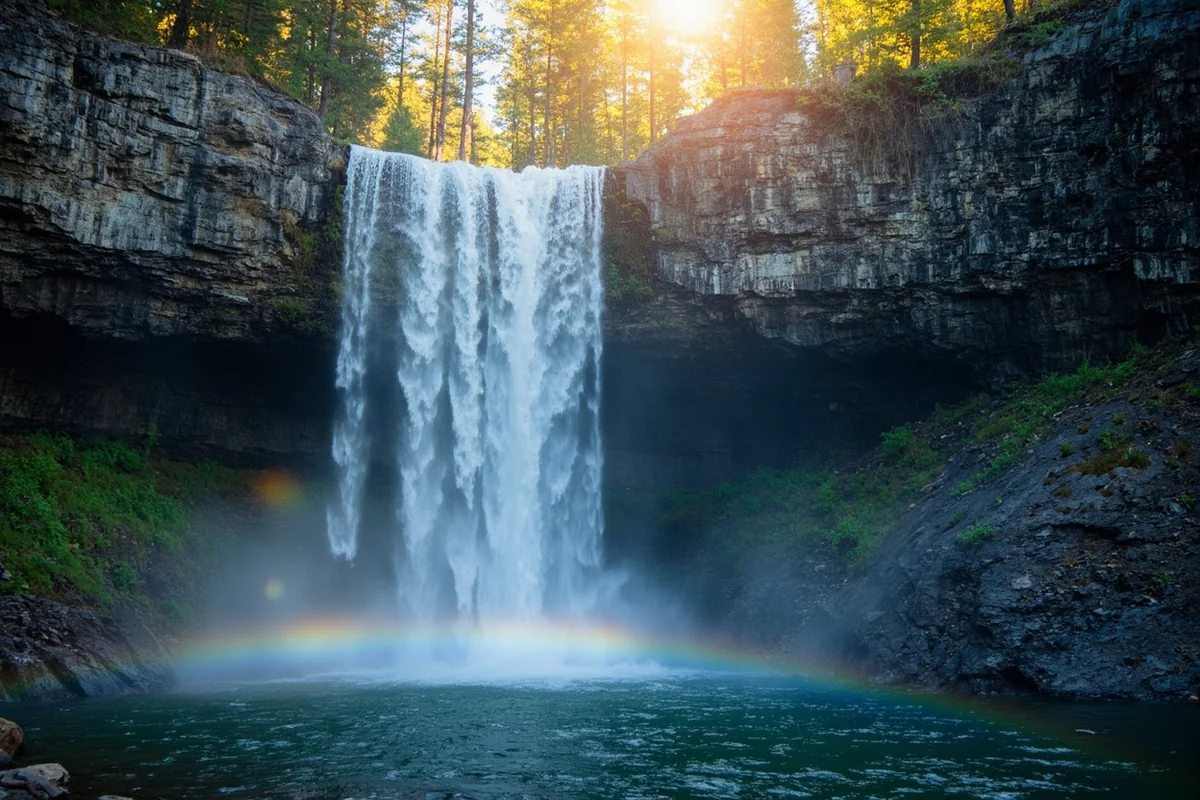
- Lost Creek Falls is a stunning 50-foot waterfall in the Absaroka-Beartooth Wilderness near Nye, Montana
- The hike is approximately 5.6 miles round-trip with moderate difficulty
- Best visited June through September for optimal water flow
- No entrance fee required, but a wilderness permit is needed for overnight stays
- Expect 2-3 hours for the round-trip hike at a moderate pace
- Limited cell service—download maps before you go
Liked this article?
Add Roaming Montana as a preferred source so you see more of our articles and guides on Google.
Why Lost Creek Falls Deserves a Spot on Your Montana Bucket List
I’ll be honest with you—when I first heard about Lost Creek Falls, I almost wrote it off. Montana has so many incredible waterfalls that the name “Lost Creek” sounded almost too generic to be special.
I couldn’t have been more wrong.
What sets Lost Creek Falls apart from more popular destinations like Morrell Falls or Ousel Falls isn’t just the waterfall itself—it’s the entire experience of getting there.
The trail winds through old-growth forest, crosses crystal-clear streams, and offers glimpses of the Absaroka-Beartooth Wilderness that will make you feel like you’ve stepped back in time.
During my visit last summer, I encountered exactly three other hikers on the entire trail. Compare that to the parking lot chaos at more touristy waterfall destinations, and you’ll understand why this place has become one of my favorites.
Getting to Lost Creek Falls: Directions and Trailhead Access
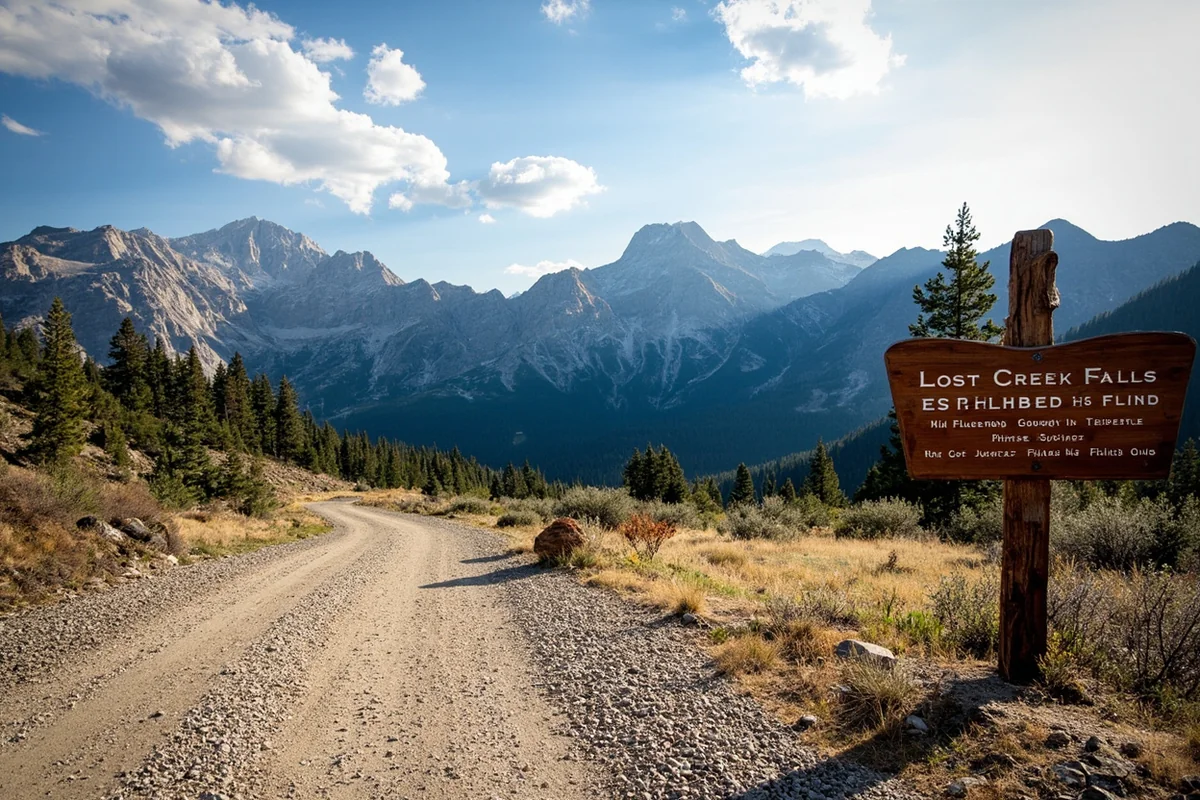
Finding the Lost Creek Falls trailhead requires a bit of navigation, but I promise it’s worth the effort. The falls are located in Stillwater County, Montana, south of the small community of Nye.
Driving Directions from Billings
From Billings, the drive takes approximately 2 hours:
- Head west on I-90 toward Livingston
- Take Exit 408 toward Columbus/Absarokee
- Follow MT-78 south through Absarokee
- Continue on MT-420 toward Nye/Stillwater Mine
- Just before Nye, turn left onto Lost Creek Road (Forest Road 72)
- Follow this road for approximately 3 miles to the trailhead
What to Expect on the Road
Lost Creek Road is a well-maintained gravel road, but I’d recommend a vehicle with decent clearance, especially if you’re visiting in early spring when snowmelt can create muddy patches. When I drove it in August, my Subaru Outback handled it without any issues, but I spotted a few sedans struggling with the larger rocks near the trailhead.
The last half-mile gets rougher, with some exposed rocks and deeper ruts. Take your time and you’ll be fine.
Trailhead Facilities
Don’t expect much at the trailhead. There’s a small parking area that fits maybe 10-12 vehicles, a pit toilet that’s seen better days, and a registration box where you should sign in before hiking.
There’s no potable water at the trailhead, so fill up before you leave town. The nearest services are in Absarokee, about 30 minutes back down the road.
| Trail Information | Details |
|---|---|
| Distance | 5.6 miles round-trip |
| Elevation Gain | Approximately 900 feet |
| Difficulty | Moderate |
| Trail Type | Out-and-back |
| Estimated Time | 2-3 hours |
| Dogs Allowed | Yes (leash recommended) |
| Fee | None for day use |
The Trail: What to Expect Mile by Mile
I’ve hiked this trail multiple times now, and each visit reveals something new. Here’s what you’ll encounter along the way.
Mile 0-1: The Forest Introduction
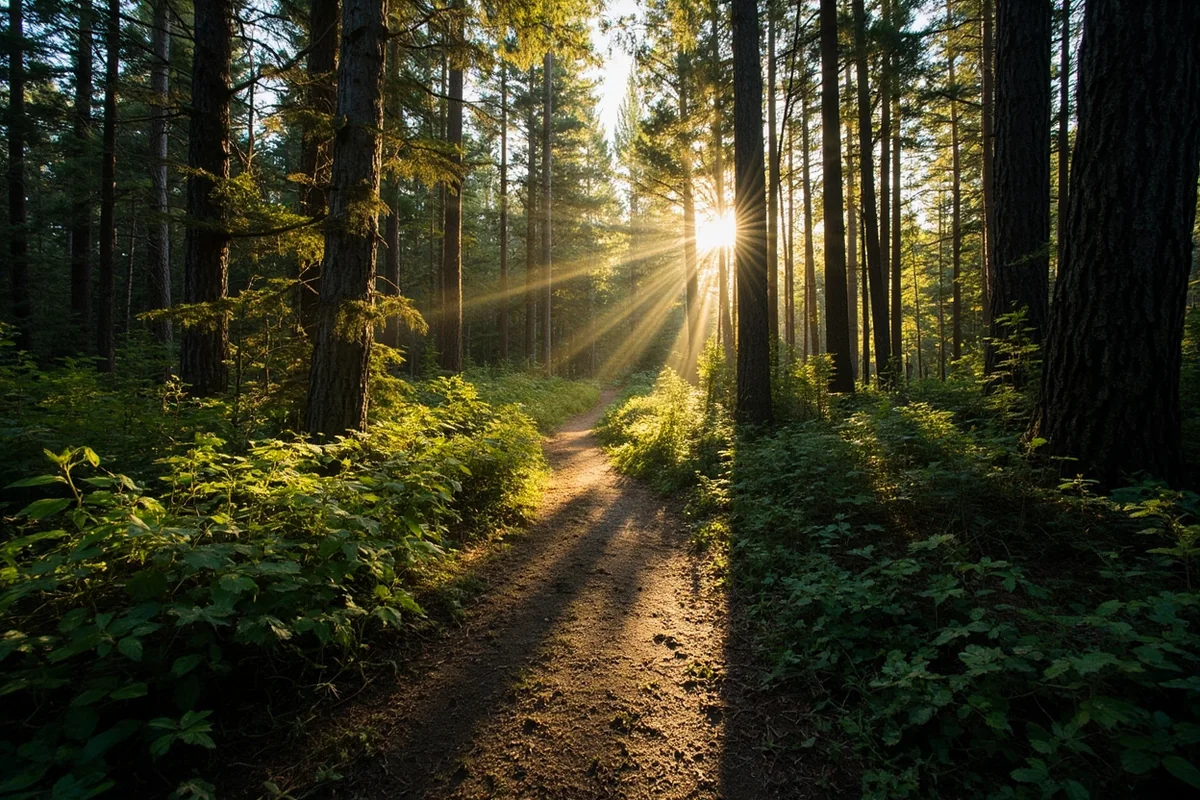
The trail starts in dense lodgepole pine forest, following Lost Creek on your left. The first mile is relatively flat, making it a gentle warm-up for what’s ahead.
I love this section in the early morning when the light filters through the trees in golden shafts. The forest floor is covered in wildflowers during July—I counted at least six different species of wildflowers on my last visit, including glacier lilies and Indian paintbrush.
The sound of Lost Creek keeps you company the entire way. During spring runoff, it’s almost deafening; by late August, it’s more of a gentle babble.
Mile 1-2: The Gradual Climb
Around the one-mile mark, the trail begins its ascent in earnest. The grade isn’t steep, but it’s consistent enough that you’ll start to feel it in your legs.
This section offers occasional glimpses of the surrounding peaks through gaps in the forest canopy. On a clear day, you can spot snow-capped summits in the distance, even in late summer.
Watch for the creek crossing around 1.5 miles. When I hiked in June, this crossing required some careful rock-hopping to keep my feet dry. By August, it was barely ankle-deep and easy to wade through.
Mile 2-2.8: The Final Push
The last stretch to the falls is where the trail gets more interesting. You’ll climb more steeply here, gaining the bulk of the elevation in this final section.
The forest opens up slightly, revealing more wildflower meadows and offering your first hints of the granite walls that frame the falls. Listen carefully—on quiet days, you can hear the waterfall before you see it.
The trail becomes rockier in this section, so watch your footing. I recommend trekking poles if you have them, especially for the return trip when tired legs can lead to twisted ankles.
The Main Attraction: Lost Creek Falls Up Close
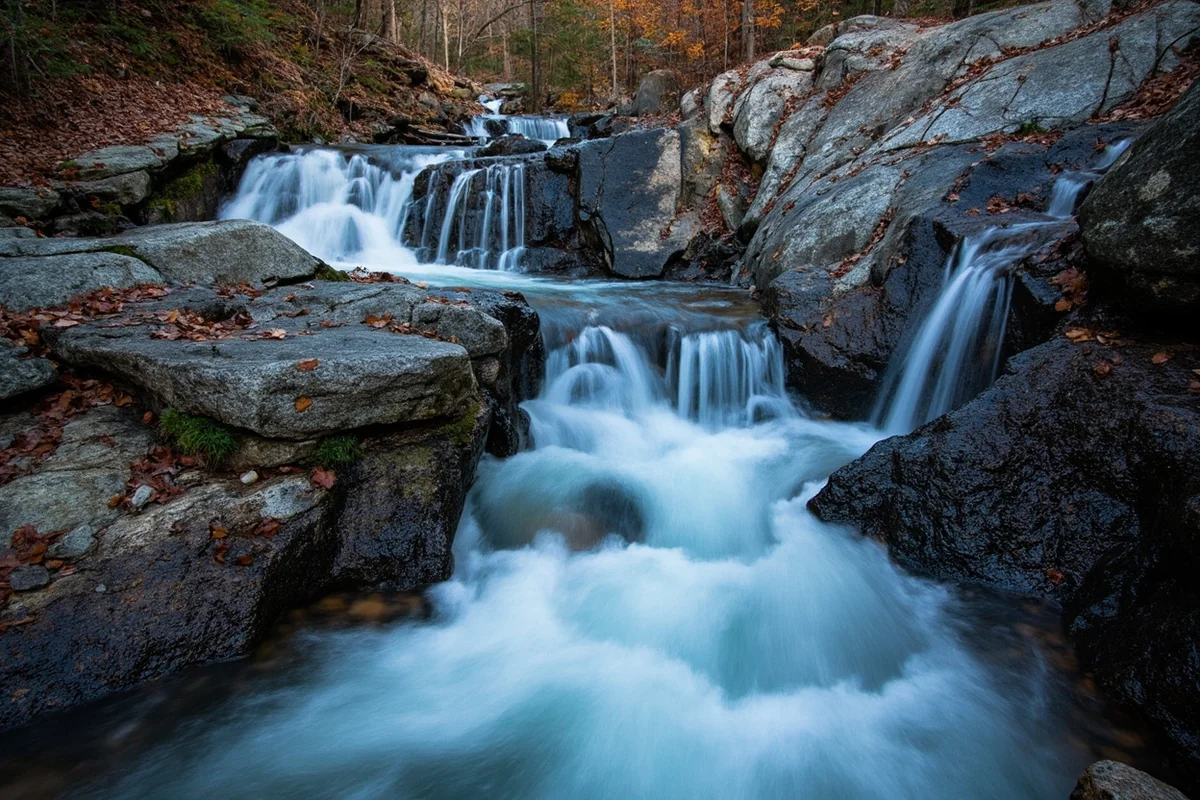
Nothing quite prepares you for that first glimpse of Lost Creek Falls emerging from the forest. The waterfall drops approximately 50 feet over a series of granite ledges, creating a beautiful horsetail-style cascade that spreads across the rock face.
Viewing Areas and Photography Spots
The trail ends at a natural viewing area about 100 feet from the base of the falls. This gives you an excellent straight-on view of the entire cascade.
For photographers, I recommend arriving mid-morning (around 10 AM) when the sun illuminates the falls without creating harsh shadows. The granite walls reflect beautiful warm light during golden hour, but you’ll need to time your hike carefully to catch it.
If you’re comfortable scrambling over some rocks, you can work your way closer to the base. I’ve done this a few times, and the mist on a hot day is absolutely refreshing. Just be careful—the rocks near the water are slippery.
How the Falls Change Throughout the Year
I’ve visited Lost Creek Falls in June, August, and early October, and each visit was dramatically different.
In June, the falls are absolutely thundering. Snowmelt from the surrounding peaks fills Lost Creek to capacity, and the waterfall becomes an impressive display of raw power. The mist can soak you even from the main viewing area.
By August, the flow has decreased significantly, revealing more of the underlying rock structure. This is actually my favorite time to visit because you can see the intricate patterns in the granite that are hidden during peak flow.
October brings autumn colors to the surrounding forest and even lower water levels. The falls are more delicate during this season, but the contrast of golden aspens against the dark granite is stunning.
Best Time to Visit Lost Creek Falls
Timing your visit correctly can make the difference between an incredible experience and a disappointing one.
Peak Season: June through August
For the best combination of waterfall flow, weather, and trail conditions, plan your visit between mid-June and late August.
June offers the most impressive water flow, but the trail can still have snow patches in shaded areas. I encountered a few sketchy spots during my June visit that required careful navigation.
July and August provide more reliable trail conditions and still-respectable water flow. This is also prime wildflower season, adding another dimension to the experience.
Shoulder Season Considerations
Late May and early September can be excellent times to visit if you’re flexible with dates. You’ll encounter fewer people, but conditions are less predictable.
During my October visit, the trail was completely empty, but the falls had slowed to a trickle. Still beautiful, but a very different experience than summer.
What About Winter?
I haven’t attempted the trail in winter, and I wouldn’t recommend it unless you’re an experienced backcountry skier or snowshoer. The road is typically not plowed beyond the first mile, adding significant distance to an already moderate hike.
Essential Gear and Preparation
Learning from my own mistakes (and successes), here’s what I recommend bringing.
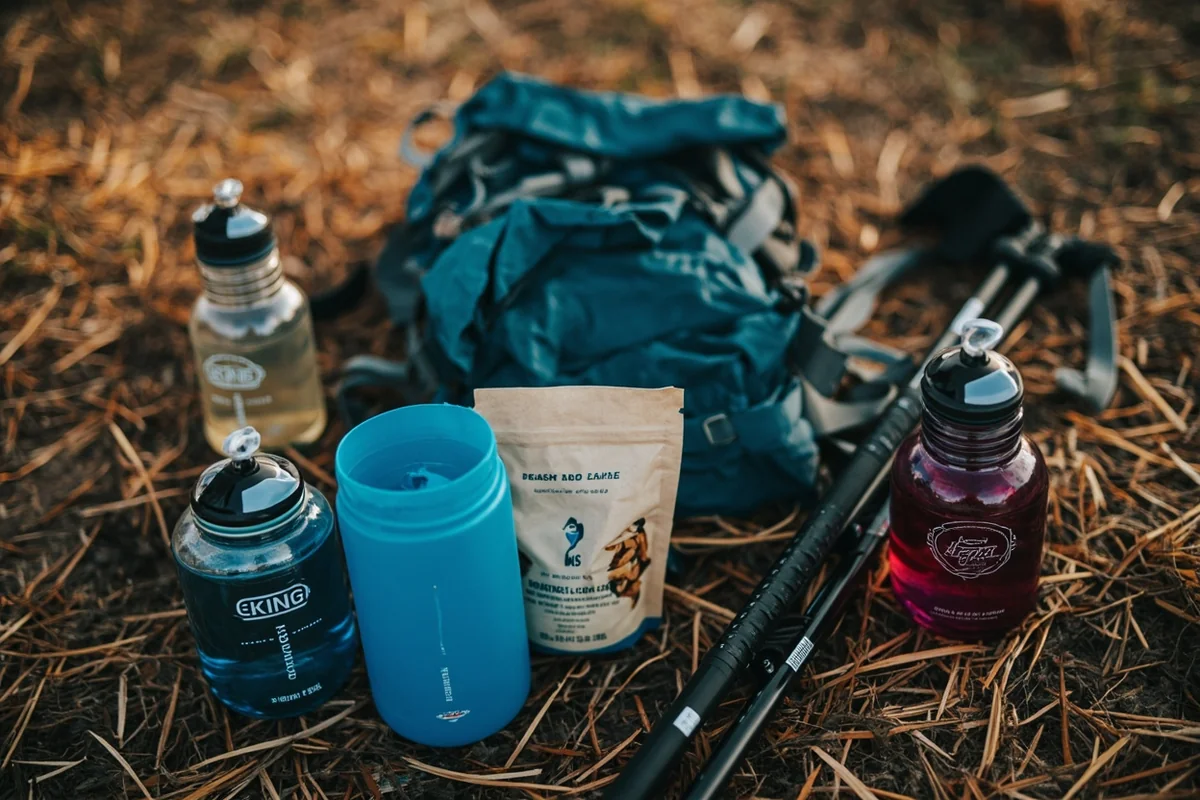
The Essentials
- Water: Bring at least 2 liters per person. While Lost Creek looks inviting, I always treat or filter any backcountry water.
- Snacks: The hike takes 2-3 hours, so pack accordingly. I like to bring something to enjoy at the falls.
- Layers: Mountain weather changes quickly. Even in August, I carry a light rain jacket.
- Sturdy footwear: Trail runners work fine for most of the hike, but I prefer hiking boots for the rocky final section.
- Trekking poles: Optional but recommended, especially for the descent.
- Bear spray: This is grizzly country. I’ve never encountered a bear on this trail, but I always carry spray and know how to use it.
Nice-to-Haves
- A swimsuit if you want to cool off in the creek below the falls
- A packable tripod for waterfall photography
- Binoculars for wildlife watching
- A downloaded offline map (no cell service on the trail)
Wildlife You Might Encounter
The Absaroka-Beartooth Wilderness is one of the most ecologically intact landscapes in the lower 48, and Lost Creek Falls sits right in the heart of it.
Common Sightings
During my visits, I’ve spotted mule deer (almost every trip), red squirrels (constantly chattering from the trees), and various bird species including mountain chickadees and Steller’s jays.
On one memorable August morning, I watched a pine marten hunting near the creek crossing. These weasel-like creatures are elusive, so consider yourself lucky if you spot one.
Bear Awareness
Both black bears and grizzly bears inhabit this area. I treat every hike in this region as bear country, which means:
- Making noise on the trail (I usually talk or clap at blind corners)
- Carrying bear spray in an accessible location (not buried in your pack)
- Staying alert, especially near the creek where bears might be fishing
- Keeping a clean camp if you’re backpacking
I’ve never had a bear encounter on this specific trail, but I’ve seen fresh scat and tracks. They’re out there—respect their home.
Comparing Lost Creek Falls to Other Montana Waterfalls
After visiting dozens of Montana waterfalls, here’s how Lost Creek Falls stacks up.
If you’re looking for sheer spectacle and easy access, places like Kootenai Falls or Palisade Falls might be more your speed. Both are impressive and require minimal hiking.
For a similar wilderness experience with slightly less effort, consider Holland Lake Falls or Memorial Falls. Both offer beautiful cascades with shorter approach hikes.
Lost Creek Falls occupies a sweet spot—challenging enough to keep crowds away, but accessible enough for most reasonably fit hikers. It’s similar in character to Grotto Falls or Hidden Falls in terms of the solitude-to-reward ratio.
For more adventurous hikers, consider pairing Lost Creek Falls with nearby destinations like Rock Creek Falls or Needle Falls for a multi-day waterfall exploration.
Extending Your Trip: Nearby Attractions
Lost Creek Falls makes an excellent day trip, but the surrounding area offers plenty more to explore if you have time.
The Stillwater Mine
Just down the road in Nye, the Stillwater Mine is one of the only palladium and platinum mines in the United States. While you can’t tour the mine itself, the small town has an interesting history worth exploring.
The Stillwater River
If you’re into fishing, the Stillwater River offers excellent trout fishing throughout the summer. I’ve spent many afternoons casting dry flies after a morning hike to the falls.
Absaroka-Beartooth Wilderness
Lost Creek Falls sits at the edge of this magnificent wilderness area. For backpackers, the trail continues beyond the falls into true backcountry territory. Consider obtaining a wilderness permit and extending your trip into a multi-day adventure.
The area is also home to other notable falls worth exploring, including Passage Creek Falls and the cascades along Pioneer Falls trail system. For those willing to push deeper into the wilderness, destinations like Siksika Falls and Ipasha Falls in Glacier country offer similar solitude.
Where to Stay Near Lost Creek Falls
Your accommodation options depend on how rustic you’re willing to go.
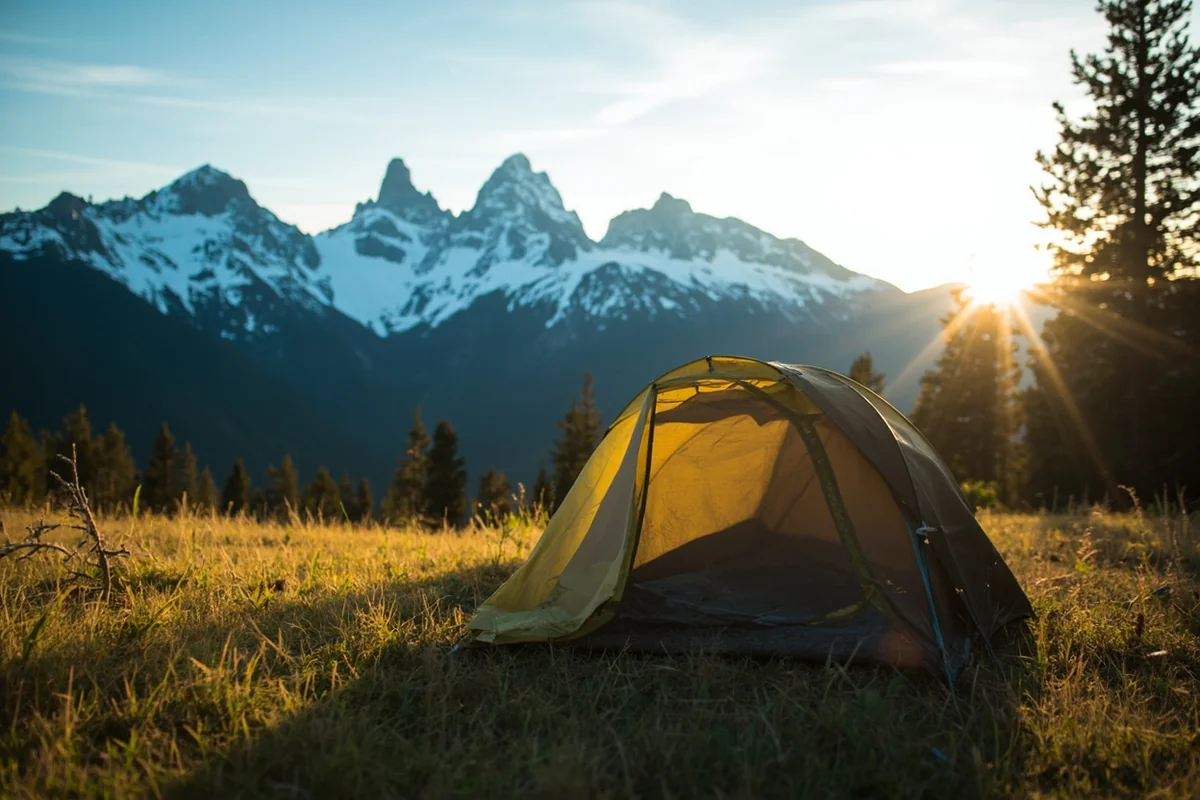
Camping
Several Forest Service campgrounds operate along the Stillwater River corridor. Woodbine Campground and Emerald Lake Campground are both within 30 minutes of the trailhead and offer basic amenities.
For a more primitive experience, dispersed camping is allowed throughout the national forest. I’ve camped along Lost Creek Road several times—just follow Leave No Trace principles and check current fire restrictions.
Hotels and Lodges
The nearest hotel accommodations are in Absarokee, about 30 minutes from the trailhead. Options are limited but clean and affordable.
For a more upscale experience, Columbus (about 45 minutes away) offers more choices. I usually stay in Columbus when I’m not camping, as it has better restaurant options and reliable cell service.
Vacation Rentals
Check vacation rental platforms for cabin options in the Nye/Stillwater area. During my last visit, I rented a small cabin right on the river—perfect for an early morning start to beat the heat.
Photography Tips for Lost Creek Falls
If you’re hoping to capture memorable images of the falls, here are some hard-won lessons from my attempts.
Technical Recommendations
For that silky-smooth water effect, you’ll need:
- A tripod (even a lightweight travel tripod works)
- A neutral density filter (I use a 6-stop ND)
- Shutter speeds between 1/4 second and 2 seconds depending on desired effect
Without a tripod, focus on freezing the water’s motion with faster shutter speeds. This creates a different but equally valid aesthetic.
Composition Ideas
The straight-on view from the main viewing area is classic, but I prefer working the edges of the scene. The fallen logs and rocks at the base of the falls make excellent foreground elements.
In autumn, include the colorful foliage in your frame. In summer, look for wildflowers to add pops of color.
My favorite shot from this location was taken from a low angle near the creek, shooting up toward the falls with a wide-angle lens. It makes the cascade look absolutely massive.
Safety Considerations and Trail Etiquette
A few important safety notes based on my experience hiking this trail.
Trail Hazards
The biggest risks on this trail are:
- Slippery rocks near water: Both at the creek crossings and near the falls, rocks can be treacherous when wet.
- Afternoon thunderstorms: Summer storms build quickly in the mountains. Start early and head back if you see dark clouds building.
- Wildlife encounters: As mentioned, this is bear country. Stay alert and carry spray.
- Creek crossings during high water: In early season, creek crossings can be dangerous. Don’t attempt them if the water looks too high or fast.
Leave No Trace
This area sees relatively light traffic, and I’d love to keep it that way. Please pack out everything you pack in, stay on established trails, and avoid creating new paths to the falls.
If you see litter on the trail, pick it up. I always carry an extra bag for trail cleanup—it’s a small way to give back to these special places.
Planning Your Visit: Final Checklist
Before you head out, make sure you’ve covered these basics:
- Checked current trail conditions (call the Custer Gallatin National Forest office)
- Downloaded offline maps (Google Maps or a dedicated hiking app)
- Packed the ten essentials plus bear spray
- Informed someone of your hiking plans and expected return time
- Checked the weather forecast and fire conditions
- Fueled up your vehicle (no gas stations near the trailhead)
My Honest Assessment: Is Lost Creek Falls Worth It?
After multiple visits over different seasons, here’s my genuine opinion.
Lost Creek Falls won’t blow you away with sheer scale like some of Montana’s more famous cascades. If you’re looking for the biggest, tallest, or most dramatic waterfall in the state, this isn’t it.
What Lost Creek Falls offers is something increasingly rare: an authentic wilderness experience accessible to average hikers. You’ll earn your views through honest effort, enjoy them in relative solitude, and leave feeling like you discovered something special.
For experienced waterfall chasers who have already ticked off the major destinations, Lost Creek Falls is a refreshing change of pace. For newcomers to Montana, it provides an excellent introduction to what backcountry waterfall hunting is all about.
I’ve recommended this hike to dozens of friends and fellow travelers over the years. Without exception, every one of them has thanked me afterward.
If you’re building out your Montana waterfall bucket list, don’t overlook destinations like Ptarmigan Falls, Rainbow Falls, or Running Eagle Falls—each offers its own unique character and experience. For those venturing into Glacier National Park, Sacred Dancing Cascade, McDonald Falls, and Saint Mary Falls should definitely make your itinerary.
The beauty of Montana’s waterfall landscape is its diversity. From roadside cascades like Skalkaho Falls to backcountry gems like Pintler Falls and Monture Falls, there’s a waterfall experience for every ability level and interest.
Lost Creek Falls stands proudly among them—not as the biggest or most accessible, but as one of the most rewarding. Sometimes the best destinations are the ones you have to work a little harder to find.
I’ll be back again next summer. Maybe I’ll see you on the trail.
Frequently Asked Questions
Where is Lost Creek Falls located in Montana?
Lost Creek Falls is located in Lost Creek State Park, about 6 miles east of Anaconda in southwestern Montana. The park sits in a beautiful limestone canyon in the Flint Creek Range, roughly 25 miles northwest of Butte off Highway 1. I found it to be an easy detour if you’re exploring the Pintler Scenic Route.
How long is the hike to Lost Creek Falls Montana?
The hike to Lost Creek Falls is incredibly short—only about 0.25 miles one way from the campground area, making it accessible for visitors of all fitness levels. The trail is relatively flat and well-maintained, so you can reach the 50-foot waterfall in under 10 minutes. It’s perfect if you’re traveling with kids or just want a quick nature stop.
What is the best time of year to visit Lost Creek Falls?
The best time to visit Lost Creek Falls is late spring through early summer (May-June) when snowmelt creates the most impressive water flow. I recommend visiting in the morning for better lighting and fewer crowds. The state park is open year-round, but facilities are limited from mid-September through mid-May.
Is there an entrance fee for Lost Creek State Park?
Montana residents can enter Lost Creek State Park for free, while out-of-state visitors pay a $8 day-use fee per vehicle. If you’re camping overnight, fees range from $18-28 depending on the site type. I suggest bringing cash since card readers aren’t always reliable in remote Montana parks.
What should I bring when visiting Lost Creek Falls Montana?
Bring sturdy footwear with good traction since the trail near the falls can be slippery from spray, plus layers as canyon temperatures run cooler than surrounding areas. I always pack bear spray, plenty of water, and a camera with a polarizing filter for capturing the waterfall without glare. Bug spray is essential during summer months.
Can you swim at Lost Creek Falls in Montana?
Swimming at Lost Creek Falls isn’t recommended due to cold water temperatures, shallow rocky pools, and the force of falling water near the base. The creek itself is quite cold year-round since it’s fed by mountain snowmelt. However, you can wade in calmer sections downstream if you’re looking to cool off on a hot day.
Are there camping options near Lost Creek Falls?
Lost Creek State Park offers 25 first-come, first-served campsites right near the falls, with amenities including vault toilets, picnic tables, and fire rings. Sites cost $18-28 per night and fill up quickly on summer weekends, so I recommend arriving by early afternoon on Fridays. The campground makes a great base for exploring both the waterfall and the area’s limestone caves.
Sources