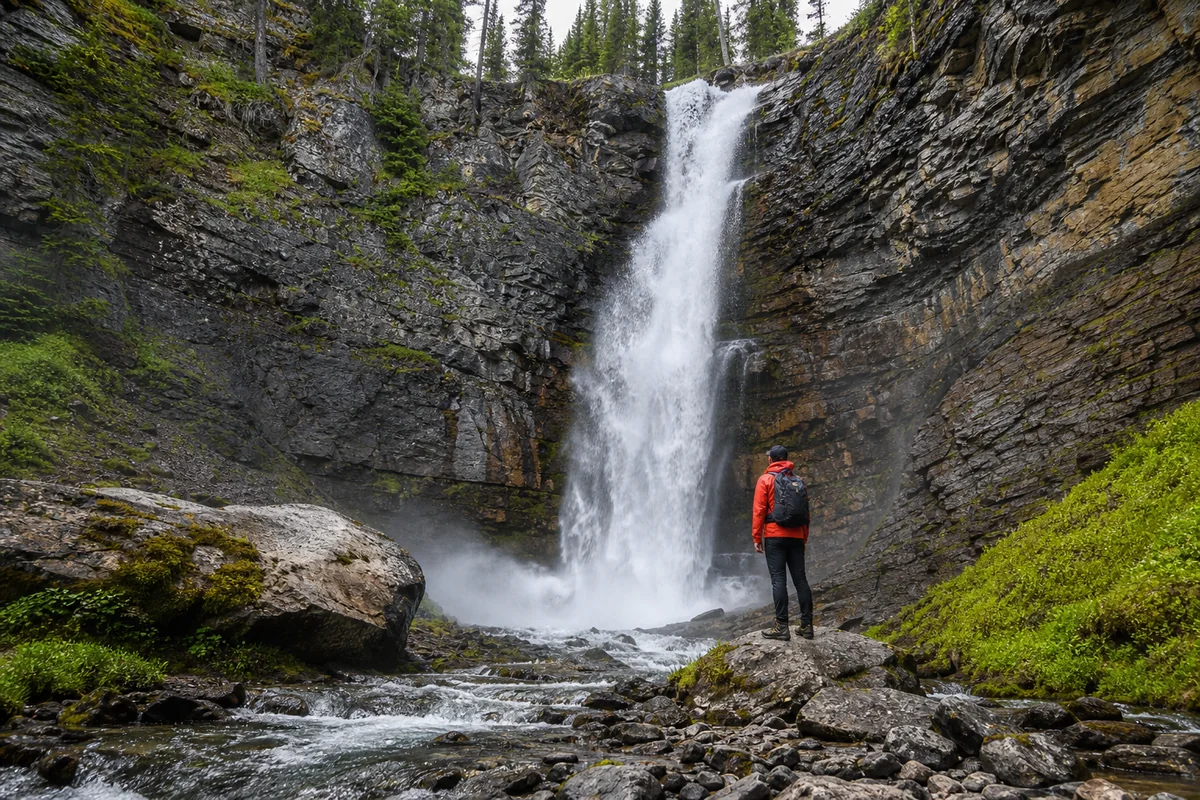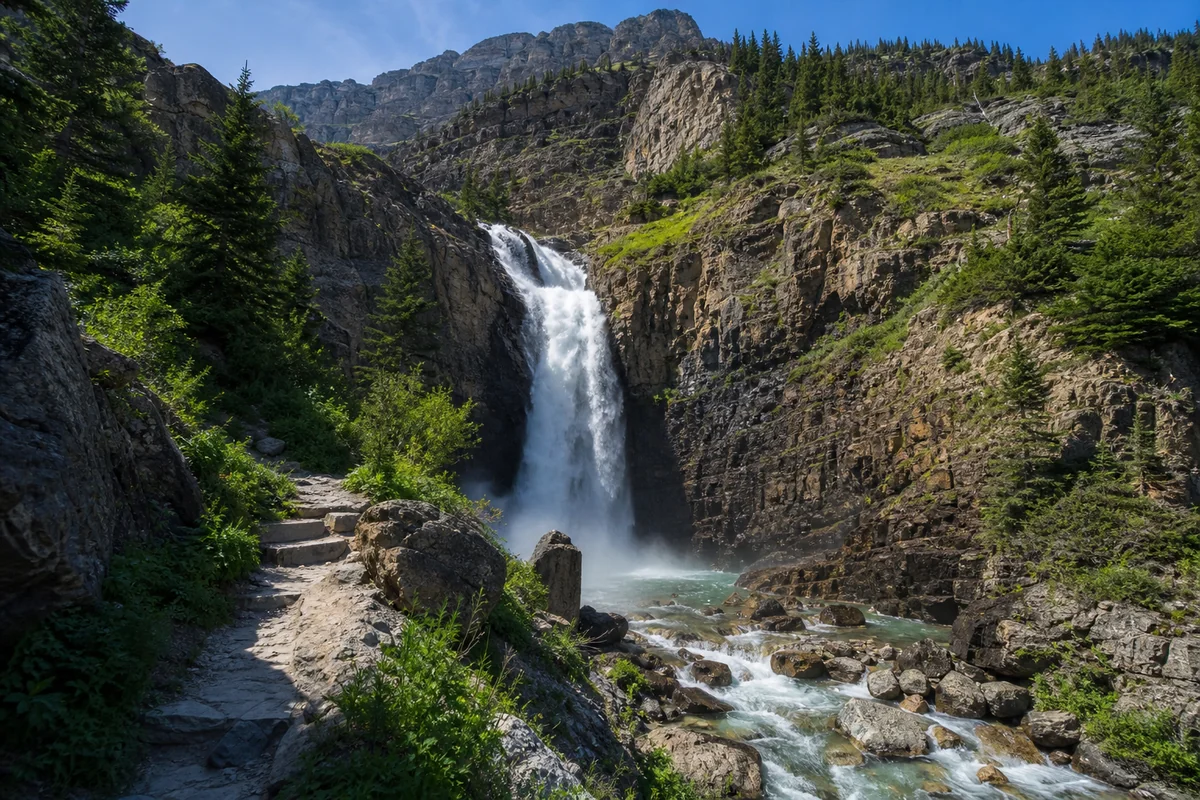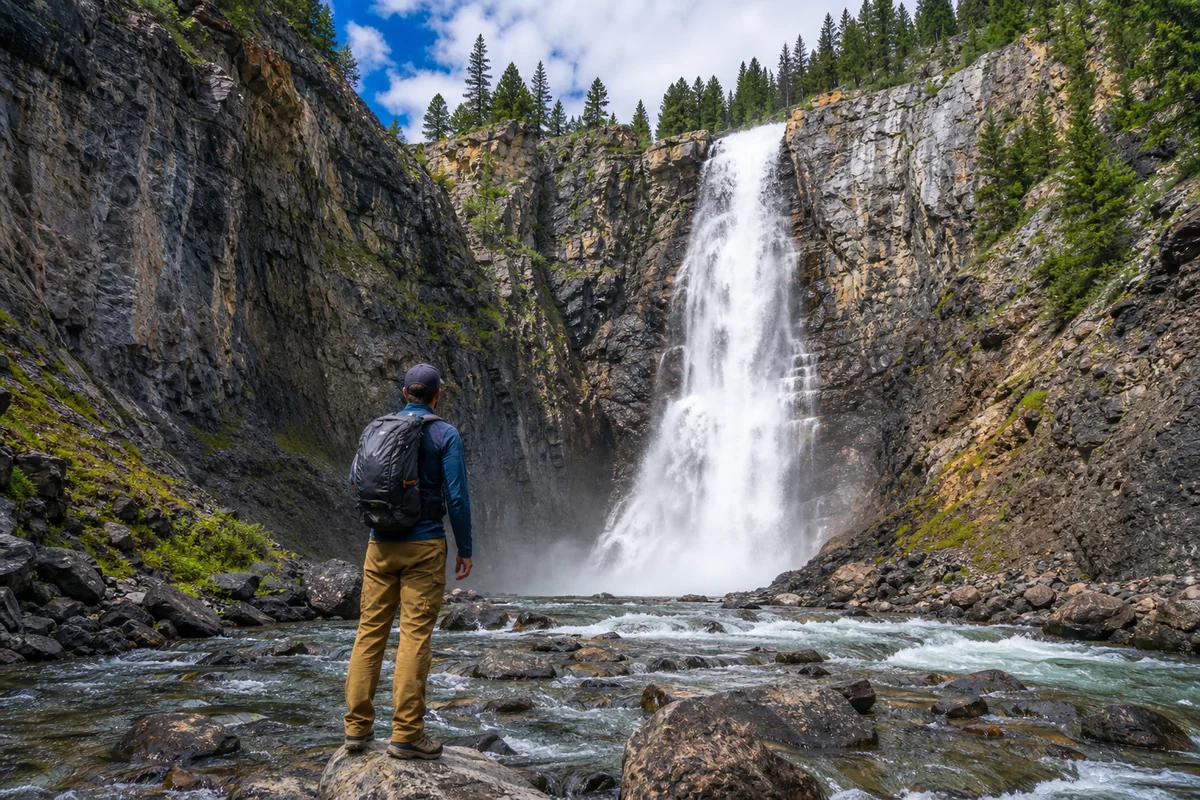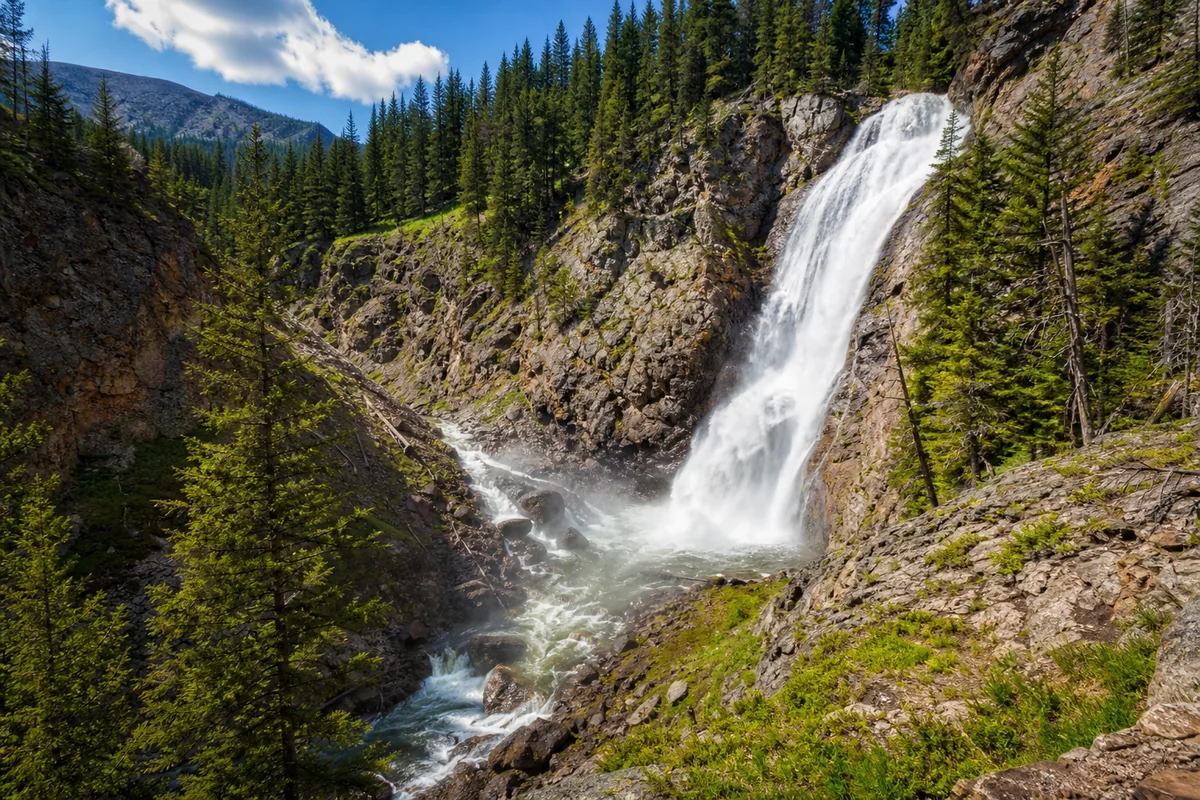
The moment I rounded the final curve on Skalkaho Pass Road and caught my first glimpse of Skalkaho Falls thundering through the granite canyon, I understood why locals call this stretch of highway one of Montana’s best-kept secrets.
Standing at the overlook last July, mist cooling my face while the roar of snowmelt echoed off ancient rock walls, I felt that rare rush of discovering something genuinely spectacular that most tourists never see.
If you’re exploring Montana waterfalls, Skalkaho Falls deserves a prominent spot on your itinerary—not despite its remoteness, but because of it.
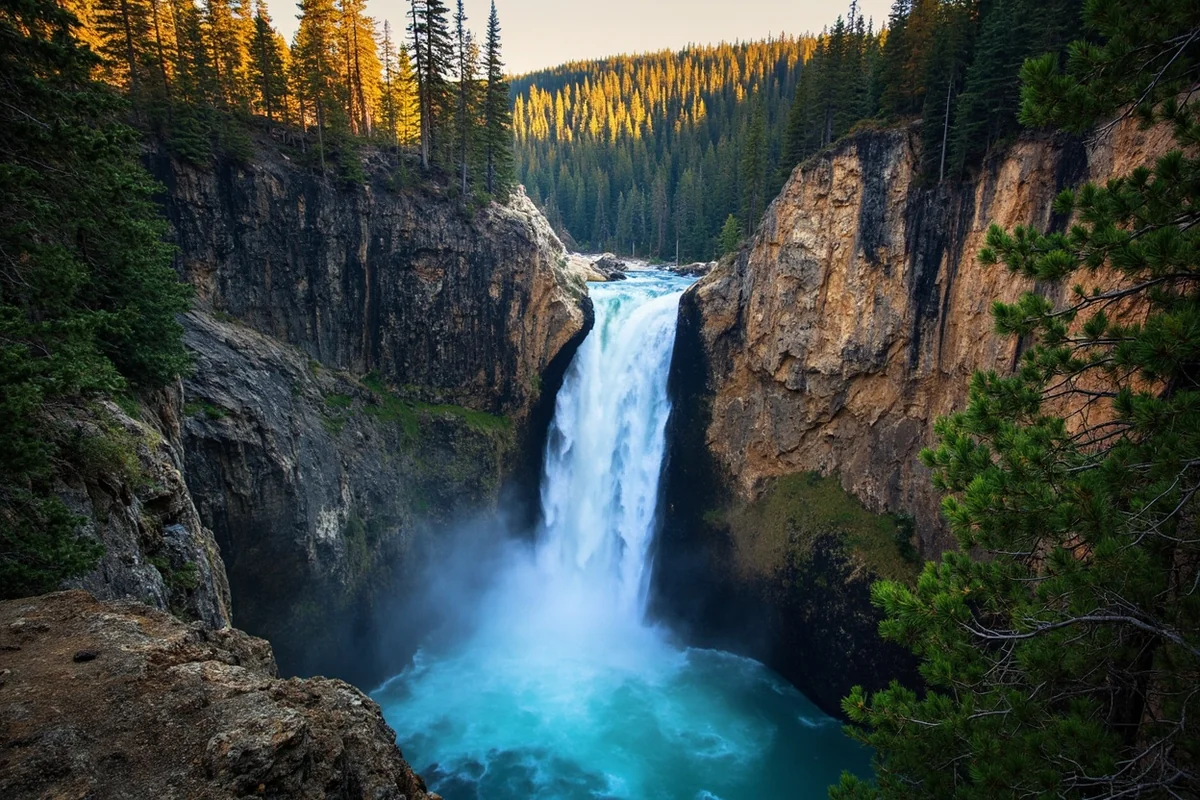
- Skalkaho Falls drops approximately 150 feet through a dramatic granite gorge on the Skalkaho Pass Highway (MT-38)
- Road typically opens late June through mid-October (weather dependent)
- Free roadside access with a short walk to viewing areas—no hiking required
- Located 50 miles from Hamilton, 26 miles from Philipsburg
- Best visited during peak snowmelt (late June-early July) for maximum water flow
- Bring layers—temperatures at 7,000+ feet can drop quickly even in summer
- Combine with a drive over Skalkaho Pass for a full day adventure
Liked this article?
Add Roaming Montana as a preferred source so you see more of our articles and guides on Google.
What Makes Skalkaho Falls Special
I’ve visited dozens of waterfalls across Montana over the years, from the popular cascades at Kootenai Falls to hidden gems like Hidden Falls. Skalkaho Falls stands apart for one simple reason: the combination of raw power, dramatic setting, and genuine solitude.
During my visit last summer, I spent nearly two hours at the falls and saw exactly four other people. Compare that to the crowds at Glacier National Park’s waterfalls, and you’ll understand the appeal.
The falls themselves cascade roughly 150 feet through a narrow granite chute carved over millennia by Skalkaho Creek. Unlike many Montana waterfalls that spread wide and gentle, Skalkaho concentrates its fury into a focused plunge that feels almost violent during peak flow.
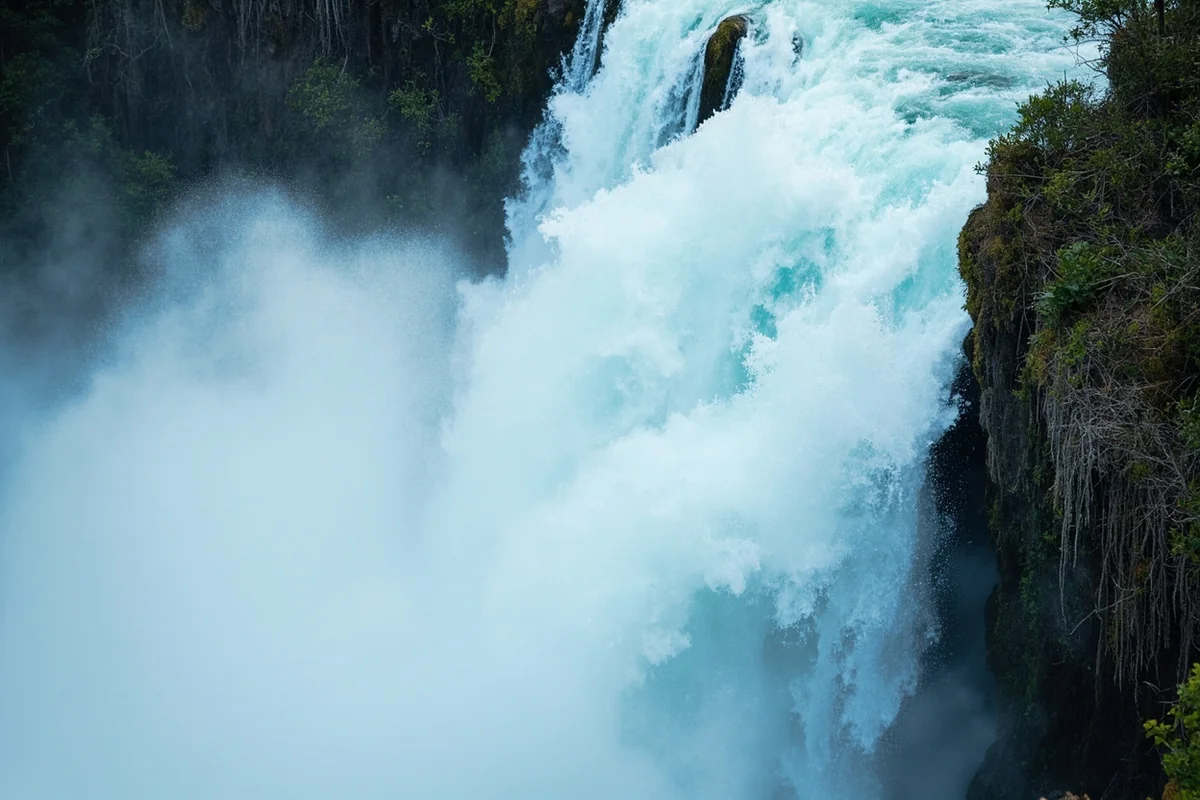
What struck me most was the sound. The canyon walls amplify the roar until it becomes almost physical—a vibration you feel in your chest as much as hear with your ears.
Getting to Skalkaho Falls: The Essential Details
Let me be direct about something: getting to Skalkaho Falls requires commitment. This isn’t a quick detour off the interstate.
The falls sit along Montana Highway 38, commonly called the Skalkaho Pass Highway or Skalkaho Pass Road. This seasonal route connects Hamilton in the Bitterroot Valley to Philipsburg in the Flint Creek Valley, crossing the Sapphire Mountains at an elevation exceeding 7,200 feet.
From Hamilton (West Side)
If you’re coming from the Bitterroot Valley, you’ll access the falls from Hamilton. Head east on Main Street, which becomes Skalkaho Highway (MT-38). The drive to the falls takes approximately one hour covering 50 miles.
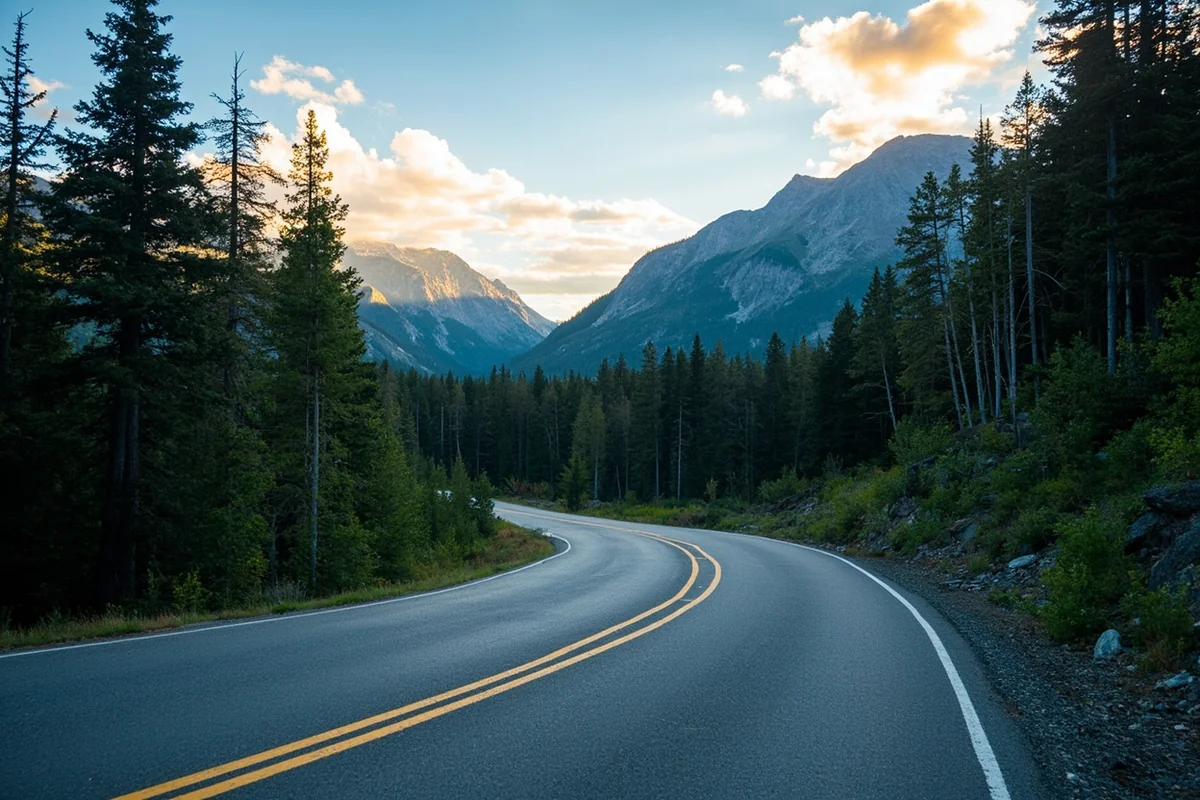
The first portion from Hamilton through the Bitterroot National Forest follows the Skalkaho Creek, climbing gradually through mixed conifer forest. The road remains paved but narrow, with occasional pullouts for slower vehicles to let others pass.
From Philipsburg (East Side)
Approaching from the east via Philipsburg offers a shorter drive of about 26 miles to the falls. Take Broadway Street south from town, which becomes Skalkaho Pass Road.
I prefer this approach when I’m making a day trip specifically for the falls. The road climbs more steeply from this direction, giving you those dramatic reveals as you descend toward the cascade.
Road Conditions and Seasonal Access
Here’s what you absolutely need to know: Skalkaho Pass Road is unpaved for the majority of its 54-mile length, and it closes completely in winter.
The Montana Department of Transportation typically opens the road in late June, though this varies significantly based on snowpack. During heavy snow years, the pass might not open until early July. The road generally closes with the first significant autumn snowfall, usually mid to late October.
During my visit in mid-July, the gravel portions were in excellent condition—well-graded with no major washboarding. However, I’ve heard from locals that conditions deteriorate later in summer, particularly after heavy rain events.
The road is suitable for standard passenger vehicles when conditions are good, but I wouldn’t recommend low-clearance sports cars. My Honda CR-V handled it without issue, though I took the rougher sections slowly.
| Detail | Information |
|---|---|
| Location | MT-38, Bitterroot National Forest |
| GPS Coordinates | 46.2089° N, 113.7517° W |
| Distance from Hamilton | ~50 miles (1 hour drive) |
| Distance from Philipsburg | ~26 miles (45 minutes drive) |
| Elevation at Falls | Approximately 6,200 feet |
| Road Season | Late June through mid-October |
| Admission | Free |
| Facilities | Roadside pullout, pit toilet nearby |
Experiencing Skalkaho Falls: What to Expect
When you arrive at the falls, you’ll find a clearly marked pullout area on the north side of the road. During my visit, there was space for perhaps eight to ten vehicles, though I’ve read that weekends in July can see overflow parking along the roadside.
From the parking area, a short path leads to the primary viewing area. I’m talking maybe 50 yards of easy walking—this is not a hike by any measure. The trail is dirt with some exposed roots, manageable for anyone with basic mobility.
The Main Viewing Area
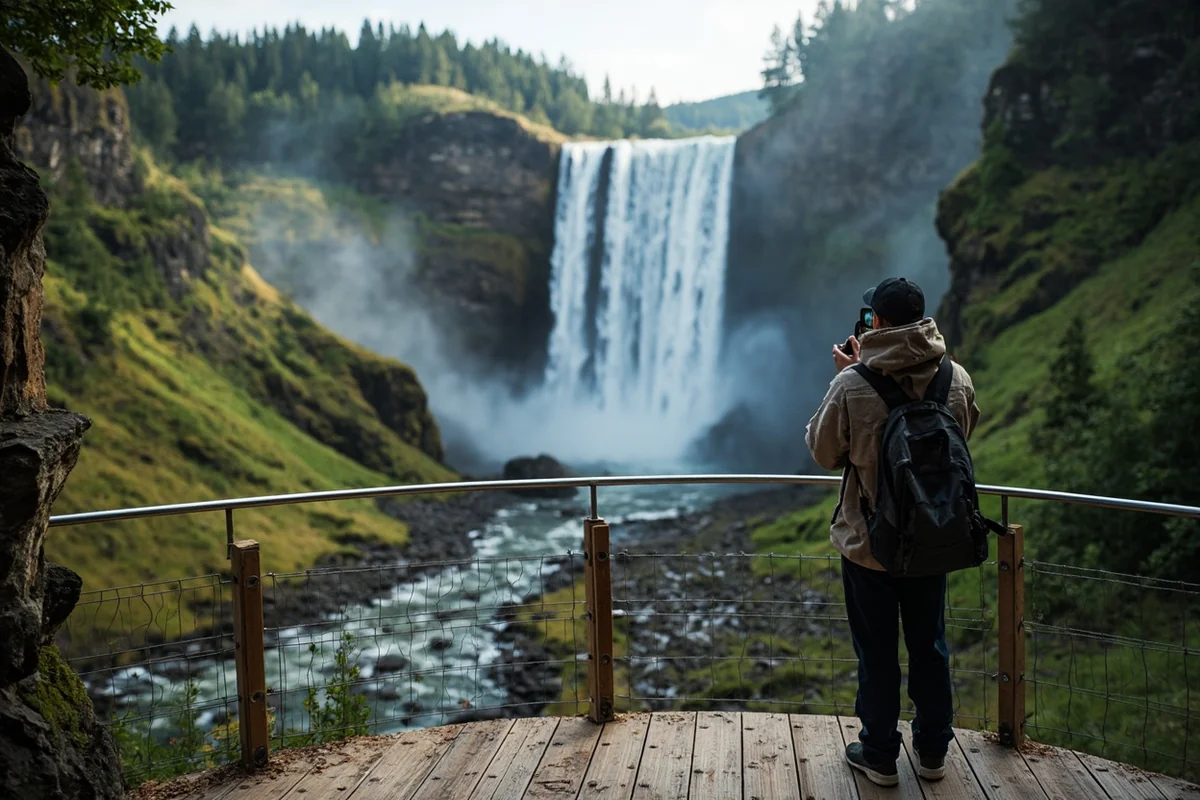
The established viewpoint provides a spectacular perspective of the falls’ main cascade. A wooden fence protects visitors from the steep drop to the canyon below.
What I appreciated was the angle: you’re positioned to see the water emerge from the forest above, plunge through the granite channel, and disappear into the misty gorge below. The whole spectacle unfolds before you without obstruction.
On my July visit, the mist from the falls carried far enough to dampen my camera lens from the viewing platform. I’d suggest bringing a microfiber cloth if you’re planning to photograph the cascade.
Additional Viewing Spots
Beyond the main viewing area, informal trails scramble through the forest to alternative vantage points. I explored one that led slightly downhill, offering a view looking up at the falls from a lower angle.
I need to be honest here: these secondary paths are not maintained trails. They’re user-created routes through steep, often slippery terrain. During my exploration, I found the footing challenging even in dry conditions. If you choose to explore beyond the main viewpoint, wear appropriate footwear and exercise genuine caution.
The rocks near the water are perpetually wet and coated with algae. I watched another visitor nearly take a serious tumble when they ventured too close to the creek.
Best Time to Visit Skalkaho Falls
Timing your visit correctly makes a significant difference in your experience. I’ve now seen Skalkaho Falls in both early July and late August, and the contrast was dramatic.
Peak Flow: Late June to Early July
For the most impressive display of water power, aim for the first few weeks after the road opens. This timing typically coincides with peak snowmelt from the Sapphire Mountains.
During my early July visit, the volume of water was genuinely impressive. The main cascade maintained consistent power, and secondary streams that apparently dry up later in summer were flowing strong.
The tradeoff? Expect cooler temperatures, potential afternoon thunderstorms, and possibly some remaining snow at higher elevations along the pass.
Mid-Summer: July to Early August
This window offers the best balance of water flow and weather conditions. The falls remain powerful, temperatures are comfortable, and the road conditions are typically at their best.
If I were recommending one ideal time for a first visit, I’d say the third week of July. That’s when I encountered the best combination of factors during my travels.
Late Season: September to October
By early fall, water levels drop noticeably. During my late August visit, I estimated the flow at perhaps 60% of what I’d seen in July. The falls were still beautiful, just less dramatic.
However, fall brings its own advantages. The larch trees begin their golden transformation in late September, creating stunning color contrasts with the dark granite and evergreens. Crowds essentially disappear, and you might have the falls entirely to yourself.
Time of Day Considerations
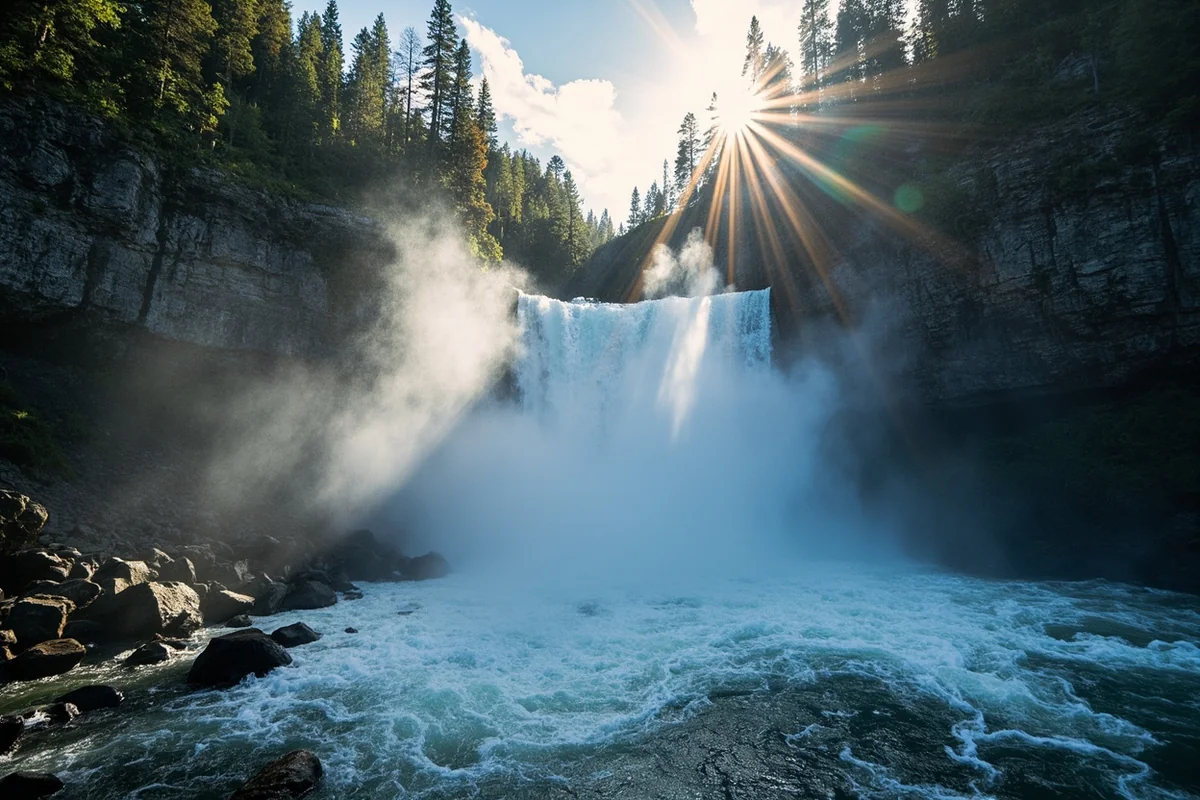
The falls face generally east, meaning morning light illuminates the cascade directly. I arrived around 10 AM during my July visit and found the lighting ideal for photography, with the sun highlighting the water against shadowed rock.
By afternoon, the falls fall into shadow much earlier than you might expect due to the steep canyon walls. If photography matters to you, prioritize morning visits.
What to Bring: My Packing Recommendations
After multiple visits, I’ve refined my packing list for Skalkaho Falls trips:
Clothing and Gear
- Layers — Even in July, morning temperatures at 6,000+ feet can hover in the 50s. I always bring a fleece jacket and windbreaker.
- Rain gear — Afternoon thunderstorms develop quickly in the mountains. My packable rain jacket has saved me multiple times.
- Sturdy footwear — Skip the flip-flops. Trail shoes or light hiking boots make exploring the viewing areas much safer.
- Hat and sunglasses — High elevation means intense sun when it’s out.
- Sunscreen — I’ve been sunburned at Montana waterfalls more than once.
Supplies
- Water and snacks — There are zero services between Hamilton and Philipsburg. Pack more than you think you need.
- Full tank of gas — Seriously, there’s nothing on this road. Fill up before you leave town.
- Camera and microfiber cloth — The mist can coat lenses quickly.
- Bug spray — Mosquitoes can be aggressive near the water, especially in early summer.
- Physical map or downloaded offline maps — Cell service is non-existent for most of the drive.
Combining Skalkaho Falls with Other Attractions
The drive over Skalkaho Pass is an experience in itself, and I always recommend making a full day of your visit. Here’s how I structure my Skalkaho trips:
The Complete Pass Crossing
Rather than driving to the falls and returning the same way, consider crossing the entire pass. The full journey from Hamilton to Philipsburg (or reverse) takes roughly two hours of driving time, though you’ll want to budget at least four hours with stops.
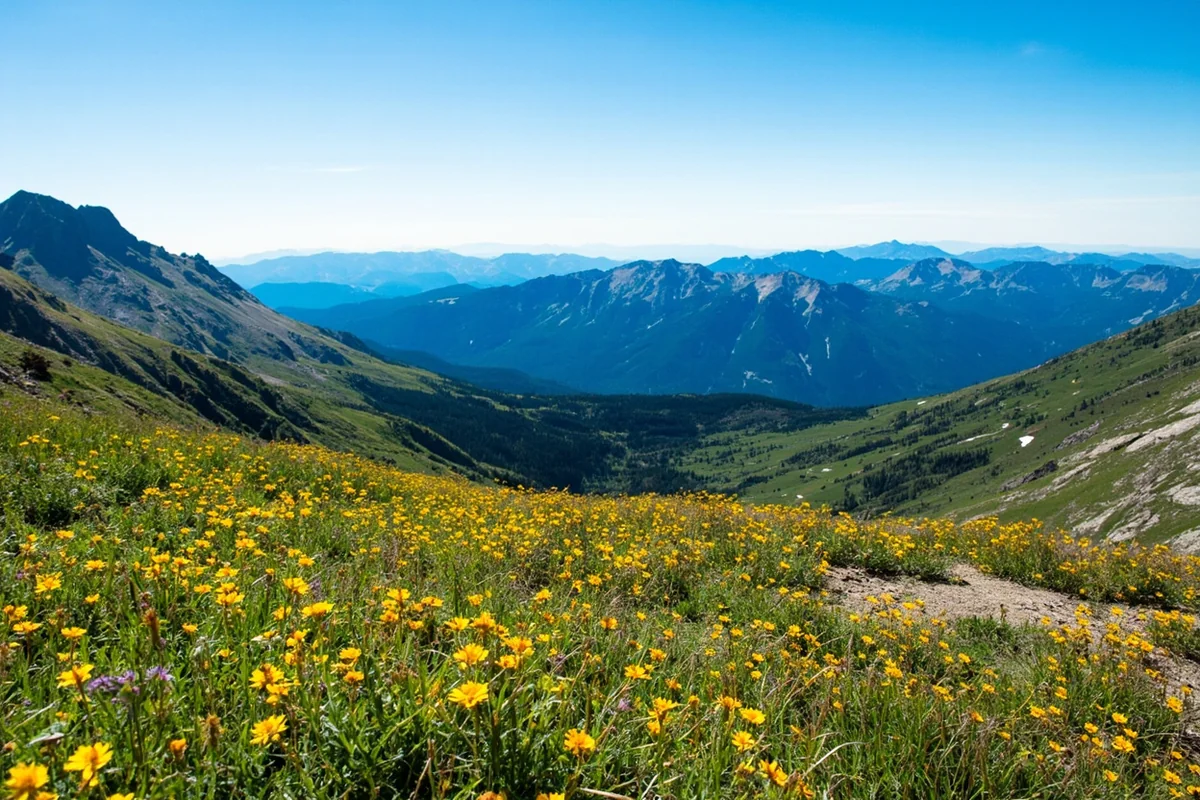
The summit of Skalkaho Pass offers sweeping views of the surrounding mountain ranges. When I stopped there in July, wildflowers carpeted the alpine meadows—lupine, paintbrush, and species I couldn’t identify.
Philipsburg
The town of Philipsburg makes an excellent endpoint or starting point for a Skalkaho adventure. This historic mining community has reinvented itself with excellent restaurants, sapphire galleries, and the famous Philipsburg Brewing Company.
I stopped at the Sweet Palace on my last visit—a candy store occupying a beautifully preserved historic building. It’s touristy, sure, but genuinely fun if you’re traveling with kids.
Hamilton and the Bitterroot Valley
If you’re basing yourself in Hamilton, you have easy access to numerous other attractions. The Daly Mansion offers tours of a copper baron’s estate, and the Bitterroot River provides excellent fishing opportunities.
For waterfall enthusiasts, the Bitterroot area also provides access to trails leading to Lost Creek Falls with minimal additional driving.
Georgetown Lake
About 15 miles north of Philipsburg, Georgetown Lake offers a pleasant alpine setting for fishing, kayaking, or simply enjoying the mountain scenery. I’ve combined Skalkaho Falls with a Georgetown Lake picnic on multiple occasions.
Camping and Lodging Options
If you’re planning to extend your Skalkaho Falls visit into an overnight trip, several options exist:
Campgrounds Near the Falls
Skalkaho Campground sits just a few miles west of the falls along MT-38. This small Forest Service campground offers basic sites without hookups in a beautiful creekside setting. First-come, first-served during my visits, though reservations may be available through Recreation.gov.
I camped here during my July trip and found it quiet and scenic, though facilities are minimal—vault toilets and no potable water. Bring everything you need.
Crystal Creek Campground lies closer to Hamilton and offers slightly more developed amenities. It’s a longer drive to the falls but more accessible if you prefer some comfort.
Lodging in Hamilton
Hamilton offers the most convenient lodging options on the west side. The town has several chain hotels and some charming locally-owned motels.
I stayed at the Bitterroot River Inn during one visit and found it clean and reasonably priced. The location provided easy access to both the Skalkaho Highway and downtown Hamilton restaurants.
Lodging in Philipsburg
For a more characterful stay, consider Philipsburg’s historic lodging options. The Broadway Hotel occupies a beautifully restored building downtown with rooms that feel authentically Western without being kitschy.
The smaller scale of Philipsburg means limited capacity during peak summer season. I’d recommend booking ahead if visiting on weekends in July or August.
Wildlife and Nature Around Skalkaho Falls
The Skalkaho Pass corridor passes through prime Montana wildlife habitat. During my visits, I’ve encountered:
- Mule deer — Common along the road, especially during morning and evening hours
- White-tailed deer — More frequently in the lower valleys
- Moose — I spotted a cow moose in the willows near Skalkaho Creek during my July visit
- Mountain goats — Visible on rocky outcrops near the pass summit
- Various raptors — Hawks and eagles patrol the open areas
Black bears inhabit this area, though I’ve never personally encountered one near the falls. Standard bear awareness applies: store food properly if camping, make noise while walking, and give any wildlife generous space.
The creek below the falls supports native cutthroat trout. I watched a angler working a pool downstream during one visit, though I didn’t ask about success.
Photography Tips for Skalkaho Falls
I’ve photographed enough waterfalls to have opinions about capturing Skalkaho effectively:
Gear Recommendations
A wide-angle lens (24mm or wider) captures the full scope of the falls and surrounding canyon. I shot most of my images with a 16-35mm lens and was glad for the wide end.
A polarizing filter helps manage the reflections on wet rock and can enhance the sky on clear days. I consider this essential for waterfall photography.
If you want those silky, long-exposure water shots, bring a neutral density filter and a stable tripod. The main viewing area has enough room to set up, though the wooden railings can limit positioning options.
Timing and Conditions
As mentioned, morning light produces the best illumination. Overcast days actually work well for waterfall photography, reducing harsh shadows and blown highlights.
The mist can be challenging. I found myself constantly wiping my lens during my July visit when water levels were high. Consider shooting from slightly farther back when flow is at peak.
Composition Ideas
The classic shot from the main viewpoint is beautiful, but consider these alternatives:
The surrounding forest provides natural framing elements. I positioned evergreen branches in the foreground of several shots to add depth.
Including a human figure (with permission, obviously) demonstrates the impressive scale of the falls.
Vertical compositions tend to work well given the falls’ height-to-width ratio.
Similar Montana Waterfalls Worth Visiting
If Skalkaho Falls captures your imagination, Montana offers numerous other spectacular cascades. Based on my travels, here are some worth considering:
For remote, dramatic waterfalls similar to Skalkaho, I’d suggest exploring Morrell Falls near Seeley Lake. The hike is longer but the payoff rivals anything in the state.
If you’re specifically interested in roadside-accessible waterfalls, Memorial Falls near Noxon offers a similar experience with shorter driving distances from Missoula.
For those heading toward Glacier National Park, Running Eagle Falls provides an easy trail and fascinating geology. The falls display a unique two-tier phenomenon during high water.
In the same region as Glacier, Saint Mary Falls and McDonald Falls deserve consideration for any comprehensive waterfall itinerary.
Southwest Montana waterfall enthusiasts should check out Ousel Falls near Big Sky and Palisade Falls south of Bozeman. Both offer developed trails and impressive cascades.
For a truly adventurous option requiring more effort, Pintler Falls in the Anaconda-Pintler Wilderness rewards hikers with stunning alpine scenery and relative solitude.
Common Questions and Concerns
Let me address some questions I’ve received and observations I’ve noted:
Is the Road Really That Rough?
The condition varies by season and recent weather, but in my experience, the road is manageable for careful drivers in standard vehicles. I’ve seen sedans and minivans at the falls parking area.
That said, this isn’t a highway. Expect to average 25-30 mph on the gravel sections, with occasional rough patches requiring slower speeds. High-clearance vehicles handle it more comfortably, but they’re not strictly necessary.
How Long Should I Budget?
For the falls alone: 30-60 minutes provides adequate time to explore the viewing areas and take photos.
For a full pass crossing with stops: 4-5 hours minimum.
For a truly leisurely day including Philipsburg or Hamilton exploration: 6-8 hours.
Can I Swim at the Falls?
I wouldn’t recommend it. The water is extremely cold, the currents are powerful, and the rocks are dangerously slippery. I’ve seen no one swimming here, and that seems wise.
Is it Safe for Kids?
The main viewing area is perfectly appropriate for children who can be supervised near the railing. The walk from parking to viewpoint is short and manageable for most ages.
I would not allow children to explore the unofficial trails or venture near the water’s edge without direct adult supervision and firm boundaries.
What About Accessibility?
Honestly, the path from parking to viewpoint is rough enough that wheelchair access would be extremely challenging. The terrain is uneven, unpaved, and includes some short inclines.
Practical Planning Summary
After several visits, here’s my distilled advice for planning your Skalkaho Falls trip:
Ideal Visit Profile: A mid-week morning in mid-July, approaching from Philipsburg, spending 1-2 hours at the falls, then completing the pass crossing to Hamilton for lunch.
Budget: Free admission. Budget for fuel (a full tank), food packed from town, and any lodging if making it an overnight trip.
Physical Demands: Minimal. The main viewpoint requires only a short, easy walk. Optional exploration demands more caution and fitness.
Best For: Photographers, solitude seekers, road trip enthusiasts, anyone wanting to experience less-visited Montana.
Skip If: You’re uncomfortable driving gravel roads, require developed facilities, or have limited time and need guaranteed access (the road’s seasonal closure means plans can change).
Final Thoughts on Skalkaho Falls
I’ve returned to Skalkaho Falls multiple times now, and I expect I’ll return again. There’s something about the combination of dramatic natural beauty and genuine solitude that keeps calling me back.
In an era when so many natural attractions feel overcrowded and over-managed, Skalkaho Falls remains authentically Montana. The road demands commitment. The facilities are minimal. The rewards are immense.
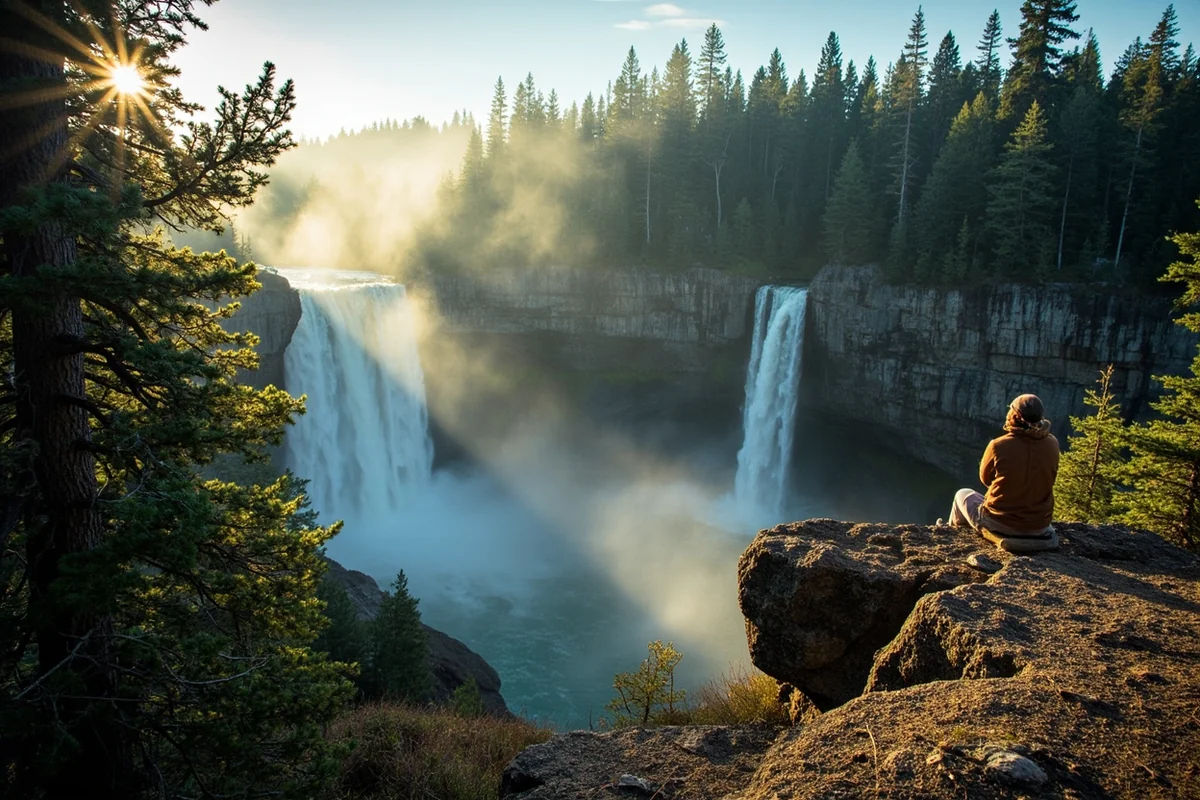
When I stood at the viewpoint last July, watching thousands of gallons of snowmelt thunder through that ancient granite gorge, I felt the same wonder I experienced my first time. That consistency tells me something genuine exists here—something worth the winding gravel miles and the absence of cell service and the extra layers you need at elevation.
If you’re exploring Montana’s waterfalls, make the effort for Skalkaho. Drive the pass. Stop at the falls. Take your time. Some places earn their remoteness, and this is one of them.
For more waterfall adventures across the state, explore cascades like Holland Lake Falls near the Swan Valley or venture into Glacier country for Piegan Falls and Rockwell Falls. Each offers its own character and rewards.
Montana’s waterfalls taught me that the journey matters as much as the destination. Skalkaho Falls, perhaps more than any other cascade I’ve visited, embodies that lesson perfectly.
Frequently Asked Questions
How do I get to Skalkaho Falls in Montana?
Skalkaho Falls is located along Skalkaho Highway (Route 38) between Hamilton and Anaconda, about 23 miles east of Hamilton. The falls are easily accessible from a pullout right along the road, making it one of the most convenient waterfalls to visit in Montana. I recommend approaching from the Hamilton side as the road is better maintained.
When is the best time to visit Skalkaho Falls?
The best time to visit Skalkaho Falls is late May through early July when snowmelt creates the most dramatic water flow. Keep in mind that Skalkaho Highway typically doesn’t open until late May or early June due to snow and closes again in fall, so plan your trip accordingly. I found early June to be the sweet spot for peak flow and accessible roads.
Is Skalkaho Highway safe to drive and what vehicle do I need?
Skalkaho Highway is a paved but narrow and winding mountain road with some gravel sections near the pass. A standard vehicle with good clearance works fine, though I’d avoid large RVs or trailers due to tight switchbacks. Drive cautiously, watch for wildlife, and fill up on gas in Hamilton or Anaconda since there are no services along the 54-mile route.
Is there a hiking trail at Skalkaho Falls or can you see it from the road?
You can see Skalkaho Falls directly from the roadside pullout without any hiking required, which makes it perfect for travelers of all mobility levels. There’s a short path that leads to a viewing area closer to the 150-foot cascade. The whole stop takes about 15-20 minutes unless you want to linger and take photos.
Is Skalkaho Falls free to visit and are there any facilities?
Yes, Skalkaho Falls is completely free to visit with no entrance fees or parking charges. Facilities are extremely limited—there are no restrooms, picnic tables, or amenities at the falls pullout, so plan accordingly. I recommend using restrooms in Hamilton before making the drive and packing your own snacks and water.
Can I visit Skalkaho Falls with kids or pets?
Skalkaho Falls is very family-friendly since you can view the waterfall without a strenuous hike and kids love the dramatic cascade. Dogs are welcome but should be kept on leash near the overlook for safety. Just be mindful that there are no guardrails and the rocks can be slippery, so keep a close eye on little ones.
What other attractions are near Skalkaho Falls worth visiting?
While driving Skalkaho Highway, stop at Skalkaho Pass (7,260 feet) for stunning mountain views and consider exploring the Sapphire Mountains wilderness area. The historic town of Hamilton offers great restaurants and the Daly Mansion for a cultural stop, while Anaconda has the quirky Washoe Theater and Old Works Golf Course. I like combining Skalkaho Falls with a full scenic loop day trip through the Bitterroot Valley.