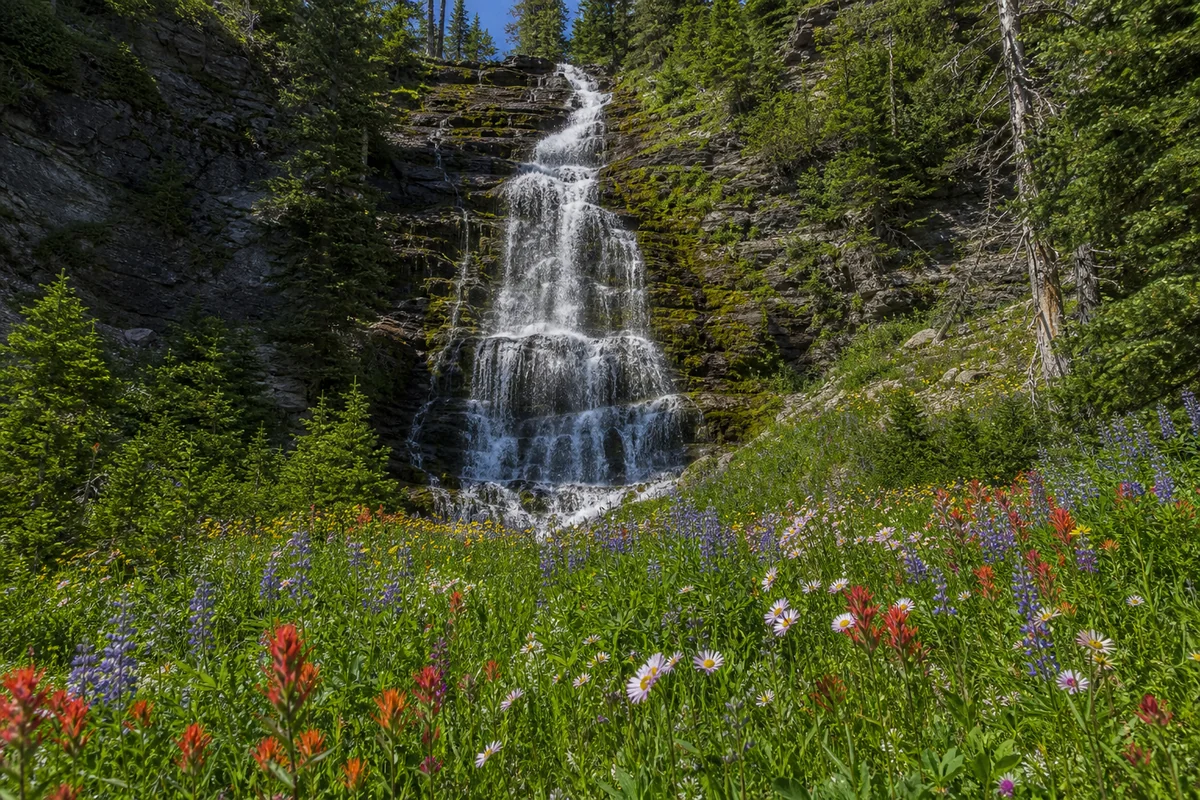
Standing knee-deep in wildflowers last July, I watched Passage Creek Falls thunder down a moss-covered rock face while not another soul was in sight—a rare gift in a state where popular waterfalls can feel like theme park attractions during peak season.
This tucked-away cascade in Montana’s wilderness reminded me exactly why I’ve spent years exploring every corner of Big Sky Country, seeking out the Montana waterfalls that don’t make it onto most tourist itineraries.
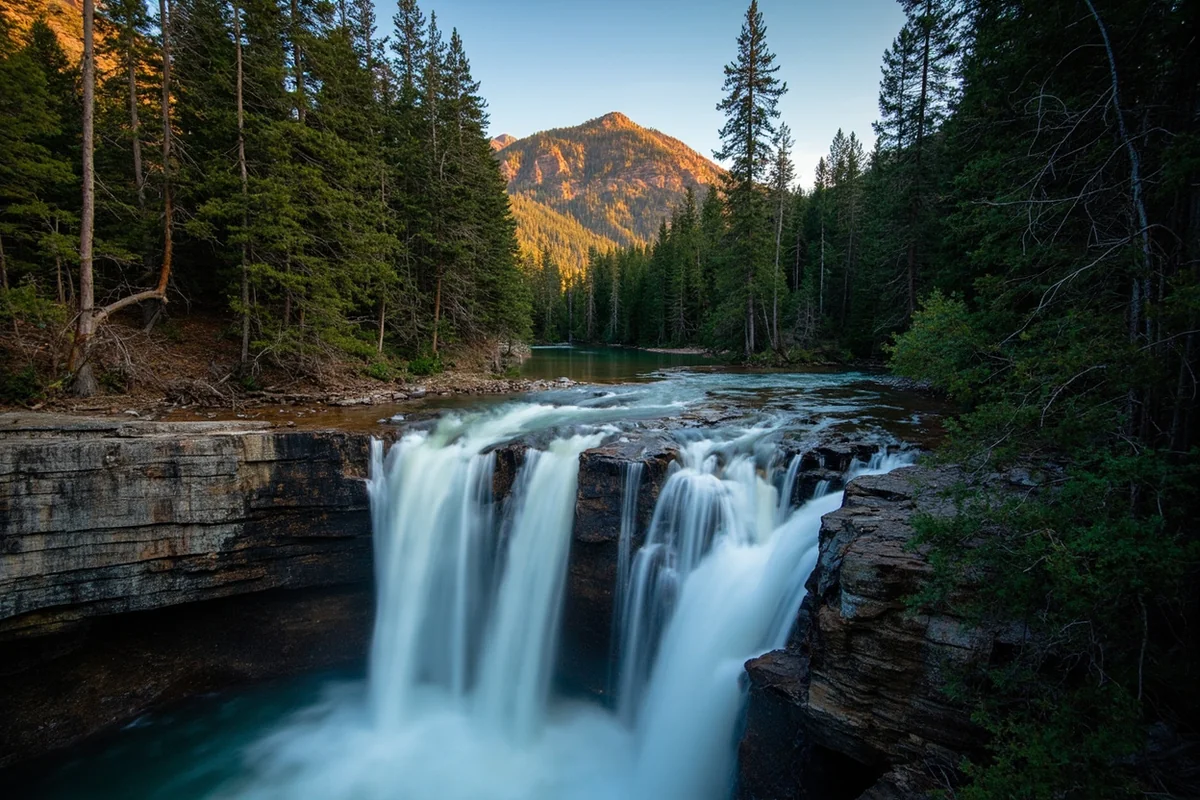
- Passage Creek Falls is a secluded multi-tier waterfall requiring moderate hiking skills to access
- Best visited late May through early July for peak water flow
- Round-trip distance approximately 6.2 miles with 1,400 feet elevation gain
- No crowds—I saw zero other hikers during my midsummer visit
- Bring bear spray, plenty of water, and sturdy hiking boots with ankle support
- Cell service is nonexistent; download offline maps before your trip
Liked this article?
Add Roaming Montana as a preferred source so you see more of our articles and guides on Google.
Why Passage Creek Falls Deserves Your Attention
Let me be honest with you: Passage Creek Falls isn’t the tallest waterfall in Montana, nor is it the most photographed. What it offers is something increasingly rare—an authentic wilderness experience where the journey matters as much as the destination.
During my visit last summer, I understood why this waterfall remains off most tourists’ radar. The access road alone filters out casual day-trippers, and the trail demands enough effort that only committed hikers make it to the falls.
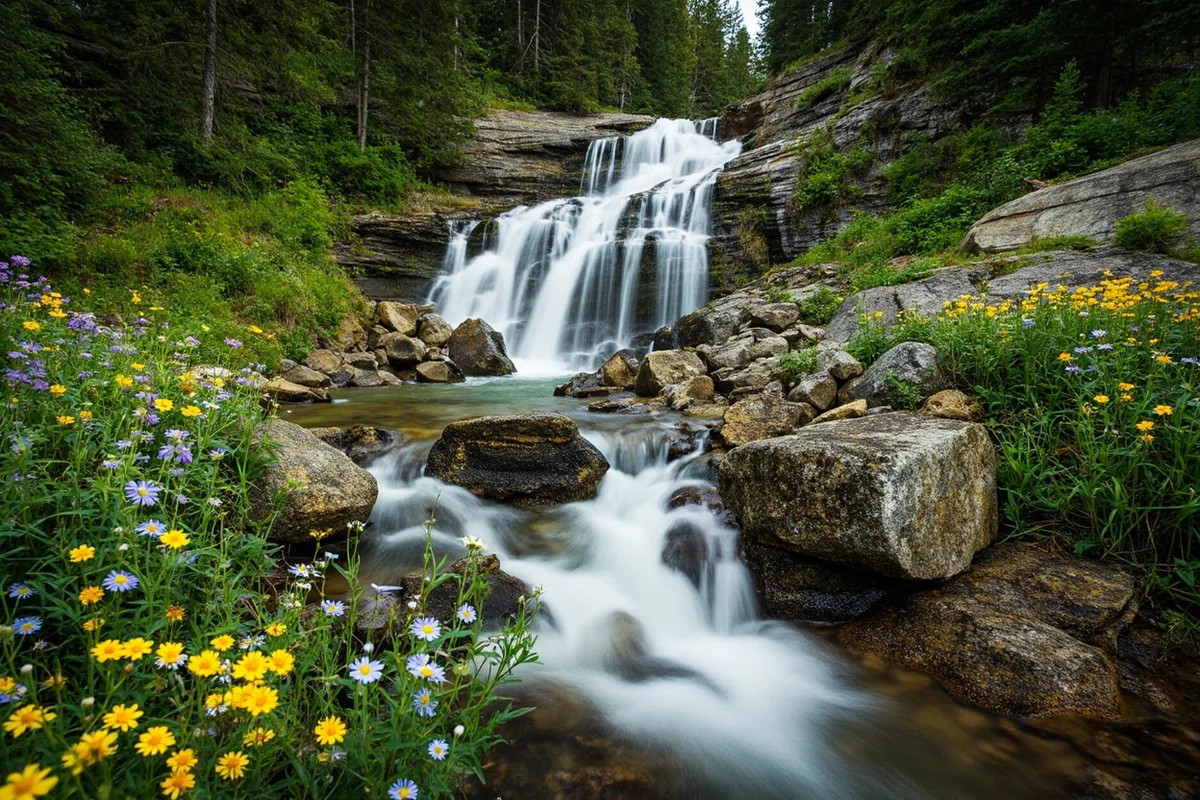
The waterfall itself drops approximately 60 feet over a series of granite ledges, creating a mesmerizing staircase effect. Unlike the single-drop waterfalls that dominate Instagram feeds, Passage Creek Falls rewards patient observation as water finds countless paths through the ancient rock.
If you’re the type of traveler who feels disappointed when a “hidden gem” turns out to have a packed parking lot, Passage Creek Falls won’t let you down. Similar off-the-beaten-path experiences await at Hidden Falls and Lost Creek Falls, both of which share that same sense of wilderness solitude.
Getting to the Trailhead: What to Expect
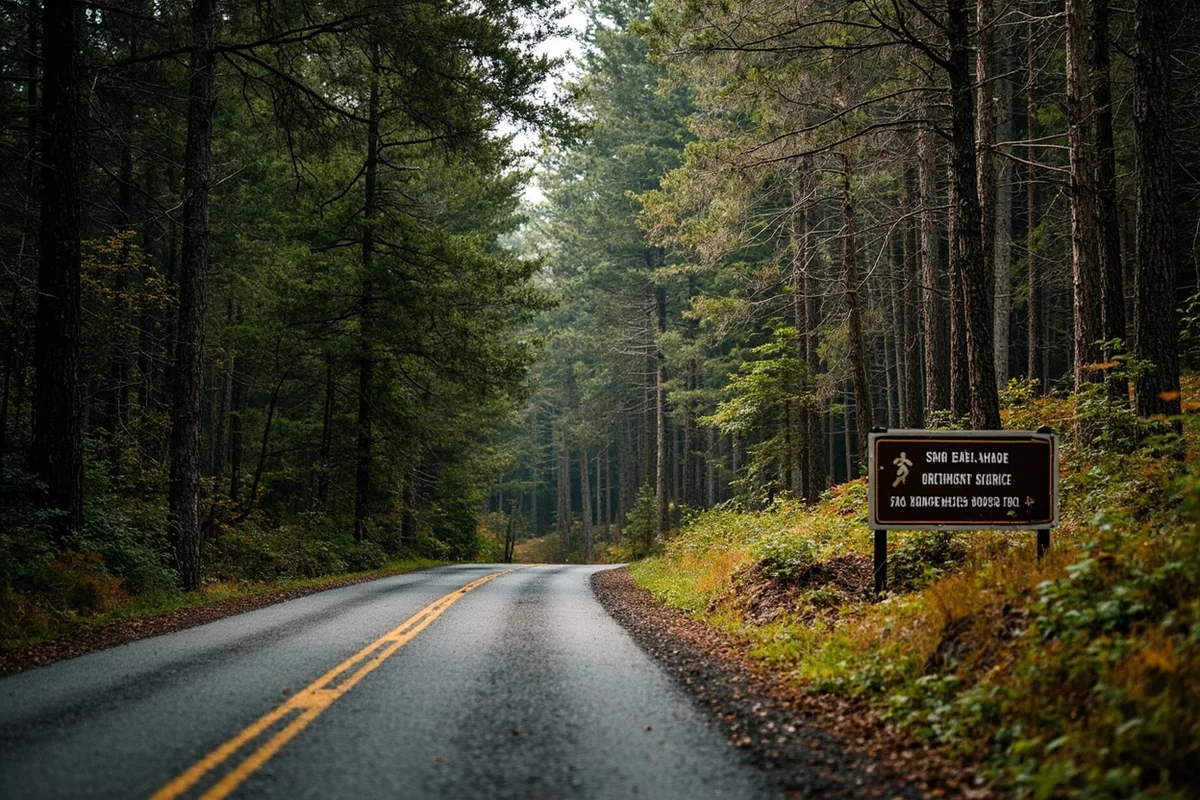
I won’t sugarcoat this—reaching Passage Creek Falls requires commitment before you even lace up your hiking boots. The drive to the trailhead involves navigating Forest Service roads that range from well-maintained gravel to “I hope my rental car survives this” conditions.
From the nearest paved road, plan for approximately 45 minutes of slow, careful driving. I averaged about 15 miles per hour on my visit, partly due to road conditions and partly because I kept stopping to photograph the surrounding landscape.
Road Conditions by Season
When I attempted this drive in early June, patches of snow still lingered in shaded sections of the road. By mid-July, the road was completely passable for standard vehicles with decent clearance.
High-clearance vehicles aren’t strictly necessary, but they’ll make your life easier. I drove my Subaru Outback without issues, though I heard some ominous scraping sounds crossing a particularly rutted section near mile marker 3.
The Forest Service typically doesn’t plow these roads until late May, and early-season visitors should check current conditions with the local ranger station. I learned this lesson the hard way a few years back when an unexpected late-spring snowstorm left me turning around just two miles from a different trailhead.
Parking and Trailhead Facilities
The trailhead parking area accommodates roughly 8-10 vehicles in a small clearing. During my visit, I was the only car there—a stark contrast to popular destinations like Kootenai Falls where parking lots fill by mid-morning.
Don’t expect any facilities here. No restrooms, no trash cans, no information kiosk. This is true backcountry Montana, which means packing out everything you bring in.
I always recommend arriving at remote trailheads with a full tank of gas and basic emergency supplies in your vehicle. The nearest gas station is over an hour away, and cell service disappears completely once you turn off the main highway.
| Practical Info | Details |
|---|---|
| Driving Time from Nearest Town | Approximately 1.5-2 hours depending on road conditions |
| Road Surface | Gravel Forest Service road, some rough patches |
| Vehicle Requirements | Standard SUV or car with good clearance recommended |
| Parking Capacity | 8-10 vehicles |
| Facilities | None—pack everything you need |
| Cell Service | No coverage at trailhead or on trail |
The Trail: A Mile-by-Mile Breakdown
The hike to Passage Creek Falls covers approximately 3.1 miles one way, with a total elevation gain of around 1,400 feet. I’d classify this as a moderate hike that pushes into strenuous territory during the final mile.
Miles 0-1: The Gentle Introduction
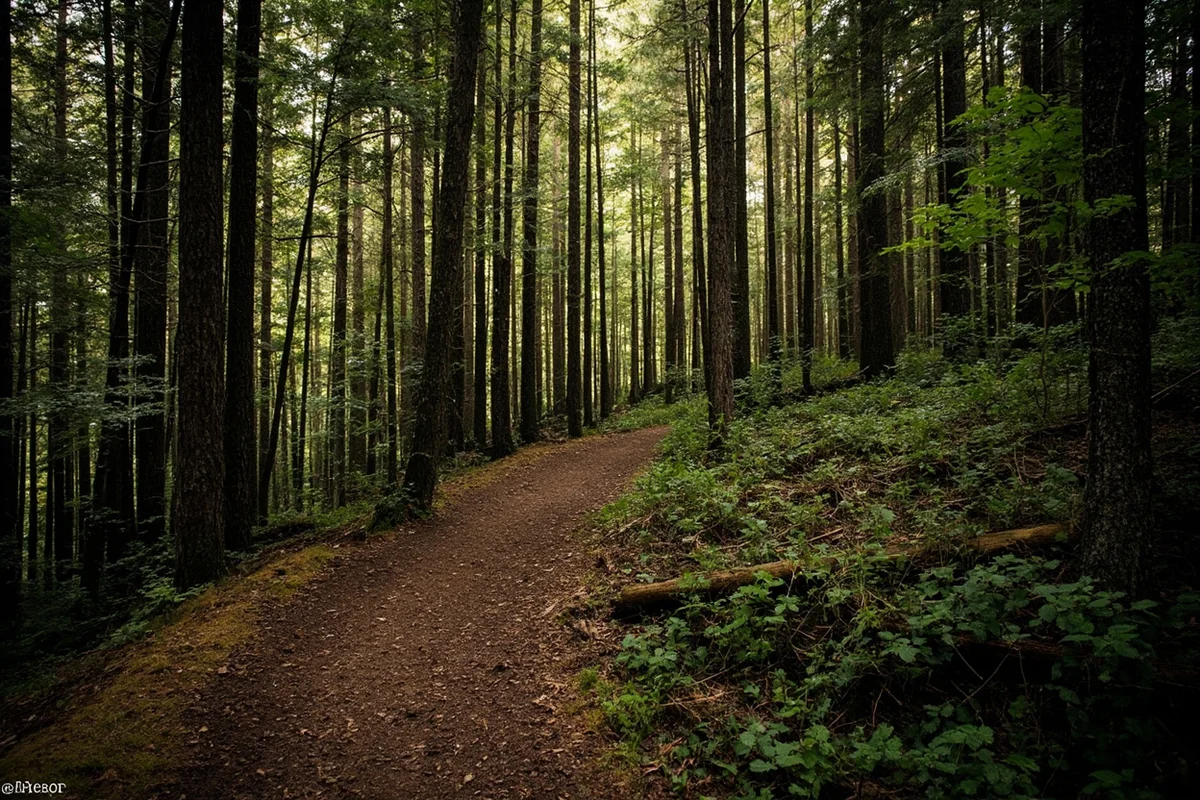
The first mile lulls you into a false sense of ease. The trail winds through a beautiful mixed conifer forest, climbing so gradually that you barely notice the elevation gain.
During my hike, this section was alive with wildflowers—lupine, Indian paintbrush, and beargrass creating a purple, red, and white tapestry. I probably spent 45 minutes covering this first mile just because I kept stopping to take photos.
The trail is well-defined here, with minimal route-finding required. Keep your eyes peeled for wildlife signs—I spotted fresh bear scat about half a mile in, a reminder that we’re visitors in someone else’s home.
Miles 1-2: Where Things Get Interesting
Around the one-mile mark, the trail begins climbing in earnest. Several switchbacks carry you up a forested ridge, and you’ll start feeling the elevation in your legs and lungs.
This section offers occasional glimpses through the trees toward distant peaks. On a clear day during my visit, I could see snow-capped mountains stretching to the horizon—the kind of view that makes you understand why Montana is called Big Sky Country.
The trail surface becomes rockier here, with exposed tree roots creating potential trip hazards. I recommend watching your footing rather than trying to hike and photograph simultaneously (a mistake I’ve made more times than I care to admit).
Miles 2-3.1: The Final Push
The last mile is where the trail earns its “moderate to strenuous” rating. The grade steepens noticeably, and you’ll encounter several sections of loose rock that require careful navigation.
About two miles in, you’ll hear the falls before you see them. That distant rumble building as you approach is one of hiking’s greatest pleasures—nature’s way of telling you that your effort is about to pay off.
The trail descends slightly during the final quarter mile as it drops into the creek drainage. This descent can be slippery when wet, so take your time and use trekking poles if you have them.
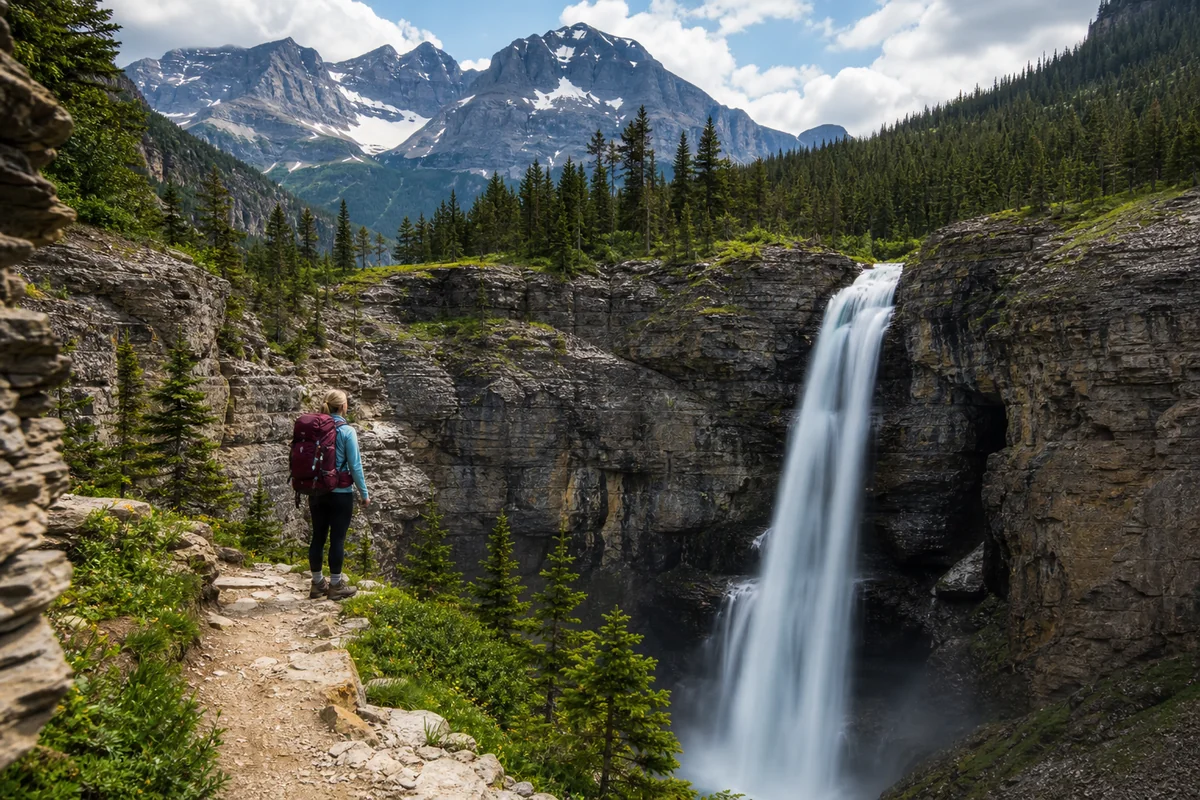
When the forest finally opens and Passage Creek Falls reveals itself, the impact is worth every bead of sweat. The waterfall occupies a natural amphitheater of rock and greenery that feels almost too perfect to be real.
Experiencing the Falls: What You’ll Find
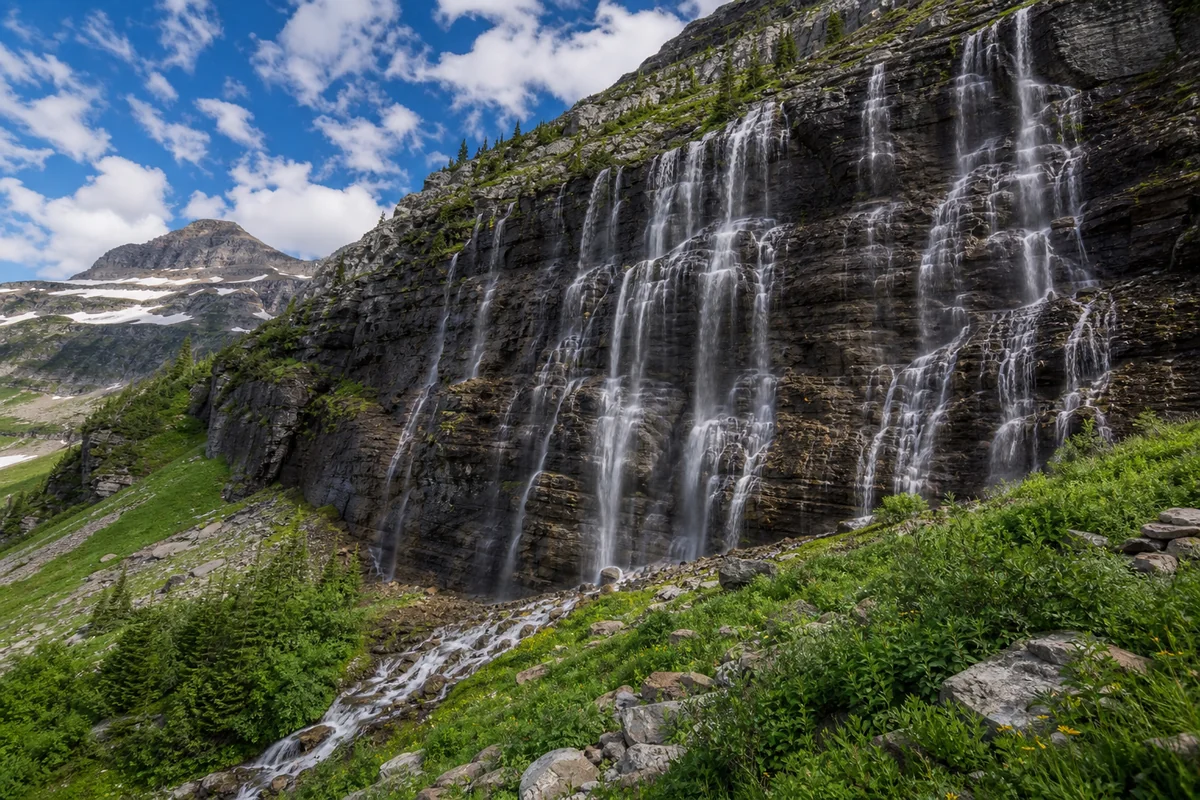
Passage Creek Falls isn’t just a single waterfall—it’s a series of cascades that together create a magical scene. During peak flow, water seems to pour from every crack and crevice in the rock face.
The Main Falls
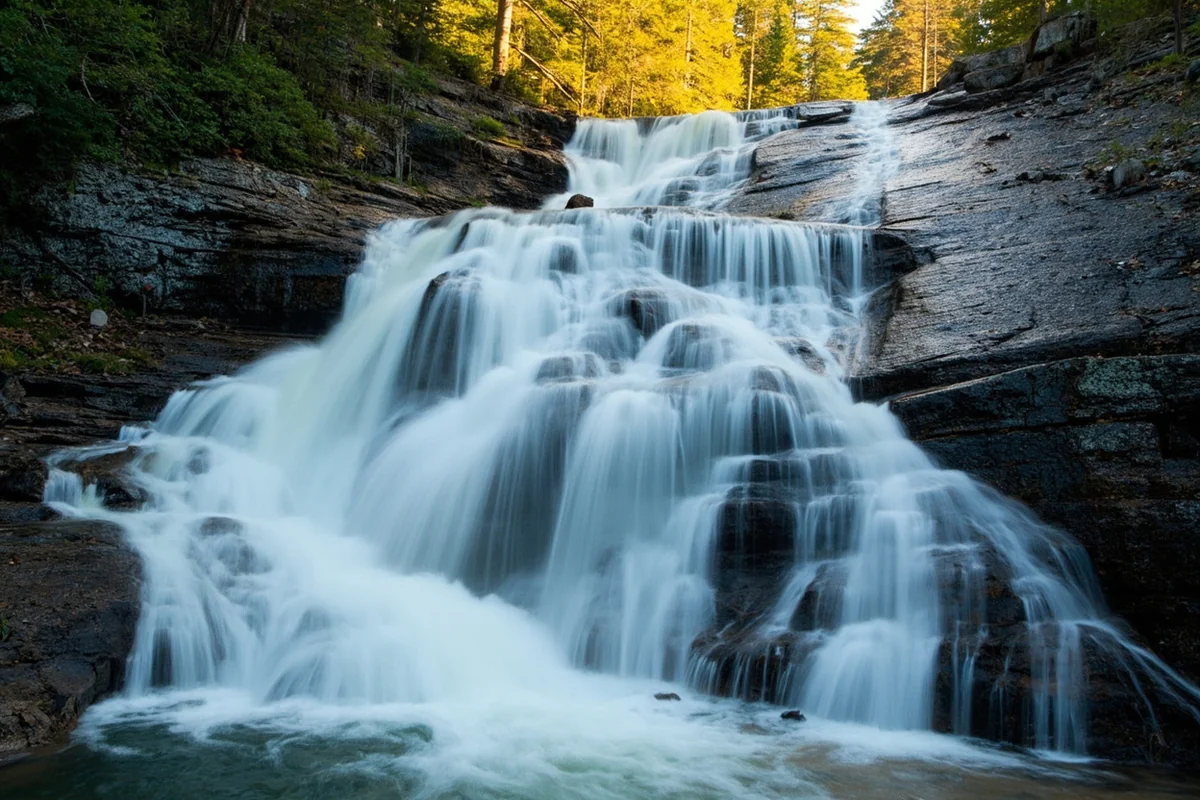
The primary drop measures roughly 40 feet, with water streaming over a concave rock face that’s covered in thick green moss. The spray from this main section creates a perpetual mist that keeps the surrounding vegetation impossibly lush.
During my July visit, the flow was still impressive despite being several weeks past peak snowmelt. The falls never completely dry up thanks to springs that feed the creek year-round, but spring visitors will see significantly more volume.
Standing at the base, I felt that primal connection to moving water that keeps drawing me back to waterfalls throughout Montana. Similar experiences await at Morrell Falls and Holland Lake Falls, which share this same wild, untamed character.
The Upper Cascades
Above the main falls, a series of smaller cascades tumble through house-sized boulders. These upper tiers are partially visible from the main viewpoint but can be better appreciated from a rough scramble trail to the north.
I spent considerable time exploring these upper sections during my visit. Each cascade has its own personality—some dropping directly into pools, others spreading across wide rock faces in delicate veils.
The geology here tells a story millions of years in the making. You’re looking at ancient metamorphic rock that’s been shaped by countless centuries of water flow.
The Pool at the Base
A plunge pool at the base of the main falls offers a tempting swimming opportunity on hot days. I’ll be honest—I tested the water with my feet and immediately reconsidered.
Even in July, the water temperature hovers in the low 50s Fahrenheit. If you’re braver than me, pack a quick-dry towel and prepare for an invigorating (read: shockingly cold) dip.
The pool is also home to small trout, which I watched darting through the crystal-clear water. Fishing isn’t practical here due to access challenges, but it’s a good reminder of how healthy this ecosystem remains.
Best Time to Visit Passage Creek Falls
Timing your visit correctly can mean the difference between a spectacular experience and a disappointing trickle. Based on multiple visits over the years, here’s what I’ve learned about seasonal variations.
Late May to Early July: Peak Flow
This is my favorite window for visiting Passage Creek Falls. Snowmelt swells the creek to its maximum volume, and the waterfall becomes an absolute powerhouse.
The tradeoff? Trail conditions can be challenging early in this window. Expect muddy sections, possible snow patches at higher elevations, and creek crossings that may require getting your feet wet.
During a late May visit a few years back, I encountered knee-deep snow in the final half mile. The falls were roaring, but the hike required full winter hiking preparation.
Mid-July to August: The Sweet Spot
My most recent visit fell during this window, and I’d argue it offers the best overall experience. The trail is completely clear, the weather is typically stable, and the falls maintain enough flow to be impressive while allowing closer approach.
Wildflowers peak during this period, adding splashes of color throughout the hike. The mosquito population also decreases from its June peak, though I still recommend bringing repellent.
September to October: Autumn Colors
Fall brings diminished water flow but compensates with stunning foliage. The larch trees along the approach road turn brilliant gold, and the surrounding forest takes on warm tones that photograph beautifully.
I haven’t personally visited during fall, but a friend who hiked here in late September described the experience as “worth it for the colors alone, even with the smaller falls.”
Winter and Early Spring: Not Recommended
The road to the trailhead closes with the first significant snowfall, typically in November. Even if you could reach the trailhead, avalanche danger and extreme conditions make winter visits inadvisable for all but expert mountaineers.
Photography Tips for Passage Creek Falls
I’ve photographed dozens of Montana waterfalls, and Passage Creek Falls presents both unique opportunities and challenges. Here’s what I’ve learned from my time behind the lens here.
Gear Recommendations
Bring a polarizing filter—it’s essential for cutting glare on the wet rocks and deepening colors in the surrounding foliage. I also recommend a neutral density filter if you want those silky smooth water effects during midday lighting.
A tripod is technically useful but can be challenging to set up on the uneven, often wet terrain at the base. I ended up bracing my camera against rocks and trees for most of my long exposures.
Wide-angle lenses (16-35mm range) work well for capturing the falls in their full environmental context. A telephoto lens lets you isolate interesting details—individual cascades, patterns in the rock, and wildlife in the surrounding trees.
Best Times of Day
The falls face roughly northeast, which means direct sunlight hits the water during late morning in summer. This creates harsh contrast and washed-out highlights that are difficult to work with.
My best photos came during early morning when the gorge was still in shadow but the sky provided soft, even illumination. Late afternoon also works well, though you’ll want to factor in the long hike out.
Overcast days are actually ideal for waterfall photography here. The diffused light eliminates harsh shadows and allows the subtle colors in the rock and moss to really shine.
Composition Ideas
Don’t just shoot the waterfall head-on from the main viewpoint. Explore different angles—I found a particularly compelling composition by positioning myself downstream where I could include the creek leading toward the falls.
The surrounding forest offers great framing opportunities. Look for overhanging branches or interesting tree shapes to create natural borders around your waterfall images.
Including people in your shots provides scale and human interest. On my solo visit, I set up my camera on a timer and positioned myself at the edge of the pool to show just how impressive these falls really are.
Safety Considerations and Preparation
Remote backcountry destinations like Passage Creek Falls require more preparation than a casual day hike. I’ve learned some of these lessons the hard way, so let me share what I wish I’d known earlier in my hiking career.
Wildlife Awareness
This is active bear country, and I cannot stress enough the importance of carrying bear spray and knowing how to use it. During my visit, I saw clear evidence of recent bear activity, including fresh tracks along the creek.
Make noise while hiking, especially when approaching blind corners or dense vegetation. I usually talk, sing badly, or clap my hands periodically. Some hikers carry bear bells, though their effectiveness is debated.
Mountain lions also inhabit this area. While encounters are rare, hiking with a partner and staying alert reduces risk significantly.
Water and Food
Bring at least two liters of water per person—more if hiking during hot weather. While Passage Creek provides potential water sources, you’ll need a filter or purification tablets if you plan to drink from natural sources.
Pack more food than you think you’ll need. The 6+ mile round trip and significant elevation gain burn serious calories. I typically bring a substantial lunch plus multiple snacks.
Navigation
Download offline maps to your phone before leaving cell service. I use both Google Maps offline and the Gaia GPS app for redundancy.
Consider bringing a paper topographic map and compass as backup. Electronics can fail, batteries can die, and knowing how to navigate old-school could save your life in an emergency.
Emergency Preparedness
Tell someone your hiking plans, including expected return time and what to do if you don’t check in. This is backcountry Montana—help is not minutes away.
Carry a basic first aid kit, emergency shelter (even a simple space blanket), fire-starting materials, and a headlamp with extra batteries. I’ve never needed most of this gear, but I’ve never regretted having it either.
What to Combine with Your Visit
A trip to Passage Creek Falls works well as part of a larger Montana exploration. Here are some complementary experiences I’d recommend based on my own travels.
Nearby Waterfalls
If you’re on a waterfall-hunting mission, several other cascades are accessible within a few hours’ drive. Memorial Falls offers a shorter, more accessible hike for days when you want something less demanding.
For another secluded experience, Needle Falls provides similar wilderness solitude. Those seeking dramatic single-drop waterfalls might enjoy Palisade Falls near Bozeman.
Camping Options
Several Forest Service campgrounds operate in the general area, offering basic but beautiful sites. I spent the night before my hike at a primitive camp along the approach road, waking to deer grazing just yards from my tent.
Dispersed camping is allowed on National Forest land, giving you flexibility to create your own basecamp. Just follow Leave No Trace principles and check current fire restrictions.
Scenic Drives
The approach to Passage Creek Falls passes through some genuinely spectacular country. Consider extending your drive to explore other Forest Service roads in the area—some lead to additional trailheads and overlooks.
I spent an entire afternoon after my hike just driving slowly through the national forest, stopping at pullouts and soaking in views that rival anything in the more famous parks.
Comparing Passage Creek Falls to Other Montana Waterfalls
After years exploring Montana waterfalls, I’ve developed a sense of what makes each one special. Here’s how Passage Creek Falls stacks up against other destinations I’ve written about.
In terms of solitude, Passage Creek Falls ranks near the top. While Kootenai Falls impresses with its power and accessibility, it can feel crowded during peak season. Passage Creek offers the opposite experience.
For similar effort-to-reward ratios, I’d compare it to Impasse Falls and Monture Falls. All three require substantial hiking but reward visitors with genuine wilderness experiences.
If you’re new to Montana waterfall hiking, I’d recommend building up to Passage Creek Falls. Start with easier destinations like Ousel Falls near Big Sky or Running Eagle Falls in Glacier National Park to gauge your comfort level with mountain trails.
Planning Your Trip: Practical Timeline
Based on my experience, here’s how I’d structure a day trip to Passage Creek Falls:
- 5:30 AM: Wake up and have a substantial breakfast at your accommodation
- 6:00 AM: Begin drive toward trailhead, stopping for gas and any last-minute supplies
- 7:30-8:00 AM: Arrive at trailhead, final gear check, apply sunscreen and bug spray
- 8:15 AM: Begin hiking
- 10:30-11:00 AM: Arrive at falls, depending on pace and stops
- 11:00 AM-1:00 PM: Explore falls, eat lunch, take photos
- 1:00 PM: Begin return hike
- 3:30-4:00 PM: Return to trailhead
- 5:30-6:00 PM: Return to civilization for well-deserved dinner
This timeline assumes moderate hiking pace and good trail conditions. Add extra time if you’re a photographer, plan to swim, or want to explore the upper cascades thoroughly.
What I Wish I’d Known Before My First Visit
Every waterfall teaches you something, and Passage Creek Falls was no exception. Here are the insights I’d share with my past self:
The forest service road is worse than it looks on the map. What appeared to be a straightforward drive took nearly twice as long as anticipated. Leave earlier than you think necessary.
Mosquitoes near the falls can be brutal, especially in early season. The mist from the waterfall creates perfect breeding conditions. A head net might feel excessive until you’re standing in a cloud of hungry insects.
The best photographs weren’t at the main viewpoint. I initially felt pressured to shoot from the obvious spot, then discovered much more interesting angles by scrambling along the creek banks.
Lunch at the falls is one of life’s great pleasures. I almost ate on the trail to “save time” and I’m so glad I didn’t. Sitting by that thundering water, eating a sandwich in complete solitude—that memory has stayed with me.
The hike out feels shorter than the hike in. Once you’ve seen the falls and the anticipation is satisfied, the return journey seems to fly by. Don’t underestimate how much mental energy the “not knowing” consumes on the approach.
Final Thoughts on Passage Creek Falls
Montana has no shortage of waterfall destinations, from the famous cascades in Glacier National Park to roadside attractions that require barely a few steps from your car. Passage Creek Falls represents something different—a reward that must be earned through effort and intention.
During my time at the falls last summer, I found myself grateful for every challenge the journey presented. The rough road filtered out casual visitors. The demanding trail tested my fitness. The lack of cell service forced me to be present rather than documented.
What remained was pure experience—the sound of falling water, the smell of wet rock and pine, the satisfaction of reaching a beautiful place through my own effort.
If you’re the kind of traveler who feels energized rather than discouraged by remote destinations, Passage Creek Falls belongs on your Montana list. Pack your bear spray, charge your camera batteries, and prepare for one of the most rewarding waterfall experiences in the state.
For those seeking other uncrowded alternatives, I’d also recommend exploring Ptarmigan Falls, Rockwell Falls, or Sentinel Falls. Each offers its own unique character while sharing that precious quality of wilderness solitude.
Montana’s backcountry waterfalls don’t advertise themselves. They wait patiently for visitors willing to put in the work. Passage Creek Falls is waiting for you.
Frequently Asked Questions
Where is Passage Creek Falls located in Montana?
Passage Creek Falls is located in the Kootenai National Forest in northwestern Montana, near the town of Troy. The falls sit along Passage Creek, a tributary that flows through this remote and scenic corner of the state, approximately 20 miles from the Idaho border.
How do I get to Passage Creek Falls trailhead?
To reach Passage Creek Falls, take Highway 2 west from Libby toward Troy, then follow Forest Service roads into the Kootenai National Forest. I recommend a high-clearance vehicle for the final stretch, as the gravel roads can be rough, especially after rain or snowmelt. Allow about 45 minutes to an hour from Troy depending on road conditions.
What is the best time of year to visit Passage Creek Falls Montana?
The best time to visit Passage Creek Falls is late spring through early summer (May through July) when snowmelt creates the most impressive water flow. I’ve found that visiting in June offers the perfect combination of strong water volume and accessible roads, though the falls remain scenic through September for a quieter experience.
How difficult is the hike to Passage Creek Falls?
The hike to Passage Creek Falls is relatively easy to moderate, covering roughly 1-2 miles round trip with minimal elevation gain. The trail can be uneven and slippery near the falls, so sturdy hiking boots with good grip are essential. Most visitors can complete the hike in under an hour, making it great for families and casual hikers.
Is there an entrance fee to visit Passage Creek Falls?
There is no entrance fee to visit Passage Creek Falls since it’s located on Kootenai National Forest land. However, some trailheads in the national forest may require a day-use parking pass ($5-10), so I always keep a Northwest Forest Pass in my car just in case.
What should I bring when hiking to Passage Creek Falls?
Bring sturdy waterproof hiking boots, plenty of water, snacks, and bear spray since you’re in grizzly country. I also recommend packing layers even in summer since northwestern Montana can be cool in shaded forest areas. A camera with a wide-angle lens is a must for capturing the falls, and trekking poles help on the sometimes muddy trail sections.
Are there other waterfalls near Passage Creek Falls worth visiting?
Yes, northwestern Montana has several other stunning waterfalls within driving distance, including Kootenai Falls (about 30 miles away) which is one of the largest free-flowing waterfalls in the state. Ross Creek Cedars and its nearby cascades are also worth a detour. I typically plan a full day to waterfall-hop through this region since the scenic drives alone are spectacular.