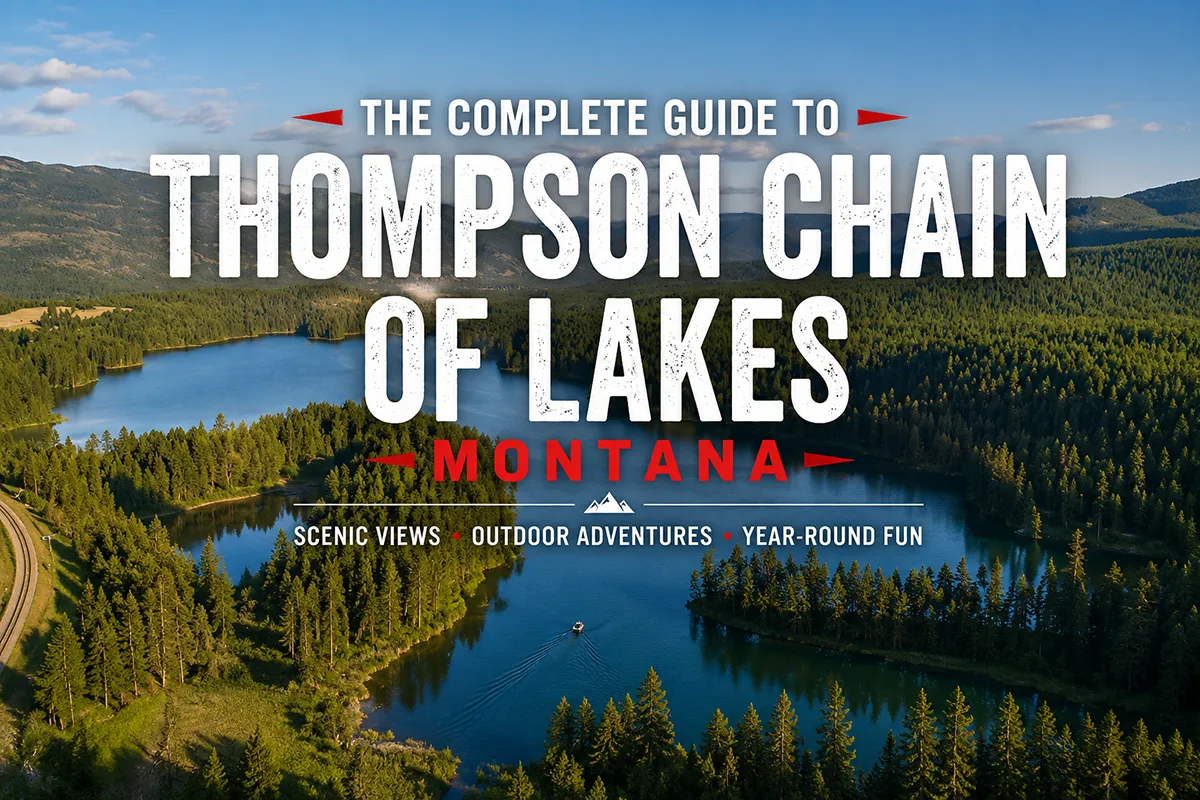
Eighteen named lakes sit within a 20-mile stretch of highway here, and most drivers speed through without realizing what’s just off the road.
- The Thompson Chain of Lakes stretches 20 miles along Highway 2 between Kalispell and Libby
- It includes 18 named lakes managed as Thompson Chain of Lakes State Park, plus several smaller unnamed ponds
- This guide covers which lakes to prioritize, camping across the chain, fishing variety, and the day-use fees involved
- Despite the name, most of these lakes aren’t directly connected by water — they’re clustered rather than linked
Liked this article?
Add Roaming Montana as a preferred source so you see more of our articles and guides on Google.
Not Really a “Chain” in the Literal Sense
The name suggests linked, connected water, but that’s not quite accurate here. Most of these 18 lakes sit near each other without direct water connections.
The chain technically starts where the Pleasant Valley River flows into Loon Lake at the westernmost point.
From there, it continues east through Horseshoe Lake, Crystal Lake, Upper Thompson Lake, Middle Thompson Lake, Lower Thompson Lake, and McGregor Lake with its satellite Little McGregor Lake.
Intermittent streams connect some of these lakes, but most aren’t navigable by boat between one and the next. I think of this less as a single chain and more as a dense cluster worth exploring lake by lake, patiently, over more than one visit.
All 18 Lakes, Roughly West to East
Beyond the seven larger named lakes above, the chain includes several smaller waters: Lavon Lake, Little Loon, Banana Lake, Bootjack Lake, Cad Lake, Cibid Lake, Lily Pad Lake, Myron Lake, Rainbow Lake, and Topless Lake.
Most of these smaller lakes see day-use only, with limited or no camping infrastructure. I’d treat them as bonus stops on a bigger chain exploration rather than standalone destinations worth a special trip.
Which Lakes to Prioritize
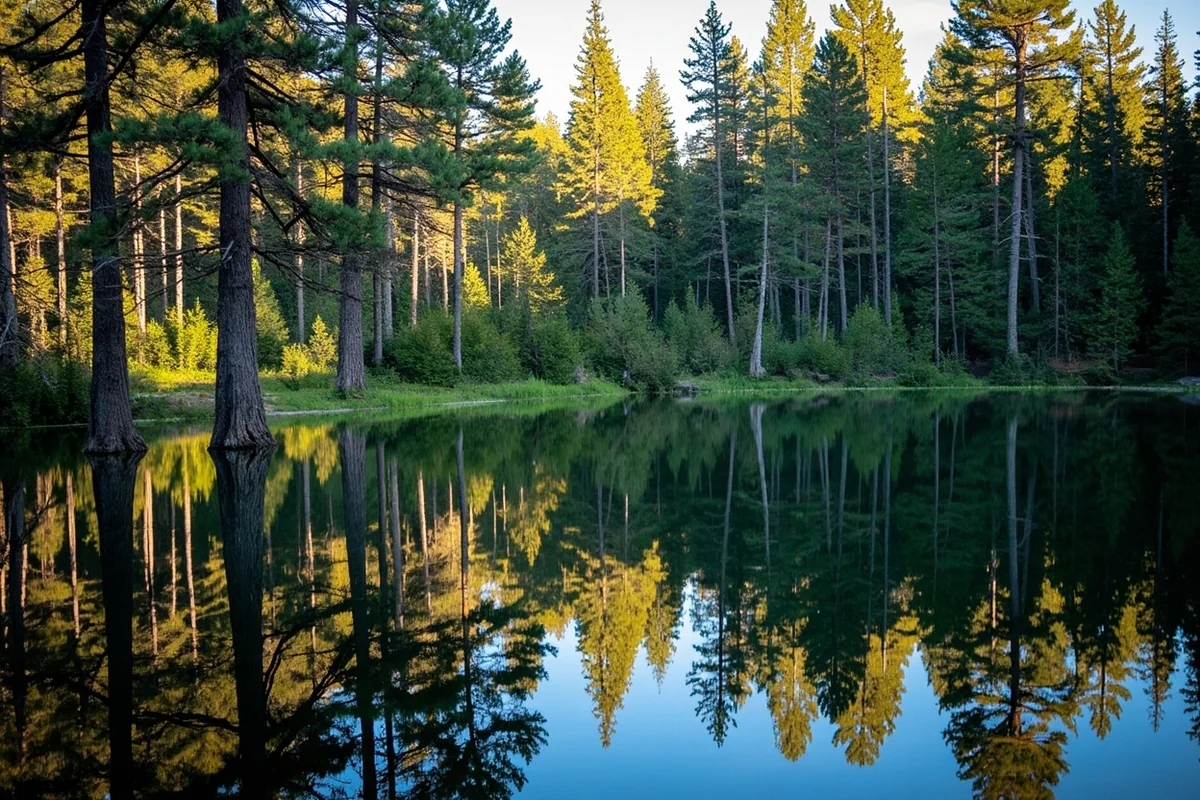
If you only have a day or two, I’d focus on McGregor Lake for its exceptional water clarity and depth, Horseshoe Lake for motorized boating and swimming, and Loon Lake for solitude at the chain’s western entry point.
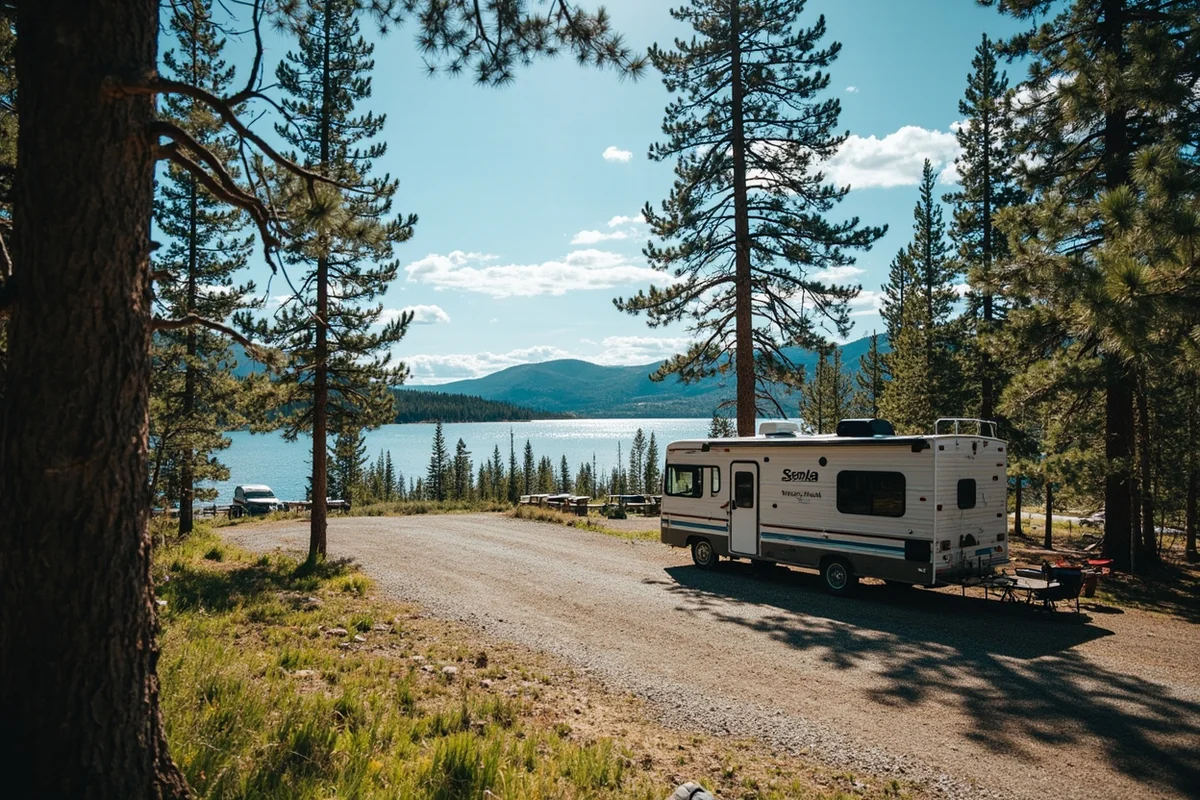
Crystal Lake and the three Thompson Lakes (Upper, Middle, and Lower) round out a solid multi-day exploration if you have more time. Logan State Park, on Middle Thompson Lake specifically, offers the chain’s most developed camping for larger RVs.
Fishing Variety Across the Chain
This might be the single best stretch of highway in Montana for fishing variety. Across the full chain, you’ll find rainbow, brook, and cutthroat trout, largemouth bass, yellow perch, kokanee salmon, black crappie, and northern pike.
Specific lakes specialize in different combinations. Loon Lake holds brook trout, smallmouth bass, mountain whitefish, pike, and walleye. Horseshoe Lake leans toward pumpkinseed, largemouth bass, and whitefish alongside several other species.
I’d research the specific lake you’re targeting before you go, since species and size distributions genuinely vary lake to lake within this compact area.
Boat Ramps and Access Points
Concrete boat ramps exist at Little McGregor Lake, Boisverts on McGregor Lake, the Peninsula on Lower Thompson Lake, Upper Thompson Lake, Horseshoe Lake, and Loon Lake. Several other lakes use dirt ramps or hand-carry access only.
Roads throughout the chain run primitive, and I wouldn’t recommend attempting them with a motorhome or large trailer, with the exception of Logan State Park’s developed sites on Middle Thompson Lake.
Camping Across the Chain
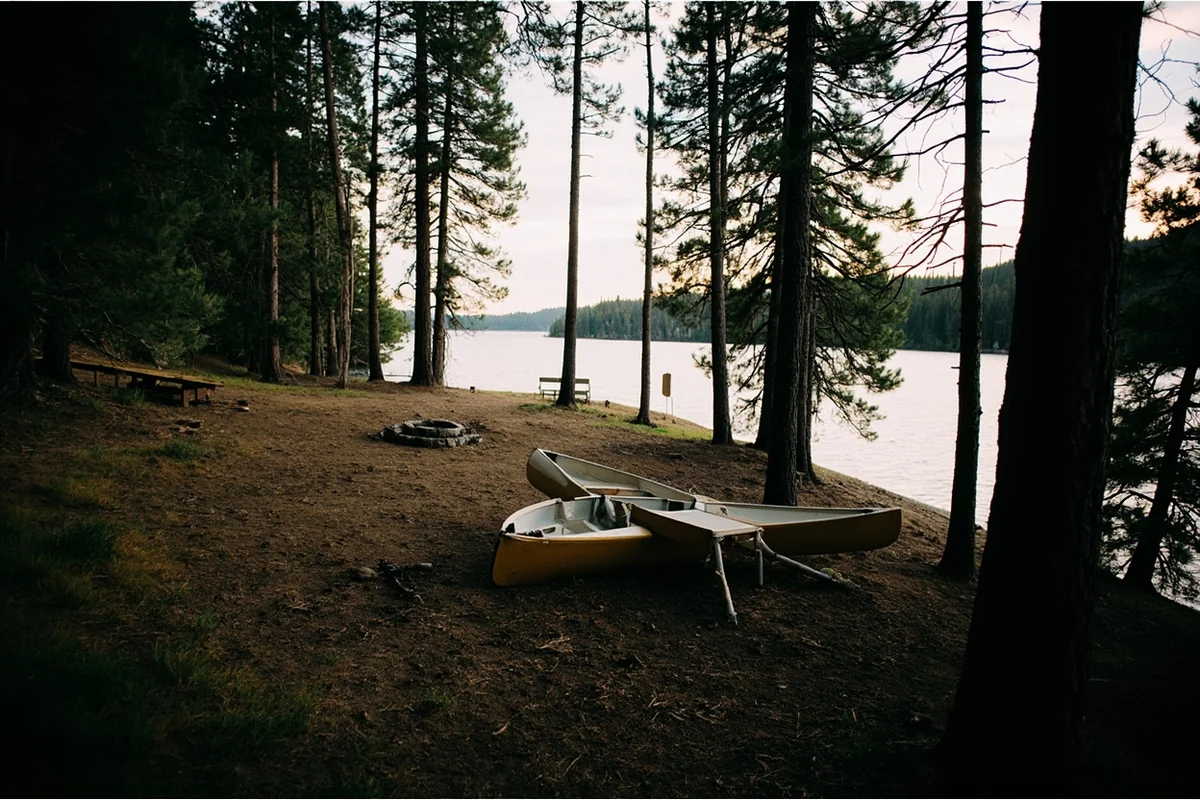
The park system includes 83 standard campsites and 8 group sites across the chain, all requiring a fee for overnight stays. Sites run rustic — don’t expect drinking water at most locations.
A day-use entrance fee applies for non-residents, typically around $8 with a vehicle or $4 for walk-in or bike-in visitors [verify current fee amounts]. The maximum camping stay across most sites runs 14 consecutive days.
I’d pack in all the water you’ll need regardless of which specific lake you choose to camp at.
Resorts and Lodges Within the Chain
Not every visitor wants to camp, and the chain does offer some alternatives. McGregor Lake has resorts and a lodge geared toward anglers, with relevant fishing supplies typically stocked on-site.
Crystal Lake includes a few private cottages, and sections of Upper and Middle Thompson Lake offer similar options. I’d book well ahead for peak summer weekends, since inventory across this rural stretch is genuinely limited.
Wildlife Viewing
Beyond fishing, Thompson Chain of Lakes State Park offers some of the best wildlife viewing opportunities in northwest Montana. The mix of water, forest, and relative remoteness supports healthy populations of deer, moose, black bears, and a wide range of bird species.
I’ve had some of my best casual wildlife sightings in this state simply driving Highway 2 slowly through this stretch rather than stopping at any single lake.
Winter at the Chain
Ice fishing draws a dedicated crowd across the Thompson Chain once the lakes freeze. The annual Ice Fishing Derby, centered around Horseshoe Lake, raises funds for the Fisher River Volunteer Fire Department and brings hundreds of participants together each year.
I’d treat winter access as more limited than summer, given the primitive road conditions throughout the area, and check current conditions before planning a cold-weather visit [verify current winter road conditions].
Getting to the Thompson Chain of Lakes
Highway 2 runs directly through the chain, making it one of the most accessible clusters of lakes in this guide from a pure driving standpoint.
From Kalispell, head west; from Libby, head east — either direction puts you into the chain within a reasonable drive.
I’d budget at least a half day even for a quick sampling of two or three lakes, given how much there genuinely is to see along this stretch.
A Brief History of the Chain
This corridor’s lakes owe their concentration to the same glacial activity that shaped most of northwest Montana roughly 12,000 to 14,000 years ago. The Cordilleran Ice Sheet carved multiple basins close together here, creating this unusually dense cluster.
Highway 2 itself followed established travel routes through this valley for decades before the state park designation formalized recreation management across the chain.
I think that history explains why the lakes feel so naturally woven into the highway experience rather than requiring a special detour to reach.
The State Park Designation
Thompson Chain of Lakes State Park manages the shared recreational infrastructure across all 18 named lakes, which is a genuinely unusual approach compared to most state parks built around a single feature.
This shared management explains why fee structures, camping rules, and stay limits stay consistent across such a geographically spread-out area.
I’d keep this in mind when planning — a single day-use fee or camping arrangement generally covers your access across the broader park system, not just one specific lake.
Choosing Your Base Camp
If you’re spending multiple days exploring the chain, picking the right base campground matters more than it might seem.
Logan State Park on Middle Thompson Lake offers the most developed infrastructure and works well if you’re bringing a larger RV or want a more comfortable home base.
For a more rustic experience closer to the chain’s quieter western end, camping directly at Loon Lake or Horseshoe Lake puts you closer to those specific lakes’ best fishing and paddling, at the cost of fewer amenities.
I’ve based trips out of both styles of camp, and I’d recommend Logan State Park for first-time visitors and the more rustic options for anyone who’s already gotten a feel for the area.
A Multi-Day Itinerary Through the Chain
If I were planning three days through this corridor from scratch, I’d structure it roughly like this. Day one, arrive from Kalispell and settle at McGregor Lake for the afternoon, taking advantage of the exceptional water clarity before evening.
Day two, explore Horseshoe Lake in the morning for active water sports, then drive the short distance to quieter Crystal Lake or one of the smaller ponds for a calmer afternoon.
Day three, push west to Loon Lake for a final morning of solitude before continuing on toward Libby or back east toward Kalispell.
This kind of structured approach helps avoid the common mistake of trying to see everything in a single rushed day, which I’ve done before and genuinely regretted.
Why This Corridor Doesn’t Get More Attention
I’ve thought about why the Thompson Chain of Lakes stays so far under the radar compared to Flathead Lake or Glacier National Park’s famous water. Part of it is simple geography — Highway 2 through this stretch isn’t most travelers’ primary route between major destinations.
Part of it is also the primitive infrastructure. Lakes without drinking water, developed marinas, or lakeside restaurants don’t photograph as well for typical travel marketing, even when the fishing and paddling genuinely rival more famous destinations.
I think that’s exactly the opportunity for travelers willing to pack in their own water and embrace a more self-sufficient style of lake trip.
Personal Tips / What I Wish I Knew
Don’t try to see all 18 lakes in one trip. I’ve made that mistake before, and it turns a relaxing lake day into a rushed checklist exercise that leaves you remembering almost nothing specific about any single stop.
Bring your own drinking water regardless of which lake you visit. Almost none of the campsites here guarantee potable water, and I’ve learned not to assume otherwise even at the more developed sites within the park system.
Research your target lake’s specific fish species ahead of time. The variety here is a genuine strength, but only if you know what you’re actually fishing for, since tackle and technique needs shift noticeably from one lake to the next within the same short stretch of highway.
Consider Logan State Park if you’re bringing a bigger RV. It’s the one developed exception to the primitive road conditions found elsewhere in the chain.
Practical Info: Thompson Chain of Lakes
| Total lakes | 18 named lakes plus several smaller ponds |
| Location | Along Highway 2, 20 miles between Kalispell and Libby |
| Day-use fee | About $8/vehicle, $4 walk/bike-in [verify current fees] |
| Camping | 83 standard sites, 8 group sites; mostly no drinking water |
| Boat ramps | Concrete ramps at 6 of the larger lakes |
| Best for | Fishing variety, multi-day lake-hopping trips |
Frequently Asked Questions
Are the lakes in the Thompson Chain actually connected?
Not directly by navigable water in most cases — they’re clustered along the same corridor with some intermittent stream connections rather than forming a true linked chain.
How many lakes are in the Thompson Chain of Lakes?
18 named lakes, managed as Thompson Chain of Lakes State Park, plus several smaller unnamed ponds in the surrounding area.
Is there an entrance fee for the Thompson Chain of Lakes?
Yes, a day-use fee applies for non-residents, typically around $8 per vehicle or $4 for walk-in or bike-in visitors.
Which lake in the chain is best for RV camping?
Logan State Park on Middle Thompson Lake offers the most developed sites suitable for larger RVs; most other campgrounds have primitive access roads.
What fish can you catch in the Thompson Chain of Lakes?
A wide variety across the chain, including rainbow, brook, and cutthroat trout, largemouth bass, yellow perch, kokanee salmon, black crappie, and northern pike.
Final Thoughts
The Thompson Chain of Lakes rewards travelers willing to slow down on a stretch of highway most people treat as a means to an end. Eighteen lakes in 20 miles is a genuinely unusual concentration, even by Montana standards.
I’ve now spent enough time exploring this corridor across different seasons that I consider it one of the most underrated stretches of highway in the entire state. Every visit turns up a lake or a pond I hadn’t properly explored before, and that discovery factor alone keeps me coming back.
For deeper dives into specific lakes within the chain, see my guides to McGregor Lake, Horseshoe Lake, and Loon Lake, or check out the complete guide to Montana’s best lakes for the rest of the region.
If you’re exploring nearby Little Bitterroot Lake as well, all four make for a genuinely full northwest Montana lake trip. For gateway towns on either end, see my guides to Kalispell and Libby.