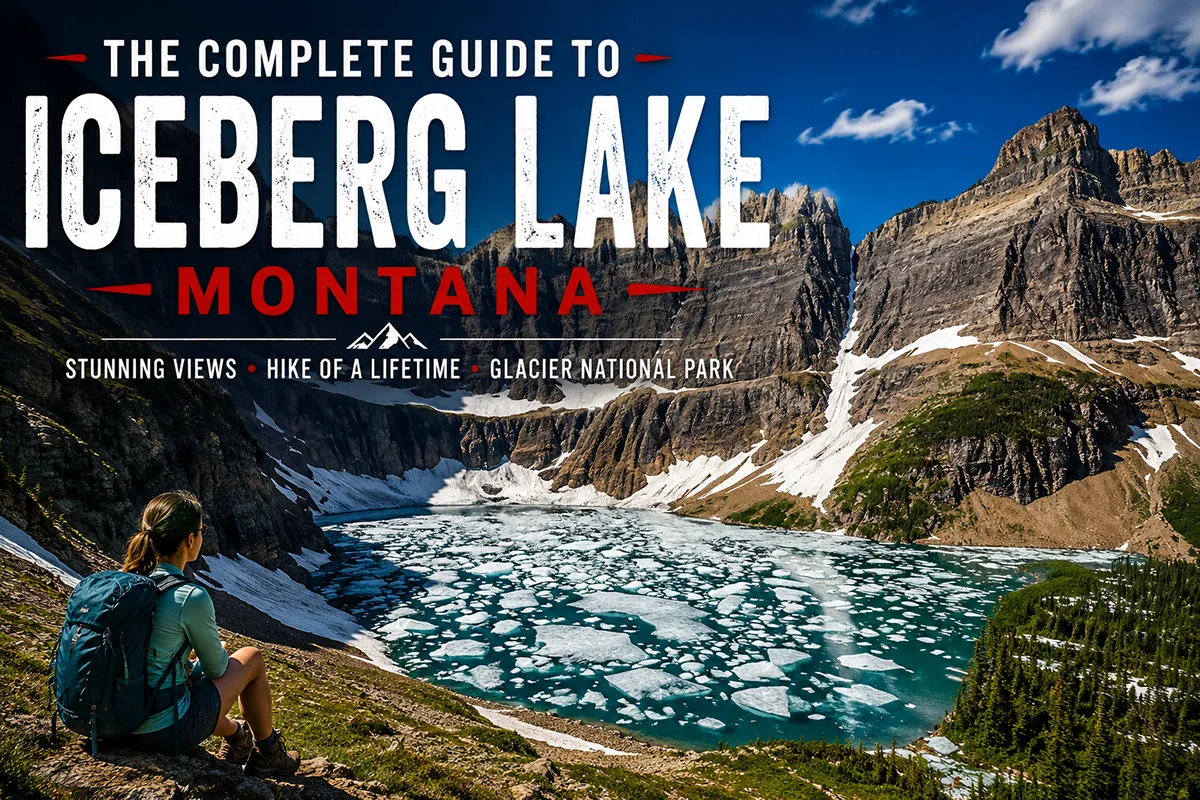
I jumped into this lake in early August with three actual icebergs floating close enough to touch. Within about four seconds I understood exactly why they hadn’t melted yet.
- Iceberg Lake sits in Glacier National Park’s Many Glacier region, reached by a 9.6 to 10-mile round-trip hike from behind the Swiftcurrent Motor Inn
- The lake keeps ice floating on its surface well into summer because it sits in near-permanent shadow beneath Mount Wilbur and Iceberg Peak, both towering roughly 3,000 feet overhead
- This guide covers the real trail conditions, the surprisingly common cold-plunge tradition, why this specific trail corridor sees so many grizzly bears, and the parking situation that catches people off guard
- Best accessed late May through mid-September; day-hike only, no backcountry camping permitted at the lake itself
Liked this article?
Add Roaming Montana as a preferred source so you see more of our articles and guides on Google.
Why This Lake Has Ice in the Middle of Summer
Every other lake in this guide eventually warms up at least somewhat by August. Iceberg Lake genuinely doesn’t, and the reason comes down entirely to geometry rather than elevation alone.
Mount Wilbur rises to the south and Iceberg Peak looms to the west, both climbing roughly 3,000 feet almost straight up from the water. That combination of height and proximity means direct sunlight barely reaches the lake’s surface for much of the day, even in the height of summer.
Less sun means less melting. Snow and ice that accumulate on the surrounding cliff walls through winter slide down into the lake and simply don’t fully disappear before the next winter’s snow arrives.
I’ve hiked here in early July and found the lake still substantially frozen over; by early August on a different trip, I found open water with actual iceberg chunks still drifting across it.
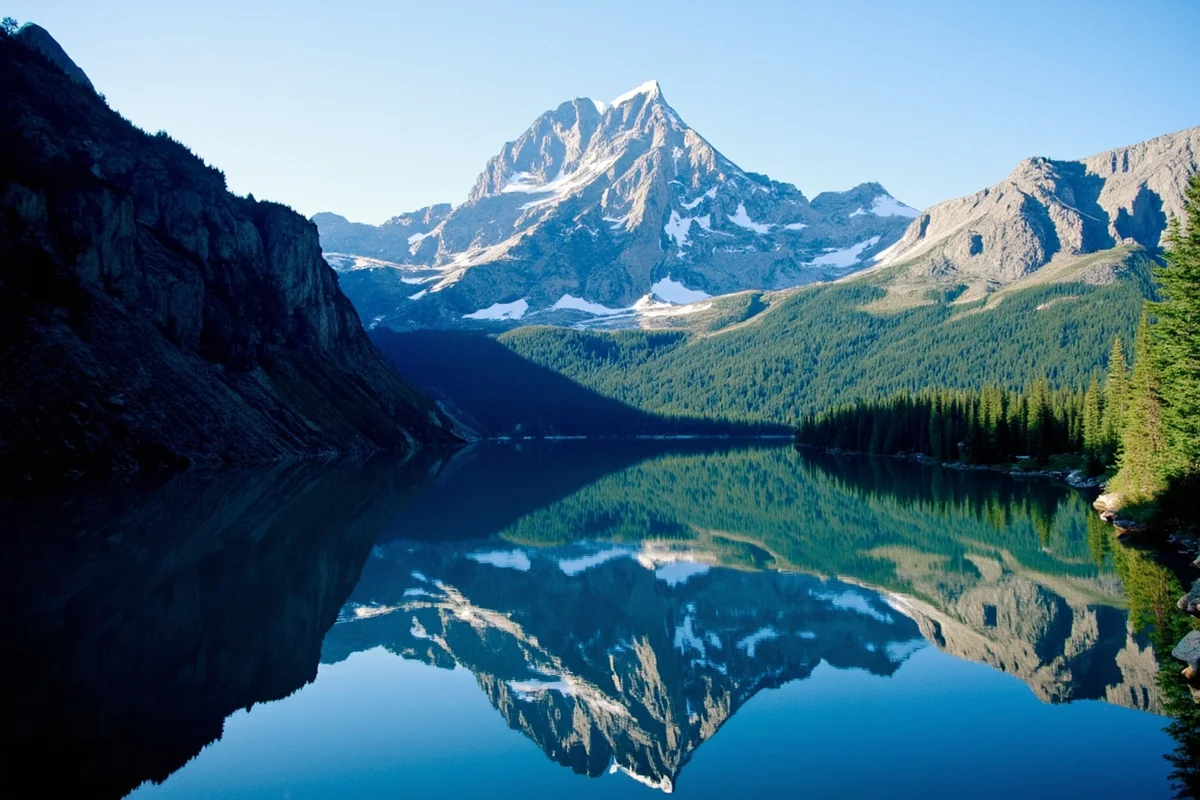
Getting to the Trailhead
From the St. Mary entrance on the park’s east side, take US-89 north to Babb, then turn left onto Many Glacier Road. Follow this road to its end at the Swiftcurrent Motor Inn complex, where the Iceberg-Ptarmigan Trailhead departs from the north end of the parking area.
If you’re coming from the west side of the park, you can either drive around via East Glacier and Babb, or cross Going-to-the-Sun Road over Logan Pass, which is shorter in miles but slower given the road’s winding, narrow character. I’d budget real time either way, since Many Glacier sits in a genuinely remote corner of the park.
During peak season, entering the park between roughly 6 a.m. and 4 p.m. may require a separate vehicle reservation in addition to your park entrance pass [verify current vehicle reservation requirements and fees].
I’ve been caught off guard by this exact requirement before, so I’d check current rules well ahead of your trip rather than assuming your park pass alone covers everything.
The Parking Problem
I want to be direct about this, since it trips up more visitors than almost anything else on this hike. The trailhead lot holds somewhere around 12 to 15 vehicles, which is a genuinely small number for one of the most popular hikes in the entire park.
Arrive after mid-morning in peak season and that lot will almost certainly be full. When that happens, you’ll park in front of the Swiftcurrent Motor Inn instead, adding roughly two-tenths of a mile of walking each way to reach the actual trailhead.
I’ve arrived at 7:15 a.m. on a July morning and still found the lot nearly empty. I’ve also arrived at 10 a.m. on a different visit and circled for fifteen minutes before giving up and parking at the inn. The gap between those two experiences is entirely about what time you show up.
The Hike Itself, Section by Section
The trail shares its first roughly 2.7 miles with the Ptarmigan Tunnel Trail, passing below Altyn Peak and Mount Wilbur with occasional glimpses of Ptarmigan Falls off to the side. Right from the trailhead, you’ll climb about 250 feet before the trail settles into a long, gentle traverse along the mountainside.
After the trail splits off toward Iceberg Lake specifically, you’ll pass beneath the Ptarmigan Wall, an arête — a thin, glacier-carved ridge separating the Many Glacier valley from the Belly River valley — that towers more than 1,500 feet overhead.
Around 4.5 miles in, a footbridge crosses Iceberg Creek, and the trail opens into a genuinely beautiful alpine meadow thick with wildflowers, beargrass especially, by mid-to-late July.
From there, a short climb of about two-tenths of a mile brings you to a small rise, and then it’s a quick descent down to the lake itself.
Total round-trip distance runs somewhere between 9.6 and 10 miles depending on the source and exactly where you park, with roughly 1,200 to 1,450 feet of total elevation gain. I’d call it moderate — long enough to respect, but without any single brutal climb that makes it feel technical.
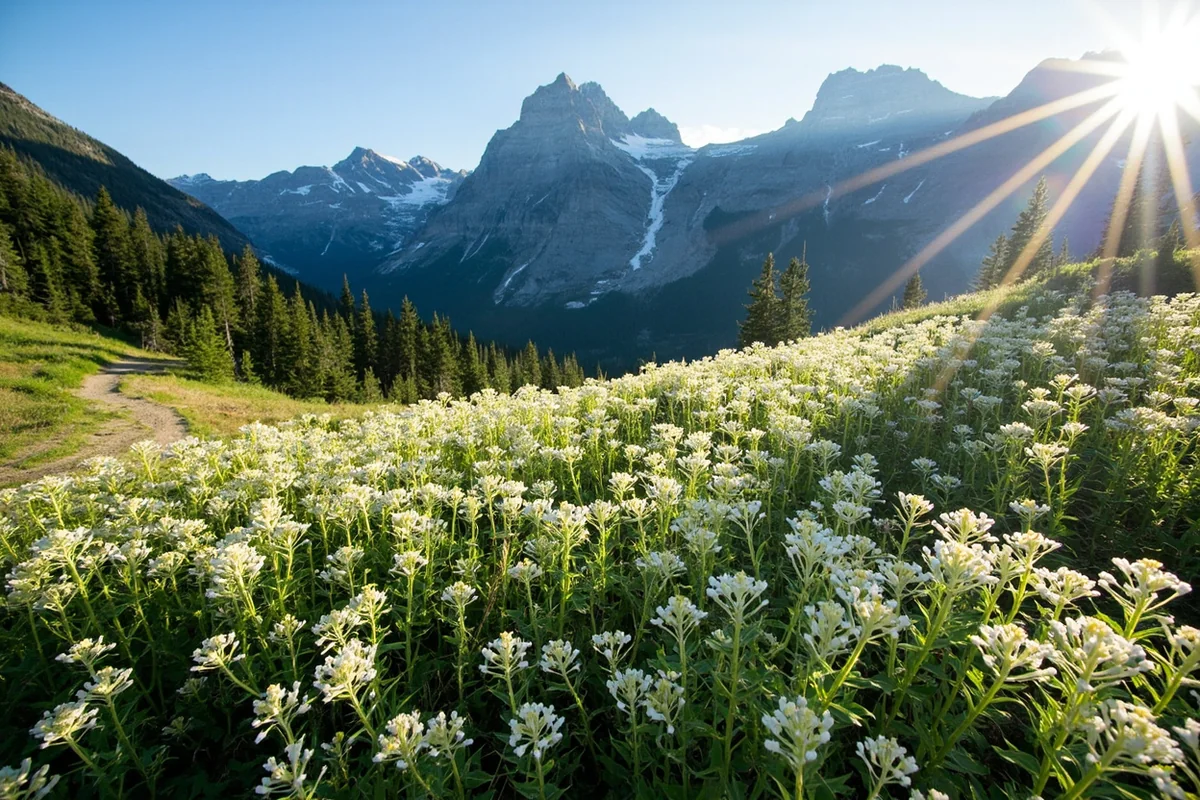
Grizzly Country, Genuinely
I don’t say this lightly: the first mile or so past the Ptarmigan connector junction is some of the most reliable grizzly bear habitat on any maintained trail in the park.
Bears use the dense brush along this stretch regularly, and trail closures due to bear activity happen often enough here that checking current status before you leave is a real requirement, not just boilerplate advice.
I’ve hiked this trail more than once and spotted a grizzly along the hillside on nearly every visit, always at a safe distance.
On one trip, a cow moose and her calf were feeding in the valley below the trail on the way in, and the same pair was walking up the trail itself on our way back down, forcing our whole group to scramble uphill off the path to let them pass.
Carry bear spray where you can reach it instantly, make noise through the brushier sections, and hike in a group if at all possible.
I’d also genuinely recommend checking with a ranger at the Many Glacier Ranger Station about current bear activity before setting out, since closures on this specific trail are common enough to be a real planning factor.
The Cold Plunge Tradition
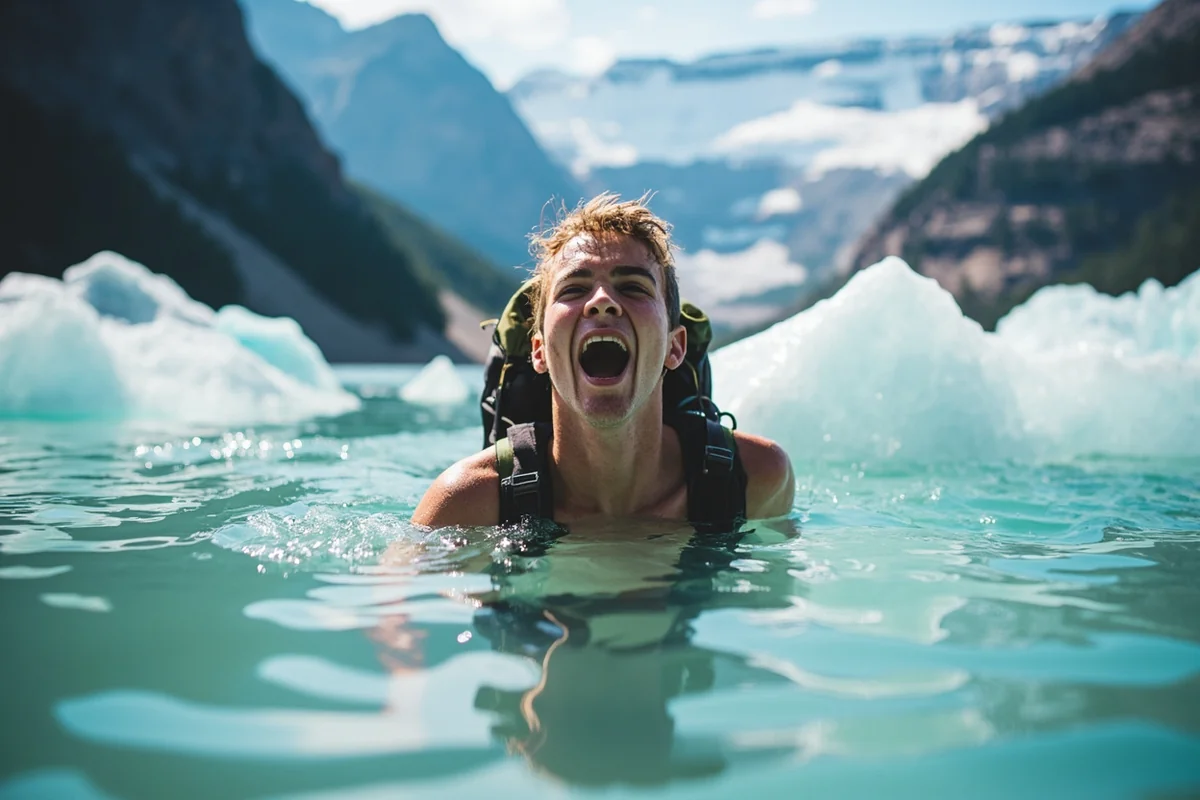
Here’s something I didn’t expect the first time I hiked this trail: jumping into Iceberg Lake, actual icebergs and all, is a genuine, semi-common tradition among hikers who make it this far. I’ve watched people strip down to swimsuits at the shoreline and wade in specifically to say they swam next to floating ice in July.
I did this myself on one visit, and “cold” doesn’t fully capture it. It’s the kind of cold that takes your breath away for a genuine few seconds before your body adjusts even slightly.
I’d bring a towel and a full change of dry clothes if you’re planning to try it, since the surrounding air, while sunnier and warmer than the water, won’t dry you off quickly on its own.
Most hikers I’ve seen do this stick to a quick dip rather than an actual swim, and I’d recommend the same. This isn’t a lake to linger in.
Finding Quiet at a Genuinely Popular Lake
I won’t pretend this is an undiscovered destination. Iceberg Lake ranks among the most popular day hikes in the entire park, and the shoreline near the trail’s end sees real crowds by midday in peak season.
What I’ve found works: walk a short distance around the lake’s edge in either direction rather than stopping at the first obvious spot.
Even on a busy August afternoon, I’ve found genuinely quiet stretches of shoreline just a few minutes’ walk from where most people stop, simply because most hikers don’t bother going any further once they’ve reached the lake at all.
Fishing Iceberg Lake
Fishing is technically possible here with a free Glacier National Park fishing permit, though I wouldn’t call this a serious fishing destination.
The lake’s cold temperature and limited food base keep any fish population modest at best, and I’ve never seen anyone seriously fishing here on any of my visits — the destination’s appeal is almost entirely scenic and experiential rather than angling-focused.
No Camping at the Lake
I’d set this expectation clearly: backcountry camping directly at Iceberg Lake isn’t permitted. This is strictly a day-hike destination, which actually works in the lake’s favor — it keeps the immediate shoreline from becoming a backcountry campsite free-for-all, preserving it as a day-use spot for the volume of visitors it already sees.
If you want to camp in the general area, you’ll need to look at designated backcountry sites elsewhere in the Many Glacier region, requiring a separate permit through the park’s backcountry office.
Guided Hikes: A Genuine Option
If navigating bear safety and trail logistics on your own feels like a lot, guided hikes to Iceberg Lake are available through outfitters operating in the Many Glacier area.
I’d consider this seriously for a first-time visit, especially if you’re traveling without a large group, since guides bring both route knowledge and an extra layer of bear awareness that solo or small-group hikers don’t have.
Best Time of Year to Visit
Late May through mid-September covers the accessible season, though I’d specifically flag early-to-mid July as the sweet spot if seeing genuine icebergs matters to your visit. By late August in a warm year, much of the visible ice has often melted out, leaving open water without the namesake feature.
Early season brings its own tradeoff: snow can still cover sections of the trail itself well into June some years, and stream crossings run higher and colder with active snowmelt.
I’d check current trail conditions specifically before an early-season visit, rather than assuming the whole route is clear just because the calendar says summer.
Personal Tips / What I Wish I Knew
Arrive before 8 a.m. if the parking lot’s size worries you. I’ve never once regretted an early start here, and I’ve regretted arriving late more than once.
Bring a towel and dry clothes if you’re even considering the cold plunge. I underestimated how much I’d want dry layers waiting for me on my first attempt.
Don’t skip checking current bear activity reports. This specific trail closes for bear activity more often than most others in the park, and I’d treat that as a real planning variable, not an afterthought — my Montana bear guide covers the fundamentals worth knowing before you go.
Book lodging near Many Glacier well in advance. The Swiftcurrent Motor Inn and Many Glacier Hotel both fill up fast in peak season — see my Glacier National Park lodging guide for the full range of options on this side of the park.
Walk a little further around the shoreline than everyone else does. The quietest, best photo spots at this lake consistently sit just beyond where most hikers stop.
Practical Info: Iceberg Lake
| Trail distance | 9.6–10 miles round trip |
| Elevation gain | Approximately 1,200–1,450 feet |
| Difficulty | Moderate |
| Lake elevation | Approximately 6,100–6,160 feet |
| Best season | Late May through mid-September; early-to-mid July for the most visible ice |
| Camping | Not permitted at the lake; day-hike only |
| Fishing permit | Free Glacier National Park fishing permit required |
Frequently Asked Questions
Why does Iceberg Lake have ice in the summer?
The lake sits in near-permanent shadow beneath Mount Wilbur and Iceberg Peak, both rising roughly 3,000 feet overhead. That limited sun exposure keeps ice and snow from fully melting between winters.
How long is the hike to Iceberg Lake?
Between 9.6 and 10 miles round trip from the trailhead behind the Swiftcurrent Motor Inn, with roughly 1,200 to 1,450 feet of total elevation gain.
Can you swim in Iceberg Lake?
Yes, and a genuine cold-plunge tradition exists among hikers who make it this far, though the water stays extremely cold even in the height of summer.
Is Iceberg Lake good for spotting bears?
The trail corridor, especially the first mile past the Ptarmigan Trail junction, is prime grizzly habitat, and trail closures for bear activity are common enough that checking current status matters.
Can you camp at Iceberg Lake?
No, camping isn’t permitted directly at the lake — this is a day-hike destination only, with separate backcountry sites available elsewhere in the Many Glacier region.
Final Thoughts
Iceberg Lake earns its popularity honestly. Few hikes in the country deliver a payoff this specific and this strange — actual floating ice, in July, at the bottom of a 2,000-foot rock amphitheater.
I’ve done this hike several times now, and the moment of cresting that final small rise and seeing the lake open up below never gets old.
For more of Many Glacier’s connected lakes, see my guides to Swiftcurrent Lake and Fishercap Lake, both passed on the way to this trailhead, or Grinnell Lake for another Many Glacier hike worth comparing.
For a broader look at the park’s best trails, my Glacier National Park hiking guide rounds out what else is worth your time. Check out the complete guide to Montana’s best lakes for the rest of the region.