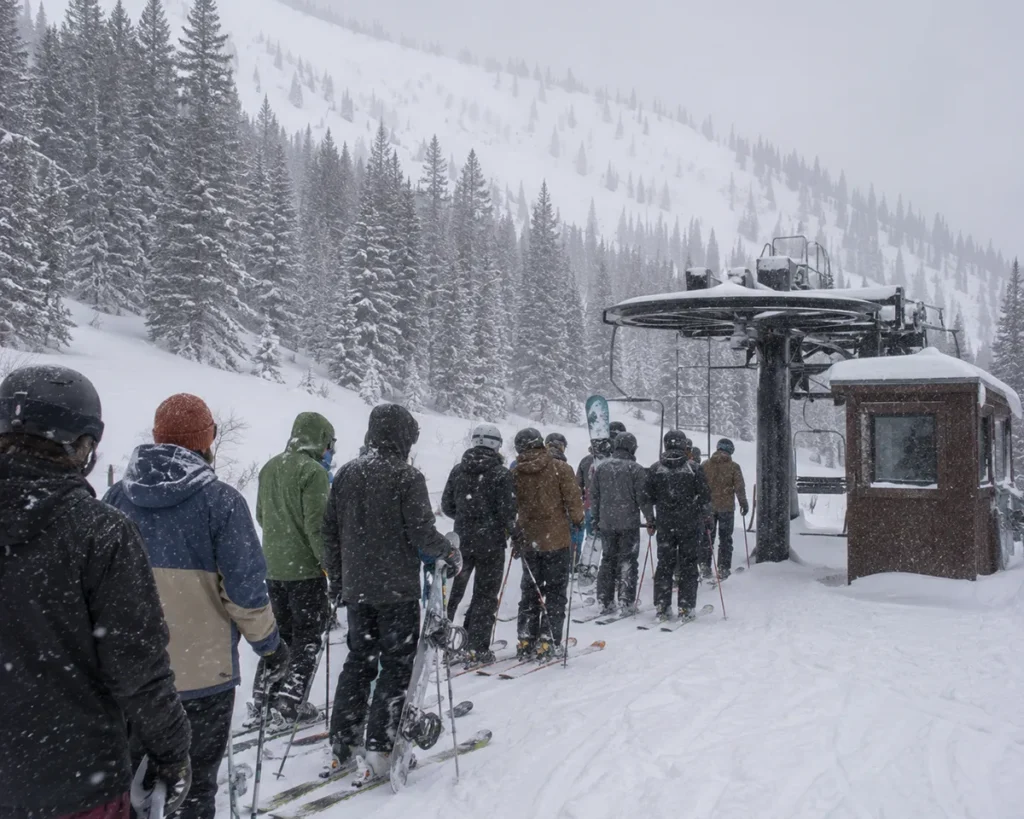
I’ve watched grown men cry on the Schlasman’s lift line. It was an exceptional powder day, the wait was 45 minutes long, and the guy ahead of me in line looked up at the Ridge and just teared up a little. I asked if he was okay. He said, “I’ve been waiting twenty years to ski here on a day like this.”
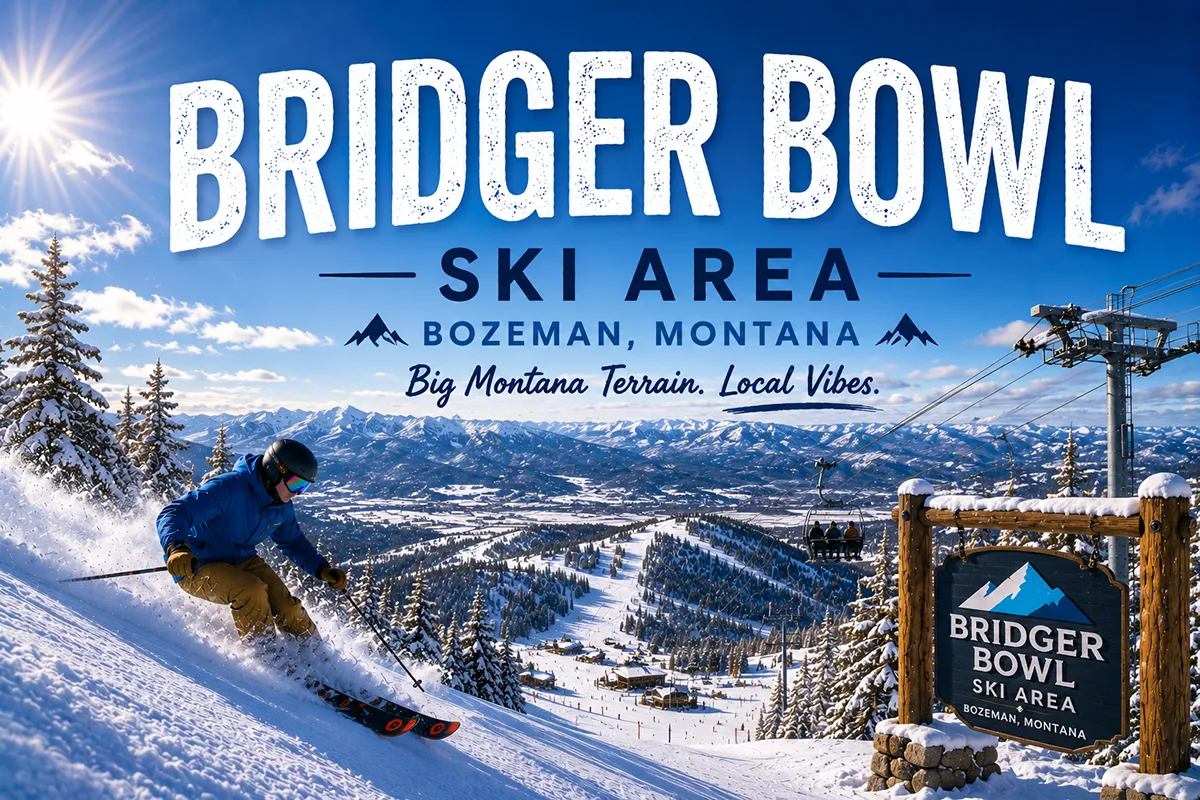
- Bridger Bowl is a locally owned nonprofit ski area 16 miles northeast of Bozeman in the Bridger Range
- 2,000 skiable acres, 2,600-foot lift-served vertical, 75+ trails — plus 311 acres of hike-to Ridge terrain that requires an avalanche transceiver
- Roughly 300+ inches of snow per year, with a specific microclimate that produces the famously dry “cold smoke” powder
- 8 chairlifts, including the avalanche-transceiver-required Schlasman’s lift to the upper mountain
- Day tickets typically run $30–$100 depending on the date [verify current price] — among the most affordable destination-quality skiing in America
- Fully independent — Bridger left the Powder Alliance after 2020–21 and has chosen not to join Ikon, Epic, or Indy
- The right trip if you want a serious local mountain with expert terrain and real ski culture; the wrong trip if you want lodging at the base or destination-resort amenities
Liked this article?
Add Roaming Montana as a preferred source so you see more of our articles and guides on Google.
Why Bridger Bowl Is the Locals’ Mountain
If you ask a serious Bozeman skier where they ski, the answer is Bridger Bowl. Not Big Sky — that’s the destination resort for visitors.
Bridger is the mountain that Bozeman residents drive to four mornings a week, that Montana State University students learn to ski on, that ski patrol from other resorts come to ski on their days off, and that quietly produces some of the best skiing in North America.
Bridger has been a nonprofit since 1955. Locally owned, locally operated, with profits returned to the mountain rather than to shareholders. Lift tickets are some of the cheapest you’ll find at any ski area of this caliber.
The terrain is genuine — 2,000 lift-served acres, a 2,600-foot vertical drop, and 311 additional acres of legitimately serious expert terrain accessed by hiking the Ridge.
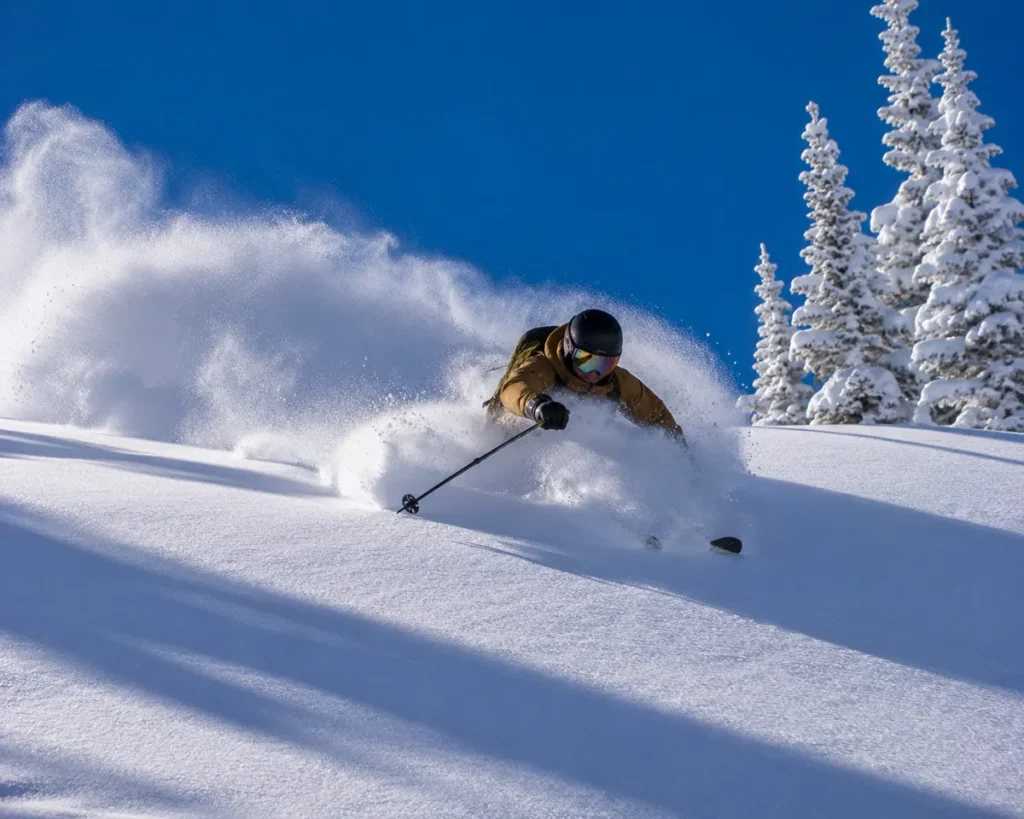
And the snow. The “cold smoke” powder at Bridger isn’t marketing copy. The east-facing slopes of the Bridger Range catch a specific kind of light, dry continental snow that locals will openly tell you is different from snow at other resorts. They’re not wrong.
This is part of our complete guide to Montana ski resorts — and if you’re going to be in Bozeman, this is the mountain you need to understand.
Where Bridger Bowl Actually Is
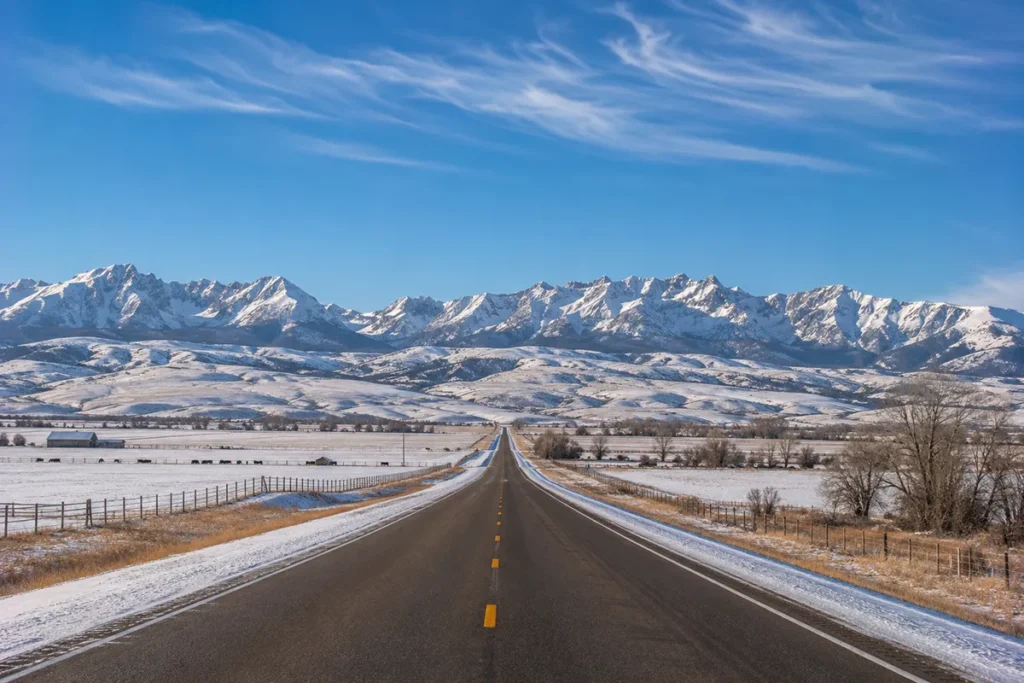
Bridger Bowl sits in the Bridger Range in Gallatin County, on the east-facing slopes of the range that runs north from Bozeman.
The location matters: Bridger catches storms from a different direction than Big Sky Resort does (Big Sky is to the south, in the Madison Range), and the two mountains often have very different conditions on the same day.
Getting there:
- From Bozeman: 16 miles northeast via Highway 86 (about 20–30 minutes on dry roads)
- From Bozeman Yellowstone International Airport (BZN): about 25 miles total, roughly 35–45 minutes
- From Big Sky: about 90 minutes
- From Helena: about 2 hours west
Bozeman Yellowstone International (BZN) is the natural airport for any Bridger trip — and Bridger is one of the rare destination-quality ski areas you can reach from a major airport in under 45 minutes.
The drive from Bozeman up Bridger Canyon Road (Highway 86) is one of the easiest ski access roads in Montana — paved, gently graded, no switchbacks. It still gets snowy and icy in storms, so snow tires are essential, but the road itself isn’t intimidating compared to mountain access roads at other resorts.
Free weekend bus service runs from the Gallatin County Fairgrounds in Bozeman to Bridger Bowl during the ski season — a strong option for visitors who don’t want to drive in winter conditions or who are staying downtown without a car.
For more on the gateway city, see my guide to Bozeman and things to do in Bozeman.
The Terrain: How Bridger Actually Skis
Bridger’s terrain is laid out in a series of bowls and ridges along the east-facing slopes of the Bridger Range. Think of it as a long, north-south running mountain face with multiple lifts climbing up from a single base area, each accessing different terrain zones.
The Lower Mountain (Beginner and Lower Intermediate)
The Sunnyside Quad is the primary lower-mountain lift — most skiers will load it at least once a day. It accesses a mix of beginner and intermediate terrain at the south end of the mountain.
The Virginia City Triple serves dedicated beginner terrain on the lowest part of the mountain — gentle, learner-friendly, and far enough from the experts that beginners can build confidence without intimidation.
About 25% of Bridger’s terrain is rated beginner, which is more than many visitors expect for a mountain with this kind of expert reputation.
The Mid-Mountain (Intermediate)
The Pierre’s Knob Triple and the Alpine and Powder Park triples (both opened for the 2013–14 season, replacing the old fixed-grip Alpine) access miles of intermediate cruising terrain.
This is where the bulk of Bridger’s everyday skiers spend their time. Long groomers, tree-skiing zones that are accessible without being committing, and consistent terrain across the mid-mountain.
About 35% of Bridger’s terrain is rated intermediate.
The Upper Mountain (Advanced)
The Bridger Lift — Bridger Bowl’s namesake — climbs to about 8,100 feet and accesses the heart of the advanced terrain.
From the top of Bridger you can ski almost any pitch on the mountain, including the entrance to the Ridge hike. The Deer Park Triple accesses additional advanced terrain on the northern end of the mountain.
About 40% of Bridger’s terrain is rated advanced or expert.
Schlasman’s Lift (The One You Need to Know About)
This is where Bridger gets unusual. The Schlasman’s lift is a reconditioned 1976 Doppelmayr double chair — purchased from Snowbird in Utah and installed at Bridger for the 2008–09 season, where it was the first lift-served terrain expansion in 30 years.
The lift is named after P.B. Schlasman, one of four miners killed in an 1885 avalanche in the Bridger Mountains.
What makes Schlasman’s notable:
- It rises 1,700 vertical feet and accesses 311 acres of expert-only terrain
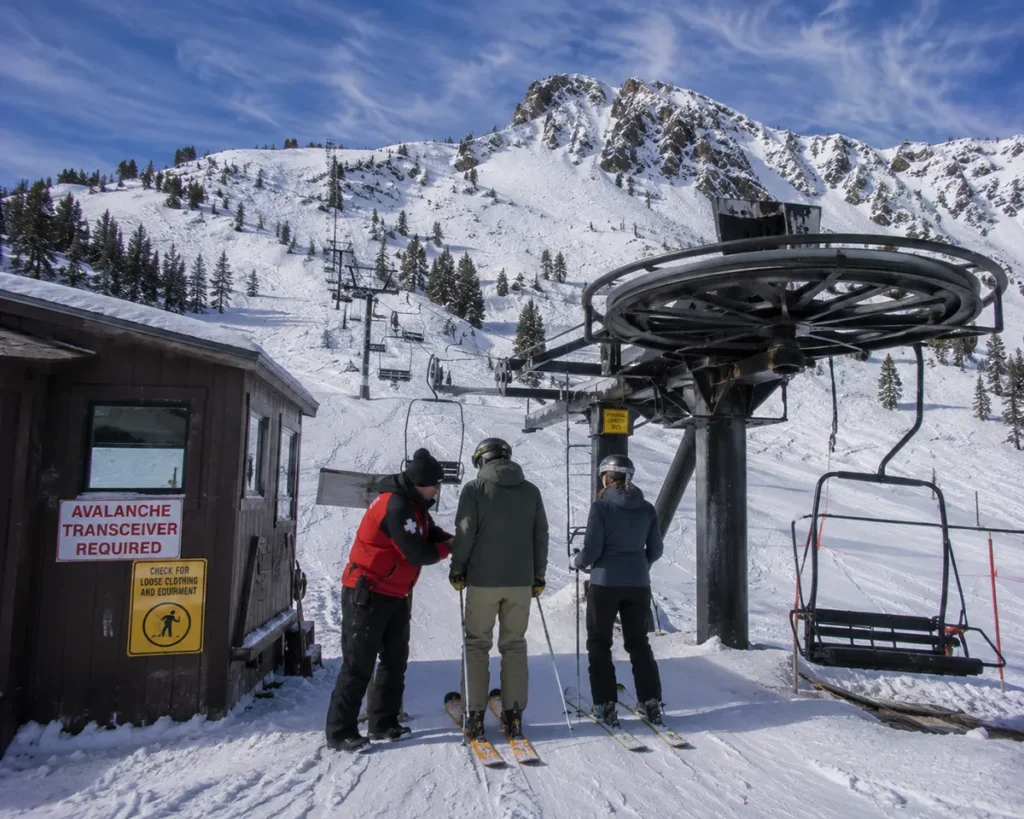
- An avalanche transceiver is required to ride this lift — Bridger ski patrol checks at the load station
- It’s strongly recommended to ski with a partner, carry a shovel and probe, and have working knowledge of avalanche rescue
- Terrain off Schlasman’s includes steep chutes, snowfields, cliff bands, and high-alpine glades
- On powder days, lift lines at Schlasman’s can run 40+ minutes — locals will openly tell you that’s worth waiting for
This is one of the most unusual lift-access policies at any North American resort, and it’s one of the things that defines Bridger’s identity. Do not ride this lift if you’re not prepared. If you don’t own an avalanche transceiver, you can rent one in Bozeman or stick to the other lifts.
The Ridge (The Reason Most People Come)
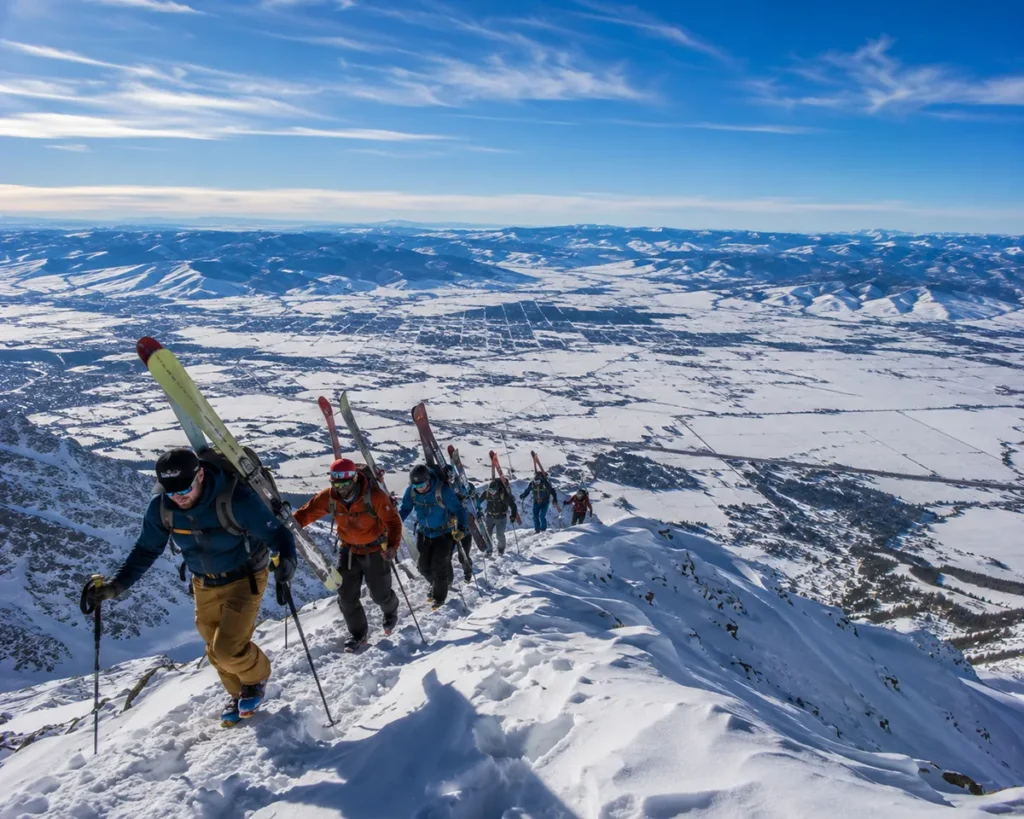
Above the top of the Schlasman’s lift and accessible by a 15–20 minute boot-pack hike from the top of the Bridger lift, the Ridge at Bridger Bowl is one of the most famous pieces of inbounds-but-extreme terrain in North America.
The Ridge runs north-south for over two miles and offers:
- Steep rock-walled chutes
- Technically challenging couloirs
- Cliff bands you can drop off (or avoid)
- Alluvial fanned snow fields
- Glades and trees on both north-facing and south-facing aspects
- An additional 400+ feet of vertical from the top of the Bridger lift to the top of the Ridge hike
The hike up the Ridge requires a vigorous 15–20 minutes of effort depending on conditioning. The terrain at the top is gated, transceiver-required, and intended for expert skiers only. There is no easy way down — once you commit to the Ridge, you ski expert terrain to get back.
Warren Miller films, Greg Stump films, and Burton Snowboards catalogs have all been shot on the Ridge over the years. There’s a reason.
The “Cold Smoke” Powder: Why Bridger’s Snow Is Different
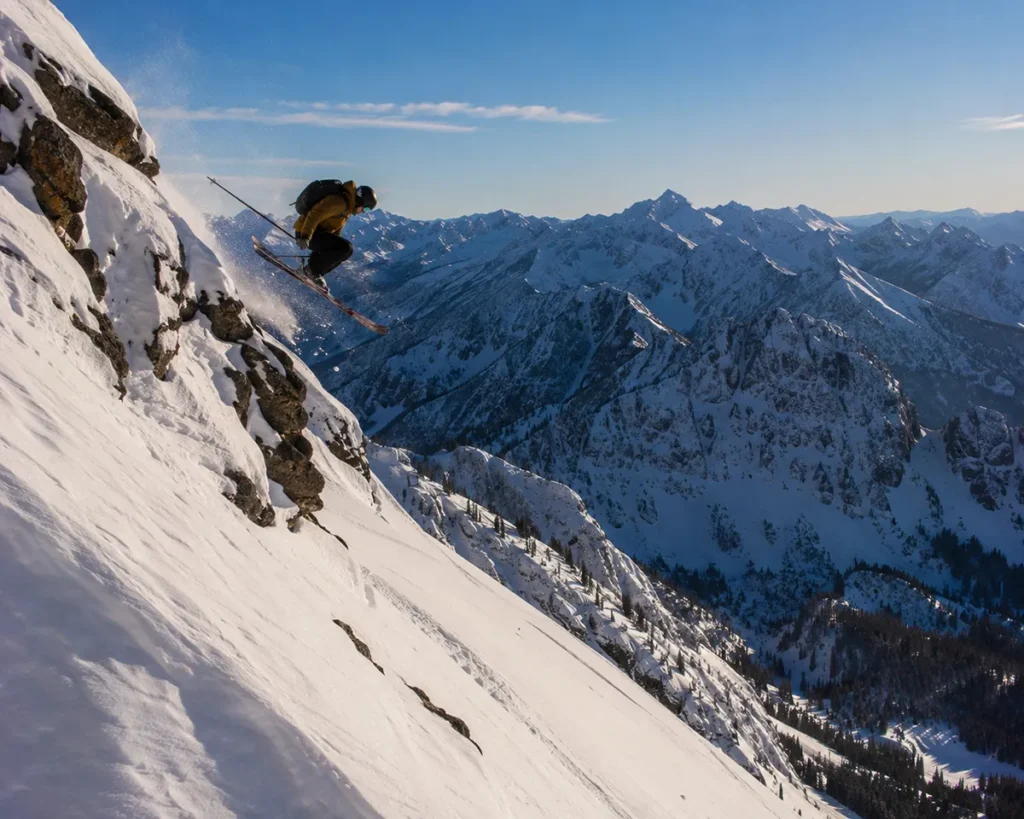
Locals at Bridger talk about “cold smoke” powder the way wine people talk about specific vintages. It’s not exaggeration.
The Bridger Range sits in a specific geographical and meteorological position that produces unusually dry, light snow.
The east-facing slopes are far enough from the Continental Divide that storms drop most of their moisture before arriving — what reaches the Bridgers is the lightest, driest fraction of the storm.
Combined with the cold temperatures of the mountain’s location (the base is at 6,100 feet, the top at 8,700 feet), this produces snow that genuinely floats more than it falls.
What that means practically:
- Powder days at Bridger ski differently than powder days at most other resorts. The snow is so light you can ski through it without significant resistance.
- Visibility on storm days can be dramatic — the lightness of the snow means it kicks up easily and clings to goggles. Bring spare goggles and low-light lenses.
- The snow doesn’t pack down as fast — what gets skied off the open runs early in the day lasts longer in the tree zones and the Ridge.
- Bluebird days after storms at Bridger are some of the best skiing experiences available in American skiing. Because the range is set off from the Divide, sunny days are common.
Annual snowfall at Bridger averages around 300+ inches — modest by Big Sky’s 400-inch standard, but the quality is the trade.
For more on the cold itself, see how cold Montana gets.
Lift Tickets, Passes, and the Independent Stance
Bridger Bowl pricing is among the best stories in modern American skiing, and it’s deliberate.
Full-day adult lift tickets at Bridger Bowl have ranged from about $30 (early/late season specials) to roughly $90–$100 (peak season) in recent years. [Verify current pricing on bridgerbowl.com.] Even at peak pricing, Bridger is dramatically cheaper than Big Sky or destination-resort pricing elsewhere in the West.
A few specifics:
- Buy online in advance for the lowest prices — Bridger uses a tiered pricing model
- Half-day tickets start at 12:30 PM for afternoon skiing
- Senior (65+) and junior (6–12) discounts available
- Children 5 and under ski free
- Active and retired US military receive a half-day rate as a discount
- Tickets and rentals load onto a reusable Bridger Bowl Card (first card free, $5 replacement fee) using RFID
The Independent Stance
Bridger Bowl was a member of the Powder Alliance through the 2020–21 season, then ended the partnership. They have also chosen not to join Ikon, Epic, or Indy.
In a 2024 statement, Bridger general manager Randy O’Connor was direct: “Our independence far outweighs the money made by joining a mega pass.”
The nonprofit structure of the mountain means there are no shareholders demanding revenue growth — Bridger is committed to “quality, affordability, and sustainability in a way that best serves our community.”
This stance is increasingly rare in American skiing. Bridger, Whitefish, and a handful of other resorts have collectively decided to stay outside the mega-pass ecosystem in order to retain control of their crowds, prices, and experience.
For visitors, this means: day tickets are sold directly through Bridger Bowl. Season passes are an extraordinary value if you live in the area or visit Bozeman for a long ski trip — but there’s no way to ski Bridger on a mega-pass you might already own.
The Bradley Meadows Master Plan
In February 2025, Bridger released an updated Master Development Plan outlining significant upgrades to handle growing visitation (the 2022–23 season set a record at over 377,000 skier visits).
The plan proposes six new lifts including expansion into the Bradley Meadows area, a new beginner area, and 70 additional acres of developed terrain.
These changes will roll out over multiple seasons. [Verify current development progress before publishing.]
What I Wish I Knew Before Skiing Bridger
A handful of things I’d tell my pre-Bridger self.
Weekday skiing is dramatically better. Bridger sees significant weekend traffic — both from Bozeman residents and Montana State University students. On a Saturday in February, lift lines at the Bridger lift and Schlasman’s can run 20–40 minutes. On a Tuesday or Wednesday, the same lifts have minimal lines. If your schedule has any flexibility, ski Bridger midweek.
The Ridge requires real preparation. Don’t just hike up because you saw a Warren Miller clip. Carry an avalanche transceiver, ski with a partner, know how to use rescue equipment, and respect the closures and bouncing safety updates from ski patrol. The Ridge has had fatalities. This isn’t theoretical risk — it’s actual avalanche terrain.
Rent an avalanche transceiver if you don’t own one. Multiple shops in Bozeman rent transceivers, shovels, and probes for the day or week. If you’re planning to ski Schlasman’s or the Ridge, this is non-negotiable.
The base lodge food is honest and well-priced. Bridger has four day lodges across the mountain. The food is genuinely good (well-made burgers, chili, breakfast items) and meaningfully cheaper than destination-resort dining. Don’t waste a meal trying to drive back to Bozeman.
Stay in Bozeman, not at the resort. There is no on-mountain lodging at Bridger Bowl beyond a small number of cabins. Bozeman is 20–30 minutes away and offers far more lodging options, dining (great pizza, breweries, fine dining), and culture than any base-area accommodation could match. See where to stay in Bozeman, Bozeman breweries, and the best pizza in Bozeman.
The cold is real and Bozeman-specific. Bridger sits at higher elevation than its base elevation suggests, and the temperatures can hit -20°F in January and February. The slow lifts and long Ridge hike mean you’ll be exposed to cold for extended periods. Bring hand warmers, a balaclava, and proper layers. See my Montana winter clothing guide.
Combine Bridger with Big Sky if you have time. The two mountains are 90 minutes apart and offer completely different experiences. A common Bozeman-area ski trip is 2–3 days at Bridger plus 1–2 days at Big Sky. Each delivers what the other doesn’t.
March is the locals’ favorite month. Deepest snowpack, longer days, better afternoon temperatures, and the legendary “cold smoke” still falling well into the spring storm cycles. See Montana in March for broader context.
Bridger Bowl Compared to the Other 17 Montana Ski Areas
Quick honest comparisons.
Vs. Big Sky Resort: Big Sky is bigger, steeper, more expensive, and has more amenities. Bridger is cheaper, more authentic, more locally-driven, and has comparable expert terrain in the Ridge and Schlasman’s zone. Most serious Bozeman skiers ski both — Bridger for everyday skiing and Big Sky for special destination days. The two mountains are 90 minutes apart.
Vs. Whitefish Mountain Resort: Whitefish has more terrain and a better destination ski town. Bridger has lighter powder, cheaper tickets, harder expert terrain, and stronger local culture. For a visitor with one Montana ski week, Whitefish is usually the better full-package choice. For someone based in Bozeman or visiting Bozeman, Bridger is the answer.
Vs. Discovery Ski Area: The closest comparison — both nonprofit-leaning, both with serious expert terrain, both with strong local culture. Discovery has more terrain variety and operates full-week. Bridger has the Ridge, the cold smoke powder, and the Bozeman ecosystem. If your trip is anchored in Bozeman, Bridger. If you’re road-tripping southwest Montana, Discovery.
Vs. Turner Mountain and Bear Paw Ski Bowl: These are smaller, more remote, more community-oriented mountains. Bridger is in a different league of size and infrastructure but shares the nonprofit ethos.
For the complete cluster, see the Montana ski resorts pillar guide.
Bridger Bowl: At-a-Glance
| Vertical Drop | 2,600 ft (lift-served); +400 ft hike-to terrain on the Ridge |
|---|---|
| Skiable Acres | 2,000 lift-served + 311 acres of Ridge terrain via Schlasman’s |
| Top Elevation | 8,700 ft (Ridge); 8,100 ft (Bridger lift top) |
| Base Elevation | 6,100 ft |
| Annual Snowfall | ~300+ inches (“cold smoke” powder) |
| Terrain Breakdown | 25% Beginner, 35% Intermediate, 40% Advanced/Expert |
| Trails | 75+ named runs |
| Longest Run | ~3 miles |
| Lifts | 8 chairs — 1 quad, 6 triples, 1 double (Schlasman’s) |
| Lift Ticket | $30–$100 range [verify current price] |
| Pass Affiliation | Independent — not on Ikon, Epic, Indy, or Powder Alliance |
| Schlasman’s / Ridge | Avalanche transceiver REQUIRED |
| Operating Season | Typically early-mid December through early April |
| Owner / Status | Locally owned nonprofit |
| Nearest City | Bozeman (16 miles) |
| Nearest Airport | Bozeman Yellowstone International (BZN), ~25 miles |
| Free Weekend Shuttle | From Gallatin County Fairgrounds in Bozeman |
Lift ticket prices, lift count, and operating dates change annually. Bridger released an updated Master Development Plan in February 2025 proposing six new lifts and Bradley Meadows expansion — verify current development progress and current published terrain stats on bridgerbowl.com.
Things to Do in Bozeman When You’re Not Skiing
Bozeman is the best non-skiing complement to a Bridger trip. A few highlights:
- Bozeman breweries — Bozeman has one of the most concentrated craft brewery scenes in the West
- The best pizza in Bozeman — a surprisingly strong category for a town this size
- Museum of the Rockies — outstanding dinosaur and natural history collection at Montana State University
- Downtown Main Street — historic, walkable, packed with restaurants and shops
- American Computer & Robotics Museum — quirky and good
- Day trip to Yellowstone — the north entrance at Gardiner is about 90 minutes away
- Hot springs — Bozeman Hot Springs, Norris Hot Springs, and Chico Hot Springs are all within day-trip range
For the complete breakdown, see things to do in Bozeman.
Final Thoughts on Bridger Bowl
Bridger Bowl is the mountain that explains, more clearly than any other Montana resort, what ski culture in the state actually is. Locally owned. Nonprofit.
Avalanche-transceiver-required terrain that respects skiers as adults capable of managing their own risk.
Lift tickets priced for the community that built the mountain, not for the wealthiest visitors who can be extracted from. A deliberate refusal to join the mega-pass ecosystem.
This isn’t an accident. Bridger has made specific, public choices over the past few years — leaving the Powder Alliance, refusing Ikon and Epic — that prioritize the experience over the revenue.
The Master Development Plan that came out in 2025 was specifically designed to manage growth in a way that protects what makes Bridger Bridger.
For visitors, this means a few things. Bridger is the best Bozeman ski experience if you can manage the weekend crowds (or, better, ski midweek).
Bridger is the best place in Montana to learn about avalanche terrain in a managed environment — the Ridge and Schlasman’s zone are real backcountry-style skiing within resort boundaries.
And Bridger is the mountain where, more than anywhere else in Montana, you’ll feel like you’re skiing somewhere that hasn’t yet been remade by the modern destination-resort industry.
If you’re spending time in Bozeman and you ski, you should ski Bridger. If you’re planning a Montana ski trip and you want to understand what the state’s ski culture is really like, you should ski Bridger.
And if you’re an experienced skier looking for inbounds terrain that genuinely tests you, the Ridge is one of a small number of places in North America that delivers.
Pin this guide for your trip planning, and drop your questions in the comments below — I read every one and will happily help you decide if Bridger fits your trip, whether you should ski it instead of Big Sky, and how to handle the Ridge if you’re considering it.
Frequently Asked Questions
How big is Bridger Bowl?
Bridger Bowl has 2,000 lift-served skiable acres, a 2,600-foot lift-served vertical drop, and 75+ named trails. The terrain extends to 311 additional acres on the Ridge (hike-to and avalanche-transceiver-required), with an additional 400+ feet of vertical above the top of the Bridger lift. Summit elevation is 8,700 feet at the Ridge top.
How much does a lift ticket at Bridger Bowl cost?
Adult day tickets at Bridger Bowl have ranged from about $30 (early/late season specials) to roughly $90–$100 (peak season) in recent years. The mountain uses tiered pricing — buy online in advance for the lowest rates. [Verify current pricing on bridgerbowl.com.]
Is Bridger Bowl on the Ikon, Epic, or Indy Pass?
No. Bridger Bowl is independent and has deliberately chosen not to affiliate with any major mega-pass system. The resort was previously part of the Powder Alliance through the 2020–21 season, but ended that partnership. In a 2024 statement, the resort’s general manager said: “Our independence far outweighs the money made by joining a mega pass.” Day tickets and season passes are sold directly through Bridger Bowl.
What is the Schlasman’s lift at Bridger Bowl?
Schlasman’s is a vintage double chairlift (a reconditioned 1976 Doppelmayr lift originally from Snowbird in Utah) installed at Bridger for the 2008–09 season. It rises 1,700 vertical feet and accesses 311 acres of expert-only terrain on the Ridge. An avalanche transceiver is required to ride the Schlasman’s lift — ski patrol checks at the load station. Skiing with a partner, carrying a shovel and probe, and having avalanche rescue knowledge are all strongly recommended.
What is the Ridge at Bridger Bowl?
The Ridge is a 2-mile-long alpine ridge accessible from the top of the Bridger lift via a 15–20 minute boot-pack hike. It features 311 acres of steep chutes, couloirs, cliff bands, and high-alpine glades. The Ridge is for expert skiers only, requires an avalanche transceiver, and has been featured in Warren Miller films, Greg Stump films, and Burton Snowboards catalogs. There is no easy way down once you commit to the Ridge.
What is “cold smoke” powder at Bridger Bowl?
“Cold smoke” refers to the unusually light, dry continental powder that falls at Bridger Bowl. The east-facing slopes of the Bridger Range catch the lightest fraction of storm moisture (most precipitation drops west of the Continental Divide), producing snow that genuinely floats more than it falls. Locals consider Bridger’s snow texture noticeably different from snow at other regional resorts.
Is Bridger Bowl good for beginners?
Yes. About 25% of Bridger’s terrain is rated beginner, with dedicated learner terrain served by the Virginia City lift. The Sunnyside lift accesses gentle intermediate terrain. The mountain has a professional ski and snowboard school. However, weekend crowds can be heavy — beginners should consider midweek lessons when possible.
Does Bridger Bowl have lodging at the mountain?
There is no significant on-mountain lodging at Bridger Bowl — just a handful of cabins. Most visitors stay in Bozeman (16 miles south) and commute to the mountain. Bozeman has extensive lodging options including downtown hotels, vacation rentals, and chain hotels near the airport.
How does Bridger Bowl compare to Big Sky?
Big Sky has more terrain (5,850 vs. 2,000 acres), more vertical drop (4,350 vs. 2,600 ft), and the Lone Peak Tram. Big Sky lift tickets are typically 2–3x more expensive than Bridger. Bridger has lighter powder (“cold smoke”), more affordable pricing, more authentic local culture, and arguably comparable expert terrain in the Ridge and Schlasman’s zone. Most Bozeman locals ski both — Bridger for everyday skiing and Big Sky for destination days. The two mountains are about 90 minutes apart.
Can I take a bus to Bridger Bowl from Bozeman?
Yes. Free weekend bus service runs from the Gallatin County Fairgrounds in Bozeman to Bridger Bowl during ski season. This is a strong option for visitors who don’t want to drive in winter conditions or who are staying in downtown Bozeman without a car.
When is the best time to ski Bridger Bowl?
Mid-January through early March offers the most consistent snow. March is the locals’ favorite — deepest snowpack, longer days, and softer afternoon temperatures. Avoid the Christmas–New Year holiday week and any weekend you can — midweek skiing at Bridger is dramatically less crowded than weekend skiing.