In 1993, the National Park Service added the Outlook Soo Line Depot to the National Register of Historic Places.
The 1913 building was a classic example of Canadian Pacific Railway’s Soo Line standardized combination-plan depot architecture — passenger services, baggage warehouse, and station office all wrapped into a single distinctive wood-frame structure.
It had survived 80 years of homesteading boom-and-bust cycles. It still had its original paint scheme. It still had its outbuildings, including a remarkable two-seat privy still intact behind the depot.
It was, when listed, the most substantively preserved Soo Line depot remaining in the state of Montana.
Then it burned down.
The exact year and cause have not been widely documented, but by the early 21st century the Outlook Depot was gone. Today only the railroad corridor itself remains visible at the site — the empty grade where the tracks once ran, scattered remnants of railroad-era buildings, and the standardized T-town plan that defined Outlook’s original founding.
The town is a near-ghost town today. A post office still operates. A bar still serves the small remaining community. A handful of houses and a cemetery tell the rest of the story.
But the Outlook of 1913 was something different.
When the Soo Line Railroad — a subsidiary of the Canadian Pacific Railway — built its spur south from Saskatchewan into northeastern Montana in the early 1910s, it created a string of new towns serving the homesteaders pouring into the country. Outlook was one of them. The Soo Line route ran through Outlook, Raymond, Whitetail, Comertown, and other small Sheridan and Daniels County communities — all in direct competition with the Great Northern Railway’s parallel spur from Bainville through Plentywood and Scobey to Opheim.
For about 30 years, both lines operated.
Then the contraction came. Drought, the Great Depression, mechanization of agriculture, and the consolidation of farms all reduced the population that the railroads had been built to serve. The Soo Line eventually abandoned its Montana spur entirely.
TL;DR
- Outlook (~50) is in Sheridan County in far-northeastern Montana, on MT Highway 16 about 30 miles north of Plentywood and 7 miles south of the Canadian border.
- The town was founded around 1913 by the Canadian-based Soo Line Railroad (a subsidiary of the Canadian Pacific Railway) as part of its spur into northeastern Montana.
- The Outlook Soo Line Depot was added to the National Register of Historic Places on October 27, 1993 (ref 93001144).
- The historic depot has since burned down; only the railroad corridor remains.
- The town was built on the classic T-town plan — main street perpendicular to the railroad tracks forming a T-shape.
- Outlook was part of a Soo Line corridor that also included Raymond, Whitetail, and Comertown.
- The Soo Line spur was the competitive counterpart to the Great Northern’s parallel spur through Bainville, Plentywood, Scobey, and Opheim.
- The town now has a post office, a bar, and scattered businesses surrounded by surviving infrastructure and a substantial cemetery.
- Best for: railroad history travelers, lost-architecture enthusiasts, far-northeast Montana prairie photographers, Soo Line corridor explorers.
Liked this article?
Add Roaming Montana as a preferred source so you see more of our articles and guides on Google.
Outlook at a Glance
| Population (estimated) | ~50 |
|---|---|
| County | Sheridan County |
| Region | Far Northeast Montana |
| Elevation | 2,103 ft |
| Distance to Canadian border | ~7 miles north |
| Distance to Plentywood (county seat) | ~30 miles south on MT-16 |
| Distance to Westby | ~25 miles east |
| Distance to Flaxville | ~25 miles west |
| Distance to Scobey | ~50 miles west |
| Distance to Culbertson | ~70 miles south |
| Distance to Bainville | ~80 miles south |
| Founded | ~1913 (Soo Line) |
| Depot NRHP listed | October 27, 1993 |
| Depot lost to fire | Early 21st century |
| Best for | Soo Line heritage, far-northeast Montana, prairie photography |
What Makes Outlook Different
The Soo Line corridor is the defining piece of context.
The Soo Line Story
The Minneapolis, St. Paul & Sault Ste. Marie Railroad — commonly known as the “Soo Line” — was a Midwestern railroad system controlled by the Canadian Pacific Railway.
In the early 1900s, the Soo Line was looking to expand its agricultural-shipping reach into the upper Great Plains. Northeastern Montana — then being opened to homesteading under the 1909 Enlarged Homestead Act — represented a substantial new market for grain shipping.
In the early 1910s, the Soo Line constructed a spur line south from Saskatchewan into Sheridan and Daniels counties. The line crossed the Canadian border near present-day Outlook and ran south, establishing a string of new stations: Outlook, Raymond, Whitetail, Comertown, and others.
Outlook was one of the more substantial of these new communities. The standardized Soo Line combination depot was built in 1913 — passenger waiting room, baggage warehouse, station office, and agent’s quarters all wrapped into a single architecturally distinctive structure.
The Competing Great Northern Push
The Soo Line wasn’t the only railroad targeting the area.
The Great Northern Railway — James J. Hill’s transcontinental empire — was simultaneously building its own competing spur from Bainville on the GN mainline north through Plentywood, Scobey, and ultimately to Opheim near the Canadian border.
The two railroads were racing for the same agricultural shipping freight. Both lines ran roughly parallel through Sheridan County in opposite directions — the Soo Line from north to south, the Great Northern from south to north.
For about 30 years (1913-1940s), both lines operated.
The result was an unusually dense rail network for a thinly-populated frontier region. Almost every small town in northeastern Montana was on one or the other line. Some — including Plentywood — were on both, becoming substantial intermodal shipping centers during the brief period when both railroads competed for traffic.
The T-town Plan
Outlook was built on the classic T-town plan that defined hundreds of northern plains railroad communities.
The main street ran perpendicular to the railroad tracks, forming a T-shape. The depot anchored the long side of the T at the railroad. Commercial buildings — bank, store, hotel, saloon — lined both sides of main street.
Residential blocks extended outward from the commercial core. Grain elevators stood along the tracks at both ends of the depot.
The plan reflected the economic logic of the era: everything in town was organized around moving wheat and other agricultural commodities from the surrounding country to the rail siding for shipment east.
The Decline
The Soo Line spur into Montana never achieved long-term viability.
The drought of 1917-1924 drove most of the homesteaders off the surrounding land. The Great Depression collapsed agricultural commodity prices.
The Soo Line eventually abandoned the spur. The grain elevators along the line shifted to truck-delivery systems serving the few remaining surviving towns on what’s now BNSF mainline routes.
By the late 20th century, Outlook had contracted to a population in the low double digits.
The Soo Line Depot — listed on the National Register in 1993 — was one of the last substantive surviving examples of Soo Line standardized combination-plan architecture in Montana when it burned down sometime in the following years. The loss permanently changed the historical record of the Soo Line corridor.
For broader trip context, see my Montana cities and towns hub and Montana railroads overview.
The Top 5 Things to Do In & Around Outlook
1. Soo Line Railroad Corridor Walking
The signature historical attraction.
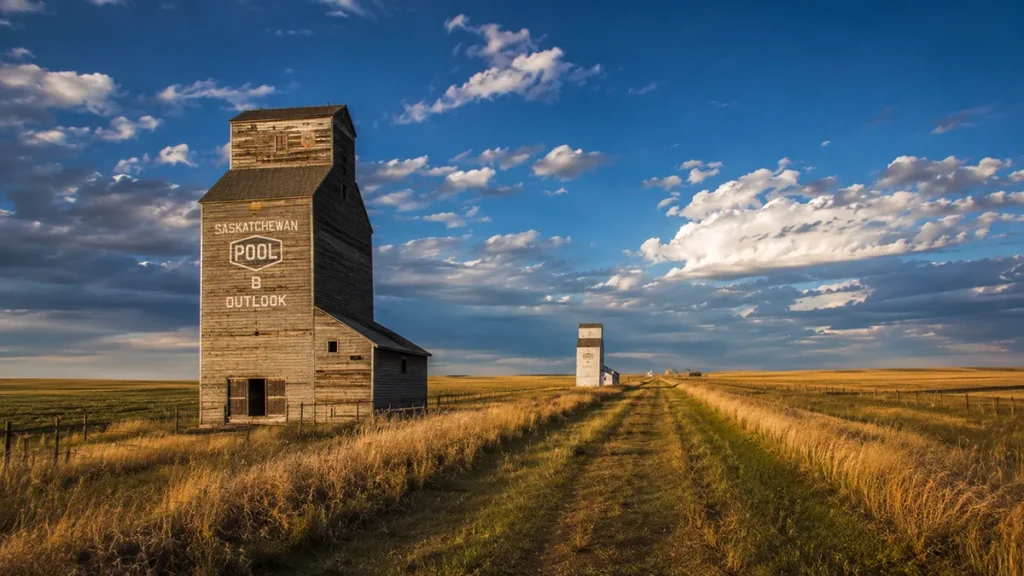
The abandoned Soo Line corridor runs through Outlook. The empty grade, scattered building foundations, and surviving grain elevators tell the story of the Canadian Pacific Railway’s brief push into Montana. Brief walking tour with significant historical content.
See Montana railroads for broader rail-corridor context.
2. Outlook Town Walk
The remaining commercial buildings, the small bar, the post office, and the substantial cemetery all tell the story of what Outlook was during the railroad era.
The cemetery is particularly informative — the number of substantial markers from the 1910s and 1920s reflects what the town’s population was during its homestead-era peak. Respect the cemetery as a working community institution.
3. Sheridan County Border Region Drive
The far-northeast corner of Montana around Outlook is genuinely some of the emptiest prairie in the contiguous United States.
The drive from Outlook north to the Canadian border (about 7 miles) crosses substantial unbroken grassland.
The Whitetail border crossing — north on Montana Road 511 — was permanently closed in recent years; verify current border crossing access via the Raymond, Saskatchewan crossing or via the more substantial Plentywood-area crossings.
4. Day Trip to Plentywood (30 miles south)
The Sheridan County seat and the regional anchor city.
Attractions include the Sheridan County Pioneer Museum, the historic Orpheum Theater (still operating), the New Deal-era Sheridan County Courthouse, and the famous “three bank buildings at the three corners” main intersection.
Plentywood was known historically as Montana’s “best known socialist county” — a substantive piece of early 20th-century political history.
5. Comertown & Raymond Ghost Site Drives
Two other Soo Line towns are accessible via local roads from Outlook.
Comertown — east on the Soo Line corridor — has lost its NRHP-listed grain elevator (also to fire) but retains other railroad-era remnants.
Raymond — south on the Soo Line corridor — was photographed in 1988 with “nothing left but deteriorating elevators” and has continued to contract.
Both are genuine prairie ghost-town experiences.
Where to Stay
Outlook has no dedicated lodging.
Most travelers base in Plentywood (30 miles south).
| Lodging | Vibe | Price | Best For |
|---|---|---|---|
| Plentywood hotels (30 min S) | Full Sheridan County selection | $100–180 | Most travelers |
| Scobey lodging (1 hr W) | Daniels County options | $90–150 | Western base |
| Culbertson hotels (1.5 hrs S) | US-2 Hi-Line options | $100–180 | Hi-Line travelers |
| Vacation rentals (Sheridan County) | Limited; ranch and farm stays | $120–250 | Hunters, longer visits |
Where to Eat
- Local Outlook bar — community gathering spot; verify current operations
- Plentywood dining (30 min S) — broader options
- Scobey restaurants (1 hr W) — small-town variety
Getting There & Around
From Plentywood: 30 miles north on MT-16, about 35 minutes.
From Westby: ~25 miles east via county roads, about 45 minutes.
From Scobey: ~50 miles west via MT-13 to MT-16, about 1.25 hours.
From Flaxville: ~25 miles west via county roads, about 45 minutes.
From Opheim: ~110 miles west via Plentywood and Scobey, about 2.25 hours.
Cell service: Limited in Outlook and along MT-16. Bring offline maps.
When to Visit
Summer (June-August): Best driving conditions; longest daylight; warmest weather.
Fall (September-October): Outstanding far-northeastern prairie light; harvest activity; hunting season.
Winter (December-March): Severe northern weather; temperatures regularly below -20°F; bring proper winter gear.
Spring (April-May): Quieter shoulder season; the prairie greens up; waterfowl migration.
Personal Tips
Read the Soo Line history before visiting. The Canadian Pacific Railway’s brief push into northeastern Montana via the Soo Line spur in the early 1910s is one of the more substantive but underdiscussed pieces of regional railroad history. Understanding the story makes the visit to Outlook substantively more meaningful.
Approach the depot site respectfully. The lost NRHP-listed depot is a tragic preservation outcome. The corridor itself remains, but the structure that defined Outlook’s railroad heritage is gone. Mourn it, photograph what remains, and move on.
Combine with Plentywood. A morning Outlook visit followed by an afternoon in the Sheridan County seat (30 miles south) makes a substantive far-northeast Montana day trip.
Take the border seriously. The Whitetail border crossing was permanently closed recently. The closest substantial active crossing is at Raymond, Saskatchewan, or further east at Westby/Whitetail-area alternatives. Verify current border crossing status before any planned international travel.
Bring everything. Outlook has minimal services. Fuel up in Plentywood before driving north. Carry water, snacks, and emergency supplies.
Photograph the cemetery. The Outlook cemetery is one of the best surviving records of what the town was during its 1913-1940s population peak. The number and quality of markers from those decades is striking.
Outlook Quick Facts
| Population (estimated) | ~50 | | County | Sheridan County | | Region | Far Northeast Montana | | Founded | ~1913 | | Founding railroad | Soo Line (Canadian Pacific subsidiary) | | Original Outlook Depot built | 1913 | | Depot NRHP listed | October 27, 1993 (ref 93001144) | | Depot status | Lost to fire (early 21st century) | | Town plan | T-town (main street perpendicular to tracks) | | Distance to Canadian border | ~7 miles | | Distance to Plentywood | ~30 miles south | | Parallel competing railroad | Great Northern Scobey Subdivision (Bainville-Opheim) | | Other Soo Line corridor towns | Raymond, Whitetail, Comertown | | Average summer high | 81°F | | Average winter low | -8°F |
Conclusion
Outlook is a 50-person Sheridan County town with substantively significant — if largely lost — railroad heritage.
The 1913 Soo Line Depot was one of the most architecturally important Canadian Pacific Railway structures remaining in Montana when it was added to the National Register of Historic Places in 1993. Its subsequent loss to fire permanently changed the historical record.
The corridor itself remains, the T-town plan is visible, the cemetery tells the broader story, and the surviving post office and bar maintain Outlook as a working community rather than a complete ghost town.
For travelers genuinely interested in early-20th-century American railroad heritage — and willing to drive the 30 miles of empty prairie north from Plentywood — Outlook represents one of the more substantively meaningful Soo Line corridor visits available in Montana.
The Canadian Pacific is no longer here. But for a few decades in the early 20th century, it was.
Have an Outlook question? Drop it in the comments — I read every one.
Frequently Asked Questions
Is Outlook Montana worth visiting?
Outlook is worth a visit primarily for railroad heritage travelers interested in the Canadian Pacific Soo Line corridor that extended into northeastern Montana in the early 1910s, lost-architecture enthusiasts wanting to walk where the NRHP-listed 1913 Soo Line Depot once stood (the depot has been lost to fire), and far-northeast Montana prairie photographers willing to drive 30 miles north of Plentywood into some of the emptiest landscape in the contiguous United States. It is not a traditional tourism destination.
What was the Outlook Depot?
The Outlook Depot was a 1913 standardized combination depot built by the Canadian Pacific Railway’s Soo Line subsidiary in Outlook, Montana. The wood-frame structure combined passenger waiting room, baggage warehouse, and station office in a single architecturally distinctive building. The depot was added to the National Register of Historic Places on October 27, 1993 (reference number 93001144), at which point it retained its original paint scheme, outbuildings, and a remarkably intact two-seat privy. The depot was destroyed by fire sometime in the early 21st century and is no longer extant. Only the railroad corridor and a few scattered remnants remain at the site today.
What was the Soo Line Railroad in Montana?
The Soo Line was a Midwestern railroad system controlled by the Canadian Pacific Railway (formally the Minneapolis, St. Paul & Sault Ste. Marie Railroad). In the early 1910s, the Soo Line constructed a spur line south from Saskatchewan into Sheridan and Daniels counties of northeastern Montana, establishing a string of new stations including Outlook, Raymond, Whitetail, and Comertown. The Soo Line spur was direct competition for the Great Northern Railway’s own parallel spur through Bainville, Plentywood, Scobey, and Opheim. Both lines operated through approximately the 1940s. The Soo Line eventually abandoned its Montana spur entirely; only ghost-town remnants survive along the corridor today.
When was Outlook Montana founded?
Outlook was founded around 1913 as a station town on the new Soo Line Railroad spur that the Canadian Pacific Railway built south from Saskatchewan into northeastern Montana. The town was platted on the classic T-town plan with the main street perpendicular to the railroad tracks. The Soo Line Depot was built the same year. The town grew rapidly during the homestead boom of the 1910s and contracted dramatically during the drought of 1917-1924 and the subsequent Great Depression.
How big is Outlook Montana?
Outlook has approximately 50 year-round residents. The town has contracted dramatically from its homestead-era peak in the 1910s, when several hundred residents lived in the area. The remaining infrastructure includes a post office, a small bar, scattered houses, and a substantial cemetery whose markers tell the story of what the town was during its early-20th-century population peak.
How far is Outlook from Plentywood Montana?
Outlook is approximately 30 miles north of Plentywood (the Sheridan County seat) on Montana Highway 16 — about a 35-minute drive. From the Canadian border, Outlook is approximately 7 miles south. Plentywood serves as the practical urban anchor for any Outlook visit, with hotels, restaurants, the Sheridan County Pioneer Museum, the historic Orpheum Theater, and the New Deal-era Sheridan County Courthouse.
Was Plentywood Montana actually a socialist county?
Yes — Sheridan County, anchored by Plentywood, is historically known as “Montana’s best known socialist county” of the early 20th century. The county had substantial socialist political organization during the 1910s and 1920s, including socialist newspapers, electoral support for socialist candidates, and active participation in the broader Nonpartisan League farmer-labor movement. The historical political character of Sheridan County is one of the more substantive — and surprising — pieces of early 20th-century Montana political history.