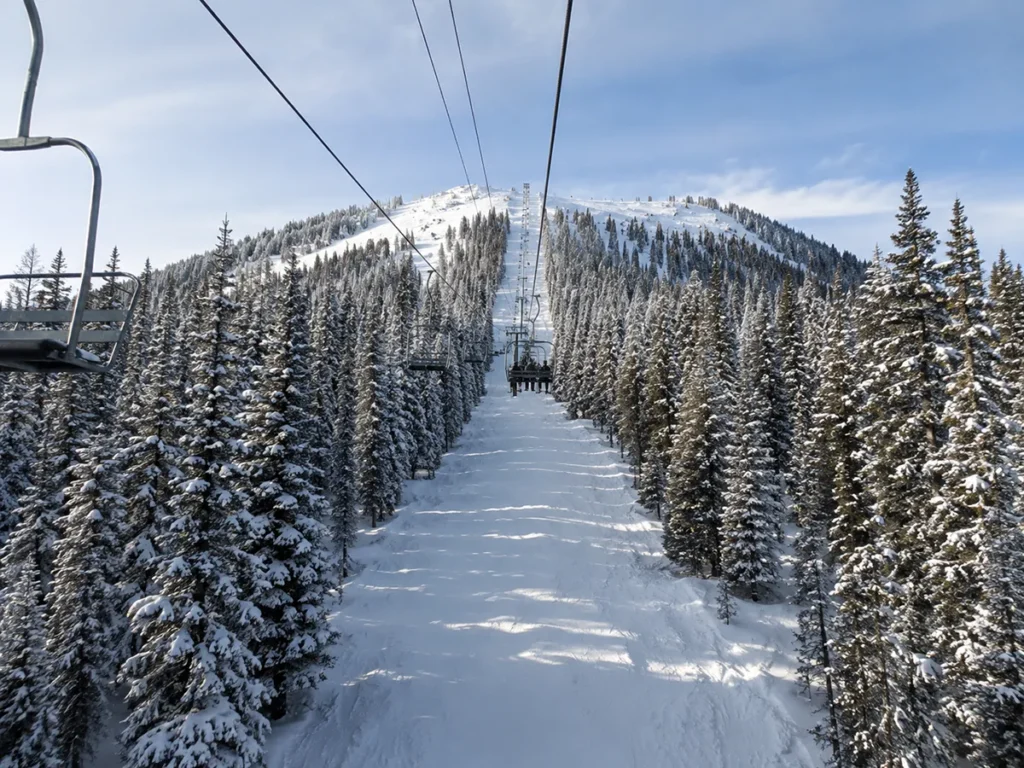
I rode the Prospector lift up on a Friday morning in February — 12 and a half minutes from the base to the 8,200-foot summit on a fixed-grip triple chair that gave me plenty of time to count exactly four other skiers on the entire mountain.
Then I dropped into “champagne powder” the ski area markets on its own website, and you know what? It actually was.
- Showdown Montana is Montana’s oldest continuously operating ski area (since 1936) — and one of the oldest in the entire United States
- Located in the Little Belt Mountains at Kings Hill Pass on US-89, in Neihart, Montana — 67 miles south of Great Falls, in the Lewis and Clark National Forest
- 640 skiable acres, 1,400-foot vertical drop, 39 named trails, 4 lifts (one triple, two doubles, one conveyor)
- Roughly 200–240 inches of natural snowfall annually — and no snowmaking at all
- Family-owned and now woman-owned — sold by George Willett to his daughter Katie Boedecker in 2021
- Lift tickets are among Montana’s most affordable [verify current price]
- Typically operates Wednesday through Sunday (closed Mondays and Tuesdays)
- Independent — not on the Ikon, Epic, or Indy Pass
- The right trip if you want the most authentic, oldest-school Montana ski experience available; the wrong trip if you want fast lifts, snowmaking reliability, or 7-day operations
Liked this article?
Add Roaming Montana as a preferred source so you see more of our articles and guides on Google.
Why Showdown Is the Most Historic Ski Area in Montana
There are 18 ski areas in Montana. Showdown is the oldest of all of them — operating since 1936, when it was called Kings Hill Ski Area and offered exactly one rope tow up Porphyry Peak.
It’s also one of the oldest ski areas in the United States, predating most of what now exists in Colorado, Utah, and California.
What’s remarkable about Showdown isn’t just the age. It’s that the mountain has stayed remarkably close to its original character for nearly 90 years.
The lodge sits where it has for decades. The lift system runs on fixed-grip chairs rather than high-speed quads. There’s no snowmaking — what falls is what you ski.
The terrain is laid out the way it was laid out generations ago. And the family ownership has been stable for over 50 years.
This is part of our complete guide to Montana ski resorts — and Showdown is the ski area I send people to when they want to understand what Montana skiing genuinely is, not what destination resorts have rebranded it as.
Where Showdown Actually Is
Showdown sits in Meagher County in central Montana, in the Little Belt Mountains of the Lewis and Clark National Forest, on the slopes of Porphyry Peak near Neihart, Montana.
The mountain pass right at the resort — Kings Hill Pass — sits at 7,385 feet, with the resort summit a few hundred feet higher.
Getting there:
- From Great Falls: about 67 miles south on US-89 (about 1 hour 30 minutes)
- From White Sulphur Springs: about 32 miles north on US-89 (45 minutes)
- From Helena: about 110 miles north via I-15 to US-12 to US-89 (about 2 hours 15 minutes)
- From Bozeman: about 130 miles north (about 2.5 hours)
- From Billings: about 200 miles northwest (about 3.5 hours)
Great Falls International Airport (GTF) is the closest commercial airport at about 62 miles north of the resort. Bozeman Yellowstone International (BZN) is the larger nearby airport (~2.5 hours away) with significantly more direct flight options.
The US-89 Drive
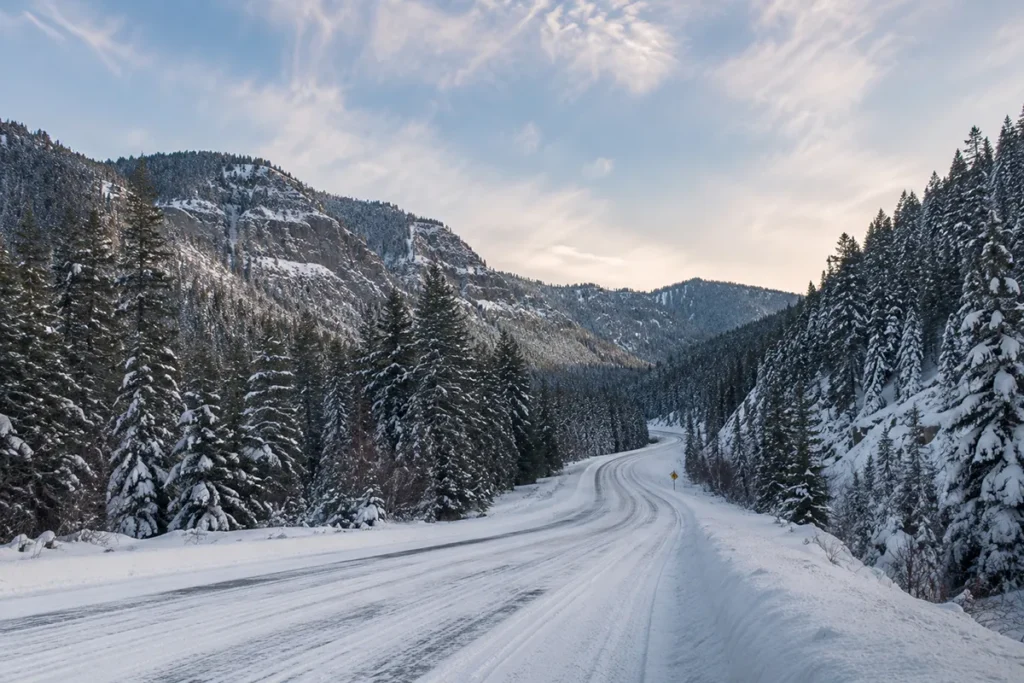
The drive on US-89 south from Great Falls through the Little Belt Mountains is one of central Montana’s most scenic routes — and notably the only paved highway that crosses Kings Hill Pass.
The road climbs steadily through the national forest, with mostly easy grades but exposed sections that can drift over in storms.
Watch for:
- Heavy snow at the pass — Kings Hill Pass is at 7,385 feet
- Wildlife on the road, especially elk and deer in the lower elevations
- Limited cell service for the final 30+ miles approaching the resort
- No gas station between Belt (north) and White Sulphur Springs (south) — fill up before heading into the Little Belts
See my Montana winter driving guide for general winter driving prep.
The History: Nine Decades of Montana Skiing
Showdown’s history is genuinely one of the most interesting in American skiing. The mountain has been operating continuously since 1936 — through World War II, through every recession and ski industry boom-and-bust cycle, and through nearly every major change in the industry.
The historical milestones:
- 1936: The mountain opens as Kings Hill Ski Area, operated by the Great Falls Ski Club. The first uphill access is a rope tow powered by an automobile engine.
- 1940: First rope tow donated by Great Falls businessman Charlie Bovey
- 1957: The ski club and members of the Great Falls Ski Patrol form Ski Lift Inc. to manage operations. Stock is sold, and a Poma lift is purchased to access the upper mountain.
- 1964: The Poma lift is replaced with a T-bar, with the original Poma relocated to the north side as a beginner-area lift
- 1968: Last major addition to the main lodge completed
- 1970s: Renamed Showdown Ski Area
- Family ownership: Acquired and operated by the same Montana family for over 50 years
- 2021: Katie Boedecker purchases the mountain from her father, George Willett, making Showdown a woman-owned ski area
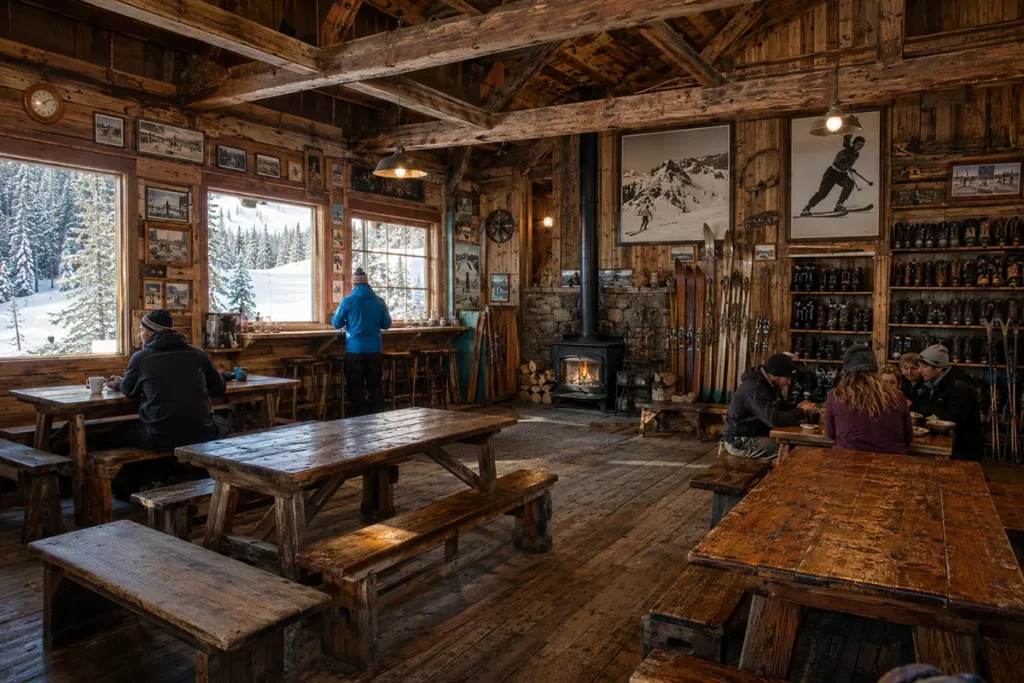
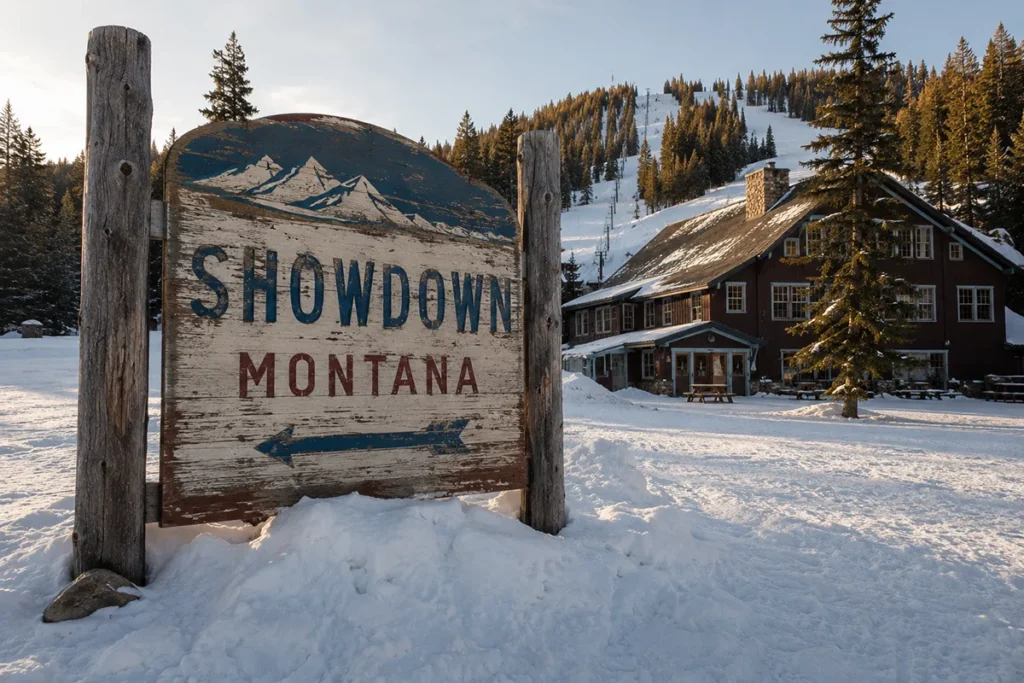
The lodge itself — substantially the same building as in 1968 with appropriate updates — is a working time capsule.
The wooden interior, the family-friendly cafeteria, the historic photos on the walls, the racks for ski boots that have held boots since the resort had T-bars instead of chairs. This isn’t a manufactured nostalgia — it’s actually just the lodge that’s been here for decades.
The Boedecker family ownership transition in 2021 represents continuity with change — Katie Boedecker grew up at Showdown and represents the kind of intergenerational mountain stewardship that defines the resort’s character.
For broader Montana history context, see my Montana history guide.
The Terrain: How Showdown Skis
Showdown’s terrain is laid out across 640 acres of Porphyry Peak, with a vertical drop of 1,400 feet from the 8,200-foot summit to the 6,800-foot base. The mountain is small by destination-resort standards but offers genuine terrain variety across 39 named trails.
Approximate terrain breakdown:
- 28% Beginner
- 44% Intermediate
- 28% Advanced/Expert
This is one of the most balanced terrain breakdowns at any Montana ski area — significantly more beginner terrain than Snowbowl (~5%) or Bridger Bowl, and meaningfully more advanced terrain than Bear Paw. The result is a mountain that genuinely works for mixed-ability groups.
The Lifts
Four lifts serve the mountain:
- Prospector Triple Chair — the main mountain access, climbing about 1,400 vertical feet from base to summit. The ride takes approximately 12.5 minutes — a slow but contemplative trip with the Little Belt Mountains spreading out around you. This is a fixed-grip triple, not a high-speed lift.
- Two double chairs — accessing different sections of the mountain including the more difficult terrain and the beginner zones
- One conveyor lift — beginner-area access on a learner run
The slow lift speed is meaningful. At a high-speed-quad mountain, you’d lap 12 runs per hour. At Showdown, you’ll get about 4–5 runs per hour.
The trade is that you have time to actually look at where you’re going, talk to whoever’s next to you, and develop the kind of rhythm that destination skiing has largely lost.
The Snow
Showdown receives approximately 200–240 inches of natural snowfall annually, with reviewers consistently describing the snow as “champagne powder.” The mountain has no snowmaking infrastructure — every flake on the slopes is natural.
Some specifics about the snow:
- The continental snowpack is light and dry, similar to Bridger Bowl’s “cold smoke”
- Powder lasts because skier traffic is low — fresh tracks are still available days after storms
- Tree skiing is excellent — the gladed terrain holds snow longer and stays interesting throughout the day
- The 1,400-foot vertical is enough for legitimate top-to-bottom skiing without being intimidating
- Without snowmaking, opening and closing dates depend entirely on natural conditions — typically early December through late March/early April
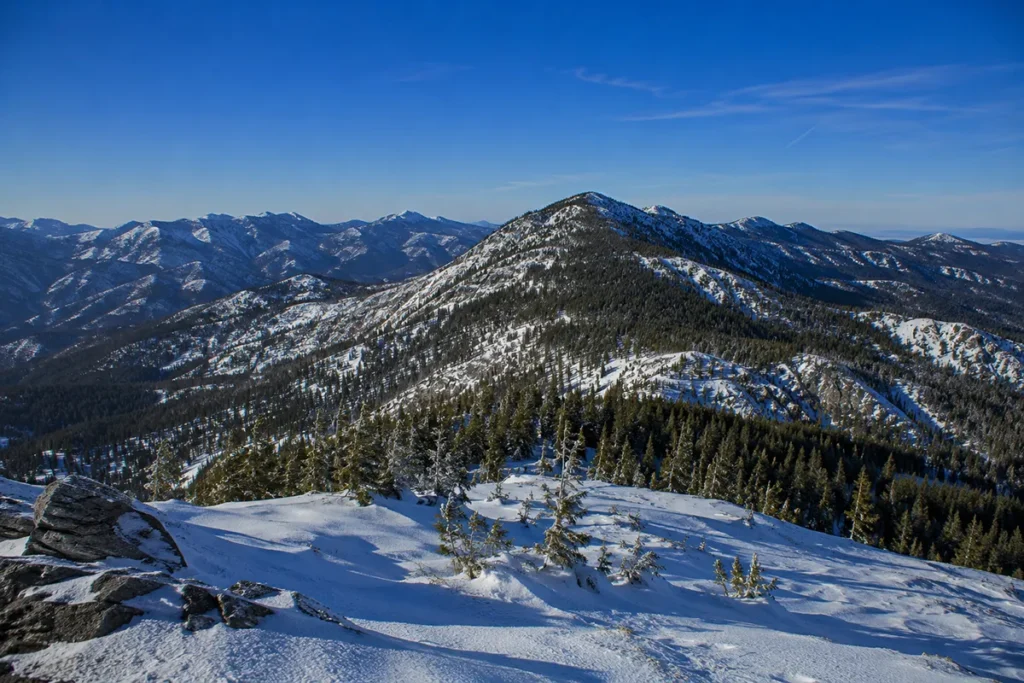
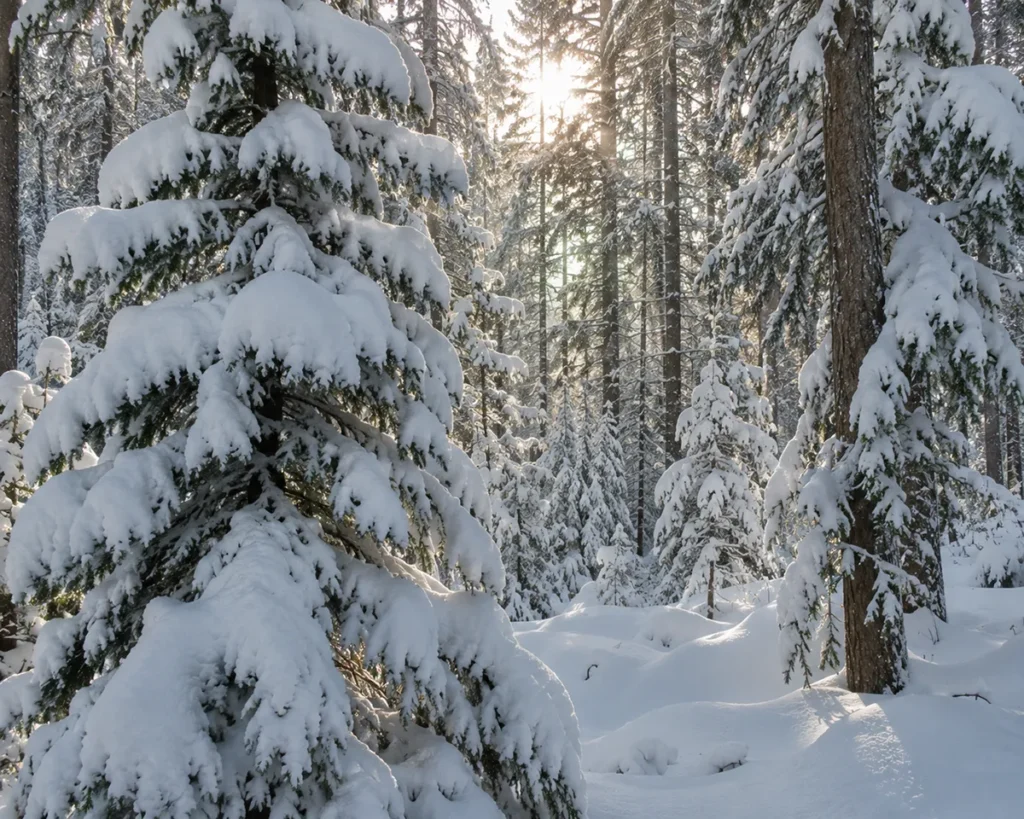
The 12.5-minute Prospector lift ride was the source of online review skepticism for years, but in practice the slow ride provides time for cardiovascular recovery between runs, conversation, and just looking at the mountain. The Little Belt Mountains’ snow-laden conifer forests are genuinely beautiful from the lift.
Terrain Park
Showdown maintains terrain parks near the base with rails, boxes, and jumps. The park is solid by mid-tier Montana standards — not as developed as Great Divide’s nationally-recognized park scene, but legitimate for freestyle skiers and snowboarders looking to progress.
Lift Tickets, Passes, and the Honest Operating Reality
Showdown pricing is among Montana’s most affordable, reflecting both the family-owned operating model and the resort’s commitment to remaining accessible to local Montana families.
Lift Tickets
Full-day adult lift tickets at Showdown typically run $50–$55 depending on the day, with discounted rates for early-season and late-season skiing. Ages 5 and under ski FREE. Military rates are available. [Verify current pricing on showdownmontana.com.]
Pass Affiliations
Showdown is independent — not on the Ikon, Epic, or Indy Pass. The resort sells its own day tickets and season passes directly.
The family ownership has prioritized keeping the mountain affordable to local skiers rather than maximizing per-ticket revenue or chasing destination pass revenue.
Operating Schedule
Showdown typically operates Wednesday through Sunday during the regular season, with hours typically from 9:30am to 4:00pm. The resort is closed Monday and Tuesday during the regular season.
This is similar to Lost Trail Powder Mountain and reflects the family-owned operational model — concentrating skier traffic into productive operating days while giving the small staff a meaningful work-life rhythm.
The season runs roughly early December through late March or early April, depending entirely on natural snowfall. Without snowmaking, opening and closing dates can shift by a week or two in either direction based on snow conditions.
A Great Falls ticket sales office has historically been available for visitors who want to purchase tickets in advance from town — verify whether this remains current.
What I Wish I Knew Before Skiing Showdown
A few things I’d tell my pre-Showdown self.
Verify the operating days before driving. The Wed-Sun schedule means you can’t just show up on a Monday or Tuesday during the regular season. This is the single most important practical fact for any Showdown trip.
Plan a Great Falls or White Sulphur Springs basecamp. There is no on-mountain lodging at Showdown. The town of Neihart immediately below the mountain is tiny — a few cabins and bars, limited services. For substantial lodging, base in Great Falls (90 minutes north) or White Sulphur Springs (45 minutes south).
The drive on US-89 takes longer than you think. Especially in winter conditions, the climb through the Little Belts can add 15-30 minutes to your travel time. Build in buffer time on storm days.
Bring food backup. The lodge cafeteria is honest and well-priced but limited. If you have dietary restrictions or like specific foods, pack from a Great Falls or Helena grocery store.
The 12.5-minute Prospector ride is part of the experience. Don’t fight it. Slow lifts mean fewer crowds, more recovery time, and the chance to actually look at where you are. Bring conversation. Or just look at the trees.
Spring skiing here is excellent. March and April at Showdown often combine deep snowpack from the winter season with softer afternoon conditions and longer days. The southwest-facing terrain warms up nicely in spring. See Montana in March for broader spring context.
The Great Falls connection is real. Showdown is the ski mountain for Great Falls — many regular skiers commute from there on weekends. If you’re staying in Great Falls, also explore coffee shops in Great Falls, the Electric City Water Park or Last Chance Splash Waterpark for off-day options, and RV parks in Great Falls if you’re traveling with an RV.
Combine with White Sulphur Springs. Spa Hot Springs Motel in White Sulphur Springs is a popular Montana hot springs destination 45 minutes south of Showdown. A ski day at Showdown plus a hot springs evening makes a strong central Montana rhythm.
The Little Belts are genuinely beautiful. Don’t just ski and leave. Walk around outside the lodge. Look at the conifer forests. This is one of the more remote Montana ski areas, and the surrounding national forest landscape is part of the appeal.
Showdown Compared to the Other 17 Montana Ski Areas
Quick honest comparisons.
Vs. Great Divide Ski Area: The natural central Montana counterpart. Great Divide has more terrain (1,600 vs. 640 acres), better terrain parks, more night skiing, capable snowmaking, and easier access from Helena. Showdown has more snow naturally (240 inches vs. 150-180), the historic charm of being Montana’s oldest ski area, and a more remote feel in the Little Belts. For Helena-area travelers, Great Divide. For Great Falls-area travelers or those wanting the more historic experience, Showdown.
Vs. Bridger Bowl: Bridger has dramatically more terrain (2,000+ acres), more vertical (2,600 ft), the famous Ridge, and is 16 miles from Bozeman. Showdown is smaller, more remote, and significantly cheaper. Both have legitimate “cold smoke” powder reputations. For destination skiing, Bridger. For uncrowded local-mountain skiing, Showdown.
Vs. Bear Paw Ski Bowl: Both are small community-spirit Montana mountains. Bear Paw is even more remote and even smaller (~240 acres), volunteer-run, weekend-only, cash-only. Showdown is larger, operates 5 days per week, and has modern infrastructure. For the truly tiny community experience, Bear Paw. For uncrowded historic Montana skiing at a slightly larger scale, Showdown.
Vs. Maverick Mountain: Both are small, family-owned, southwestern Montana-style mountains. Maverick is smaller (200 acres), has more vertical drop (2,120 ft vs. 1,400), and is in the Dillon area in the far southwest. Showdown is bigger, has more terrain variety, and is in central Montana. For Dillon-area travelers, Maverick. For Great Falls or Helena travelers, Showdown.
Vs. Big Sky Resort: Different products entirely. Big Sky is the destination behemoth; Showdown is the family-owned historic community mountain. The comparison isn’t really fair — choose based on what kind of trip you want.
For the full picture, see the Montana ski resorts pillar guide.
Showdown Montana: At-a-Glance
| Vertical Drop | 1,400 ft |
|---|---|
| Skiable Acres | 640 |
| Top Elevation | 8,200 ft (Porphyry Peak summit) |
| Base Elevation | 6,800 ft |
| Annual Snowfall | ~200–240 inches (no snowmaking — 100% natural) |
| Terrain Breakdown | 28% Beginner, 44% Intermediate, 28% Advanced/Expert |
| Trails | 39 named runs (sources cite 34, 36, 38, and 39) |
| Longest Run | 1.8 miles |
| Lifts | 4 total: 1 triple (Prospector), 2 doubles, 1 conveyor |
| Prospector Ride Time | ~12.5 minutes |
| Lift Ticket | $50–$55 range [verify current price] |
| Ages 5 & Under | Ski FREE |
| Pass Affiliation | Independent — not on Ikon, Epic, or Indy |
| Operating Days | Wednesday–Sunday (closed Mon–Tue) |
| Hours | ~9:30am–4:00pm |
| Season | Early December through late March/early April (snow dependent) |
| Snowmaking | None |
| Owner | Boedecker family — woman-owned by Katie Boedecker since 2021 |
| Founded | 1936 as Kings Hill Ski Area |
| Status | Montana’s oldest continuously operating ski area |
| Nearest Town | Neihart, immediately adjacent (population ~50) |
| Nearest City | Great Falls, 67 miles north |
| Nearest Airport | Great Falls International (GTF), ~62 miles north; Bozeman Yellowstone (BZN), ~130 miles south |
Lift ticket prices, operating schedule, and infrastructure change annually — verify current information on showdownmontana.com before booking.
Things to Do Around Showdown When You’re Not Skiing
The Showdown area is remote, but a few options exist for non-ski days:
- White Sulphur Springs — Spa Hot Springs Motel offers a hot springs soak 45 minutes south
- Great Falls — the larger city to the north has restaurants, museums, the C.M. Russell Museum, and meaningful winter activities
- Snowmobiling — extensive groomed snowmobile trails in the Lewis and Clark National Forest around Showdown
- Cross-country skiing — Nordic trails through the Little Belt Mountains
- Sluice Boxes State Park — south of Belt on US-89, dramatic canyon scenery (mostly summer-accessible)
- Castle Town ghost town — about 30 miles east of Showdown, accessible in summer
- Day trip to Helena — about 2 hours south, for state capital sightseeing
For winter Airbnb planning, see winter Airbnbs in Montana.
Final Thoughts on Showdown Montana
Showdown is the Montana ski mountain that most clearly preserves what skiing in this state used to feel like. The historic lodge. The slow chairlift. The natural snow.
The family ownership through generations. The deliberate choice to stay independent of mega-pass systems. The Wednesday-through-Sunday operating schedule that prioritizes sustainable operations over revenue maximization.
For most visitors, this isn’t the right answer for a primary Montana ski trip. The terrain is smaller than Big Sky or Whitefish, the infrastructure is dated by destination-resort standards, and the location requires real commitment to reach.
But for the specific kind of skier who wants to see what Montana skiing looked like before the mega-pass consolidation reshaped the industry, Showdown is the right place to go.
And for Great Falls-area travelers — or anyone making a multi-stop central Montana road trip — Showdown is genuinely one of the best ski options in the state.
The Boedecker family ownership transition in 2021 marks the start of the next chapter for Montana’s oldest ski area. Katie Boedecker grew up here.
Her father George Willett ran it for years before her. The mountain stays in the family, the character stays consistent, and the lifts keep spinning.
Pin this guide before your trip planning, and drop your questions in the comments below — I read every one and will happily help you decide if Showdown fits your itinerary, especially if you’re trying to figure out whether to add a Showdown day to a Great Falls-area trip or whether to pair it with Great Divide for a central Montana double-mountain weekend.
Frequently Asked Questions
Where is Showdown Montana?
Showdown is located in the Little Belt Mountains in central Montana, on Porphyry Peak near the town of Neihart in Meagher County. The resort sits on US-89 at Kings Hill Pass (7,385 feet). It’s 67 miles south of Great Falls, 32 miles north of White Sulphur Springs, and approximately 2 hours from both Helena and Bozeman.
Is Showdown really Montana’s oldest ski area?
Yes. Showdown opened for skiing in 1936 as Kings Hill Ski Area, making it Montana’s oldest continuously operating ski area and one of the oldest in the United States. It has operated continuously through World War II, every recession since, and every major industry change.
How much does a lift ticket at Showdown cost?
Full-day adult lift tickets at Showdown typically run $50–$55 depending on the date. Ages 5 and under ski FREE. Military rates are available, along with student and senior discounts. [Verify current pricing on showdownmontana.com.]
What days is Showdown open?
Showdown typically operates Wednesday through Sunday during the regular season. The resort is closed Monday and Tuesday. Hours are typically 9:30am to 4:00pm. Operating days may extend during holiday weeks. Always verify the current operating schedule before driving up.
Is Showdown on the Ikon, Epic, or Indy Pass?
No. Showdown is independent and does not participate in any major mega-pass system. The Boedecker family ownership has chosen to remain independent. Day tickets and season passes are sold directly through Showdown.
How big is Showdown Montana?
Showdown covers 640 skiable acres with a 1,400-foot vertical drop and 39 named trails. Summit elevation is 8,200 feet on Porphyry Peak, with a base at 6,800 feet. The lift system includes one fixed-grip triple chair (Prospector), two double chairs, and one conveyor lift. By Montana standards, it’s a smaller ski area — larger than Bear Paw or Maverick, smaller than Discovery or Great Divide.
Does Showdown have snowmaking?
No. Showdown has no snowmaking infrastructure — every flake of snow on the slopes is natural. The mountain receives approximately 200-240 inches of natural snowfall annually, with reviewers consistently describing the snow texture as “champagne powder.” This means opening and closing dates depend entirely on natural conditions.
Who owns Showdown Ski Area?
Showdown is owned by Katie Boedecker, who purchased the mountain from her father George Willett in 2021, making Showdown a woman-owned ski area. The mountain has been in the same family for over 50 years. Originally founded by the Great Falls Ski Club in 1936, Showdown has been continuously family-owned since the Willett family acquired it decades ago.
Is Showdown good for beginners?
Yes — Showdown has 28% beginner terrain, more than most Montana ski areas. The beginner area is served by the conveyor lift and a dedicated double chair. The mountain’s terrain balance (28% beginner, 44% intermediate, 28% advanced) makes it one of Montana’s most family-friendly resorts for mixed-ability groups.
How does Showdown compare to Great Divide?
Both are central Montana ski areas with family-owned heritage and affordable pricing. Great Divide (near Helena) has more total terrain (1,600 vs. 640 acres), better terrain parks, more night skiing, capable snowmaking, and easier access from a major city. Showdown has more natural snow (240 vs. 150-180 inches), the historic distinction of being Montana’s oldest ski area, and a more remote, time-capsule feel. Pick based on which region of Montana you’re anchoring in.
Where should I stay for a Showdown ski trip?
There is no significant on-mountain lodging at Showdown. The closest town, Neihart, has limited cabin lodging. For substantial lodging, base in Great Falls (67 miles north, about 1.5 hours), White Sulphur Springs (32 miles south, 45 minutes), or even Helena (about 2 hours south).
What’s the Prospector lift ride like?
The Prospector Triple Chair takes approximately 12.5 minutes to ascend from the base to the 8,200-foot summit. This is dramatically slower than the high-speed quads at destination resorts (typically 4-6 minutes), but the slow ride allows for conversation, recovery between runs, and time to actually look at the Little Belt Mountains around you. The slow lift is part of Showdown’s authentic, unhurried character.