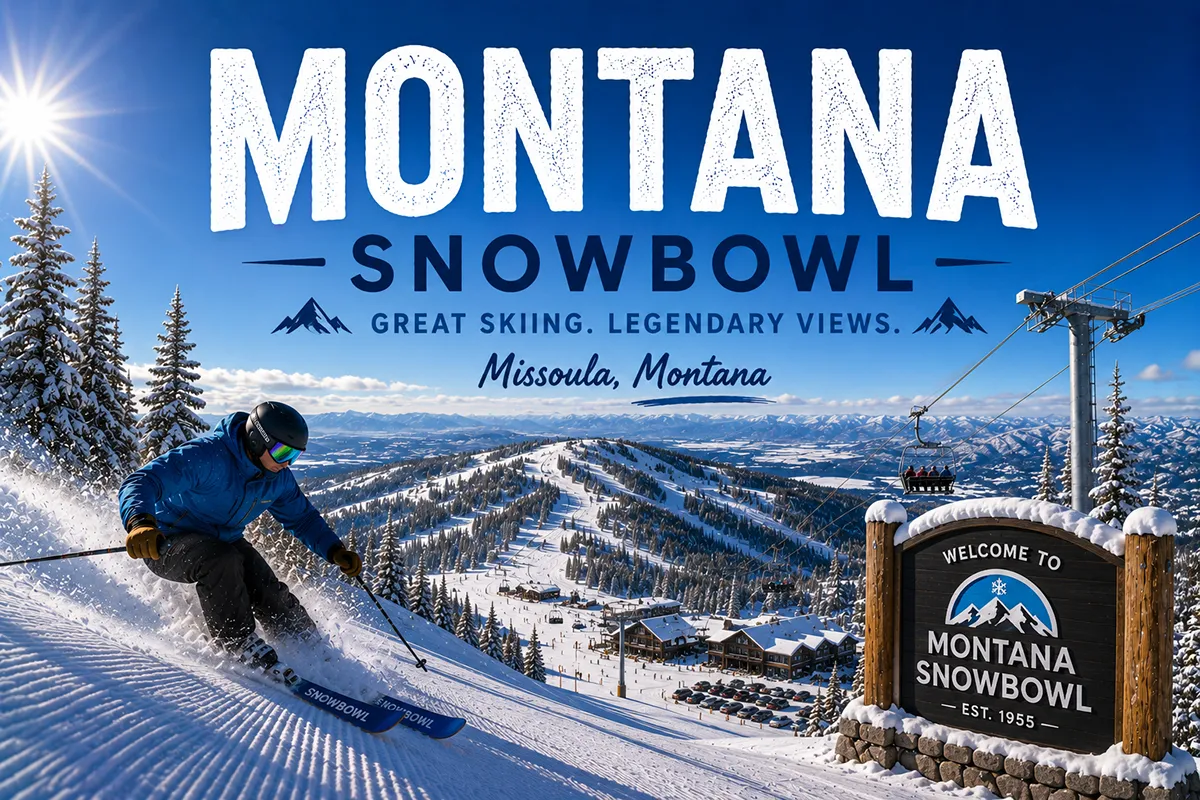
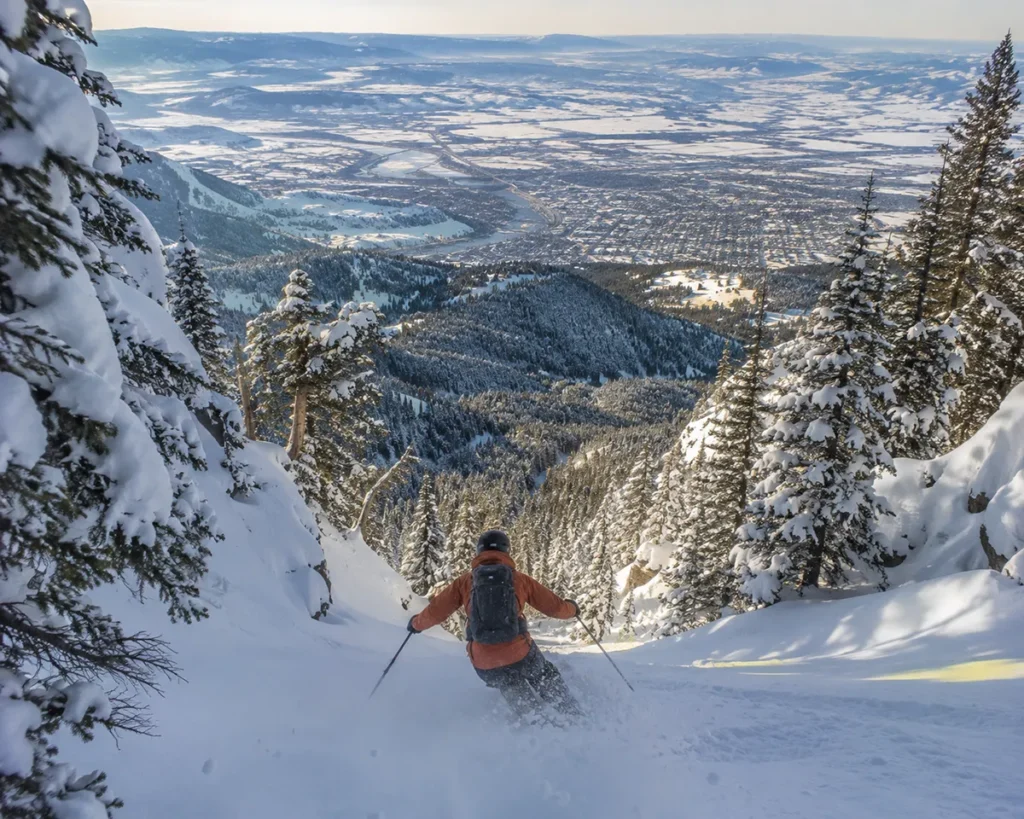
I overheard a University of Montana student at Snowbowl describe his ski-day strategy to a friend: “Skip my 9:30 class, drive up at 10, ski until 2, back in time for my afternoon lecture.” That’s Snowbowl. That’s why it exists.
- Montana Snowbowl sits 12 miles northwest of Missoula on Lolo National Forest land — the closest ski area to a major Montana university town
- 950 skiable acres, 2,600-foot vertical drop, ~39 named trails, ~300 inches of snow per year
- Heavily expert-oriented — limited beginner terrain, lots of steeps and tree skiing
- Indy Pass partner in recent seasons [verify current season]
- Full-day adult lift tickets typically run $55–$75 [verify current price] — one of the most affordable lift tickets in Montana
- Slope-side lodging is rare for an area this close to a city
- Heads up: Snowbowl operates Wed–Mon (closed Tuesdays) in recent seasons — verify the current schedule before your trip
- The right trip if you’re an advanced skier with a Missoula base; the wrong trip for beginners or first-time Montana visitors
Liked this article?
Add Roaming Montana as a preferred source so you see more of our articles and guides on Google.
Why Snowbowl Is Missoula’s Mountain
If you ask a serious Missoula skier where they ski, the answer is Montana Snowbowl. Not because Snowbowl is the best resort in the state — it isn’t, and locals will tell you so. It’s because Snowbowl is the right balance of proximity, terrain, and price for the way Missoula actually lives.
The mountain is 12 miles northwest of downtown Missoula, accessible via a winding road that climbs out of the Clark Fork valley into the Rattlesnake mountains. The drive takes about 25–30 minutes from town in good conditions.
That proximity means Missoula locals — including a huge segment of the University of Montana student population — can ski before work, after class, or for a half-day on Saturday without dedicating a full travel day to the experience.
The terrain at Snowbowl is steeper than most visitors expect. With 2,600 feet of vertical drop — one of the higher lift-served verticals in Montana — and an aggressive skew toward advanced terrain, Snowbowl is fundamentally an expert’s mountain that happens to have a few intermediate runs attached.
This is the inverse of how most family-friendly destination resorts are laid out, and it’s why first-time visitors sometimes leave disappointed while local advanced skiers absolutely love the place.
This is part of our complete guide to Montana ski resorts — and if you’re trying to figure out whether Snowbowl is the right pick for your trip, this guide will give you the honest assessment.
Where Montana Snowbowl Actually Is
Snowbowl sits on Lolo National Forest land in Missoula County, on the slopes that rise above the western side of the Rattlesnake Wilderness. The base elevation is 5,000 feet — notably lower than most other Montana ski areas — and the summit reaches 7,600 feet.
Getting there:
- From downtown Missoula: 12 miles northwest via Grant Creek Road and Snowbowl Road (about 25–30 minutes)
- From Missoula International Airport (MSO): about 15 miles, roughly 25 minutes
- From the University of Montana campus: about 20 minutes
- From Bozeman: about 3.5–4 hours east
- From Spokane, WA: about 3 hours west
Missoula International Airport (MSO) is the natural gateway — and Snowbowl is one of the most accessible ski areas from any U.S. airport at under 30 minutes. The airport has reasonable direct flights from a handful of major U.S. hubs, with Salt Lake City and Seattle being the most reliable connections.
The Road In
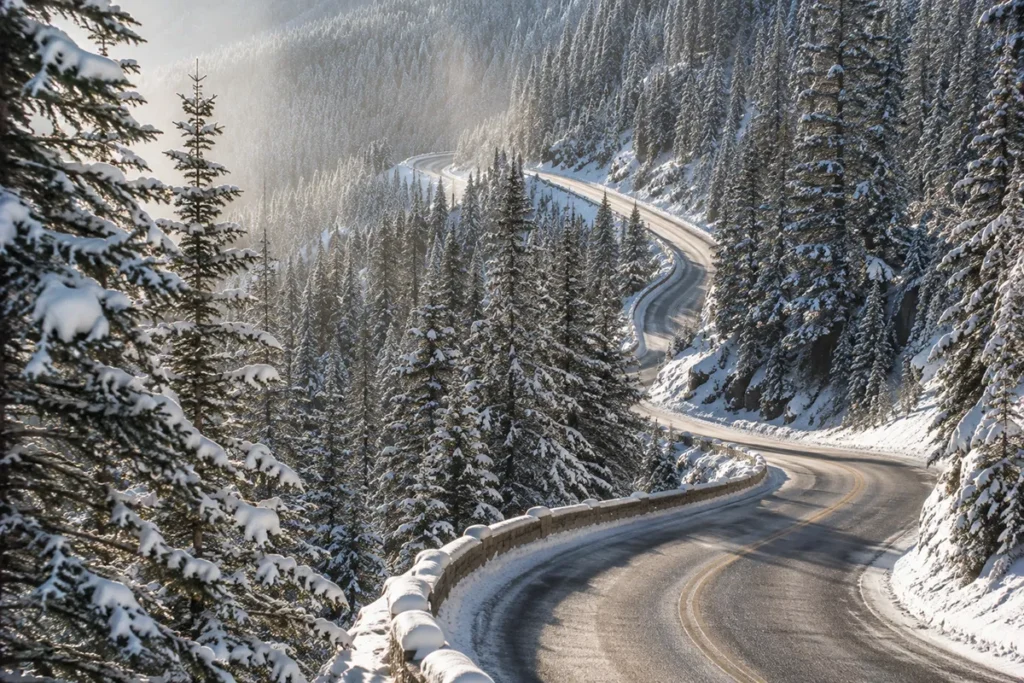
This is worth mentioning. The road up to Snowbowl from the Grant Creek area is a winding gravel road with switchbacks that climbs steeply from the valley floor. It’s not as gnarly as some Montana ski roads (Pipe Creek to Turner Mountain comes to mind), but it isn’t a paved highway either.
Snow tires and AWD/4WD are essential in winter conditions. The road is plowed but stays icy at the upper switchbacks.
A shuttle bus runs from Missoula to Snowbowl during peak ski season — a strong option for visitors without a car or for after-skiing dinners in town. See my Montana winter driving guide for general winter driving prep.
The Terrain: Steep, Ungroomed, and Honest About What It Is
Snowbowl breaks the typical “all-abilities” ski resort marketing template. Roughly 60–75% of the terrain is rated advanced or expert depending on how you count it, with limited beginner skiing concentrated near the base.
The Beginner Reality
Let me say this directly: Snowbowl is not a great mountain to learn to ski on. There’s a dedicated beginner area served by a surface lift near the base, and it works for absolute first-timers.
But there are no beginner runs from the summit, and only one semi-beginner option from the top of the Grizzly Chair.
If you’re traveling specifically to learn, or with a partner who’s never skied, look at Discovery Ski Area (90 minutes east of Missoula), Blacktail Mountain (about 2 hours north), or Lookout Pass (about 90 minutes west).
The Intermediate Zone
Snowbowl has a respectable network of groomed intermediate runs. Sunrise Bowl and the groomed terrain off the LaVelle Creek Chair offer solid mid-mountain cruising.
The pitch is real — these are runs that wouldn’t be rated intermediate at a more gently-graded resort — but strong intermediates will find plenty to ski here.
The Advanced Terrain (Why People Come to Snowbowl)
This is where Snowbowl earns its reputation. The mountain features TV Mountain and East Bowl on the north-facing side, with steep faces that drop into ungroomed tree skiing and natural-feature terrain.
Lolo Peak terrain accessed from the resort offers lift-accessible backcountry-style skiing for experts with the right gear.
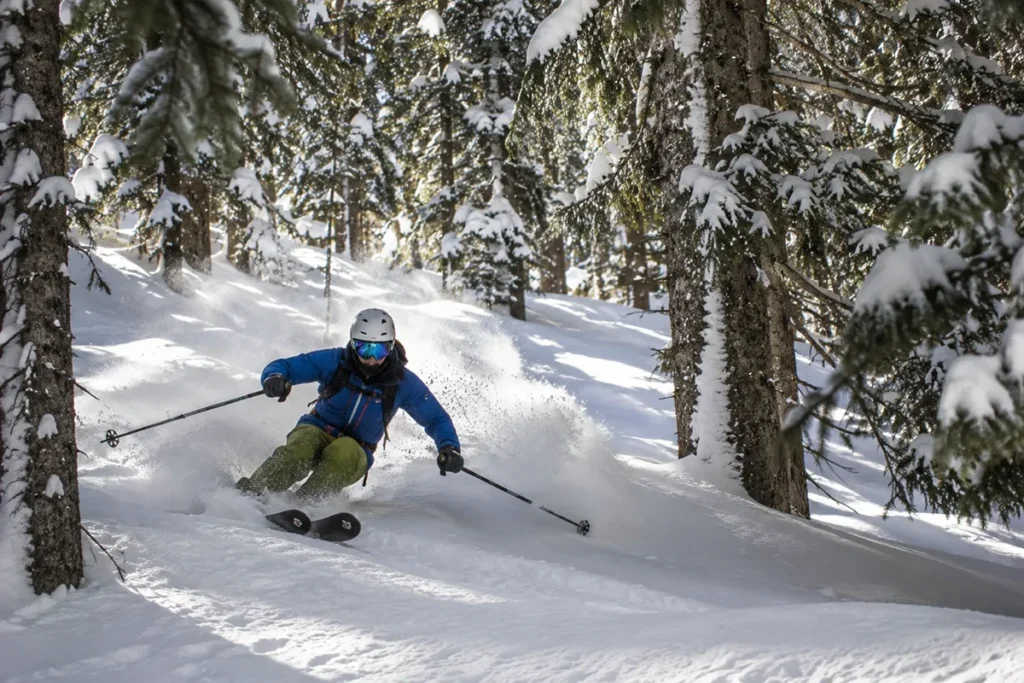
Roughly 500 of Snowbowl’s 950 acres are designated glade skiing — tree zones that hold snow well after storms and stay interesting throughout the day.
This is the highest proportional glade-skiing footprint of any Montana resort. If you’re a tree skier, this is your mountain.
A few specific advanced zones worth knowing:
- TV Mountain — the prominent steep face accessed by the Grizzly Chair
- East Bowl — north-facing terrain that holds snow longest
- The “Backside” terrain — accessed via traverses from the top of the Grizzly Chair, includes Lolo Peak access
- Designated glades scattered across the mountain — among the best lift-accessed tree skiing in the state
The Snow Conversation
I have to be honest about something Snowbowl marketing won’t tell you: the snow quality at Snowbowl is more variable than at most other Montana ski areas.
Two factors drive this:
1. Lower base elevation. At 5,000 feet, Snowbowl’s base sits meaningfully lower than Bridger Bowl (6,100 ft), Big Sky (6,800 ft), or Whitefish (4,464 ft is similar but Whitefish’s Pacific moisture compensates). When temperatures rise into the mid-30s, the base area can develop sticky or icy conditions that aren’t an issue at higher-elevation resorts.
2. South-facing aspects. A meaningful portion of Snowbowl’s terrain faces south, which means sun exposure cooks the snow during warm spells and creates crusty conditions between storms.
What this means practically:
- Time your visit around storms. Snowbowl skis spectacularly within 24–48 hours of a fresh dump. Between storms, conditions can deteriorate quickly.
- The north-facing terrain (East Bowl, TV Mountain) stays in better shape than the south-facing terrain when conditions get marginal
- The trees hold snow better than the open runs when sun cooks the open faces
- Cold cycles preserve conditions — if you’re visiting during a deep-cold stretch, the snow stays in good shape
Annual snowfall averages around 300 inches, which is genuinely generous, but the variability of conditions means timing matters more here than at higher-elevation resorts. See how cold Montana gets for context.
Lift Tickets, Passes, and Operating Quirks
Snowbowl pricing is among the most affordable in Montana — and intentionally so. The mountain operates on a small-business, locally-owned model rather than a destination-resort revenue strategy.
Full-day adult lift tickets typically run $55–$75 depending on the date and how far in advance you purchase. [Verify current pricing on montanasnowbowl.com.] Senior, junior, and student discounts are available, and ages 5 and under ski free.
Snowbowl is also an Indy Pass partner in recent seasons, with two days of skiing on the standard Indy Pass and additional days on Indy+. [Verify current Indy Pass terms each season.]
The Operating Schedule
This is genuinely important and often missed by visitors. Snowbowl historically operates a partial week schedule, with recent seasons typically running:
- Open: Monday, Wednesday–Sunday
- Closed: Tuesdays
- Hours: 9:30am–4:00pm
This is unusual among Montana ski areas and can trip up visitors who assume a daily schedule. Always verify the current operating days before your trip — the schedule can shift season to season, and powder days sometimes change normal operating patterns.
The reason for the schedule comes back to Snowbowl’s nature: it’s a community ski area that operates on its own economic and operational logic, not a destination resort optimizing for visitor density.
The shorter week keeps operating costs sustainable for the mountain and concentrates skier visits into productive operating days.
Slope-Side Lodging (Rare for an Urban-Adjacent Resort)
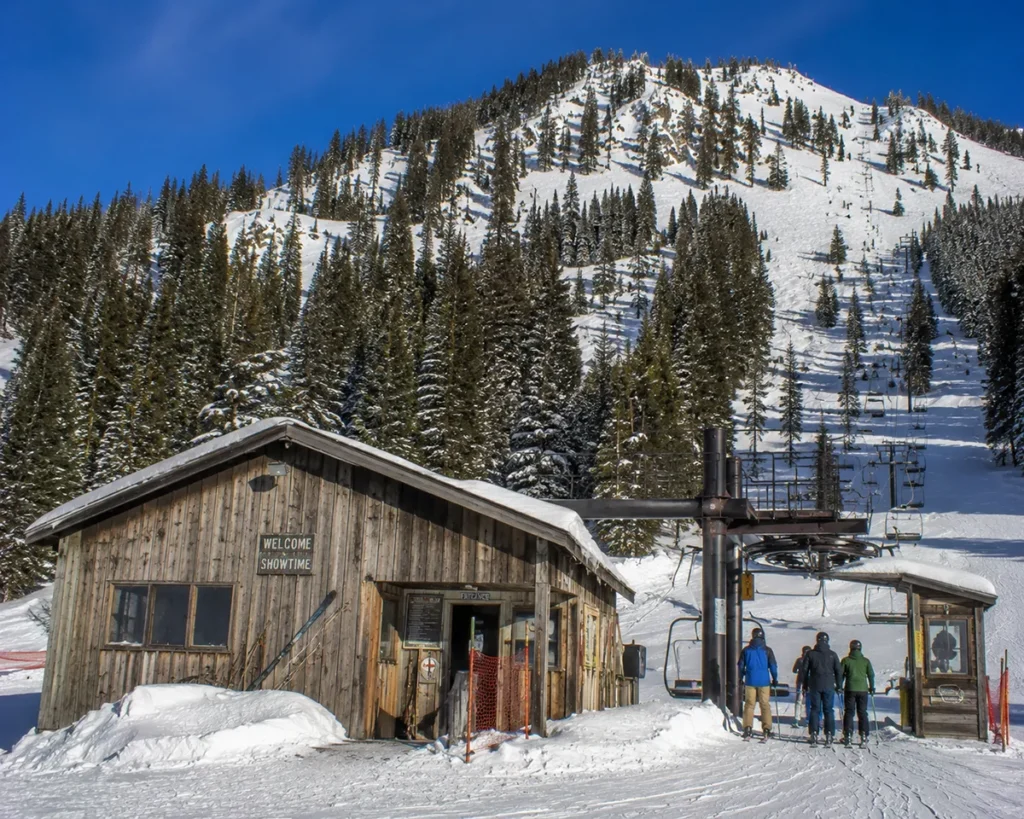
Most ski areas this close to a major city don’t offer on-mountain lodging — visitors just stay in town. Snowbowl is an exception. The mountain has slope-side lodging in the form of cabins and lodge rooms at the base area.
A few specifics:
- The lodging is modest by destination-resort standards — comfortable, functional, not luxury
- The advantage is the ski-in/ski-out access and the ability to be there for first lifts on a powder day
- The disadvantage is that you’re 25 minutes from Missoula’s food and culture, and the on-mountain dining is limited
For most visitors, staying in Missoula makes more sense than staying at the mountain. The city has more lodging options, dramatically better food, and a real Montana college-town atmosphere. See hotels in Missoula for options.
Missoula: The Real Reason to Make This Trip
I’ll say it plainly: Snowbowl is more interesting as part of a Missoula trip than as a solo ski destination. The town adds the dimension that the mountain alone doesn’t.
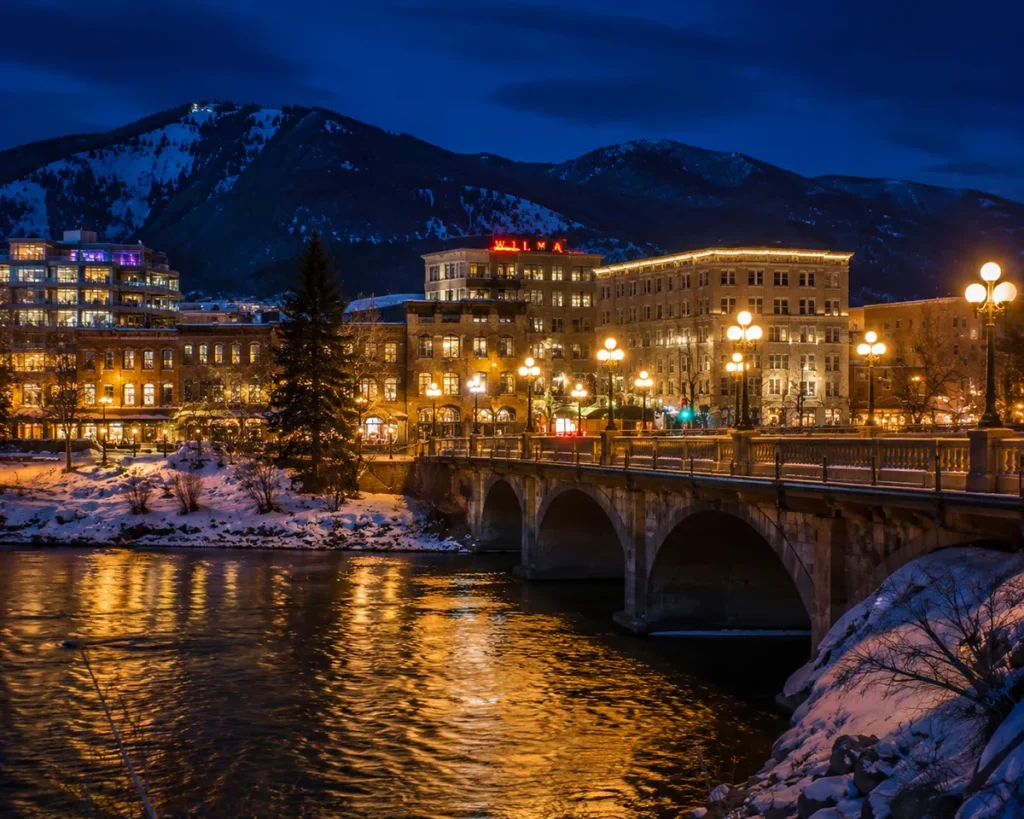
Missoula is one of the most genuinely interesting small cities in the American West. Home to the University of Montana (best colleges in Montana), the city sits in the Clark Fork river valley surrounded by mountains in every direction.
The downtown is walkable, the food scene is exceptional for a city this size, and the cultural energy that comes from a university town of 75,000 people punches well above its weight.
Specifics worth knowing:
- Missoula breweries — one of the most concentrated craft brewery scenes in the West
- Downtown food — multiple James Beard-nominated restaurants and a strong casual scene. See best restaurants in Montana for some of the regional standouts.
- The Wilma — historic downtown theater hosting concerts and films
- A Carousel for Missoula — quirky, family-friendly downtown attraction
- River access — the Clark Fork runs right through downtown
- Bookstores, music venues, and outdoor gear shops scattered through walkable downtown
A common itinerary: ski Snowbowl Thursday and Friday, dinner and brewery hopping in downtown Missoula Friday night, ski half-day Saturday, dinner in town again. That rhythm works.
What I Wish I Knew Before Skiing Snowbowl
A few things I’d tell my pre-Snowbowl self.
Plan for variable conditions. Don’t assume Snowbowl is going to ski like Big Sky on a random Tuesday. Check the snow report aggressively, watch storm forecasts, and time your trip around fresh snow if possible.
Stay in Missoula, not at the mountain. Unless you specifically want first-lift powder priority, the food and culture upside of staying in downtown Missoula far outweighs the on-mountain convenience. See hotels in Missoula.
Verify the operating schedule before driving up. Snowbowl’s day-of-week schedule is unusual. Check the current published days before you assume the resort is open.
Don’t bring a beginner here. This isn’t subtle. Snowbowl has limited beginner terrain, the trail map skews expert, and a nervous learner can have a frustrating day. If your group includes any non-skiers or absolute beginners, plan a different mountain.
The trees are the real attraction. First-time visitors often focus on the named groomed runs. Locals know the action is in the designated glade zones — 500 acres of them. Bring fatter skis if you have them, and don’t be afraid to drop into the trees on the marked glade sections.
Combine with a multi-resort Missoula-area trip. Snowbowl pairs naturally with Lost Trail Powder Mountain (90 minutes south), Discovery Ski Area (90 minutes east), and Lookout Pass (90 minutes west). A four-mountain Missoula-based ski week is one of the most underrated Montana itineraries available, and Indy Pass holders can ski all four on the same pass.
The University of Montana ski culture is real. If you’re skiing here on a weekday between class breaks, you’ll find yourself sharing the lift with college students who know the mountain intimately. They’re friendly and tend to ski hard. Strike up conversations.
Montana Snowbowl Compared to the Other 17 Montana Ski Areas
Quick honest comparisons.
Vs. Bridger Bowl: The natural comparison — both are college-town local mountains 15-20 minutes from a major university. Bridger has more snow, lighter snow (“cold smoke”), more terrain, and more authentic culture. Snowbowl has cheaper tickets, more accessibility to a real city with food and culture, and steeper average pitch. Bridger is more famous; Snowbowl is more accessible.
Vs. Discovery Ski Area: Discovery has more terrain, more variety, better intermediate skiing, and a more interesting backside expert zone. Snowbowl is more convenient to Missoula and has steeper average pitch. For a one-day visit from Missoula, Snowbowl. For a multi-day base, Discovery.
Vs. Lost Trail Powder Mountain: Lost Trail gets dramatically more snow and feels far more remote (90 minutes south of Missoula vs. 25 minutes for Snowbowl). Lost Trail operates Thursday-Sunday only. The two complement each other — Snowbowl for weekday lunch laps, Lost Trail for committed powder pilgrimages.
Vs. Big Sky and Whitefish: These are destination resorts with everything Snowbowl doesn’t have: amenities, deep snow consistently, easier access. Snowbowl is a local skier’s mountain. The comparison isn’t really fair — they’re different products.
For the full picture, see the Montana ski resorts pillar guide.
Montana Snowbowl: At-a-Glance
| Vertical Drop | 2,600 ft |
|---|---|
| Skiable Acres | 950 (500 acres designated glade skiing) |
| Top Elevation | 7,600 ft |
| Base Elevation | 5,000 ft |
| Annual Snowfall | ~300 inches (variable conditions due to lower base elevation) |
| Terrain Breakdown | Limited beginner, moderate intermediate, ~60–75% advanced/expert |
| Trails | ~39 named runs |
| Longest Run | 3 miles |
| Lifts | 3 double chairs + surface lifts (T-bar, rope tow) |
| Lift Ticket | $55–$75 range [verify current price] |
| Pass Affiliation | Indy Pass partner [verify current season] |
| Operating Schedule | Typically Wed–Mon (closed Tuesdays) [verify current schedule] |
| Hours | 9:30am–4:00pm |
| Season | Typically early December through early April |
| Ages 5 & Under | Ski FREE |
| Slopeside Lodging | Yes (modest cabin/lodge options) |
| Nearest City | Missoula, 12 miles |
| Nearest Airport | Missoula International (MSO), ~15 miles / 25 min |
| Shuttle Service | Available from Missoula during peak season |
Lift ticket prices, Indy Pass terms, operating schedule, and lift inventory change annually — verify current information on montanasnowbowl.com before booking.
Things to Do in Missoula When You’re Not Skiing
A few highlights for a Missoula-based ski week:
- Missoula breweries — Big Sky Brewing, Bayern, Imagine Nation, KettleHouse, and many more
- University of Montana campus — walk the downtown side and stop at the Mansfield Library
- The Wilma Theater — check the calendar for concerts and films
- Downtown food scene — see best restaurants in Montana for highlights
- Smoke jumper visitor center — small but fascinating museum on aerial firefighting history (summer mainly)
- Hiking the Mount Sentinel “M” trail — well-known trail with the iconic “M” carved into the hillside (summer-mainly but accessible in mild winter)
- Hot springs day trip — Lolo Hot Springs is about 30 minutes southwest of town
For winter lodging strategy, see winter Airbnbs in Montana.

Final Thoughts on Montana Snowbowl
Snowbowl is the kind of ski area I’d never recommend as a first Montana ski trip — and one I genuinely love. The mountain isn’t trying to be Big Sky. It isn’t trying to be Whitefish.
It’s trying to be the place where Missoula residents and University of Montana students can ski hard between obligations, and where committed advanced skiers from out of town can find serious terrain at affordable prices in a real Montana college town.
If you’re a confident intermediate or better, time your trip around a storm, base in downtown Missoula, and treat the resort as one piece of a broader Missoula experience, Snowbowl delivers a uniquely Montana ski day.
The trees hold snow for days after storms. The lift lines are nonexistent on weekdays. The lift tickets are among the cheapest in the state. And the dinner at a Missoula brewery on the way back into town is part of the rhythm.
If you’re a beginner, a family with mixed abilities, or a destination skier who wants reliable conditions and modern amenities, Snowbowl will frustrate you. Look at Discovery, Lookout Pass, or one of the destination resorts instead.
Pin this guide before your trip planning kicks into gear, and drop your questions in the comments below — I read every one and will happily help you decide if Snowbowl is the right pick for your itinerary, especially if you’re considering an Indy Pass-driven multi-resort Montana week.
Frequently Asked Questions
Where is Montana Snowbowl?
Montana Snowbowl is in Missoula County on Lolo National Forest land, 12 miles northwest of downtown Missoula. The resort is reached via Grant Creek Road and Snowbowl Road from the Grant Creek neighborhood of Missoula. Missoula International Airport (MSO) is approximately 15 miles away — about a 25-minute drive.
How much does a lift ticket at Montana Snowbowl cost?
Full-day adult lift tickets at Montana Snowbowl typically run $55–$75 depending on the date, with online advance purchases offering the best pricing. Ages 5 and under ski free. [Verify current pricing on montanasnowbowl.com.]
Is Montana Snowbowl on the Ikon, Epic, or Indy Pass?
Montana Snowbowl has been an Indy Pass partner in recent seasons, providing two days of access on the standard Indy Pass plus additional days for Indy+ holders. It is not on the Ikon or Epic Pass. [Verify current Indy Pass terms each season.]
What days is Montana Snowbowl open?
Snowbowl has historically operated Monday, Wednesday through Sunday — closed Tuesdays during recent ski seasons. The schedule is unusual among Montana resorts and can shift season to season. Always verify the current published operating days on montanasnowbowl.com before driving up.
Is Montana Snowbowl good for beginners?
Not particularly. Snowbowl has limited beginner terrain — a small base area served by a surface lift, and only one semi-beginner option from the top of the Grizzly Chair. The mountain skews heavily expert. For beginners, Discovery Ski Area, Blacktail Mountain, or Lookout Pass are better choices.
Is Montana Snowbowl good for experts?
Yes. Roughly 60–75% of the terrain is rated advanced or expert, and the mountain has 500 acres of designated glade skiing — among the most lift-accessible tree skiing of any Montana resort. TV Mountain, East Bowl, and the backside terrain offer serious expert skiing.
How is the snow quality at Montana Snowbowl?
Variable. The 5,000-foot base elevation is lower than most Montana ski areas, and some south-facing aspects get sun damage during warm spells. Snowbowl skis spectacularly within 24-48 hours of a fresh storm, but between storms the conditions can deteriorate. Annual snowfall averages around 300 inches.
How far is Montana Snowbowl from the University of Montana?
About 20 minutes by car. The University of Montana campus is in downtown Missoula, and Snowbowl is 12 miles northwest. The proximity is why so many UM students ski Snowbowl regularly during the academic year.
How does Montana Snowbowl compare to Bridger Bowl?
Both are college-town local mountains 15-20 minutes from a major university. Bridger Bowl (north of Bozeman) has more snow, lighter “cold smoke” powder, more terrain, and the famous Ridge. Snowbowl has cheaper lift tickets, more accessibility to a real city with great food and culture, and a steeper average pitch. Both are strong choices for advanced skiers — pick based on which Montana city you’re anchoring in.
Is there lodging at Montana Snowbowl?
Yes, modest slope-side lodging is available at the base area. However, most visitors stay in Missoula — the city offers far more lodging options, dramatically better food and culture, and is only 25 minutes from the mountain. See hotels in Missoula.
Can I combine Montana Snowbowl with other ski areas?
Yes. From Missoula, you can easily reach Lost Trail Powder Mountain (90 minutes south), Discovery Ski Area (90 minutes east), and Lookout Pass (90 minutes west). All four are Indy Pass partners in recent seasons, making a Missoula-based four-mountain ski week one of the best Indy Pass itineraries available in Montana.