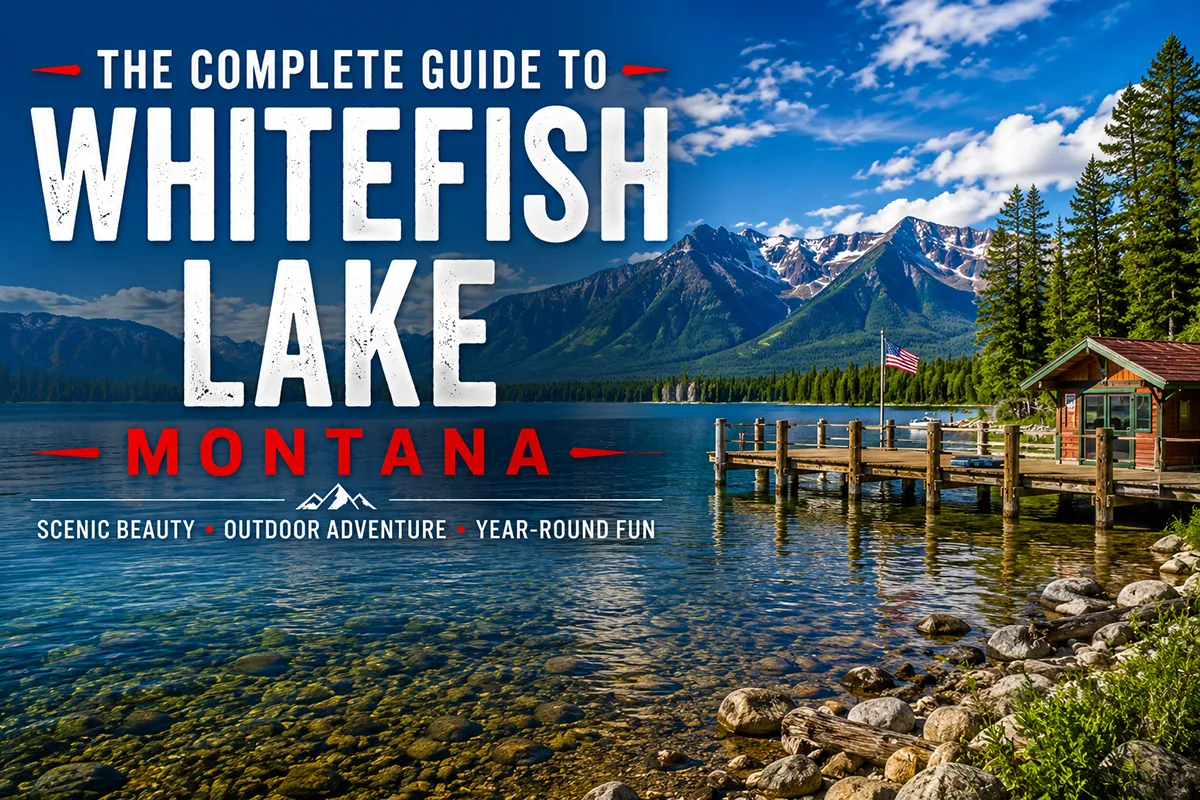
I’ve swum in a lot of Montana lakes that make you gasp on entry, and Whitefish Lake genuinely isn’t one of them — at least not by August. It’s the one lake in this part of the state I actually recommend to people who hate cold water.
Whitefish Lake covers just over five square miles at the base of Whitefish Mountain Resort, making it one of the smaller, warmer, and more swimmable lakes in northwest Montana. This guide covers the two main public access points, water temperature by month, fishing, boating rules, and how the lake changes character between summer and the ski season that made this town famous.
Liked this article?
Add Roaming Montana as a preferred source so you see more of our articles and guides on Google.
Whitefish Lake by the Numbers
- Surface area: approximately 5.2 square miles (about 3,300 acres)
- Maximum depth: approximately 220 feet
- Length: roughly 6.5 miles
- Elevation: about 3,036 feet
The lake sits just north of downtown Whitefish, close enough that you can bike from Central Avenue to the shoreline in under fifteen minutes.
Because it’s smaller and shallower on average than Flathead Lake to the south, its surface water warms noticeably more by mid-summer — one of the reasons it’s the beach of choice for families staying in town.
Where to Access the Lake
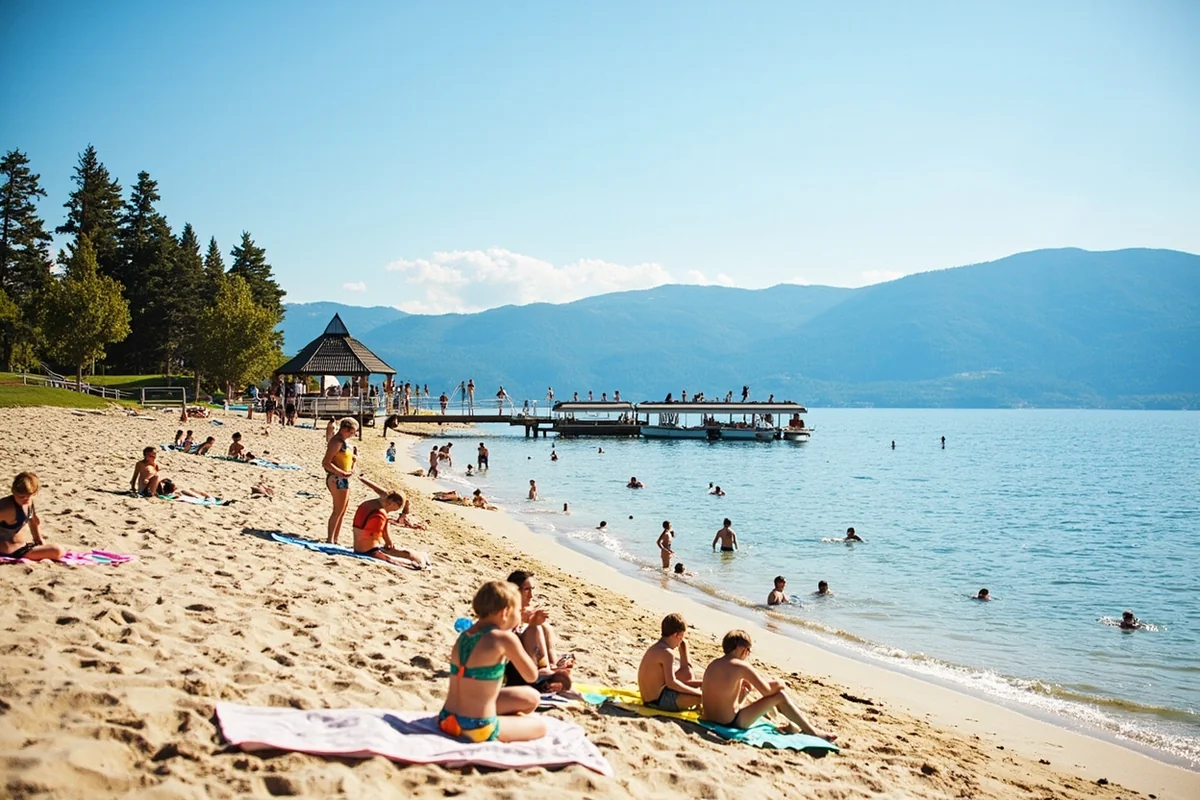
Whitefish City Beach, on the lake’s south shore, is the most popular public access point — a sandy beach with a designated swimming area, a boat launch, picnic tables, and enough parking that I’ve still occasionally had to circle for a spot on a July Saturday afternoon.
This is where most visitors end up, and for good reason: it’s walkable from downtown lodging and has full amenities.
Whitefish Lake State Park, on the southwest shore, offers a quieter alternative with its own boat ramp, rental cabins, and a small campground. I prefer this side when I want fewer people around — it tends to draw more boaters and campers than day-trip swimmers.
Beyond those two main points, a fair amount of the shoreline is private, lined with cabins and homes, so don’t expect to find pull-off access all the way around the lake the way you might at a more public reservoir.
Swimming and Water Temperature
This is the lake I point to when someone tells me they don’t want to swim in “typical cold Montana water.”
By August, Whitefish Lake’s surface temperature regularly climbs into the low-to-mid 70s Fahrenheit in the shallows near the beaches, noticeably warmer than Flathead Lake or anything glacially fed inside the national park.
It’s still a mountain lake, so don’t expect bathwater, but I’ve spent a full afternoon in the water here without the numbness I get at Avalanche or McDonald.
June and early July are a different story — snowmelt inflow keeps the lake cold well into early summer, so if you’re visiting before the Fourth of July, pack a wetsuit or plan on a shorter swim.
Fishing Whitefish Lake
The lake supports a mixed fishery of kokanee salmon, lake trout, yellow perch, and northern pike.
Kokanee fishing draws a dedicated local following in the fall as the fish stage for their spawning run, and I’ve watched anglers line the shoreline near the state park during that window.
A standard Montana fishing license covers the lake — no tribal permit needed here, unlike the southern half of Flathead Lake.
Boating on Whitefish Lake
Motorized boats, water skiing, and wakeboarding are all common on the lake, particularly in the open water toward the center.
Both public access points have boat ramps, and the lake’s smaller size means it’s genuinely possible to circle the whole shoreline by boat in an afternoon if you want the full tour.
Personal watercraft are permitted but subject to Montana’s general boating regulations, and I’d recommend checking current speed zone maps before heading out, since some near-shore areas have restrictions to protect swimmers.
Whitefish Lake in Winter
It’s easy to forget this lake exists once ski season starts, since all the attention shifts to Whitefish Mountain Resort a few miles away.
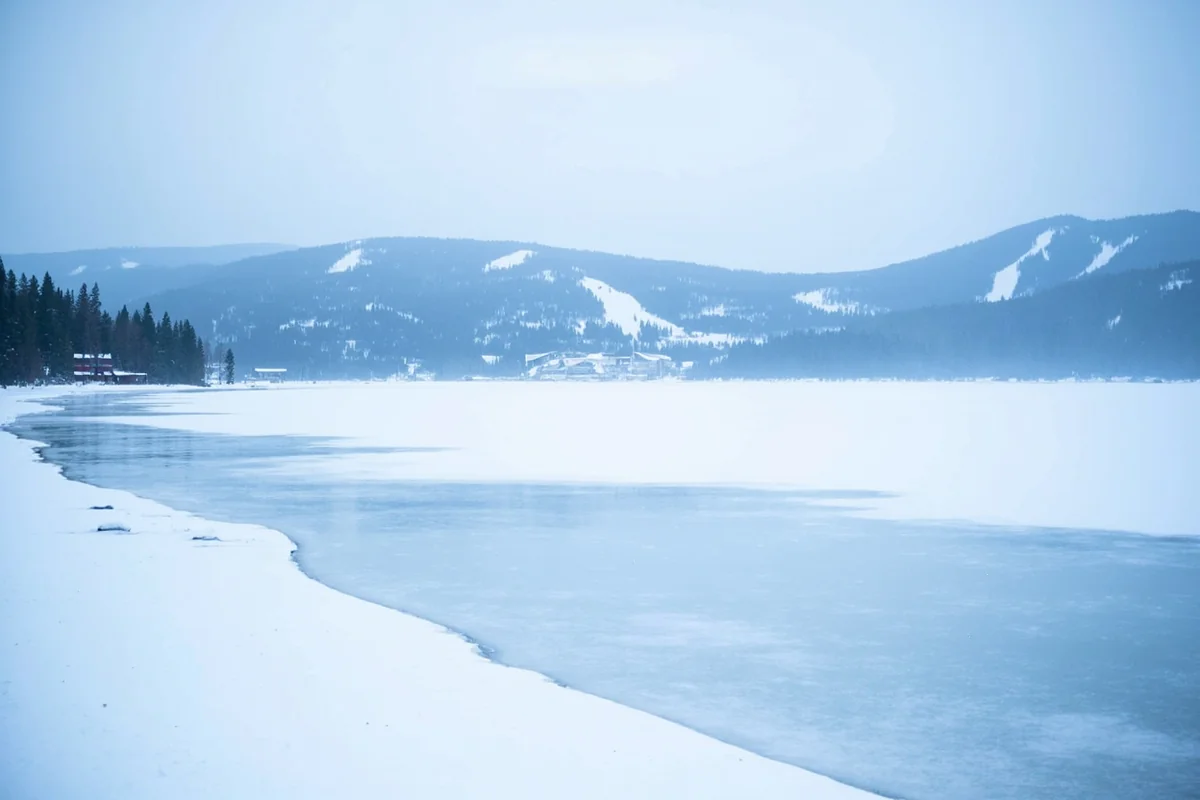
But the lake itself becomes a genuine winter attraction in its own right — when it freezes solid enough, locals ice fish, ice skate, and even cross-country ski across sections of it.
I wouldn’t recommend heading out onto the ice without checking current conditions and local guidance first, since ice thickness varies year to year and season to season.
For the full rundown on the resort and winter town experience, see my Whitefish in winter guide.
A Bit of History
Whitefish Lake’s shoreline has a working history that predates its current identity as a resort-town amenity.
The Great Northern Railway’s arrival in the early 1900s turned the area into a logging and rail hub, and the lake itself was used for log drives and storage in the early 20th century before the town’s economy shifted toward tourism and, eventually, skiing after Big Mountain (now Whitefish Mountain Resort) opened in 1947.
I’ve talked to longtime residents who remember when the lakeshore was almost entirely undeveloped forest rather than the mix of private cabins and vacation homes you see today.
That development history matters for visitors because it explains why so much of the shoreline is private property.
Unlike some of Montana’s more rural lakes, where public land rings most of the water, Whitefish Lake’s shore is largely lined with residential lots, which is exactly why the two public access points — City Beach and the state park — carry so much of the visitor traffic. There isn’t a lot of casual pull-off access elsewhere around the lake.
Whitefish Lake vs. Nearby Alternatives
If City Beach feels too crowded on a summer weekend, I usually point people toward one of two alternatives depending on what they want.
Tally Lake, about 25 minutes west, is one of the deepest lakes in Montana and sees a fraction of the visitor traffic, though it has fewer amenities.
For something closer to town with a similar family-friendly feel, the state park side of Whitefish Lake itself, rather than City Beach, is often the better call — same lake, noticeably fewer people.
I’ve also had visitors ask whether Whitefish Lake or nearby Flathead Lake is the better home base for a family trip.
My honest answer: Whitefish Lake wins on convenience and warmer water for young kids, while Flathead Lake wins on variety — more towns, more restaurants, more lodging options, and a genuinely different landscape to explore if you’re staying more than a couple of days.
Many visitors end up splitting time between both, which is easy enough given they’re only about 30 minutes apart.
Sunset Paddling
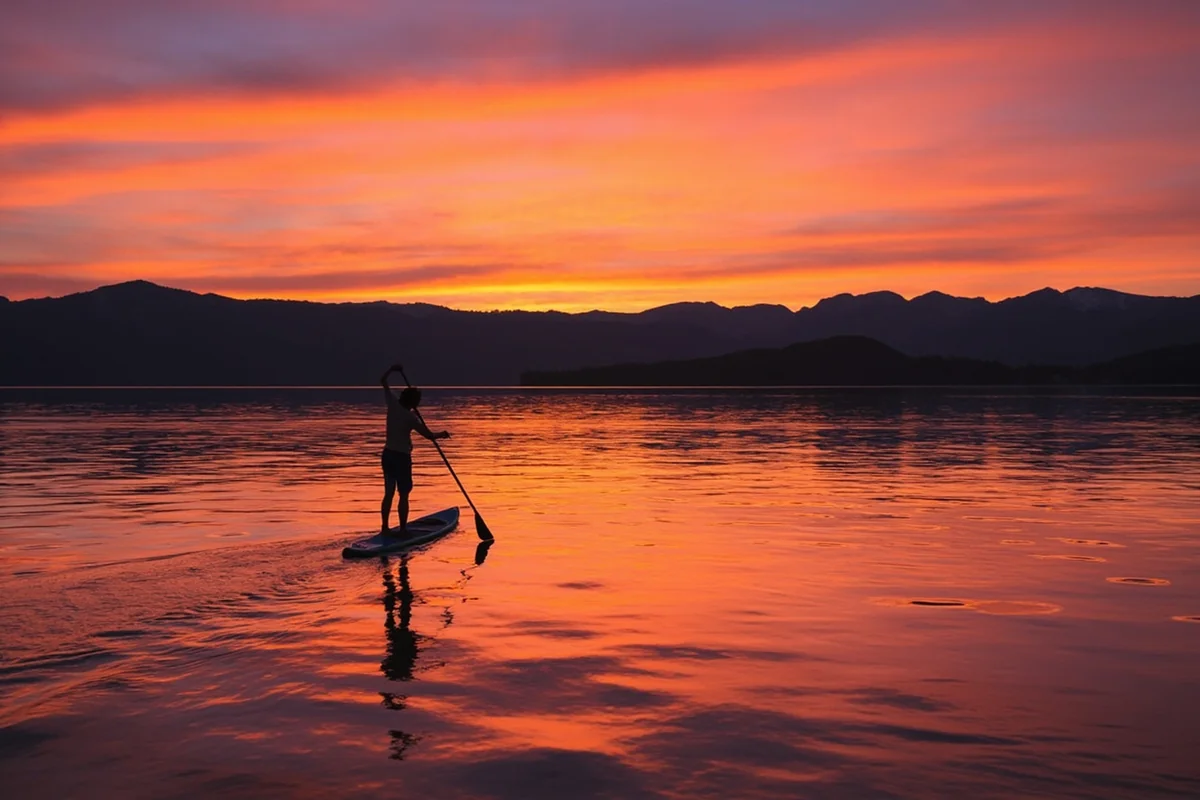
One of my favorite low-key ways to experience this lake is a sunset paddleboard session from City Beach in late summer, once the daytime wind dies down and the water goes nearly flat.
The light hits Whitefish Mountain in the background in a way that’s hard to capture from land, and because most day visitors have already packed up by then, the beach itself feels almost private for that last hour before dark.
Local Events on the Lake
Whitefish’s Huckleberry Days Art Festival in early August draws crowds into town and, by extension, adds visitor pressure to the lake that same weekend — worth knowing if you’re hoping for a quiet beach day.
The lake also hosts informal sailing and paddleboard groups throughout the summer, and I’ve watched more than one casual regatta form up near City Beach on a breezy afternoon.
Personal Tips / What I Wish I Knew
City Beach gets crowded by early afternoon. If you want a good spot, I aim to arrive before 11 a.m. on summer weekends, especially around the Fourth of July and Huckleberry Days festival weekend in early August.
The state park side is better for longer stays. If you’re camping or bringing a boat for the whole day, Whitefish Lake State Park has more room to spread out than the beach.
Kokanee fishing in September and October is underrated. Most visitors think of this as a purely summer lake, but the fall kokanee run brings out serious local anglers and is worth timing a trip around if fishing is your priority.
Pair it with a mountain day. Because the lake sits so close to Whitefish Mountain Resort, I’ve done mornings on the lake followed by an afternoon gondola ride on the same day more than once — it’s one of the more efficient combinations in the whole region.
Getting There and Getting Around
Whitefish Lake sits close enough to downtown that I’ve made the trip on foot before, though it’s a solid 30-40 minute walk from Central Avenue to City Beach and most visitors drive or bike it.
Parking at City Beach is a paid lot in peak season [verify current rates], and it fills up by late morning on summer weekends and holidays.
If you’re staying downtown without a car, a bike rental is genuinely one of the better ways to get out to the lake — the ride is mostly flat and takes about 15 minutes at an easy pace.
If you’re coming from Glacier National Park’s west entrance, the lake is roughly a 25-minute drive, which makes it an easy add-on to a Glacier day if you want to cool off with a swim before or after visiting the park.
For lodging close enough to walk or bike to the lake, see my where to stay in Whitefish guide, and for help timing your trip around both lake weather and ski season, my best time to visit Montana guide breaks down what to expect month by month.
Renting Gear on the Lake
Both public access points have nearby rental operations for kayaks, paddleboards, and small boats, and several outfitters based in downtown Whitefish will deliver gear directly to the lake if you’d rather not deal with transporting it yourself.
I’ve rented paddleboards here on a whim more than once and always found availability even without advance booking, though I’d still call ahead on major holiday weekends just to be safe.
Practical Info: Whitefish Lake
| Best season to visit | Late June through early September for swimming; December through March for winter lake activities |
| Water temperature (August) | Low-to-mid 70s°F in shallows near the beaches |
| Main access points | Whitefish City Beach (south shore) and Whitefish Lake State Park (southwest shore) |
| Fishing license | Standard Montana state fishing license |
| Nearest airport | Glacier Park International Airport (FCA), about 15 minutes away |
| Nearby lodging | Downtown Whitefish, a short drive or bike ride from the lake |
Frequently Asked Questions
Is Whitefish Lake warmer than Flathead Lake?
Generally yes, especially in the shallows near the beaches by August, since Whitefish Lake is smaller and warms up faster than the much larger, deeper Flathead Lake.
How deep is Whitefish Lake?
Whitefish Lake reaches a maximum depth of approximately 220 feet.
Is there a public beach on Whitefish Lake?
Yes, Whitefish City Beach on the south shore is the main public swimming beach, with Whitefish Lake State Park offering a second, quieter access point.
Can you fish Whitefish Lake year-round?
Yes, with a valid Montana fishing license, including ice fishing once the lake freezes over in winter.
How far is Whitefish Lake from Whitefish Mountain Resort?
About 10–15 minutes by car, making it easy to combine a lake day with a mountain visit.
Is most of Whitefish Lake’s shoreline public or private?
Mostly private. The shoreline is largely lined with cabins and homes, which is why the two public access points — Whitefish City Beach and Whitefish Lake State Park — see the bulk of visitor traffic.
What’s the best month to visit Whitefish Lake?
August offers the warmest water, though July and early September are quieter alternatives with still-comfortable swimming temperatures.
Is Whitefish Lake good for kayaking?
Yes, especially in the morning before wind picks up, and its smaller size compared to Flathead Lake makes a full-shoreline paddle realistic in a single outing.
I’ve now brought friends and family to this lake enough times that I can predict, almost to the week, when it’ll be busiest and when it’ll be nearly empty. That kind of familiarity is exactly what I hope this guide gives you a head start on, even on a first visit.
Final Thoughts
Whitefish Lake is proof that not every Montana lake has to punish you with cold water to be worth a visit.
It’s small enough to feel manageable, warm enough to actually enjoy swimming in by mid-summer, and close enough to downtown Whitefish that it fits easily into a bigger trip built around the mountain.
For the full Whitefish town guide, see things to do in Whitefish, MT, and for more of the region’s best lakes, check the complete guide to Montana’s best lakes.