On October 9, 1895, a federal commission led by George Bird Grinnell signed an agreement with the Fort Belknap Indian Community.
The agreement was, ostensibly, a purchase. The federal government would pay the tribe for a substantial 49 square-mile tract of land encompassing the Little Rocky Mountains — the substantial laccolithic dome rising from the surrounding Great Plains in what is now southwestern Phillips County.
The negotiations were, in fact, coercive. During the substantial negotiations, Grinnell and other members of the federal commission told Fort Belknap Indian leaders that the tribe would not receive promised rations if the agreement was not signed.
The tribe signed.
Within months of Congressional ratification, mining prospectors substantially flooded the Little Rockies. The substantial mining districts of Zortman and Landusky were substantially rapidly built. Substantial gold and silver claims were filed across the entire former tribal territory.
By the early 1920s, the substantial mining town of Zortman — named for Oliver “Pete” Zortman, the substantial prospector who had built one of the substantial first mills in the area — had grown to approximately 2,000 residents. Substantial businesses and substantial mining operations lined the substantial streets.
The substantial Ruby Gulch Mine — developed in 1898 by Charles Whitcomb — was producing as much as $14,000 per day in gold bullion. In 1903, Whitcomb built what would become the second-largest cyanide mill in the world with 100-ton capacity.
Three substantial catastrophes substantially ended the boom. A substantial fire in 1912 substantially crippled the Ruby Gulch operation. A substantial wildfire swept the Little Rockies in 1936, substantially destroying most of the mining infrastructure.
The substantial War Production Board Order L-208 of 1942 substantially shut down all non-essential gold mining during World War II. By the substantial late 1940s, with substantial depressed post-war gold prices and substantial high operating costs, the mines could not substantially reopen.
By the 1970s, Zortman’s population had collapsed to 21 people.
In 1979, the substantial Pegasus Gold Corporation of Spokane, Washington, substantially purchased the Zortman-Landusky claims and substantially established two open-pit cyanide heap-leach mines. Over the next two substantial decades, substantial multiple cyanide spills contaminated Fort Belknap tribal watersheds. In 1996, Pegasus Gold substantially agreed to $37 million in remediation.
In 1998, the substantial company declared bankruptcy and left the State of Montana to substantially clean up the substantial contamination. In 2002, the substantial Fort Belknap tribes sued the State of Montana for substantial damages to their watersheds.
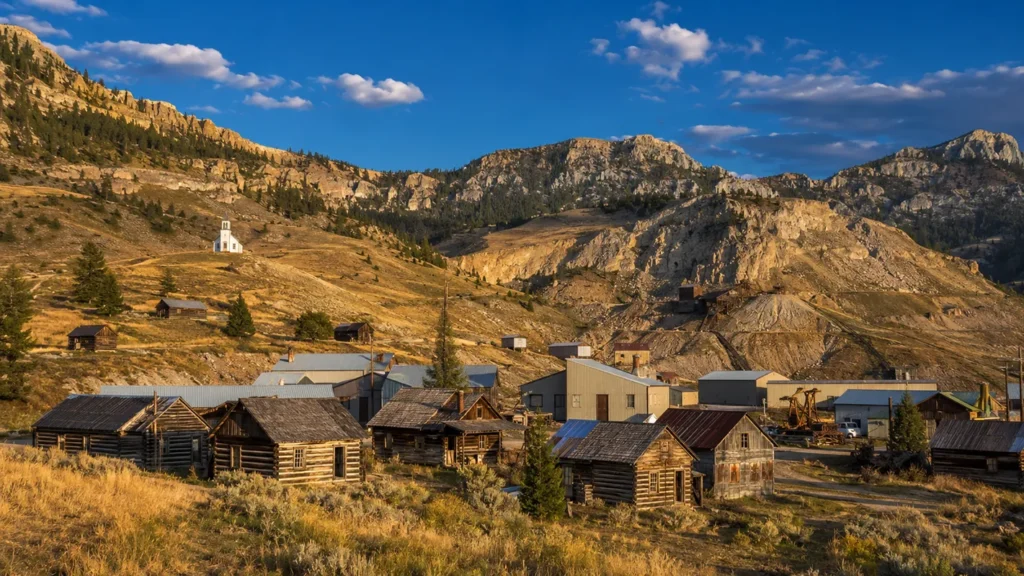
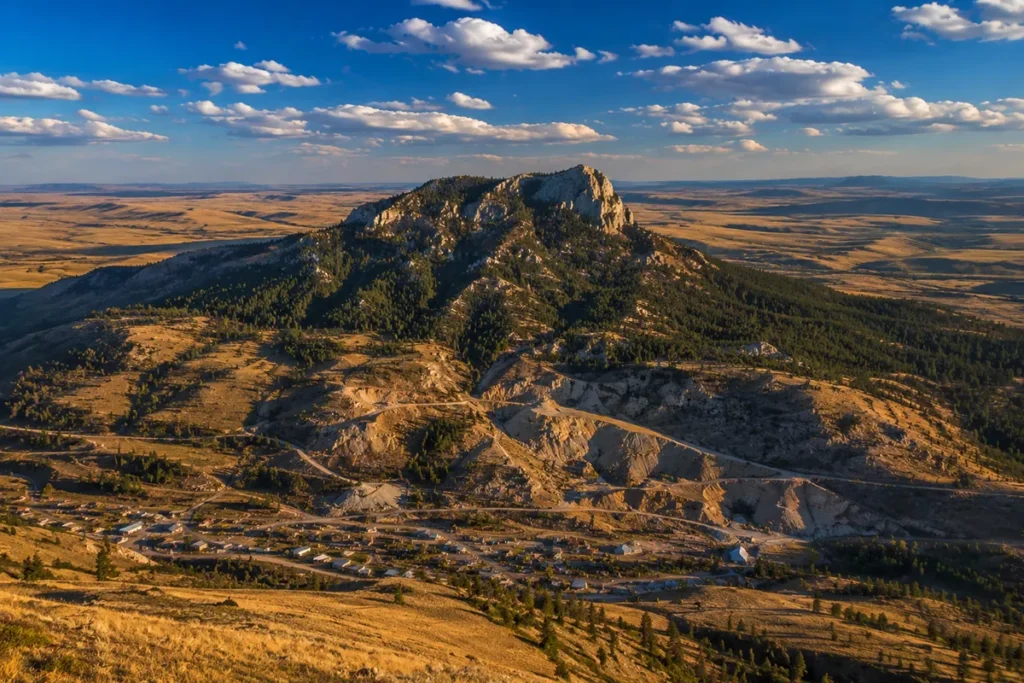
Today, Zortman is home to approximately 60 residents. Historic log cabins and miners’ shacks lean against substantial modern buildings and trailers in a substantial mishmash of architecture.
A substantial white clapboard church sits high on a substantial grassy mountainside above town. Precipitation runoff from the substantial abandoned mines still substantially flows into tributaries of the substantial Milk and Missouri Rivers.
TL;DR
- Zortman (~60) is an unincorporated community in southwestern Phillips County, in the substantial Little Rocky Mountains, just south of the Fort Belknap Indian Reservation.
- The community was substantially founded in 1890 after Pike Landusky and Bob Ormond struck a substantial rich vein; named for prospector Oliver “Pete” Zortman, who built one of the first mills.
- The substantial October 9, 1895 George Bird Grinnell agreement — substantially negotiated under coercion (threats to withhold rations from the Fort Belknap Indian Community) — substantially transferred 49 square miles of the Little Rockies from tribal control to federal control, substantially opening the area to mining.
- The substantial Ruby Gulch Mine (developed 1898 by Charles Whitcomb) produced as much as $14,000/day in gold; in 1903, Whitcomb built the substantial second-largest cyanide mill in the world (100-ton capacity).
- 1912 fire, 1936 wildfire, and WWII Order L-208 substantially ended the boom era. Total $125 million in gold was substantially extracted from Zortman, Landusky, and Beaver Creek mines before 1949.
- Pegasus Gold Corporation (Spokane, WA) operated open-pit cyanide heap-leach mines from 1979 until substantial bankruptcy in 1998, substantially leaving the State of Montana to clean up the substantial contamination.
- In 2002, the Fort Belknap tribes sued the State of Montana for substantial watershed damages from the Pegasus Gold operations.
- Population peaked at ~2,000 in the 1920s; collapsed to 21 by the 1970s; today ~60.
- Best for: Mining heritage travelers, ghost town exploration, Little Rocky Mountains recreation, complex Montana environmental history.
Liked this article?
Add Roaming Montana as a preferred source so you see more of our articles and guides on Google.
Zortman at a Glance
| Population (estimated) | ~60 |
|---|---|
| Population (1920s peak) | ~2,000 |
| Population (1970s low) | 21 |
| County | Phillips County |
| Status | Unincorporated mining ghost town |
| Region | North-Central Montana (Little Rocky Mountains) |
| Elevation | 4,024 ft |
| Mountain range | Little Rocky Mountains (laccolithic dome) |
| Nearest reservation | Fort Belknap Indian Reservation (just north) |
| Distance to Landusky (sister ghost town) | ~2 miles |
| Distance to Malta | ~50 miles northeast |
| Distance to Harlem (Fort Belknap Agency HQ) | ~45 miles north |
| Distance to Hays | ~35 miles north |
| Distance to Lewistown | ~80 miles south |
| Distance to Havre | ~110 miles northwest |
| Distance to Great Falls | ~150 miles southwest |
| Founded | 1890 |
| Named for | Oliver “Pete” Zortman |
| Best for | Mining heritage, ghost town exploration, Little Rockies recreation, complex environmental history |
What Makes Zortman Different
Four distinct stories define Zortman: the controversial 1895 Grinnell agreement, the gold rush boom era, the catastrophic end, and the Pegasus Gold environmental disaster.
The Pre-1895 Heritage
The substantial Little Rocky Mountains had been substantial sacred territory and substantial hunting grounds for substantial Indigenous peoples for substantial thousands of years before substantial European-American arrival.
By the substantial late 19th century, the substantial mountains were substantially included within the substantial Fort Belknap Indian Reservation — home to the substantial Aaniiih (Gros Ventre) and Nakoda (Assiniboine) peoples (see my Hays post for substantial broader Fort Belknap context).
The substantial original southern boundary of the Fort Belknap Reservation followed the substantial drainage divide between the Milk River to the north and the Missouri River to the south — running approximately along the crest of the substantial Little Rocky Mountains. The substantial mountains themselves were substantially tribal territory.
The 1884 Placer Gold Discovery
In 1884 — eleven years before the substantial 1895 agreement — placer gold was substantially first discovered in Little Rockies by prospectors operating from the Black Hills of South Dakota.
The substantial initial discovery was substantial small. Only substantial minor placer gold was substantially exploited at first. But the substantial source lodes hinted at substantial larger deposits underground.
For the substantial next decade, substantial limited prospecting continued — substantially constrained by the substantial fact that the substantial mountains were on substantial reservation land.
The October 9, 1895 Grinnell Agreement
On October 9, 1895, a substantial federal commission led by George Bird Grinnell — substantial naturalist, ethnographer, and substantial later co-founder of the Boone and Crockett Club — substantially negotiated with the substantial Fort Belknap Indian Community.
The substantial agreement was, ostensibly, a substantial purchase. The substantial federal government would substantially pay the tribe for a substantial 49 square-mile tract encompassing the substantial Little Rocky Mountains.
The substantial agreement, if ratified, would substantially extinguish tribal land rights to the substantial mountains and substantially open them to substantial mining.
The substantial negotiations were, in substantial historical reality, coercive.
During the substantial negotiations, the substantial Grinnell-led federal commission substantially told the substantial Fort Belknap Indian leaders that the substantial tribe would not receive promised rations if the substantial agreement was not signed.
The substantial threat of substantial withholding food during the substantial substantially severe northern Montana winters was substantial substantial coercion.
The substantial tribe substantially signed.
Within months of the substantial agreement being substantially ratified by Congress, substantial mining prospectors substantially flooded the Little Rockies. The substantial mining districts of Zortman and Landusky were substantially rapidly built. Substantial gold and silver claims were substantially filed across the substantial former tribal territory.
The substantial 1895 agreement substantially set up the substantial subsequent century-and-a-quarter of substantial gold mining in the substantial Little Rockies — substantial including all of the substantial subsequent environmental damage that the substantial Fort Belknap tribes would substantially have to substantially deal with.
The 1890 Founding and Oliver “Pete” Zortman
The substantial community of Zortman itself substantially traces to 1890 — five years before the substantial Grinnell agreement, when substantial prospectors were substantially still operating substantial illicitly on reservation land.
In 1890, prospectors Pike Landusky and Bob Ormond substantially struck a substantial rich gold vein. The substantial discovery substantially triggered a substantial small gold rush.
Oliver “Pete” Zortman — a substantial prospector originally from Alabama — substantially established his substantial own claim and substantially built a substantial mill with a substantial partner. The substantial mill substantially extracted low-grade ore from substantial rock. Zortman substantially named his substantial primary mine the Alabama Mine for his substantial home state. Over substantial subsequent operations, the substantial Alabama Mine substantially extracted approximately $600,000 worth of gold.
The substantial community that substantially grew up around the substantial mining operations took its substantial name from Pete Zortman.
The 1898 Ruby Gulch Mine
The substantial single most substantially productive mine in Zortman history was the substantial Ruby Gulch Mine.
In 1898, Charles Whitcomb substantially developed the substantial Ruby Gulch claim approximately 2.5 miles from substantial Zortman. The substantial mine substantially turned out to be one of the substantial richest gold deposits in the substantial entire region. The substantial Ruby Gulch substantially produced as much as $14,000 per day in gold bullion during peak operations.
The 1903 World’s Second-Largest Cyanide Mill
In 1903, Whitcomb substantially constructed a substantial new mill at Ruby Gulch.
The substantial mill used substantial cyanide leaching — the substantial chemical process for substantial extracting gold from substantial low-grade ores that had substantially revolutionized the substantial American gold mining industry in the 1890s.
The substantial new Whitcomb mill had a substantial 100-ton capacity — substantial making it the substantial second-largest cyanide mill in the entire world. The substantial size substantially reflected the substantial substantial Ruby Gulch ore body.
The 1912 Fire
In 1912, a substantial fire substantially crippled the substantial Ruby Gulch mine and substantial mill complex.
Substantial operations substantially recovered in stages. The substantial mine substantially flourished through World War I (1914-1918). After the substantial war, the substantial mine substantially shut down briefly before substantially reopening in the substantial early 1930s under the substantial Little Ben Mining Company.
The 1920s Boom
By the substantial early 1920s, Zortman had substantially grown to approximately 2,000 residents — substantially making it one of the substantially larger communities in north-central Montana.
Substantial businesses substantially lined the substantial streets. Substantial substantial multiple mines substantially operated in the substantial surrounding hills.
Substantial substantial transportation infrastructure — substantial wagon roads, substantial freight hauling, substantial later early automobile traffic — substantially connected substantial Zortman to substantial broader Phillips County and beyond.
The 1936 Wildfire
In 1936, a substantial destructive wildfire substantially swept through the substantial Little Rockies.
The substantial fire substantially destroyed substantial most of the substantial mining infrastructure. Substantial mills, substantial buildings, substantial timber supports, substantial railroad spurs — substantial all were substantially destroyed.
The substantial mines substantially rebuilt slowly throughout the substantial late 1930s.
Order L-208 and the End of the Boom
In October 1942, the substantial U.S. War Production Board substantially issued Order L-208 — substantial federal regulation that substantially halted all non-essential gold mining for the substantial duration of World War II.
The substantial Zortman mines substantially shut down.
After the substantial war, the substantial mines substantially could not substantial reopen. The substantial post-war gold price was substantially still pegged at the substantial pre-war federal level.
Substantial operating costs had substantial substantially risen substantially during wartime inflation. The substantial economics substantially no longer worked.
Substantial total gold production from the substantial Zortman, Landusky, and Beaver Creek mines through the substantial 1949 final shutdown was substantially estimated at $125 million in gold.
The substantial population substantially dispersed. By the substantial 1970s, only 21 people substantially lived in Zortman.
The 1979-1998 Pegasus Gold Era
In 1979, the substantial Pegasus Gold Corporation of Spokane, Washington, substantially purchased the substantial Zortman-Landusky claims.
The substantial Montana Department of State Lands substantially approved Pegasus Gold’s substantial applications for two open-pit cyanide heap-leach mines in the substantial Little Rocky Mountains.
The substantial new operations were substantially distinct from the substantial earlier underground mining — substantial massive open pits would substantially extract substantial vast quantities of substantial low-grade ore for substantial cyanide processing on the substantial surface.
Over substantial subsequent decades, substantial multiple cyanide spills substantially contaminated Fort Belknap tribal watersheds.
In June 1990, after substantial at least three substantial spills in the substantial previous year, the substantial Fort Belknap Community Council Tribal Health Department substantially issued a substantial notice of violation.
In 1996, Pegasus Gold substantially agreed to begin a substantial $37 million remediation of the substantial massive cyanide contamination that had substantially resulted from substantial operations.
In 1998, Pegasus Gold substantially declared bankruptcy. The substantial substantial bankruptcy substantially left the State of Montana to substantially clean up the substantial substantial contamination.
The 2002 Fort Belknap Lawsuit
In 2002, the substantial Fort Belknap tribes substantially sued the State of Montana for substantial damages to the substantial watershed from the substantial Pegasus Gold operations.
The substantial lawsuit substantially marked the substantial broader contemporary tribal sovereignty efforts substantial regarding the substantial environmental legacy of the substantial 1895 Grinnell agreement and substantial subsequent mining damage.
The Contemporary Community
Today, Zortman is home to approximately 60 residents.
Substantial historic log cabins and substantial miners’ shacks substantially lean between substantial modern buildings and substantial trailers in a substantial “mishmash of architecture.”
A substantial white clapboard church — substantial elegant in its substantial simple design — substantial sits high above the substantial town on a substantial grassy mountainside.
Substantial precipitation runoff from the substantial abandoned Zortman and Landusky mines substantially still substantially flows into substantial tributaries of the substantial Milk and Missouri Rivers — substantial decades after the substantial mining operations substantially ceased.
For broader trip context, see my Montana cities and towns hub, Montana history overview, Montana gold rush hub, and key historical events in Montana.
The Top 6 Things to Do In & Around Zortman
1. Zortman Mining Ghost Town
The signature attraction.
Substantial historic log cabins, substantial miners’ shacks, and substantial mining infrastructure remnants substantially scattered throughout the substantial community. Substantial respect substantial private property; substantial photograph from substantial public viewpoints.
The substantial white clapboard church on the substantial grassy mountainside above town is substantially particularly photographable.
2. Landusky Sister Ghost Town
Approximately 2 miles from Zortman.
Landusky — substantial sister mining community substantially named for substantial Powell “Pike” Landusky (one of the substantial original 1890 prospectors) — substantially provides substantial additional mining ghost town exploration.
The substantial Pike Landusky figure was substantially a substantial colorful local — substantial famously substantial murdered by substantial Kid Curry (Harvey Logan) in substantial 1894.
3. Little Rocky Mountains Recreation
The substantial laccolithic dome of the substantial Little Rocky Mountains substantially provides substantial hiking, substantial dispersed camping, and substantial broader outdoor recreation.
Substantial trails substantially weave through the substantial Bureau of Land Management lands surrounding the substantial mining ghost towns.
Substantial Antelope Creek Nature Trail, substantial Kid Curry Cave Trail (named for the substantial outlaw who substantially murdered Pike Landusky), and substantial Bone Springs Trail are substantial among the substantial best local hikes.
4. Upper Missouri River Breaks National Monument
The substantial Upper Missouri River Breaks National Monument substantially extends south from the substantial Little Rocky Mountains.
The substantial 375,000-acre monument substantially preserves substantial dramatic Missouri River canyon landscape substantially central to the substantial 1805-1806 Lewis and Clark Expedition. Substantial multiple trailheads accessible from substantial Zortman area roads.
5. UL Bend National Wildlife Refuge
Just south of Zortman.
The substantial UL Bend National Wildlife Refuge substantially preserves a substantial 56,000-acre area within the substantial broader Charles M. Russell National Wildlife Refuge.
Substantial wildlife substantially includes substantial elk, substantial mule deer, substantial pronghorn antelope, substantial substantial sage grouse, and substantial broader prairie species.
6. Day Trip to Malta (50 miles northeast)
The substantial Phillips County seat substantially provides substantial urban services not substantially available in substantial small Zortman.
Substantial attractions include the substantial Dinosaur Field Station (substantial associated with the substantial Judith River Dinosaur Institute), the substantial Phillips County Museum, and substantial substantial broader services.
Where to Stay
Zortman has limited dedicated lodging.
| Lodging | Vibe | Price | Best For |
|---|---|---|---|
| Local Zortman options | Small B&Bs, cabins | $90–160 | Ghost-town travelers |
| Malta hotels (1 hr NE) | Phillips County seat | $100–180 | Most travelers |
| Lewistown lodging (1.5 hrs S) | Fergus County seat | $110–200 | Southern base |
| Harlem options (1 hr N) | Fort Belknap Agency HQ | $90–140 | Reservation-focused |
| Vacation rentals (Zortman/Little Rockies) | Mining-character | $130–250 | Heritage travelers |
Where to Eat
- Local Zortman options — small selection; verify current operations
- Malta dining (1 hr NE) — Phillips County variety
- Lewistown restaurants (1.5 hrs S) — broader Fergus County selection
- Harlem options (1 hr N) — small Hi-Line selection
Getting There & Around
From Malta: ~50 miles southwest via US-191 and county roads, about 1 hour.
From Harlem: ~45 miles south via county roads, about 1 hour.
From Hays: ~35 miles south via county roads, about 50 minutes.
From Dodson: ~50 miles southwest via US-2 and county roads, about 1 hour.
From Lewistown: ~80 miles north on US-191, about 1.5 hours.
From Havre: ~110 miles southeast via US-2 and US-191, about 2 hours.
Cell service: Limited in Zortman and the Little Rockies. Bring offline maps.
When to Visit
Summer (June-August): Best Little Rockies weather; substantial access to all trails; warmest temperatures.
Fall (September-October): Outstanding Little Rockies fall color; cooler temperatures; substantial elk and mule deer wildlife viewing.
Winter (December-March): Severe Montana winter; many roads can be impassable; substantial caution required.
Spring (April-May): Snowmelt; the country greens up; quieter shoulder season.
Personal Tips
Approach the heritage honestly. The substantial Zortman story substantially involves the substantial coercive 1895 Grinnell agreement (substantial Fort Belknap tribes threatened with substantial loss of rations to substantial sign over their substantial mountains for substantial mining), the substantial 1890-1949 boom-era extraction of $125 million in substantial gold, and the substantial 1979-1998 Pegasus Gold environmental disaster that substantially left the State of Montana with substantial cleanup obligations after the substantial company’s bankruptcy. Substantial visitors substantially should substantially understand the substantial complete substantial history rather than substantial just the substantial picturesque ghost-town surface.
Visit the substantial sister ghost town of Landusky. Approximately 2 miles from substantial Zortman, substantial Landusky was named for substantial Pike Landusky — one of the substantial original 1890 prospectors who was substantial later famously murdered by substantial Kid Curry (Harvey Logan) in substantial 1894. The substantial sister ghost town substantially provides substantial additional mining heritage context.
Read about the contemporary contamination. Substantial precipitation runoff from the substantial abandoned Zortman and Landusky mines substantially still substantially flows into substantial tributaries of the substantial Milk and Missouri Rivers — substantial decades after operations ceased. The substantial substantial environmental legacy is substantially ongoing.
Combine with Hays and the broader Fort Belknap Reservation. A substantial visit combining substantial Zortman’s mining ghost town with substantial Hays‘s substantial Aaniiih and Nakoda cultural heritage substantially provides substantial substantively meaningful context for the substantial entire Little Rockies-Fort Belknap landscape.
Don’t disturb substantial property or substantial cultural sites. Substantial Zortman is substantial substantial private property substantially mixed with substantial substantial Bureau of Land Management lands. Substantial respect substantial both. Substantial don’t enter substantial substantial private cabins or substantial substantial active homes. Substantial don’t substantially disturb substantial mining infrastructure or substantial substantial cultural sites.
Bring substantial preparedness. Substantial Zortman is substantial substantially remote. Substantial limited services. Substantial bring substantial substantial food, water, fuel, and substantial substantial cold-weather clothing substantial substantially regardless of substantial season.
Zortman Quick Facts
| Population (estimated) | ~60 | | Peak population (1920s) | ~2,000 | | Low population (1970s) | 21 | | County | Phillips County | | Elevation | 4,024 ft | | Mountain range | Little Rocky Mountains (laccolithic dome) | | Adjacent reservation | Fort Belknap (just north) | | First placer gold discovery | 1884 | | 1895 Grinnell agreement | October 9, 1895 (coercive) | | 49 sq mi tract | Transferred from Fort Belknap | | Permanent settlement founded | 1890 (Pike Landusky and Bob Ormond rich vein) | | Named for | Oliver “Pete” Zortman | | Zortman’s primary mine | Alabama Mine ($600,000 gold) | | Ruby Gulch Mine developed | 1898 (Charles Whitcomb) | | Ruby Gulch peak daily production | $14,000 in gold bullion | | Whitcomb cyanide mill built | 1903 | | Mill ranking | 2nd largest in world (100-ton capacity) | | 1912 fire | Crippled mine | | 1936 wildfire | Destroyed most mining operations | | WWII shutdown | Order L-208 (October 1942) | | Total gold extraction through 1949 | $125 million (Zortman + Landusky + Beaver Creek) | | Total life-of-mine production | 47 million grams gold + 200 million grams silver | | Pegasus Gold purchase | 1979 | | Pegasus Gold operations | Open-pit cyanide heap-leach | | June 1990 violation | Fort Belknap Tribal Health Dept notice | | 1996 remediation agreement | $37 million | | Pegasus Gold bankruptcy | 1998 | | 2002 Fort Belknap lawsuit | Sued State of Montana for watershed damages | | Average summer high | 84°F | | Average winter low | -2°F |
Conclusion
Zortman is a 60-person Phillips County mining ghost town with substantively complicated heritage and substantial contemporary environmental legacy.
The substantial October 9, 1895 George Bird Grinnell agreement substantially negotiated under substantial coercion. The substantial 1890 Pike Landusky and Bob Ormond strike. The substantial naming for Oliver “Pete” Zortman and his substantial Alabama Mine. The substantial 1898 Charles Whitcomb Ruby Gulch development producing $14,000/day in gold bullion. The substantial 1903 construction of the world’s second-largest cyanide mill (100-ton capacity). The substantial 1920s 2,000-resident boom. The substantial 1912 fire. The substantial 1936 wildfire. The substantial WWII Order L-208 shutdown. The substantial $125 million gold extraction through 1949. The substantial 1970s collapse to 21 residents. The substantial 1979-1998 Pegasus Gold environmental disaster. The substantial 1998 bankruptcy leaving the substantial State of Montana to clean up. The substantial 2002 Fort Belknap tribal lawsuit against the substantial state. The substantial ongoing contamination still flowing into the substantial Milk and Missouri River tributaries.
The next time you’re driving the substantial back roads of the substantial Little Rocky Mountains — perhaps making a substantial loop from substantial Malta through substantial Hays and substantial down into substantial Zortman — substantial pay substantial respect to the substantial substantial complete substantial history. The substantial story of substantial gold, substantial coercion, substantial wealth, substantial fire, substantial environmental disaster, and substantial substantial tribal sovereignty assertion substantially continues to substantially shape substantial north-central Montana to substantial this day.
Have a Zortman question? Drop it in the comments — I read every one.
Frequently Asked Questions
Is Zortman Montana worth visiting?
Zortman is worth visiting for the substantial mining ghost town heritage (population peaked at ~2,000 in the 1920s, now ~60), the substantial Little Rocky Mountains scenery, the substantial nearby Landusky sister ghost town (2 miles away), the substantial Upper Missouri River Breaks National Monument access, and the substantial UL Bend National Wildlife Refuge. Best combined with visits to Malta (Phillips County seat, 50 miles NE), Hays (Fort Belknap Reservation community, 35 miles N), and substantial broader north-central Montana exploration. Approach the substantial visit understanding the substantial complete history — including the substantial 1895 Grinnell coercive agreement that substantial transferred the substantial Little Rockies from Fort Belknap tribal control, and the substantial 1979-1998 Pegasus Gold environmental disaster that substantial left ongoing contamination.
Who was Oliver “Pete” Zortman?
Oliver “Pete” Zortman was a substantial prospector originally from Alabama who substantial established a substantial gold mining claim and substantially built a substantial mill in the substantial Little Rocky Mountains of substantial north-central Montana in the substantial late 1880s. He substantial named his substantial primary mine the Alabama Mine for his substantial home state. Over substantial subsequent operations, the substantial Alabama Mine substantially extracted approximately $600,000 worth of gold. The substantial community that substantial grew up around the substantial mining operations substantially took its substantial name from Pete Zortman. The substantial community has substantial continued bearing his name for substantial over 130 years since.
What was the 1895 Grinnell agreement?
The 1895 Grinnell agreement was a substantial federal commission negotiation led by substantial naturalist and substantial ethnographer George Bird Grinnell that substantial occurred on October 9, 1895. The substantial commission substantial negotiated with the substantial Fort Belknap Indian Community to substantial purchase a substantial 49 square-mile tract of land substantially encompassing the substantial Little Rocky Mountains. The substantial negotiations were substantial coercive — Grinnell and substantial other federal commissioners substantial told Fort Belknap leaders that the substantial tribe would not receive promised rations if the substantial agreement was not signed. The substantial threat of substantial withholding food during substantial severe northern Montana winters constituted substantial substantial coercion. The substantial tribe substantially signed. Within months of substantial Congressional ratification, substantial mining prospectors substantially flooded the Little Rockies and substantial rapidly built the substantial Zortman and Landusky mining districts. The substantial 1895 agreement substantially set up substantial all subsequent gold mining in the substantial Little Rockies.
What was the Pegasus Gold environmental disaster?
In 1979, the substantial Pegasus Gold Corporation of substantial Spokane, Washington, substantial purchased the substantial Zortman-Landusky mining claims and substantial established two open-pit cyanide heap-leach mines in the substantial Little Rocky Mountains. Over substantial subsequent operations, substantial multiple cyanide spills substantial contaminated substantial Fort Belknap tribal watersheds. In June 1990, the substantial Fort Belknap Community Council Tribal Health Department substantial issued a substantial notice of violation. In 1996, Pegasus Gold substantial agreed to begin a substantial $37 million remediation. In 1998, the substantial company substantial declared bankruptcy and substantial left the substantial State of Montana to substantial clean up the substantial massive cyanide contamination. In 2002, the substantial Fort Belknap tribes substantial sued the State of Montana for substantial damages to the substantial watershed. Substantial precipitation runoff from the substantial abandoned mines substantial still substantial flows into substantial tributaries of the substantial Milk and Missouri Rivers substantial decades after substantial operations substantial ceased.
How big was Zortman in its heyday?
By the substantial early 1920s, Zortman had substantial grown to approximately 2,000 residents — substantial making it one of the substantial larger communities in substantial north-central Montana. The substantial substantial total Zortman-Landusky-Beaver Creek mining complex substantial substantially extracted approximately $125 million in gold before the substantial substantial 1949 final shutdown — substantial making it one of the substantial more substantively important Montana gold mining districts. The substantial Ruby Gulch Mine (developed 1898 by substantial Charles Whitcomb) substantial substantially produced as much as substantial $14,000 per day in gold bullion. The substantial substantial 1903 Whitcomb cyanide mill at substantial Ruby Gulch was the substantial second-largest cyanide mill in the entire world with a substantial 100-ton capacity.
Why is Zortman a ghost town today?
Three substantial substantial catastrophic events substantial substantially ended the substantial Zortman boom. First, a substantial substantial fire in 1912 substantial crippled the substantial Ruby Gulch operation. Second, a substantial destructive wildfire swept the substantial Little Rockies in 1936, substantial destroying most of the substantial mining infrastructure. Third, the substantial substantial U.S. War Production Board’s Order L-208 of October 1942 substantial halted all substantial non-essential gold mining for the substantial duration of World War II. After the substantial war, the substantial mines substantial substantially could not substantial reopen — the substantial post-war gold price was substantial substantially still pegged at the substantial pre-war federal level, while substantial substantial operating costs had substantially substantially risen during substantial wartime inflation. The substantial substantial population substantial dispersed. By the substantial 1970s, only 21 people substantial lived in Zortman. Today, the substantial population is approximately 60. The substantial substantial 1979-1998 Pegasus Gold reopening substantial substantially did not substantially substantially restore substantial substantial community population — the substantial substantial open-pit cyanide heap-leach operations substantial substantially required substantial substantially fewer workers than the substantial substantial earlier underground mining era.
How far is Zortman from Malta Montana?
Zortman is approximately 50 miles southwest of Malta (the Phillips County seat) via US Highway 191 and substantial county roads — substantial about a 1-hour drive. Malta substantially provides the substantial natural urban anchor for any substantial Zortman visit, with substantial full Phillips County services including the substantial Dinosaur Field Station (associated with the substantial Judith River Dinosaur Institute), the substantial Phillips County Museum, and substantial broader hotels and dining.