Here’s a fact that surprises almost everyone: the movie that made the Blackfoot River world-famous wasn’t actually filmed on the Blackfoot River at all. In 1991, the river was too polluted to put in front of a camera.
- The Blackfoot River is the river from Norman Maclean’s “A River Runs Through It,” but the 1992 film was shot on the Gallatin, Yellowstone, and Boulder Rivers because the real Blackfoot was degraded by mining pollution at the time.
- Today’s Blackfoot is one of the best restoration success stories in the American West, thanks to decades of cleanup work.
- It offers excellent floating and fly fishing, especially through the famous Box Canyon stretch, with float-in camping available by permit.
- The upper river survived a proposed cyanide gold mine in the 1990s, a fight that led directly to Montana becoming the first state to ban cyanide heap-leach mining.
- A new mining company has recently shown renewed interest in the same area, so this isn’t entirely a closed chapter.
Liked this article?
Add Roaming Montana as a preferred source so you see more of our articles and guides on Google.
The River That Wasn’t in Its Own Movie
I want to start with this story because almost nobody tells it, and it completely changes how you should think about this river.
When “A River Runs Through It” was released in 1992, it turned the Blackfoot into one of the most famous trout rivers in the world. Fly fishing licenses in Montana surged. Fly shops multiplied. An entire generation of anglers decided Montana was where they needed to be.
Here’s the twist. Producer Patrick Markey later explained that when the film crew scouted the actual Blackfoot in 1991, they found a river degraded by decades of logging, grazing, and mining. It simply didn’t look like the pristine water Norman Maclean had described in his novella.
So the production moved everything east to Livingston and filmed the fishing scenes on the Gallatin, the upper Yellowstone, and the Boulder River instead. The film won an Academy Award for Best Cinematography showing off rivers that weren’t the one in the title.
The biggest single culprit behind the real Blackfoot’s decline was the Mike Horse Mine, an old mining operation near the river’s headwaters.
I think that’s a detail worth sitting with before you plan a float trip here, because the river you’ll fish today looks completely different from the one that existed when the book’s author was still alive.
Floating and Fishing the Blackfoot Today
The good news is that decades of restoration work have paid off, and the Blackfoot today is genuinely one of the best rivers in western Montana for both floating and fly fishing.
The river runs about 132 miles from its headwaters near Rogers Pass on the Continental Divide down to its confluence with the Clark Fork River at Milltown, just east of Missoula. Along the way it drops through forested canyons, open ranchland, and one particularly famous stretch known as Box Canyon.
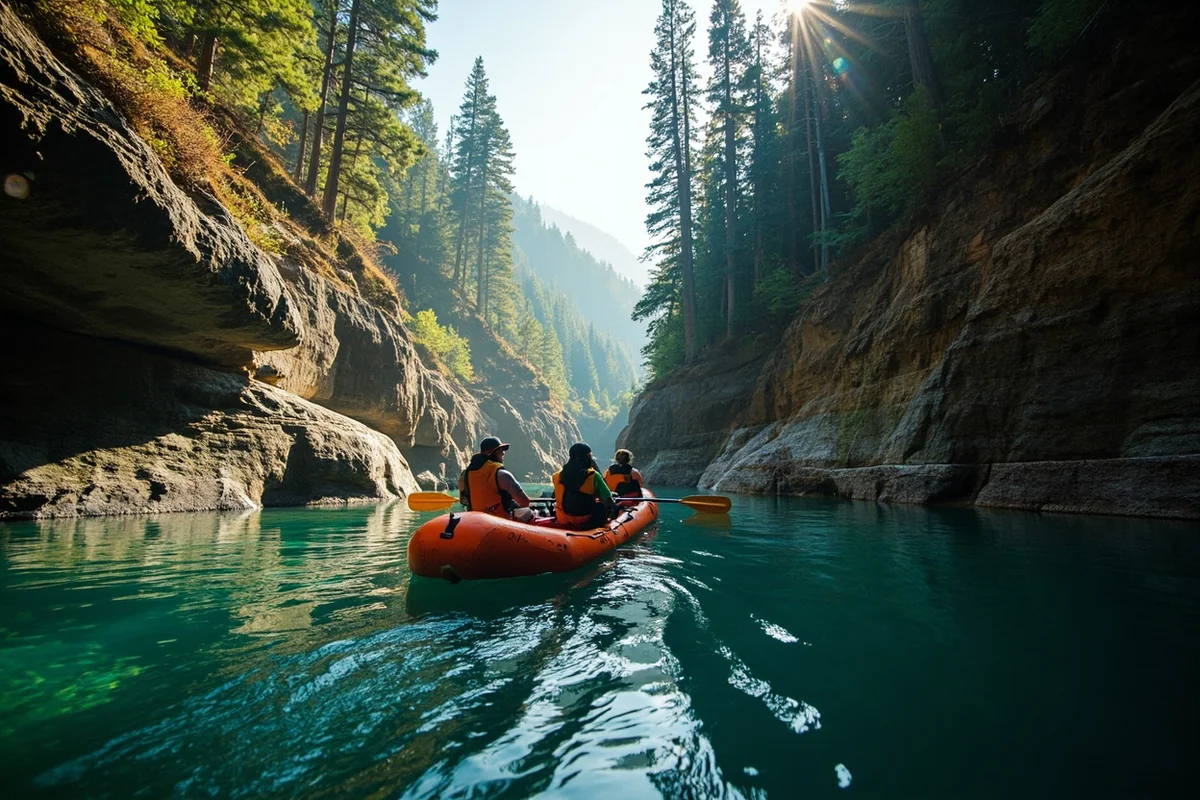
Box Canyon, between River Junction and Russell Gates, is the river’s signature whitewater section, and most guides consider it the most scenic float on the entire Blackfoot. Expect Class I and II water most of the season, with a few Class III drops at high flows in early summer.
The lower 30-plus miles of river, from Russell Gates down to Johnsrud Park, fall within the Blackfoot River Recreation Corridor, a cooperative management agreement between Montana FWP and private landowners that keeps this heavily used stretch both accessible and reasonably well protected.
Eight float-in campsites are available by reservation within the corridor, and reservations typically open in early March for the coming season.
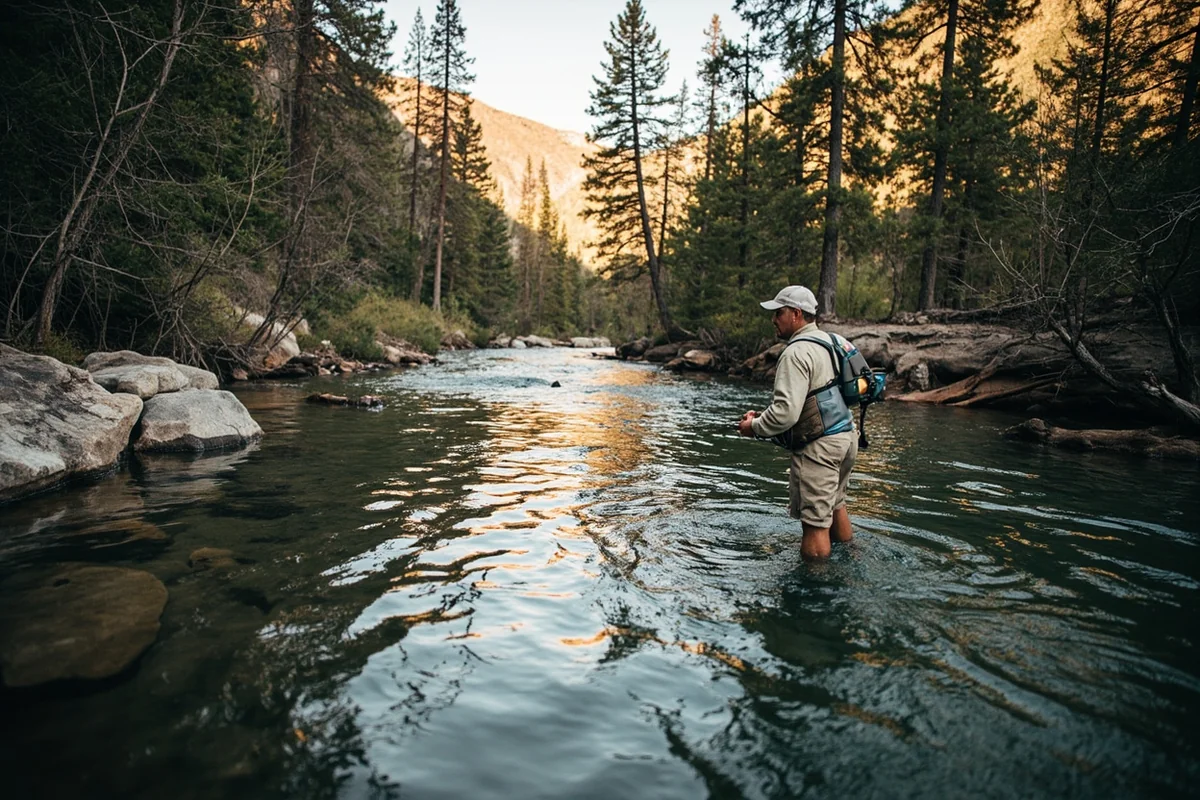
Fishing here holds a real distinction: this is one of the few rivers in Montana where an angler has a legitimate shot at a “Grand Slam” of four trout species in a single day — native westslope cutthroat, native bull trout, and introduced rainbow and brown trout.
Bull trout are catch-and-release only, and for good reason. They’re a genuine link back to the river’s pre-settlement ecology, before rainbows and browns were introduced in the early 1900s.
The salmonfly hatch typically arrives in late June just after runoff clears, and it’s some of the best big dry fly fishing in the state. I fished it on a July afternoon a few years back and watched a friend land a heavy brown on a stonefly pattern nearly the size of his thumb.
Wildlife sightings are part of the draw here too. Bald eagles nest along several stretches of the upper river, and ospreys are a near-constant presence over the water — our Montana osprey page covers their habits in more depth.
The upper drainage, closer to the Bob Marshall Wilderness, is also genuine grizzly bear country, so review our Montana bear guide before any overnight float-in camping trip.
Montana’s Stream Access Law governs recreation here just as it does on every other river in the state, letting you wade and fish up to the high-water mark even where the surrounding land is privately owned — our broader page on Montana laws covers this and other regulations that catch visitors off guard.
The Mike Horse Mine: What Actually Polluted “Norman Maclean’s River”
I think it’s worth understanding exactly what happened here, because it explains so much about the river’s modern character.
An earthen dam was built in 1941 near the Blackfoot’s headwaters to contain tailings from the Mike Horse Mine. In 1975, that dam failed, sending a flood of heavy metals — zinc and cadmium among them — pouring directly into the upper river.
The damage wasn’t subtle. The contamination wiped out much of the aquatic insect life that trout depend on for food, and the effects lingered for decades.
More than $100 million has since been spent restoring stream channels and floodplains in the area, along with building a water treatment plant that treats contaminated mine water on a permanent, ongoing basis.
Some longtime anglers say the Blackfoot fishery still hasn’t fully returned to what it once was, even after all that investment. I think that’s an honest and important caveat, even as I’d tell you the river fishes beautifully today.
The Fight Against the McDonald Gold Mine
The Mike Horse disaster wasn’t the only threat this river faced. In the late 1980s, geologists discovered a substantial gold deposit near the Blackfoot, and a Colorado-based company called Canyon Resources proposed the McDonald Mine — an open pit roughly 1,200 feet deep, positioned about half a mile from the river.
Extracting that gold would have required cyanide heap-leaching, a process that dissolves gold out of low-grade ore using a weak cyanide solution spread across massive piles of crushed rock.
Given the Blackfoot’s proximity, and Montana’s track record of contamination from similar mines elsewhere in the state, the proposal galvanized fierce opposition.
In November 1998, Montana voters passed Initiative 137 by a 53 to 47 percent margin, banning new open-pit cyanide heap-leach gold and silver mines statewide.
Montana became the first state in the country to enact this kind of ban. The mining company sued, seeking hundreds of millions of dollars in damages, arguing the law amounted to an illegal taking of their mineral rights — but the ban ultimately held up in court, and the McDonald Mine never happened.
I think this is one of the more remarkable pieces of river conservation history in the American West, and it’s genuinely surprising how rarely it comes up in typical Blackfoot fishing content.
The river you float today exists in its current form partly because Montana voters decided, at the ballot box, that this particular watershed wasn’t worth the risk.
It’s a very different kind of mining story than the one I covered in our Montana Gold Rush history piece, but it belongs in the same larger conversation about how mining has shaped this state, covered more broadly in our key historical events in Montana page.
A Restoration Success Story — With a New Threat
Here’s where I want to be current rather than just historical, because this story isn’t entirely finished.
Both the Mike Horse Dam and the Milltown Dam — one at each end of the Blackfoot’s journey — have since been removed, and the contaminated sediment behind them has been cleaned out.
For more on the Milltown side of that story and its connection to the Clark Fork, I’ve covered it in depth in our Clark Fork River guide.
But mining interest in this area hasn’t entirely gone away. In recent years, an Australian company has shown renewed interest in gold deposits near Lincoln, not far from the old Mike Horse Mine site, using extraction methods other than cyanide heap-leaching, since that process remains banned under Montana law.
Conservation groups including Montana Trout Unlimited are monitoring the situation closely, and it’s the kind of thing worth checking current news on before assuming the Blackfoot’s mining chapter is fully closed.
The Missoula Floods and the Canyon’s Geology
One more piece of context I find genuinely fascinating: much of the Blackfoot’s canyon country wasn’t shaped gradually over millions of years the way most river valleys are.
Geologists attribute a lot of this landscape to the Missoula Floods — a series of catastrophic Ice Age floods caused by repeated failures of an ice dam that once held back a massive glacial lake covering much of western Montana.
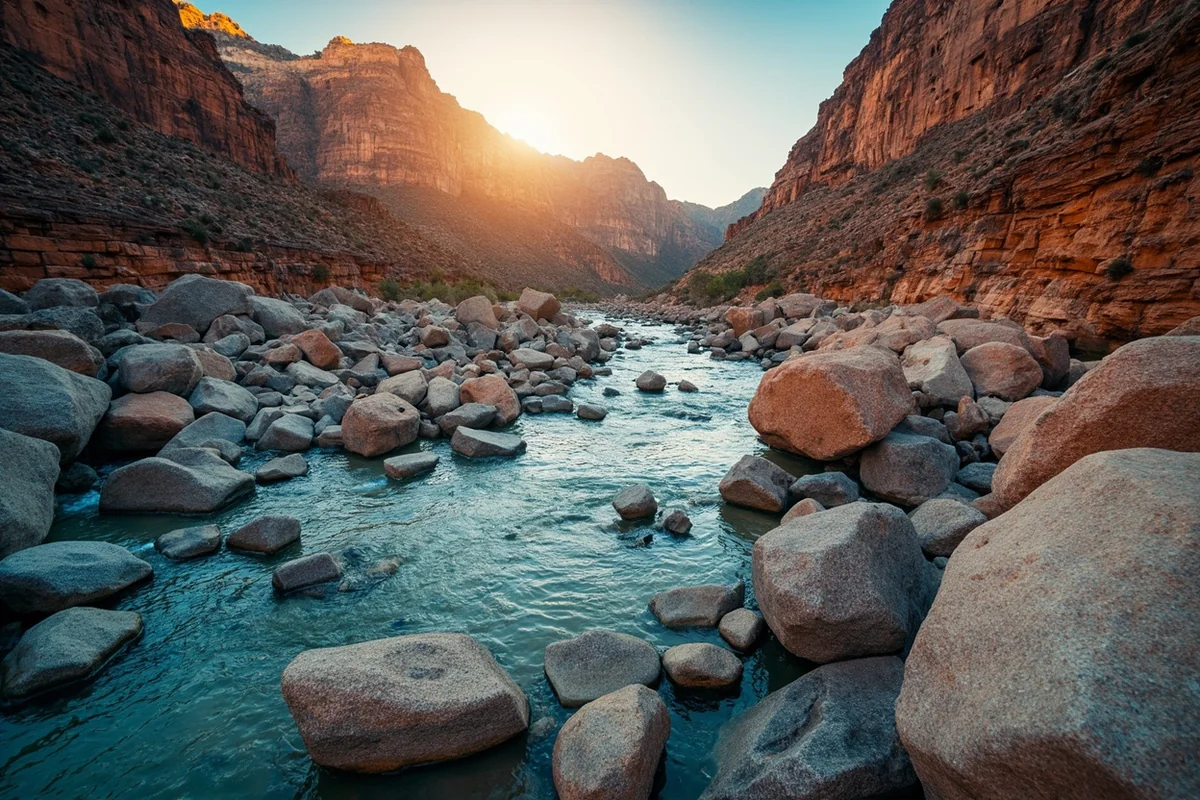
When that ice dam broke, unimaginable volumes of water tore through this landscape at tremendous speed, carving canyons and depositing boulders in a fraction of the time normal river erosion would take.
Standing in Box Canyon and picturing that kind of catastrophic flood event reshaping the ground under your raft adds a different kind of appreciation to the float.
Making Your Base Camp
Missoula is the natural hub for a Blackfoot trip, sitting right at the river’s confluence with the Clark Fork. From there it’s a straightforward drive up Highway 200 to reach most of the river’s floatable stretches.
Heading upriver, small communities like Seeley Lake sit closer to the upper drainage and Bob Marshall Wilderness access, while Clinton to the south sits along Rock Creek, a worthwhile detour if you want a second river to fish during the same trip.
Back in Missoula, several RV parks and a good rotation of local breweries make for an easy home base.
Personal Tips / What I Wish I Knew
Weekends get genuinely crowded. The Blackfoot’s proximity to Missoula means summer weekend float traffic can feel more like a parade than a wilderness experience. Go midweek if your schedule allows it.
Reserve float-in campsites early. The eight reservable sites within the Recreation Corridor fill up fast once the booking window opens each spring, especially for peak-season weekend dates.
Bring a proper cooler and pack out everything. Glass containers are prohibited at float-in campsites, and portable toilet systems are required. This is a heavily used stretch of river, and the rules exist because of that pressure.
Don’t expect the movie’s rivers when you get here. If you’ve seen “A River Runs Through It” and expect the exact water from the film, remember you’re actually looking for the Gallatin or Yellowstone for that. The Blackfoot has its own, very real character.
Ask locally about current mining news before you assume the story is over. Conservation groups in Missoula stay closely tuned to any renewed mineral exploration near the headwaters, and it’s worth a quick search before your trip if this history interests you.
Practical Info: Blackfoot River at a Glance
| Detail | Information |
|---|---|
| Total length | About 132 miles, Rogers Pass to Milltown confluence |
| Best floating stretch | Box Canyon (River Junction to Russell Gates) |
| Whitewater difficulty | Class I–II typically, Class III at high flows |
| Recreation Corridor | Russell Gates to Johnsrud Park, ~30+ miles |
| Float-in camping | 8 reservable sites, reservations open early March |
| Best fishing season | Late June (post-runoff salmonfly hatch) through September |
| Notable species | Westslope cutthroat, bull trout (catch-and-release only), rainbow, brown |
| Nearest hub | Missoula |
[Verify current float-in campsite reservation dates and fees directly with Montana FWP before planning your trip.]
Final Thoughts
The Blackfoot is a genuinely rare kind of river: famous for a movie that wasn’t even filmed here, nearly destroyed by mining pollution, saved partly by the very fame that misrepresented it, and still facing new mineral exploration interest even now.
I’d encourage you to float it, fish it, and also take a few minutes to appreciate just how much work went into making this water what it is today. For how the Blackfoot fits alongside the rest of the state’s best rivers, check out our full guide to the best rivers in Montana.
Pin this guide before your trip, and let me know in the comments if you’ve floated Box Canyon yourself.