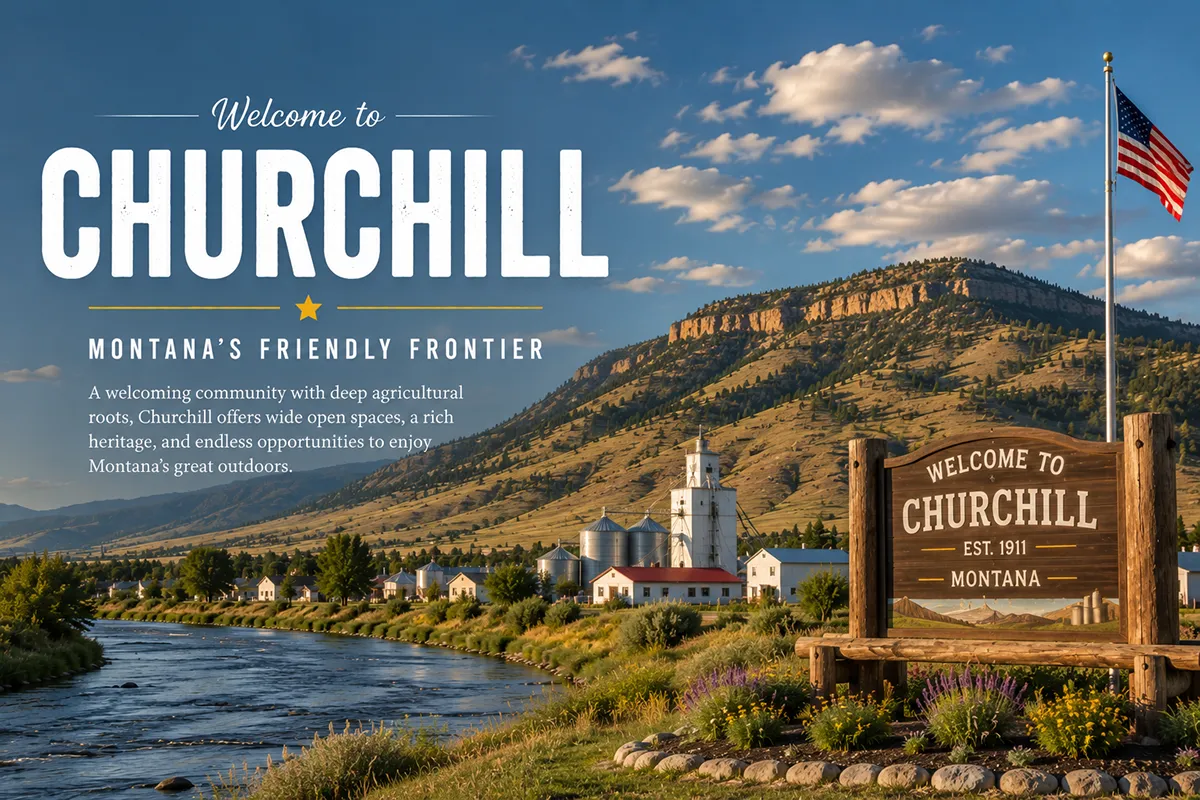
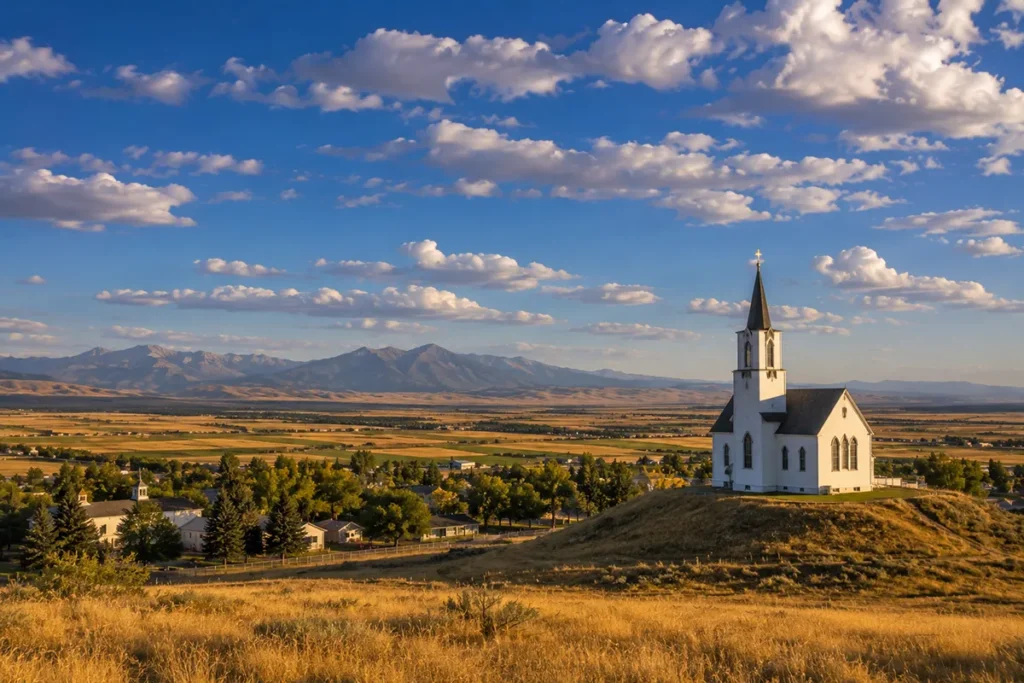
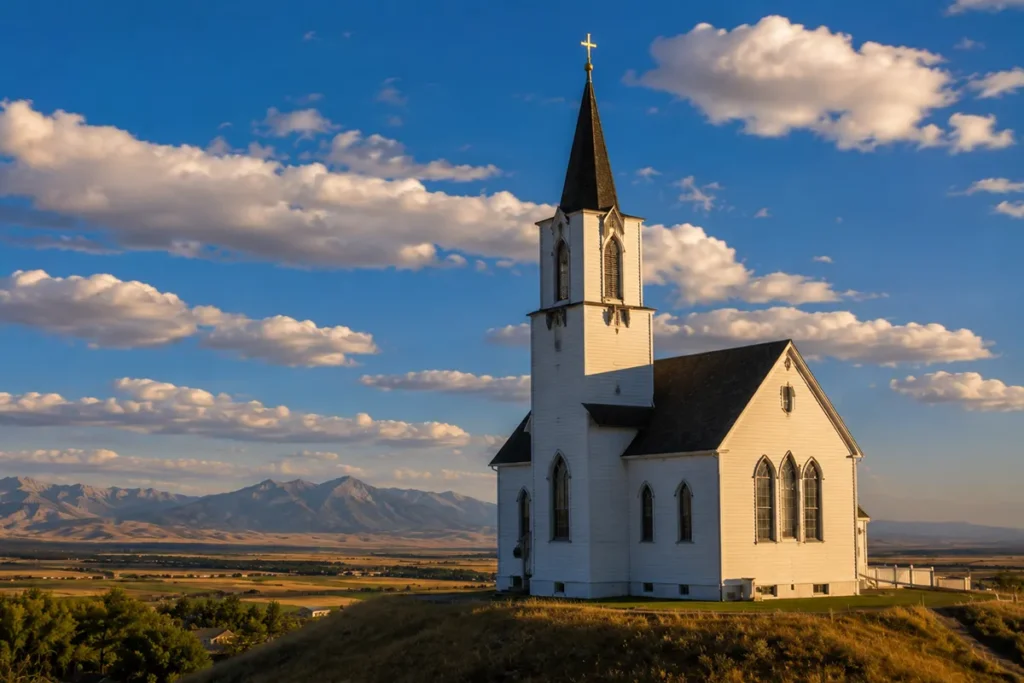
There’s a big white church on a hill seven miles south of Manhattan, Montana.
The church was built in 1903 by Dutch immigrants who had recently arrived in the Gallatin Valley at the invitation of the Manhattan Malting Company — a New York City-based venture that had purchased 13,000 acres of prime western Gallatin County farmland in the early 1890s.
The company needed farmers to grow malting barley for its brewing operations. A Presbyterian minister of Dutch heritage named Andreas Wormser — who also worked for the West Gallatin Irrigation Company — was tasked with recruiting Dutch farmers from the Netherlands and from Dutch-American communities in the Midwest.
Hundreds responded.
By the late 1890s, a substantial Dutch settlement was developing in the western Gallatin Valley — a linear 14-mile band of homes, farms, and ranches extending south from Manhattan toward the small community now known as Little Holland.
Two smaller communities anchored the middle of the settlement: Amsterdam to the west (with the Northern Pacific Railway’s Anceney Spur siding) and Church Hill to the east (with the Milwaukee Road’s Holland Siding).
The Dutch built the white wooden church on the prominent hill at the center of their community in 1903.
It was, briefly, the largest wooden structure west of the Mississippi River.
The community took its name from the building. The Gallatin County Road Department eventually shortened “Church Hill” to Churchill on its maps and signs. The community has been called Churchill ever since.
Today, Churchill has approximately 1,030 residents (the 2020 census separated Churchill from the formerly combined Amsterdam-Churchill CDP).
The community remains substantively Dutch-American in character — the Manhattan Christian Reformed Church (which traces directly to the 1903 founding congregation) still operates, along with the Manhattan Christian School (a parent-operated private P-12 school) and the Bethel Christian Reformed Church (a spinoff congregation).
TL;DR
- Churchill (~1,030) is an unincorporated CDP in Gallatin County, 7 miles south of Manhattan and approximately 15 miles west of Bozeman.
- The community is the cultural center of Montana’s largest Dutch settlement — a 14-mile linear band extending from Manhattan south to Little Holland.
- Originally named “Church Hill” for the prominent Christian Reformed Church built on the hill in 1903.
- The original Christian Reformed Church (now known as Manhattan Christian Reformed Church) was once the largest wooden structure west of the Mississippi River.
- The Dutch settlement was organized in the late 1890s by the Manhattan Malting Company (a New York City venture) to support its malting barley operations.
- Andreas Wormser — a Presbyterian minister of Dutch heritage — recruited Dutch farmers to the Gallatin Valley.
- The Manhattan Christian School — a parent-operated private P-12 — still operates as part of the cultural heritage.
- Two original railroad sidings (NP’s “Amsterdam” siding and Milwaukee Road’s “Holland Siding”) shaped the settlement’s geographic pattern.
- Best for: Dutch-American heritage travelers, Gallatin Valley exploration, Bozeman day-trippers, historical architecture enthusiasts.
Liked this article?
Add Roaming Montana as a preferred source so you see more of our articles and guides on Google.
Churchill at a Glance
| Population (2020) | 1,030 |
|---|---|
| County | Gallatin County |
| Status | Unincorporated CDP (formerly part of Amsterdam-Churchill CDP) |
| Region | Southwest Montana (Gallatin Valley) |
| Elevation | ~4,300 ft |
| CDP area | 3.6 square miles |
| Distance to Manhattan | ~7 miles north |
| Distance to Bozeman (county seat) | ~15 miles east |
| Distance to Belgrade | ~12 miles northeast |
| Distance to Three Forks | ~15 miles west |
| Distance to Big Sky | ~60 miles south |
| Distance to Little Holland | ~7 miles south (end of Dutch settlement) |
| Distance to Amsterdam | ~2 miles west (separate CDP) |
| Bordering creeks | Camp Creek (west), Godfrey Creek (south/east), Valley Ditch (east/north) |
| Best for | Dutch heritage, Gallatin Valley exploration, Bozeman area visits |
What Makes Churchill Different
The Dutch settlement story is genuinely unusual in Montana’s broader European-immigrant history.
The Manhattan Malting Company
The Gallatin Valley’s Dutch heritage traces directly to one company.
The Manhattan Malting Company was a New York City-based business venture organized in the early 1890s — just before the devastating economic depression of 1893-1896.
The company’s leadership identified the Gallatin Valley as substantially well-suited for growing malting barley — the specialized grain crop required for beer production.
The company purchased approximately 13,000 acres of Gallatin Valley farmland west of Bozeman. They renamed the existing small community of Moreland to Manhattan — explicitly invoking the company’s New York City origins. They acquired the Jacob Price Field Locomotive — a state-of-the-art steam plow — to break the prairie soil. And they began recruiting farmers.
Recruiting the Dutch
The company recognized that Dutch farmers had substantial expertise in intensive small-scale agriculture suitable for the climate and soil conditions of the Gallatin Valley.
Andreas Wormser — a Presbyterian minister of Dutch heritage — became the company’s primary recruiter. Wormser had a substantial double role: he was a religious leader committed to building Dutch-Calvinist immigrant communities in the American West, and he was a paid employee of the West Gallatin Irrigation Company specifically tasked with bringing Dutch farmers to Gallatin County.
The combination worked. Hundreds of Dutch immigrants — many from Netherlands towns and many from Dutch-American communities in Michigan, Iowa, and elsewhere — arrived in the Gallatin Valley in the late 1890s.
The Linear Settlement
The Dutch community that developed didn’t concentrate in a single town. Instead, it sprawled across approximately 14 miles of fertile Gallatin Valley land in what historians describe as a “linear settlement.”
The settlement extended south from Manhattan (the railroad town and Manhattan Malting Company headquarters) through what would become Amsterdam, Church Hill (Churchill), and Holland, all the way down to the small area still known today as Little Holland.
Two railroad sidings shaped the geographic pattern:
- The Northern Pacific Railway established a siding called Amsterdam on its Anceney Spur, west of “the hill”
- The Chicago, Milwaukee, St. Paul and Pacific Railway (the Milwaukee Road) established the Holland Siding on its Gallatin Valley Railway about two miles east of “the hill”
The area east of the central hill became known on maps as Holland. Amsterdam developed as the retail center of the settlement. Church Hill (with its distinctive 1903 wooden church on the prominent hill at the geographic center) became the cultural center.
The 1903 Church
The Dutch settlers built a substantial Christian Reformed Church on the prominent hill at the geographic center of their community in 1903.
The church was a large white wooden structure visible for miles across the Gallatin Valley. Sources report it was, briefly, the largest wooden structure west of the Mississippi River — a substantial claim that reflects both the building’s actual size and the Dutch community’s commitment to substantial religious architecture as a marker of permanence and identity.
The church was the First Christian Reformed Church of the Gallatin Valley Dutch settlement. Today the congregation is known as the Manhattan Christian Reformed Church — and the same building (with renovations over the decades) still stands on the same hill.
The church gave Churchill its name. “Church Hill” was eventually shortened by the Gallatin County Road Department to “Churchill” on its maps and signs.
Manhattan Christian School
Related to the church is Manhattan Christian School — a parent-operated private P-12 school that has served the Dutch-American community continuously since the early 20th century.
The school is classified as a Class C school by the Montana High School Association. It serves substantially the same Dutch-American extended community that the original church congregation serves — multi-generational families who have lived in the Gallatin Valley since the 1890s.
Contemporary Churchill
The contemporary Churchill community remains substantively Dutch-American in character.
The Manhattan Christian Reformed Church still operates. The Manhattan Christian School still operates. Bethel Christian Reformed Church (a spinoff congregation) operates alongside. The Churchill Retirement Home serves elderly community members.
The community has also been substantially affected by the rapid suburbanization of the broader Gallatin County area — driven by the explosive growth of Bozeman since the 1990s.
New residential development has expanded around the historic Dutch core. The contemporary population mix reflects both multi-generational Dutch-American families and newer residents drawn to the area by its proximity to Bozeman.
For broader trip context, see my Montana cities and towns hub and Montana history overview.
The Top 6 Things to Do In & Around Churchill
1. Manhattan Christian Reformed Church
The signature historical attraction.
The 1903 white wooden church on the hill — once the largest wooden structure west of the Mississippi River — is genuinely impressive both as historical architecture and as an active community religious institution. The church and its surrounding cemetery represent the substantive heart of the Dutch settlement.
Visit during exterior viewing hours; respect that the church is a working congregation.
2. Manhattan Christian School Campus
The parent-operated private P-12 school operates as a central institution of the Dutch-American community.
The school is the largest private school in the Gallatin Valley west of Bozeman. Visit during exterior viewing hours.
3. Gallatin Valley Drive
The country roads through and around Churchill provide substantively beautiful views of the broader Gallatin Valley.
The Bridger Mountains rise dramatically to the north. The Gallatin Mountains rise to the south. The Tobacco Root Mountains rise to the southwest.
The agricultural fields — many still operating as multi-generational Dutch-American farms — extend in every direction. A short drive provides outstanding photography opportunities.
4. Little Holland & Dutch Settlement Cemeteries
Approximately 7 miles south of Churchill is the area still known as Little Holland.
One of the two original Dutch settlement cemeteries is in Little Holland; the other is in Churchill. Both contain substantial multi-generational Dutch-American family burials dating to the 1890s settlement era.
5. Day Trip to Bozeman (15 miles east)
The Gallatin County seat is the natural urban anchor for any Churchill visit.
Attractions include the Museum of the Rockies, the Gallatin History Museum (which has documented the Dutch settlement in detail), the Sweet Pea Festival (summer), and substantial restaurant, brewery, and shopping options. See things to do in Bozeman for a comprehensive guide.
For dining and drink: where to find the best pizza in Bozeman, Bozeman breweries, and Bozeman hot springs all provide substantial pairing opportunities.
6. Day Trip to Three Forks (15 miles west)
The Lewis and Clark Confluence community at the headwaters of the Missouri River.
Attractions include the Headwaters of the Missouri State Park (where the Jefferson, Madison, and Gallatin rivers join to form the Missouri), the historic Sacajawea Hotel, and substantial Lewis and Clark Expedition interpretation.
Where to Stay
Churchill has no dedicated lodging.
Most travelers base in Bozeman (15 miles east) or in the smaller Gallatin Valley communities.
| Lodging | Vibe | Price | Best For |
|---|---|---|---|
| Bozeman hotels (20 min E) | Full city selection | $130–300 | Most travelers |
| Belgrade lodging (15 min NE) | Airport-area options | $110–220 | Airport travelers |
| Three Forks options (15 min W) | Historic Sacajawea Hotel | $130–220 | Lewis and Clark-focused |
| Bozeman RV options — see RV parks in Bozeman | RV options | $40–80 | RV travelers |
| Vacation rentals (Gallatin Valley) | Farm and ranch stays | $150–300 | Heritage-focused travelers |
Where to Eat
Churchill has limited dining within the community itself.
- Bozeman restaurants (20 min E) — extensive variety; see Bozeman breweries and best pizza in Bozeman
- Manhattan dining (7 min N) — small-town cafe options
- Three Forks restaurants (15 min W) — historic Sacajawea Hotel dining
- Belgrade options (15 min NE) — additional choices
Getting There & Around
From Bozeman: ~15 miles west via I-90 to Manhattan exit, then south on local roads, about 25 minutes.
From Belgrade (Bozeman Yellowstone International Airport): ~12 miles southwest via Manhattan, about 20 minutes.
From Three Forks: ~15 miles east via I-90 and local roads, about 20 minutes.
From Manhattan: 7 miles south on local roads, about 12 minutes.
Cell service: Generally available throughout Churchill and the broader Gallatin Valley.
When to Visit
Summer (June-August): Best Gallatin Valley weather; agricultural country at peak visual character.
Fall (September-October): Outstanding Gallatin Valley harvest light; cooler temperatures; harvest activity on Dutch-American farms.
Winter (December-March): Inversion-prone weather; cold temperatures; quieter community character.
Spring (April-May): The valley greens up; calving and lambing activity; quieter shoulder season.
Personal Tips
Visit the church first. The Manhattan Christian Reformed Church is the substantive anchor of any Churchill visit. The 1903 building’s history as briefly the largest wooden structure west of the Mississippi River makes it one of the more substantively important pieces of 19th-century Dutch-American religious architecture in the West.
Read about the Manhattan Malting Company. Understanding the company’s strategic decision to recruit Dutch farmers — and Reverend Andreas Wormser’s substantial role as both religious leader and corporate recruiter — adds substantive context to the entire Gallatin Valley Dutch settlement story.
Combine with Bozeman and Three Forks. A morning at the Gallatin History Museum in Bozeman (which has documented the Dutch settlement extensively), an afternoon in Churchill itself, and an evening at the Sacajawea Hotel in Three Forks makes a substantive Gallatin Valley heritage day.
Don’t expect a town center. Churchill is functionally a rural community with a substantial historic church and school as its civic anchors — but no traditional commercial downtown. Don’t drive in expecting a Main Street walking tour. The Manhattan Christian Reformed Church campus and the Manhattan Christian School are the substantive built-environment attractions.
Respect the working community. Churchill remains a substantively religious community with multi-generational Dutch-American families. Sunday morning is church time. Photograph buildings from public viewpoints; don’t disrupt active worship or school operations.
Pair with the Gallatin History Museum. The Bozeman museum’s Dutch settlement archive — and the book “Images of America: Manhattan, Belgrade, Amsterdam, and Churchill” by Bruce Gourley (a Churchill-area historian) — provide substantively important context for the visit.
Churchill Quick Facts
| Population (2020) | 1,030 | | County | Gallatin County | | CDP area | 3.6 sq mi | | Elevation | ~4,300 ft | | Originally named | Church Hill | | Shortened by | Gallatin County Road Department | | Dutch settlement founding | Late 1890s | | Manhattan Malting Company purchased | 13,000 acres | | Original local town renamed to Manhattan from | Moreland | | Lead recruiter of Dutch farmers | Rev. Andreas Wormser (Presbyterian minister, West Gallatin Irrigation Company) | | Christian Reformed Church built | 1903 | | Largest wooden structure | West of the Mississippi River (when built) | | Current name of original CRC | Manhattan Christian Reformed Church | | Spinoff congregation | Bethel Christian Reformed Church | | Affiliated private school | Manhattan Christian School (P-12) | | Dutch settlement linear extent | 14 miles (Manhattan to Little Holland) | | Northern Pacific siding | Amsterdam (Anceney Spur) | | Milwaukee Road siding | Holland Siding (Gallatin Valley Railway) | | Bordering creeks | Camp, Godfrey, Valley Ditch | | Bridger Mountains | North | | Gallatin Mountains | South | | Average summer high | 81°F | | Average winter low | 8°F |
Conclusion
Churchill is a 1,030-person unincorporated community in southwest Montana with substantively unique American immigrant heritage.
The Manhattan Malting Company’s early-1890s strategic decision to recruit Dutch farmers. Reverend Andreas Wormser’s dual role as Presbyterian minister and corporate land-development recruiter.
The 1903 Christian Reformed Church that was once the largest wooden structure west of the Mississippi River.
The 14-mile linear Dutch settlement extending from Manhattan south through Amsterdam, Churchill, Holland, and Little Holland. The contemporary Manhattan Christian Reformed Church and Manhattan Christian School that preserve the heritage continuously since the 1890s.
The Bridger Mountains rise to the north. The Gallatin Mountains rise to the south. The country between is some of the most substantively beautiful agricultural land in Montana — and it’s been worked by Dutch-American families for more than a century.
Next time you’re driving I-90 between Bozeman and Three Forks, take the Manhattan exit, head south seven miles, and stop at the church on the hill.
Have a Churchill question? Drop it in the comments — I read every one.
Frequently Asked Questions
Is Churchill Montana worth visiting?
Churchill is worth visiting primarily for the Manhattan Christian Reformed Church (the 1903 white wooden church on the hill — once the largest wooden structure west of the Mississippi River), the broader Dutch-American heritage of the surrounding Gallatin Valley (Montana’s largest Dutch settlement), the substantively beautiful Gallatin Valley views toward the Bridger Mountains and Gallatin Mountains, and as a substantive stop on a Gallatin Valley road trip between Bozeman and Three Forks.
Why is Churchill Montana named that way?
Churchill was originally called “Church Hill” because of the substantial Christian Reformed Church that the Dutch immigrant settlers built on the prominent hill at the geographic center of their community in 1903. The church was a large white wooden structure visible for miles across the Gallatin Valley — briefly the largest wooden structure west of the Mississippi River. The Gallatin County Road Department eventually shortened “Church Hill” to Churchill on its maps and signs, and the community has been called Churchill ever since.
What is the Dutch heritage in Churchill Montana?
Churchill anchors what is known as Montana’s largest Dutch settlement — a 14-mile linear band of homes, farms, and ranches extending south from Manhattan, Montana through Amsterdam, Churchill, Holland, and Little Holland. The settlement was organized in the late 1890s by the Manhattan Malting Company (a New York City venture) to support its malting barley operations. Reverend Andreas Wormser, a Presbyterian minister of Dutch heritage who also worked for the West Gallatin Irrigation Company, was the primary recruiter of Dutch farmers. Hundreds of Dutch immigrants — many directly from the Netherlands, many from Dutch-American communities in the Midwest — arrived in the Gallatin Valley starting in the late 1890s. The community remains substantively Dutch-American in character today.
How big is Churchill Montana?
Churchill had a population of 1,030 at the 2020 U.S. Census — separated for the first time from the previously combined Amsterdam-Churchill CDP. The community covers approximately 3.6 square miles in southwestern Gallatin County. The CDP boundaries are defined by Camp Creek on the west, Godfrey Creek on the south and east, and the Valley Ditch on the east and north.
What is the Manhattan Christian Reformed Church?
The Manhattan Christian Reformed Church is the descendant congregation of the First Christian Reformed Church of the Gallatin Valley Dutch settlement, founded in 1903 by Dutch immigrants. The original church building — a large white wooden structure on the prominent hill at the geographic center of the Dutch settlement — was briefly the largest wooden structure west of the Mississippi River. The church gave Churchill its name (originally “Church Hill”). The congregation continues to operate today as one of the central institutions of the Churchill Dutch-American community. The affiliated Manhattan Christian School — a parent-operated private P-12 school — operates as part of the same community institutional cluster.
How far is Churchill from Bozeman Montana?
Churchill is approximately 15 miles west of Bozeman (the Gallatin County seat) — about a 25-minute drive via I-90 to the Manhattan exit and then south on local roads for 7 miles. Bozeman serves as the practical urban anchor for any Churchill visit, with full hotels, restaurants, Bozeman breweries, best pizza in Bozeman, Bozeman hot springs, the Museum of the Rockies, and the Gallatin History Museum (which has documented the Dutch settlement extensively). See things to do in Bozeman for a comprehensive guide.
Who was Andreas Wormser?
Andreas Wormser was a Presbyterian minister of Dutch heritage who served as the primary recruiter of Dutch farmers to the Gallatin Valley in the late 1890s. Wormser had a substantial dual role: he was both a religious leader committed to building Dutch-Calvinist immigrant communities in the American West, and a paid employee of the West Gallatin Irrigation Company specifically tasked with bringing Dutch farmers to Gallatin County (in coordination with the Manhattan Malting Company’s land development plans). His recruitment efforts brought hundreds of Dutch immigrants — many directly from the Netherlands, many from Dutch-American communities in Michigan, Iowa, and elsewhere — to the Gallatin Valley between approximately 1893 and the early 1900s. The community he helped establish has remained substantively Dutch-American in character for over 125 years.