I applied for a Smith River permit for six straight years before my name finally came up, and when the confirmation email landed in my inbox on a random Tuesday in February, I stared at it for a full minute before I let myself believe it was real.
The Smith River is the only river in Montana that requires a permit to float, and it’s genuinely one of the hardest outdoor recreation permits to draw in the country — in 2026, 11,571 people applied for just 995 spots. This guide covers exactly how the lottery works, what your real odds are, what the 59-mile float actually feels like day to day, the gear and camp rules that catch first-timers off guard, and what your options are if you don’t draw. I’ll also walk through the Black Butte Copper Mine situation upstream, because it’s changed significantly in the last two years and most guides online are describing an outdated version of that fight.
Liked this article?
Add Roaming Montana as a preferred source so you see more of our articles and guides on Google.
Why This River Gets Its Own Rules
Every other river covered in our guide to the best rivers in Montana is open water — show up, launch, float. The Smith is the one exception.
It’s the only river in the entire state that requires a permit to float, a distinction it’s held since 1993, and the reason is simple: it’s too good for its own good.
A 59-mile stretch of towering limestone canyon with excellent trout fishing and only one legal put-in and one legal take-out for the whole run means demand would completely overwhelm the river without some kind of cap. So Montana Fish, Wildlife and Parks caps it, hard, through an annual lottery.
I want to be upfront about something before you read further: this post assumes you either have a permit already or are seriously considering applying for one.
If you’re just permit-curious, that’s fine too — but I’d rather tell you honestly how brutal the odds are than sell you on a dream that mostly doesn’t come true. I’ll get into exact numbers in a minute, and they’re rougher than most articles let on.
My own float happened in mid-June, four days on the water, and it included a hailstorm that came out of nowhere on day two and pinned our whole party under a tarp for forty-five minutes while marble-sized ice pellets hammered the canyon rim above us.
Nobody warns you that Smith River weather can turn that fast. That’s the kind of detail I want this guide to actually deliver — not just the mechanics of the lottery, but what it’s really like once you’re 20 miles into a float with no way out except downstream.
How the Smith River Permit Lottery Actually Works
Application Window, Fees, and Timeline
The lottery opens January 1 and closes February 15 every year, run through Montana FWP’s online licensing system — the same portal used for hunting and fishing licenses, not a separate booking platform like Recreation.gov, which trips up a lot of first-time applicants who go looking for the wrong website.
There’s a non-refundable application fee, roughly $15 per application [verify current fee before applying, as it has changed over time].
Winners are typically notified by email in mid-to-late February; the exact drawing date shifts slightly year to year. If you don’t win, you won’t hear anything at all — FWP only contacts successful applicants, so no news by early March means you should start making a backup plan.
One detail that catches people off guard: as of the 2024 season, you only get to select a single preferred launch date on your application, not a ranked list.
Pick strategically. Mid-June dates are consistently the most requested because that’s when flows have usually cleared from spring runoff but haven’t dropped too low yet.
Bonus Points: Do They Actually Move the Needle?
Since 2024, Montana has allowed applicants to purchase a bonus point that improves their odds and accumulates in years they don’t draw.
As of the current system, a resident bonus point costs $5, while a nonresident bonus point costs $125 [verify current pricing] — worth noting that the nonresident price has more than doubled since the bonus point system launched, when it started at $50.
If you’re a serious repeat applicant, especially a nonresident, that escalating cost is worth factoring into your annual budget for this dream.
The Non-Resident 10 Percent Rule
A 2023 Montana law caps non-resident permits at no more than 10 percent of the total issued each season. In practical terms, that means the overwhelming majority of Smith River permits go to Montana residents by design, and out-of-state applicants are competing for a genuinely small slice of the pie.
It’s worth knowing this going in so you’re not surprised by how the math works against you if you’re applying from out of state.
If You Don’t Draw: Your Real Options
You’ve got three realistic paths if the main lottery doesn’t go your way. First, the Super Permit: for $5 per entry, you can buy as many chances as you want at a single Super Permit that lets the winner launch on any date they choose that season, drawn separately in mid-March.
Second, the standby route: starting March 2, you can call the Smith River Reservation Line at 406-454-5861 (Monday through Friday, 8 a.m. to noon Mountain Time) to ask about remaining launch dates or cancellations — this is a legitimate way people get on the river most years, especially for early April or late-summer dates when demand is lower. Third, go with a licensed outfitter.
Several Montana outfitters hold their own permit allocation separate from the public lottery, so booking a guided trip guarantees you a spot without the lottery at all — it’s a real expense, typically several thousand dollars per person for a multi-day guided float, but it’s the only guaranteed route onto this river.
The Numbers Nobody Runs: How Bad Are the Odds, Really
Here’s where I want to get specific, because most articles about the Smith River permit describe the odds as “tough” without ever running the actual math. In the 2026 drawing, 8,711 Montana residents and 2,860 nonresidents applied — 11,571 total applicants — for 995 available float permits.
That’s roughly an 8.6 percent overall success rate, and it gets worse for popular dates: June 15, the single most requested launch date, had only a 1.87 percent success rate that year.
For context on how much more competitive this has become, back in 2015 there were 9,365 applicants for 1,175 permits, which works out to roughly a 12.6 percent success rate.
In a little over a decade, the pool of applicants grew while the number of available permits actually shrank — which tells you the trend is moving in exactly the wrong direction if you’re hoping this gets easier with time.
My honest advice: apply every single year, treat bonus points as a long-term investment if you’re a repeat applicant, and don’t build a summer around the assumption that this will be the year.

What a 59-Mile Wilderness Float Actually Feels Like
The float season officially runs April 1 through August 15, though the “typical” window with floatable water is narrower — mid-April through mid-July, with occasional opportunities in September and October depending on that year’s snowpack and irrigation demand upstream.
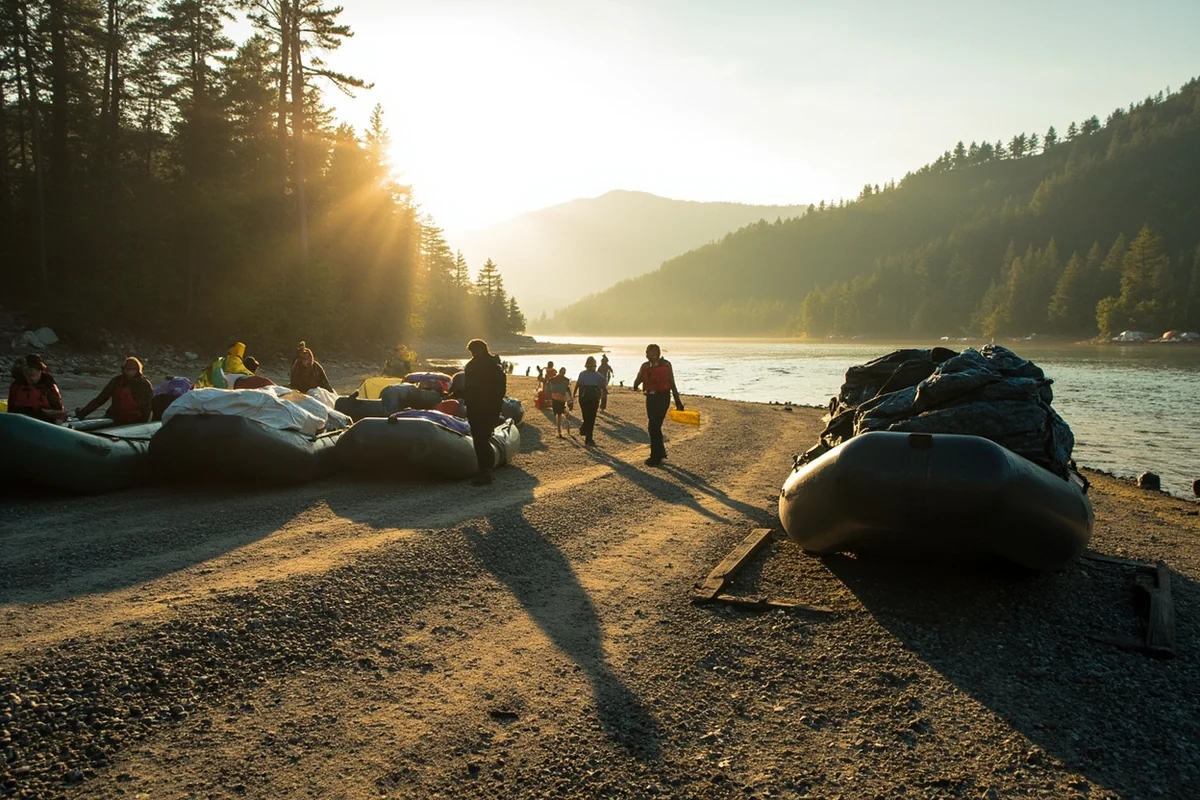
My trip launched from Camp Baker, about 26 miles northwest of White Sulphur Springs, in mid-June.
There’s no drinking water at the put-in, so bring everything you’ll need for the entire trip before you arrive — I learned this the slightly panicked way, topping off water jugs at a gas station in White Sulphur Springs the morning of launch.
Two days before your launch date, an FWP river ranger calls to walk through registration — how many nights you’re camping (two minimum, four maximum during peak season from May 15 through July 15), your preferred campsites among the roughly 50 designated boat camps along the route, everyone’s name and age, your boat count and types, and your payment.
They also assign you a one-hour launch window to stagger boat traffic off the ramp. This call replaced the old first-come-first-served camp selection system, so you’re not racing anyone for a good spot once you’re on the water — you already know where you’re sleeping each night before you push off.
Once you launch, you’re committed. There’s exactly one put-in and one take-out for the entire 59 miles, no roads touch the canyon in between, and cell service disappears almost immediately.
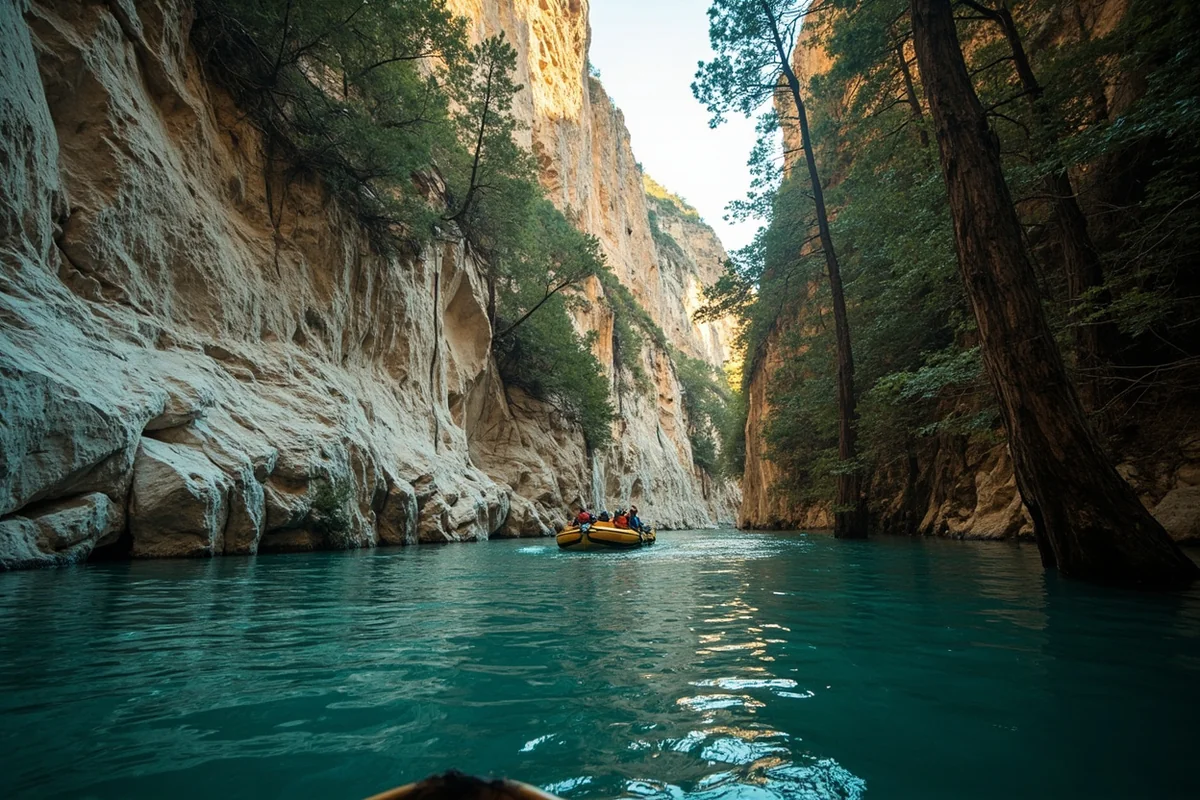
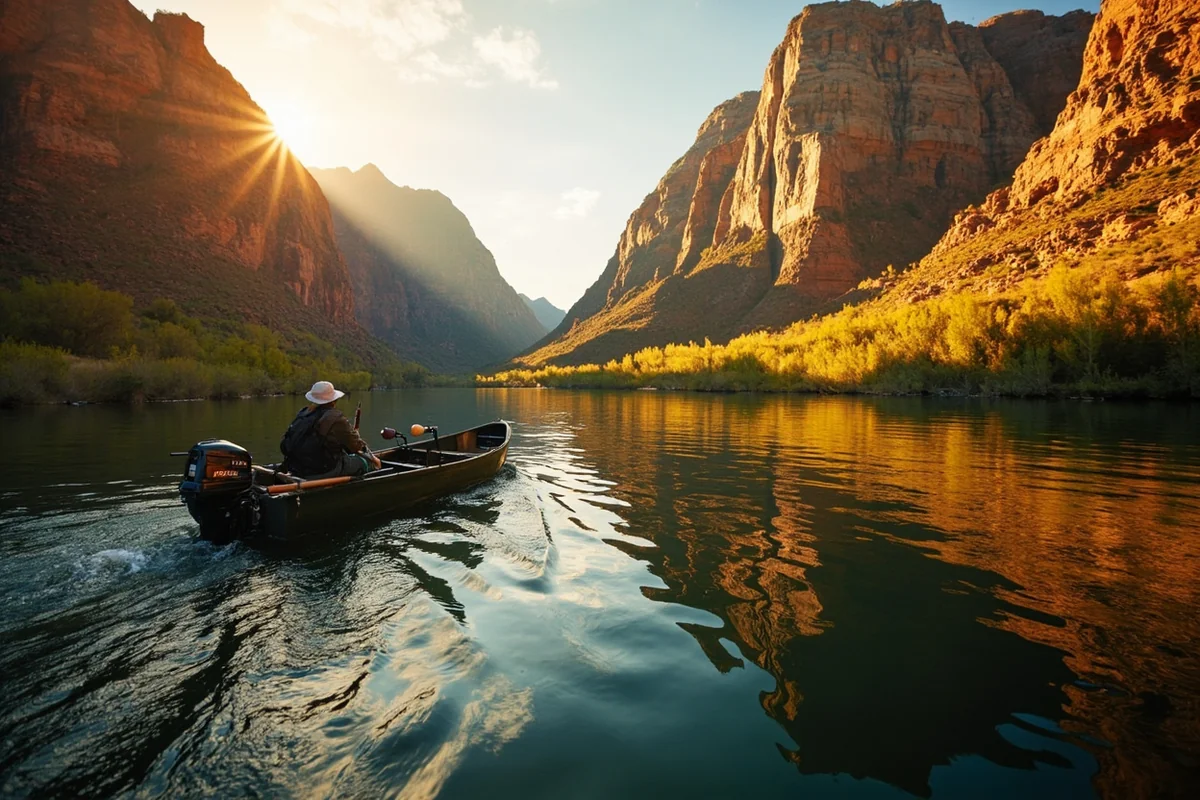
The canyon walls close in gradually over the first day, and by day two you’re floating beneath cliffs that, in places, rise close to a thousand feet above the water.
The only real whitewater on the whole run is a pair of straightforward Class II wave trains around river miles 47 and 49 — nothing technical, but enough to wake you up if you’re drifting along half-asleep.
Around river mile 16.8, keep your eyes on the canyon wall river-left: there’s a well-known set of pictograph handprints visible directly from the water, part of more than 70 recorded pictograph and rock art sites throughout the Smith River drainage.
Most groups take four to five days to cover the full stretch, and the pacing is genuinely relaxed if you plan your mileage sensibly — long lazy mornings with coffee before breaking camp, a few hours of floating and fishing, then camp again by mid-afternoon with plenty of daylight left for a hike or a swim.
One quirk of the route: partway down, you’ll pass Heaven on Earth Ranch, a private guest ranch along the river corridor where, if you’ve arranged it in advance, you can occasionally pick up a hot shower or a round of golf — a strange little luxury in the middle of an otherwise fully self-sufficient wilderness trip.

The History Beneath the Canyon Walls
Lewis and Clark named the Smith River in 1805, part of their habit of naming tributaries of the Missouri after members of Thomas Jefferson’s administration — in this case, Robert Smith, who served as Secretary of the Navy.
It’s a slightly odd namesake for a landlocked Montana trout stream, but that’s Montana history for you.
Long before that naming, the canyon was used and marked by Indigenous peoples, and the more than 70 pictograph sites throughout the drainage are the clearest surviving evidence of that presence — a reminder that the “wilderness” feeling of this float sits on top of a much older human relationship with this exact canyon.
If you’re interested in more of the region’s broader timeline, our overview of key historical events in Montana covers the Lewis and Clark expedition’s path through the state in more depth.
The Fight Over Sheep Creek: What You Should Know Before You Go
I don’t think it’s honest to write about the Smith River without addressing what’s happening upstream. Sheep Creek, a major tributary that joins the Smith right around where most floaters launch, supplies as much as half of the main stem’s flow and is critical spawning habitat for the river’s wild trout.
For over a decade, a proposed underground copper mine near Sheep Creek — the Black Butte Copper Project, operated by Tintina Montana, a subsidiary of Sandfire Resources — has been the subject of sustained legal opposition from a coalition including Montana Trout Unlimited, American Rivers, the Montana Environmental Information Center, and Earthworks.
Their core concern is acid mine drainage contaminating a river system with no easy way to recover if that happens.
As of the most recent rulings I’m aware of, the Montana Supreme Court has sided with the mine’s operators twice — first upholding the project’s operating permit in early 2024, then upholding a separate water-use permit in early 2025 — and the company has reportedly moved forward with initial surface construction.
The state’s position, echoed by the governor’s office, frames the ruling as a win for jobs and responsible resource development; opponents maintain that the state’s water and environmental review process didn’t adequately account for long-term risk to the fishery.
I’d encourage you to read up on the current status directly through Montana Trout Unlimited or American Rivers before you go, since this is very much a live issue and the situation may have moved further by the time you’re planning your own trip.
Gear, Camp Rules, and Logistics That Trip People Up
Bear-proof food storage is legally required, not optional. Black bears are common along the Smith, and every party must store food, trash, and anything scented in an IGBC-approved bear-resistant container or an approved electric bear fence. Review our Montana bear guide before you go, and make sure everyone in your group has practiced with bear spray before launch day, not for the first time in an actual encounter.
You now have to pack out your own waste. Pit latrines that used to sit at Smith River campsites were removed starting in 2024. Every party needs an agency-approved portable toilet system (commonly called a “groover” among river runners), and there’s now a SCAT sanitizing station at the Eden Bridge takeout where approved systems can be cleaned before you head home.
Boat inspections are mandatory. Montana enforces strict aquatic invasive species rules, and any trailered or carried watercraft must stop at open inspection stations and be cleared before arriving at Camp Baker. Nonresidents also need to purchase an AIS sticker in advance. Don’t skip this — it’s enforced, and showing up without your inspection paperwork can genuinely jeopardize your launch. For broader rules that apply to river recreation across the state, our guide to boating in Montana is a useful starting point, and our rundown of Montana laws covers other regulations visitors commonly overlook.
Shuttles are a real logistical headache. Camp Baker and Eden Bridge are nowhere near each other by road, so plan a vehicle shuttle well ahead of time rather than trying to sort it out the week of your trip. Several local shuttle services operate specifically for Smith River floaters and will even wash your car while it’s in their care.
Overnight camping at Camp Baker before launch is limited. Outside of September through November, you generally can’t camp at the put-in the night before you launch, so plan lodging in White Sulphur Springs or nearby Montana ranches the night before instead.
Fishing the Smith River
The Smith holds native westslope cutthroat trout and mountain whitefish alongside introduced browns, rainbows, and brook trout, and it’s one of the earliest Montana rivers to fish the famous salmonfly hatch each season.
Early in the float season, when runoff is still clearing, streamers and heavy nymph rigs are your best bet, especially worked tight against the limestone cliff edges.
Once the water clears — typically late June into July — expect strong PMD and yellow sallies hatches during the day and good caddis activity in the evenings, with terrestrials picking up the slack as summer wears on.
If fly fishing across the rest of the state is on your radar too, our Montana state fish page has more on the westslope cutthroat you’ll likely encounter here.
Personal Tips / What I Wish I Knew
Apply every single year, even when you’re busy. The application window is short — six weeks, January 1 through February 15 — and it’s easy to let it slip by if you’re not actively tracking it. Set a calendar reminder for early December, not January, so you have time to gather everyone’s information if you’re applying as a group.
Bring more water than you think you need. There’s no drinking water at Camp Baker, and while some campsites along the route have decent natural springs, I wouldn’t plan your trip around relying on them exclusively.
Pack for genuinely unpredictable weather. My hailstorm on day two wasn’t a freak fluke — this canyon generates its own microclimate, and afternoon thunderstorms roll in fast with very little warning. Bring real rain gear, not a flimsy poncho.
Don’t rush your mileage on day one. It’s tempting to push hard the first day since everyone’s fresh, but the float is meant to be savored. Camp early, hike the trail above your site if there is one, and let the trip breathe.
Poison ivy is a real hazard near some of the pictograph hike-in sites. If you’re planning to hike up to any of the less-visible pictograph locations off the water, wear long sleeves and pants, and bring something to scrub exposed skin when you get back to the boat.
Practical Info: Smith River Float at a Glance
| Detail | Information |
|---|---|
| Permitted stretch | 59 miles, Camp Baker to Eden Bridge |
| Permit required | Yes — annual lottery, the only river in Montana with this requirement |
| Application window | January 1 – February 15 |
| Application fee | Approx. $15 [verify current fee] |
| Bonus point cost | $5 resident / $125 nonresident [verify current pricing] |
| Non-resident permit cap | 10% of total permits issued |
| 2026 applicants vs. permits | 11,571 applicants for 995 permits (~8.6% success rate) |
| Float season | April 1 – August 15 (typical floatable window: mid-April–mid-July) |
| Typical trip length | 4–5 days, 3–4 nights |
| Max group size | 15 people per permit |
| Minimum age to apply | 12 (no minimum age to float) |
| Boats allowed | Non-motorized only: rafts, canoes, kayaks, drift boats |
| Nearest town | White Sulphur Springs |
| Backup options if you don’t draw | Super Permit ($5/entry), standby reservation line (starts March 2), licensed outfitters |
Final Thoughts
Six years of applying taught me more patience than I expected to need for a river trip, but the Smith River earned every bit of that wait.
It’s not just the scenery or the fishing — though both are genuinely exceptional — it’s the rare experience of being completely committed to a stretch of wilderness for four straight days with no easy way out and no cell signal pulling your attention elsewhere.
If you’re serious about experiencing it yourself, apply this January, read up honestly on what’s happening at Sheep Creek before you go, and check out our full guide to the best rivers in Montana for how the Smith fits alongside the rest of the state’s best water.
Good luck in the lottery — and if you draw a permit this year, I’d genuinely love to hear how your float goes.