I was sitting at the bar in the M&M Cigar Store in Butte on a Tuesday afternoon in October when an old man two stools over told me, without prompting, that this saloon hadn’t closed since 1890.
Not once. Not for Prohibition, not for either World War, not for the pandemic. He took a long sip of his coffee, said “you can look it up,” and went back to his newspaper. I did look it up. He was right.
Welcome to Southwest Montana — the part of the state where almost every small thing turns out to be a bigger story than you expected.
TL;DR
Southwest Montana is the most underrated of Montana’s six tourism regions and arguably the richest in layered experiences — gold rush history, the densest concentration of hot springs in the state, Bannack (the original Montana territorial capital), Virginia City (a living ghost town), three ski areas, Lewis & Clark Caverns, the Big Hole River, and a state capital most travelers underestimate. Best base depends on what you’re after, but Helena and Butte make the strongest hubs. Best time to visit: June through September for the high country; February is fantastic for skiing. If you’ve already done Glacier or Yellowstone and want a different Montana, this is the region.
Liked this article?
Add Roaming Montana as a preferred source so you see more of our articles and guides on Google.
What Is Southwest Montana?
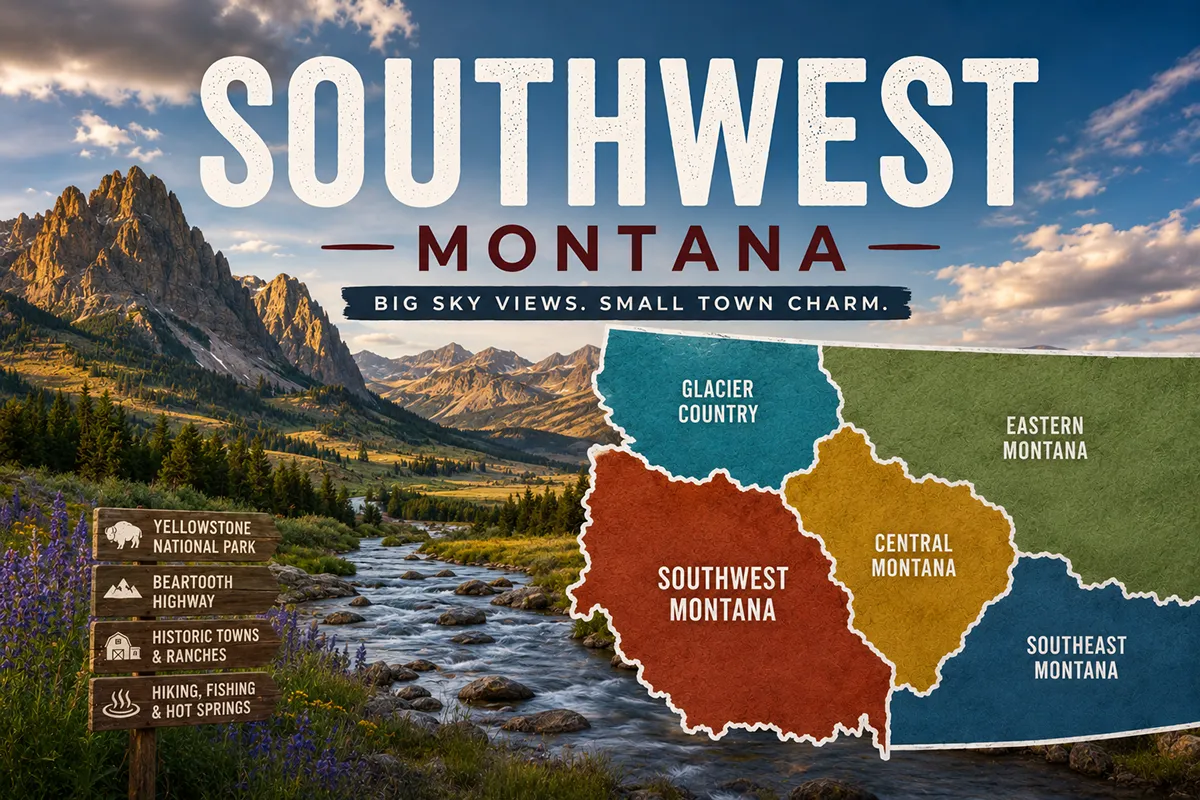
Southwest Montana is one of Montana’s six official tourism regions, established in 1986–87 along with the state lodging tax. It covers nine counties: Beaverhead, Broadwater, Deer Lodge, Granite, Jefferson, Lewis & Clark, Madison, Powell, and Silver Bow.
Geographically, the region runs from the Idaho border in the south up to the Front Range in the north, and from the Continental Divide in the west out to the edge of the Big Belt Mountains in the east.
Despite what one popular competitor travel guide currently says, Southwest Montana is not bordered by Glacier National Park — Glacier is up in Glacier Country, four hours north.
The accurate description: Southwest Montana sits between the Bitterroot Valley to the west and Yellowstone Country to the east, with Central Montana to the north and Idaho to the south.
The region contains the state capital (Helena), the largest national forest in Montana (Beaverhead-Deerlodge), the Anaconda-Pintler Wilderness, three full-service ski areas, the densest concentration of natural hot springs in the state, and more preserved 19th-century mining towns than anywhere else in the country.
A heads-up on the name: Southwest Montana doesn’t include the Bitterroot Valley (which is in Glacier Country) or Bozeman (which is in Yellowstone Country). I see this trip up first-time visitors constantly.
The Towns of Southwest Montana
Where you base determines what kind of trip you’ll have. Here’s the honest local breakdown.
Helena
The state capital. Helena is criminally underrated. Most travelers blow past it on I-90 or I-15 without stopping, which is a mistake. Founded in 1864 during the Last Chance Gulch gold strike, Helena became the wealthiest per-capita city in the U.S. in the 1880s.
The architecture — Victorian mansions, the Montana State Capitol with its copper dome, the Cathedral of St. Helena, Reeder’s Alley — is genuinely museum-quality.
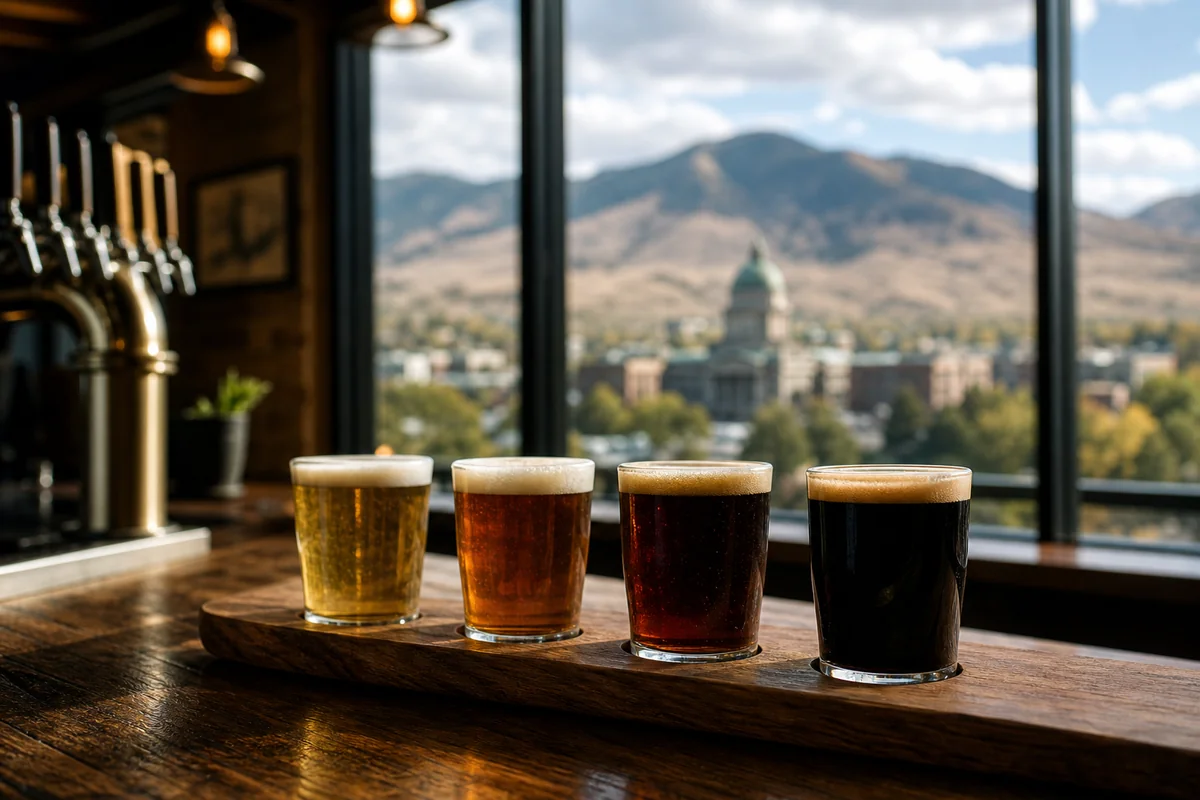
The walkable downtown along the original gold-strike gulch is one of my favorite mid-size city centers in the Rocky Mountain West. Mount Helena rises directly behind town with hiking trails accessible from city neighborhoods. The food and brewery scene punches above its weight.
Base in Helena if: You want a real city experience without Bozeman prices, you’re interested in history and architecture, you’re combining a Glacier-to-Yellowstone road trip and need a midway stop, or you’re flying into Helena Regional Airport (HLN).
➡️ Best things to do in Helena | More Helena ideas | Helena breweries | Helena RV parks
Butte
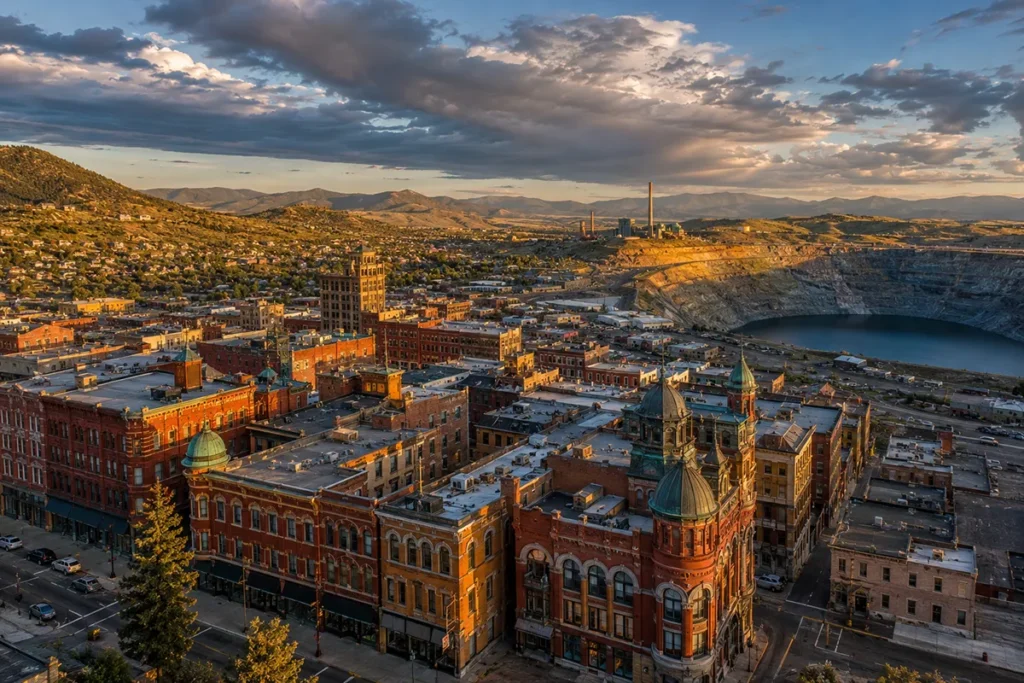
One of the most fascinating cities in the American West, full stop. Butte was once the largest city between Chicago and San Francisco. At its peak in the early 1900s, the Anaconda Copper Company employed more than 14,500 miners pulling copper out of the “Richest Hill on Earth.”
The city had 100,000 residents, three opera houses, and one of the most ethnically diverse populations in the country (Irish, Cornish, Italian, Finnish, Chinese, and dozens more).
Today, Butte has roughly 35,000 residents and the largest National Historic Landmark District in the country — block after block of preserved Victorian commercial architecture, miners’ cottages, and Beaux-Arts mansions. The Berkeley Pit — a giant open-pit mine flooded into a toxic lake — sits a block off main street and is its own surreal tourist attraction.
The World Museum of Mining is excellent. Our Lady of the Rockies is a 90-foot statue on the Continental Divide above town. The M&M Cigar Store has been open continuously since 1890. The Pekin Noodle Parlor is the oldest continuously operating Chinese restaurant in the United States.
Base in Butte if: History interests you, you appreciate authentic small-city character, you want lower lodging costs than Helena or Bozeman.
➡️ Things to do in Butte | Our Lady of the Rockies | Butte RV parks
Anaconda
The smelter town to Butte’s mining. Anaconda was built around the world’s largest copper smelter — the iconic 585-foot Anaconda Smelter Stack still dominates the skyline. The stack is now a state park.
When the smelter shut down in 1980, Anaconda’s main employer disappeared, but the town has reinvented itself in fascinating ways.
The most extraordinary: the Old Works Golf Course — a Jack Nicklaus-designed 18-hole course built on the reclaimed Superfund smelter site, where the sand traps are black slag and the layout traces the original industrial footprint. It’s the only one of its kind anywhere in the world.
Base in Anaconda if: You’re a golfer, you want a quiet historic-town base, or you’re doing the Pintler Scenic Loop.
Dillon
The Beaverhead County seat and gateway to some of the best fly fishing on Earth. Dillon is a working ranch town with a small university (University of Montana Western) and a real Western character — the bars on Bannack Street feel like the 1950s in the best way.
It’s also the closest town to Bannack State Park (about 20 minutes), and the gateway to the Big Hole River and Beaverhead River for fly fishing.
Base in Dillon if: Fly fishing is your priority, you want to visit Bannack, or you’re crossing into Idaho via I-15.
Philipsburg
The candy-shop mining-town turned tourist gem. Philipsburg sits at the base of the Pintlers and has somehow held onto its character even as Yelp discovered it.
The main drag is two blocks of carefully restored Victorian commercial buildings painted in candy colors. The Sweet Palace is one of the best candy stores in the West.
Philipsburg Brewing makes excellent beer. The Sapphire Gallery sells locally mined Montana sapphires and runs hands-on sapphire mining experiences (kids love it). Discovery Ski Area is 20 minutes up the road in winter.
Base in Philipsburg if: You want one of the most beautiful small towns in Montana, you’re doing the Pintler Scenic Loop, or you’re skiing Discovery.
Virginia City & Nevada City
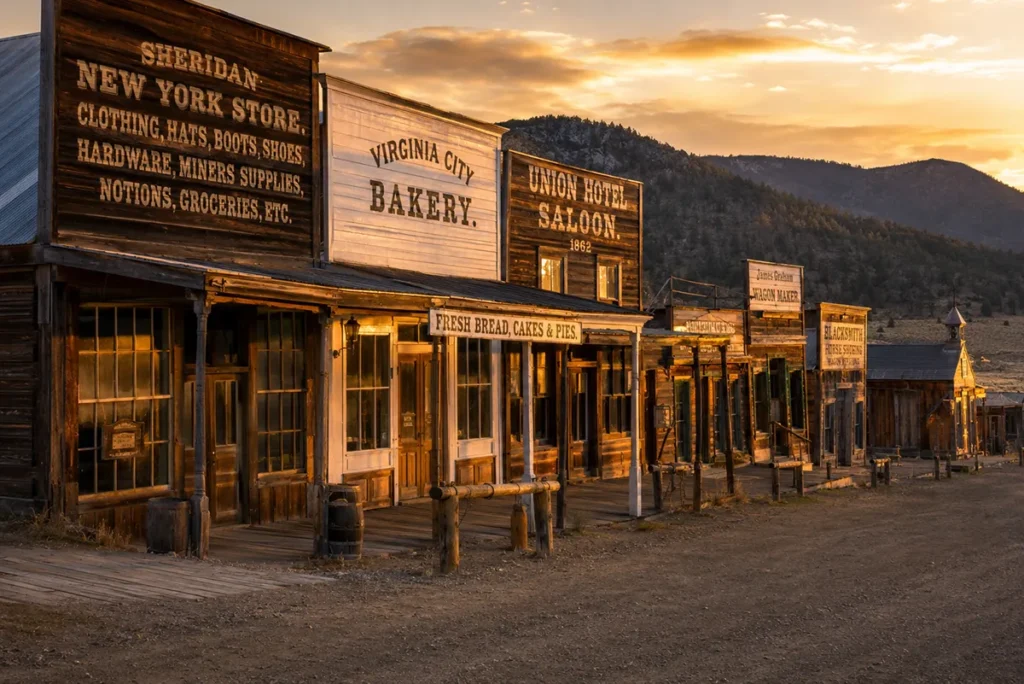
Living ghost towns. Virginia City was founded after the Alder Gulch gold strike of 1863 (the second-richest placer gold strike in U.S. history). It served as the second territorial capital of Montana (1865–1875).
Today, most of the original 1860s buildings are still standing, restored by the Bovey family in the 1940s–50s and now run by the state.
You can walk through working-period buildings, watch costumed interpreters, ride a steam train to neighboring Nevada City, drink at the Bale of Hay Saloon (in continuous operation since 1863), and stay in original miners’ cabins.
This is the closest thing to a real Old West experience anywhere in the country. It’s not a theme park — most of the buildings have never been demolished or rebuilt. Open seasonally, typically Memorial Day weekend through Labor Day.
Deer Lodge
A historic ranch and prison town. Deer Lodge is home to the Old Montana Prison (decommissioned in 1979 and now an excellent museum), the Montana Auto Museum (named one of USA Today‘s top 10 car museums in the U.S.), and Grant-Kohrs Ranch National Historic Site — a preserved working cattle ranch maintained by the National Park Service.
Other Towns Worth Knowing
- Three Forks — where the Madison, Jefferson, and Gallatin Rivers join to form the Missouri (Lewis & Clark named all three). Gateway to Lewis & Clark Caverns State Park — Montana’s first state park, a 2-mile underground tour through one of the most decorated limestone caves in the Northwest.
- Twin Bridges — fly-fishing royalty, at the junction of the Big Hole, Beaverhead, and Ruby rivers
- Ennis — Madison River fly fishing hub
- Sheridan — Tobacco Root Mountains gateway
- Whitehall and Boulder — quiet I-15 stops, both with hot springs
- Townsend — Canyon Ferry Lake gateway
- Drummond — between Missoula and Butte, real ranch country
Ghost Towns of Southwest Montana
This region has more genuine preserved ghost towns than anywhere else in the U.S. The three you need to know:
Bannack State Park
The original. Bannack was the first major gold strike in what would become Montana (1862), the first territorial capital, and is now Montana’s best-preserved ghost town.
More than 60 buildings still stand — a hotel, a jail, a Masonic lodge, miners’ cabins — most of which you can walk through. There’s no commercialization. No costumed interpreters trying to upsell you. Just an actual 19th-century mining town frozen at the moment everyone left.
The Bannack Days living history weekend in mid-July is the best time to visit if you want demonstrations and reenactors. Otherwise, go on a weekday in May or September and you can wander a state park’s worth of perfectly preserved buildings essentially alone.
About 20 minutes southwest of Dillon on a gravel road. [Verify Bannack Days exact dates each year before publishing.]
Virginia City & Nevada City
Less ghost-town, more living museum (see town description above). Far more developed than Bannack, with restaurants, lodging, and live programming. Better if you have kids. Bannack is better for atmosphere.
Garnet Ghost Town
In the Garnet Range east of Missoula (technically right on the boundary with Glacier Country, but accessed primarily from Southwest Montana). Garnet is a former gold camp at 6,000 feet, accessible only by a rough mountain road in summer and snowmobile in winter.
About 30 structures remain, run by the BLM. The drive in is a serious commitment. Worth it for the most remote and atmospheric ghost-town experience in the region.
➡️ Montana gold rush history | Pioneer legacy
Hot Springs of Southwest Montana
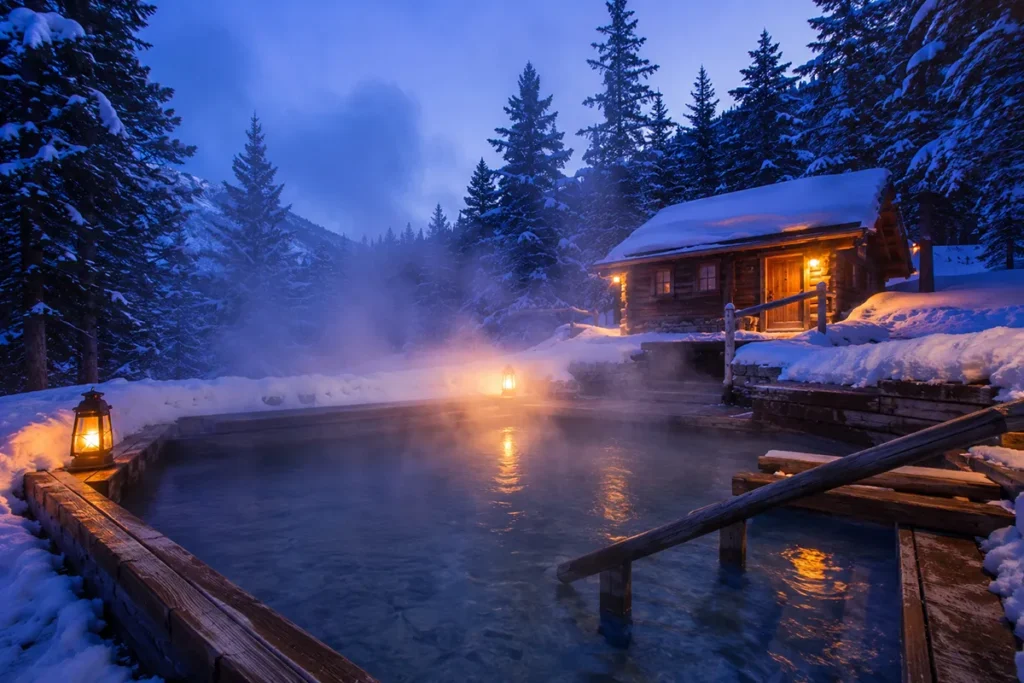
This is the region’s most underrated category. Southwest Montana has the highest concentration of natural hot springs in the state.
| Hot Spring | Town | Style |
|---|---|---|
| Norris Hot Springs | Norris | Outdoor wooden pool, live music summer weekends |
| Boulder Hot Springs | Boulder | Historic 1888 hotel + outdoor and indoor pools |
| Elkhorn Hot Springs | Polaris | Rustic mountain lodge in the Pioneer Mountains |
| Jackson Hot Springs | Jackson | Big Hole Valley resort with massive outdoor pool |
| Potosi Hot Springs | Pony | Private soak in the Tobacco Roots |
| Fairmont Hot Springs | Anaconda area | Family-friendly resort with waterslides |
| Broadwater Hot Springs | Helena | Day-use thermal pools just outside Helena |
| Renova Hot Springs | Twin Bridges | Free, undeveloped riverside springs |
| Gigantic Warm Springs | Lewistown area | Edge of region |
For the full picture: Montana hot springs overview
The Pintler Scenic Loop
If you have one day in Southwest Montana and want to maximize beauty per mile driven, do this drive. The Pintler Scenic Loop is a 65-mile route on State Highway 1 between Anaconda and Drummond, looping you past Georgetown Lake, Discovery Ski Area, Philipsburg, and the Anaconda-Pintler Wilderness.
Highlights along the loop:
- Georgetown Lake — high-altitude lake with great views of the Pintlers
- Discovery Ski Area — even in summer the scenic chairlift is worth a ride
- Philipsburg — the candy store, sapphire mining, brewing
- Granite Ghost Town State Park — short hike to a 19th-century silver-mining ruin above Philipsburg
- Lost Creek Falls — short walk near Anaconda
- Pintler Falls — for those who want a longer hike
Plan a full day. Pack a picnic. Stop frequently.
Fly Fishing in Southwest Montana
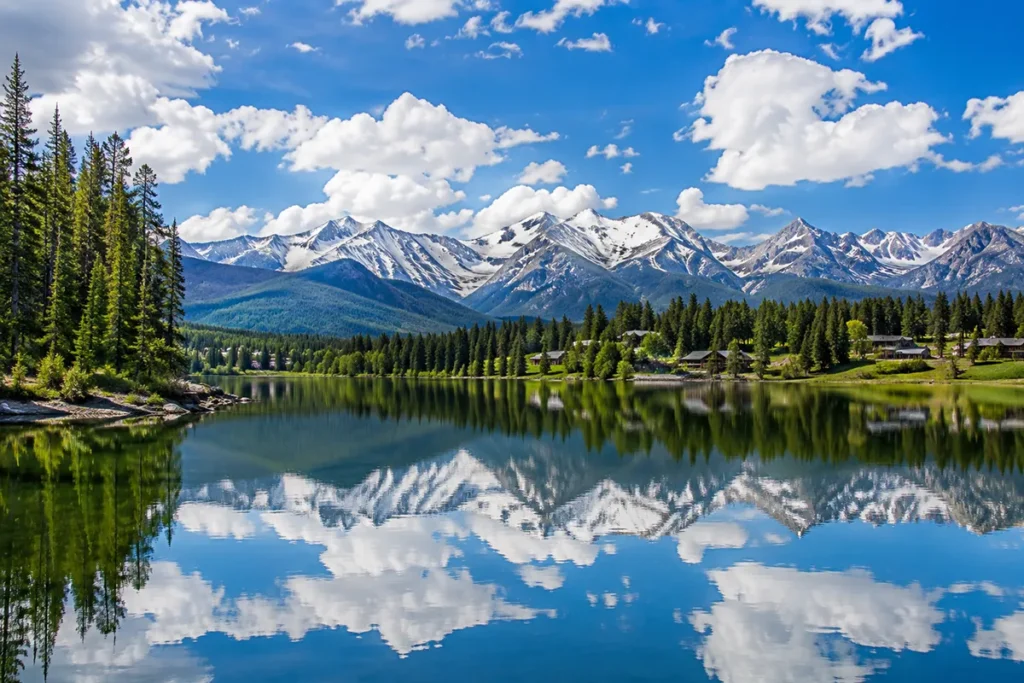
Southwest Montana is genuinely one of the best fly fishing destinations in the world. Five blue-ribbon rivers all converge here:
- Big Hole River — wild trout, lovely water, accessible from Wisdom to Twin Bridges
- Beaverhead River — tailwater trophy trout below Clark Canyon Dam, near Dillon
- Madison River (upper) — between Hebgen Lake and Three Forks
- Ruby River — small water, big rewards, near Sheridan
- Jefferson River — formed at Three Forks, less famous but excellent
The Missouri River below Canyon Ferry Dam (just east of Helena) is also a world-class tailwater fishery and one of my personal favorites for a half-day from a Helena base.
Hire a guide for at least your first day. Tip well.
Ski Areas of Southwest Montana
Three full-service alpine ski areas and one fantastic local hill, none of which charge megaresort prices:
- Discovery Ski Area — Philipsburg-adjacent, locally beloved, excellent for intermediates and families
- Maverick Mountain — Polaris area, in the Pioneer Mountains, small and authentic
- Great Divide — closest ski area to Helena, family-run, well-priced day skiing
- Showdown — technically in Central Montana but accessible from the region
➡️ Montana ski resorts overview
Lewis & Clark Caverns: Montana’s First State Park
A genuinely impressive limestone cavern system near Three Forks. Lewis & Clark themselves never actually visited the cave — it was named after them later — but the cave is one of the largest and most decorated in the Northwest.
The standard tour is about 2 miles round-trip underground and takes around 2 hours. There are nearly 600 steps and one narrow passage you have to slide through (“the beaver slide”). Not great for the claustrophobic. Spectacular for everyone else. Tours run May through September.
Native American History: Big Hole National Battlefield
About 12 miles west of Wisdom, the Big Hole National Battlefield marks the site of an 1877 battle between the U.S. Army and the Nez Perce during their forced flight to Canada. It’s a small, somber, beautifully preserved National Park Service site.
The visitor center contextualizes the battle from Nez Perce, settler, and Army perspectives. The battlefield itself sits in a wide-open valley that has barely changed in 150 years.
This is one of the most important sites in Montana for understanding the full history of the West. If you have any interest in Indigenous American history, build it into your trip.
Wildlife and Nature
Southwest Montana isn’t as wildlife-heavy as Yellowstone Country, but you’ll see plenty:
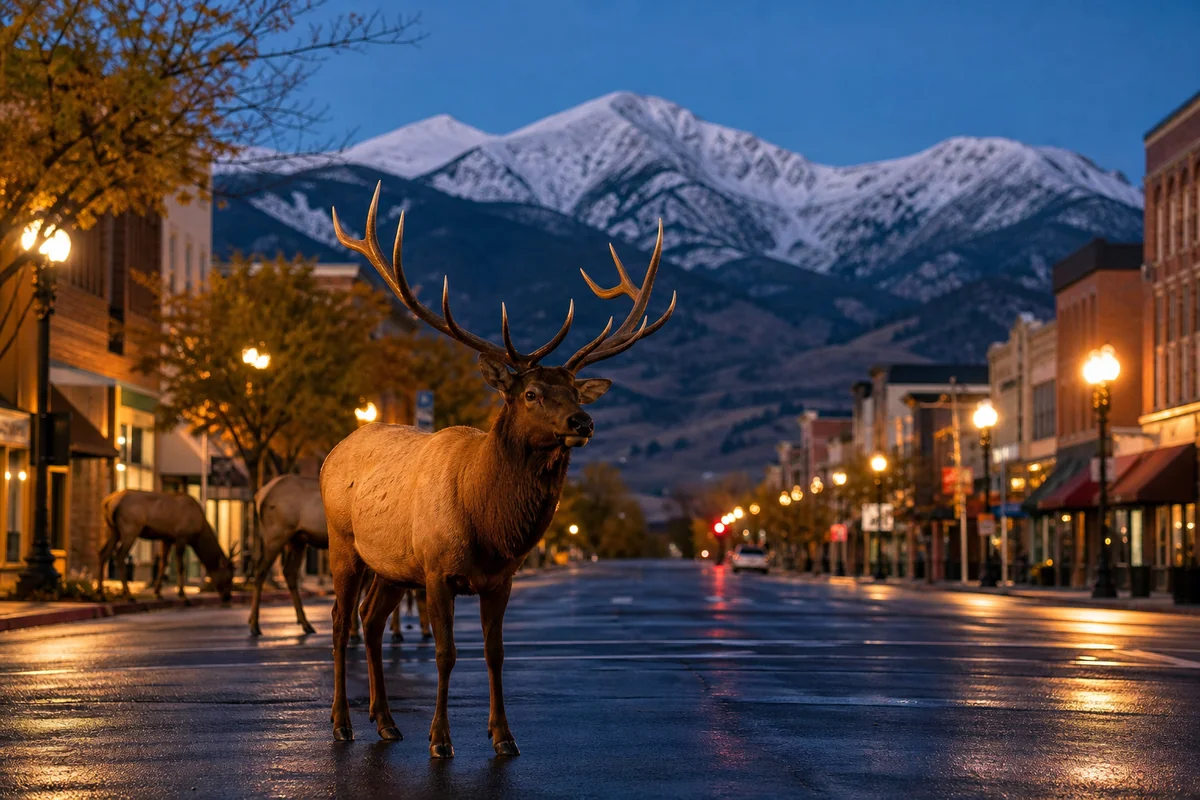
- Elk — abundant, especially in the Madison Range and around Wise River
- Moose — willow flats along the Big Hole and Madison
- Pronghorn — open valleys throughout
- Black bears and grizzlies — both present; carry bear spray on hikes
- Mountain goats and bighorn sheep — Tobacco Roots, Pioneer Mountains, Anaconda-Pintler Wilderness
A 5-Day Southwest Montana Itinerary
What I’d recommend for a first visit:
- Day 1: Fly into Helena (HLN) or Bozeman (BZN). Explore Helena — Last Chance Gulch, Capitol building, Cathedral. Soak at Broadwater Hot Springs.
- Day 2: Drive to Butte. World Museum of Mining, Berkeley Pit, Our Lady of the Rockies, dinner at Pekin Noodle Parlor.
- Day 3: Pintler Scenic Loop day. Anaconda (Old Works Stack), Georgetown Lake, Philipsburg (sapphire mining, candy store), overnight in Philipsburg.
- Day 4: Drive south to Dillon. Visit Bannack State Park. Fly fish the Beaverhead or just hike the river.
- Day 5: Drive to Virginia City via Highway 287. Walk the historic district. Return to Bozeman to fly out.
For a longer trip, add Lewis & Clark Caverns, Three Forks, and a soak day at Norris Hot Springs.
Practical Info Box: Southwest Montana at a Glance
| Item | Details |
|---|---|
| Major airports | Helena Regional (HLN); Bozeman Yellowstone International (BZN) is the practical “big” airport |
| Best season overall | June through September |
| Best for ski season | December through March |
| Counties included | Beaverhead, Broadwater, Deer Lodge, Granite, Jefferson, Lewis & Clark, Madison, Powell, Silver Bow |
| Major rivers | Missouri, Madison, Jefferson, Big Hole, Beaverhead, Ruby |
| Bear country? | Yes, both grizzly and black bears — carry spray |
| Cell service | Good in towns, patchy in the mountains and wilderness areas |
| State parks | Bannack, Lewis & Clark Caverns, Granite Ghost Town, Anaconda Smoke Stack, others |
| Largest national forest | Beaverhead-Deerlodge — the largest in Montana |
| Time zone | Mountain Time (MST/MDT) |
What I Wish I’d Known Before My First Trip
A few things that would have saved me real time and money.
Distances look short but mountain passes slow you down. Add about 25% to whatever Google Maps tells you for any drive that crosses a ridge. The Continental Divide runs through this region. The roads aren’t slow because of traffic — they’re slow because of switchbacks.
Bannack is worth more than a drive-through. People assume it’s a quick stop. Give it 2–3 hours minimum. Bring water and snacks; there’s no concession.
Butte and Helena are different cities. A lot of first-timers think they’re picking between Helena and Butte. Don’t pick — visit both. They’re 65 miles apart and tell two completely different chapters of Montana’s story.
Hot springs are everywhere, but they’re not all the same. Norris is small and atmospheric. Fairmont is a family resort with waterslides. Boulder is historic and laid-back. Match the vibe to your trip. See the best natural hot springs in Montana for the full breakdown.
Most ghost towns are seasonal. Bannack is open year-round; the road in can get rough in winter. Virginia City and Nevada City are open Memorial Day through Labor Day only. Garnet has a longer summer season but is essentially impossible in winter.
Old Works Golf Course is real and worth playing. Even if you’re not a serious golfer, an afternoon round at a Jack Nicklaus course built on a reclaimed Superfund site is a story.
Fly fishing pressure varies by river. The Madison gets crowded. The Big Hole and Beaverhead are far less so. Twin Bridges-area outfitters know where to take you.
The mining history is not optional. Even if you think you don’t care about copper, Butte’s story will draw you in. The World Museum of Mining is genuinely excellent.
Pekin Noodle Parlor is worth the visit. Founded in 1909, oldest continuously operating Chinese restaurant in the United States, second floor of a Butte building. Order the chow mein. Eat in one of the private booths. [Verify “1909 founding” and “oldest in US” claims before publishing.]
Where to Stay (Quick Reference)
| Stay style | Best location |
|---|---|
| Walkable downtown | Helena, Butte, Philipsburg |
| Hot springs resort | Fairmont, Boulder, Elkhorn, Jackson |
| Historic atmosphere | Virginia City (in-period lodging), Bannack-area lodges |
| Ranch experience | Big Hole Valley, Madison Valley, throughout Beaverhead County |
| Budget-friendly | Dillon, Drummond, Deer Lodge |
| Ski-area base | Philipsburg (Discovery), Polaris (Maverick), Helena (Great Divide) |
| RV / camping | Multiple state parks; private parks in Helena, Butte, Anaconda |
➡️ Helena RV parks | Butte RV parks | Hidden gem RV parks | Best RV parks in Montana
How Southwest Compares to Glacier and Yellowstone Country
If you’ve already done either of the big-park regions and want to know whether Southwest is worth a return trip, here’s the honest take:
| Factor | Southwest Montana | Glacier Country | Yellowstone Country |
|---|---|---|---|
| Headline park | Bannack State Park, no NP | Glacier NP | Yellowstone NP |
| Crowds | Low | Heavy | Heavy |
| Hot springs density | Highest in state | Medium | Medium |
| Historic depth | Highest in state | Medium | Medium |
| Best for | Repeat Montana visitors | First-timers | First-timers + wildlife |
| Mountain drama | Strong, less iconic | Highest | High |
| Best fly fishing | Equal or better | Excellent | Excellent |
| Affordability | Best of the three | Most expensive | Expensive |
For most repeat visitors, Southwest is the easy choice. Lower prices, fewer crowds, deeper history, more hot springs.
➡️ Glacier Country guide | Yellowstone Country guide
Should You Visit Southwest Montana?
If this is your first Montana trip and you can only do one region, this isn’t the one. Glacier Country and Yellowstone Country are easier wins for first-timers.
But if you’re on your second or third Montana visit — or if you’re the kind of traveler who already knows you prefer ghost towns and hot springs and small bars over national park crowds — this is the region.
It is, in my honest opinion, the most rewarding corner of the state for travelers who like to read the historical markers, take side roads, and sit on the porch of a 130-year-old saloon with someone older than your grandfather and listen.
Save this guide for your trip planning or pin it for later. Got a specific question about Southwest Montana? Drop it in the comments — I read and answer every one. And when you’re ready for region #4, Central Montana is next — wheat country, the Rocky Mountain Front, and the great in-between that most travelers blow through without realizing what they’re missing.
➡️ Back to the main Montana Regions guide
Written by Sarah Bennett. The M&M in Butte still pours the best cup of coffee in Montana, and yes, you can buy a cigar from the same wooden case that’s been there since 1890.