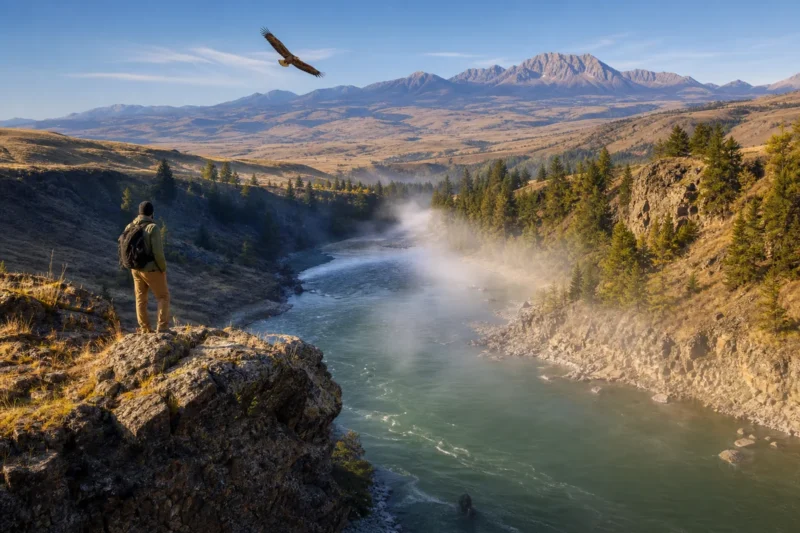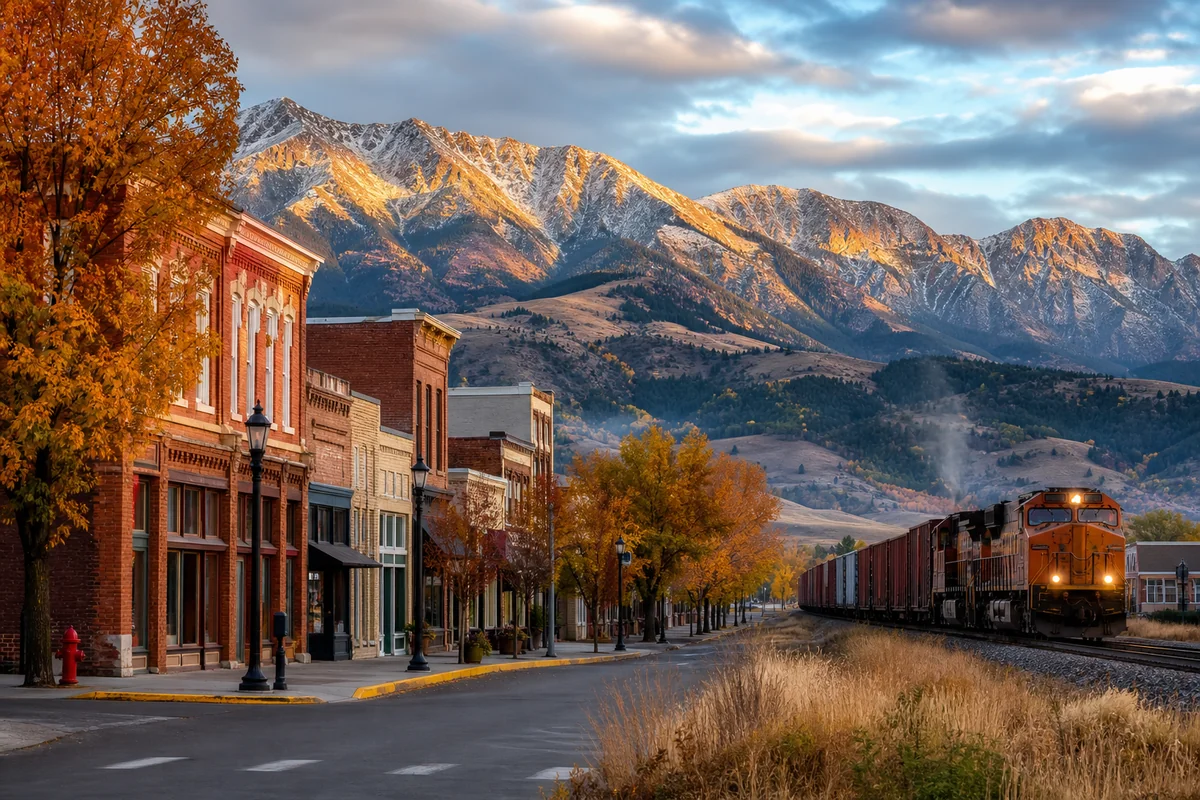
Standing at the edge of Livingston’s main street on a crisp October morning, watching the Absaroka Range glow amber in the early light while a freight train rumbles past century-old brick storefronts — that’s when Park County stops feeling like a destination and starts feeling like somewhere you’d actually want to live.
Part of the remarkable tapestry covered across the 56 Montana Counties, Park County earns its place among the state’s most compelling corners, anchored by wild rivers, towering peaks, and a gateway to one of the world’s most famous national parks.
- Park County sits in south-central Montana, directly north of Yellowstone National Park’s North Entrance at Gardiner.
- Livingston is the county seat — a genuine small town with great food, art galleries, and one of Montana’s best fly-fishing rivers running through it.
- The Yellowstone River, Paradise Valley, and Absaroka-Beartooth Wilderness are the headline attractions.
- Best visited May through October; July and August are busiest but stunning — spring and fall offer fewer crowds and better wildlife viewing.
- This is a full-trip destination, not just a drive-through — allow at least 3–4 days to do it justice.
- Book accommodations well in advance for summer, especially if you’re also visiting Yellowstone National Park.
Liked this article?
Add Roaming Montana as a preferred source so you see more of our articles and guides on Google.
Where Is Park County, Montana?
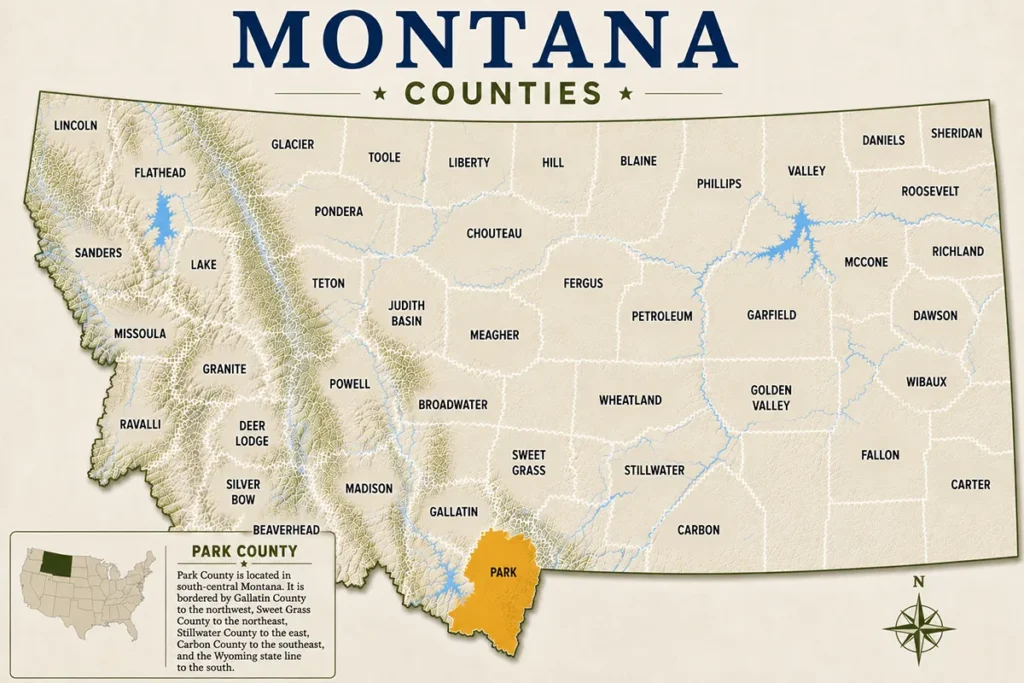
Park County occupies a dramatic stretch of south-central Montana, bordered by the Absaroka and Gallatin mountain ranges to the west and south.
The county covers roughly 2,800 square miles, though it packs an extraordinary amount of geographic variety into that space — from the high alpine terrain of the Absaroka-Beartooth Wilderness to the broad agricultural flats of the Yellowstone River corridor.
Livingston is the county seat, sitting at about 4,500 feet elevation along Interstate 90, roughly 116 miles southeast of Bozeman. The town of Gardiner anchors the southern end of the county, positioned at the North Entrance of Yellowstone — making Park County one of the most strategic staging points for any Montana road trip.
Neighboring Gallatin County sits to the west, and Carbon County borders it to the east. That regional context matters: visitors who build a multi-county itinerary through this corridor will find some of Montana’s most concentrated scenery within a 100-mile radius.
A Brief History of Park County
Park County was established in 1887, named directly for its proximity to Yellowstone National Park — the nation’s first national park, designated in 1872. Livingston itself was born as a railroad town, established by the Northern Pacific Railway in 1882 as a division point and the original gateway to Yellowstone.
The town quickly grew into a supply hub for ranchers, miners, and tourists making their way south. By the early 20th century, Livingston had hotels, saloons, and an active arts community — a character it has largely preserved to this day.
Writers like Tom McGuane and Jim Harrison famously put down roots here, drawn by the fishing, the landscape, and the particular quality of light that rolls through Paradise Valley on a summer afternoon.
That literary and artistic legacy isn’t just trivia. It actively shapes the town’s identity, explaining why you’ll find serious independent bookstores, working artists’ studios, and gallery openings alongside the outfitters and fly shops.
Livingston: The Heart of Park County
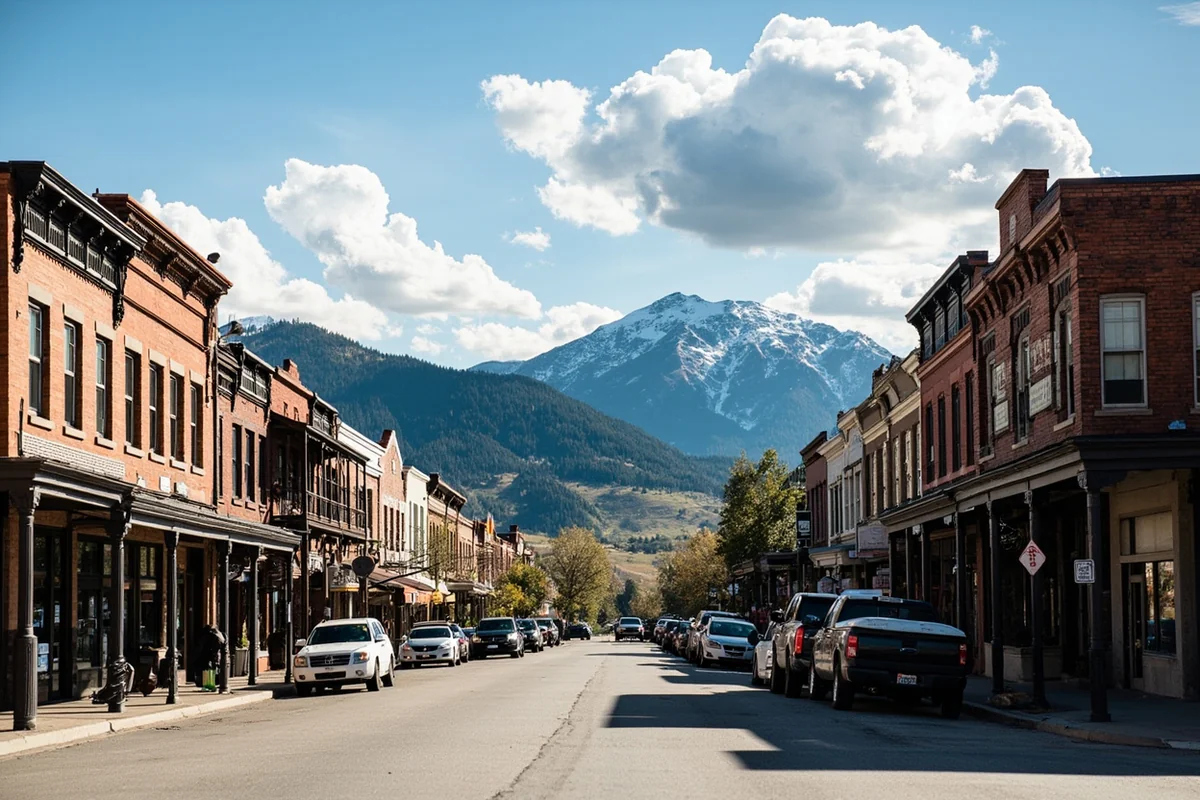
Most visitors base themselves in Livingston, and for good reason. The town has the infrastructure of somewhere twice its size — around 8,000 residents — but none of the anonymity.
Within a few blocks of the historic Depot Center, you can find a top-tier fly shop, an acclaimed restaurant, a proper espresso bar, and a museum worth spending an hour in.
What most guides skip is just how walkable and genuinely livable downtown Livingston feels. On a recent visit during a weekday in early September, the streets were busy but not chaotic — a refreshing contrast to the tourist crowds pushing through nearby gateway towns further south.
Livingston Depot Center
The Depot Center is the old Northern Pacific train station, now operating as a museum dedicated to the cultural and railroad history of the region. The building itself — an Italian Renaissance Revival structure completed in 1902 — is worth seeing on its own merits.
Admission is typically modest (under $10 for adults at the time of writing), and the exhibits cover everything from Yellowstone tourism history to the lives of homesteaders in Paradise Valley. What caught me off guard on my visit was the quality of the rotating fine art exhibitions — a step above what you’d expect from a small-town museum.
The Livingston Bar and Grille
No itinerary for Livingston is complete without at least one meal or drink at the Bar and Grille. It’s the kind of place where a Hollywood director and a ranch hand might be sitting at adjacent barstools — and both would be perfectly at home.
Expect to pay roughly $15–$30 per entrée, reflecting the quality of the ingredients and the kitchen’s commitment to Montana-sourced proteins. The elk and bison options are reliably excellent.
Shopping and the Arts Scene
Livingston’s gallery density is genuinely impressive for a town this size. The work skews toward Western and wildlife realism, but you’ll find contemporary and abstract work too. First Friday gallery walks happen most months and are a great way to connect with local artists.
The independent bookstores along Main Street carry an unusually strong selection of Montana and Western literature — the influence of the town’s literary history is tangible. Pick up anything by Tom McGuane if you want to understand the landscape through the eyes of someone who has lived it.
Paradise Valley: Montana at Its Most Cinematic
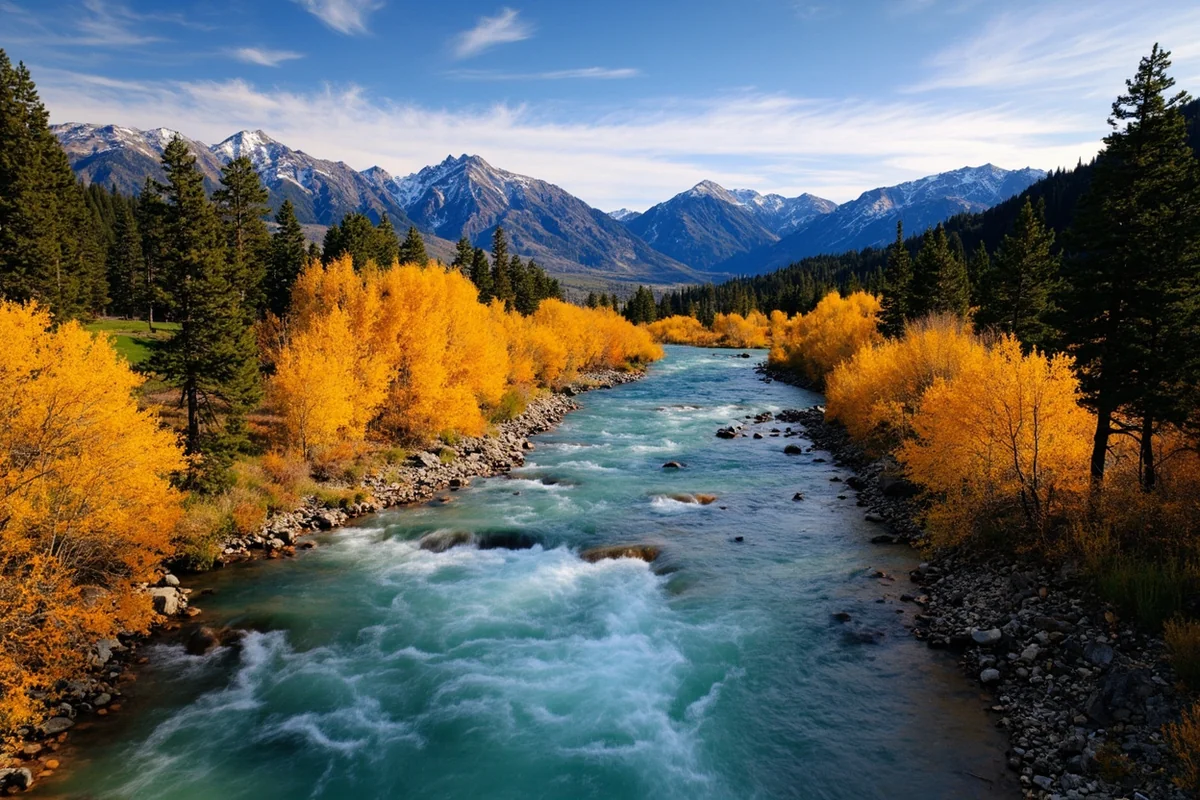
Drive south from Livingston on US-89 and within minutes you’re in one of Montana’s most photographed landscapes — though the photos never quite do it justice.
Paradise Valley is a broad river corridor flanked by the Absaroka Range to the east and the Gallatin Range to the west, with the Yellowstone River threading through the middle.
The valley runs roughly 50 miles south to Gardiner, and the drive alone is worth building time into your itinerary.
Pull off at the Tom Miner Basin Road turnoff on the east side around mile 17 if you want a taste of the backcountry without committing to a full hike — the views from the first few miles of that dirt road rival anything in the valley.
Yellowstone River Access
The Yellowstone River is the longest undammed river in the contiguous United States, and Park County holds some of its most fishable and accessible stretches.
According to Montana Fish, Wildlife & Parks, the upper Yellowstone through Paradise Valley supports robust populations of brown and rainbow trout, making it one of the most sought-after fly-fishing rivers in the American West.
Public fishing access sites are well-marked along US-89, and most don’t require a reservation. What surprises many first-timers is how approachable the river feels here — wide, relatively predictable flows (outside of spring runoff), and long gravel bars that make wading comfortable for intermediate anglers.
Hiring a local guide for a half-day float is money well spent, even if you’re an experienced angler. The guides know the specific runs, understand the seasonal hatches, and carry the right gear for the conditions. Expect to pay roughly $300–$450 for a guided full-day float trip, with half-days typically around $200–$275.
Chico Hot Springs
Chico Hot Springs Resort, tucked into the valley about 30 miles south of Livingston near Pray, Montana, deserves its own paragraph. The resort has been operating since 1900 and manages the rare trick of feeling genuinely historic without being tired or kitschy.
The outdoor pools are fed by natural geothermal springs maintained at around 96–103°F, and soaking in them on a cold evening with the Absarokas rising directly overhead is one of those experiences that’s hard to describe to someone who hasn’t done it.
Day-use pool access is available for visitors not staying overnight — fees are typically reasonable, around $10–$15 per person at the time of writing. The resort’s restaurant is also worth a dinner reservation.
Gardiner: Gateway to Yellowstone
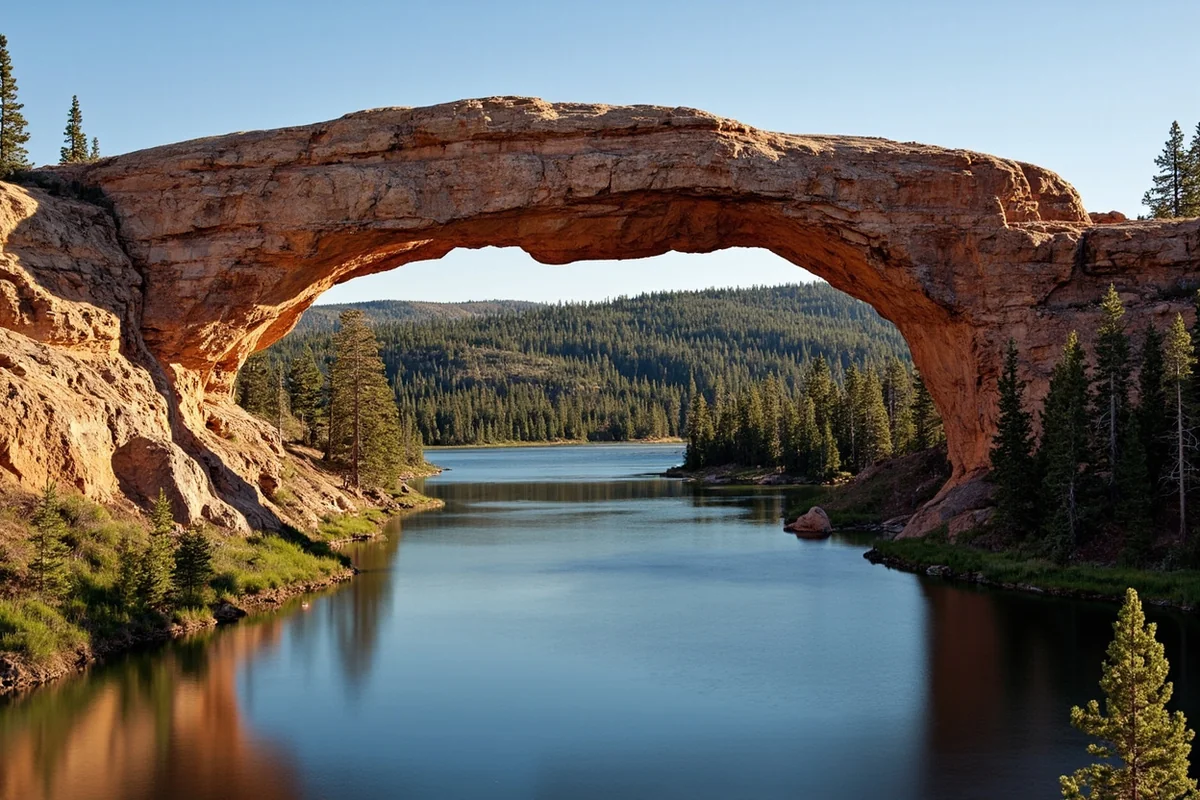
At the southern tip of Park County, Gardiner sits at 5,314 feet elevation, pressed right against the boundary of Yellowstone National Park. The town is small — fewer than 1,000 permanent residents — but it punches well above its weight in terms of services and character.
The Roosevelt Arch, built in 1903 and inscribed with Teddy Roosevelt’s dedication “For the benefit and enjoyment of the people,” marks the historic North Entrance.
It’s one of the most photographed spots in the greater Yellowstone region, and seeing it for the first time still carries a genuine sense of occasion.
Gardiner is the only Yellowstone entrance that stays open to wheeled vehicles year-round, which makes it the go-to access point for winter wildlife watching.
The Lamar Valley road is accessible from here in winter via snowcoach or snowmobile, offering some of the most spectacular wolf and bison viewing anywhere on the continent.
For accommodation context, Gardiner tends to run slightly more affordable than lodging inside the park. Expect a range from basic motels at roughly $100–$180 per night to nicer lodge-style properties at $200–$350, depending on season and availability.
Outdoor Recreation in Park County
Hiking the Absaroka-Beartooth Wilderness
The Absaroka-Beartooth Wilderness — one of the largest wilderness areas in the lower 48 states — covers significant terrain within Park County’s eastern boundary. According to the U.S. Forest Service, the wilderness encompasses over 943,000 acres, with trailheads accessible from both the Livingston side and from the Cooke City corridor to the south.
The Mill Creek drainage east of Livingston is a relatively accessible entry point — the first few miles of trail gain elevation steadily through pine and fir before opening into high-country meadows.
On a trip last summer, the wildflower display in the upper meadows around mile 6 was genuinely extraordinary — the kind of scene that stops you mid-step.
Rock Climbing and Mountain Biking
Climbing in the Absarokas requires more approach effort than the crags near Bozeman, but the payoff is solitude and quality rock. The Emigrant Peak area draws experienced climbers, though most lines here are serious undertakings requiring solid alpine skills.
Mountain biking options are expanding in the Livingston area, with the Sacajawea Trailhead offering a growing network of singletrack with views across the valley. Trail conditions vary significantly by season — early June can be muddy, while late July through September is typically prime.
Wildlife Watching
This is where Park County genuinely separates itself from most Montana destinations. The northern range of Yellowstone ecosystem extends well into Paradise Valley, meaning wildlife encounters here are not unusual — they’re expected.
Pronghorn are a near-constant presence on the valley floor. Elk move through in large numbers during fall migration, which peaks around late October. Bear activity in the Absarokas is real — black bears commonly and grizzly bears occasionally — making bear spray non-negotiable for any backcountry travel. Carry it, know how to use it.
Fishing Beyond the Yellowstone
Mill Creek, Suce Creek, and Tom Miner Creek all offer smaller-stream fishing for cutthroat and brook trout. These tributaries get far less pressure than the main Yellowstone, and on a quiet Tuesday in August, you can have a productive stretch entirely to yourself.
Montana fishing licenses are required for all anglers 15 and older. Current licensing information and fees are available directly through Montana Fish, Wildlife & Parks at fwp.mt.gov — checking there before your trip is the right move since fees are updated annually.
Suggested Itinerary
Park County rewards a proper multi-day visit. Here’s a realistic two-day framework that hits the highlights without feeling rushed.
Day 1: Livingston and Paradise Valley
Start the morning in Livingston with breakfast at one of the cafés along Main Street — the town wakes up early by Montana standards. Spend an hour walking the Depot Center before driving south on US-89 into Paradise Valley.
Stop at a public fishing access site to walk the Yellowstone River banks, even if you’re not fishing — the river at this scale is worth experiencing up close.
Continue south to Chico Hot Springs for lunch, then soak in the pools for an hour in the afternoon. The drive back north through the valley at golden hour is one of those moments that makes you understand why people move here.
Day 2: Gardiner and Yellowstone
An early start is essential. Drive south to Gardiner, arriving at the Roosevelt Arch by 8 a.m. before day-trip crowds build.
From Gardiner, enter Yellowstone National Park — the park entrance fee was $35 per vehicle at the time of writing, and the annual America the Beautiful Pass is worth buying if you’re visiting multiple federal sites on this trip.
Spend the morning on the Mammoth Hot Springs terraces, which are directly accessible from the North Entrance.
Return to Gardiner for lunch, then use the afternoon to explore the Yellowstone River canyon views near the Boiling River area (seasonal access — check current conditions with the National Park Service before visiting). End the day back in Livingston.
Where to Stay in Park County
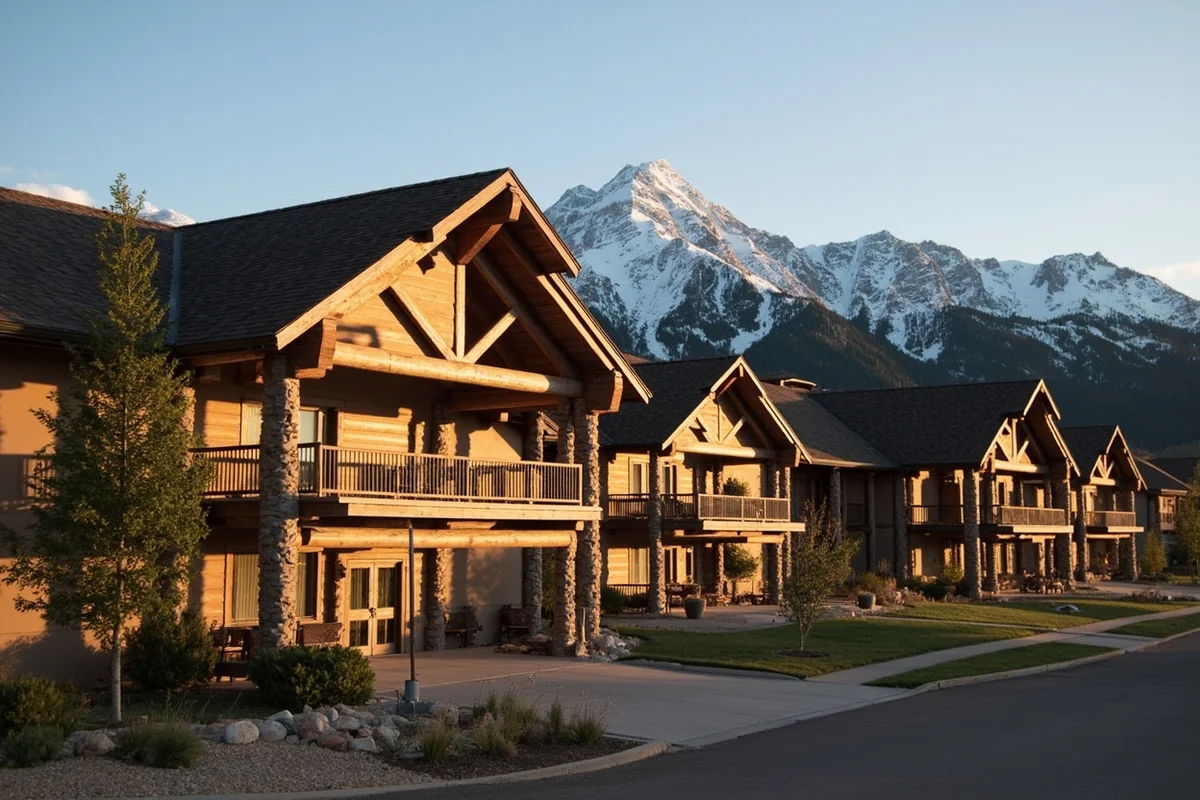
Livingston offers the widest range of accommodation options in the county. Historic downtown hotels — some operating in beautifully restored 19th-century buildings — typically run from roughly $120–$220 per night in summer.
Vacation rentals through short-term platforms are plentiful and often offer better value for groups or families, usually ranging $150–$350 per night depending on size and location.
Chico Hot Springs Resort is the premium option in the valley itself — expect to pay $150–$300 per night for rooms, with the hot spring access included. It books out months in advance for July and August weekends, so planning ahead is essential.
Gardiner’s options skew toward no-frills motels and small lodges — functional and reasonably priced compared to inside-the-park options, but limited in number. Booking more than two months out is strongly advised for summer stays.
Camping is another genuine option. The Yellowstone River Trout Hatchery area and several Forest Service campgrounds in the Absaroka foothills provide access to backcountry without requiring a long drive. Sites typically run $10–$20 per night through the Recreation.gov system.
Practical Information for Visitors
| Detail | Information |
|---|---|
| County Seat | Livingston |
| Nearest Major Airport | Bozeman Yellowstone International (BZN) — approx. 55 miles west |
| Best Months to Visit | May–October (peak: July–August; quieter: May, September, October) |
| Average Summer High (Livingston) | 80–88°F (July); can spike above 95°F in heat waves |
| Average Winter Low (Livingston) | 5–15°F; Livingston is notorious for extreme wind (gusts to 60+ mph) |
| Cell Service | Good in Livingston and Gardiner; patchy through much of Paradise Valley and nonexistent in backcountry |
| Gas Stations | Available in Livingston and Gardiner; fuel up before heading into Paradise Valley |
| Yellowstone Entrance | North Entrance at Gardiner — open year-round to wheeled vehicles |
| Emergency Services | Livingston HealthCare is the county’s main hospital facility |
What Most Visitors Get Wrong About Park County
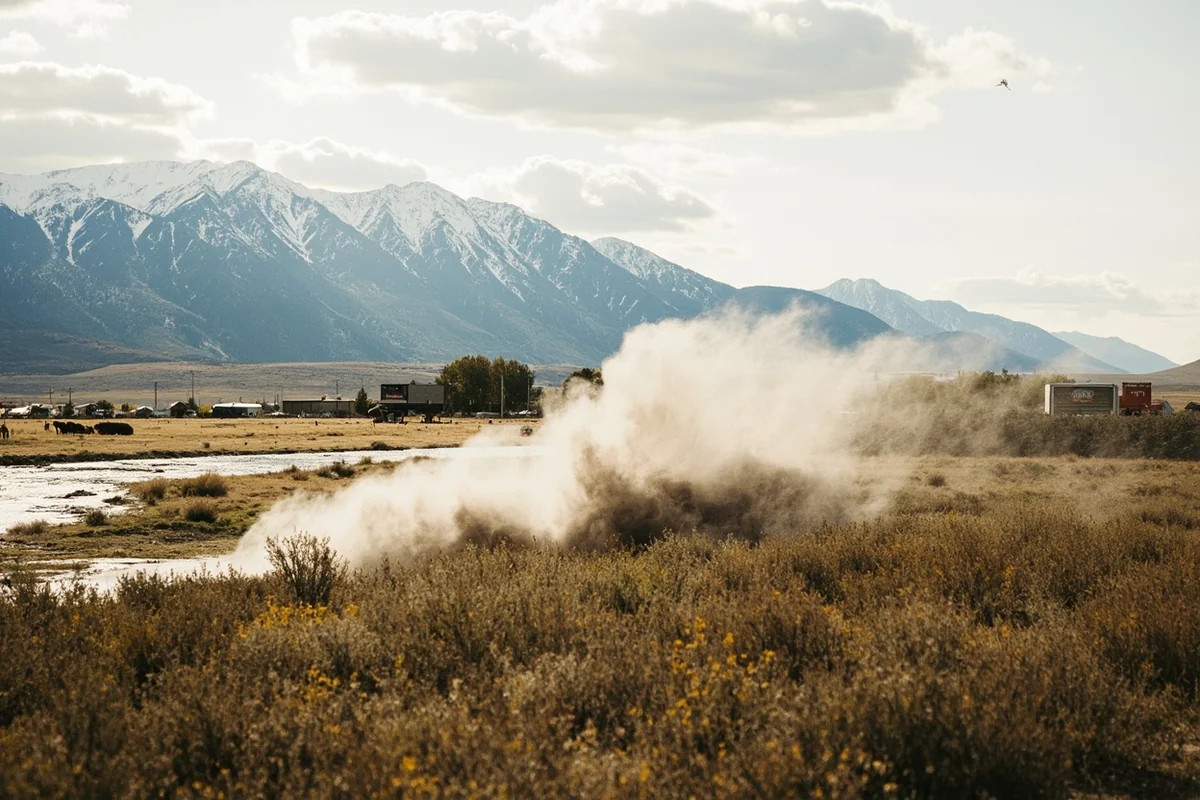
Underestimating the wind. Livingston has a well-documented reputation as one of the windiest towns in Montana — and the state takes wind seriously. The gap in the Absarokas east of town acts as a natural funnel, and 40–60 mph gusts on an otherwise beautiful day are not unusual. Pack a windproof layer even in summer. On my first visit, I nearly had a tent pole snapped at a campsite before someone local told me to anchor down differently.
Treating it only as a Yellowstone staging area. Plenty of visitors spend one night in Livingston and rush south the next morning, missing the fact that Paradise Valley, the Absaroka wilderness, and Livingston itself are each full-day destinations. Park County deserves its own trip, not just an overnight stop.
Skipping the shoulder seasons. July and August are beautiful, but September in Paradise Valley is arguably the best month of the year — cooler temperatures, fall color on the aspens, elk bugling in the mornings, and dramatically fewer people on the river. The mistake most visitors make is not considering it.
Assuming the Yellowstone River is safe to wade anywhere. The upper Yellowstone moves fast, and cold. Several stretches that look calm from the bank have tricky currents and slippery cobble underfoot. If you’re new to wading swift rivers, hire a guide or stick to the shallower edges near public access sites.
Forgetting about wind in Gardiner. Gardiner gets its own version of big weather — afternoon thunderstorms build fast over the Absarokas in summer, and conditions inside the park can deteriorate quickly. Check the National Park Service forecast at nps.gov/yell before heading into Yellowstone from the north.
Day Trips and Side Explorations
Park County’s central location makes it a natural hub for wider explorations. A day trip east along US-212 from Cooke City (accessible from the park’s Northeast Entrance) opens up the Beartooth Highway — one of the most scenic drives in North America — though this route is only open from late May through mid-October depending on snowpack.
To the west, it’s an easy 55-mile drive to Bozeman in Gallatin County for those wanting a larger-city day with shopping, brewery visits, or access to the Museum of the Rockies.
The small community of Clyde Park, north of Livingston, offers a glimpse into working ranch country that most tourists entirely bypass. It’s the kind of place where a grain elevator and a small post office are the main landmarks — and where you’ll understand that Montana’s character runs much deeper than its scenic corridors.
If you’re building a broader Montana road trip and want to compare Park County’s character against other regions, it’s worth reading about Beaverhead County to the southwest, which shares some of that wild river and ranching DNA, or Cascade County further north for a completely different Montana experience.
Getting to Park County
Most visitors fly into Bozeman Yellowstone International Airport (BZN), which has seen significant expansion in recent years and now handles direct flights from most major US hubs. From the airport, Livingston is approximately 55 miles east on I-90 — roughly a 50-minute drive under normal conditions.
Rental cars are the only practical way to explore the county. Public transportation within Park County is extremely limited, and rideshare options thin out quickly outside of Livingston proper. Book your rental car well in advance for summer — BZN inventory depletes fast during peak season, and prices spike accordingly.
Road conditions from late fall through early spring require attention. The Wyoming Department of Transportation (for those coming from the south via Yellowstone) and Montana Department of Transportation (MDT) both provide real-time road condition updates at 511.mt.gov — bookmark it before your trip.
Final Thoughts
Park County is one of those places that expands in your imagination the more time you spend there. What looks like a Yellowstone staging area on a map reveals itself, on the ground, as a fully realized destination with its own rhythms, landscapes, and community.
The Yellowstone River, the valley, the wind, the art scene, the fishing — none of it feels like it’s performing for tourists. It just exists, and you get to step into it.
What I’d tell anyone planning a trip here is this: give it more time than you think you need. Build in a day you haven’t filled.
That’s when Park County tends to deliver its best moments — an unexpected conversation at a fly shop, a pull-off with a view you didn’t expect, an evening in Chico’s hot springs when the Absarokas catch the last light.
Whether this is your first Montana trip or your tenth, Park County belongs on the itinerary — not as a corridor, but as a destination.
How We Researched This Guide
This guide is based on multiple visits to Park County across different seasons, including summer and early fall trips that covered Livingston, Paradise Valley, Chico Hot Springs, and Gardiner. Information on fishing regulations and public access was verified with Montana Fish, Wildlife & Parks (fwp.mt.gov).
Yellowstone entrance information was confirmed through the National Park Service (nps.gov/yell). Road condition guidance references the Montana Department of Transportation (511.mt.gov).
We also spoke with local outfitters and guides in Livingston to ensure seasonal recommendations reflect current on-the-ground conditions.
Frequently Asked Questions
What is the best time of year to visit Park County, Montana?
The best time to visit Park County, Montana is late June through early September, when Yellowstone’s North Entrance near Gardiner is fully accessible and mountain roads are clear of snow. If you prefer fewer crowds and don’t mind cooler temperatures, late May or early October offer stunning shoulder-season scenery with significantly lower accommodation rates. Winter visitors can enjoy world-class snowmobiling and wolf watching near Lamar Valley, making Park County a legitimate year-round destination.
How far is Park County, Montana from major US cities?
Park County is roughly 1,400 miles from Chicago, about 1,100 miles from Denver, and approximately 560 miles from Salt Lake City, making it most accessible by fly-and-drive trips through Bozeman Yellowstone International Airport (BZN), just 80 miles northwest of Gardiner. Many travelers from the Pacific Northwest drive from Seattle or Portland in around 8 to 10 hours, entering the county via Livingston on Interstate 90. Renting a car in Bozeman is strongly recommended, as public transportation options within Park County are extremely limited.
What are the top things to do in Park County, Montana besides Yellowstone?
Beyond Yellowstone’s North Entrance, Park County offers exceptional fly fishing on the legendary Yellowstone River, with guided half-day trips typically running $300 to $450 for two anglers. The Absaroka-Beartooth Wilderness has hundreds of miles of hiking trails with far fewer visitors than the national park itself. Livingston, the county seat, is a charming Western town with great restaurants, art galleries, and the historic Livingston Depot worth spending at least a half day exploring.
How much does a trip to Park County, Montana typically cost per day?
Budget travelers staying in Gardiner or Livingston can expect to spend around $150 to $200 per day covering a mid-range motel ($100 to $160/night), meals ($40 to $60/day), and basic park entry fees ($35 per vehicle for a 7-day Yellowstone pass). Mid-range travelers using dude ranches or boutique hotels in Paradise Valley should budget $300 to $500 per day including guided activities. Peak summer weekends drive prices up significantly, so booking accommodations at least 3 to 4 months in advance is strongly advised.
What should I pack for a trip to Park County, Montana in summer?
Even in July and August, Park County mornings and evenings can drop into the 40s°F, so layering is essential — pack a fleece, a waterproof shell jacket, and moisture-wicking base layers. Sturdy hiking boots with ankle support are a must if you plan to explore trails in the Absaroka Range or within Yellowstone. Don’t forget bear spray ($50 to $60 to rent locally), a reusable water bottle, and sunscreen, as the high-elevation sun is much stronger than most visitors expect.
Is Park County, Montana worth visiting without going into Yellowstone National Park?
Absolutely — Paradise Valley alone is worth the trip, offering dramatic scenery along the Yellowstone River corridor with mountain views that rival anything inside the park. The stretch of US-89 between Livingston and Gardiner is widely considered one of the most scenic drives in Montana, and the region has excellent wildlife viewing including pronghorn, eagles, and mule deer without any entry fees. Fly fishing, whitewater rafting on the Yellowstone River, and exploring the Absaroka-Beartooth Wilderness provide a full itinerary entirely outside park boundaries.
Are there family-friendly activities in Park County, Montana for kids?
Park County is extremely family-friendly, with junior ranger programs inside Yellowstone, accessible riverside trails near Gardiner, and beginner-level whitewater float trips on the Yellowstone River suitable for kids ages 6 and up (typically $45 to $65 per person). The small but excellent Yellowstone Gateway Museum in Livingston has interactive exhibits on regional history that kids tend to enjoy. Many guest ranches in Paradise Valley offer horseback riding for children, giving families a classic Montana experience that’s hard to replicate anywhere else in the US.