Most Yellowstone guides on the internet are written from a Wyoming perspective. This isn’t one of them.
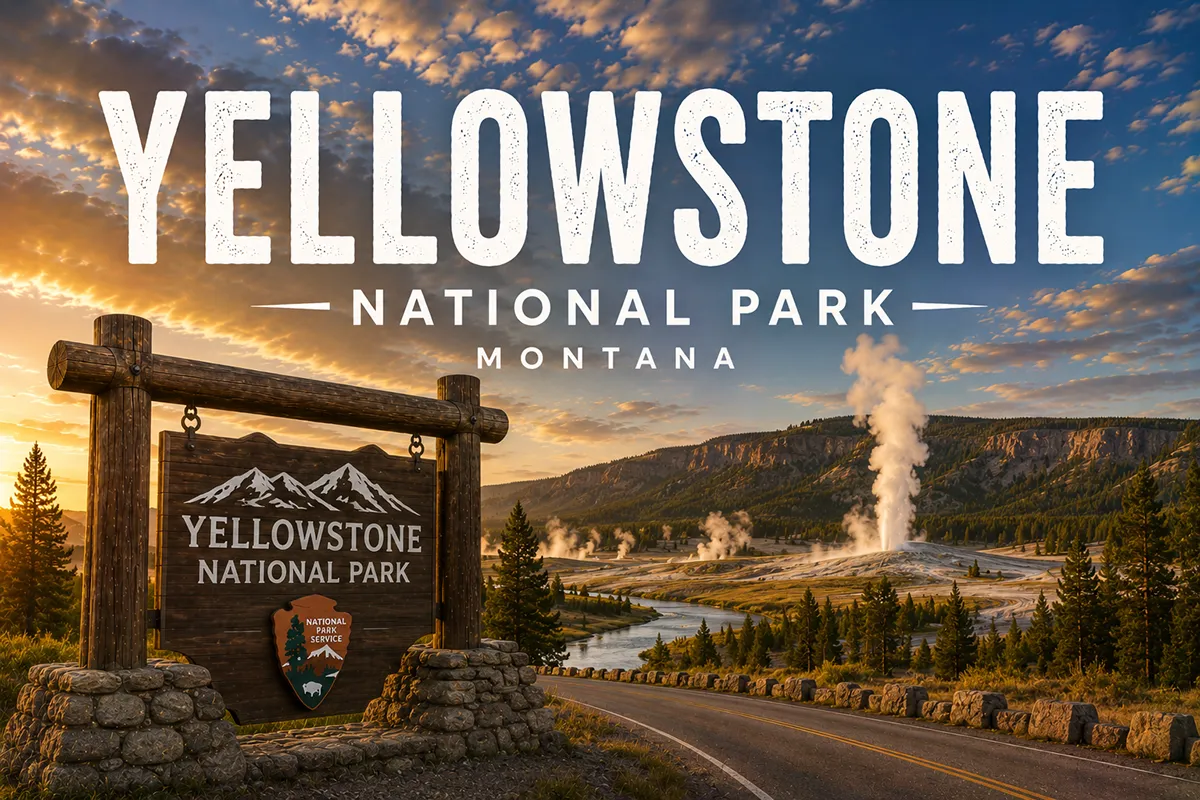
TL;DR: Yellowstone was the world’s first national park, established in 1872. It spans 2.2 million acres across three states — 96% in Wyoming, 3% in Montana, 1% in Idaho — but Montana owns three of the park’s five entrances (West, North, and Northeast). The Montana side is arguably the better side for wildlife, the only year-round road access, and the gateway to Lamar Valley — the most reliable wolf-watching country in the Lower 48. This guide covers the three Montana entrances, the two main road loops, where to stay, what’s changed for 2026, and how Yellowstone compares to its Montana sibling, Glacier.
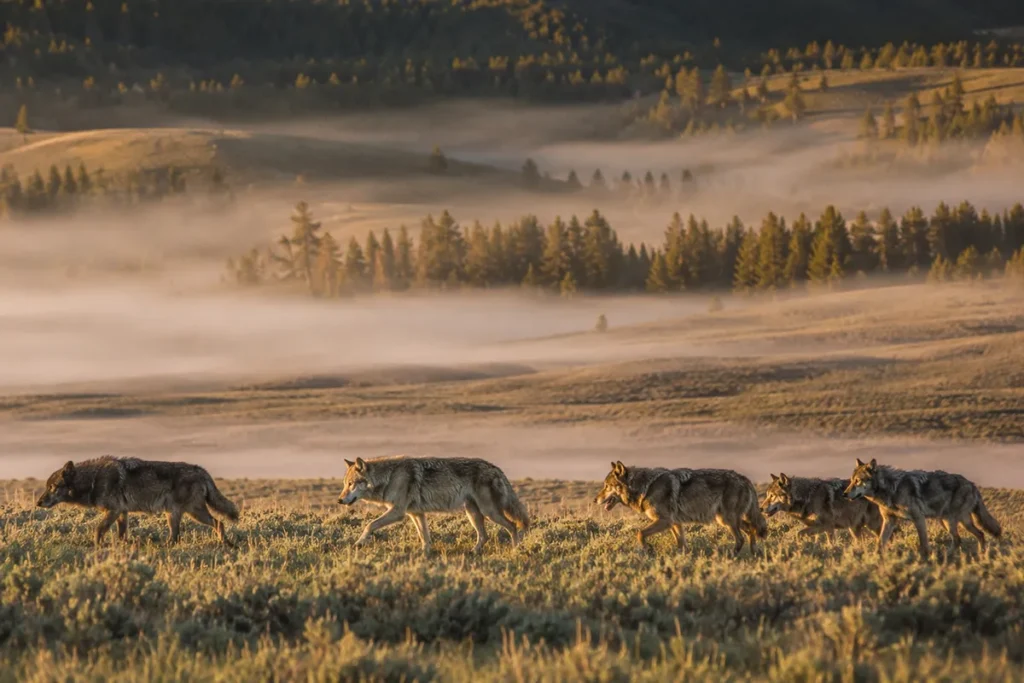
I’m Sarah Bennett, and I’ve been crossing into Yellowstone from the Montana side for the better part of a decade. I’ve watched wolves trot across a Lamar Valley meadow at dawn from a pullout I had entirely to myself.
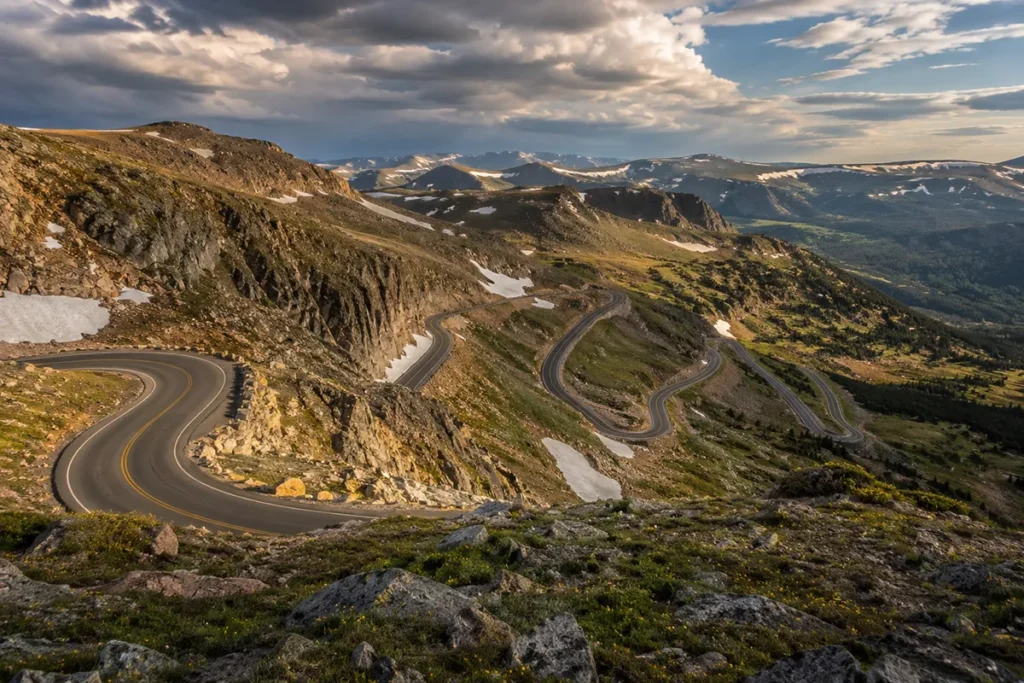
I’ve driven the Beartooth Highway in mid-September with the larches glowing yellow and not seen another car for twenty miles. I’ve also been stuck in the Old Faithful parking lot at 11 a.m. in July, which is its own kind of education.
The honest truth: Yellowstone is enormous, and how you experience it depends almost entirely on which entrance you use.
Most travelers default to the West Entrance because that’s where most of the marketing points. But the North Entrance (Gardiner) and Northeast Entrance (Cooke City) — both Montana — offer a fundamentally different and, in my opinion, better Yellowstone experience for the right traveler.
This is the hub for everything Yellowstone on RoamingMontana, from a Montana traveler’s perspective. For the wider context on how Yellowstone fits into the state’s federal-lands landscape, see my Montana national parks pillar guide. For its natural sibling trip, see my Glacier National Park guide.
Quick Stats: What You’re Working With
| Stat | Detail |
|---|---|
| Designation | World’s first National Park |
| Established | March 1, 1872 |
| Size | 2,219,791 acres (~3,468 square miles) |
| States covered | Wyoming (96%), Montana (3%), Idaho (1%) |
| Number of entrances | 5 total (3 Montana, 2 Wyoming) |
| Geothermal features | Over 10,000 (more than anywhere else on Earth) |
| Named geysers | 500+ (over half the world’s total) |
| Annual visitors | ~4.5 million [verify 2025 figure] |
| Highest point | Eagle Peak, 11,358 feet |
| Entry fee [verify 2026] | $35 per vehicle (7-day) |
| Annual pass | $80 America the Beautiful Pass |
The Three Montana Entrances — And Which One to Use
Each Montana entrance opens up a fundamentally different Yellowstone trip. Choose carefully, because once you’re inside, distances between regions are vast.
1. West Entrance — West Yellowstone, Montana
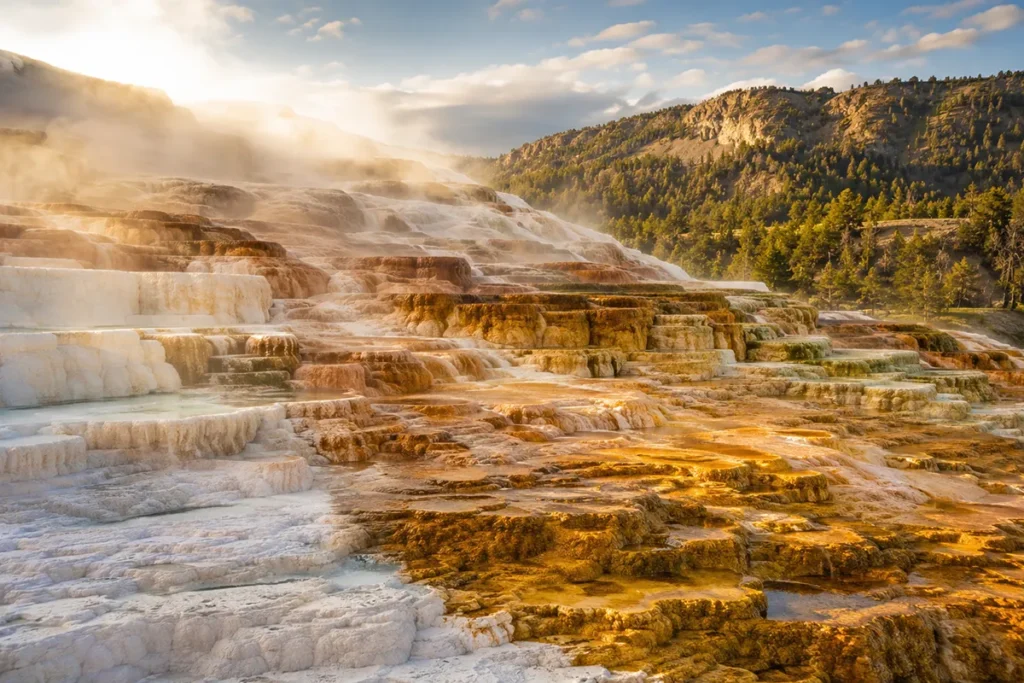
The most-trafficked entrance by far. This is the closest entrance to Old Faithful and the Upper, Midway, and Lower Geyser Basins — meaning if your priority is the geothermal features, this is your door.
Best for: First-timers, geyser-watchers, families with kids, anyone who wants the iconic Yellowstone experience.
Gateway town: West Yellowstone — the most park-oriented gateway town, with restaurants, hotels, the IMAX, and the Grizzly and Wolf Discovery Center (which I genuinely recommend if you want guaranteed close-up viewing of the big predators).
The honest tradeoff: It’s also the busiest entrance. Summer mornings can see 30–60 minute entry lines, and the road to Old Faithful turns into a slow-motion parade by midmorning. Get there at 7 a.m. or come back another day.
2. North Entrance — Gardiner, Montana
The historic original entrance, marked by the Roosevelt Arch (inscribed “For the Benefit and Enjoyment of the People”). This is the only year-round road into Yellowstone — the route from Gardiner to Mammoth Hot Springs to the Northeast Entrance stays open to vehicle traffic 365 days a year.
Best for: Wildlife travelers, winter visitors, anyone wanting Mammoth Hot Springs as the first stop, return visitors.
Gateway town: Gardiner — smaller than West Yellowstone but with more authentic Montana character, the Yellowstone River running through the middle of town, and easy access to Paradise Valley and Chico Hot Springs Resort for post-park soaks.
The honest tradeoff: The 2022 flood washed out the road between Gardiner and Mammoth. NPS rebuilt it on a different alignment, and access has been restored, but the corridor looks different from older guidebooks. [verify current Gardiner–Mammoth road status for 2026]
3. Northeast Entrance — Cooke City, Montana
The least-visited and most spectacular entry approach. The Northeast Entrance is reached via the Beartooth Highway — a 68-mile scenic drive from Red Lodge over the Beartooth Pass (10,947 feet) that’s been called “the most beautiful drive in America” by both Charles Kuralt and most of the locals I trust on the matter.
Best for: Lamar Valley access, wolf-watching, scenic drivers, return visitors, anyone who’s done Yellowstone before and wants the wilder side.
Gateway town: Cooke City — tiny, isolated, and snowbound for most of the year (the Beartooth Highway is only fully open mid-May to mid-October).
The honest tradeoff: The Beartooth Highway closes in winter, and Cooke City effectively becomes accessible only via the year-round road from Gardiner through Mammoth. Plan accordingly.
The Two Wyoming Entrances — For Context
For completeness: the East Entrance comes in from Cody, Wyoming, via the North Fork Highway — a beautiful but long drive that puts you on the east side of the park near Yellowstone Lake.
The South Entrance connects directly from Grand Teton National Park and Jackson Hole, Wyoming — useful if you’re combining the two parks but not relevant for most Montana travelers.
If you’re driving up from Wyoming with a Montana finish, the South-to-North traverse (entering at South, exiting at Gardiner) is a genuinely great itinerary.
The Two Road Loops: Pick One
Yellowstone’s roads form a figure-eight called the Grand Loop — 142 miles total, split into a Northern Loop and Southern Loop joined in the middle at Norris and Madison junctions. Trying to drive the whole figure-eight in one day is the most common Yellowstone mistake. Pick a loop and go deep.
The Northern Loop (Mammoth → Tower → Canyon → Norris → Mammoth)
This is the wildlife loop. Mammoth Hot Springs at the top, Lamar Valley accessed via the Tower Junction spur, the Grand Canyon of the Yellowstone with its dramatic Lower Falls, and the geothermal basin at Norris. This loop is also the most accessible from the Montana entrances.
Distance: ~70 miles
Time needed: Full day minimum; two days to do it well
Highlights: Mammoth Hot Springs, Lamar Valley wildlife, Tower Fall, Grand Canyon of the Yellowstone, Norris Geyser Basin
The Southern Loop (Madison → Old Faithful → West Thumb → Canyon → Norris → Madison)
This is the geothermal loop. Old Faithful Geyser, the Upper/Midway/Lower Geyser Basins, Grand Prismatic Spring, West Thumb on Yellowstone Lake. Most-photographed Yellowstone, most-crowded Yellowstone.
Distance: ~96 miles
Time needed: Full day minimum; better as two days
Highlights: Old Faithful, Grand Prismatic Spring, Norris Geyser Basin, West Thumb Geyser Basin, Yellowstone Lake
My recommendation: First-timers with 3 days should do the Southern Loop and skip the rest. Return visitors should focus on the Northern Loop. Travelers with 5+ days can do both, but with rest days between to actually absorb what you’ve seen.
Wildlife: Why the Montana Side Is Better
Yellowstone is the only place in the Lower 48 with a fully intact pre-Columbian ecosystem of predators and prey. Wolves, grizzlies, black bears, mountain lions, bison, elk, pronghorn, bighorn sheep — all of them still here, in the populations they evolved with.
The Montana side — specifically Lamar Valley and the corridor along the Northeast Entrance Road — is where most of this wildlife is concentrated.
What you’re likely to see on a Montana-side trip:
- Bison herds — easily, in the thousands
- Elk — Mammoth Hot Springs area, especially fall rut
- Pronghorn — Northern Range
- Bighorn sheep — Lamar Valley, near Cooke City
- Black bears — Tower–Roosevelt area
What you might see with patience and timing:
- Wolves — Lamar Valley at dawn or dusk, year-round but easiest in winter
- Grizzly bears — backcountry edges, occasionally on roadsides in spring
- Coyotes — everywhere, often confused with wolves by visitors
The wolf-watching reality: Lamar Valley is genuinely one of the great wildlife-viewing destinations on Earth. The wolves are wild, free-ranging, and viewable from public turnouts on most mornings between April and October. For the full breakdown of timing, gear, and where the packs actually are, see my Yellowstone wolf-watching guide. For everything to do in the valley itself — beyond just wolves — see my full Lamar Valley guide.
Bear safety is non-negotiable. Carry bear spray. Make noise on trails. Never approach wildlife. My Montana bear guide covers exactly what to carry and how to use it. For the broader picture of who’s wild and what’s recovered, endangered and threatened species in Montana tells the conservation story.
Geothermal Features: A Crash Course
Yellowstone sits on top of one of the world’s largest active super-volcanos. The 10,000+ geothermal features are the surface expression of magma about 5 miles below your feet. Here’s the vocabulary every visitor should know:
Geyser: Hot springs that periodically erupt because steam pressure builds up beneath a constricted plumbing system. Old Faithful is the most famous; Grand Geyser is more impressive but less predictable. Yellowstone has more geysers than the rest of the world combined.
Hot spring: Continuously flowing thermal water without the eruptive constriction. Grand Prismatic is the most famous — and the largest hot spring in the U.S.
Mud pot: Hot springs that lack water flow but have enough acidic dissolution to break down rock into clay mud, which bubbles from escaping gas. Fountain Paint Pots is the easiest place to see them.
Fumarole: A vent that releases steam and gas without any water at all. The hottest of the four feature types.
The Upper Geyser Basin (Old Faithful area) has the highest concentration of geysers anywhere on Earth — about a quarter of the world’s total in a one-square-mile area.
Where to Stay: The Strategic Choice
Yellowstone’s vastness makes lodging strategy critical. The wrong base can add 90+ minutes of daily driving.
The three main options:
- Inside the park — Historic lodges (Old Faithful Inn, Lake Yellowstone Hotel, Mammoth Hot Springs Hotel, Roosevelt Lodge Cabins) and campgrounds. Books out 12+ months in advance. The most magical, the most expensive, the most stressful to book.
- Gateway towns — West Yellowstone, Gardiner, Cooke City on the Montana side; Cody on the Wyoming east side; Jackson on the Wyoming south side.
- Regional basecamps — Big Sky (60 minutes from West Entrance), Bozeman (90 minutes), and Livingston (60 minutes from North Entrance) all work as comfortable basecamps with better dining and amenities than the gateway towns proper.
For the full lodging strategy — which lodge to book if you want the historic experience, which gateway town suits which trip type, RV park breakdowns, and the budget options — see my where-to-stay-in-Yellowstone guide. For RV-specific guidance, RV parks in Gardiner covers the North Entrance side, and Montana’s best RV parks covers everything else.
When to Visit: Month by Month
Yellowstone is open year-round in some form, but the realistic visiting season is much narrower.
April: Most park roads still snow-closed. Mammoth area accessible. Best for wildlife — bears emerging, bison calves born, wolves still hunting in the open. See Montana in April.
May: Roads progressively open through the month. Wildlife extraordinary. Crowds light. Weather unpredictable. Montana in May.
June: Full road access by mid-month typically. Crowds ramp up. Wildflowers peak. Montana in June.
July–August: Peak season. Hot (Yellowstone’s summer is genuinely warm — 80s common). Massive crowds. Geyser shows at their best. See Montana in July and Montana in August.
September: My favorite month, hands down. Crowds drop sharply after Labor Day. Elk rut begins (the bugling is otherworldly). Cool nights, warm days. Montana in September.
October: Most facilities closing. Roads start to close mid-month. Wildlife active. Stunning if you catch the timing.
November–March: Only the Gardiner-to-Mammoth-to-Cooke City road stays open. Interior roads require snowcoach or snowmobile access. Montana winter weather covers the broader context. Yellowstone in winter is a transformative experience for travelers willing to deal with the logistics.
For the broader Montana seasonal calendar, best time to visit Montana is worth a read.
2026 Reservations, Fees, and What You Need to Know
Entry fees [verify 2026 NPS.gov]:
- 7-day vehicle pass: $35
- 7-day motorcycle pass: $30
- 7-day individual (foot/bike) pass: $20
- Annual Yellowstone pass: $70
- America the Beautiful Pass: $80
Reservations: Unlike Glacier, Yellowstone does NOT currently require vehicle reservations for park entry. This may change — verify current status before your trip.
Lodging reservations: In-park lodges and campgrounds book 13 months in advance through Yellowstone National Park Lodges and recreation.gov. Set calendar reminders.
Cell service: Reliable in Mammoth, Old Faithful, and Canyon developed areas. Spotty to nonexistent everywhere else.
Roads: The Grand Loop is fully open roughly May–October. Specific opening/closing dates vary annually based on snowpack. Always check NPS road status the morning of your visit.
Personal Tips: What I Wish I’d Known on My First Trip
Be in Lamar Valley by sunrise. Not “early.” Sunrise. Wolves and bears are most active in the first 90 minutes of daylight. Drive up the night before and sleep in Gardiner or Cooke City.
Old Faithful erupts about every 90 minutes — but everything else around it is better. Don’t wait for Old Faithful and then leave. The Upper Geyser Basin boardwalk loop has dozens of more impressive features. Grand Geyser is bigger; Riverside Geyser is more elegant; Beehive Geyser is the rare jaw-dropper.
Bring a spotting scope or strong binoculars. Yellowstone wildlife is often viewed from a half-mile away or more. Without optics, the wolves you came for look like distant dogs.
The bison aren’t tame. A bison killed and injured travelers in Yellowstone in recent years for getting too close. Stay 25 yards from bison and elk, 100 yards from bears and wolves. This is not optional.
Skip the Grand Loop in one day. People try this constantly and it’s the single biggest planning mistake. You’ll spend 8 hours driving and see almost nothing properly.
Stop at Chico Hot Springs on the way back. Paradise Valley, 30 minutes north of Gardiner. The old hotel, the open-air pool, the dining room. It’s where Montanans go when we want to celebrate something or recover from something.
The bug season is real here too. Montana’s bug season guide is worth reading before any June or early-July trip.
Pack layers always. Yellowstone weather changes by elevation and hour. I’ve worn shorts at noon and a fleece at 4 p.m. in July.
Yellowstone vs. Glacier: Which One Should You Visit?
The mirror image of the question I answered in my Glacier National Park guide. Here it is from the other direction.
Pick Yellowstone if you want:
- Geothermal features — geysers, hot springs, mud pots (Glacier has none)
- The best wildlife viewing in the Lower 48 — wolves, large bison herds, more bears
- A sprawling park you’ll cover by vehicle more than on foot
- Warmer summer weather and a longer open season
- A trip you can combine with Grand Teton
Pick Glacier if you want:
- Dramatic alpine scenery and big mountain hiking
- A more compact, walkable park experience
- Cooler summer temperatures
- The “Crown of the Continent” aesthetic — peaks, lakes, glaciers
- A focused 5–7 day trip
For the broader Montana parks landscape and how to combine both, my Montana national parks pillar guide covers all ten NPS sites and the road-trip itineraries that make the most of them.
My personal recommendation: If you’ve never been to either, do Glacier first. Yellowstone is bigger, longer, and easier to feel rushed in. Glacier rewards focus; Yellowstone rewards repeat visits. Once you’ve done Glacier well, come back and give Yellowstone the 7+ days it actually needs.
Practical Info Box
| Topic | Quick Answer |
|---|---|
| Best months overall | Mid-June through early September |
| Best month for wildlife | May–June and September |
| Best month for geysers | Year-round, but August has the most reliable predictions |
| Entry fee | $35/vehicle (7-day) [verify 2026] |
| Reservation required? | No vehicle reservation required as of 2026 [verify NPS.gov] |
| Closest airports | Bozeman Yellowstone (BZN), Billings Logan (BIL) — see Montana airports |
| Best Montana entrance for first-timers | West Yellowstone (geysers) |
| Best Montana entrance for wildlife | Gardiner (Lamar Valley access) |
| Best Montana entrance for scenic drive | Cooke City via Beartooth Highway |
| Year-round road access | Only Gardiner → Mammoth → Cooke City corridor |
| Pair this trip with | Glacier National Park, Lewis & Clark Caverns, Bozeman Hot Springs, Chico Hot Springs |
| Pair this with a Montana hub | West Yellowstone, Gardiner, Cooke City, Big Sky, Bozeman, Livingston |
Conclusion: A Park That Demands Repeat Visits
Yellowstone is impossible to “see” in a single trip. It’s bigger than Rhode Island and Delaware combined, contains more geothermal features than the rest of the planet, and supports a wildlife population that doesn’t exist anywhere else in the Lower 48.
The most useful thing I can tell you is: don’t try to see it all. Pick a corner — geysers via the West Entrance, or wildlife via Gardiner and Cooke City — and go deep.
The Montana side is the side I’ll always recommend first. Three of five entrances, the only year-round road, Lamar Valley, the Beartooth Highway, gateway towns with actual Montana character, and proximity to other Montana experiences like Chico Hot Springs, Bozeman Hot Springs, and the Paradise Valley fishing scene. Wyoming gets the Old Faithful headlines; Montana gets the soul of the park.
This post is the hub. For the deep-dives:
- Lamar Valley complete guide — the wildlife corridor
- Yellowstone wolf watching guide — timing, gear, and finding the packs
- Where to stay in Yellowstone — by entrance and trip type
- Grizzly and Wolf Discovery Center, West Yellowstone — guaranteed close-up wildlife viewing
For the broader Montana context:
- Montana national parks pillar guide — all ten NPS sites in the state
- Glacier National Park guide — the natural counterpart trip
- Montana state parks pillar guide — the state-managed sites that complement Yellowstone
For broader trip planning, see my Montana trip planning guide, things to do in Montana, and the Montana bucket list. Pin this post for your planning, and drop any specific questions in the comments — I’ll answer from experience.
FAQs About Yellowstone National Park
What is Yellowstone National Park famous for?
Yellowstone National Park is famous for its geothermal features, including geysers, hot springs, mud pots, and fumaroles. The park is home to Old Faithful, Grand Prismatic Spring, abundant wildlife, and some of the most spectacular natural landscapes in the United States.
Where is Yellowstone National Park located?
Yellowstone National Park is primarily located in northwestern Wyoming, with portions extending into Montana and Idaho. It was established in 1872 and is widely recognized as the world’s first national park.
What is the best time to visit Yellowstone National Park?
The best time to visit Yellowstone is from late spring through early fall, particularly May through September. Summer offers the warmest weather and full access to roads and attractions, while spring and fall provide fewer crowds and excellent wildlife viewing opportunities.
How many days do you need in Yellowstone National Park?
Most visitors should plan to spend at least 3–5 days in Yellowstone National Park. This allows enough time to explore the major geyser basins, scenic drives, waterfalls, hiking trails, and wildlife-viewing areas.
Do I need a reservation to enter Yellowstone National Park?
Yellowstone generally does not require timed-entry reservations. However, visitors must purchase a park entrance pass. Lodging, campgrounds, and some activities may require advance reservations, especially during peak summer months.
What is Old Faithful and why is it famous?
Old Faithful is Yellowstone’s most famous geyser, known for its predictable eruptions. It typically erupts every 60 to 110 minutes, shooting thousands of gallons of hot water high into the air.
What animals can I see in Yellowstone National Park?
Yellowstone is home to bison, elk, grizzly bears, black bears, wolves, moose, bighorn sheep, pronghorn, and many bird species. The Lamar Valley and Hayden Valley are among the best places for wildlife viewing.
What is the best wildlife viewing area in Yellowstone?
Lamar Valley is often considered the best wildlife-viewing area in Yellowstone National Park. Visitors frequently spot bison, wolves, bears, coyotes, and other animals, especially during early morning and evening hours.
Can you drive through Yellowstone National Park in one day?
Yes, it is possible to drive through Yellowstone in one day, but doing so only provides a brief overview of the park. Spending several days allows visitors to experience geothermal areas, scenic viewpoints, hiking trails, and wildlife habitats more thoroughly.
What are the top attractions in Yellowstone National Park?
Some of Yellowstone’s most popular attractions include Old Faithful, Grand Prismatic Spring, Yellowstone Lake, Mammoth Hot Springs, Norris Geyser Basin, Lamar Valley, Hayden Valley, and the Grand Canyon of the Yellowstone.
Is Yellowstone National Park family-friendly?
Yes. Yellowstone offers family-friendly activities such as boardwalks around geothermal features, scenic drives, wildlife watching, ranger programs, and easy hiking trails suitable for children.
Can you swim in Yellowstone’s hot springs?
No. Swimming is prohibited in most geothermal features because the water can be extremely hot, acidic, and dangerous. Visitors should stay on designated boardwalks and trails for safety.
What is the Grand Canyon of the Yellowstone?
The Grand Canyon of the Yellowstone is a dramatic canyon carved by the Yellowstone River. It features colorful rock formations and stunning waterfalls, including the famous Lower Falls, which plunges approximately 308 feet.
What airport is closest to Yellowstone National Park?
Several airports serve Yellowstone, including Yellowstone Airport in West Yellowstone, Montana, and larger airports in Bozeman, Jackson, Cody, and Idaho Falls.
Can I visit Yellowstone National Park in winter?
Yes. Winter visitors can enjoy snowcoach tours, snowmobiling, cross-country skiing, wildlife viewing, and unique snowy landscapes. Access is limited compared to summer, but winter offers a quieter and more serene experience.
Why is Yellowstone National Park important?
Yellowstone is important for its unique geothermal features, diverse wildlife, vast wilderness, and historical significance as the world’s first national park. It plays a vital role in conservation and scientific research.
Written by Sarah Bennett, who has watched wolves in Lamar Valley enough times to lose count and still gets out of bed at 4 a.m. to do it again.