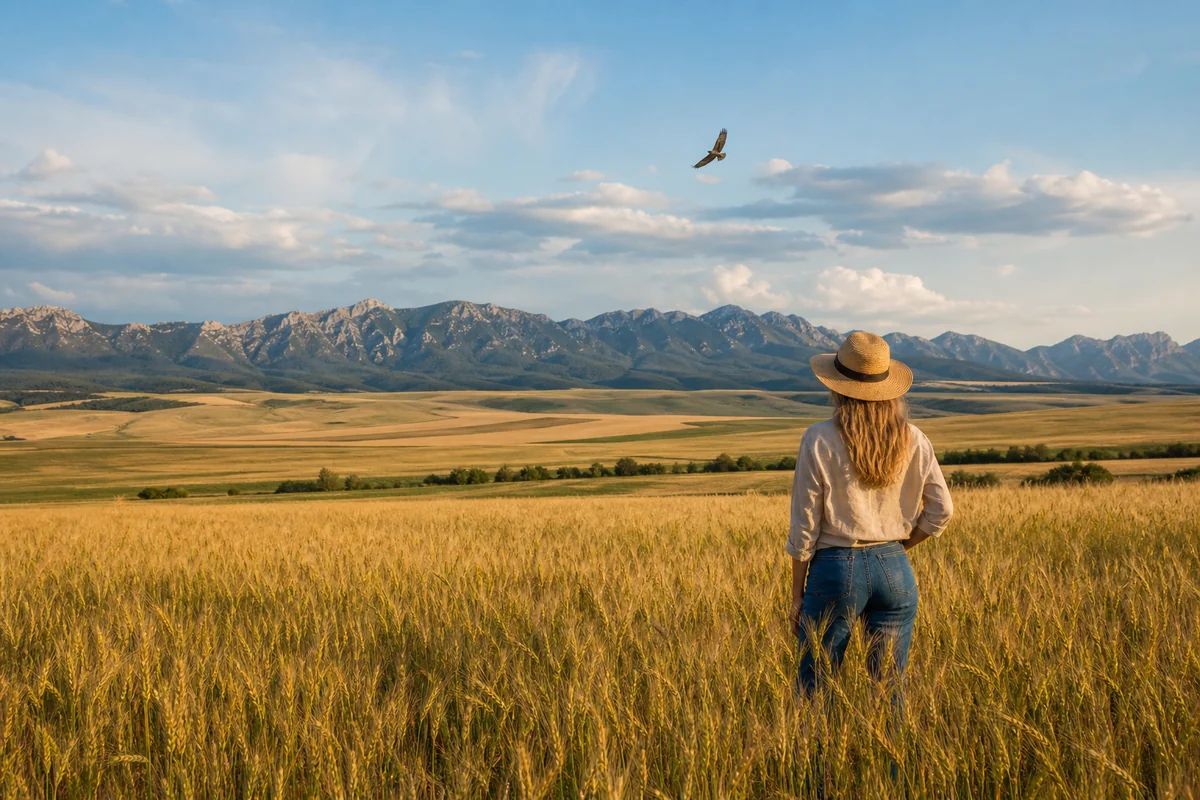
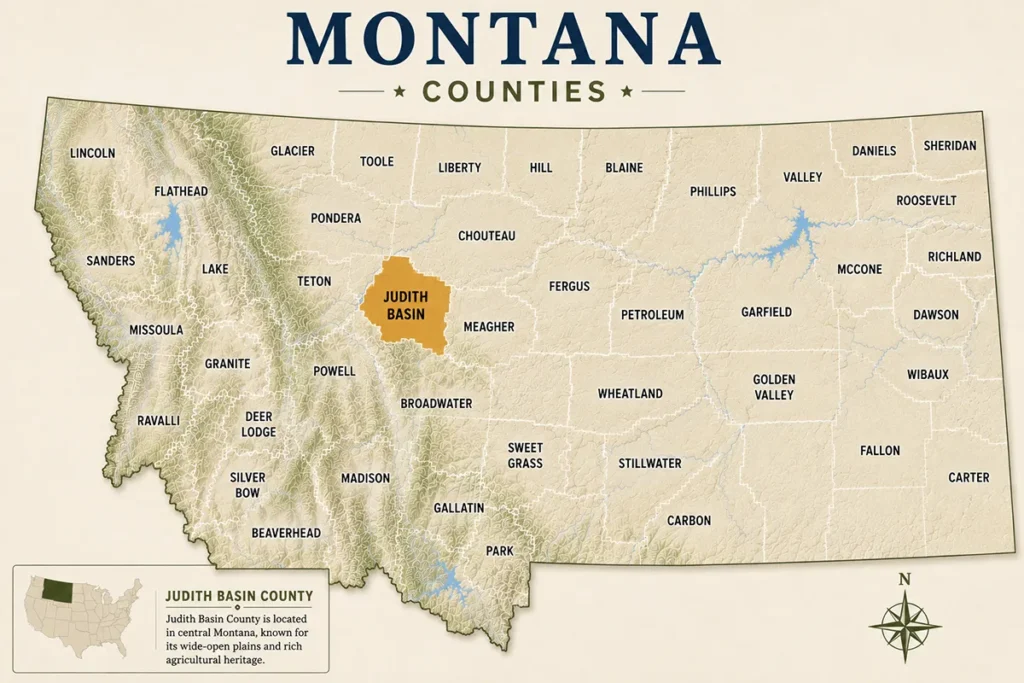
Standing in the middle of a golden wheat field outside Stanford, watching a hawk circle lazily over the Little Belt Mountains, it hit me that this was the Montana most people never find. Judith Basin County sits quietly in the geographic heart of the state, and it belongs to the broader tapestry of the 56 Montana Counties — each one a world of its own.
- Judith Basin County is a quiet, agricultural county in central Montana — easy to overlook, hard to forget once you’ve been there.
- Stanford is the county seat and your main base for services, food, and fuel.
- Top draws include the Judith River country, elk and deer hunting, fossil-rich badlands, and the open range riding culture that still thrives here.
- Best visited May through October — winters are harsh and services are minimal.
- This is not a theme-park Montana experience. Expect vast skies, empty roads, and genuine rural hospitality.
- Cell service is spotty at best. Download your maps before you leave the highway.
Liked this article?
Add Roaming Montana as a preferred source so you see more of our articles and guides on Google.
Where Exactly Is Judith Basin County?
Judith Basin County sits dead center in Montana, bounded by the Little Belt Mountains to the south and the open rolling plains to the north. It covers roughly 1,869 square miles, and the population hovers around 2,000 people — meaning you’ll regularly drive 20 or 30 miles without seeing another vehicle.
Stanford, the county seat, sits along US Highway 87, which is your main artery in and out. It’s approximately 90 miles southeast of Great Falls and around 130 miles north of Billings, making it genuinely accessible if you’re already traveling through central Montana — it just requires the decision to actually turn off the main road.
The county takes its name from the Judith River, which itself was named by Meriwether Lewis in 1805 after his cousin, Julia “Judith” Hancock. That frontier-era naming is fitting: this landscape still feels like the 19th century left something behind here that the 21st century hasn’t yet touched.
A Bit of History Worth Knowing
Before settlers arrived, the Judith Basin was prime buffalo country — a traditional hunting ground for multiple tribal nations including the Blackfeet, Crow, and Assiniboine. Charles Russell, one of America’s most celebrated Western artists, actually worked as a cowboy in the Judith Basin in the 1880s, and the landscape you see today almost certainly influenced some of his most iconic paintings.
Cattle ranching arrived in force in the 1880s, followed by homesteaders who came in the early 1900s chasing the promise of dry-land wheat farming. Many failed. Those who stayed built a community of extraordinary resilience, and it’s that persistence that shapes Judith Basin’s character today.
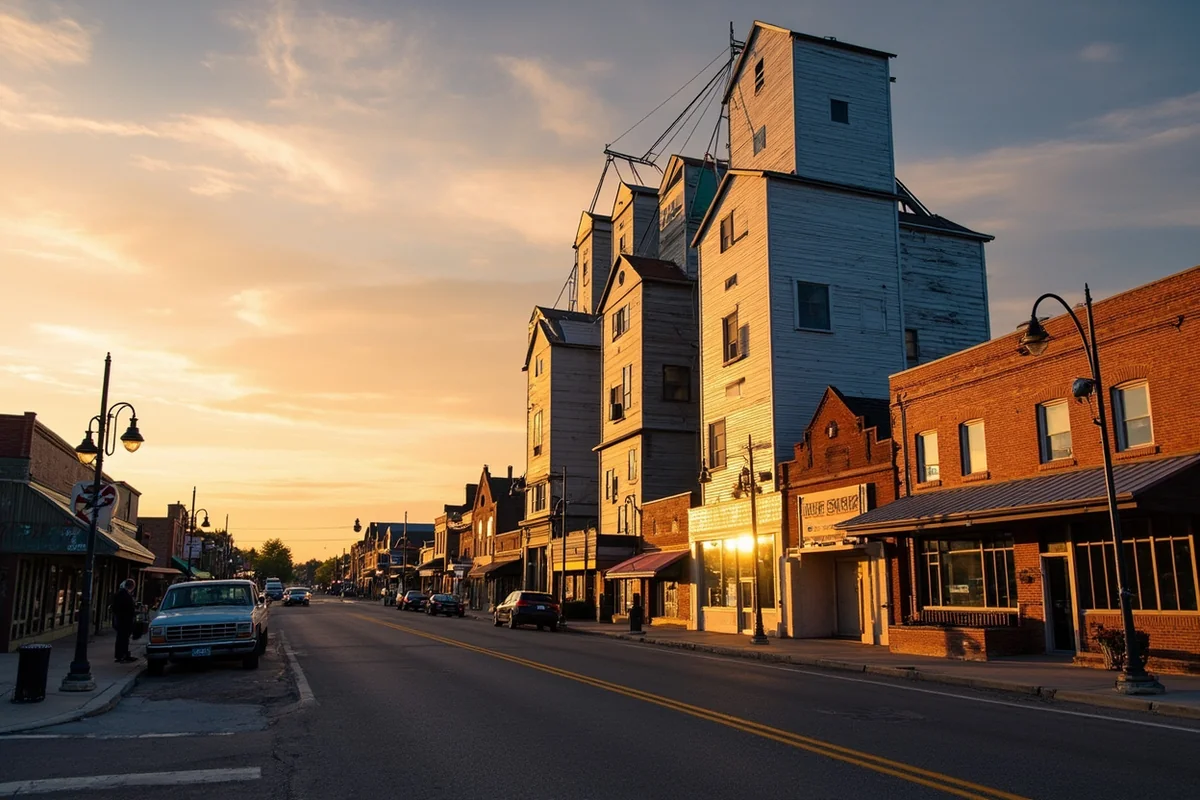
Understanding that history changes how you experience the county. The old grain elevators in Stanford aren’t just functional — they’re monuments to generations of gamblers who bet on the land and mostly broke even.
Getting There and Getting Around
There’s no commercial airport in Judith Basin County. Most visitors fly into Great Falls (the closest major airport), rent a vehicle, and drive south and east on US Highway 87 — it’s a straight shot and takes about 90 minutes.
A 4WD or all-wheel drive vehicle is strongly recommended if you plan to venture onto any of the county’s gravel or dirt roads. What most guides skip is how quickly conditions change here — a perfectly passable road in dry weather can become genuinely impassable after an afternoon thunderstorm in July. That’s not an exaggeration; what surprised me most was watching a rental sedan spin helplessly in a muddy two-track while locals drove past in pickup trucks without a second glance.
Gas up in Stanford before heading out into the county’s backcountry. There are stretches where the next fuel stop is 40-plus miles away, and cell service won’t save you from an empty tank.
What to Do in Judith Basin County
Explore the Judith River Valley
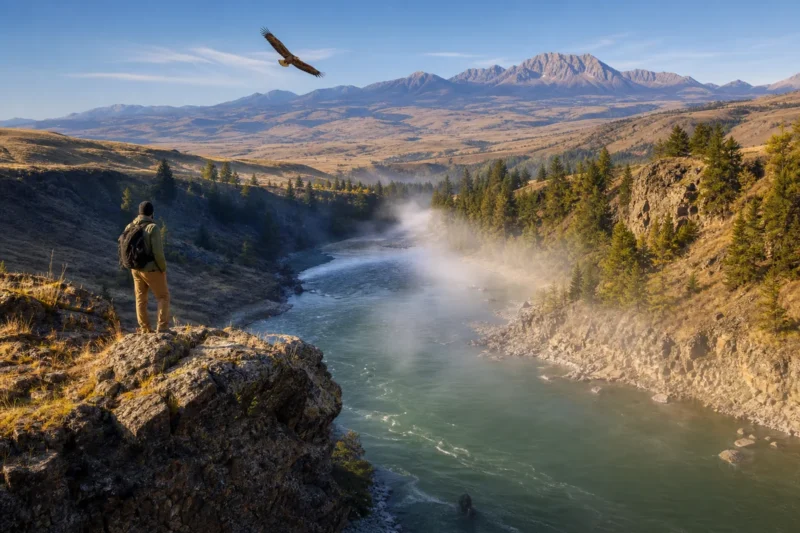
The Judith River winds through the eastern part of the county before eventually joining the Missouri River to the north in neighboring Fergus County. The valley is lush by Montana plains standards — cottonwoods line the banks, and the river corridor creates a ribbon of green through otherwise open country.
Fishing the Judith River for brown and rainbow trout is a legitimate pursuit here. According to Montana Fish, Wildlife & Parks, the Judith River drainage supports healthy wild trout populations, and you’ll encounter far fewer anglers than you would on more famous rivers to the west. A valid Montana fishing license is required and can be purchased online through the FWP website.
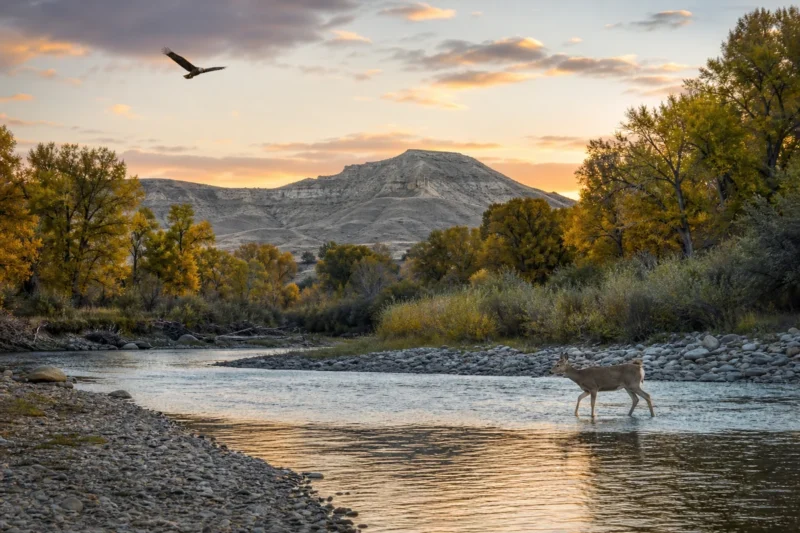
The valley is also prime habitat for white-tailed deer, wild turkeys, and an impressive variety of songbirds during spring migration. Birders who put in a morning along the river in May often come away surprised by what’s around.
Hunting in Judith Basin County
This is, frankly, one of the county’s biggest draws — though you’d be forgiven for not knowing it unless you’re part of the hunting community. Judith Basin County falls within some of Montana’s most productive elk and mule deer hunting districts.
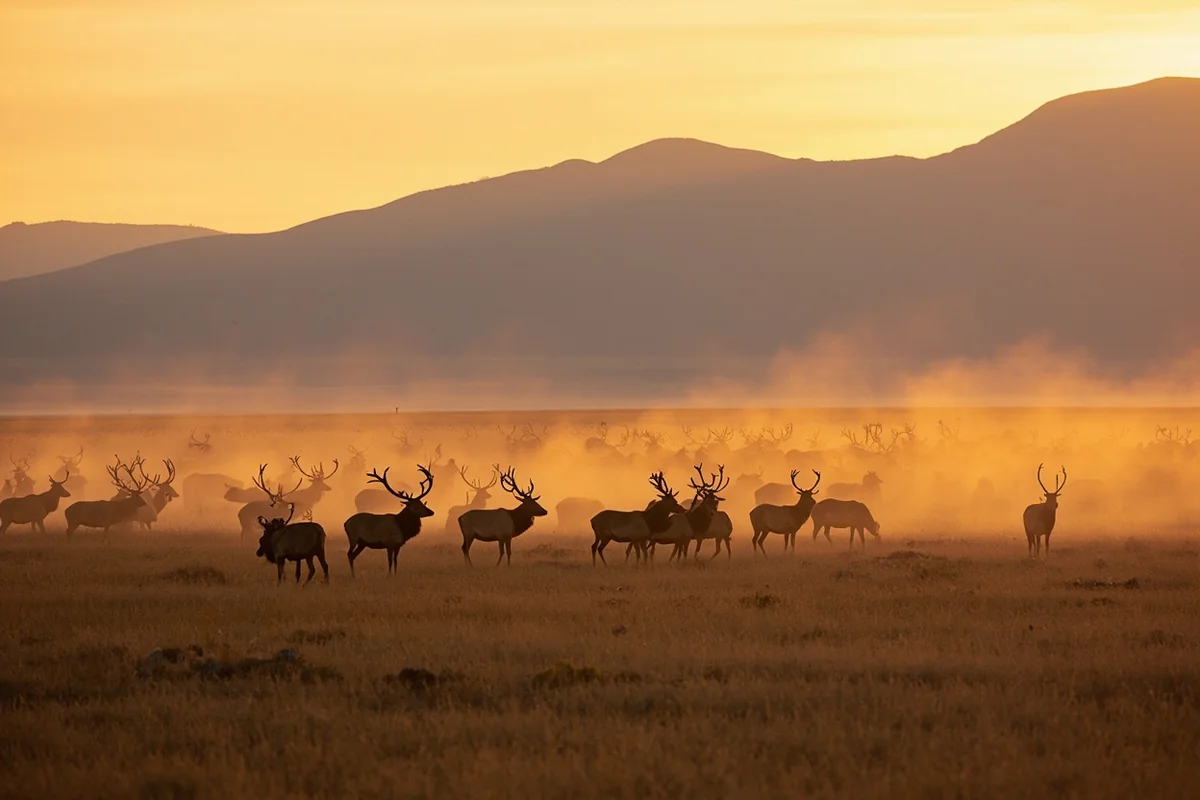
Elk herds descend from the Little Belt Mountains into the foothills and river breaks in the fall, and the hunting pressure here is dramatically lower than in counties adjacent to national forests with easier access. Hunters who put in the legwork to find access — through private land permission or BLM parcels — report seeing elk in numbers that would turn heads anywhere in the West.
If you’re planning a hunting trip, securing landowner access well in advance is non-negotiable. Most successful hunters here work relationships with local ranchers over years, not days. Guided hunts are available and worth the investment if you’re visiting for the first time — local outfitters know the terrain in ways that can’t be replicated from satellite imagery.
The Little Belt Mountains and Crystal Lake
The southern end of Judith Basin County borders the Little Belt Mountains, which are part of the Lewis and Clark National Forest. Crystal Lake, just over the county line in Cascade County, is a popular summer destination and worth combining with a Judith Basin trip.
The forest roads threading into the Little Belts from the Judith Basin side are spectacular in early fall — the aspens turn gold in late September, and the contrast against the dark pines and sage-grey foothills is the kind of scene that makes you pull over. Several dispersed camping spots are available on USFS land, and they fill up on weekends in late September when hunters start arriving.
Hiking in the Little Belts is rewarding but requires self-sufficiency. Trails can be faint, signs are sometimes absent, and rescues in this part of Montana are not a quick operation. Always carry a topographic map and a satellite communicator.
Fossil Country: The Judith River Formation
This is the detail most travel writers miss entirely: Judith Basin County sits within striking distance of one of the most paleontologically significant geological formations in North America — the Judith River Formation. This rock formation, named for the river that runs through it, has produced fossils of ceratopsian dinosaurs, hadrosaurs, and early tyrannosaurs since the mid-1800s.
You won’t find a museum here specifically dedicated to the fossils, but the bones are literally in the ground around you. Some of the fossil material from this region helped early scientists understand the diversity of late Cretaceous dinosaurs in North America.
Rockhounding and general fossil exploration are popular in the badlands sections of the county — but be aware that collecting vertebrate fossils on any federal land is illegal under US law. Invertebrate fossils and plant fossils have different rules. If in doubt, contact the BLM field office in Lewistown (the closest major office to this area) before you start picking anything up.
Stanford: The County’s Heartbeat
Stanford is small — the population is typically reported around 400 people — but it punches above its weight. The town has a genuine main street feel that hasn’t been manufactured for tourists. There are a couple of cafes, a local bar, a hardware store, and the kind of community pride that shows up in well-kept parks and local events.
The Judith Basin County Museum in Stanford is worth an hour of your time. The exhibits cover the area’s ranching history, Native American heritage, and the homesteader era with real artifacts and genuine local knowledge. Admission is typically either free or a small suggested donation — worth stopping in.
During my visit, the woman running the museum spent nearly 45 minutes walking me through the display on the early cattle drives because I asked one question about Charles Russell. That kind of unhurried local generosity is exactly what makes small-county museums so rewarding.
Judith Gap Wind Farm and the Drive Through
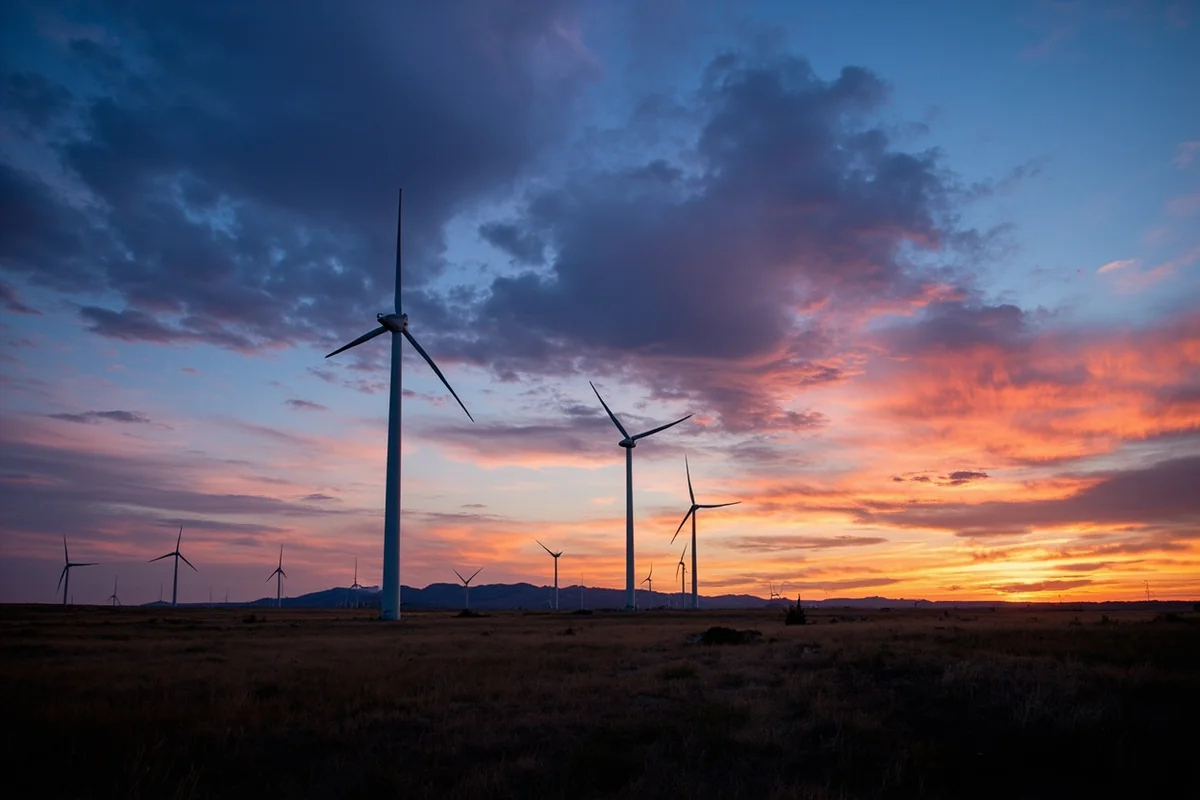
Just south of the county, the drive through Judith Gap is worth building into your route. The wind farm visible from the highway is one of the largest in Montana, and the visual contrast — enormous modern turbines against ancient prairie grasslands — is genuinely arresting. It raises real questions about energy, landscape, and the future of the West that stick with you long after you’ve driven through.
Where to Stay in Judith Basin County
Accommodation options here are limited and intentionally simple. Stanford has a small motel that serves most traveler needs — expect to pay roughly $80–$120 per night for basic, clean lodging. Amenities are minimal, but the beds are comfortable and the owners know the area inside out.
For something more atmospheric, ranch stays and hunting lodges operate seasonally in the county. These typically include meals and local guidance, and prices generally range from around $150 to $250+ per person per night depending on the season and what’s included. Booking ahead is essential — these properties often fill months in advance during hunting season.
Dispersed camping on BLM and USFS land is available and free, though you need to know what you’re doing. The nearest campground with facilities is at Crystal Lake in the Lewis and Clark National Forest, and it fills up on summer weekends.
Where to Eat in Judith Basin County
Stanford’s dining scene is small but satisfying in the way that a well-made diner meal after a long day of driving always is. Expect hearty portions, friendly service, and exactly zero pretension. Local beef features prominently, which is appropriate given that you’re surrounded by ranches that raise some of the finest cattle in the state.
There are no chain restaurants in the county. This is either a feature or a bug depending on your perspective — personally, it’s a feature. Stock up on snacks and supplies in Great Falls before you arrive if you’re planning extended time in the backcountry, because options thin out quickly once you leave Stanford.
Suggested Itinerary
Day 1: Arriving and Getting Your Bearings
Fly into Great Falls and pick up your rental vehicle — opt for an SUV or truck if available. Drive southeast on US Highway 87, stopping at the Missouri River bridge overlook before continuing into the Judith Basin. Arrive in Stanford by early afternoon and check in.
Spend the afternoon walking Stanford’s main street, visiting the Judith Basin County Museum, and talking to locals about what’s worth seeing. Ask the motel owner or museum staff about current road conditions — that local intelligence is worth more than any app.
Have dinner in town and turn in early. Tomorrow is a long day.
Day 2: Judith River Valley and Little Belt Foothills
Start early. Pack water, snacks, and a paper map (or a downloaded offline map — don’t trust cell service). Drive the Judith River valley, stopping to walk the riverbank and watch for wildlife. This is prime time for deer and turkey in the mornings.
After lunch back in Stanford, head south toward the Little Belt Mountains. Take a forest road into the foothills, stopping wherever the terrain catches your eye. If you’re visiting in late September, the aspen color here is exceptional.
Return to Stanford before dark and reflect on how much sky you’ve seen in a single day.
Day 3: Fossil Country and Heading Out
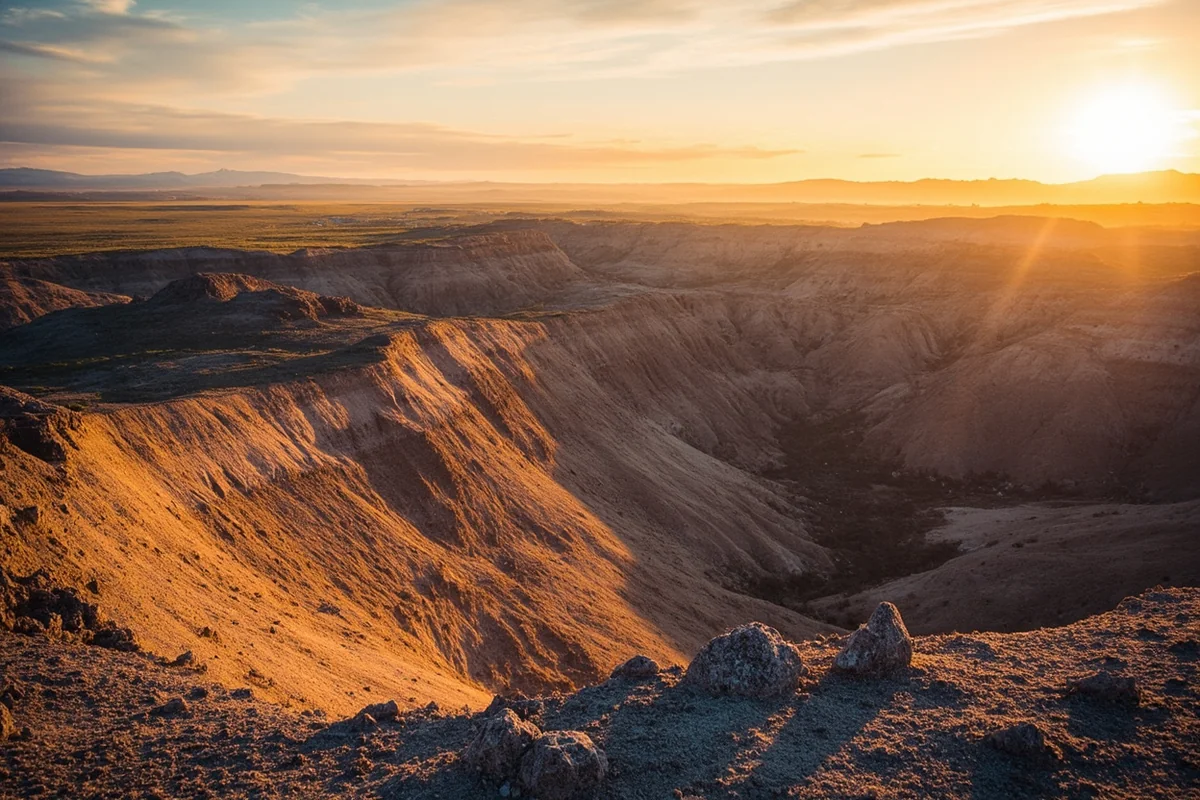
Take a morning drive into the badlands terrain east of Stanford before heading back north toward Great Falls. The light is best in the early morning — the eroded draws and coulees look otherworldly in low-angle sun.
Before leaving the county, stop at a local cafe for coffee and spend 20 minutes talking to whoever is sitting at the counter. What I learned on my last morning in Stanford — about a hidden spring where elk gather at dawn — wasn’t in any guidebook and didn’t end up on any social media post. It’s just the kind of local knowledge this county rewards you with if you slow down enough to receive it.
What Most Visitors Get Wrong About Judith Basin County
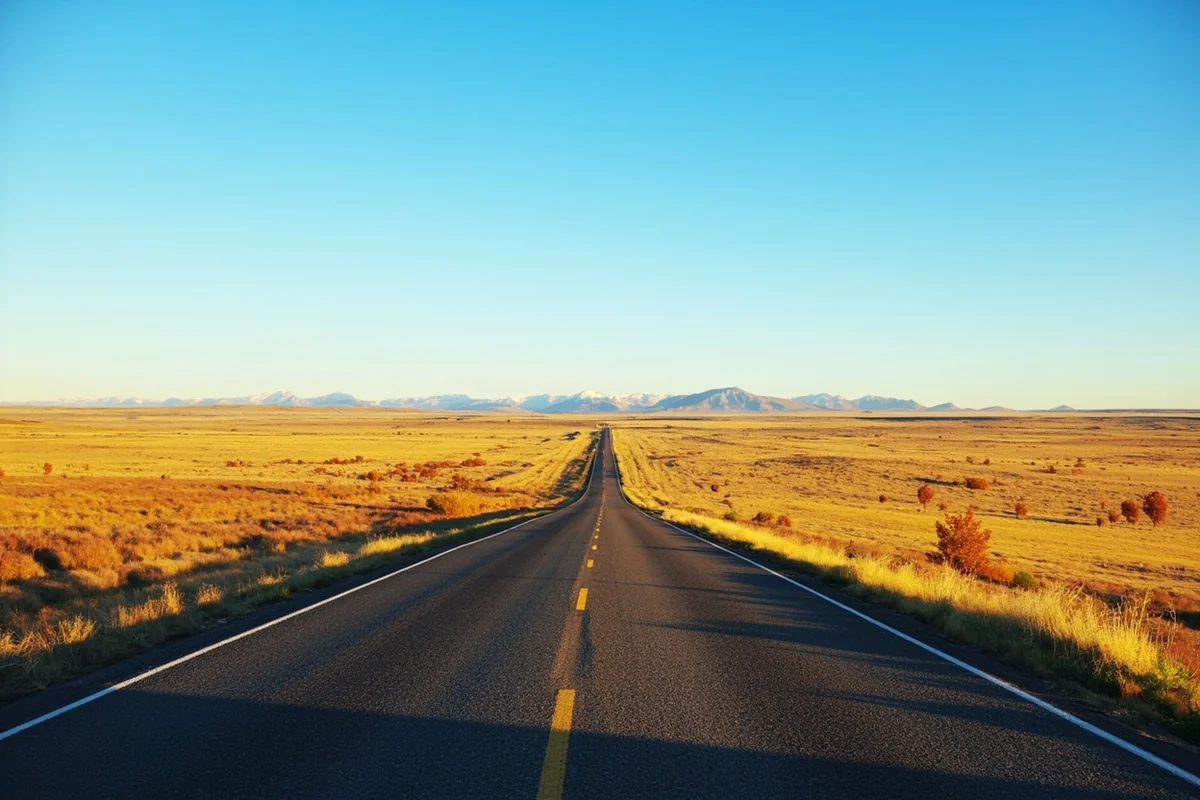
The most common mistake is treating Judith Basin as a drive-through. People zip along Highway 87, maybe stop in Stanford for fuel, and continue on to somewhere more “famous.” What they miss is that the county rewards time — even just an extra four hours changes what you experience entirely.
The second mistake is underestimating the weather. Afternoon thunderstorms in summer can be violent and sudden. What starts as a perfect July morning can turn into a hailstorm that dents a car hood by 2 p.m. Check the National Weather Service forecast for central Montana every morning, not just once when you arrive.
The third mistake, and this one is subtle, is coming with an agenda. Judith Basin County doesn’t perform for visitors. It just is. The people aren’t there to entertain tourists, the roads don’t lead to viewpoints with interpretive signs, and the wildlife doesn’t appear on schedule. If you come expecting the county to deliver experiences to you, it will seem dull. If you come genuinely curious and willing to explore, it’s endlessly interesting.
Practical Information at a Glance
| Category | Details |
|---|---|
| County Seat | Stanford, Montana |
| Population | Approximately 2,000 (county-wide) |
| Area | ~1,869 square miles |
| Nearest Major City | Great Falls (~90 miles northwest) |
| Main Highway | US Highway 87 |
| Best Time to Visit | May through October |
| Cell Service | Spotty to nonexistent outside Stanford |
| Nearest Airport | Great Falls International (GTF) |
| Vehicle Recommendation | 4WD or AWD strongly advised |
| Fishing License | Required — purchase via Montana FWP website |
| Hunting License | Required — verify current district regulations with Montana FWP |
Seasonal Considerations
Spring (May–June)
Wildflowers are exceptional in May and early June, and the Judith River runs full and fast with snowmelt. Roads can be muddy and some county roads are briefly impassable. This is an excellent time for birding and photography — the greens are vivid and the light is soft.
Summer (July–August)
Peak travel season, though Judith Basin never gets crowded by Montana standards. Afternoon thunderstorms are a daily possibility in July. Temperatures are warm — typically in the 80s°F during the day — and evenings cool down dramatically, which makes camping genuinely comfortable.
Fall (September–October)
Arguably the best time to visit. The aspens turn in the Little Belts, the light is golden and low, and the elk rut brings extraordinary wildlife activity. Hunting season begins in earnest in October, which means the county buzzes with more activity than usual.
Winter (November–March)
Judith Basin winters are serious. Deep cold, blowing snow, and roads that become genuinely dangerous for unprepared drivers. The county doesn’t shut down — ranching is year-round work — but it’s not a welcoming time for casual tourism. Those who do visit in winter find a landscape of extraordinary stark beauty, but need to be fully self-sufficient.
How Judith Basin Fits Into a Broader Montana Road Trip
If you’re mapping a central Montana circuit, Judith Basin pairs naturally with Fergus County to the east and the Chouteau County to the north. The route from Great Falls south through Stanford, east to Lewistown (Fergus County), and then north through the Missouri Breaks is one of the finest drives in Montana that almost nobody talks about.
For travelers curious about how Judith Basin compares to other agricultural and ranching counties across the state, it’s worth exploring some of the similarly character-rich destinations like Beaverhead County in the southwest or Carbon County near the Wyoming border. Each of the 56 Montana Counties has its own distinct identity, and Judith Basin is among the more rewarding for the traveler willing to slow down.
Those interested in understanding how Montana’s rural counties fit into the state’s broader demographic picture might find the data on Montana’s fastest growing cities and counties illuminating — Judith Basin is decidedly not on that list, and that’s a significant part of its appeal.
Final Thoughts
Judith Basin County isn’t the Montana you see on Instagram. There are no glacier-carved peaks reflected in turquoise lakes, no famous trails with wooden bridges, no branded outdoor-brand storefronts lining a walkable downtown. What there is, is something harder to photograph and more difficult to summarize — a place that is authentically and unapologetically itself.
What surprised me most over multiple visits was how much the county gives back in proportion to the curiosity you bring. Ask a question in Stanford’s cafe and you’ll get a 20-minute answer and an invitation to come back. Drive a gravel road without an agenda and you’ll find a fossil-scattered coulee or a hidden spring that isn’t on any map. That’s the experience Judith Basin trades in — genuine discovery rather than curated access.
If you’re planning a Montana trip and you’ve already ticked off Glacier, Yellowstone, and the Beartooth, consider that the state’s interior holds something just as irreplaceable. Judith Basin County is waiting, quietly and completely, for the visitors who are ready for it.
How We Researched This Guide
This guide is based on multiple visits to Judith Basin County across different seasons, including spring wildflower season and early fall during the elk rut. Information was verified with Montana Fish, Wildlife & Parks regarding fishing and hunting licensing requirements, the US Bureau of Land Management regarding public land access and fossil collection regulations, and the Lewis and Clark National Forest for camping and trail information. We also spoke with staff at the Judith Basin County Museum and local outfitters operating in the area to ensure the practical details reflect on-the-ground reality rather than outdated published sources.
Frequently Asked Questions
What is Judith Basin County, Montana known for?
Judith Basin County is best known for its sweeping agricultural landscapes, rich wheat farming heritage, and access to the scenic Little Belt Mountains on its western edge. The county is also a magnet for hunters and anglers, with excellent opportunities for elk, deer, and upland bird hunting across its wide-open ranchlands. History buffs will appreciate its deep ties to the days of open-range cattle drives and Native American history in central Montana.
When is the best time to visit Judith Basin County, Montana?
The best time to visit Judith Basin County is late spring through early fall, roughly May through September, when roads are accessible and the golden wheat fields are at their most photogenic. Summer temperatures typically range from the mid-60s to mid-80s°F, making outdoor exploration comfortable. If you’re visiting for hunting season, late September through November draws a crowd of sportsmen looking to take advantage of the region’s abundant wildlife.
How far is Judith Basin County from major Montana cities?
Judith Basin County sits in central Montana, roughly 100 miles east of Great Falls and about 130 miles northeast of Helena, making it a manageable road trip from either city. The county seat of Stanford is the main hub, and most visitors drive through on US Highway 87. I’d recommend renting a reliable vehicle, as many of the county’s most scenic backroads are unpaved and best tackled with higher clearance.
What are the top things to do in Judith Basin County, Montana?
Top activities in Judith Basin County include hiking and fishing in the Judith River drainage, exploring the charming small town of Stanford, and visiting the Judith Basin Museum to dig into the county’s homesteading and ranching history. Outdoor enthusiasts can access portions of the Lewis and Clark National Forest on the western side of the county for camping and wildlife watching. In the fall, the county becomes one of Montana’s most underrated pheasant and Hungarian partridge hunting destinations.
Is Judith Basin County worth visiting for a Montana road trip?
Absolutely — Judith Basin County is a hidden gem for travelers who want to experience authentic, crowd-free Montana rather than the more touristy areas around Glacier or Yellowstone. The drive through the county on Highway 87 offers stunning big-sky views, rolling grain fields, and a real sense of the state’s agricultural soul. It pairs especially well with a central Montana road trip that includes stops in Lewistown and the nearby Missouri River Breaks area.
What should I budget for a trip to Judith Basin County, Montana?
Judith Basin County is one of Montana’s more budget-friendly destinations since it lacks resort-style pricing — expect to spend around $80–$130 per night for a motel in Stanford or nearby Lewistown. Dining options are limited to small local diners and bars where a hearty meal rarely tops $20. If you’re hunting or fishing, factor in Montana non-resident license fees, which typically run $40–$100+ depending on species and season.
What should I pack for a trip to Judith Basin County, Montana?
Pack layers regardless of the season, as central Montana weather can shift quickly from warm afternoons to chilly evenings, even in summer. Sturdy hiking boots, sunscreen, and plenty of water are essential since services are sparse and the terrain can be dry and exposed. If you’re exploring backroads or planning any backcountry time, I’d strongly suggest bringing a paper map or downloaded offline GPS maps, as cell service in the county is patchy at best.