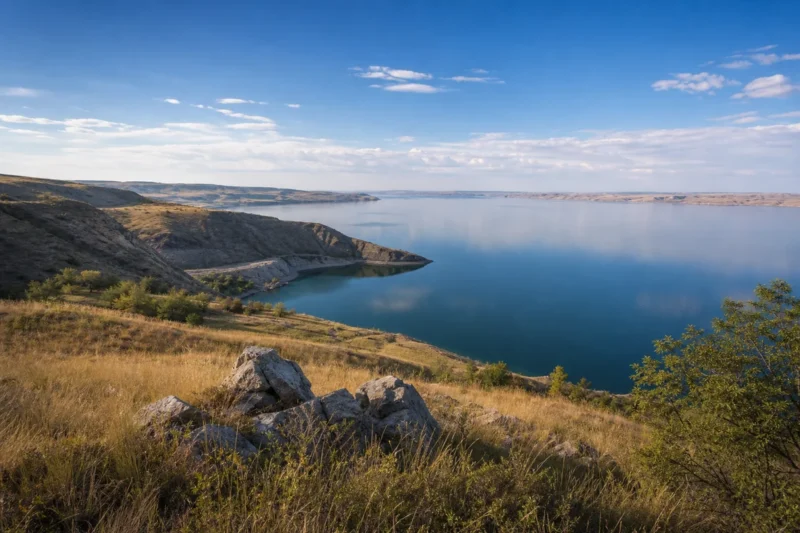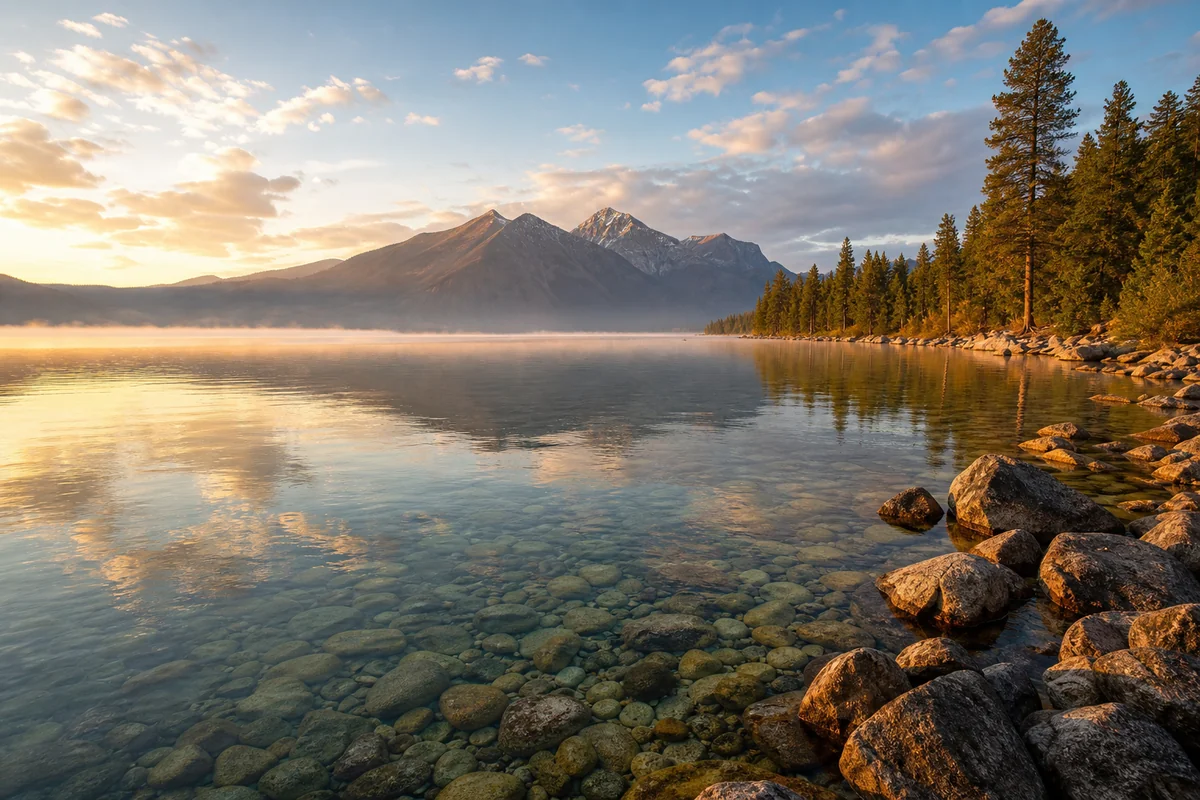
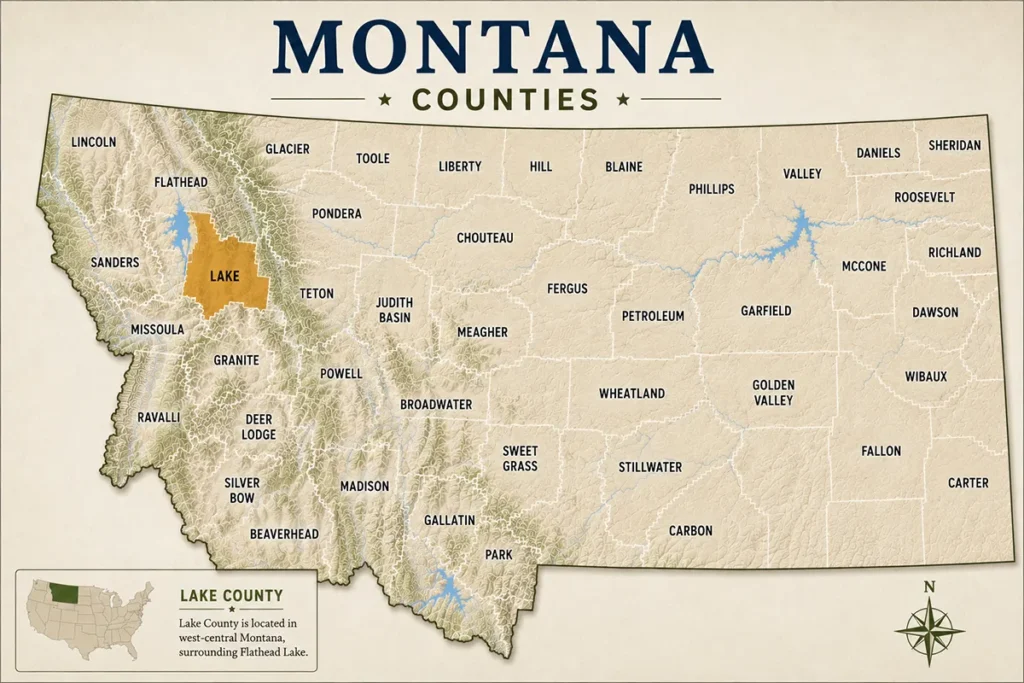
Standing on the eastern shore of Flathead Lake at dawn, watching the mist lift off water so clear you can see the rocky bottom thirty feet down — that’s the moment Lake County stops being a place on a map and becomes somewhere you genuinely can’t stop thinking about. One of the 56 Montana Counties, Lake County sits in the northwest corner of the state and quietly holds one of the most remarkable concentrations of natural and cultural heritage anywhere in the American West.
- Lake County is home to Flathead Lake — the largest natural freshwater lake west of the Mississippi.
- The county sits within the Flathead Indian Reservation, home to the Confederated Salish and Kootenai Tribes.
- Top attractions include the National Bison Range, Wild Horse Island State Park, and the arts town of Polson.
- Best visited May through October — summers are warm and the lake is swimmable.
- A manageable drive from Missoula (roughly 60 miles north) makes it ideal for a weekend trip or longer stay.
- Plan ahead for summer weekends — popular campgrounds and boat launches fill early.
Liked this article?
Add Roaming Montana as a preferred source so you see more of our articles and guides on Google.
Where Is Lake County and How Do You Get There?
Lake County occupies a lush valley in northwestern Montana, bordered by the Cabinet Mountains to the west and the Mission Mountains to the east. The county seat is Polson, perched right at the southern tip of Flathead Lake — an honestly spectacular spot for a town to land.
Getting here is straightforward. From Missoula, it’s about an hour north on US-93, which traces the eastern shore of Flathead Lake before arriving in Polson. From Kalispell to the north, the drive is roughly 40 minutes south. Visitors coming from the east coast or midwest typically fly into Missoula or Glacier Park International Airport near Kalispell, then rent a car — there’s no meaningful public transit serving the county.
One thing worth noting: much of Lake County lies within the Flathead Indian Reservation, administered by the Confederated Salish and Kootenai Tribes (CSKT). Some recreational activities — particularly fishing and hunting — require a tribal recreation permit in addition to a Montana state license. Picking up a permit in Polson before heading out is quick and inexpensive, but skipping it is a mistake that can end your trip on a sour note.
Understanding the Land and the People
Lake County is inseparable from the story of the Confederated Salish and Kootenai Tribes, who have called this landscape home for thousands of years. The reservation was established by the Hellgate Treaty of 1855, and the tribal government today is one of the most economically and culturally active in the nation.
What most visitors don’t fully appreciate is that spending time in Lake County means you’re genuinely a guest on tribal lands. The CSKT run their own fish and wildlife department, their own educational institutions, and the county itself has seen notable population growth in recent decades, partly driven by non-tribal members purchasing land within the reservation boundaries — a situation with a complex legal history.
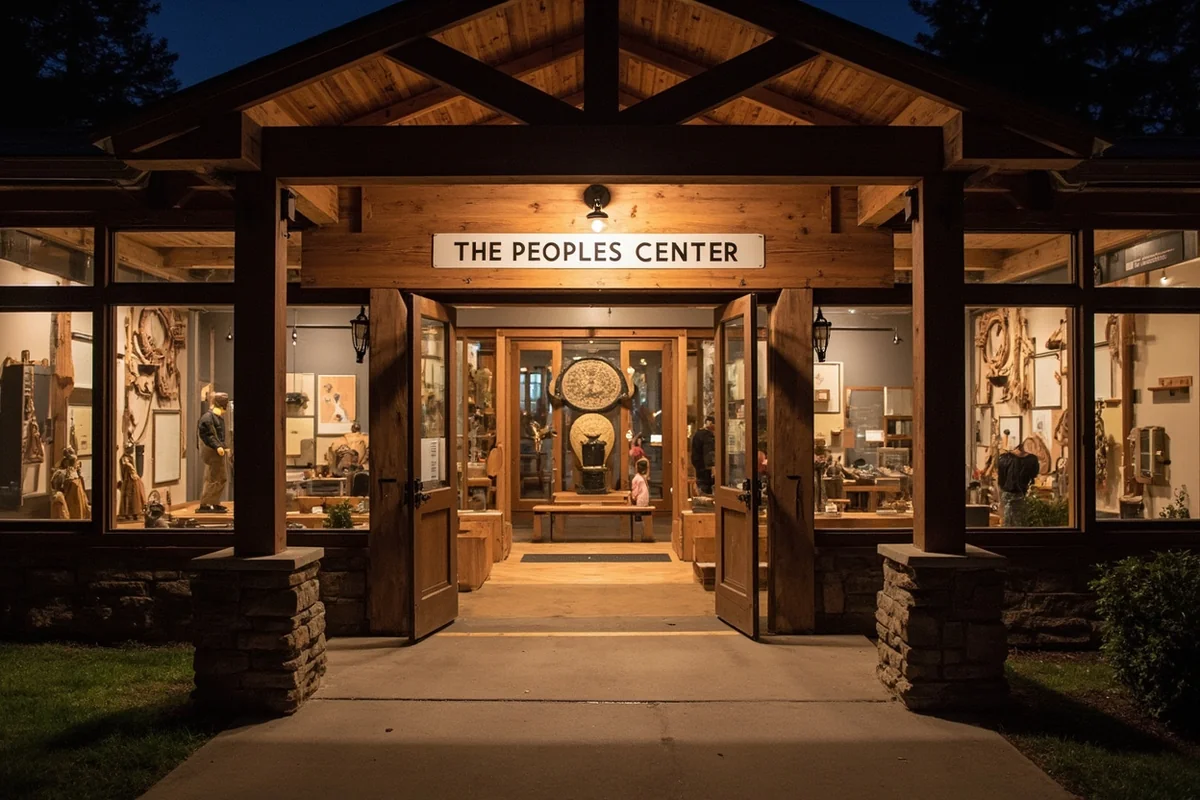
Taking the time to visit the Confederated Salish and Kootenai Tribes Tribal Cultural Committee resources and the SKC (Salish Kootenai College) in Pablo adds genuine depth to a trip here. The Peoples Center in Pablo houses exhibits on tribal history and culture that most drive-through visitors miss entirely.
Flathead Lake: Everything You Need to Know
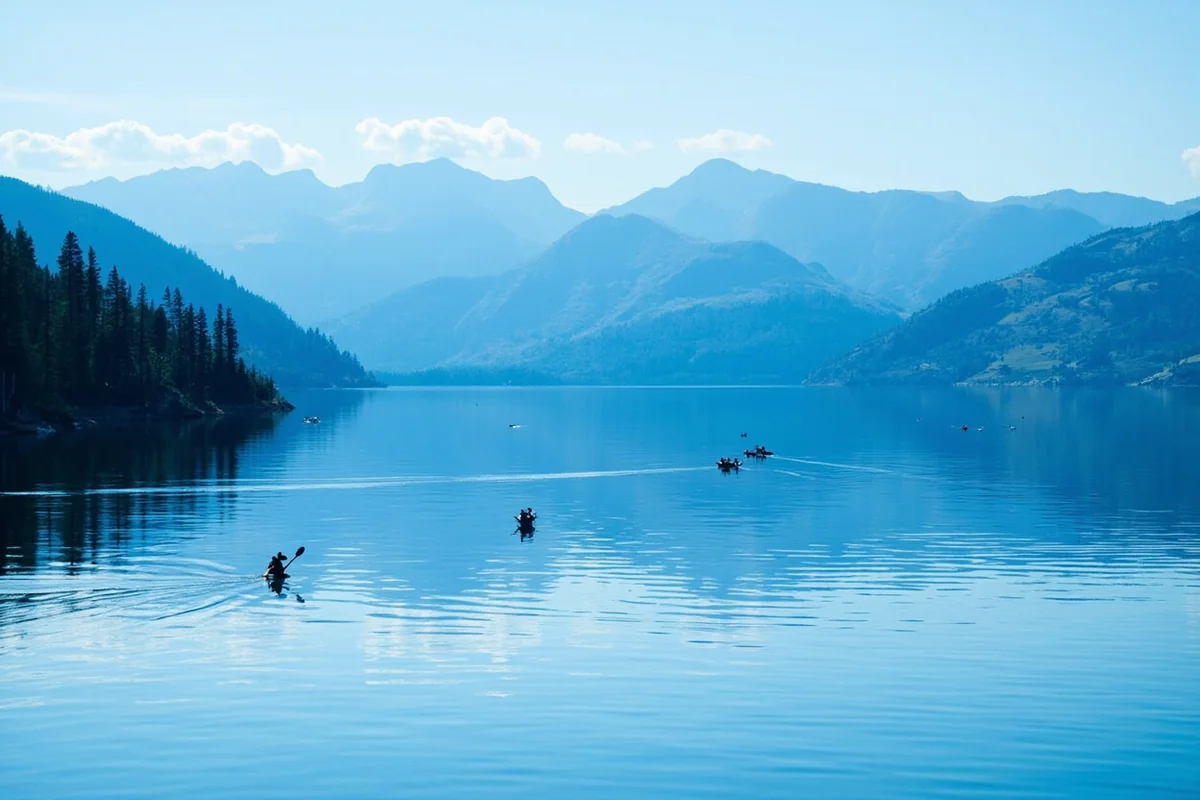
Flathead Lake is the centerpiece of the county — and it genuinely earns the superlative. At roughly 28 miles long and up to 15 miles wide, it’s the largest natural freshwater lake west of the Mississippi River, according to Montana Fish, Wildlife & Parks.
The water is startling in its clarity. On a calm day in early summer, before the boat traffic picks up, you can see bottom detail at depths that feel implausible. Water temperatures peak in July and August, typically reaching the low-to-mid 60s Fahrenheit — cold by beach standards, but perfectly swimmable if you grew up in the northern US.
West Shore vs East Shore: Which Side Should You Stay On?
This is a question worth thinking about before you book. The east shore (US-93 corridor through Polson and Bigfork) is more developed, with more lodging, restaurants, and services. The west shore is quieter, wilder, and more photogenic — the road hugs the lake closely and passes through small communities like Lakeside and Somers.
During a visit last summer, the difference was stark: east shore felt like a vacation destination, west shore felt like a secret. The Flathead Lake State Park units are spread across both shores, with five separate units offering camping, fishing, and boat access.
Reservations fill weeks in advance for July and August — the Montana State Parks reservation system opens bookings well ahead of the season, and waiting until May for a July weekend will leave you scrambling.
Swimming, Boating, and Water Activities
The main public beach in Polson sees heavy use in summer, with families, kayakers, and paddleboarders sharing a relatively small stretch of shoreline. What surprised me on a Tuesday morning in mid-July was how busy it already was by 9 a.m. — arriving early matters.
Boat rentals are available through several marinas in Polson and Bigfork, with pontoon boats, fishing boats, and personal watercraft all available at typically competitive rates. Expect to pay roughly $200–$400 per day for a pontoon depending on size and season, though rates vary and it’s worth calling ahead for current pricing.
Kayak and paddleboard rentals run considerably less — generally under $50 for a half-day — and the protected coves near Rollins on the west shore are ideal for beginners.
Fishing on Flathead Lake is exceptional: lake trout (mackinaw), yellow perch, and westslope cutthroat are the main targets. Remember the tribal fishing permit if you’re on reservation waters.
Wild Horse Island State Park
This is the one that most first-time visitors underestimate. Wild Horse Island is a 2,163-acre island in the middle of Flathead Lake — accessible only by boat — and it genuinely feels like stepping into a piece of untouched Montana.
The island supports free-roaming wild horses (you’ll see them if you walk the interior trails), mule deer, bighorn sheep, and bald eagles nesting in the old-growth ponderosa pines.
What most guides skip is that the trails are unmaintained and the terrain can be rough — wearing proper footwear and carrying water matters more than it might seem from the park’s modest-sounding acreage.
Getting there requires renting a boat or arranging transport through a local outfitter in Bigfork or Polson. There’s no bridge, no ferry service, and no concession stand.
What you get in exchange is an island that feels genuinely wild — during my visit, a herd of five horses grazed within 200 yards of the landing beach while a pair of bald eagles circled overhead. It’s the kind of scene that makes you reach for your phone and immediately realize the photo won’t do it justice.
The National Bison Range
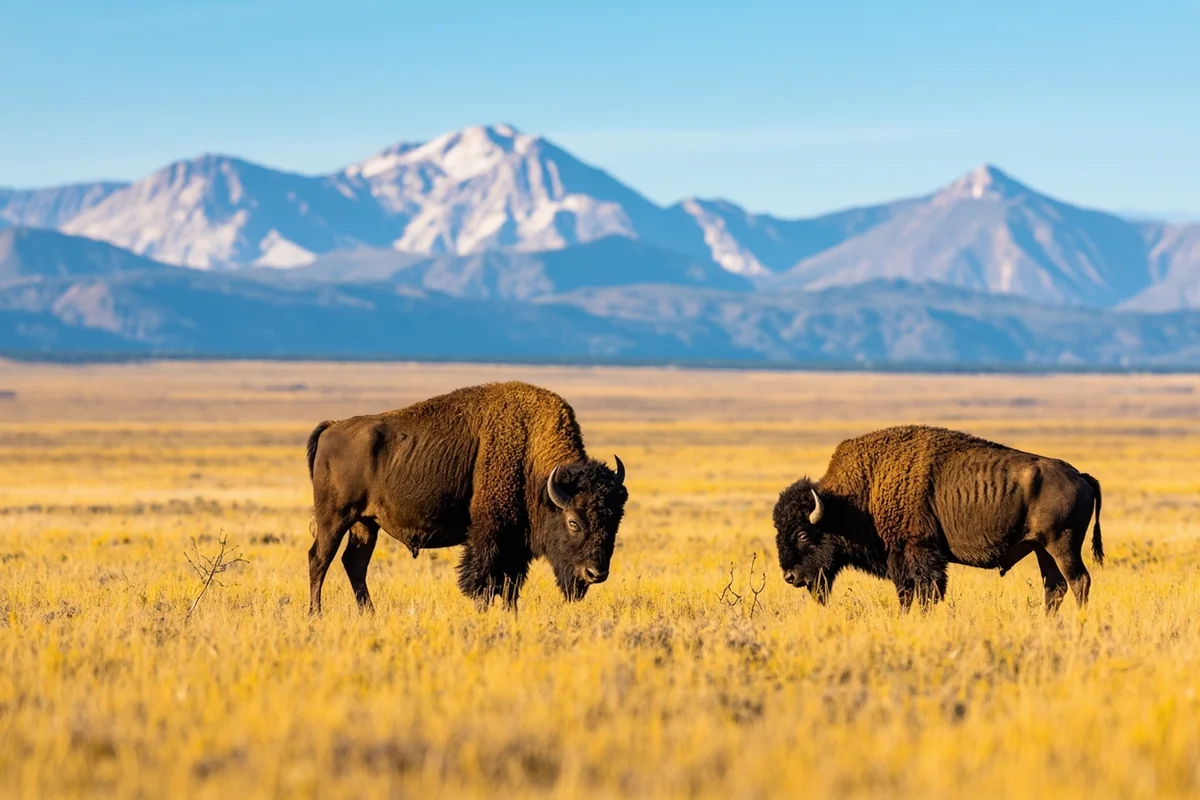
Located just south of Moiese, the National Bison Range is one of the oldest wildlife refuges in the US, established in 1908. According to the US Fish & Wildlife Service, the range protects a herd of roughly 350–500 American bison across approximately 18,500 acres of native grassland.
The refuge is co-managed by the Confederated Salish and Kootenai Tribes following an agreement reached in 2020 — a historic shift that returned management of this land to the tribes from whose territory it was originally taken. Understanding this context enriches the visit considerably.
The main attraction is the Red Sleep Mountain Drive, a 19-mile one-way loop that takes visitors through bison country.
Allow at least two hours — the road is unpaved in sections and the wildlife encounters can slow you down in the best possible way. The entrance fee was a modest per-vehicle charge at the time of writing; check the USFWS website for current rates before you go.
One concrete detail worth knowing: the loop drive requires a vehicle with reasonable clearance (a standard sedan manages fine in dry conditions) and can be closed in wet weather or during calving season. Calling ahead to confirm it’s open saves a wasted trip from Polson.
Polson: The County Seat
Polson has more going on than its size suggests. With a population of roughly 5,000, it’s a genuine small town with a functioning downtown, a waterfront, and a legitimate arts and food scene built around summer tourism.
The Polson-Flathead Historical Museum is a solid rainy-afternoon option, with exhibits on early settler history, tribal history, and the development of the region.
The Miracle of America Museum is a quirky, sprawling collection of Americana — motorcycles, military equipment, vintage farm machinery — that defies easy categorization and is worth an hour even if you’re not normally a museum person.
Downtown Polson has a handful of good restaurants, a small brewery, and a farmers market running through summer months. The waterfront area along Flathead Lake’s southern tip is pleasant for an evening walk. What I’d skip: the souvenir shops clustered near the marina aren’t particularly distinctive.
Bigfork: The Arts Village on the Lake
Bigfork sits at the northeastern corner of Flathead Lake where the Swan River flows in, and it operates as Lake County’s cultural hub. The village has galleries, boutiques, excellent restaurants, and the Bigfork Summer Playhouse — a legitimate regional theater that has been running Broadway-style productions since 1960.
The energy in Bigfork is markedly different from Polson — more artsy, more expensive, more oriented toward the Flathead Valley vacation crowd. Eagle Bend Golf Club here is consistently ranked among Montana’s best courses. Dining options run from casual pizza to upscale lakeside fare, with prices generally ranging from around $15 per person for lunch to $40–$60 per person for dinner at the better restaurants.
Bigfork is technically within Lake County but sits right on the county line with Flathead County, and some local businesses identify with Kalispell more than Polson. Worth knowing for planning purposes.
Mission Mountains and the Wilderness
The jagged peaks of the Mission Mountains rise dramatically along Lake County’s eastern edge, visible from almost everywhere in the county.
The Mission Mountains Wilderness covers 73,877 acres on the west slope of the range and is managed by Flathead National Forest. There’s also the Mission Mountains Tribal Wilderness on the east slope — the first tribally designated wilderness area in the US, administered by the CSKT.
Access to the tribal wilderness requires a tribal recreation use permit. The national forest side requires standard wilderness regulations — pack out everything, group size limits apply.
Popular trailheads include the Cold Lakes Trail near Condon (technically just into Missoula County but accessed via Lake County roads) and several access points near St. Mary Lake.
Hikers who venture into the Mission Mountains backcountry should know: grizzly bear activity is real here. Carrying bear spray is non-negotiable, and making noise on the trail matters more than it would in many other Montana ranges. During a late June hike above St. Mary Lake, fresh grizzly diggings were visible within a hundred yards of the trail.
Séliš-Ql̓ispé Culture Center
The Séliš-Ql̓ispé Culture Center in St. Ignatius is arguably the most important cultural institution in Lake County, and it remains undervisited by travelers who stick to the lake. The center documents and preserves the languages, oral traditions, and material culture of the Salish and Pend d’Oreilles peoples.
Visiting here — even briefly — reshapes the way you experience everything else in the county. The landscape starts to feel inhabited rather than discovered. Call ahead to confirm hours, which can vary seasonally.
St. Ignatius: The Mission and the Mountains
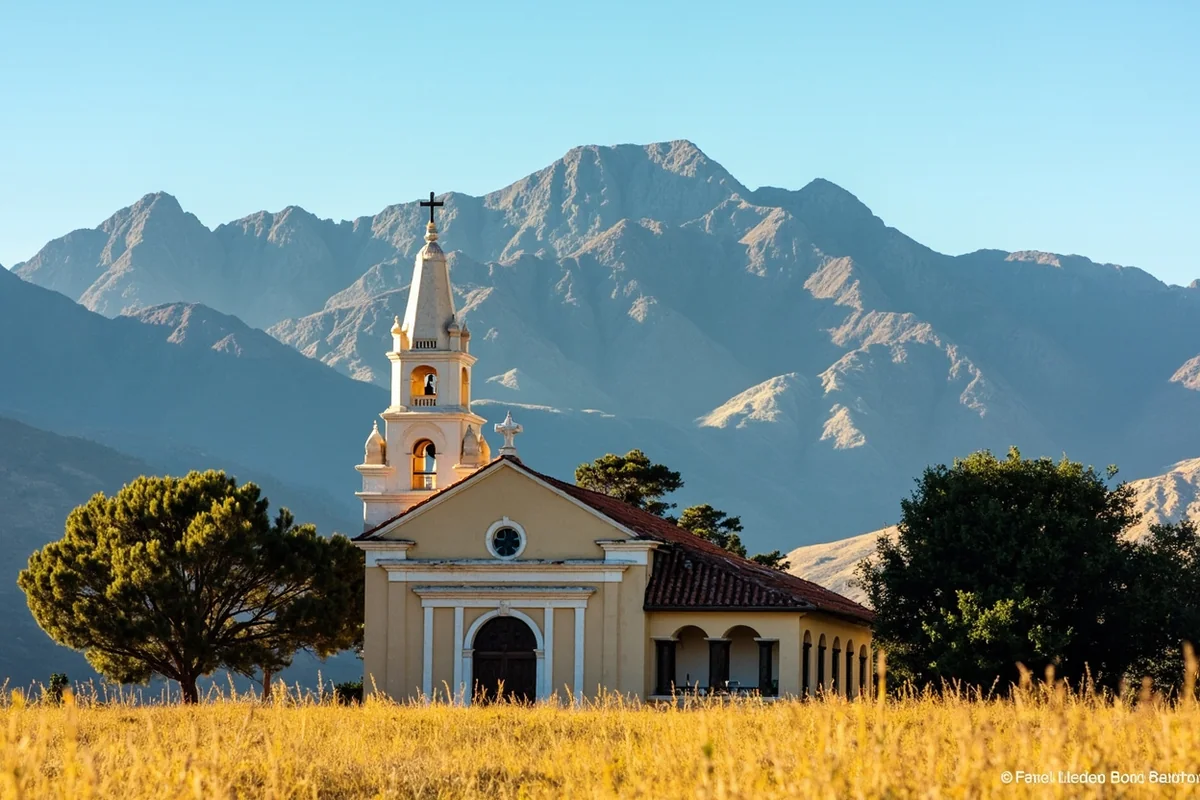
St. Ignatius is a small community midway between Polson and Missoula on US-93, and it’s home to the St. Ignatius Mission — a Catholic church built in 1891 and featuring 58 murals painted by Brother Joseph Carignano, a self-taught artist who served as the mission’s cook. The murals are remarkable in scale and ambition, covering every wall and arch of the interior.
The church sits against a backdrop of the Mission Mountains that stops visitors in their tracks — it’s one of those scenes that reads as almost impossibly picturesque. Entry is free (donations appreciated), and it takes about 20–30 minutes to properly explore.
Suggested Itinerary
Lake County rewards a full weekend, though a single packed day is possible from Missoula or Kalispell.
Day 1: Southern Lake and Town
Start in Polson with breakfast at a downtown café before walking the waterfront. Spend mid-morning at the Miracle of America Museum or the Polson-Flathead Historical Museum.
After lunch, arrange a boat rental and spend the afternoon on Flathead Lake — aim for Wild Horse Island if you’ve booked the logistics in advance, or simply explore the southern basin by water.
Evening in Polson: dinner at one of the waterfront restaurants, then a sunset walk along the lake. Polson is compact enough that everything is walkable from a central accommodation.
Day 2: Bison, Missions, and Culture
Rise early and drive to the National Bison Range — the Red Sleep Mountain Drive is best in morning light when bison are active. Allow two to three hours for the full loop. Back on US-93, stop in St. Ignatius for the mission murals and lunch in town.
Afternoon: head to Pablo for the Peoples Center, then drive the west shore of Flathead Lake back to your accommodation for the evening.
The west shore road (MT-35 south from Bigfork, then connecting roads) offers lake views that the east shore highway misses. Sunset from the west shore, looking back across the water toward the Mission Mountains, is one of the best endings to a day in Montana.
What Most Visitors Get Wrong in Lake County
The most common mistake is treating this as just a lake destination. Visitors who spend their entire trip on the Flathead Lake waterfront go home having seen a small fraction of what the county offers — the bison range, the Mission Mountains, the tribal cultural sites all get skipped.
The second mistake is ignoring the tribal permit requirements. Fishing or hunting on reservation lands without a CSKT permit isn’t a gray area — it’s a violation that can result in fines and equipment confiscation. The permits are genuinely easy to obtain in Polson or online through the tribal website, so there’s no excuse.
A third error: underestimating summer crowds on the east shore. The US-93 corridor through Polson and Bigfork gets genuinely congested on summer weekends, particularly around the July 4th holiday and the Cherry Festival in Polson (typically held in late July). If you value space and quiet, the west shore is a consistently better bet.
Finally — and this one caught me off guard on a first visit — the transition between state-managed and tribally-managed land isn’t always signposted clearly. What looks like open forest may have different access rules than the national forest land nearby. When in doubt, the CSKT website and tribal offices in Pablo are reliable resources.
Practical Information for Visitors
| Detail | Information |
|---|---|
| County Seat | Polson |
| Nearest Major Airport | Glacier Park International (Kalispell) — ~40 min north; Missoula — ~60 min south |
| Best Time to Visit | May–October (peak July–August; September quieter and beautiful) |
| Tribal Recreation Permits | Required for fishing/hunting on reservation lands — available in Polson or via CSKT website |
| Flathead Lake State Park Camping | Reserve through Montana State Parks website; books up weeks ahead in summer |
| National Bison Range Access | Check USFWS for current hours and road conditions; Red Sleep Mountain Drive may close in wet weather |
| Wild Horse Island Access | Boat-access only; arrange through marinas in Polson or Bigfork |
| Cell Coverage | Good in Polson and along US-93; limited in backcountry and west shore areas |
| Bear Country | Yes — carry bear spray in Mission Mountains and forested areas |
Where to Stay
Polson and Bigfork both have a solid mix of accommodation options — lakeside resorts, motels, vacation rentals, and B&Bs. Expect to pay roughly $100–$180 per night for a mid-range motel in shoulder season, with lakefront resort rates climbing considerably in July and August.
Vacation rentals through platforms like VRBO are popular and often better value for families or groups, with nightly rates generally ranging from $150 to $400+ depending on the property.
Camping at Flathead Lake State Park units is the most atmospheric option — waking up a hundred yards from the lake is hard to beat. Rates are typically modest by national standards, but booking early is essential.
Getting Around
A car is non-negotiable in Lake County. Distances between attractions are real, and there’s no meaningful public transit. US-93 is the main artery; most secondary roads are paved but some become dirt or gravel routes, particularly on the west shore and toward trailheads in the Mission Mountains.
Gas up in Polson before heading toward Moiese or the west shore — stations are sparse in between.
Connecting Lake County to the Broader Montana Experience
Lake County makes an excellent anchor for a longer northwestern Montana itinerary. To the north, Flathead County and the gateway communities to Glacier National Park are within easy reach.
To the south, the drive back to Missoula along US-93 passes through the Seeley Lake corridor — one of Montana’s most scenic drives and worth an overnight stop in its own right.
Visitors who’ve already explored Glacier County or Cascade County will find Lake County a rewarding contrast — quieter, more intimate in scale, with a cultural dimension that adds real depth to a Montana road trip.
If you’re building out a broader circuit of Montana’s diverse counties — from Beaverhead County in the southwest to Big Horn County in the southeast — Lake County belongs near the top of that list.
For travelers interested in wildlife refuges beyond the bison range, it’s worth noting that Benton Lake Wildlife Refuge near Great Falls offers a very different but equally compelling wildlife experience in Cascade County to the east.
Final Thoughts
Lake County is one of those Montana destinations that consistently delivers more than visitors expect. The combination of an extraordinary lake, genuine wilderness, accessible wildlife, and living Indigenous culture in one relatively compact area is rare — and it’s not something you find by accident on a map.
What the county asks in return is a degree of attentiveness that some visitors skip. Learning about the tribal land context, obtaining the right permits, and venturing off US-93 are small investments that transform an ordinary lake vacation into something genuinely memorable.
Come in summer for the full experience, but don’t overlook September — the crowds thin dramatically, the light turns golden, and the lake sits calm in a way it rarely does in peak season. That might be the best-kept secret Lake County has.
How We Researched This Guide
This guide is based on multiple visits to Lake County across different seasons, including firsthand exploration of Flathead Lake, Wild Horse Island, the National Bison Range, and the Mission Mountains corridor.
Information was verified with the Confederated Salish and Kootenai Tribes’ official resources, Montana Fish, Wildlife & Parks, the US Fish & Wildlife Service (National Bison Range), and Montana State Parks.
We also consulted with local outfitters and marina operators in Polson and Bigfork to confirm current permit requirements, boat rental availability, and seasonal access conditions.
Frequently Asked Questions
What is the best time of year to visit Lake County, Montana?
The best time to visit Lake County, Montana is from late June through early September, when Flathead Lake is warm enough for swimming and boating and the National Bison Range is alive with wildlife activity. Fall visits in September and October are also stunning, with golden larch trees framing the Mission Mountains and far fewer crowds than summer. If you’re planning a cherry-picking trip, aim for mid-July when the famous Flathead Lake orchards are at peak harvest.
What are the top things to do in Lake County, Montana for first-time visitors?
First-time visitors to Lake County should prioritize a scenic drive along the east shore of Flathead Lake, a stop at the National Bison Range near Moiese, and a visit to the Ninepipes National Wildlife Refuge for exceptional bird watching. The historic town of Polson at the southern tip of Flathead Lake offers great dining, a charming downtown, and easy access to boat rentals and lake cruises. Don’t miss the Pablo National Wildlife Refuge and the Confederated Salish and Kootenai Tribes cultural sites for a deeper understanding of the region’s rich Indigenous heritage.
How far is Lake County, Montana from Missoula and Glacier National Park?
Lake County sits roughly 60 miles north of Missoula along US-93, making it an easy 1 to 1.5 hour drive from Missoula International Airport. The county’s northern edge near Bigfork is approximately 50 miles south of Glacier National Park’s west entrance at West Glacier, so most visitors conveniently combine both destinations in a single Montana road trip. This central location makes Lake County one of the most accessible counties in western Montana for travelers flying into either Missoula or Kalispell.
What is the average cost of a trip to Lake County, Montana?
A moderate budget for visiting Lake County runs around $150 to $250 per day including lodging, food, and activities, though costs vary widely by season and travel style. Campgrounds at Flathead Lake State Park units run $28 to $35 per night, while mid-range motels and vacation rentals in Polson or Ronan typically range from $120 to $200 per night in summer. Most wildlife refuges and state park day-use areas charge between $6 and $10 per vehicle, keeping outdoor activities very affordable.
Is Lake County, Montana worth visiting if you’re not into fishing or boating?
Absolutely — Lake County offers far more than water sports, with world-class wildlife viewing at the National Bison Range, scenic hiking near the Mission Mountains Wilderness, and vibrant cultural experiences tied to the Flathead Indian Reservation. The charming arts community in Bigfork hosts galleries, live theater, and excellent farm-to-table restaurants that rival anything in larger Montana cities. Cherry orchards, roadside stands, and local farmers markets in summer add a uniquely agricultural flavor to the county that surprises many visitors.
What should I pack for a trip to Lake County, Montana in summer?
Summer days in Lake County can be warm and sunny with highs in the upper 80s°F, but evenings near Flathead Lake cool down quickly, so bring layers including a fleece or light jacket. Sunscreen and polarized sunglasses are essential, especially if you plan to spend time on the water since the lake’s reflection intensifies UV exposure significantly. Pack insect repellent for wetland areas like Ninepipes Refuge, and if you plan to hike toward the Mission Mountains, sturdy trail shoes and bear spray are strongly recommended.
Can you visit the National Bison Range in Lake County, Montana without a reservation?
Yes, the National Bison Range near Moiese generally allows walk-up visitors, though the popular 19-mile Red Sleep Mountain auto tour can get busy on summer weekends and vehicles with larger trailers may face restrictions on certain routes. The refuge is managed by the Confederated Salish and Kootenai Tribes, and a standard America the Beautiful pass or a $10 per vehicle daily fee covers entry. Arriving early in the morning on weekdays gives you the best chance of spotting bison, pronghorn, and bighorn sheep without the midday crowds.