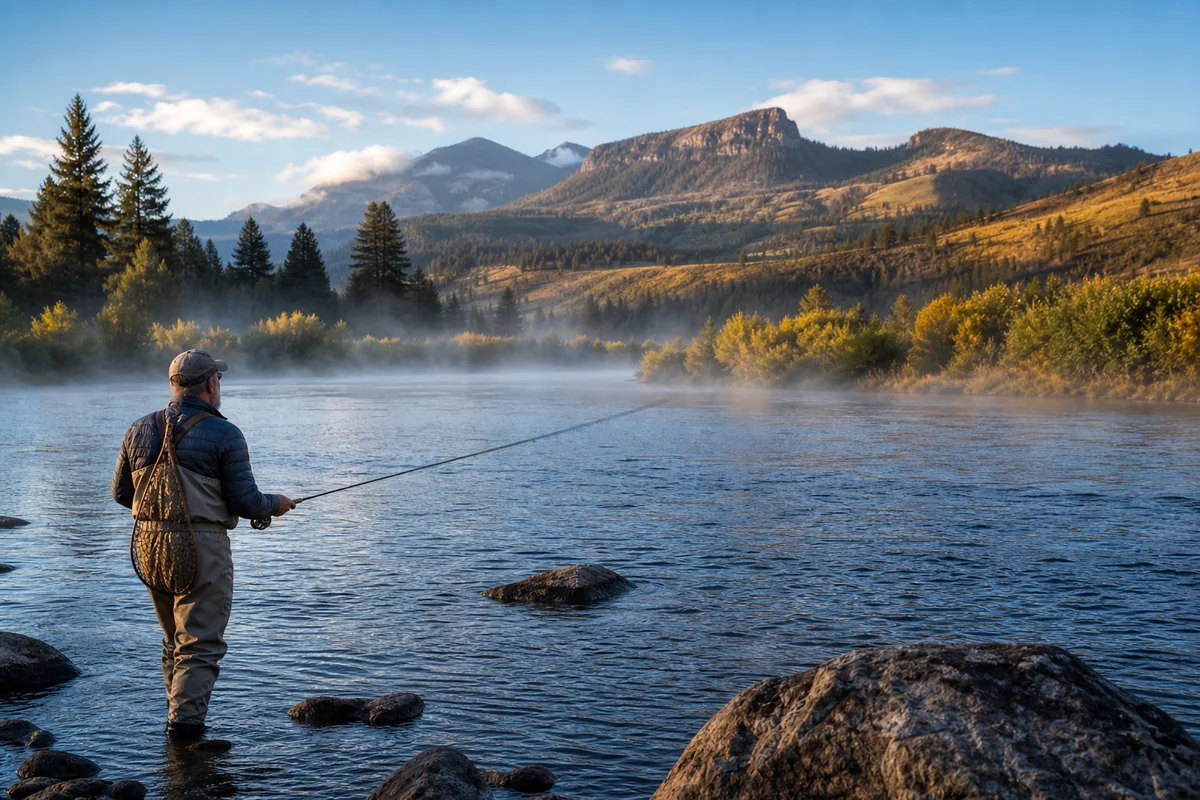
Standing at the edge of the Madison River on a September morning, watching a pod of brown trout rise in the current while steam drifted off the water in the early chill — that’s the moment Madison County stopped being a place on a map and became somewhere I genuinely love.
This is one of the most quietly spectacular corners of all 56 Montana Counties, and most visitors still drive straight through it on the way to Yellowstone without realizing what they’re missing.
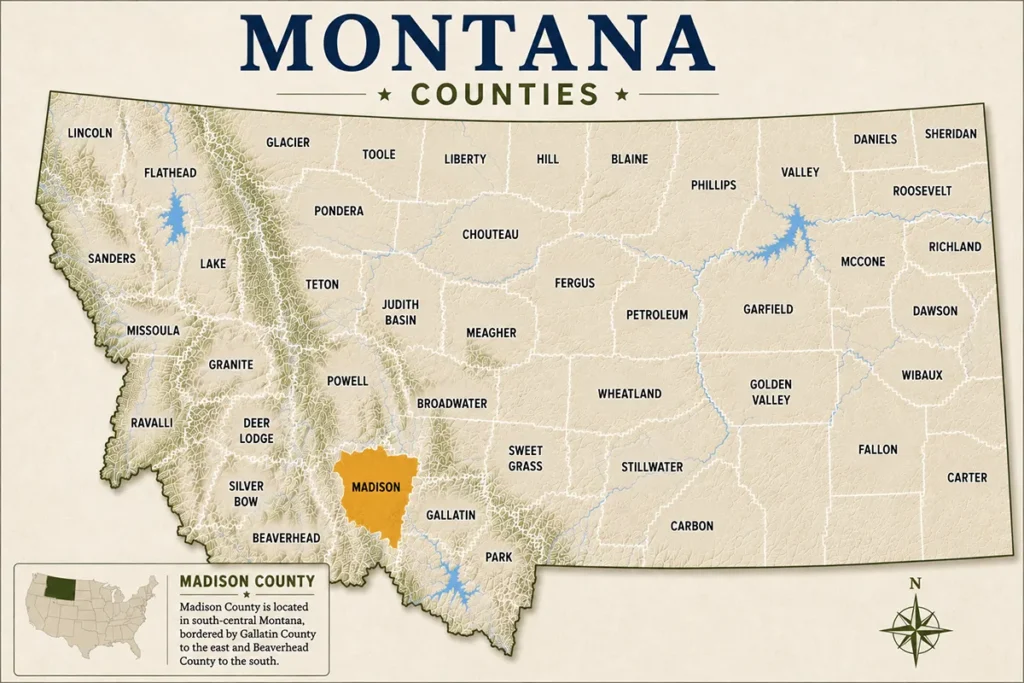
- Madison County sits in southwestern Montana, bordered by Yellowstone National Park to the south
- Virginia City — the county seat — is one of the best-preserved gold rush towns in the American West
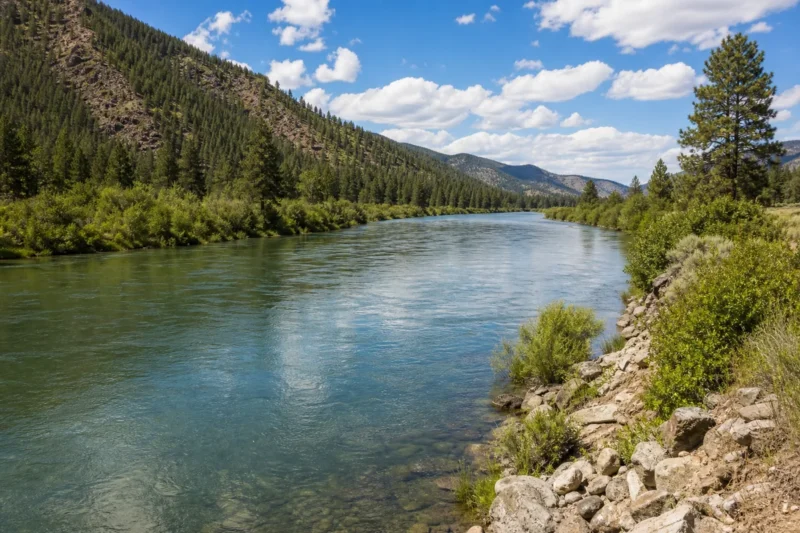
- The Madison River is world-famous for blue-ribbon fly fishing and draws anglers from across the globe
- Earthquake Lake (Quake Lake) is a haunting, fascinating geological landmark with a compelling backstory
- The county is a legit four-season destination — don’t rule out shoulder seasons for fewer crowds
- Ennis is the main service hub; book accommodation early for summer visits
- Day-trippers from West Yellowstone can easily combine both destinations in a single trip
Liked this article?
Add Roaming Montana as a preferred source so you see more of our articles and guides on Google.
Where Is Madison County, Montana?
Madison County occupies the southwestern corner of Montana, roughly between Bozeman to the northeast and the Idaho border to the west.
It’s one of Montana’s larger counties by area — covering around 3,600 square miles — yet home to fewer than 9,000 people, giving it a genuine frontier feel that’s increasingly rare even in Big Sky Country.
The county seat is Virginia City, a historic gold rush town that’s virtually unchanged since the 1860s. The largest town by population is Ennis, which sits along the Madison River and serves as the practical hub for most visitors.
What makes the geography extraordinary is the range of terrain packed into one county. You’ve got the broad Madison Valley floor, the dramatic Madison Range rising to the east, and the Gravelly Range and Tobacco Root Mountains flanking other sides.
Yellowstone National Park brushes the southern boundary, which means wildlife corridors are active and the landscape feels genuinely wild.
A Brief History of Madison County
Madison County was created in 1865 — the same year the Montana Territory itself was barely a year old — carved out of a landscape that had just erupted with gold fever.
The discovery of placer gold at Alder Gulch in 1863 triggered one of the great mining rushes of the American West, and within months, Virginia City had grown from nothing into a roaring, lawless settlement of thousands.
The Vigilantes of Montana — a citizens’ militia that famously hanged road agents across the region — organized here in response to that lawlessness. It’s a dark and gripping chapter that locals don’t shy away from.
The county was named for the Madison River, which President Thomas Jefferson’s expedition named after Secretary of State James Madison during the Lewis and Clark Expedition of 1805.
That connection to one of the defining journeys in American history gives the region a historical gravity that goes well beyond the gold rush years.
Virginia City: Montana’s Gold Rush Capital
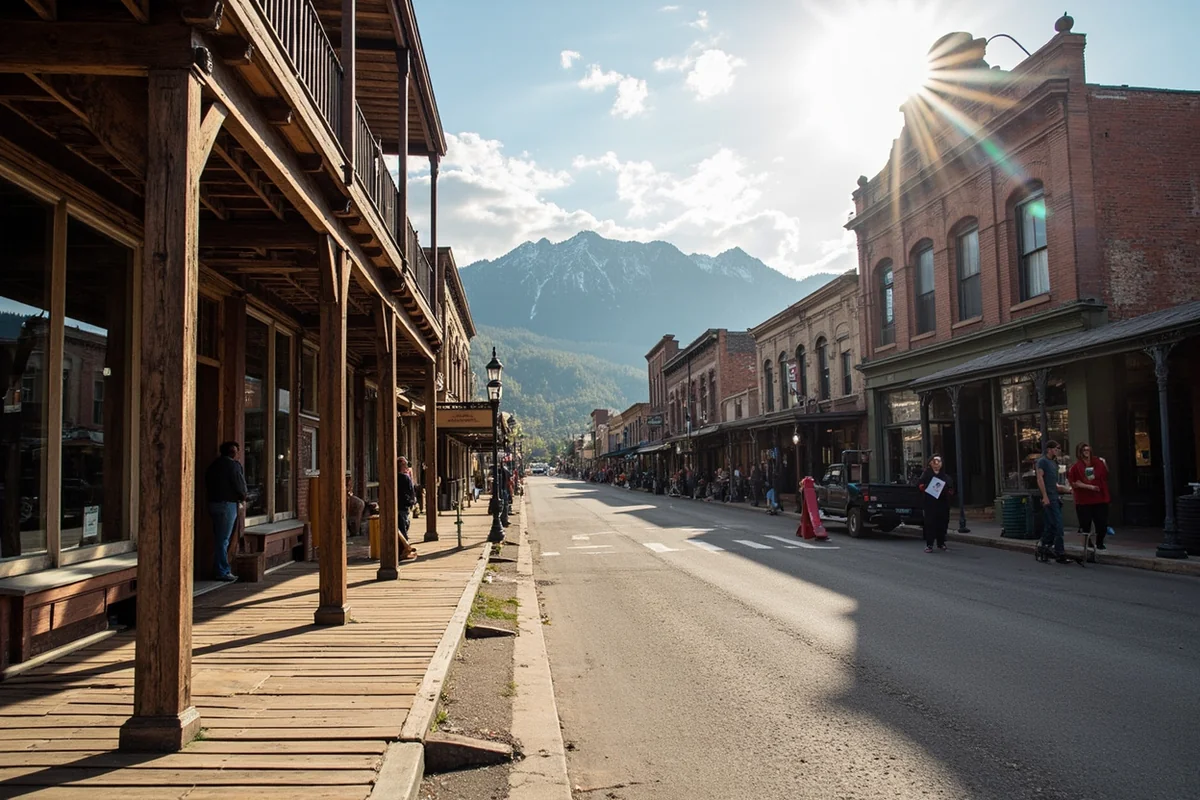
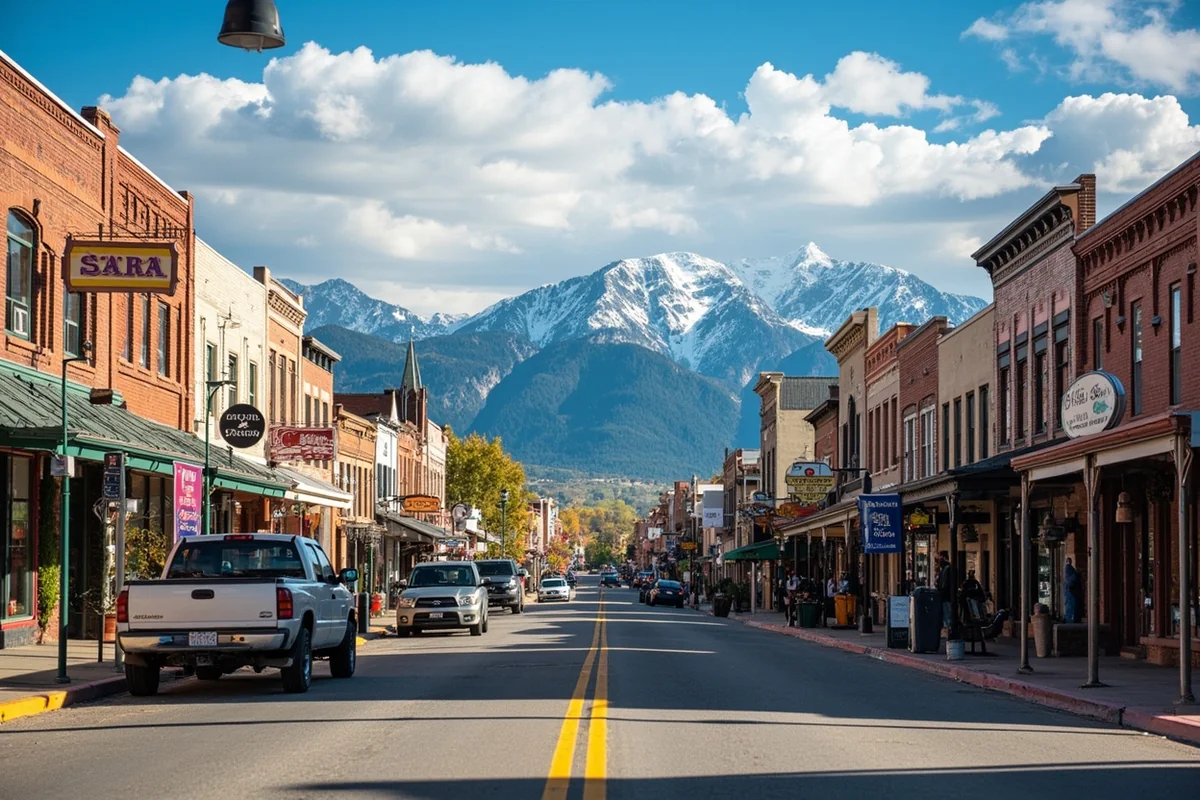
Virginia City is the kind of place that stops you mid-sentence. Walking down Wallace Street feels less like visiting a museum and more like accidentally stepping into 1865 — the storefronts are original, the boardwalks creak underfoot, and the whole town sits under a National Historic Landmark designation that has prevented the kind of “restoration” that ruins so many heritage sites.
What surprised me most was how much of the town is still genuinely functional. The Wells Fargo Express Building, the Montana Post building (home to the territory’s first newspaper), and several original saloons still stand exactly where they were built.
During summer, the Virginia City Players perform at the historic Opera House — it’s campy and wonderful in equal measure.
The gold dredge tailings still visible around Alder Gulch are a detail most visitors overlook. Those strange, undulating ridges of river gravel stretching across the valley floor are the physical scar left by massive hydraulic dredging operations that ran well into the 20th century — they processed millions of cubic yards of gravel chasing the last of the placer gold.
Admission to walk the streets is free. The museums and some buildings charge a small fee — typically a few dollars per attraction, or you can get a combination pass that covers multiple stops. Check current pricing at the Virginia City State Historic Site, as fees can change seasonally.
Nevada City
Just a mile west of Virginia City sits Nevada City, a sister ghost town that’s been partially reconstructed as an open-air museum. It lacks Virginia City’s authentic lived-in quality, but it has the Nevada City Music Hall — a collection of mechanical music machines that genuinely delighted me in a way I didn’t anticipate.
A narrow-gauge steam train runs between the two towns in summer, and it’s worth the short ride just for the views across Alder Gulch.
The Madison River: World-Class Fly Fishing
According to Montana Fish, Wildlife & Parks, the Madison River is classified as a blue-ribbon trout fishery — one of only a handful of rivers in the state to carry that designation. It means the river consistently supports exceptional trout populations, and the fishing community takes it seriously enough that special regulations apply to different sections of the river.
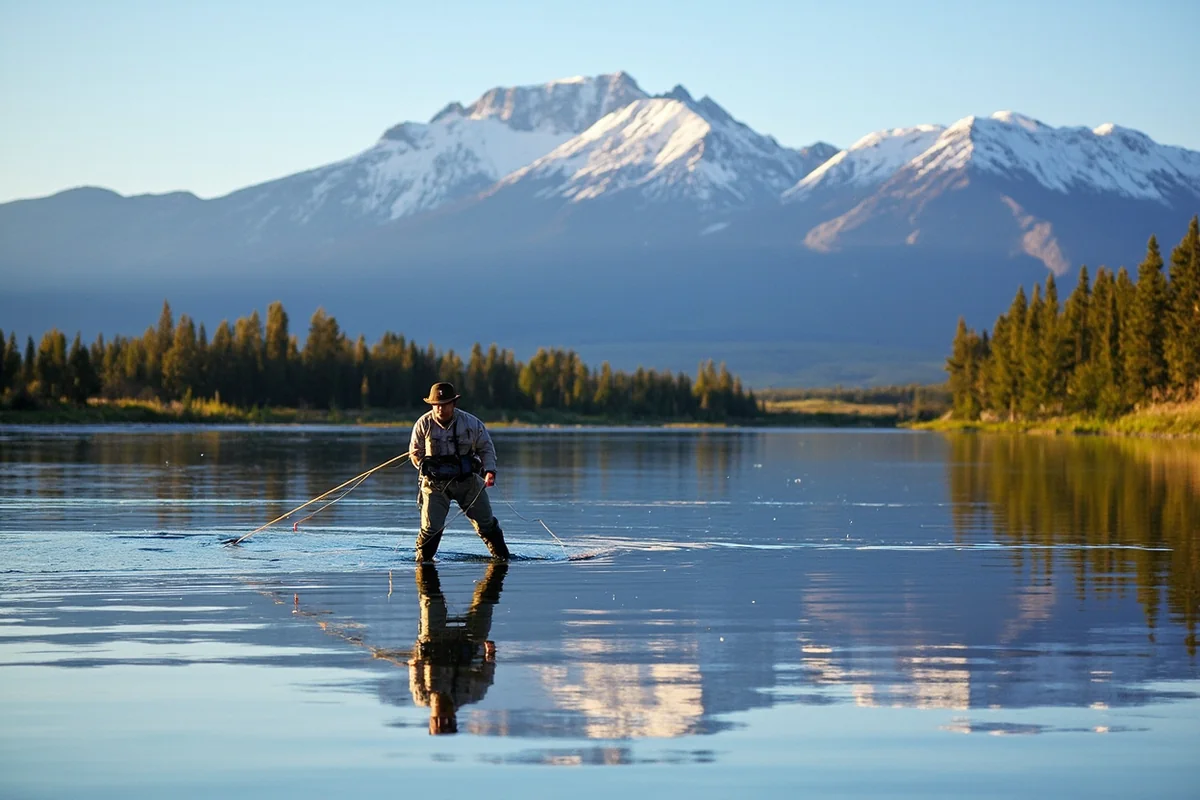
The 50-mile stretch from Quake Lake downstream to Ennis — the “50 Miles of Smiles” as locals call it — is considered among the finest wild trout rivers in North America. Brown trout and rainbow trout are the primary targets, with browns running especially large in fall.
During my visit in late September, the river was running clear and low, which the guides told me was ideal for sight fishing to individual fish. The hatches in this stretch are prolific — pale morning duns, caddis, and the famous October caddis hatch draw anglers from across the country each fall.
Hiring a local guide out of Ennis is genuinely worth it on your first visit. The river looks straightforward but has subtle currents and wade-fishing hazards that can catch you off guard. Guide rates typically run in the range of $400–$600 per day for two anglers — not cheap, but split between two people it’s comparable to other guided experiences.
A Montana fishing license is required. Annual and short-term licenses are available through Montana Fish, Wildlife & Parks — pick one up online or at a local outfitter before you hit the water.
Ennis Lake (Meadow Lake)
At the south end of the valley, the Madison River backs up behind Ennis Dam to form Ennis Lake — also known as Meadow Lake. It’s a strong producer for larger brown trout and is often overlooked by visiting anglers who focus on the river. Boat fishing is the most effective approach here.
Earthquake Lake (Quake Lake)
On August 17, 1959, a 7.3-magnitude earthquake triggered a massive landslide near Hebgen Lake that buried a campground, killed 28 people, and dammed the Madison River in a matter of minutes. The resulting lake — Quake Lake — formed almost overnight.
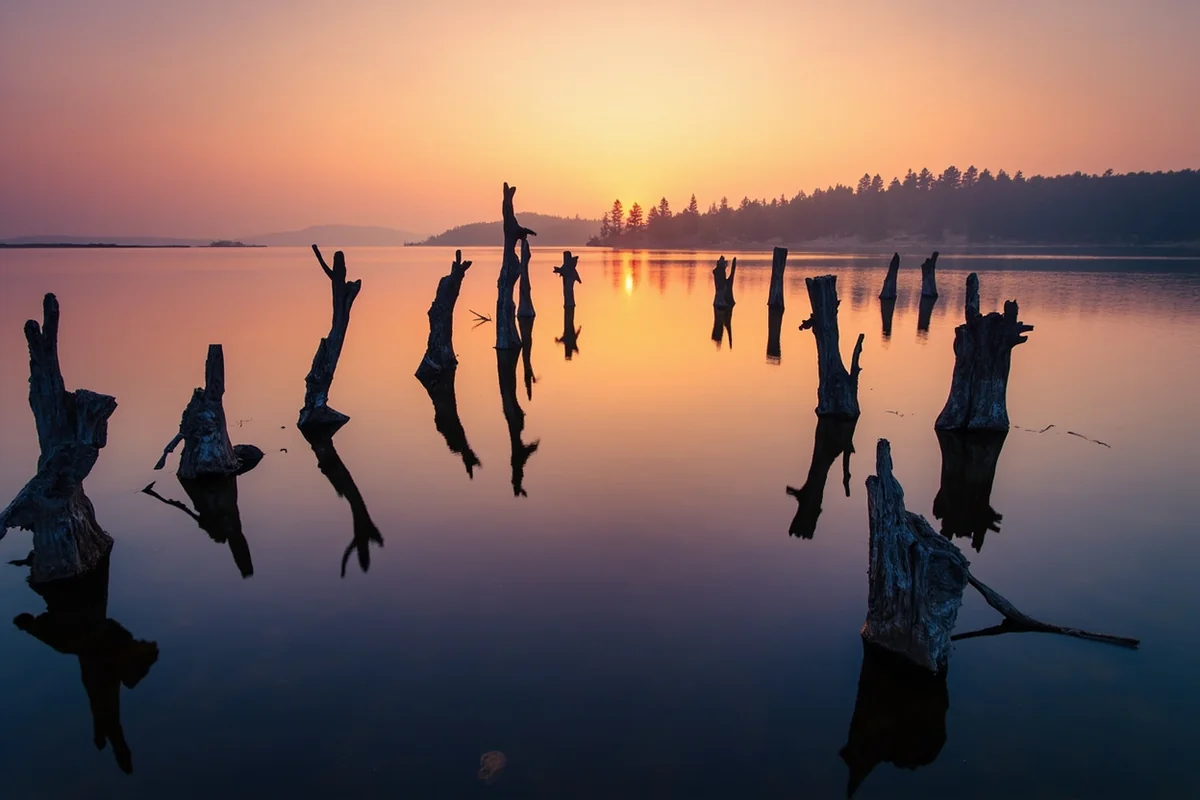
What remains today is genuinely eerie and moving. The tops of trees still protrude from the lake surface, preserved by the cold water. A car buried in the slide debris is partially visible from the overlook. The USFS Earthquake Lake Visitor Center tells the story in detail and is worth at least an hour of your time.
The drive into this area along Highway 287 is stunning in its own right — the canyon walls of the Madison River Gorge close in around you, and the geology is dramatic even before you reach the lake.
Hebgen Lake, just upstream, was also significantly affected by the earthquake and remains a productive fishing and recreation destination. Campgrounds along both lakes fill quickly in summer — book early.
Wildlife Watching in Madison County
The county’s position adjacent to Yellowstone’s northern ecosystem means large mammals move through regularly. Elk, mule deer, pronghorn, and occasional moose are common in the valley. Grizzly bears and wolves have been documented in the county as well — this isn’t Yellowstone’s managed wildlife experience, it’s actual wild country.
The most reliable wildlife viewing is along the Madison Valley in early morning and evening. The stretch of Highway 287 between Ennis and Quake Lake is particularly productive. During my fall visit, a herd of around 200 elk was staging in the foothills east of the river — the kind of scene that makes you pull over and forget entirely where you were going.
Bald eagles concentrate along the river in late fall and winter, and osprey are abundant in summer. Sandhill cranes pass through the valley during migration. Birders consistently underrate this county — it deserves more attention.
Outdoor Recreation Beyond Fly Fishing
Madison County’s outdoor offerings are wider than most visitors expect.
Hiking and Backpacking
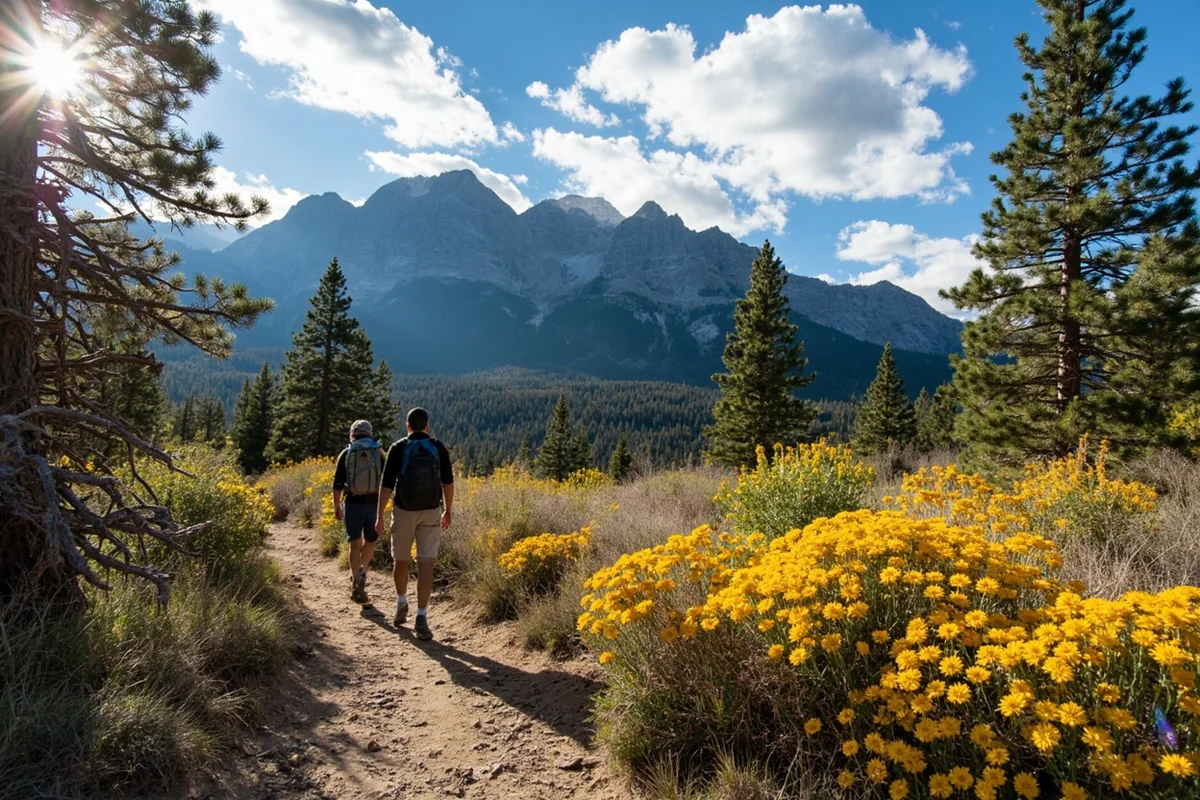
The Lee Metcalf Wilderness covers significant terrain in the county and provides excellent backcountry hiking with genuine solitude. The Spanish Peaks unit, accessed from the Madison Valley, is one of the most scenic areas in the state — but it’s demanding terrain, and the trails aren’t heavily signed. Come prepared with good maps and navigation skills.
The Tobacco Root Mountains to the north offer more accessible day hiking options with rewarding summit views. These peaks are often overlooked in favor of the more famous ranges but reward the extra effort to get off the beaten path.
Hunting
Big game hunting is a serious part of Madison County’s outdoor economy. Elk, mule deer, whitetail deer, and antelope all draw hunters to the region. The county has a mix of public and private land, and trespassing is taken seriously — always verify land status before venturing off established public access routes.
Snowmobiling
In winter, the county transforms into a snowmobile destination. The area around West Yellowstone — just outside the county’s southern border — is one of the busiest snowmobile hubs in the country, and riders frequently access Madison County trails from there.
Skiing
There’s no destination ski resort within the county itself, but Gallatin County‘s Big Sky Resort is roughly an hour’s drive north and is one of the largest ski areas in the US. It makes sense to combine both counties on a winter trip.
Where to Stay in Madison County
Ennis is the accommodation hub. Options range from classic Montana-style motels to vacation rentals and dude ranches. Expect rates to vary considerably by season — summer rates typically range from roughly $100–$200 per night for standard motel rooms, while dude ranch all-inclusive packages can run significantly higher.
Virginia City has limited accommodation, with a few historic inns and rental properties. Staying in Virginia City overnight changes the experience significantly — the town is genuinely atmospheric after the day visitors leave, and the silence under those big stars is something else.
Dispersed camping on surrounding National Forest land is free with standard USFS rules. Developed campgrounds at Quake Lake, Hebgen Lake, and along the Madison River book out fast in July and August — reservations through Recreation.gov are strongly recommended.
| Accommodation Type | Location | Typical Price Range | Best For |
|---|---|---|---|
| Motel / Motor Inn | Ennis | ~$100–$200/night | Anglers, budget-conscious travelers |
| Historic Inn | Virginia City | ~$130–$220/night | History enthusiasts, couples |
| Vacation Rental (cabin) | Ennis / Madison Valley | ~$180–$350/night | Families, groups |
| Dude Ranch (all-inclusive) | Madison Valley | ~$300–$600+/night per person | Full Western experience |
| Developed Campground | Quake Lake / Hebgen Lake | ~$20–$30/night | Campers, RV travelers |
| Dispersed Camping | National Forest land | Free (standard USFS rules) | Backcountry hikers |
Where to Eat in Madison County
Options are limited compared to larger Montana cities, and that’s part of the charm. Ennis has several solid restaurants serving the kind of hearty, unpretentious food that makes sense after a day on the river.
The Ennis Café is a local institution that opens early — useful for anglers trying to get breakfast before hitting the water at first light. Prices are reasonable, portions are generous. Expect to pay roughly $12–$18 for a full breakfast.
During peak summer season, expect a wait for dinner at Ennis’s more popular spots. The town serves a lot of people for its size, and kitchen capacity is limited. Arriving early or late is smarter than showing up at 6:30 p.m. hoping for a quick table — that’s a lesson learned the hard way on my second visit.
Virginia City has a handful of seasonal food options that operate during the summer months. Don’t count on finding much open outside of June through September.
Suggested Itinerary
Day 1: Arriving in Ennis and the Madison River
Arrive in Ennis mid-morning after driving down from Bozeman (roughly 90 minutes on US-287). Check into your accommodation and spend the afternoon walking the river. If you’ve booked a guided fishing trip, confirm your 7 a.m. launch for tomorrow — guides typically meet at the fly shop.
In the evening, grab dinner at one of Ennis’s main street restaurants. Drive the short stretch of 287 south of town before sunset — the elk are often visible in the foothills from the road around 7–8 p.m. in summer.
Day 2: Fly Fishing the Madison
Full day on the river with a guide, or self-guided if you know what you’re doing. The upper section near Lyons Bridge and the lower section near Ennis Lake both fish well depending on season and conditions — your guide will know where to go.
Pack a lunch. Cell service in the river corridor is spotty, and there are no services once you’re on the water.
Day 3: Virginia City and Nevada City
Drive to Virginia City (about 15 minutes from Ennis). Arrive before 10 a.m. to beat the tour bus crowds that arrive mid-morning in peak season. Spend at least two hours walking Wallace Street and exploring the open buildings.
Take the narrow-gauge train over to Nevada City in the early afternoon — it’s a short ride but worth doing. Return to Virginia City for a late lunch.
On the drive back, detour through the ghost town remnants along the Alder Gulch road — there are interpretive signs explaining the gold dredging operations and the scale of what happened here.
Day 4: Quake Lake and Hebgen Lake
Head south on 287 toward West Yellowstone. Stop at the Earthquake Lake Visitor Center (typically open mid-May through September) — allow at least 45 minutes. The overlook above the landslide deposit is a genuinely striking viewpoint that photographs well in morning light.
Continue to Hebgen Lake for lunch and a short lakeside walk. If you have time, push into West Yellowstone for an afternoon before returning north. The drive back along the Madison River Gorge is spectacular at any time of day.
What Most Visitors Get Wrong
Underestimating the distances
Madison County looks compact on a state map. It isn’t. The drive from Ennis to Quake Lake is nearly 50 miles, and many of the trailheads in the Lee Metcalf Wilderness require long gravel road approaches. Build more driving time into your itinerary than you think you need.
Visiting Virginia City without an overnight
Almost everyone does Virginia City as a day trip. What they miss is the early morning and evening atmosphere — the town is incomparably quieter and more evocative once the day visitors have gone. If you can manage even one night in Virginia City, do it.
Skipping the shoulder seasons
July and August are peak season, with peak crowds and peak prices to match. What most guides skip is that late September and early October offer some of the best conditions in the county — the fall colors along the Madison Valley are stunning, the elk rut is in full swing, the brown trout fishing is arguably at its best, and the crowds are dramatically reduced.
Assuming the river is always fishable
Spring runoff on the Madison can push the river into conditions that make fishing genuinely difficult or impossible — high, fast, muddy water that even experienced guides can’t do much with. If you’re planning a May or early June trip specifically for fishing, call a local outfitter before you book and ask about current conditions. What looked fine on the webcam might be blown out after an upstream rain event.
Not checking road conditions for backroads
The Gravelly Range and Tobacco Root Mountains have extensive forest roads that can be impassable in early season or after significant rain. The Montana Department of Transportation road condition line (511) and the Beaverhead-Deerlodge National Forest ranger stations are your best resources for current conditions.
Madison County vs. Nearby Counties
Travelers planning southwestern Montana trips often debate how much time to allocate across neighboring counties. Madison County shares borders with several of Montana’s most compelling destinations.
Beaverhead County to the west is larger, wilder, and even less visited — Dillon makes a good base and the fishing on the Beaverhead River is exceptional. It’s worth combining the two counties on a longer trip.
Gallatin County to the north includes Bozeman and Big Sky, which is a very different experience — more developed, more expensive, and better suited for those who want more amenities alongside their outdoor activities.
Granite County and Deer Lodge County to the north and northwest round out the southwestern Montana picture for those doing a proper regional circuit.
If you’re curious about how Madison County fits into Montana’s demographic and growth trends, the analysis at Montana’s Fastest Growing Cities and Counties provides useful context — Madison County has seen moderate growth tied largely to outdoor tourism and remote workers.
Getting To and Around Madison County
The nearest commercial airport is Bozeman Yellowstone International Airport (BZN), which has direct flights from multiple major US hubs. The drive from Bozeman to Ennis is roughly 90 minutes south on US-287 — a straightforward drive in good conditions.
A rental car is essential. There is no public transportation serving the county, and the distances between key attractions make it impossible to experience properly without your own vehicle.
US-287 is the main artery through the county, running the length of the Madison Valley. It’s generally well-maintained and suitable for standard vehicles in summer. Winter driving requires preparation — snow tires or chains, an emergency kit, and a realistic assessment of conditions before setting out.
Cell service is unreliable across most of the county outside of Ennis and the main highway corridor. Download offline maps before you go. Google Maps offline works well; the Gaia GPS app is better for backcountry use.
When to Visit Madison County
| Season | Conditions | Best Activities | Crowds |
|---|---|---|---|
| Spring (Apr–May) | Muddy, unpredictable; river often high | Wildlife watching, scenic drives | Low |
| Early Summer (Jun) | Warming up; river still running fast | Hiking, early season fishing | Moderate |
| Peak Summer (Jul–Aug) | Warm, dry; best accessibility | All activities; full visitor services | High |
| Fall (Sep–Oct) | Cool, clear; spectacular fall colors | Fly fishing, elk viewing, hiking | Low–Moderate |
| Winter (Nov–Mar) | Cold, snowy; some services closed | Snowmobiling, ice fishing | Low |
Quick Reference: Madison County Practical Info
| Detail | Information |
|---|---|
| County Seat | Virginia City |
| Largest Town | Ennis |
| Population (approx.) | ~9,000 (2020 Census) |
| Area | ~3,600 square miles |
| Nearest Airport | Bozeman Yellowstone International (BZN), ~90 min |
| Best Season | June–October; fall for fishing and wildlife |
| Key Highway | US-287 |
| Official Tourism Resource | Visit Southwest Montana |
| Fishing License | Required — Montana FWP (fwp.mt.gov) |
| National Forest | Beaverhead-Deerlodge National Forest |
Final Thoughts
Madison County doesn’t advertise itself loudly, and that’s entirely the point. It’s a place that rewards visitors who slow down, show up with curiosity, and resist the urge to rush through on the way to Yellowstone’s north entrance.
What stays with me most isn’t any single attraction — it’s the cumulative feeling of a landscape that still operates on its own terms. The river that runs cold and clear regardless of who’s watching.
The ghost town that survived because no one saw the value in tearing it down. The elk that move across the valley at dusk the same way they did before anyone thought to call this county anything at all.
If southwestern Montana is on your itinerary, give Madison County at least three days. Four is better. And if you’re only going to do one thing, wade into the Madison River — even if you’ve never held a fly rod — and just stand there in the current for a while. That alone might be worth the drive.
How We Researched This Guide
This guide is based on multiple visits to Madison County across different seasons, including fall fishing trips, summer heritage site visits, and spring wildlife scouting drives along the Madison Valley. Attractions, trail conditions, and seasonal observations were documented firsthand.
Fishing regulations and designations were verified with Montana Fish, Wildlife & Parks (fwp.mt.gov). Historical information on Virginia City was cross-checked with the Montana Heritage Commission and the Virginia City State Historic Site.
Road conditions and forest access details were confirmed with the Beaverhead-Deerlodge National Forest and the Montana Department of Transportation. Local fishing guides and outfitters in Ennis also contributed practical, on-the-ground context that informed our seasonal recommendations.
Frequently Asked Questions
What is the best time of year to visit Madison County, Montana?
The best time to visit Madison County is from late June through early September, when mountain roads are open, wildflowers are blooming, and temperatures sit comfortably between 60°F and 80°F. If you’re coming for fly fishing on the Madison River, late summer through early fall offers prime conditions before runoff muddies the waters. Winter visitors can enjoy snowmobiling and cross-country skiing, but many services in smaller towns like Ennis reduce hours significantly after October.
What are the top things to do in Madison County, Montana for first-time visitors?
First-time visitors should prioritize fly fishing on the Madison River, which is world-renowned for its blue-ribbon trout fishing, and a stop at Earthquake Lake, a dramatic geological site formed by a 1959 landslide. The Virginia City and Nevada City Historic Districts are walkable open-air museums that give a genuine feel for Montana’s gold rush era. Outdoor lovers can also access the Lee Metcalf Wilderness for day hikes with sweeping views of the Madison Range.
How far is Madison County, Montana from Yellowstone National Park?
The West Yellowstone entrance to Yellowstone National Park sits right on the eastern edge of Madison County, making it one of the closest Montana counties to the park. From Ennis, the county seat, you’re looking at roughly a 65-mile drive south to West Yellowstone, which takes about an hour. This proximity makes Madison County an excellent and less crowded base camp for exploring Yellowstone without paying peak-season lodging prices inside the park corridor.
How much does a fly fishing guide trip on the Madison River cost?
A full-day guided fly fishing float trip on the Madison River typically runs between $500 and $650 for two anglers, with half-day wade trips starting around $300 to $400. Most local outfitters based in Ennis include gear, flies, and lunch in the price, so you don’t need to bring your own equipment. Booking at least 4 to 6 weeks in advance is recommended for summer dates, as quality guides fill up fast, especially on the most productive stretches near Ennis Lake.
Is Madison County, Montana worth visiting if I’m not a fisherman?
Absolutely — Madison County offers far more than fly fishing, with Virginia City’s preserved gold rush buildings, ghost town exploration at Nevada City, and some of the best stargazing in the American West thanks to minimal light pollution. Wildlife watching is exceptional here, with frequent sightings of pronghorn, deer, and eagles along US-287 through the Madison Valley. The county also serves as an uncrowded gateway to Yellowstone and the Beartrap Canyon area, which draws hikers and whitewater kayakers throughout the summer.
What should I pack for a trip to Madison County, Montana in summer?
Summer days in Madison County can hit the mid-80s°F, but evenings cool quickly into the 40s°F, so layering is essential — pack a fleece and a waterproof shell even if the forecast looks sunny. Sun protection is a must at higher elevations, so bring SPF 50 sunscreen, polarized sunglasses, and a wide-brimmed hat. If you plan to wade fish or hike near rivers, quality waterproof boots will make a big difference, and insect repellent is worth packing for late July when mosquitoes peak near wetland areas.
Are there good places to stay in Madison County, Montana, or should I base myself in a larger city?
Madison County has a solid range of lodging options that I’d recommend over basing yourself elsewhere — Ennis has well-reviewed motels, vacation rentals, and fishing lodges that put you right in the heart of the valley. West Yellowstone on the county’s eastern edge adds more hotel options, particularly useful if Yellowstone is a key part of your itinerary. Rates in Ennis typically run $120 to $220 per night in peak summer, which is noticeably cheaper than Bozeman or gateway towns closer to Yellowstone’s north entrance.