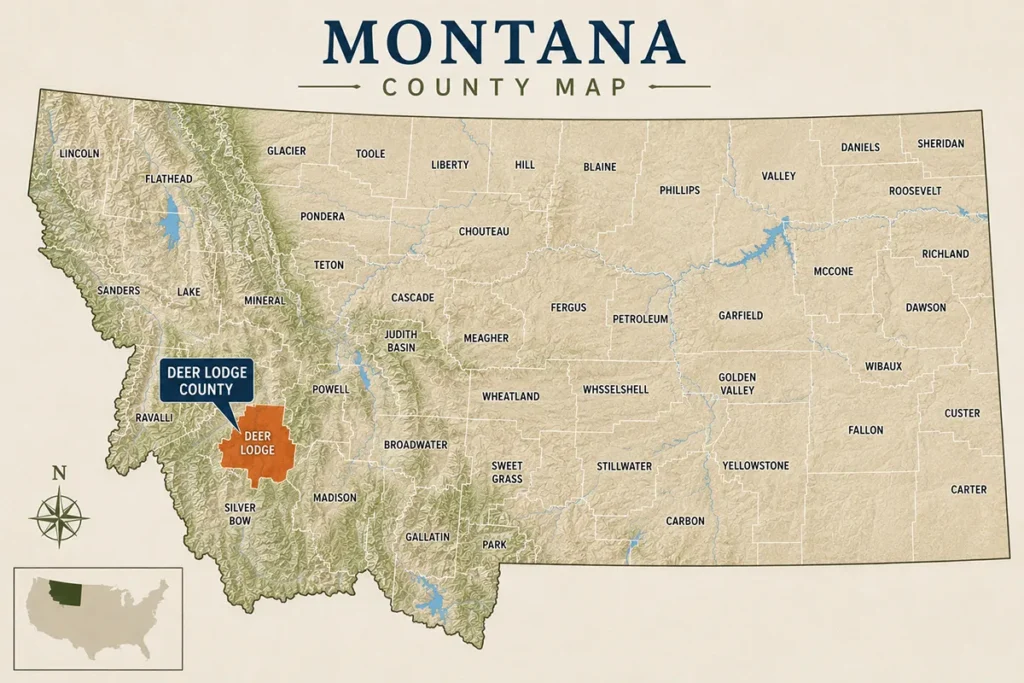
Before we go any further: the city of Deer Lodge is not in Deer Lodge County.
The city of Deer Lodge sits in Powell County, one county east. Deer Lodge County’s county seat — and only incorporated city — is Anaconda.
That naming confusion trips up nearly every travel site covering this area. Now that it’s sorted, here’s what Deer Lodge County actually contains.
- Deer Lodge County covers 737 square miles in southwest Montana — Montana’s second-smallest county by area, consolidated as Anaconda-Deer Lodge County since 1977
- The county seat is Anaconda (~9,000) — a former copper smelter city built by Marcus Daly’s Anaconda Copper Mining Company in the 1880s
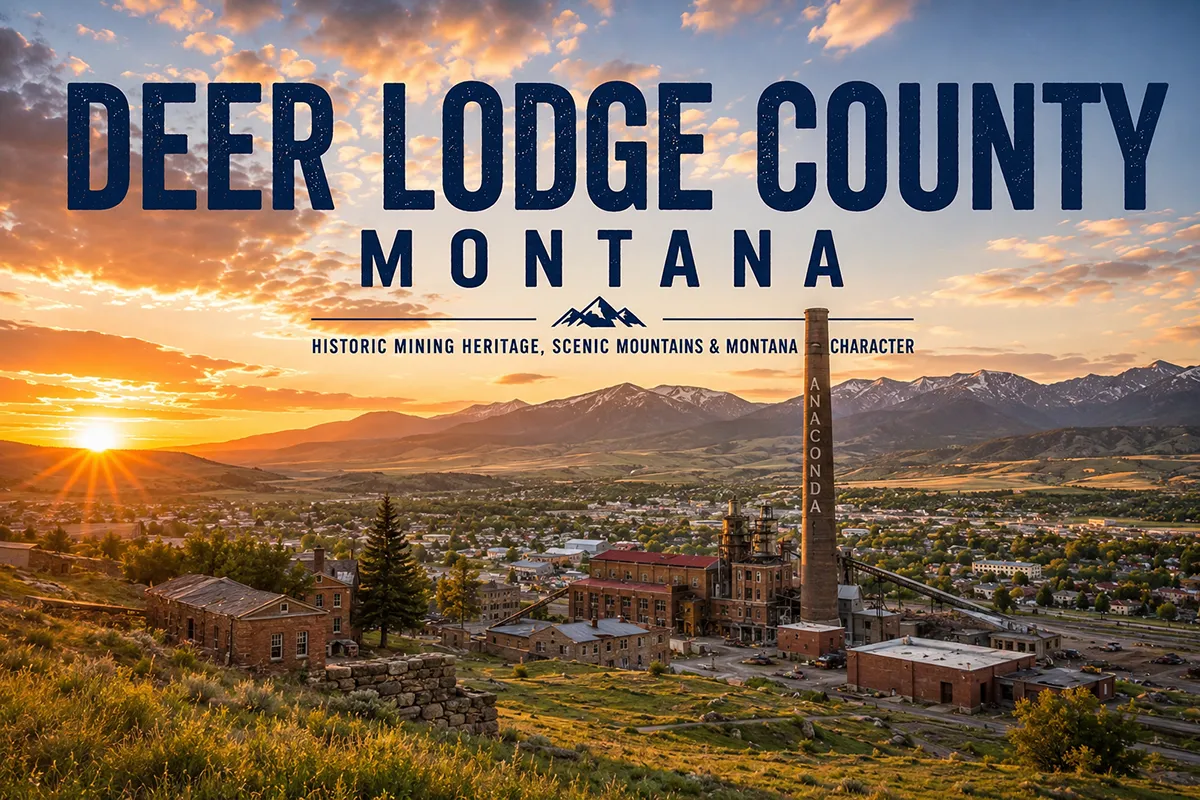
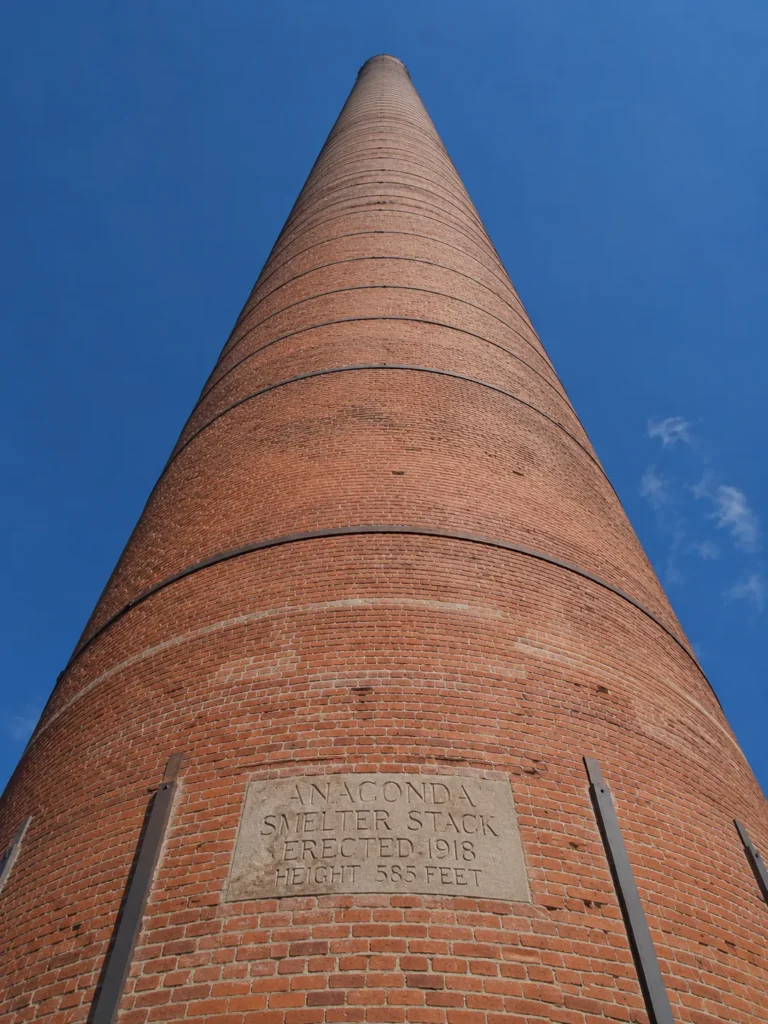
- The Anaconda Smelter Stack stands 585 feet tall — the tallest freestanding masonry (all-brick) structure in the world; now a state park and interpretive site
- In 1894, Anaconda nearly became Montana’s state capital — Marcus Daly lost a bruising political battle with copper rival William Clark, and Helena won by about 2,000 votes
- The Washoe Theatre (1936) is an Art Deco masterpiece and one of the finest small-town theaters in the American West
- Old Works Golf Course, designed by Jack Nicklaus, has bunkers filled with black smelter slag — one of the most unusual golf holes in the United States
- Georgetown Lake 20 miles west is a blue-ribbon trout fishery and mountain recreation hub
- Discovery Ski Area on the Pintler Scenic Highway offers 2,200+ skiable acres with far less crowding than Montana’s major resorts
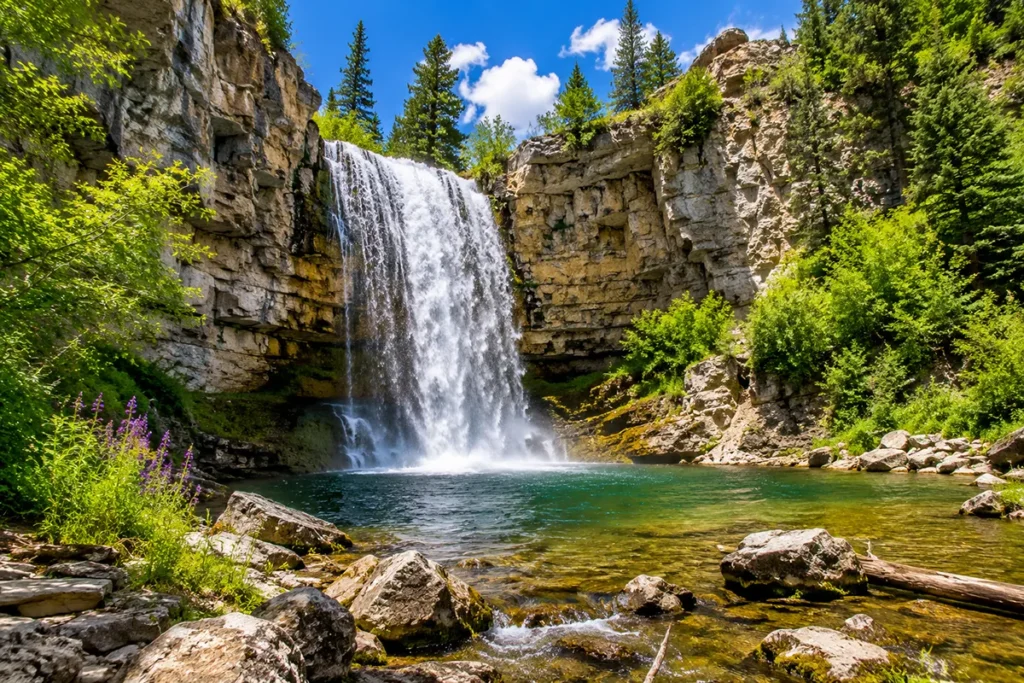
- Lost Creek State Park north of Anaconda has 1,200-foot limestone cliffs, a 50-foot waterfall, mountain goats, and bighorn sheep
- ⚠️ The county’s Anaconda Superfund site is one of the largest in the U.S. — relevant context for visitors and important to understand
Liked this article?
Add Roaming Montana as a preferred source so you see more of our articles and guides on Google.
Deer Lodge County at a Glance
Deer Lodge County is one of Montana’s original territorial counties, established in 1864.
The county takes its name from the Deer Lodge Valley, which itself is named for a warm springs geothermal vent near present-day Powell County — the rising steam resembled a Native American lodge.
Since 1977, the county has operated as a consolidated city-county government — formally called Anaconda-Deer Lodge County. There is no separate city government for Anaconda; the county government handles everything.
The county covers 737 square miles — the second smallest county in Montana by area. The terrain is defined by the surrounding mountains: the Anaconda Range (Pintler Mountains) to the west, the Flint Creek Range to the north, and the Bitterroot Range to the southwest.
Population is approximately 9,510 — mostly concentrated in Anaconda.
The economy has transitioned significantly from its copper-smelting industrial base. Tourism, outdoor recreation, and a growing arts scene have become increasingly important since the smelter closed in 1980.
For broader Montana context, see the complete guide to all 56 Montana counties.
Anaconda: Built for Copper
Anaconda didn’t evolve organically like most Montana towns.
Marcus Daly — one of the three “Copper Kings” who dominated Montana’s gilded age — built it from scratch in 1883.
Daly’s Anaconda Copper Mining Company needed a smelter site near Butte’s massive copper deposits. He chose a location in the Deer Lodge Valley, 26 miles west of Butte, with access to water, timber, and rail lines.
The town that grew around the smelter bore the company’s name. By 1900, Anaconda had 10,000 people, ornate public buildings, a grand hotel, and the largest copper smelter in the world.
The community Daly built reflected his ambitions. The Marcus Daly Hotel on Main Street was a genuine statement of prosperity. The Hearst Free Library was donated by George Hearst — father of William Randolph Hearst and a major figure in Montana mining — as a gift to the community.
The Washoe Theatre, built in 1936, was the crown jewel of the town’s cultural life. Its Art Deco interior is one of the most elaborate theater spaces in any Montana city, with painted ceilings, gilded ornamental detail, and a 1930s design integrity that has survived largely intact.
The smelter operations ceased in 1980 when market conditions and environmental costs made it uneconomical. The company town without its company faced a reckoning that Anaconda has been working through ever since.
What remains is a city with extraordinary architectural heritage, a dramatically scenic location, and outdoor recreation access that most Montana cities would envy.
For the full Anaconda guide, see Anaconda, Montana.
The Anaconda Smelter Stack
The stack cannot be adequately prepared for in writing.
It appears on the horizon driving west from Butte on I-90 — a single brick column rising 585 feet from the valley floor, dwarfing everything around it, completely implausible in the context of a small southwest Montana city.
The Anaconda Smelter Stack was completed in 1918 as part of the expansion of the Anaconda Copper Mining Company’s reduction works. It is the tallest freestanding masonry structure in the world — meaning the tallest structure built entirely from masonry (brick) without steel framing.
The Washington Monument (555 feet) is shorter. The Eiffel Tower uses iron. The Stack is brick.
It ceased operation in 1980 when the smelter shut down. The surrounding smelter complex was demolished during cleanup. The stack itself was preserved, designated a state park, and now anchors the Anaconda Smoke Stack State Park.
You cannot climb it. You can stand at its base and try to find the top with your eyes.
The interpretive site at the base tells the full story of the Anaconda Copper Mining Company — the labor history, the technical achievement, the environmental costs, and the community built around it. It’s honest about all of it.
The stack is visible on clear days for more than 20 miles in multiple directions.
The 1894 Capital Battle
One of the most fascinating chapters in Montana history played out in Deer Lodge County — and most travel content about Anaconda never mentions it.
When Montana became a state in 1889, the location of the permanent capital was not yet settled. Helena had served as the territorial capital, but the question was reopened.
Marcus Daly wanted Anaconda to be the capital. He was arguably the most powerful man in Montana at the time and had built Anaconda into a prosperous city. He campaigned aggressively for the move.
His rival, William Clark — fellow copper millionaire and political antagonist — backed Helena just as aggressively. The two men’s feud over the capital was an extension of a broader personal and commercial war that defined Montana’s gilded age.
In November 1894, Montana voters chose between Anaconda and Helena.
Helena won by approximately 2,000 votes.
Had the vote gone the other way, Anaconda would be Montana’s capital today. The entire trajectory of the state’s political geography would look different.
Anaconda’s City Hall and Deer Lodge County Courthouse — both extravagant structures for a city this size — are monuments to a moment when Anaconda genuinely believed it would be the center of state government.
See key historical events in Montana and Montana history for broader context on the copper kings era.
Anaconda Historic District
Anaconda’s National Historic Landmark district is one of the most concentrated collections of gilded-age architecture in Montana.
The Washoe Theatre (1936) at 305 Main Street is the most visually stunning building in the district. The Art Deco interior — hand-painted ceilings, ornamental gold-leaf detailing, original fixtures — is comparable to theatres in cities twenty times Anaconda’s size.
The Washoe still operates as an active movie theater. Catching a film here is one of those Montana experiences that surprises you with its quality.
The Hearst Free Library was donated to Anaconda by George Hearst in 1898. The building is a substantial Romanesque Revival structure — an unusual gift from a mining magnate, but George Hearst had deep roots in Montana’s mining economy.
The Deer Lodge County Courthouse — built in the 1890s at the height of Daly’s ambition for the city — is larger and more ornate than most Montana county courthouses.
The Anaconda Historic Bus Tour ties these sites together with 90 minutes of guided history, mid-May through mid-September. Vintage 1936 open-air buses depart from the Anaconda Visitor Center at 306 E. Park Ave.
The tour covers the courthouse, Washoe Theatre, the Stack interpretive center, Old Works Golf Course, and Montana’s first state fish hatchery. [Verify current schedule and pricing at anacondamt.org]
Old Works Golf Course
Old Works Golf Course is one of the most unusual golf courses in the United States.
Designed by Jack Nicklaus in 1997, the course was built directly on the footprint of the historic Anaconda smelter complex. The land was remediated as part of the EPA Superfund cleanup process. Old Works was specifically designed to make productive use of the remediated industrial site.
The distinctive feature: the bunkers are filled with black smelter slag — the byproduct of copper smelting — rather than sand. The slag is coarser and darker, creating a visual contrast that makes the course look unlike any other course in the country.
Playing Old Works is simultaneously a round of golf and a walk through an industrial archaeological site.
Remnants of the original smelter works — brick foundations, stone structures — are integrated into the course design.
It’s one of only a handful of Jack Nicklaus signature designs in Montana open to the public at relatively accessible green fees.
[Verify current green fees and tee times at oldworks.org]
Georgetown Lake
Georgetown Lake sits about 20 miles west of Anaconda on Highway 1, the Pintler Scenic Highway.
At elevation 6,385 feet, it’s one of the highest-elevation large lakes in Montana. The Pintler Mountains rise above the western shore. The views are consistently excellent.
The lake is a designated blue-ribbon fishery for rainbow and brown trout. Fly fishing, trolling, and ice fishing (excellent for kokanee salmon and trout) are all productive.
Summer use is heavy with boating, paddleboarding, kayaking, and camping. Multiple campgrounds ring the lake — several operated by the Forest Service, some by the state. The marina at Moose Marina is the primary boat launch.
In winter, Georgetown Lake is one of the most reliable ice fishing destinations in southwest Montana.
The drive from Anaconda to Georgetown Lake on Highway 1 is itself scenic — the road climbs through the Flint Creek drainage, past the Discovery Ski Area, and arrives at the lake surrounded by the Pintler peaks.
Discovery Ski Area
Discovery Ski Area sits about 20 miles west of Anaconda on Highway 1, just before Georgetown Lake.
The numbers: 2,200+ skiable acres across three mountain faces, a vertical drop of 2,388 feet, and a mix of beginner, intermediate, and expert terrain that covers the full range.
What the numbers don’t capture: Discovery is one of Montana’s most underrated ski areas because it doesn’t have the marketing budget of Whitefish or Big Sky, and it’s positioned between Butte and Missoula without a major resort village attached.
That means shorter lift lines, lower ticket prices, and an atmosphere driven by people who come specifically to ski rather than to be seen skiing.
The Nordic trail system around Echo Lake connects to the base lodge. Mountain biking trails open in summer on the ski terrain.
See Discovery Ski Area for the full guide, and Montana ski resorts for the statewide comparison.
Lost Creek State Park
Lost Creek State Park sits about 6 miles north of Anaconda on a short access road from Highway 1.
The park’s 502 acres contain something that doesn’t look like southwest Montana at all: a tight limestone canyon with 1,200-foot gray limestone cliffs flanked by pink and white granite formations. The rock walls are dramatic and abrupt, rising from a narrow creek-carved canyon floor.
Lost Creek Falls drops more than 50 feet from a fractured limestone face at the canyon’s northwest end. The hike to the falls is short and well-marked from the parking area.
The canyon walls provide habitat for both mountain goats and bighorn sheep — routinely spotted from the main trail and the falls area.
I’ve watched bighorn rams work across the cliff faces here on a September afternoon when the light hit the limestone at a low angle. It’s one of the better wildlife viewing moments I’ve had in southwest Montana.
Camping: 21 sites on a first-come, first-served basis. RVs up to 23 feet are accommodated.
See Lost Creek Falls for the trail guide. [Verify current camping fees at stateparks.mt.gov]
Anaconda-Pintler Wilderness
The Anaconda-Pintler Wilderness covers 158,000+ acres of the Pintler Mountains straddling the Continental Divide.
Multiple trailheads access the wilderness from Highway 1 near Georgetown Lake and from side roads west of Anaconda.
The terrain runs from subalpine meadows to exposed rocky ridges along the Divide.
Major peaks include Storm Lake Mountain, West Pintler Peak, and the Continental Divide crest with panoramic views into both Idaho and Montana.
The wilderness is significantly less crowded than the Bob Marshall or the Beartooths. Summer backpacking, late-summer fishing in alpine lakes, and fall hunting are all productive uses.
Grizzly bears are not established in the Pintlers — this is primarily black bear country. Elk, mule deer, mountain goats, and bighorn sheep are present.
Carry a topo map and compass. Trail signage in the wilderness interior is minimal.
Mount Haggin State Wildlife Management Area
Mount Haggin WMA occupies a large swath of rangeland and forest southwest of Anaconda.
In winter, the area is one of the most extensive cross-country skiing networks in southwest Montana — maintained trails suitable for skiers of all abilities.
Wildlife through the year includes elk, moose, white-tailed and mule deer, and significant populations of migratory waterfowl on the wetland portions.
The WMA is free and open to the public. No facilities — come self-sufficient.
Anaconda’s Environmental Legacy
Anaconda-Deer Lodge County carries significant environmental history that any honest travel guide should acknowledge.
The Anaconda smelter was one of the largest copper reduction facilities in the world, operating from the 1880s until 1980. Decades of smelting deposited heavy metals — arsenic, lead, cadmium — in the soils around the smelter site, the tailings ponds, and in the Warm Springs Ponds downstream.
The Anaconda Superfund site is one of the largest in the United States. EPA cleanup work has been ongoing for decades under the Comprehensive Environmental Response, Compensation, and Liability Act.
The Old Works Golf Course represents one of the most creative approaches to contaminated site remediation in Montana history — Jack Nicklaus designed the course specifically to work within the EPA-remediated footprint, and the slag bunkers are part of that design philosophy.
The Warm Springs Wildlife Management Area downstream is a former contaminated site that has been transformed into productive wildlife habitat — now excellent for waterfowl and other birds.
This environmental history doesn’t diminish Deer Lodge County as a travel destination. But understanding it adds depth to everything you see here — from the stack to the golf course to the land itself.
What I Wish I Knew Before Visiting Deer Lodge County
The naming confusion is real and widespread. The city of Deer Lodge is in Powell County, not Deer Lodge County. Travel sites routinely mix these up, placing Powell County attractions (Old Montana Prison Museum, Grant-Kohrs Ranch) inside Deer Lodge County descriptions. Both are worth visiting, but they’re different counties.
The Washoe Theatre still shows movies. It’s not a museum piece — it’s an operating theater with current films. Seeing a movie at the Washoe is a genuine experience. Check their current schedule.
The Historic Bus Tour books up in summer. The vintage 1936 buses have limited capacity and run Monday through Saturday. Call ahead or book online before arriving. [Check current availability at anacondamt.org]
Old Works Golf Course is more accessible than it looks. Jack Nicklaus-designed courses in Montana are rare. Green fees at Old Works are reasonable by Montana resort standards. Golfers who want an unusual, historic, and genuinely well-designed course should book a tee time before anything else.
Lost Creek State Park is better than its size suggests. At 502 acres it’s small. But the canyon geology, the wildlife, and the falls compress a lot of Montana’s best elements into a short hike. Go early to maximize chances of seeing bighorn sheep and mountain goats on the cliffs.
Discovery’s ski season is limited by elevation — check conditions. The mountain gets good snow but doesn’t have the snowmaking infrastructure of Whitefish or Big Sky. Early and late season conditions vary. Check the snow report before committing to a ski-specific trip.
The Pintler Scenic Highway is worth the full loop. Don’t just use it as a route to Georgetown Lake. Drive the full Highway 1 from Anaconda to Philipsburg and back via Drummond and I-90 for a complete southwest Montana loop.
Practical Info
| County seat | Anaconda (consolidated Anaconda-Deer Lodge County) |
| Area | 737 sq mi (Montana’s 2nd smallest) |
| Population | ~9,510 (2022 est.) |
| Tourism region | Gold West Country (Southwest Montana) |
| Formed | 1864; consolidated 1977 |
| Main highways | I-90 (Warm Springs junction), Highway 1 (Pintler Scenic) |
| Anaconda Smelter Stack | State park — free to visit |
| Washoe Theatre | 305 Main St, Anaconda |
| Anaconda Bus Tour | Mid-May–mid-Sept, Mon–Sat from Visitor Center |
| Old Works Golf | [oldworks.org — verify rates] |
| Georgetown Lake | ~20 miles west on Highway 1 |
| Discovery Ski Area | ~20 miles west on Highway 1 |
| Lost Creek State Park | ~6 miles north on Lost Creek Rd |
| Nearest city | Butte (~25 miles east via I-90) |
| Nearest airport | Bert Mooney Airport, Butte (BTM) — ~30 miles |
| Cell service | Good in Anaconda; variable in wilderness and Lost Creek canyon |
Getting to Deer Lodge County
From Butte: I-90 west to the Anaconda junction (Exit 208), then Highway 1 west ~7 miles into Anaconda. About 25 miles, 30 minutes.
From Missoula: I-90 east to Drummond, then Highway 1 south via the Pintler Scenic Highway — about 100 miles, 1.5 hours. A scenic alternative to the I-90 direct route.
From Helena: I-15 south to I-90 west, or Highway 12 west to I-90 — about 75 miles, roughly 1 hour.
By air: Bert Mooney Airport (BTM) in Butte has regular commercial service and is the closest commercial airport at about 30 miles. Helena Regional (HLN) is roughly 75 miles east.
See Montana airports and Montana transportation guide.
Towns in Deer Lodge County
- Anaconda — the only incorporated city in the county; all visitor services
Deer Lodge County has no other incorporated towns — the consolidated city-county government means Anaconda’s city limits are effectively the county’s urban area.
Adjacent Counties
- Silver Bow County to the east — Butte, a short drive on I-90
- Powell County to the northeast — the city of Deer Lodge (yes, different county), Old Montana Prison
- Jefferson County to the east — Boulder
- Beaverhead County to the south — Dillon, Big Hole Valley
- Granite County to the northwest — Philipsburg, Georgetown Lake shared access
Plan Your Deer Lodge County Trip
A strong two-day trip: Day one — arrive Anaconda, walk the Historic District, visit the Smelter Stack interpretive site, and play (or walk) Old Works Golf Course.
Day two — morning at Lost Creek State Park for wildlife and the falls, afternoon drive to Georgetown Lake and Discovery on the Pintler Scenic Highway.
Add the Historic Bus Tour on any morning it operates between May and September.
Winter visits center on Discovery Ski Area and Georgetown Lake ice fishing, with Lost Creek State Park for winter canyon walking.
For planning help, see Montana trip planning guide and best time to visit Montana. For skiing context, see Montana ski resorts. Back to the complete Montana counties guide.