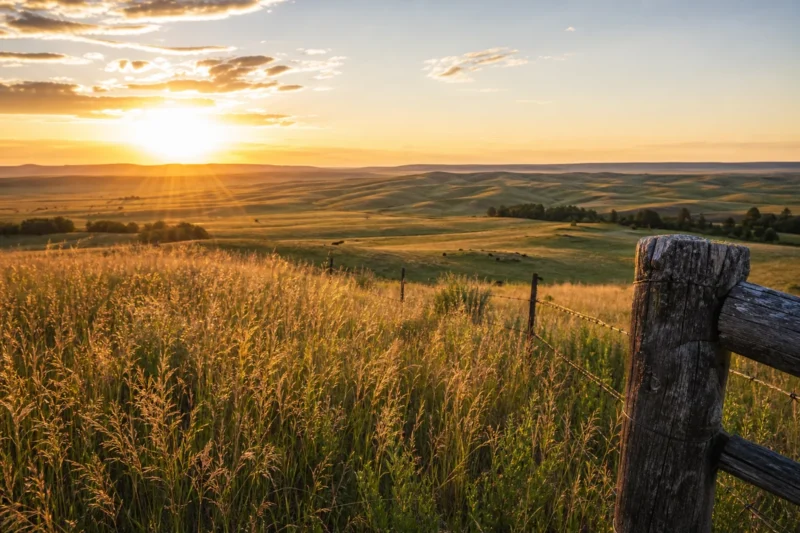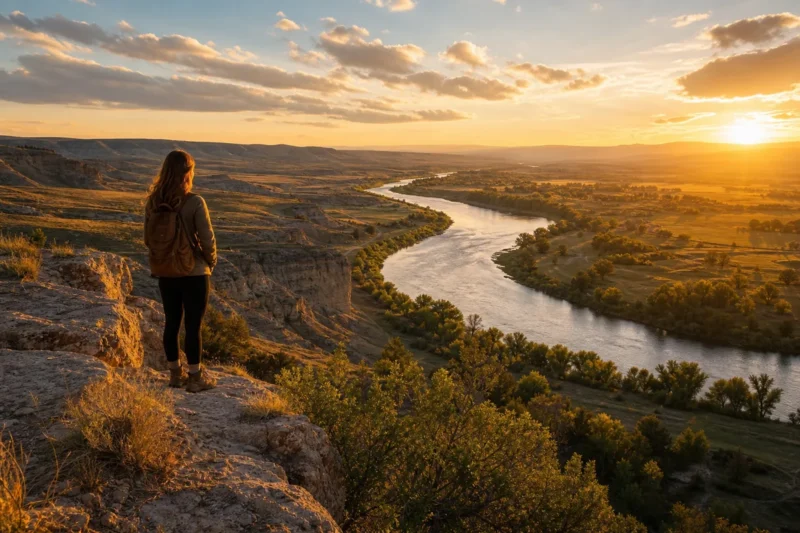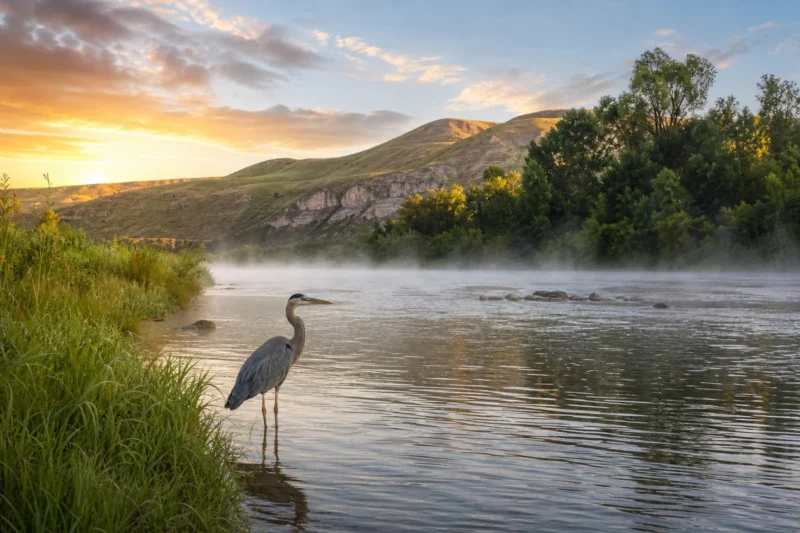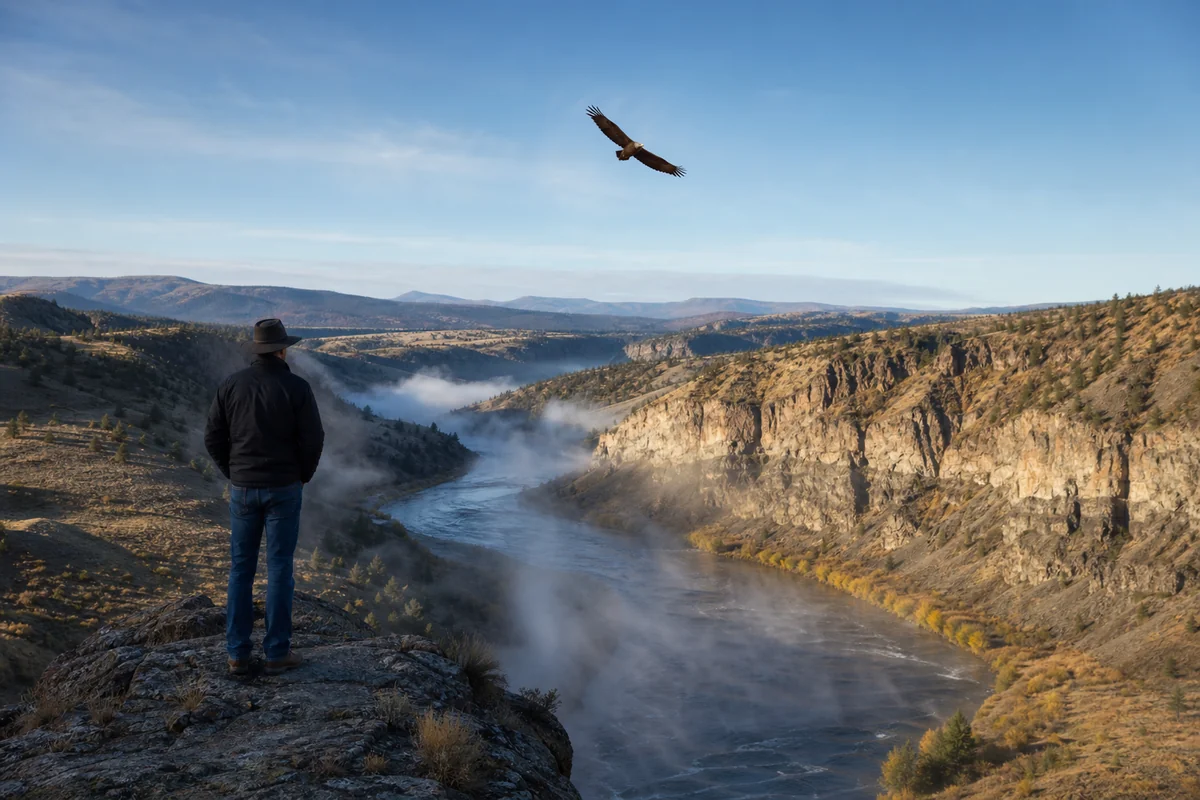
Standing at the edge of the Smith River canyon on a cool September morning, watching mist rise off the water while a golden eagle circled overhead, what struck me most was that there wasn’t another soul in sight. Meagher County — one of the least-visited corners of one of the 56 Montana Counties — rewards those who make the effort to find it with landscapes so raw and uncrowded they feel almost stolen.
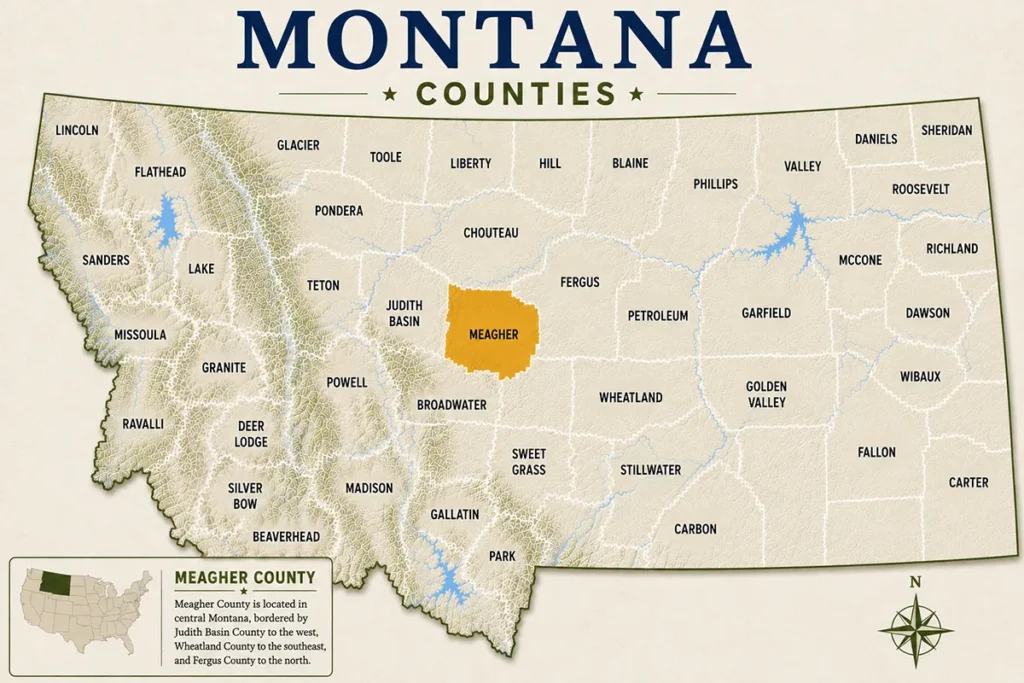
- Meagher County is a deeply rural, wildly scenic county in central Montana, anchored by the small town of White Sulphur Springs.
- The Smith River float trip is the crown jewel — a permit-only, multi-day wilderness experience unlike anything else in Montana.
- Spa Hot Springs Motel offers natural geothermal soaking right in town — a genuine sleeper hit that most tourists drive straight past.
- Wildlife is exceptional: elk, mule deer, pronghorn, and even the occasional mountain lion territory run through here.
- Best visited late May through September; winter is brutally cold and many services close down.
- This is a self-sufficient travel destination — stock up on fuel, food, and cash before you arrive.
Liked this article?
Add Roaming Montana as a preferred source so you see more of our articles and guides on Google.
Where Exactly Is Meagher County?
Meagher County (pronounced “MAR” — a detail that will save you some embarrassed looks at the gas station) sits in central Montana, roughly midway between Great Falls and Bozeman.
It covers just over 2,600 square miles but holds fewer than 2,000 permanent residents, making it one of the most sparsely populated counties in the entire state.
The county seat is White Sulphur Springs, a no-frills ranching town that packs more genuine Montana character per square block than many better-known tourist destinations.
The Belt Mountains, Crazy Mountains, and Castle Mountains all touch or border this county, giving the landscape a dramatic, multi-directional quality that surprises first-time visitors.
Getting here means driving — there’s no commercial air service, and the nearest major airport is in Bozeman (roughly 100 miles south) or Great Falls (roughly 90 miles northwest). US Highway 89 is the main artery, and it’s a beautiful drive no matter which direction you approach from.
A Brief History Worth Knowing
The county is named after Thomas Francis Meagher, an Irish-born Civil War general and acting governor of the Montana Territory in the 1860s. His story is genuinely fascinating — a political exile who became a war hero and then died under deeply mysterious circumstances in Fort Benton in 1867. Statues of him stand in Helena today.
The Crow, Blackfeet, and other Indigenous peoples lived in and traveled through this region for thousands of years before European settlement, using the Smith River corridor as a travel and hunting route.
White settlement followed the patterns common across Montana: first trappers and traders, then miners following silver and lead strikes in the Castle Mountains during the 1880s, and finally ranchers who recognized the valley grasslands as some of the finest cattle country in the territory.
The mining boom at Castle Town brought thousands of people to a remote hilltop that’s now essentially a ghost town — one of Montana’s most atmospheric and overlooked historic sites.
What surprised me during my first visit was how completely Castle Town has reverted to wilderness; collapsed buildings disappear into the hillside, and the silence there is total.
White Sulphur Springs: The County Seat
White Sulphur Springs is the kind of town that takes about twenty minutes to walk end to end, but there’s more going on here than its size suggests. The population hovers around 900, and the whole place has a working-ranch energy — this isn’t a tourist-facing town that’s been prettied up for visitors.
The name comes from the sulfurous hot springs that bubble up naturally throughout the area. Indigenous peoples used these springs for centuries before white settlers arrived, and by the 1880s, a resort had been built to attract wealthy visitors from Helena and beyond.
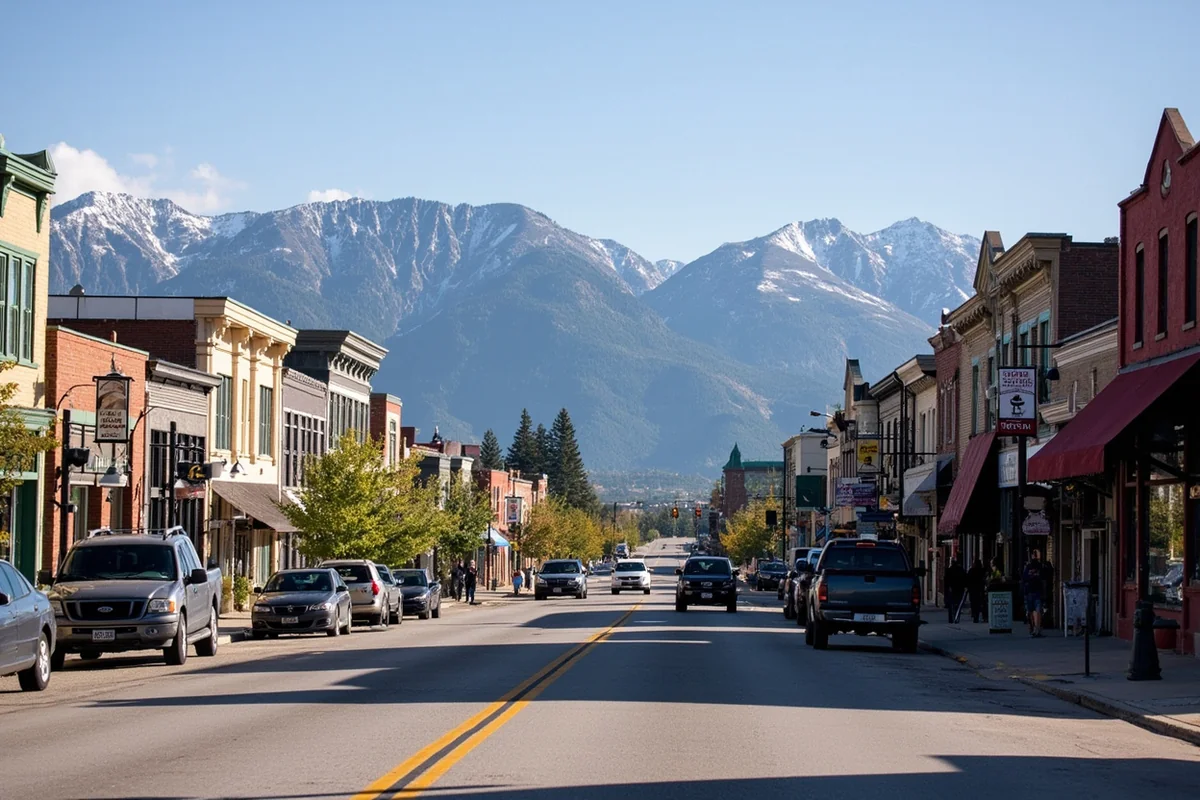
Today, the town has a grocery store, a hardware store, a handful of local restaurants, and enough services to resupply before heading out into the backcountry.
The Spa Hot Springs Motel is the biggest draw for overnight visitors, but the Meagher County Museum on Main Street deserves an hour of your time — the exhibits on the Smith River, local ranching history, and the Castle Town mining era are genuinely well done.
One practical note: there are limited ATMs in White Sulphur Springs, and cell service is spotty throughout much of the county. Carrying cash and downloading offline maps before you leave the highway is not optional — it’s essential.
Spa Hot Springs Motel: A Hidden Gem
Most Montana visitors zoom past White Sulphur Springs on their way to Bozeman or Glacier without realizing they’re driving past one of the state’s best natural hot springs experiences. The Spa Hot Springs Motel features two outdoor geothermal pools fed directly by the natural springs — one cooler pool for lounging and one hotter pool for serious soaking.
What makes this place special is that it drains and refills the pools daily with fresh spring water. That means no heavy chemical treatment and a water quality that’s noticeably cleaner and softer than most commercial hot springs operations.
On a cold October evening during one visit, the contrast between the steaming 104°F pool and the crisp mountain air was exactly the kind of restorative experience that makes Montana travel feel different.
Pool access for non-guests is available at a small day-use fee — typically under $15 per person at the time of writing, though it’s worth calling ahead to confirm current pricing.
Room rates at the motel tend to be very reasonable by Montana standards, generally ranging from around $80 to $130 per night depending on season, though prices vary and are best confirmed directly with the property.
The Smith River: Montana’s Most Coveted Float
If there’s one thing that puts Meagher County on the radar of serious Montana adventurers, it’s the Smith River. This 59-mile stretch of designated primitive river corridor cuts through a limestone canyon that in places rises 1,000 feet above the water, with no road access for the entire float.
According to Montana Fish, Wildlife & Parks, the Smith River permit system is among the most competitive in the state. Permits for the five-day, four-night float are allocated by lottery each winter, with demand dramatically outpacing supply in most years. The lottery typically opens in January — missing the deadline means waiting another full year.
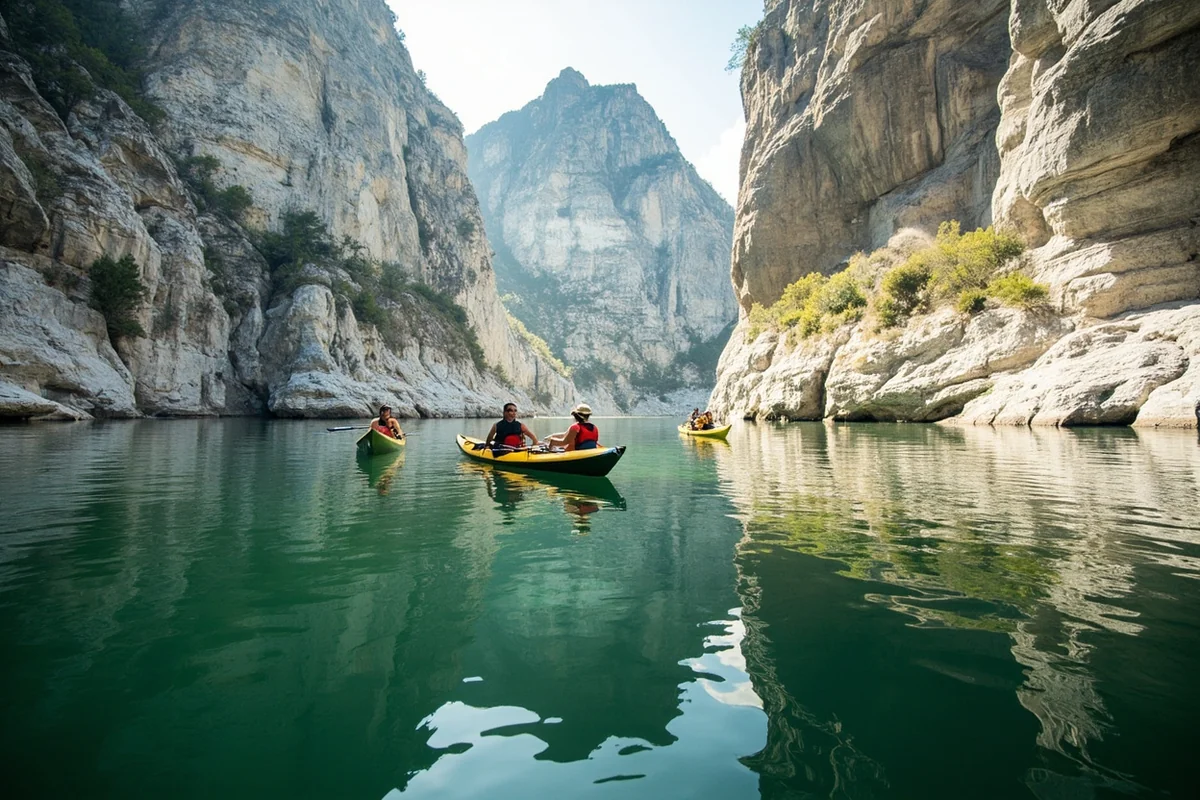
The typical put-in is at Camp Baker (accessed from White Sulphur Springs) and the take-out is near Eden, Montana, downstream. Expect to paddle through sections of technical Class II water interspersed with long, glassy pools perfect for fishing. Brown trout and rainbow trout fishing on the Smith is exceptional — the river’s isolation keeps fishing pressure lower than almost any comparable stretch in Montana.
What most first-timers don’t fully appreciate is the level of self-sufficiency required. Everything goes in by raft or kayak, everything comes out the same way. There are designated campsites along the route maintained by Montana FWP, but there are no facilities, no cell service, and no rescue shortcuts if something goes wrong. Proper dry bags, a solid first aid kit, and realistic paddling experience are non-negotiable.
For those who don’t win the lottery or aren’t ready for a solo wilderness trip, several licensed outfitters run guided Smith River floats. Guided trips typically cost considerably more — expect to budget roughly $2,000–$3,500 per person for a fully outfitted guided multi-day float, though rates vary by outfitter and season. It’s a significant investment, but for many visitors, it’s a once-in-a-decade experience.
Castle Mountains and Ghost Town Exploration
The Castle Mountains rise to the southeast of White Sulphur Springs, and exploring them feels like stepping into a Montana that most tourists never encounter. The area is managed by the Lewis and Clark National Forest, and dispersed camping is permitted in most areas — meaning you can set up a camp miles from the nearest paved road for free.
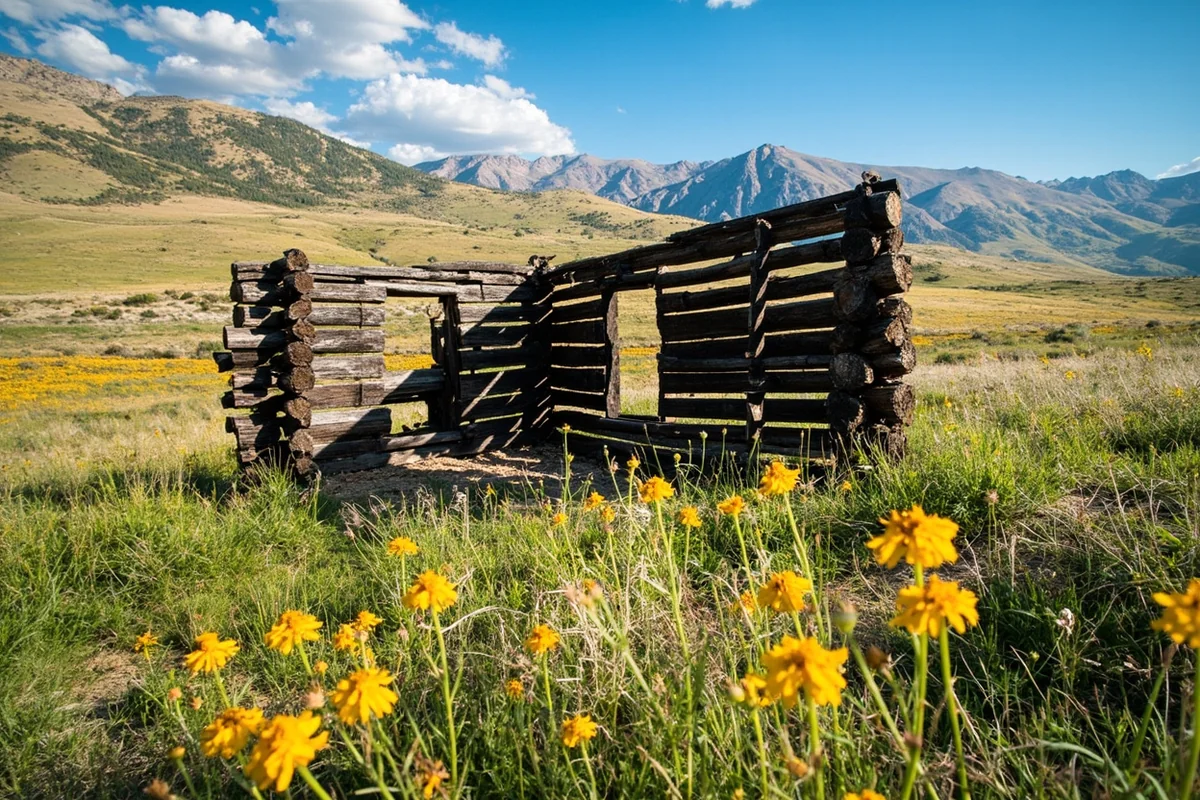
Castle Town sits at around 6,400 feet elevation and is accessible via a rough Forest Service road that requires a high-clearance vehicle, especially in wet conditions. What remains of the 1880s mining boomtown is scattered across a hillside in various states of photogenic collapse — log cabins sinking into the earth, old mine tailings overgrown with wildflowers, a few standing structures still impressive enough to photograph.
The Castle Mountains also offer solid hiking and mountain biking on Forest Service trails, and the elk populations here are substantial. During fall archery and rifle seasons, this area draws hunters from across Montana. If you’re visiting in mid-September through October, plan around hunting season — orange vest if you’re hiking, and expect to share Forest Service roads with trucks pulling horse trailers.
Wildlife Watching in Meagher County
The sheer variety and density of wildlife in Meagher County is one of its most underappreciated qualities. The Smith River corridor is a critical habitat zone, and visitors floating the river routinely report seeing white-tailed deer, mule deer, black bear, and river otter. Eagle and osprey sightings along the river are essentially guaranteed in summer.
On the open rangeland surrounding White Sulphur Springs, pronghorn antelope are a constant presence — look for them in the sagebrush flats on either side of Highway 89. Elk move between the high country and valley floors seasonally, and during the September rut, the bugling that echoes across the hills around town is one of the most genuinely thrilling wildlife sounds in North America.
Mountain lions maintain territories throughout the county, though seeing one is rare. What’s less rare — and equally dramatic — is seeing their sign along remote trails: scratch marks on trees, deer carcasses in unexpected places, that particular stillness in the forest that experienced hikers learn to pay attention to.
Fishing Beyond the Smith
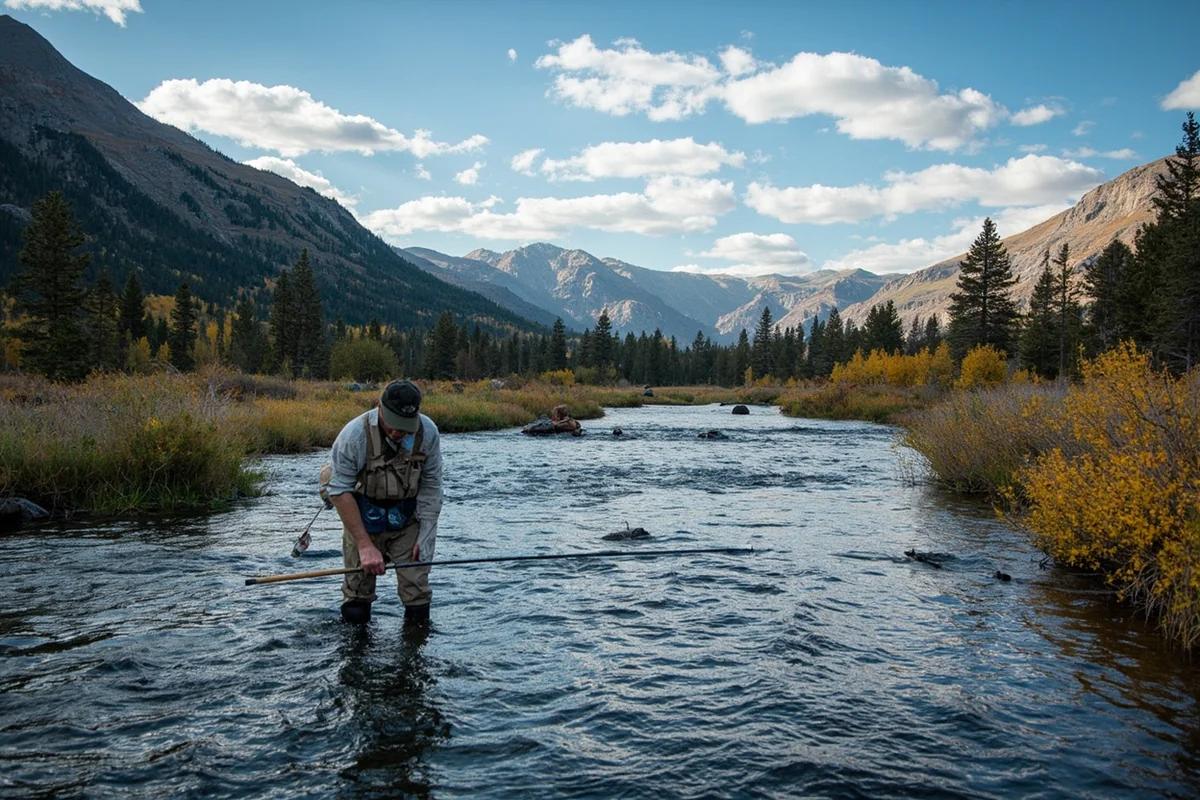
The Smith River gets most of the press, but Meagher County has additional fishing worth seeking out. Sheep Creek, Deep Creek, and several other tributaries of the Smith offer smaller-water trout fishing with virtually no competition from other anglers. On a mid-July afternoon when the Smith permit lottery was a distant memory, what surprised me was discovering a stretch of Sheep Creek where I had four miles of wild brown trout water entirely to myself.
The Shields River, which begins near the county’s southern border, is another option — it flows south into Gallatin County and eventually joins the Yellowstone. Access points can be tricky, and private land is a real consideration — always verify access rights and carry a current Montana fishing license.
According to Montana Fish, Wildlife & Parks, a standard Montana fishing license for non-residents runs roughly $85–$100 for a season license at the time of writing, with shorter-duration options also available. Conservation licenses are required in addition to fishing licenses for non-residents.
Hunting in Meagher County
For hunters, Meagher County is a genuine destination. The county falls within multiple Montana Fish, Wildlife & Parks hunting districts, with elk, mule deer, white-tailed deer, pronghorn, black bear, mountain lion, and upland birds all present in significant numbers.
Over-the-counter elk tags are available for certain districts in Meagher County — a rarity in a state where many popular hunting units have moved to limited-entry systems. Non-resident hunters should visit the Montana FWP website well before their planned trip to understand current regulations, tag requirements, and district specifics, as these change annually.
Outfitted hunting trips into the Castle Mountains and surrounding wilderness areas are available through several licensed Montana outfitters. Expect guided elk hunts to run $4,000–$8,000 or more per person depending on the outfitter and duration — those are rough benchmarks, and actual pricing varies considerably.
Suggested Itinerary
Meagher County rewards at least a weekend visit. Here’s how to structure two days if you’re arriving from Bozeman or Great Falls.
Day 1: Arriving, Soaking, and Settling In
Arrive in White Sulphur Springs by early afternoon and check into the Spa Hot Springs Motel or one of the local vacation rentals in the area. Spend an hour or two at the Meagher County Museum to orient yourself — the context makes everything else in the county more meaningful.
In the late afternoon, walk the short loop around town, grab dinner at one of the local restaurants (the options are limited but honest — expect classic American fare and a cold Montana beer), and then head to the hot springs pools as the sun goes down. The evening soak is the right way to end day one.
Day 2: Smith River Vista, Castle Mountains, Wildlife
Start early. Drive south on Highway 89 toward the Smith River corridor, stopping at the Camp Baker access point to see the river’s put-in firsthand — even if you’re not floating, the canyon view from the access road is worth the detour. The drive from White Sulphur Springs to Camp Baker takes roughly 20–25 minutes.
From there, head east toward the Castle Mountains via Forest Service roads. Allow at least three to four hours for exploring the Castle Town ghost town and hiking a short trail into the mountains. High-clearance vehicles are strongly recommended; in wet conditions, a 4×4 is advisable.
Return to White Sulphur Springs via a loop that takes you through the open rangeland — prime pronghorn country. On a clear evening, the drive back along US-89 with the Belt Mountains catching the last light is one of those Montana moments that genuinely doesn’t need a filter.
What Most Visitors Get Wrong
The single biggest mistake is underestimating the distances and services. Meagher County looks compact on a map, but the roads are mostly two-lane and the terrain slows everything down. A drive that looks like 30 minutes can easily take an hour once you’re on Forest Service roads.
Second most common mistake: showing up to try for a Smith River permit without planning a year in advance. The lottery is not a casual thing you enter the week before your trip. Families and friend groups who plan the Smith River float as a bucket-list trip need to treat the January lottery like a hard deadline on their calendars.
Another thing people get wrong — expecting the same caliber of dining and accommodation you’d find in Cascade County or around Great Falls. White Sulphur Springs is a working ranch town, not a tourist hub. The food is good and honest, but fine dining doesn’t exist here. That’s part of the appeal, frankly, but it catches some visitors off guard.
Finally: don’t skip the ghost towns because the road looks rough. Renting a high-clearance vehicle — or simply borrowing a friend’s truck — opens up an entirely different layer of Meagher County that paved-road travelers never see.
Practical Information
| Topic | Details |
|---|---|
| County Seat | White Sulphur Springs |
| Population | Approximately 1,900 (one of Montana’s least populated counties) |
| Nearest Major City | Great Falls (~90 miles NW) or Bozeman (~100 miles S) |
| Main Highway | US Highway 89 |
| Best Months to Visit | Late May through September |
| Smith River Permit | Lottery-based via Montana FWP (January application window) |
| Fuel Availability | White Sulphur Springs only — fill up before backcountry drives |
| Cell Service | Limited in town; essentially none in backcountry |
| Camping | Dispersed camping on Lewis and Clark National Forest; free with restrictions |
| Hot Springs | Spa Hot Springs Motel — open year-round, day use available |
Best Time to Visit Meagher County
Late May through early September is the sweet spot for most visitors. By Memorial Day weekend, most Forest Service roads are passable, the Smith River is running at good floatable levels, wildflowers are beginning to bloom in the high country, and daytime temperatures in White Sulphur Springs are comfortably in the 60s and 70s.
July and August are peak season — warm, dry, and the best conditions for hiking, fishing, and camping. What most guides skip is the shoulder season case for early September: cooler temperatures, virtually no crowds, excellent wildlife activity as animals begin preparing for winter, and some of the most dramatic light of the year in the mountains.
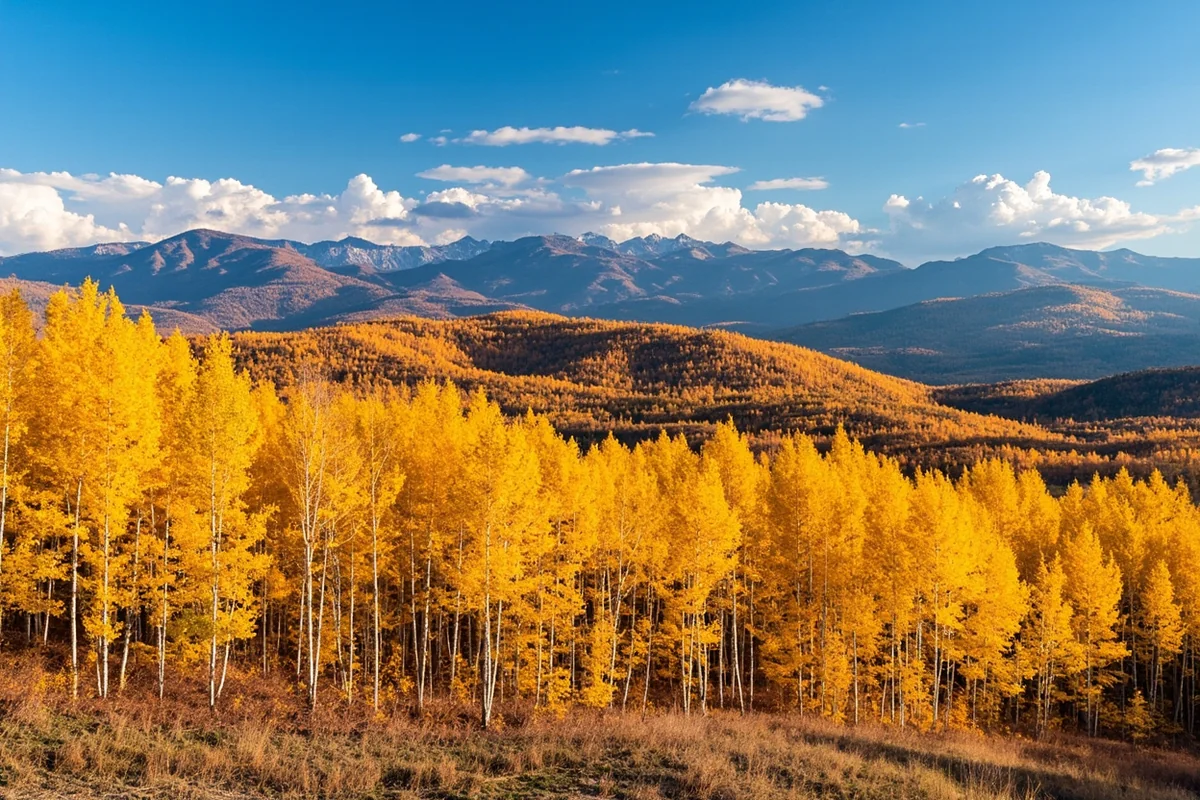
October brings fall color to the aspen groves in the Castle Mountains and marks the beginning of hunting season — a completely different kind of visitor energy descends on the county. Winter is genuinely harsh here; temperatures regularly drop well below zero, and the county’s rural infrastructure means travel can become dangerous quickly after snowfall.
For context on how Meagher County’s seasonal patterns compare with other rural central Montana counties, it’s worth reading about neighboring Broadwater County and Fergus County — the climate and seasonal rhythms have meaningful similarities.
Where to Stay in Meagher County
Accommodation options are limited but genuinely decent for a county this rural. The Spa Hot Springs Motel is the most visited option and books up quickly during summer weekends — reserving well in advance, ideally a month or more out, is wise. Rates generally range from around $80 to $130 per night, though pricing varies by season and room type.
Several vacation rental properties exist in and around White Sulphur Springs, ranging from basic cabins to fully equipped ranch houses that sleep larger groups. These tend to work well for families or groups of hunters and anglers who want more kitchen and gear-storage space than a motel provides.
Dispersed camping on Lewis and Clark National Forest land surrounding the county is free and widely available, though you’ll need to check current fire restrictions, especially in July and August. Primitive campsites along the Smith River are reserved for permitted floaters only.
Day Trips and Connections to Neighboring Counties
Meagher County sits at an interesting crossroads, making it a natural base for exploring several neighboring areas. To the northwest, Cascade County and Great Falls offer the C.M. Russell Museum, Giant Springs State Park, and Missouri River access — a good full-day excursion about 90 miles out.
To the southeast, Gallatin County and the Bozeman area are roughly 100 miles away — close enough for a long day trip to hit Museum of the Rockies or access the northern Yellowstone corridor. Meanwhile, Deer Lodge County to the southwest offers the Old Montana Prison Museum and Grant-Kohrs Ranch National Historic Site for anyone interested in digging into Montana history.
Closer to home, Broadwater County is directly west — and the town of Townsend and Canyon Ferry Lake make for a very manageable half-day side trip from White Sulphur Springs. The drive itself along US-12 through the Elkhorn Mountains foothills is one of those roads that doesn’t get enough credit.
For travelers building a broader central Montana circuit, it’s worth checking out some of Montana’s other rural counties for comparison — Chouteau County to the north and Fergus County to the northeast both have their own distinct character and worthwhile attractions.
Final Thoughts
Meagher County isn’t the kind of place that sells itself with glossy brochures or Instagram-ready infrastructure. What it offers instead is something increasingly rare: genuine wilderness access, uncrowded landscapes, and an authentic sense of Montana that hasn’t been packaged for mass consumption.
The Smith River float is a legitimate bucket-list experience — but even if the lottery doesn’t go your way, the county has enough to fill a rich long weekend. The hot springs, the ghost towns, the wildlife, the fishing, the sheer scale of the sky above the open ranchland — all of it adds up to something that stays with you.
If the overcrowding at more famous Montana destinations has started to wear on you — and if the appeal of Montana’s fastest-growing areas has started to feel more overwhelming than exciting — Meagher County is the antidote. Come prepared, come curious, and give it more than one day.
How We Researched This Guide
This guide is based on multiple visits to Meagher County across different seasons, including summer and early fall trips that included time on the Smith River corridor, exploration of the Castle Mountains ghost towns, and multiple stays in White Sulphur Springs.
Attraction details, permit information, and regulations were verified with Montana Fish, Wildlife & Parks and the Lewis and Clark National Forest.
Local business owners and outfitters in White Sulphur Springs provided current operational details, and the Meagher County Museum was consulted for historical context. Pricing references were current at the time of writing but are subject to change — always confirm directly with providers before your trip.
Frequently Asked Questions
What is Meagher County, Montana best known for?
Meagher County is best known for its stunning hot springs, rugged wilderness, and the charming small town of White Sulphur Springs, which serves as the county seat. The county sits in the heart of central Montana and is prized by outdoor travelers for its access to the Smith River, world-class elk hunting, and sweeping Big Belt and Castle Mountain landscapes. It’s a true off-the-beaten-path Montana destination that feels refreshingly uncrowded compared to more touristy areas.
When is the best time to visit Meagher County, Montana?
The best time to visit Meagher County is late spring through early fall, roughly May through September, when roads are accessible and outdoor activities are in full swing. Summer offers ideal conditions for Smith River float trips, hiking, and fishing, while fall draws hunters and those hoping to catch the golden aspen displays across the mountain ranges. Winter visitors can enjoy a quieter experience, but be prepared for heavy snow and limited services in this rural county.
How far is Meagher County from major Montana cities?
White Sulphur Springs, the main hub of Meagher County, is about 80 miles southeast of Great Falls, roughly 100 miles northeast of Bozeman, and approximately 130 miles east of Helena, making it a manageable day trip or weekend getaway from any of those cities. US Highway 89 is the main route connecting the county to the rest of Montana. I’d recommend renting a reliable vehicle since cell service and gas stations are sparse once you leave the main highway.
What are the top things to do in Meagher County, Montana?
The top experiences in Meagher County include floating the legendary Smith River, soaking at Spa Hot Springs Motel in White Sulphur Springs, and exploring Castle Mountains for hiking and wildlife watching. Anglers flock here for blue-ribbon trout fishing on the Smith River, which requires a permit lottery through Montana Fish, Wildlife & Parks. History buffs will also enjoy visiting the Meagher County Museum and learning about the region’s ranching and Native American heritage.
Do you need a permit to float the Smith River in Meagher County?
Yes, floating the Smith River requires a permit that is awarded through a competitive lottery system managed by Montana Fish, Wildlife & Parks, and demand far exceeds availability each year. The lottery typically opens in the winter for the following spring and summer season, so you’ll want to plan at least a year in advance if this is a priority for your trip. Permit fees are relatively modest, usually under $20 per person, but arranging an outfitter can significantly increase your overall costs.
What should I budget for a trip to Meagher County, Montana?
A budget trip to Meagher County can be done for around $100-$150 per day if you’re camping and cooking your own meals, while mid-range travelers staying at a motel or ranch lodging should expect to spend $175-$250 per day. White Sulphur Springs has limited dining and lodging options, so booking accommodations well in advance is essential, especially during summer and hunting season in the fall. Factor in extra costs for any guided fishing or float trips, which can run $300-$600 per person per day with a licensed outfitter.
What should I pack for a trip to Meagher County, Montana?
Pack layers regardless of the season, since Meagher County’s high-elevation central Montana climate can swing from warm afternoons to near-freezing nights even in summer. Essentials include sturdy hiking boots, sun protection, insect repellent for summer months, and a paper map or downloaded offline maps since cell service is extremely limited throughout the county. If you plan to camp or float the Smith River, bring all your own gear and enough food and water for your entire trip, as resupply options in this rural area are very limited.