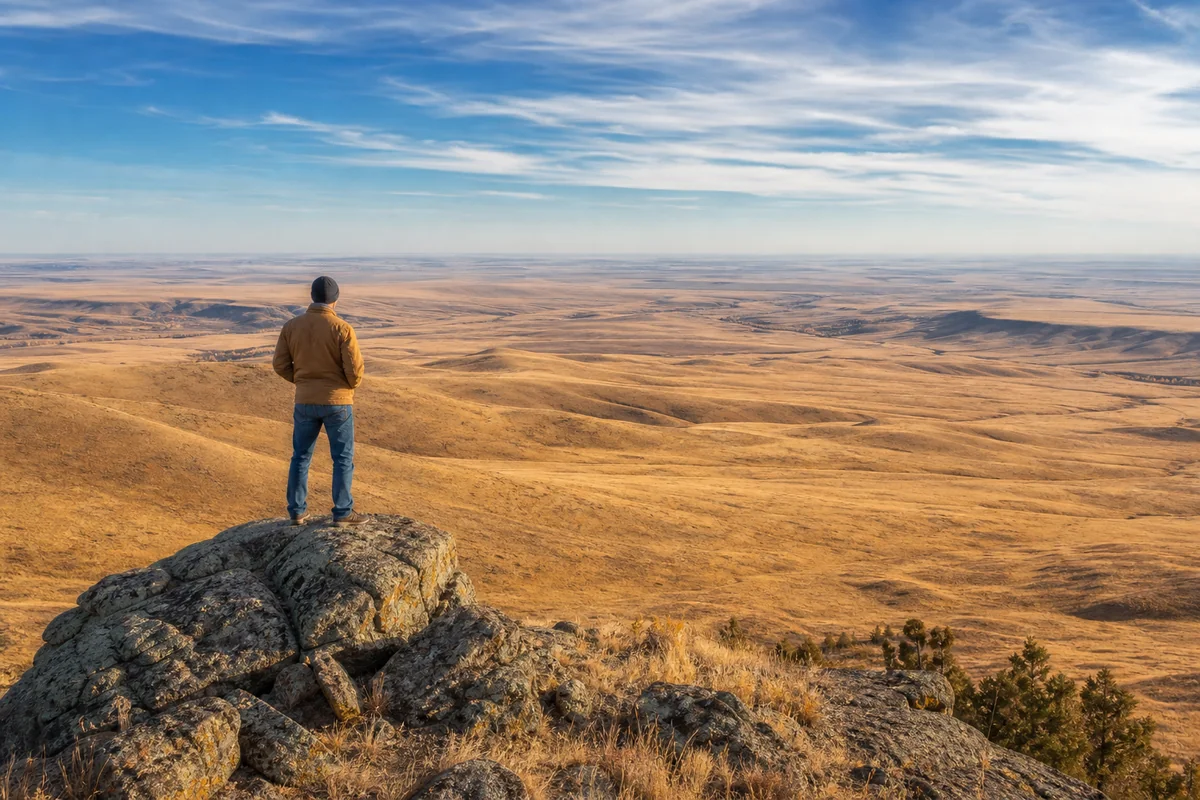
Standing on the edge of the Sweetgrass Hills in Toole County on a clear October morning, the view stretches so far into Canada that the border feels almost fictional — just a line on a map cutting through an ocean of golden grass.
This corner of Montana is one of the least-visited in all of the 56 Montana Counties, and yet it holds some of the most quietly dramatic landscapes in the northern Rockies.
What surprised me most wasn’t the scenery — it was how much history, geology, and genuine western character was packed into a place most travelers simply drive past on the way to Glacier.
- Toole County sits on Montana’s Hi-Line, bordering Canada — a genuinely off-the-beaten-path destination for history lovers and wide-open-spaces seekers
- Shelby is the county seat and the best base for exploring — small but surprisingly well-equipped for travelers
- The Sweetgrass Hills are the crown jewel of the region: sacred land, extraordinary views, and almost zero crowds
- Oil history, the famous 1923 World Heavyweight Championship fight, and a strong Blackfeet heritage shape this county’s identity
- Best visited May through September — winters are brutal and services close or reduce dramatically
- Toole County is a genuine road trip add-on if you’re driving between Glacier Country and the Hi-Line
Liked this article?
Add Roaming Montana as a preferred source so you see more of our articles and guides on Google.
Where Is Toole County, Montana?
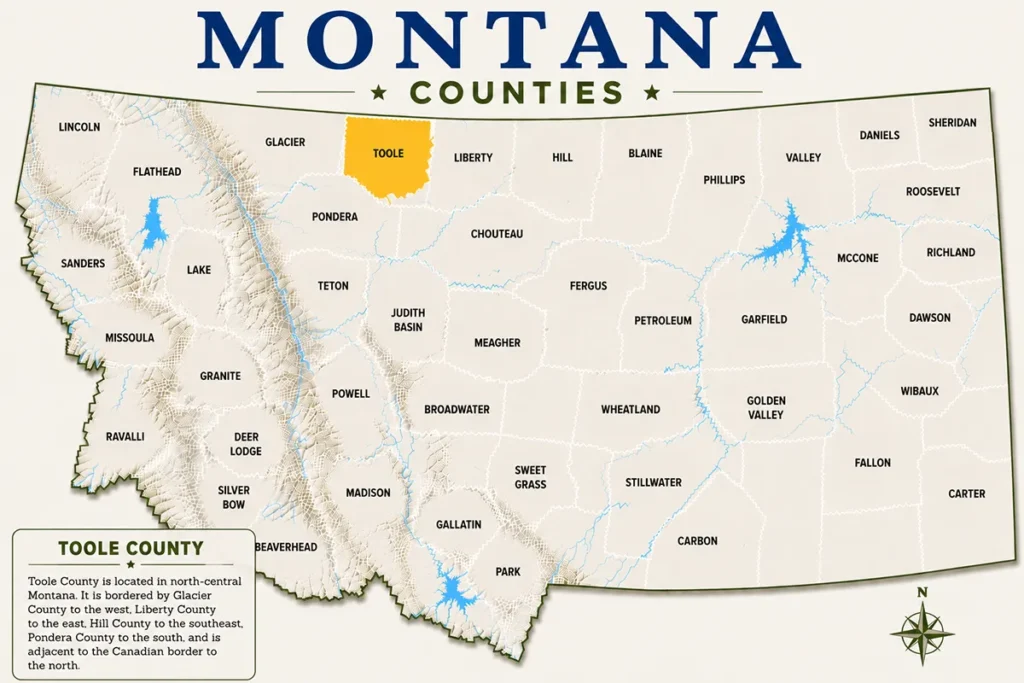
Toole County occupies the north-central portion of Montana, pressed right up against the Canadian border along a stretch that most US travelers only glimpse from the window of Amtrak’s Empire Builder train. The county seat is Shelby, a small but surprisingly lively town sitting at the junction of US-2 (the Hi-Line) and Interstate 15 — making it one of the more accessible remote destinations in the state.
To the east lies Blaine County, and to the south you’ll find Chouteau County. To the west is Glacier County — home to, as the name suggests, Glacier National Park. That positioning matters for road trippers: Toole County is a logical stop if you’re driving the Hi-Line or heading north toward the Canadian border crossing at Sweetgrass (one of Montana’s busiest ports of entry).
The county covers roughly 1,911 square miles, and the population hovers around 5,000 people — meaning you’ll find wide open spaces, not crowds.
A Brief History of Toole County
Toole County was created in 1914 and named after Joseph Kemp Toole, Montana’s first and third governor. But human history here runs far deeper than statehood.
The Sweetgrass Hills — three volcanic buttes rising dramatically from the plains — have been sacred to the Blackfeet Nation for thousands of years. The hills are called “Kii-nis-tsi-isis” (Sweet Pine Hills) in Blackfeet and remain a site of spiritual ceremony and cultural significance to this day. Visitors should approach the area with genuine respect — this is not a casual hiking destination, and parts of the land are private or tribally significant.
The late 19th and early 20th century brought cattle ranching, then the Great Northern Railway, and then one of the most surprising events in Montana sports history: the 1923 World Heavyweight Championship boxing match between Jack Dempsey and Tommy Gibbons, held right in Shelby. The town, hoping to put itself on the map, promoted the fight aggressively — and nearly went bankrupt in the process. It’s a story worth knowing before you arrive.
The discovery of oil in the Kevin-Sunburst field in the early 1920s added another chapter, bringing brief prosperity and a roughneck energy that still flavors the county’s character. The Kevin-Sunburst field is historically significant as one of Montana’s earliest productive oil regions, and the legacy of that era is visible in the architecture and community pride of towns like Kevin and Sunburst.

Shelby: The County Seat and Your Best Base
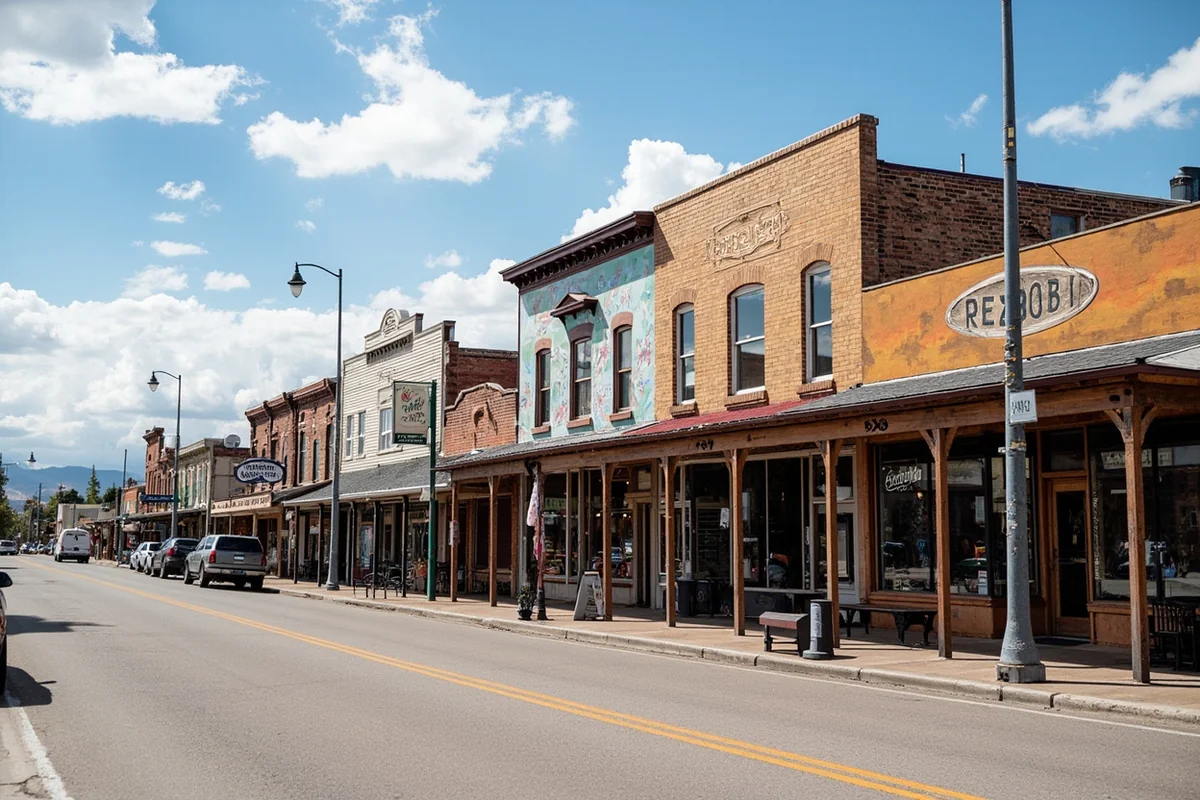
Shelby isn’t a destination town in the way that Whitefish or Bozeman is, but underestimating it is one of the most common mistakes travelers make. The town punches above its weight in terms of character and practical amenities.
On my most recent visit, what struck me immediately was the murals. The exterior walls of several downtown buildings carry impressive historical artwork — boxing scenes, oil derricks, wildlife, and Native American imagery that tell the county’s story before you’ve even walked through a museum door. The Marias Museum of History and Art is the place to start for context: a small but genuinely well-curated space covering the boxing match, the oil boom, early homesteaders, and Indigenous culture.
Downtown Shelby also has the essentials travelers need: a handful of solid restaurants, a few motels, a grocery store, and gas stations. For a town of about 3,200 people, it functions remarkably well as a base.
Where to Eat in Shelby
Options are limited but satisfying. The Shelby Café has been a local staple for years — expect hearty portions of the kind of breakfast that actually fuels a day of driving or hiking. Several gas station-adjacent spots serve the usual fast food. For dinner, local bars typically offer a better meal than their signage suggests, with burgers and steaks that reflect the ranching culture of the area.
Expect to pay fairly modest prices — Shelby is not a tourist-inflated market. A full sit-down breakfast typically runs in the range of $10–$15 per person, and dinner at a local spot is usually well under $30.
Where to Stay in Shelby
Accommodation is limited to a handful of national chain motels and a couple of independently owned options along the highway. Rates are generally reasonable — expect to pay roughly $80–$130 per night depending on season and availability, though prices can spike during summer events. Booking ahead in peak summer months (July–August) is wise, especially around any local events or rodeos.
There’s no glamping or boutique hotel scene here — this is practical, western Montana travel, and that’s part of the charm.
The Sweetgrass Hills: The Real Reason to Come
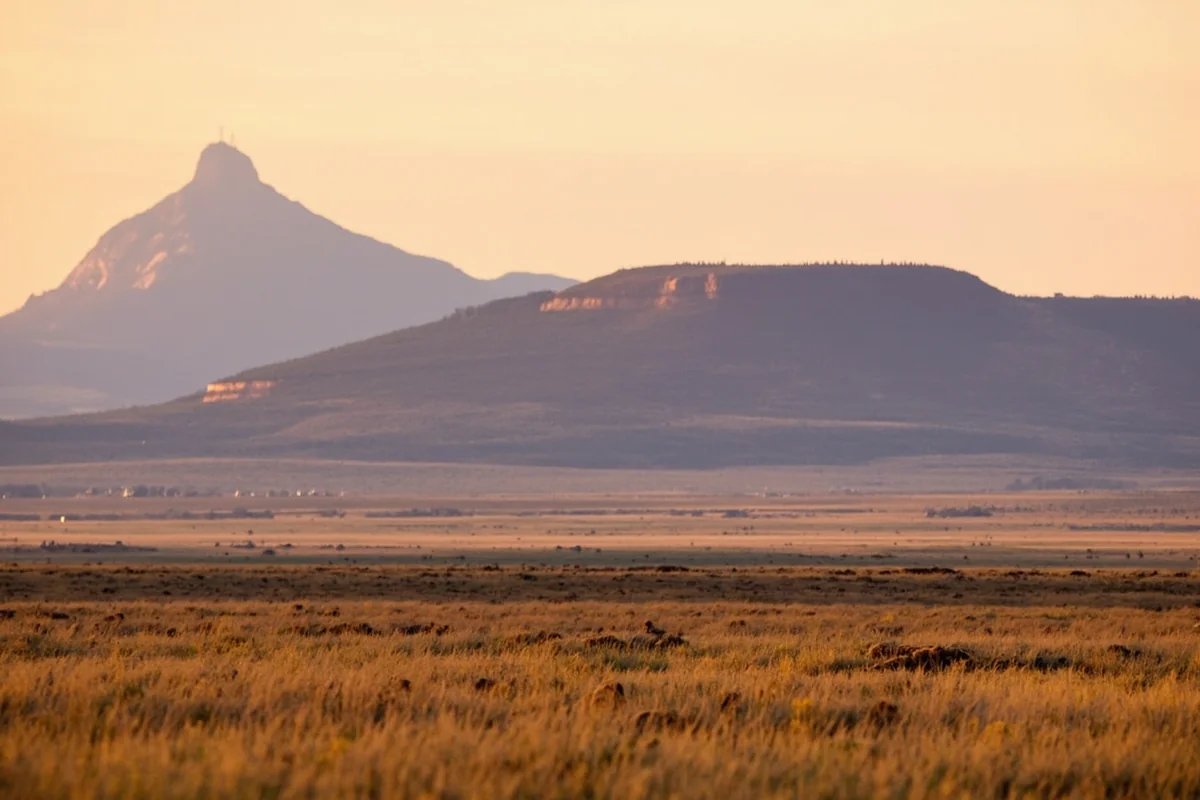
The three buttes of the Sweetgrass Hills — East Butte, West Butte, and Gold Butte — rise nearly 3,000 feet above the surrounding plains, creating one of the most visually striking landforms in northern Montana. West Butte, the tallest, reaches around 6,983 feet above sea level. These are ancient volcanic formations, geologically distinct from almost everything else on the Hi-Line.
What most travel guides skip is the access complexity. The hills are a patchwork of private land, Bureau of Land Management parcels, and land with cultural ties to the Blackfeet Nation. There is no established trailhead or national park infrastructure here. Getting to the hills requires doing homework: checking BLM maps in advance, respecting private land boundaries (the Kevin, Montana area has good locals who can point you in the right direction), and understanding that this is genuine backcountry access.
During a visit in early September, the area around the base of East Butte was completely empty — not a single other vehicle. The grasslands smelled of sage and something sweeter, likely the wild plants that give the hills their name. Binoculars are essential: pronghorn move in the foothills, and raptors circle overhead constantly. On a clear day, the Rocky Mountain Front is visible to the southwest and the Canadian Rockies shimmer to the north.
The light in the late afternoon, when the buttes catch the western sun against a darkening eastern sky, is the kind of thing you don’t easily photograph and don’t easily forget.
Practical Tips for Visiting the Sweetgrass Hills
- Download BLM maps before you arrive — cell service is unreliable in the hills
- Do not camp on private land without permission; this is cattle country and landowners notice
- Bring at least 2 liters of water per person — there are no water sources reliably accessible
- Visit early morning or late afternoon for the best light and wildlife activity
- Treat the area as the sacred landscape it is — leave no trace, take nothing
- A high-clearance vehicle is strongly recommended for the dirt roads approaching the buttes
The Sweetgrass Border Crossing
Just north of Shelby on Interstate 15, the Sweetgrass-Coutts port of entry is one of the busiest US-Canada border crossings in Montana. If you’re crossing into Alberta, this is your route — and it runs 24 hours a day, which is unusual for a Montana crossing.
Wait times vary enormously. On summer weekends, what looks like a short line can take 45 minutes to an hour. On a Tuesday in October, the crossing took under five minutes. Having your passport (or NEXUS card) ready before you reach the booth saves time and earns you a nod of appreciation from the officers.
Travelers should note that agricultural items — certain fruits, plants, and meats — face restrictions crossing in either direction. Check the US Customs and Border Protection website and the Canada Border Services Agency website before your trip if you’re carrying anything from a farmers market or hunt.
Kevin, Sunburst, and the Oil Country Towns
North of Shelby on Highway 15, the small towns of Kevin and Sunburst carry the unmistakable imprint of an oil-boom past. Kevin sits at roughly 950 residents; Sunburst a little smaller. Both feel authentically lived-in rather than tourist-designed, with grain elevators, hardware stores, and the kind of hardware-store-and-bar combination that tells you exactly where you are in rural Montana.
The Kevin-Sunburst Oil Field, discovered in 1921, was a significant find for its era — according to Montana Bureau of Mines and Geology records, it was among the state’s earliest productive oil formations and helped establish Toole County’s economic base through much of the 20th century. The working pump jacks scattered across the fields are not set dressing — oil production continues today.
For the traveler, these towns offer a genuine glimpse at Montana’s working Hi-Line culture — not curated, not performative. Stop for coffee if you’re passing through. The locals are typically friendly to visitors who show genuine curiosity rather than condescension.
Wildlife and the Northern Prairie
Toole County’s wide-open grasslands support a wildlife community that surprises many first-time visitors. Pronghorn antelope are nearly guaranteed to be spotted along any highway drive — they’re Montana’s fastest land animal, and the flat terrain here means you often see them at speed, crossing open ground in their distinctive bounding gait.
Mule deer are common, especially around the hills and creek drainages. White-tailed deer appear in the sheltered draws near water. Coyotes are ever-present. Hawks — including ferruginous, rough-legged, and Swainson’s — ride thermals above the plains throughout the warmer months.
According to Montana Fish, Wildlife & Parks, the Marias River drainage running through the southern part of the county holds productive habitat for a range of species. The river itself offers limited but real fishing access — mostly brown trout and some northern pike. Check current regulations with MFWP before fishing, as access points and regulations can vary.
Birdwatchers should note that this region is outstanding for grassland species during spring migration — longspurs, meadowlarks, and Sprague’s pipits move through in impressive numbers that most birding guides underestimate.
The Marias River and Battle of the Marias
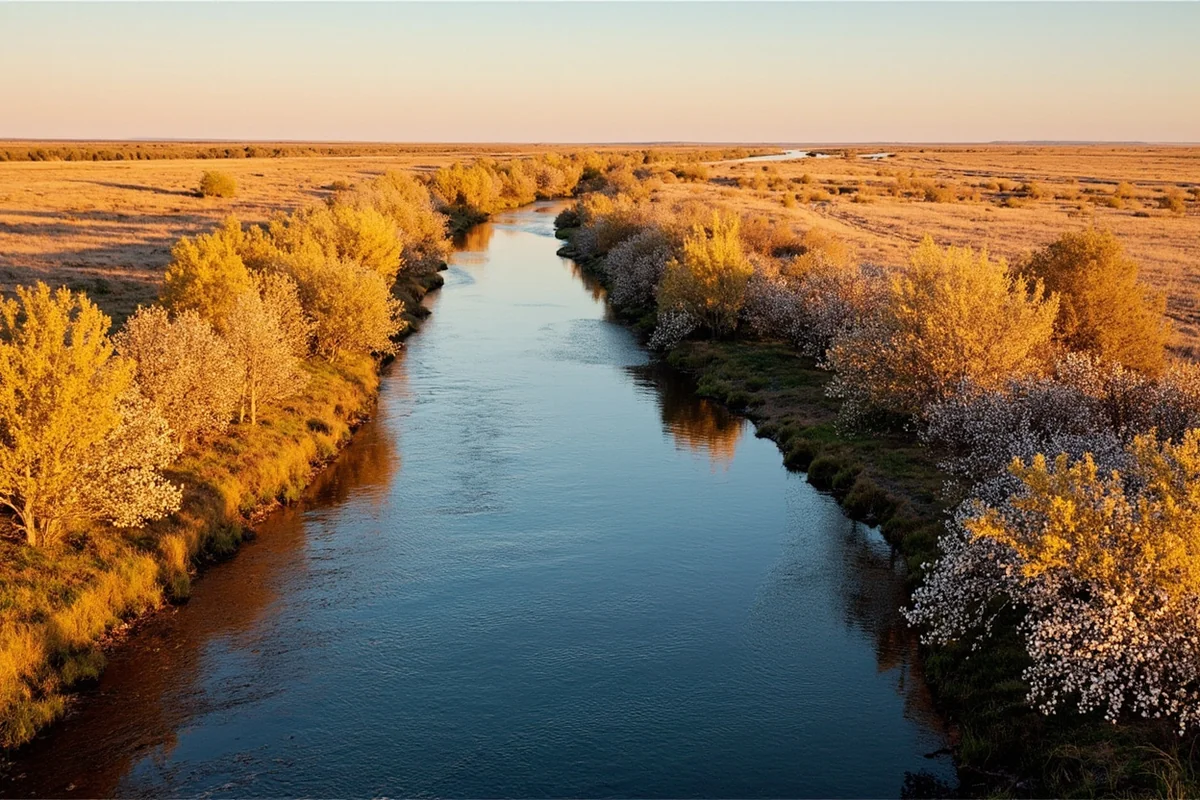
The Marias River cuts through the southern portion of Toole County, and its banks carry one of the darkest chapters in Montana history. On January 23, 1870, a US Army detachment led by Major Eugene Baker attacked a peaceful Blackfeet encampment on the Marias River — killing between 173 and 217 people, the majority of whom were women, children, and elderly. This event, known as the Marias Massacre or Baker Massacre, is recognized by historians as one of the worst atrocities committed against Native Americans in the post-Civil War era.
There is no formal visitor site here, no interpretive center with parking — and that absence is itself worth noting. The land along the river is largely private. Understanding what happened at the Marias River is, in my view, essential context for any visitor to this county. The Blackfeet Nation’s cultural connection to this landscape cannot be separated from that history.
The Blackfeet Nation’s tribal government is based in Browning, just west of Toole County in Glacier County — but the nation’s historical territory encompasses much of the surrounding region.
Suggested Itinerary
Toole County rewards a full weekend visit if you want to explore at a genuine pace — though a focused day trip from Shelby works if you’re pressed for time.
Day 1: Shelby and the History
Arrive in Shelby in the morning and start at the Marias Museum of History and Art. Budget at least 90 minutes — the boxing exhibit alone is worth it, and the oil history room fills in context that makes everything else make sense.
After the museum, walk the downtown murals — it takes about 30 minutes on foot and is completely free. Grab lunch at the Shelby Café or whichever local spot catches your eye.
In the afternoon, drive north on Highway 15 to Kevin and Sunburst. Stop to look at the working pump jacks up close — the Kevin-Sunburst field is approachable from the highway without any trespass. Return to Shelby for dinner and an early night; you’ll want morning energy for Day 2.
Day 2: Sweetgrass Hills and the Border
Leave Shelby by 7:30 a.m. — the drive to the Sweetgrass Hills foothills takes roughly 40 minutes from town. Bring your pre-downloaded BLM maps, all your water, and snacks. Plan for 3–4 hours of exploring the foothills and lower approaches, keeping clear of private land.
The late morning light on the buttes from the east is spectacular. If you have binoculars, use them constantly — wildlife is active through mid-morning.
Return toward Shelby by early afternoon, and if you have a passport and time, make the 15-minute drive north to the Sweetgrass border crossing to say you touched the Canadian border. It’s a curiosity if nothing else.
If you’re heading west to Glacier Country or east along the Hi-Line, this is where your routes diverge. The drive west on US-2 toward Cut Bank and Browning is one of Montana’s most underappreciated highway stretches, with the Rocky Mountain Front appearing gradually on the left like something you didn’t believe was real.
What Most Visitors Get Wrong About Toole County
The most common mistake is treating Toole County as a pass-through. Travelers on their way to Glacier regularly blow through Shelby without stopping, missing entirely what the county has to offer. The 30-minute museum visit genuinely changes how you see the landscape around you.
The second mistake is underestimating the weather window. Winters in Toole County are severe — temperatures regularly drop well below zero Fahrenheit, and the wind across these open plains can create dangerous wind chill conditions. What looked like a mild November day when I was checking the forecast turned into a ground blizzard within two hours that reduced visibility to near zero. Always check the National Weather Service Great Falls forecast before venturing into the hills.
The third mistake is not respecting private land. The Sweetgrass Hills are not a national park. They’re a landscape of working ranches, sacred land, and BLM parcels without clear signage. Going off-road without proper preparation — both in terms of maps and attitude — is disrespectful and potentially illegal.
Finally, many visitors assume there’s nothing worth eating or drinking in Toole County. That’s wrong. The local bars, the café, and the small-town hospitality are genuinely memorable — but only if you’re willing to engage rather than demand.
Practical Information for Toole County Visitors
| Category | Details |
|---|---|
| County Seat | Shelby, Montana |
| Population | Approximately 5,000 (2020 Census) |
| Best Time to Visit | May through September; June and September for mild weather and fewer crowds |
| Main Highway Access | Interstate 15 (north-south), US-2 (east-west Hi-Line) |
| Nearest Airport | Great Falls International Airport (~85 miles south) or Glacier Park International (~90 miles west) |
| Amtrak Access | Empire Builder stops in Shelby (seasonal schedule — verify at Amtrak.com) |
| Border Crossing | Sweetgrass-Coutts (I-15), open 24/7 — passport required |
| Cell Coverage | Reliable in Shelby; patchy to nonexistent in the Sweetgrass Hills — download offline maps |
| Fuel | Available in Shelby, Kevin, and Sunburst — fill up in Shelby before heading to the hills |
| Camping | Limited formal campgrounds; dispersed camping on BLM land with appropriate permits |
| Key Contact | Shelby Chamber of Commerce; Montana Fish, Wildlife & Parks for hunting/fishing regulations |
How Toole County Fits Into a Broader Montana Road Trip
If you’re already planning to explore Montana’s northern tier, Toole County slots in naturally alongside several nearby destinations. To the west, Glacier County is the gateway to Glacier National Park — roughly 90 minutes from Shelby. To the south, Cascade County and Great Falls offer the Lewis and Clark Interpretive Center and the Missouri River Falls, making for a logical south-to-north itinerary.
Travelers exploring the Hi-Line east of Shelby often continue through Hill County toward Havre, which has its own underground city, railway history, and Fort Assinniboine — a genuinely underrated stop. Further east still, counties like Blaine County and Chouteau County round out the Hi-Line experience.
It’s also worth mentioning that Montana’s population growth patterns — well documented over at Montana’s Fastest Growing Cities and Counties — largely bypass places like Toole County, which means visitor numbers remain low and the experience remains uncrowded. That’s increasingly rare in the American West.
Final Thoughts
Toole County isn’t going to compete with Glacier or Yellowstone for Instagram impressions, and that’s precisely the point. This is Montana for people who want the real thing — the weight of history underfoot, the silence of a prairie morning, a boxing story that ends in near-bankruptcy, hills that are sacred before they’re scenic.
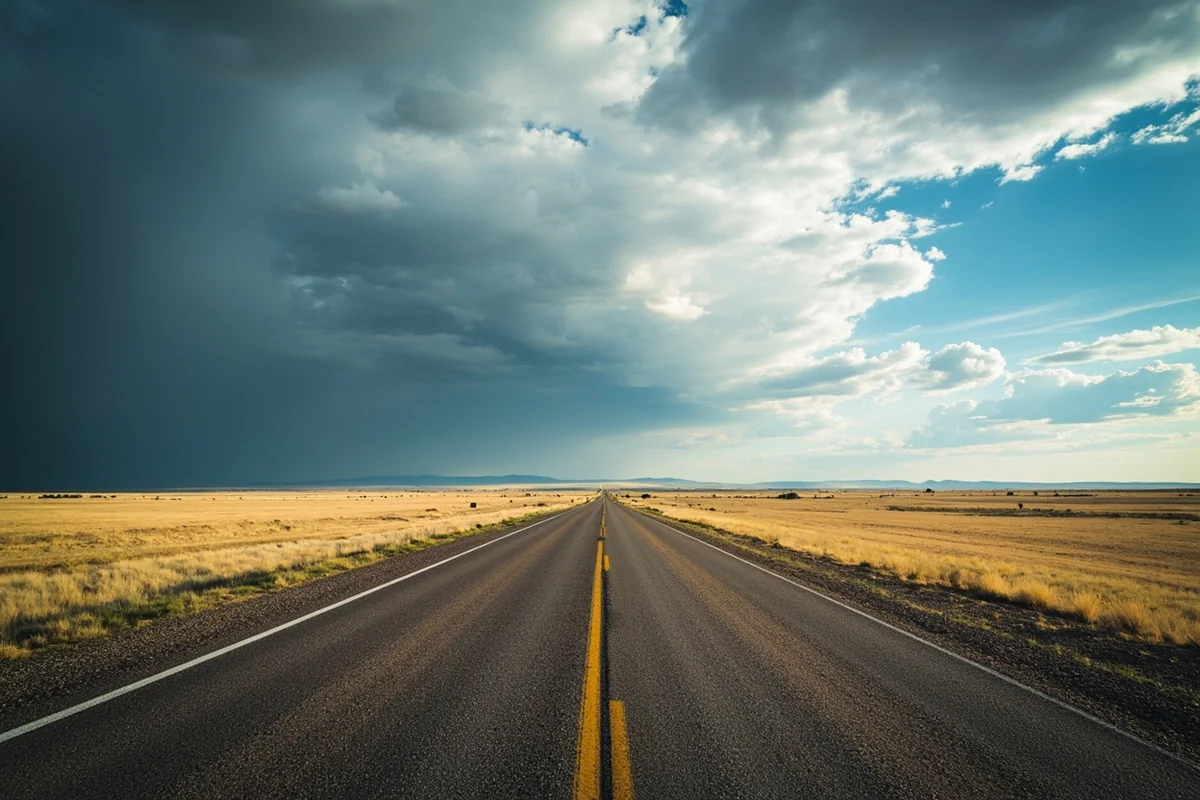
What stays with me most, after multiple visits across different seasons, is the quality of the sky. The light in Toole County is extraordinary — that particular northern Montana combination of wide-open latitude and clean air that makes everything look slightly more defined than usual. Photographers and painters know this kind of light. Travelers who slow down long enough start to notice it too.
Come here with curiosity, respect for the land and its history, and a vehicle with decent clearance. Leave the crowds to Glacier and the expectations of convenience back in Shelby. The rest of Toole County will reward you on its own terms.
How We Researched This Guide
This guide is based on multiple visits to Toole County across different seasons, including summer and fall explorations of the Sweetgrass Hills foothills, time spent in Shelby’s Marias Museum of History and Art, and conversations with local business owners and long-term residents of the Kevin-Sunburst area.
Historical facts about the Kevin-Sunburst Oil Field were cross-referenced with the Montana Bureau of Mines and Geology. Wildlife information was verified with Montana Fish, Wildlife & Parks.
Border crossing information reflects guidance from US Customs and Border Protection and Canada Border Services Agency at the time of writing. Cultural information regarding the Sweetgrass Hills and the Marias Massacre was reviewed against published historical accounts and Montana historical society records.
Frequently Asked Questions
What is there to do in Toole County, Montana for first-time visitors?
Toole County is home to Shelby, the county seat, which offers access to the historic Marias Museum of History and Art, the iconic Sweetgrass Hills, and the nearby Marias River for fishing and wildlife watching. The county sits along the Hi-Line corridor of Highway 2, making it a great stop for travelers road-tripping across northern Montana. History buffs will also appreciate the area’s connection to the 1923 World Lightweight Championship boxing match held in Shelby, a surprisingly big moment in American sports history.
What is the best time of year to visit Toole County, Montana?
The best time to visit Toole County is late spring through early fall, roughly May through September, when temperatures are mild and outdoor activities like hiking in the Sweetgrass Hills are most accessible. Summers average highs in the mid-70s to low 80s°F, which is comfortable for sightseeing and exploring the open prairies. Winter brings harsh winds and subzero temperatures, so unless you’re prepared for serious cold-weather travel, I’d recommend avoiding December through February.
How far is Toole County, Montana from the Canadian border?
Toole County sits right on the US-Canada border, with the Sweetgrass-Coutts Port of Entry located just about 30 miles north of Shelby on Interstate 15. This makes it one of the most popular northern Montana border crossings for travelers heading into Alberta, Canada. If you’re planning a cross-border road trip, make sure to carry your passport and check current border wait times before heading out.
Is Toole County worth visiting if I’m road-tripping across northern Montana?
Absolutely — Toole County is an underrated stop on any northern Montana road trip, especially if you’re driving the Hi-Line along US Highway 2 or heading north on I-15 toward Canada. The wide-open prairie scenery, big sky views, and the striking Sweetgrass Hills rising from the plains make for memorable photography and a true off-the-beaten-path Montana experience. Shelby has enough services — gas, food, and lodging — to make it a practical overnight stop without feeling like a tourist trap.
What should I pack for a trip to Toole County, Montana?
Because Toole County sits on the northern Montana high plains, weather can change fast no matter the season, so layering is essential — bring a windproof jacket even in summer. If you plan to hike the Sweetgrass Hills or explore backcountry areas, pack sturdy hiking boots, sunscreen, and plenty of water since services are sparse once you leave Shelby. For fall and winter visits, serious cold-weather gear including insulated layers, hand warmers, and a blanket in your car is strongly recommended.
How much does a weekend trip to Shelby, Montana in Toole County typically cost?
A budget-friendly weekend in Shelby can run roughly $150–$250 per person depending on lodging and dining choices, as the area offers modest motel accommodations typically ranging from $70–$120 per night. Dining options are limited but affordable, with most meals at local restaurants costing under $20 per person. Since many of the best experiences — like driving to the Sweetgrass Hills or crossing the border for a day trip — are low-cost or free, Toole County is a great destination for travelers watching their budget.
Are there any Native American cultural sites or history to explore in Toole County, Montana?
Toole County sits within the traditional territory of the Blackfeet (Niitsitapi) people, and the broader region has deep Indigenous cultural significance tied to the nearby Blackfeet Reservation to the west. The Marias Museum in Shelby touches on regional history including Native American heritage, and the Sweetgrass Hills are considered sacred lands by the Blackfeet Nation. I’d recommend learning about this history before your visit and approaching any exploration of the hills with respect for their cultural and spiritual importance.