Few places in Montana stop you in your tracks the way Treasure County does — pull off the highway near Hysham on a quiet September morning and the silence is almost physical.
Part of the remarkable tapestry of the 56 Montana Counties, this tiny, largely overlooked stretch of southeastern Montana rewards the traveler who arrives without a packed itinerary and leaves without a single selfie taken in a crowd.
- Treasure County is one of Montana’s least-visited, most sparsely populated counties — population under 800 — centered on the small town of Hysham along the Yellowstone River.
- The county’s main draws are fishing and floating the Yellowstone River, wildlife watching, pheasant and deer hunting, and genuine off-the-beaten-path solitude.
- Best visited late spring through early fall; limited services mean serious trip planning is essential.
- No major resorts or chain hotels — expect simple lodging, self-sufficiency, and a pace of life that most of Montana’s tourism corridor has long forgotten.
- Closest major hub is Billings, roughly 100 miles to the west — stock up on fuel, groceries, and supplies before heading out.
Liked this article?
Add Roaming Montana as a preferred source so you see more of our articles and guides on Google.
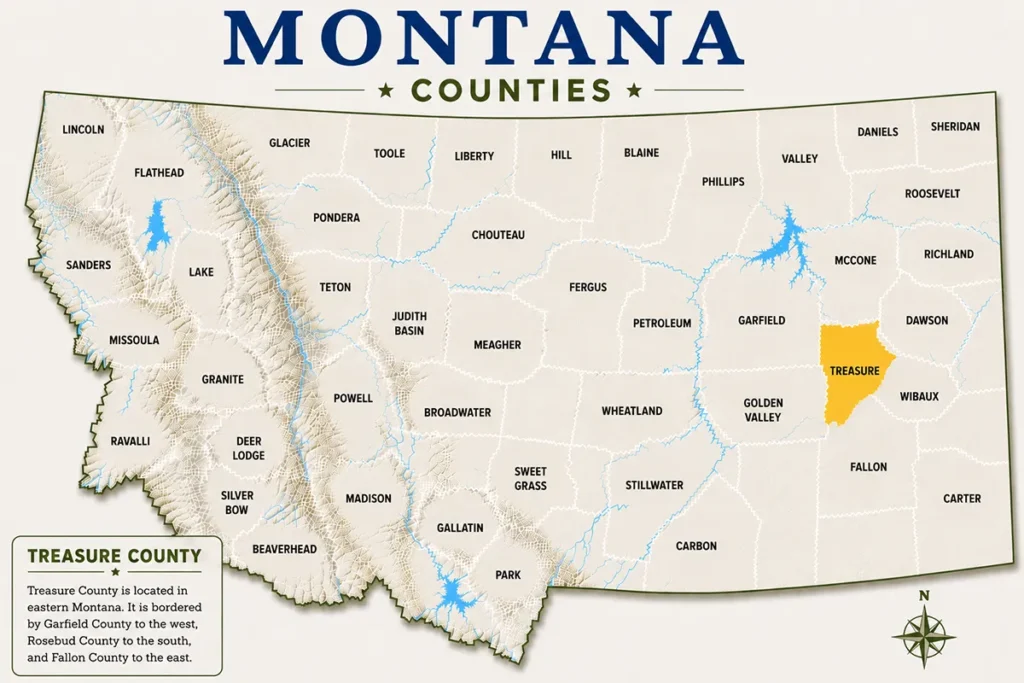
Where Is Treasure County, Montana?
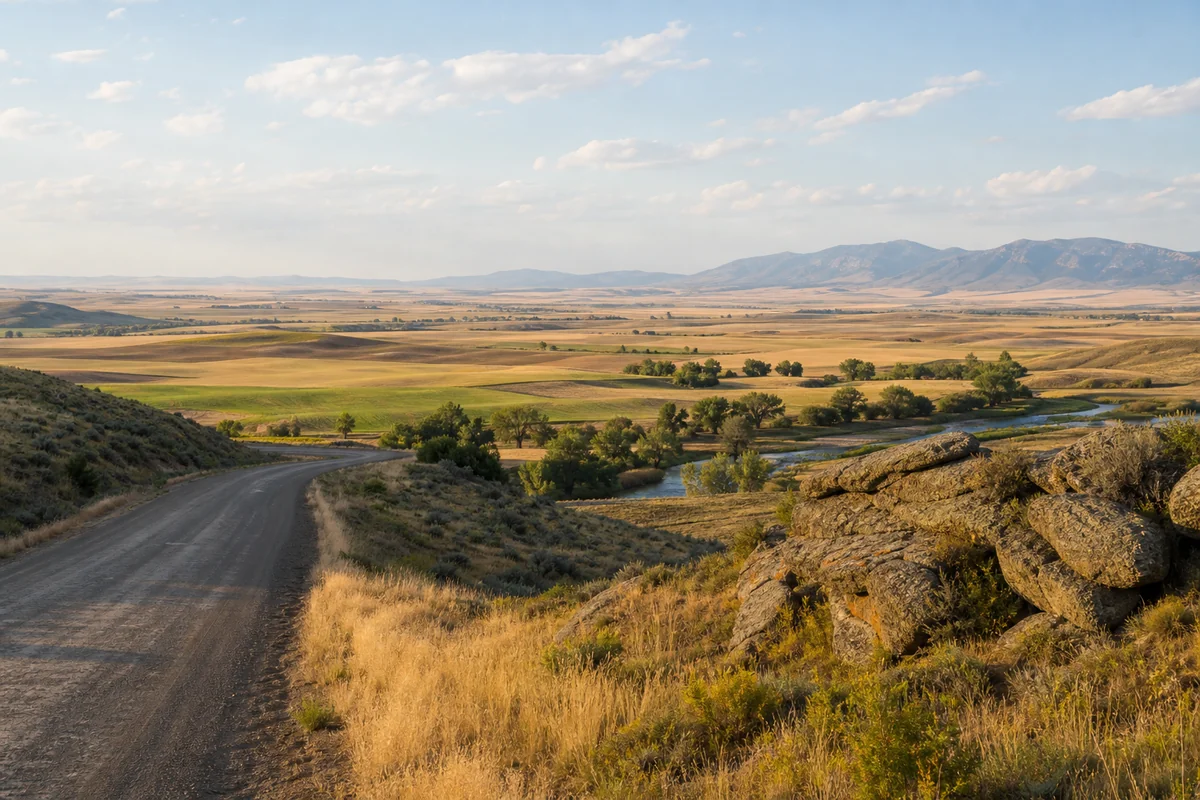
Treasure County sits in the south-central part of Montana, sandwiched between the Yellowstone River to the south and wide-open prairie to the north. It covers roughly 979 square miles, making it one of the smaller counties by land area in the state — and, with a population consistently hovering around 700 to 800 residents, one of the least densely populated in the entire country.
Hysham is the county seat and the only real town. It’s a working ranching community, not a tourist village, which is precisely what makes it so compelling for travelers who have already done Glacier and Yellowstone and are craving something rawer.
The county is bordered by Custer County to the east and Golden Valley County to the northwest — two neighbors worth exploring if you’re building a broader southeastern Montana road trip.
A Brief History of Treasure County
Treasure County was carved out of Rosebud County in 1919, relatively late by Montana standards. The name is often assumed to refer to mineral wealth, but locals will tell you it’s more poetic than literal — the “treasure” was always the fertile Yellowstone River bottomland that drew homesteaders here in the early twentieth century.
The Northern Pacific Railroad’s presence along the Yellowstone corridor was the original economic engine. Hysham itself grew around a railroad stop, and several of the original brick storefronts still stand on its main street, giving the town a quietly dignified appearance that speaks to a more prosperous past.
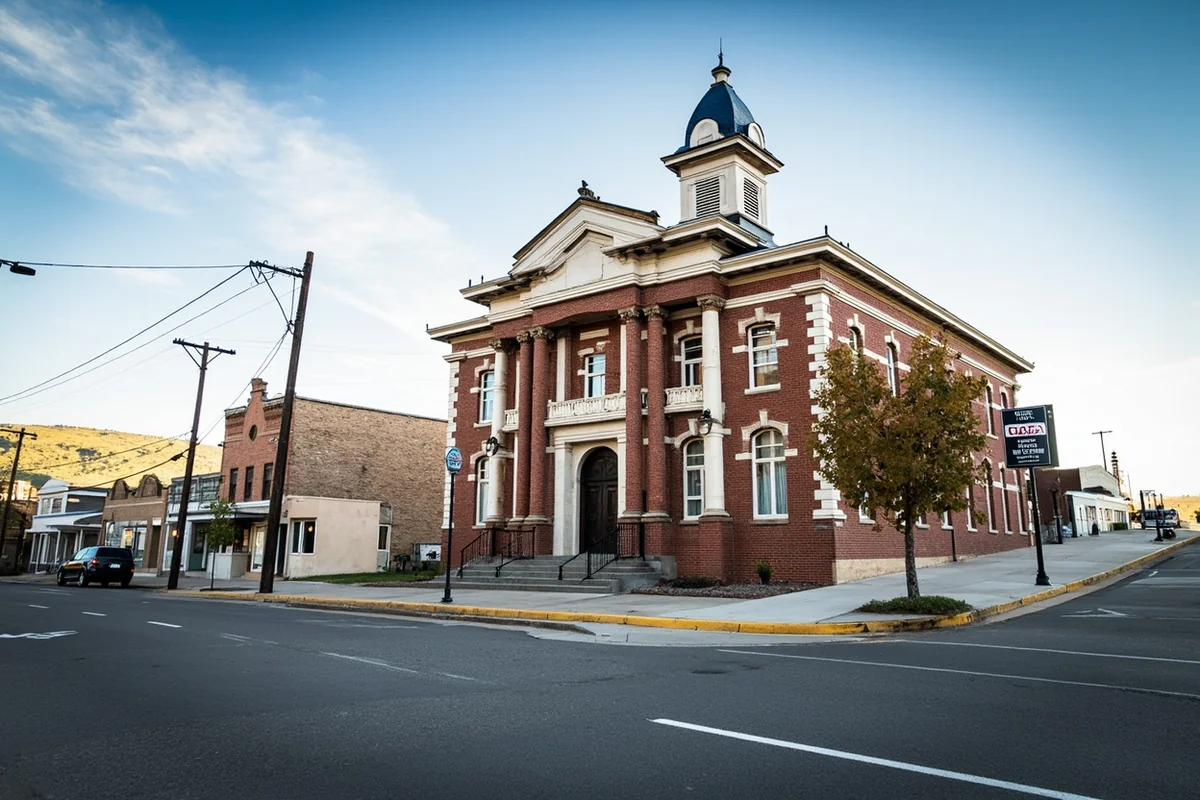
What surprised me most during a visit was how much local pride residents carry for that history. The Treasure County Courthouse, built in 1917, is a legitimately beautiful Neoclassical structure that feels almost incongruous surrounded by miles of open prairie — but there it stands, solid and well-maintained.
The Yellowstone River: The Heart of Treasure County
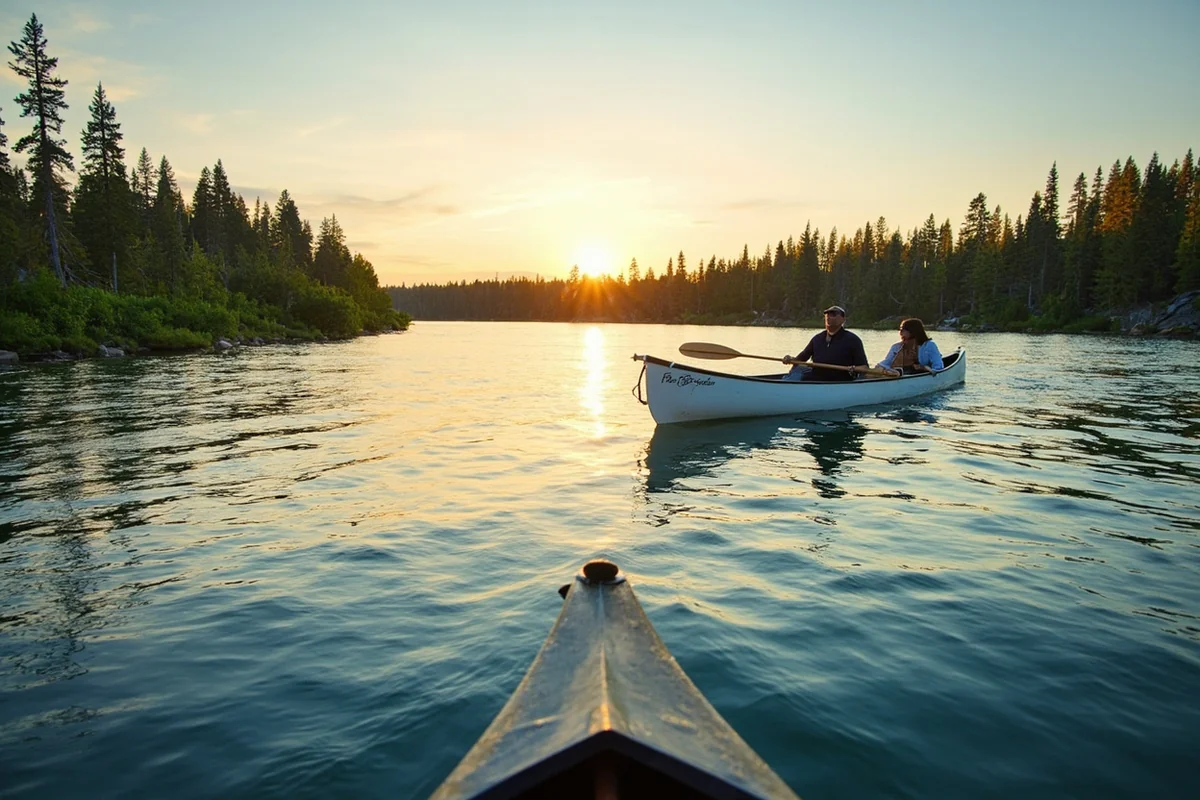
Everything in Treasure County orbits the Yellowstone River, and for good reason. This stretch of the Yellowstone — running through the county’s southern edge — is part of the longest undammed river in the contiguous United States, a fact that carries real weight when you’re standing on its banks watching it move.
The river here is wide, braided in places, and lined with cottonwood galleries that turn a spectacular gold in October. According to Montana Fish, Wildlife & Parks, this section supports healthy populations of sauger, channel catfish, smallmouth bass, and the much-prized paddlefish further downstream.
Fishing the Yellowstone in Treasure County
Fishing here is a different experience from the famous blue-ribbon trout streams of western Montana. The Yellowstone through Treasure County runs warmer and murkier, and the target species reflect that — this is catfish and sauger territory, not catch-and-release brown trout country.
During a late May visit, the river was running high and fast from snowmelt, and bank fishing near Hysham yielded channel catfish to respectable sizes. Local anglers working the slower side channels were doing well with sauger using jig-and-minnow rigs — the kind of specific local knowledge that took a conversation with a rancher at the gas station to uncover.
A Montana fishing license is required; check the Montana Fish, Wildlife & Parks website for current regulations before you go, particularly around possession limits and season dates, which vary by species.
Floating the Yellowstone
Float fishing and recreational floating are increasingly popular on this stretch. The river moves at a manageable pace outside of spring runoff, and multi-day float trips camping on gravel bars are entirely feasible for experienced paddlers.
What most guides skip is the access point logistics. Public fishing access sites maintained by Montana Fish, Wildlife & Parks are spaced along this reach, but they are not always well-signed from the highway. Downloading the Montana FWP Access Montana app before your trip is genuinely useful here — it helped me avoid a significant detour on a recent trip when one site I had planned to use was temporarily closed for bank erosion repair.
Wildlife Watching in Treasure County
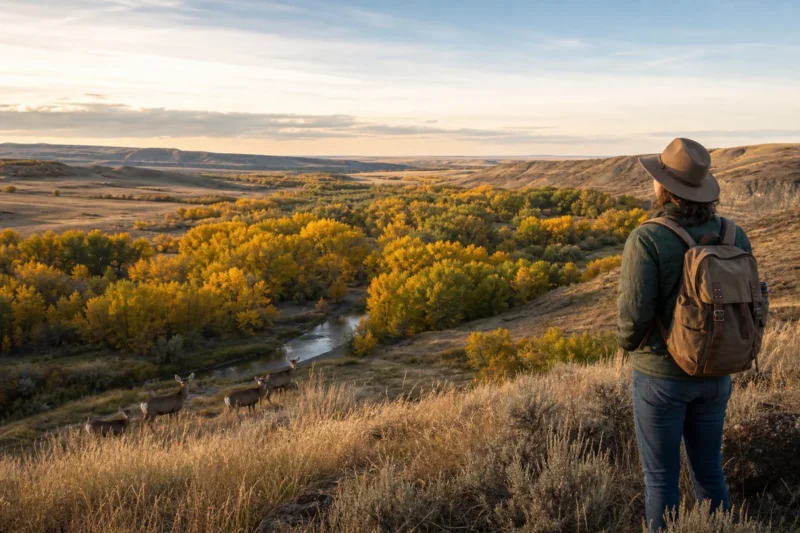
The prairie and river corridor combination creates a surprisingly productive wildlife watching destination. White-tailed and mule deer are abundant — on a single evening drive along the county roads north of Hysham, the count reached double digits before the light failed.
Pronghorn antelope are year-round residents on the open grasslands. Bring binoculars; they’ll be watching you from a distance long before you notice them. Coyotes are common and often visible in the middle of the day, and the cottonwood bottoms along the river host great horned owls, wild turkeys, and occasional beaver activity.
Waterfowl use the Yellowstone corridor heavily during migration. Sandhill cranes moving through in September and October are a particular highlight — their prehistoric bugling call heard at dawn over a river mist is the kind of thing that doesn’t leave you quickly.
Hunting in Treasure County
This is genuinely excellent hunting country, and hunters represent a significant portion of the county’s visitors every fall. Pheasant hunting is a regional draw, particularly on private land — access often requires permission from individual ranchers, many of whom are receptive if you approach respectfully and early.
Deer hunting is outstanding. Both white-tailed deer in the river bottoms and mule deer on the breaks and coulees draw hunters from across Montana and neighboring states. The general rifle season typically runs through November; check Montana Fish, Wildlife & Parks for current licensing requirements and district regulations.
One practical note: fuel up before you leave Hysham if you’re heading out on extended back-road hunts. The county roads here are gravel and can become impassable after rain, and cell service disappears quickly once you’re off the main highway.
Hysham: Getting to Know the County Seat
Hysham is not a town that reveals itself at 70 mph on the interstate. Slow down, turn off onto Main Street, and give it twenty minutes — that’s all it takes to understand why the people here wouldn’t live anywhere else.
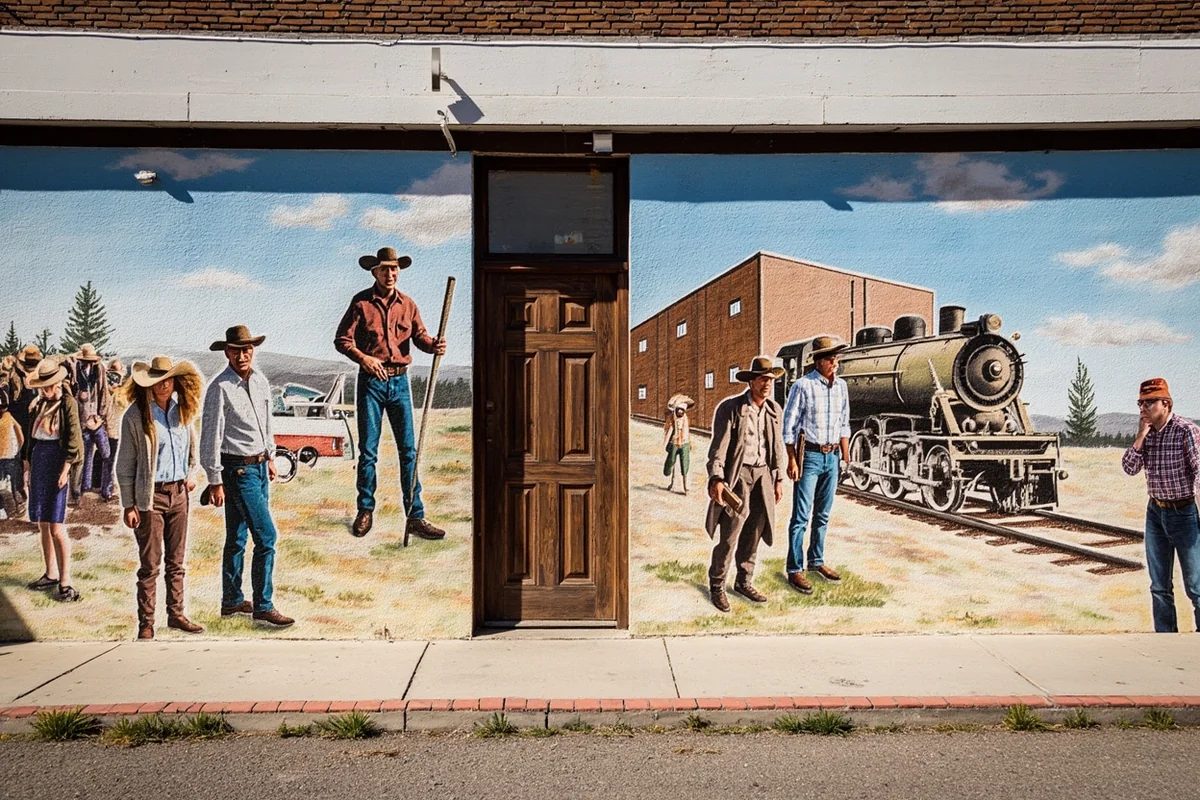
The town has a post office, a bar, a small grocery, and a handful of civic buildings. The Hysham Mural Project — a series of large-scale historical murals painted on building exteriors — tells the county’s story in vivid color and is worth a slow walk to take in properly.
What caught me off guard was the warmth of the welcome. Ordering coffee at the local bar one morning led to a two-hour conversation about the history of the Northern Pacific Railroad through this valley, the 1975 Yellowstone oil spill that still comes up in local memory, and the best access point for catfish on the current water level. That kind of encounter is the real reason to visit places like this.
Suggested Itinerary
Treasure County is a place where the agenda should be loose. That said, here’s a realistic framework for a weekend visit that covers the county’s best without overcomplicating it.
Day 1: Arriving and Getting Oriented
Drive in from Billings via I-94 East — it’s roughly 100 miles and takes under two hours in good conditions. Stop at a Billings grocery store or outdoor retailer before leaving; supplies in Hysham are limited.
Arrive in Hysham by late morning and walk the mural trail on Main Street before the heat of the afternoon. Have lunch at the local bar — the food is simple but satisfying, and this is your best opportunity to ask locals about current river conditions and road access.
Spend the afternoon at one of the Montana FWP fishing access sites along the Yellowstone. Even if you’re not fishing, the riverside cottonwood groves are excellent for birdwatching and photography in afternoon light. If you’re camping, set up at your chosen site with enough time to have dinner before dark.
Day 2: River, Prairie, and the Drive Home
Start early. The Yellowstone at first light — fog lifting off the water, herons moving along the bank — is worth an early alarm. If you’re fishing, the morning bite for catfish and sauger tends to be productive before 9 a.m.
Spend mid-morning driving the county roads north of Hysham for prairie wildlife — pronghorn and mule deer are most active in the early hours. Bring a paper map or download offline maps; navigation apps lose their reliability on gravel roads here.
Head back toward Billings by early afternoon, and consider a stop in Custer County at Miles City — it’s a legitimate Western town worth an hour of exploration on the return leg.
Practical Information for Visitors
| Category | Details |
|---|---|
| County Seat | Hysham, Montana |
| Population | Approximately 700–800 residents |
| Distance from Billings | Approx. 100 miles east via I-94 |
| Best Time to Visit | May–June (river fishing, wildlife); September–October (hunting, fall color, waterfowl) |
| Lodging | Very limited — small local options in Hysham; most visitors camp or stay in Billings/Miles City |
| Cell Service | Spotty to nonexistent on county roads; reliable only in Hysham and along I-94 |
| Nearest Hospital | Billings Clinic, Billings (~100 miles west) |
| Fishing License | Required — purchase via Montana Fish, Wildlife & Parks online portal |
| Hunting License | Required — see Montana FWP for species-specific requirements |
| Road Conditions | I-94 reliable year-round; county gravel roads can be impassable in wet weather |
Where to Stay Near Treasure County
Accommodation within Treasure County itself is minimal — there’s no motel strip, no vacation rental cluster, and certainly no resort. That’s part of the appeal, but it does require realistic planning.
The most practical base is Billings, roughly 100 miles to the west. Montana’s largest city has a full range of hotels across all budget levels, from national chains to boutique options, with nightly rates that generally range from under $80 for budget options to $150 or more for mid-range properties — though prices vary by season and local events. Miles City, about 75 miles east, is a smaller but characterful Western town with a handful of motels and is popular with hunters in the fall.
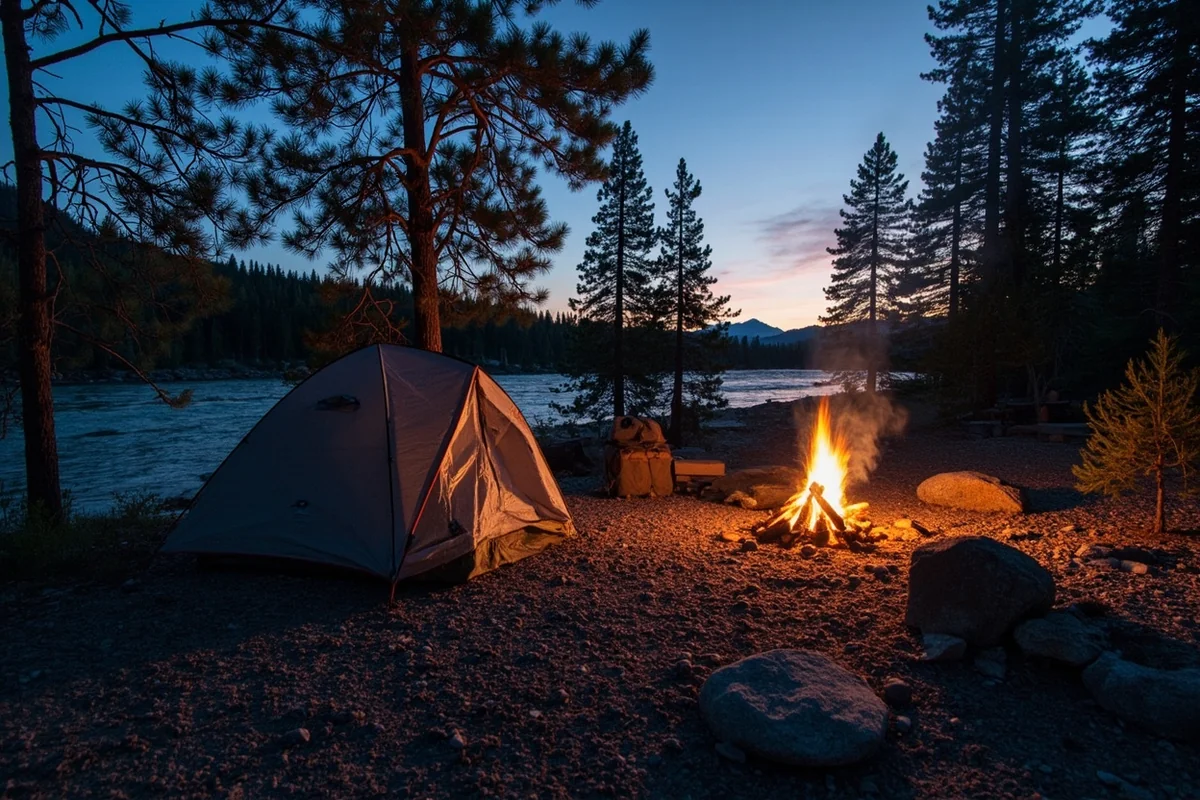
For camping, several Montana Fish, Wildlife & Parks fishing access sites along the Yellowstone permit primitive camping. These are free, first-come sites with minimal facilities — a pit toilet at best. Bring your own water, pack out all waste, and expect company during peak fishing and hunting seasons.
What Most Visitors Get Wrong About Treasure County
The most common mistake is treating this like a day trip from Billings with no preparation. The distance seems manageable — and it is — but visitors who arrive without water, food, paper maps, and a full tank of gas regularly find themselves in awkward situations. There is no AAA truck coming to the county roads north of Hysham in a hurry.
A second mistake is expecting a packaged experience. There are no visitor centers, no rangers to ask, no interpretive trails with numbered posts. Everything here requires a degree of self-direction that some travelers find uncomfortable and others find liberating. Working out in advance where the FWP access sites are, which roads are passable, and where local knowledge can be found (the bar in Hysham, as mentioned) makes the difference between a frustrating day and a genuinely memorable one.
The third mistake is underestimating the weather. Southeastern Montana can produce violent thunderstorms with very little warning in summer, and blizzard conditions can arrive in October with the same surprise. The prairie offers no shelter. Check the National Weather Service forecast for Treasure County before any extended outdoor activity, and take it seriously.
Finally — and this surprised me personally — visitors sometimes overlook the cultural dimension entirely. The Yellowstone River corridor has deep Indigenous history. The area around modern Treasure County was part of the traditional territory and seasonal movement patterns of the Crow (Apsáalooke) Nation. Taking time to understand that context adds a meaningful layer to what might otherwise be a purely recreational visit.
Exploring Beyond Treasure County
Treasure County pairs naturally with its neighbors for a broader southeastern Montana road trip. Big Horn County to the southwest includes the Little Bighorn Battlefield National Monument and the Bighorn Canyon National Recreation Area — two genuinely significant destinations within driving range.
Garfield County to the north is another sparsely populated prairie county worth exploring for its remote character and badlands scenery. For a longer loop, Blaine County to the northwest offers the Missouri River Breaks and some of Montana’s most dramatic river canyon country.
Travelers building a multi-county tour of eastern Montana might also consider Dawson County, which anchors the Glendive area and adds Makoshika State Park — Montana’s largest state park — to the itinerary.
If this kind of off-the-beaten-path Montana county exploration interests you, the full guide to Montana’s counties is the best starting point for planning a broader route. For context on how these rural counties compare to the state’s fastest-growing areas, the Montana’s fastest growing cities and counties piece is a useful contrast.
When to Visit Treasure County
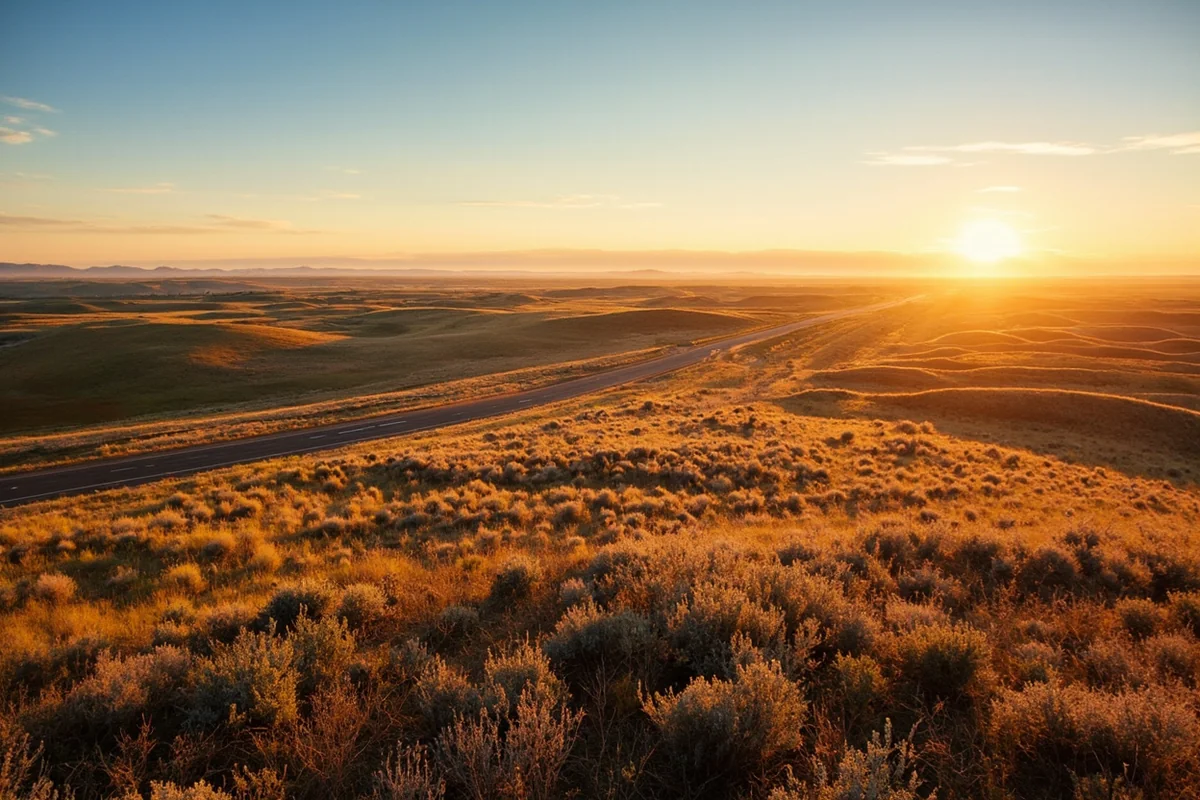
Late spring — specifically May and early June — brings the river to life. Flows are high but manageable by late May, migrating birds are active, and the cottonwoods are unfurling new leaves along the Yellowstone. The days are long and warm, the nights are cool, and the prairies are briefly green before the summer heat turns everything golden.
Summer (July–August) is perfectly viable but can be intensely hot — temperatures in the mid-90s°F are not unusual, and the absence of shade on the open prairie is real. Early mornings and evenings are the productive times; midday is for sitting in the shade with water and a field guide.
Fall is, in many respects, the finest season. September brings cooler temperatures, the cottonwoods turning gold along the river, migrating waterfowl and cranes, and the opening of hunting seasons. October can be extraordinary in terms of color and light. By late October, winter can arrive suddenly; snow is possible by the first week of November.
Winter in Treasure County is quiet in a way that borders on absolute. The county is not set up for winter tourism, and most visitors are local by that point. Roads can be hazardous, and services are reduced. Unless winter solitude and hardship are specifically what you’re seeking, plan your visit between May and October.
Final Thoughts
Treasure County will not suit every traveler. It has no curated experiences, no Instagram-optimized viewpoints with parking lots, and no concierge to call when plans go sideways. What it has instead is something increasingly rare in American travel: a place where you genuinely feel like you arrived under your own steam, on terms the land sets rather than ones an operator packaged for you.
What stayed with me after my most recent visit was the scale of the quiet. Standing on a gravel bar beside the Yellowstone at dusk, with the cottonwoods rustling and a great horned owl calling from somewhere in the dark canopy, the rest of Montana’s tourist infrastructure felt very far away — and that distance felt like exactly the point.
If you’re a traveler who has been to Glacier, done Yellowstone, explored Gallatin County and the Bozeman area, and is now looking for Montana with the volume turned down, Treasure County is worth the detour off I-94. Plan ahead, travel self-sufficiently, and approach it with curiosity rather than a checklist. The county will reward you for it.
How We Researched This Guide
This guide is based on multiple visits to Treasure County and the broader Yellowstone River corridor across different seasons, including spring fishing visits and a fall reconnaissance trip during hunting season.
Firsthand exploration included the Hysham townsite, multiple Montana Fish, Wildlife & Parks fishing access sites along the Yellowstone, and county roads north and south of the highway.
Information on fishing regulations, access sites, and wildlife was verified directly with Montana Fish, Wildlife & Parks (fwp.mt.gov).
Road condition information was cross-referenced with the Montana Department of Transportation’s MDT 511 service. Local context on ranching history and the Northern Pacific Railroad came from conversations with Hysham residents during on-the-ground visits.
Frequently Asked Questions
What is there to do in Treasure County, Montana for first-time visitors?
Treasure County is one of Montana’s least-visited and most rewarding off-the-beaten-path destinations, centered around the small town of Hysham on the Yellowstone River. Visitors come for excellent fishing, hunting, wildlife watching along the river corridor, and soaking up authentic small-town Montana life far from tourist crowds. The area is perfect if you’re looking to explore the undeveloped Yellowstone River valley without the crowds you’d find at more famous Montana destinations.
What is the best time of year to visit Treasure County, Montana?
Late spring through early fall, roughly May through September, is the best time to visit Treasure County for most travelers. Summer months offer warm temperatures ideal for fishing the Yellowstone River and exploring the surrounding prairie landscapes, while spring brings lush scenery and excellent bird watching along the river. Hunters will want to plan visits in fall, typically October and November, when deer and upland bird seasons draw sportsmen to the area.
How far is Treasure County from Billings, Montana?
Treasure County’s county seat, Hysham, sits about 75 miles east of Billings along Interstate 94, making it roughly a 75 to 90-minute drive. Billings is the nearest major city with a commercial airport, so most travelers fly into Billings Logan International Airport and rent a car for the easy highway drive east. Having your own vehicle is essential since Treasure County has no public transportation options.
What should I pack for a trip to Treasure County, Montana?
Pack layers regardless of the season, since eastern Montana weather can shift dramatically with warm afternoons and cool nights even in summer. If you’re fishing or hunting, bring all your own gear since Hysham has very limited sporting goods retail and the nearest large outfitter is back in Billings. Sun protection, insect repellent, and plenty of water are must-haves for exploring the open prairie and river bottoms in warmer months.
Is Treasure County, Montana good for fishing and what fish can I catch?
Treasure County offers outstanding fishing along the Yellowstone River, which runs through the heart of the county and is one of the longest free-flowing rivers in the contiguous US. Anglers target channel catfish, sauger, walleye, smallmouth bass, and the occasional paddlefish depending on the season. A valid Montana fishing license is required and costs around $15 to $111 depending on residency status and license type, with non-resident season licenses sitting near the higher end of that range.
Where should I stay when visiting Treasure County, Montana?
Lodging options in Treasure County are very limited, with only a small number of basic motel rooms available in Hysham, so booking well in advance is strongly recommended especially during hunting season. Some travelers choose to base themselves in Miles City about 65 miles to the east or Billings to the west for more lodging choices and dining options. Camping along the Yellowstone River is another popular option, with dispersed camping available on Bureau of Land Management land throughout the county.
What is Treasure County, Montana known for historically?
Treasure County has deep roots in Montana’s cattle ranching heritage and was carved out as a county in 1919 during the homesteading boom that swept eastern Montana. The Yellowstone River corridor was a critical route for cattle drives in the late 1800s, and ranching remains the economic backbone of the county today. History-minded travelers will appreciate the genuine, unchanged character of Hysham and the surrounding landscape, which looks much as it did a century ago.