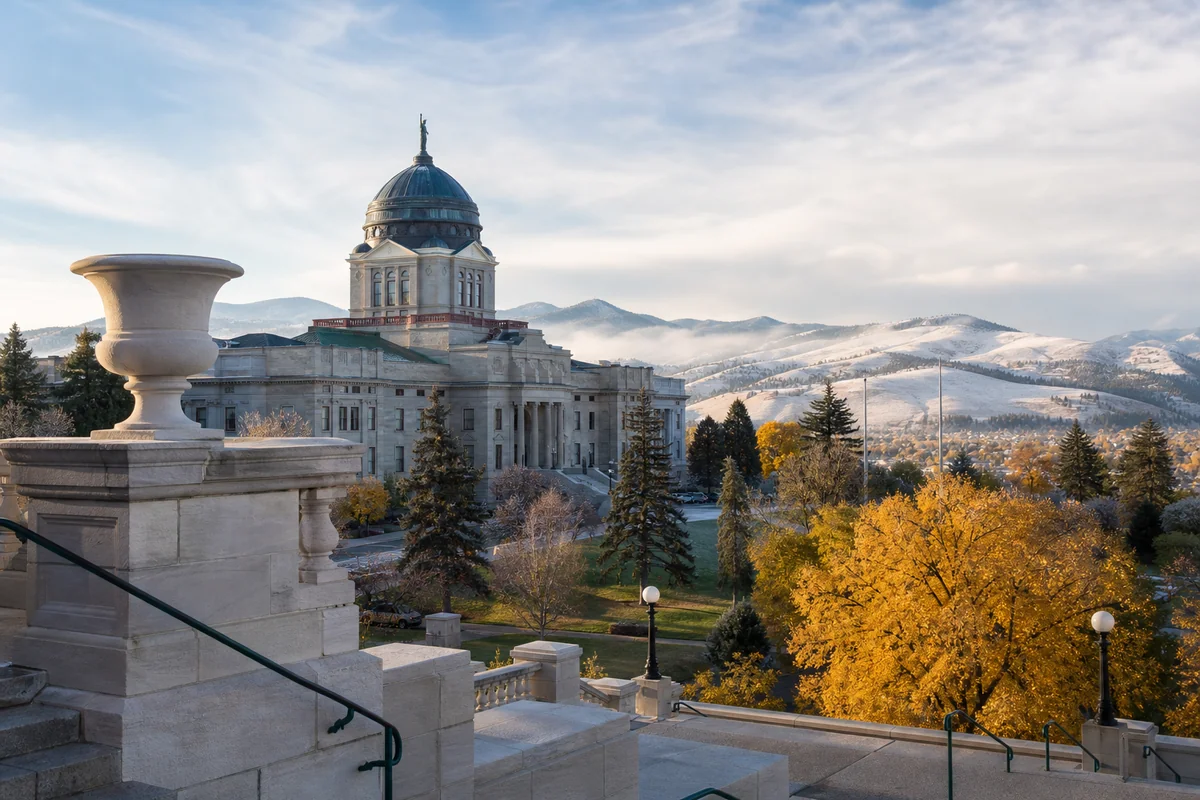
Standing on the steps of the Montana State Capitol on a crisp October morning, watching the first hard frost dust the surrounding hills gold and white, it’s hard to believe this valley was once just a dusty gold rush camp.
Lewis and Clark County is one of the most historically layered places in all of Montana’s 56 counties — and most visitors only scratch the surface.
- Lewis and Clark County is home to Helena, Montana’s state capital, with a compact, walkable downtown packed with history
- Major attractions include the Montana State Capitol, Cathedral of Saint Helena, Gates of the Mountains, and Holter Lake
- Hot springs, hiking in the Big Belt and Elkhorn Mountains, and world-class fly fishing are all within easy reach
- Best visited May through September, though fall colors and winter skiing extend the season significantly
- A two-day trip is the minimum to do the county justice — three days is better
- Helena is one of Montana’s fastest-growing cities, so book accommodation further ahead than you might expect
Liked this article?
Add Roaming Montana as a preferred source so you see more of our articles and guides on Google.
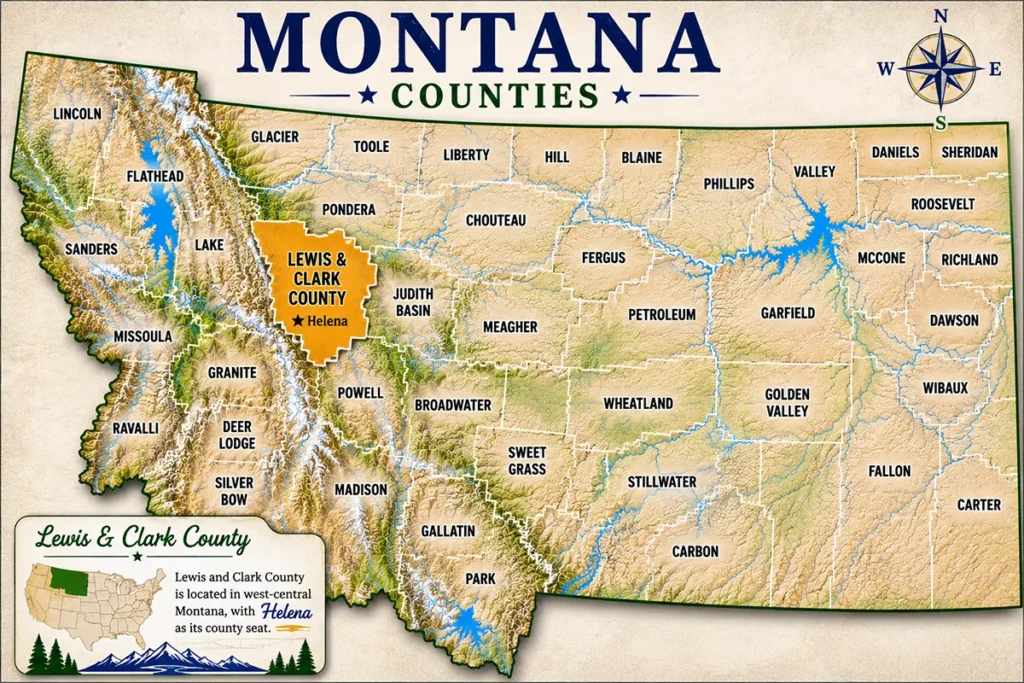
Where Is Lewis and Clark County?
Lewis and Clark County sits in west-central Montana, straddling the Continental Divide in the northern Rocky Mountains. Helena, the state capital, anchors the county at its center, sitting in a broad valley at roughly 4,000 feet elevation.
The county is bordered by Broadwater County to the east and Jefferson County to the southwest. Cascade County — home to Great Falls — lies to the north, and Deer Lodge County borders it to the west.
Covering approximately 3,461 square miles, the county is large enough to feel genuinely wild once you leave the valley. Interstate 15 runs north–south through Helena, making it a natural stopover between Missoula and Great Falls.
A Brief History of the County
The county takes its name from Meriwether Lewis and William Clark, whose Corps of Discovery passed through this region in 1805 and again on the return journey in 1806. The Missouri River corridor they followed runs right through the heart of what is now the county.
Gold was discovered at Last Chance Gulch in 1864, and Helena grew rapidly from a mining camp into one of the wealthiest cities per capita in the United States by the 1880s. The fortunes built here funded extraordinary architecture that still lines the streets today.
Montana’s territorial capital was moved to Helena in 1875, and it was confirmed as the permanent state capital after statehood in 1889. That political history shapes the city’s identity to this day — Helena feels like a state capital in a way that many small cities don’t.
Getting to Lewis and Clark County
Helena Regional Airport (HLN) offers direct flights from Salt Lake City, Seattle, Denver, and a handful of other hubs. The runway and terminal were recently expanded, making connections easier than they used to be — though flight options are still more limited than Missoula or Bozeman.
Driving is the most flexible option. From Missoula, the drive east on I-90 then north on I-15 takes roughly two hours. From Bozeman in Gallatin County, expect just under two hours heading north on I-15.
There’s no Amtrak service directly into Helena, though the Empire Builder passes through Havre and other northern Montana cities. Renting a car on arrival is strongly recommended — you’ll need it for the county’s best outdoor attractions.
Helena: The Heart of Lewis and Clark County
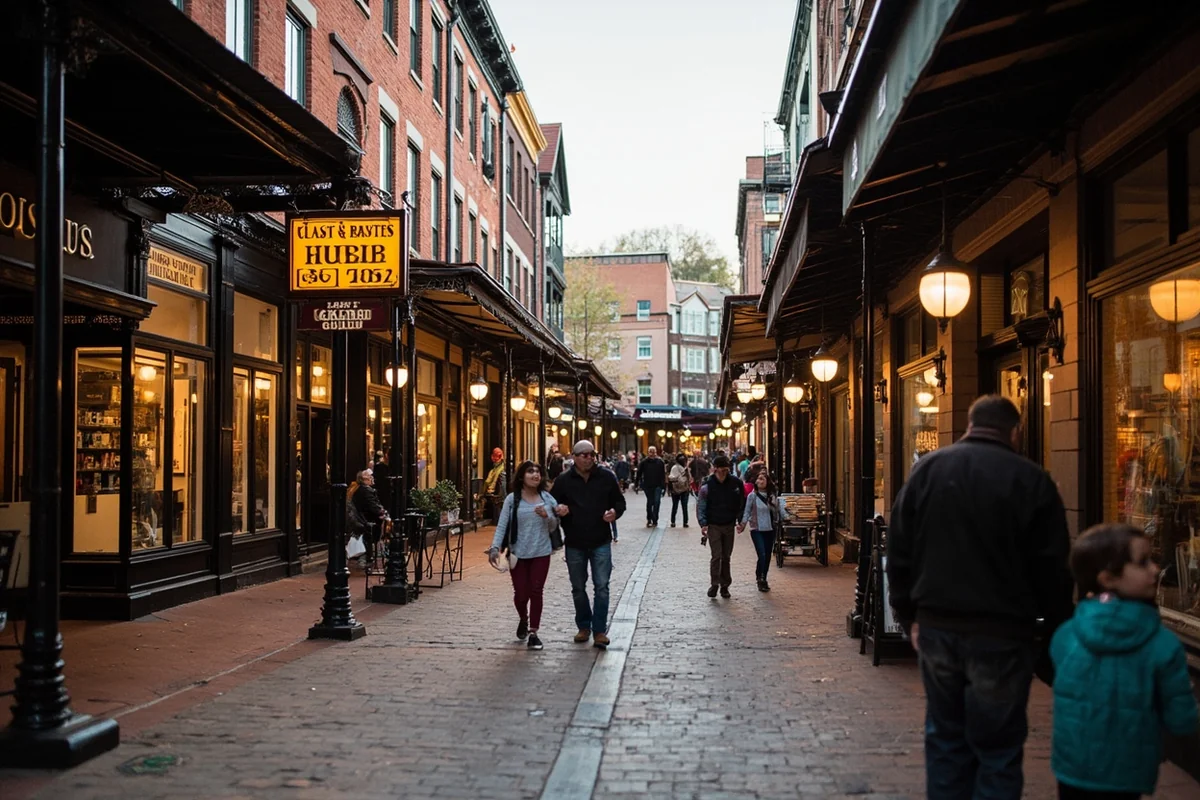
Helena is a genuinely pleasant surprise for visitors who arrive expecting a sleepy government town. The downtown — centered on the pedestrian-friendly Last Chance Gulch — has a collection of independent restaurants, coffee shops, galleries, and boutiques that punches well above the city’s population of around 33,000.
What most guides skip is the sheer density of Victorian-era architecture surviving in the old neighborhoods east of downtown. Walking those blocks feels more like Colorado or San Francisco than the plains of Montana.
Montana State Capitol
The Montana State Capitol is the obvious starting point for any Helena visit. The building, completed in 1902 with a copper dome, houses Charles Russell’s massive mural “Lewis and Clark Meeting Indians at Ross’ Hole” — one of the largest paintings by the famous Montana artist and genuinely worth seeking out.
Free guided tours run regularly on weekdays, and self-guided tours are available most days. One thing that caught me off guard: the building is still a functioning government center, so you may walk past actual legislators during the session months of January to April.
Cathedral of Saint Helena
Modeled loosely on the Votive Church in Vienna, the Cathedral of Saint Helena is the most striking building in the city. Construction began in 1908, but the twin Gothic spires weren’t completed until decades later.
The stained glass windows — 59 of them, imported from Germany and Bavaria — are the real draw. Morning light through the east-facing windows is extraordinary, and visiting shortly after it opens is worth the early wake-up.
Montana Historical Society
The Montana Historical Society Museum on Roberts Street is one of the best state history museums in the country. The Charles Russell Gallery alone justifies a stop, with the largest collection of his work anywhere.
Admission is typically very affordable — usually under $10 for adults at time of writing, with children often free. Budget at least 90 minutes here; first-time visitors who rush through always leave wishing they hadn’t.
Reeder’s Alley
Tucked below Last Chance Gulch, Reeder’s Alley is a cluster of original miner’s cabins and stone buildings dating from the 1870s that survived Helena’s rapid redevelopment. Today, the restored alley hosts shops and a popular pizza restaurant.
It’s an easy miss if you’re not looking for it. The alley entrance is just off Park Avenue — keep an eye out for the small historic marker.
Natural Attractions in Lewis and Clark County
Gates of the Mountains
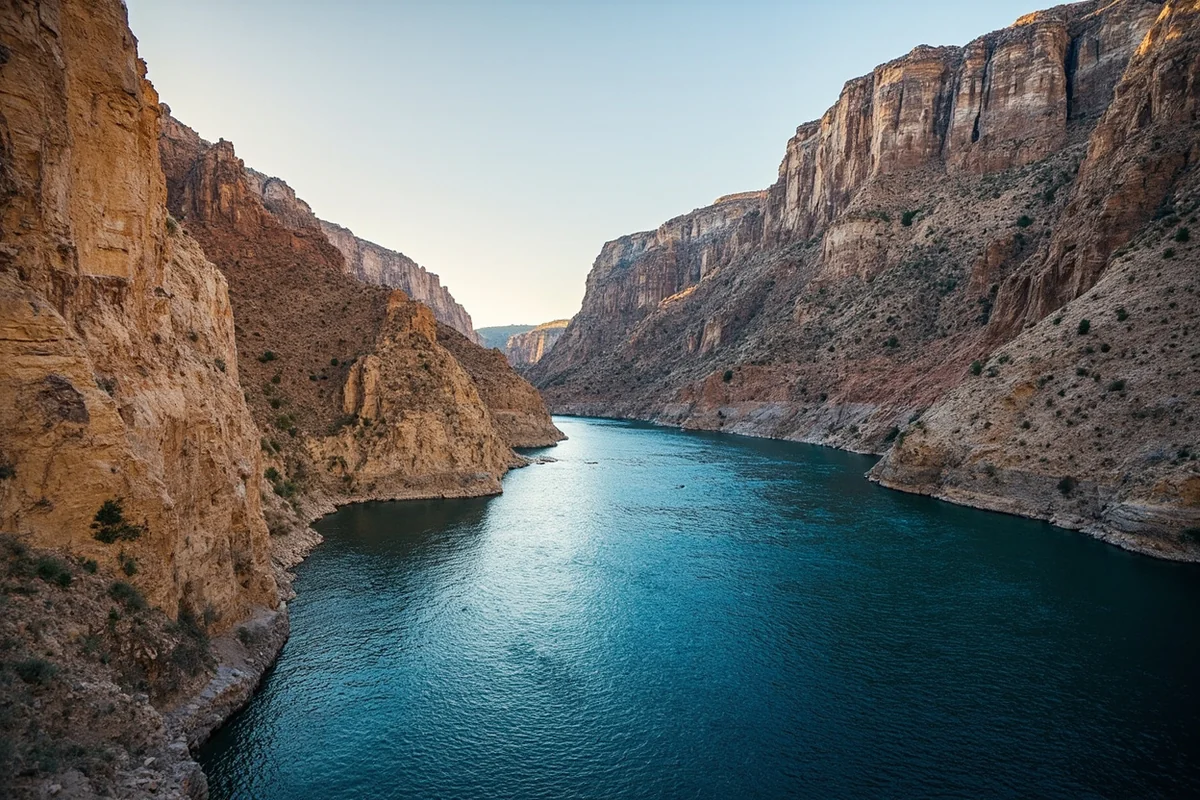
Lewis and Clark named this section of the Missouri River canyon in 1805, and the scenery hasn’t lost any of its drama. Towering limestone walls rise 1,200 feet above the river, and the only way to experience it properly is by boat.
The Gates of the Mountains boat tours depart from a marina about 20 miles north of Helena off I-15. Tours typically run from late May through September, and reservations are strongly recommended during peak summer weekends. The two-hour narrated cruise covers the full canyon while guides point out bighorn sheep, osprey nests, and the geological story written in the rock walls.
This was, for me, the single most memorable experience in the county. The canyon opens and closes in ways that genuinely feel as though the mountains are moving — exactly as Lewis described in his journal.
Holter Lake Recreation Area
Just north of the Gates of the Mountains, Holter Lake is a reservoir backed up behind a hydroelectric dam on the Missouri. The lake offers excellent fishing for rainbow trout, walleye, and perch, along with swimming, boating, and a campground managed by the Bureau of Land Management.
The fishing can be exceptional early in the season — late May and early June, before the summer boat traffic picks up. What surprised me on a late June visit was how uncrowded it remained on a Tuesday, compared to the chaos at more popular Montana lakes.
Mount Helena City Park
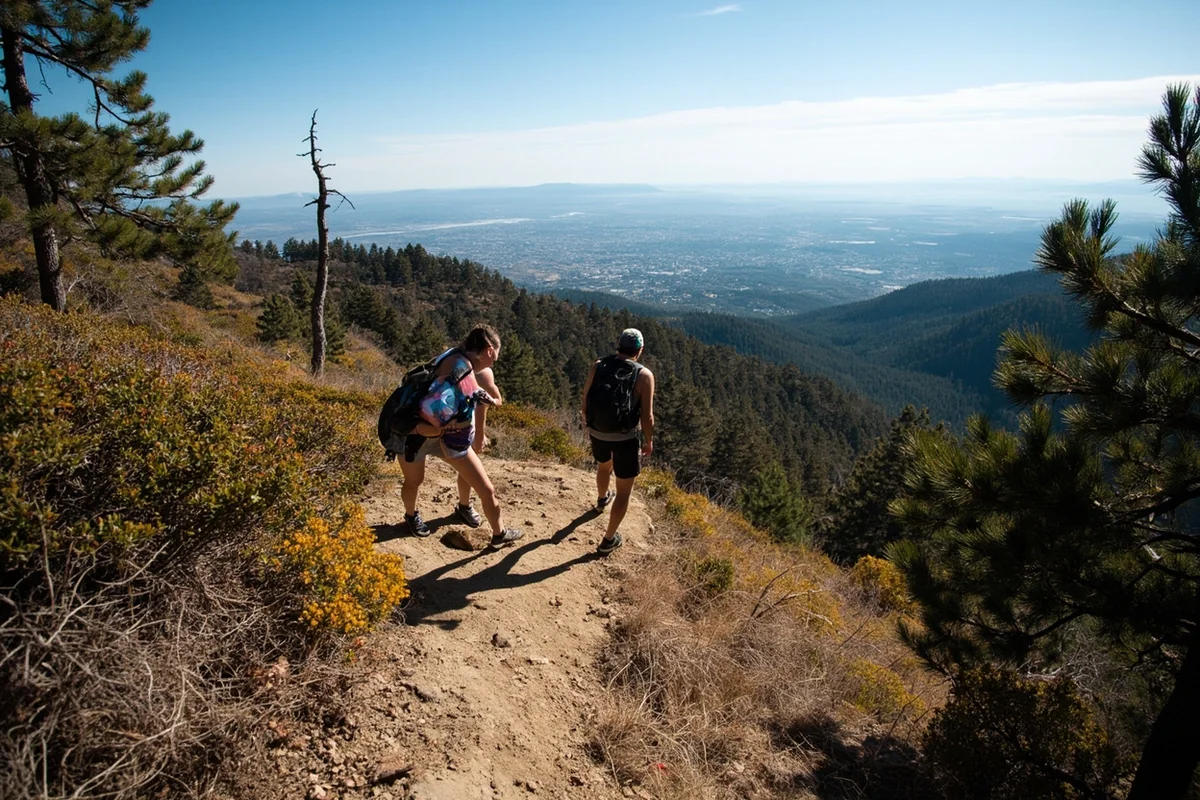
Rising directly from the western edge of Helena’s downtown, Mount Helena City Park offers 620 acres of trails with views across the entire valley. The summit trail (about 2 miles round trip to the top) is manageable for most fitness levels and delivers a panorama that puts the city and surrounding mountains in proper perspective.
The 1906 Trail — a longer switchbacking route — is more interesting for hikers who want varied terrain. Trailhead parking fills fast on weekend mornings, so arriving before 8 a.m. is genuinely the better call, not just a cliché.
Sleeping Giant Wilderness Study Area
Northwest of Helena off Highway 279, the Sleeping Giant Wilderness Study Area is where locals go when they want solitude. The rock formation the area is named for is visible for miles — a ridgeline that, from the right angle, looks exactly like a reclining figure.
Trails here are less maintained than in developed recreation areas, and conditions vary significantly by season. On a late September visit, the aspen groves in the lower drainages had turned an almost surreal amber — one of those Montana fall moments that makes you understand why people move here and never leave.
Elkhorn Ghost Town and the Elkhorn Mountains
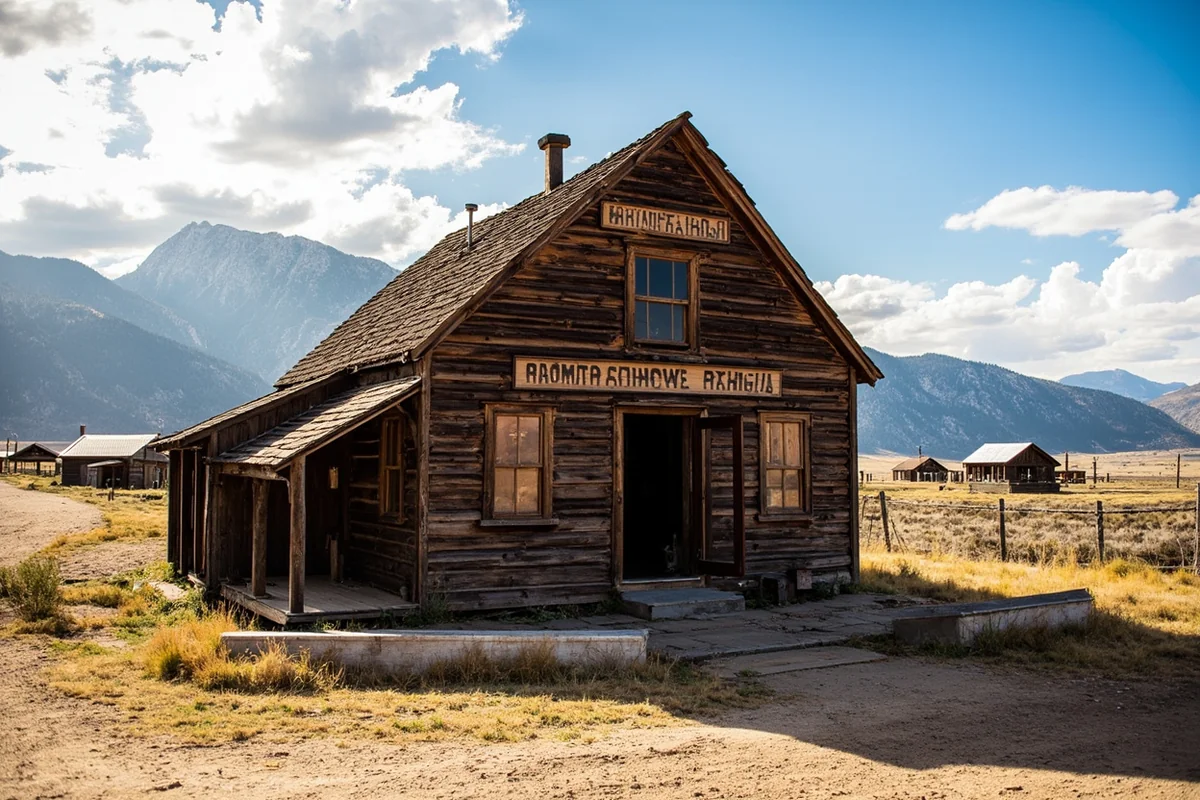
The Elkhorn Mountains, southeast of Helena, contain one of Montana’s better-preserved ghost towns. Elkhorn itself peaked in the 1880s and 1890s during the silver mining boom, and two original buildings — Fraternity Hall and Gillian Hall — survive in remarkable condition managed by Montana Fish, Wildlife & Parks.
The drive up is on a graded gravel road that’s manageable in most passenger vehicles in dry conditions. Snow can make it impassable from November through April. According to Montana Fish, Wildlife & Parks, the site is open year-round but the access road is unplowed in winter.
Hot Springs Near Lewis and Clark County
Montana is hot springs country, and Lewis and Clark County puts you within reasonable reach of several excellent soaks.
Broadwater Athletic Club and Hot Springs, just west of Helena, is the most accessible option — a historic bathhouse with outdoor pools fed by natural hot springs. The facility has had various periods of operation and restoration over the years; checking current hours before visiting is advisable.
Warm Springs, over in Deer Lodge County territory, is a short drive west on I-90. For more rustic options, the Beaverhead and Granite County regions to the south and west have undeveloped geothermal areas worth exploring.
Outdoor Recreation Beyond the Highlights
Fly Fishing
The Missouri River below Holter Dam — sometimes called the “Mo” — is one of Montana’s most celebrated tailwater fisheries. The section running downstream from the dam maintains cold, clear water year-round, creating ideal conditions for large rainbow and brown trout.
Expect to pay roughly $300–$500 per person for a guided full-day float, which includes the boat, guide, and usually lunch. That’s in the standard range for quality Montana guided fishing. Walking-wade access is free and available at several pullouts, though the fish pressure in the most accessible spots is significant.
Skiing and Winter Recreation
Great Divide Ski Area, about 22 miles from Helena, is a genuinely underrated Montana mountain. With over 1,500 acres of terrain and virtually no lift lines on weekdays, it’s a refreshingly crowd-free alternative to the big resorts. Day passes are typically around $50–$70 at time of writing — significantly less than Whitefish or Big Sky.
The snowpack here can be variable compared to western slope mountains, and conditions before late December are unpredictable. The flip side is that late-season spring skiing in March and April, with long sunny days and crusted corn snow, can be excellent.
Biking and the Beartooth Trail
Helena has invested substantially in trail infrastructure, and the Beartooth Trail system connects Mount Helena with surrounding open space. Road cycling is also popular along the valley corridors — the route toward Canyon Ferry Lake is a classic local ride with manageable climbing and big views.
Canyon Ferry Lake and the Missouri River Reservoirs
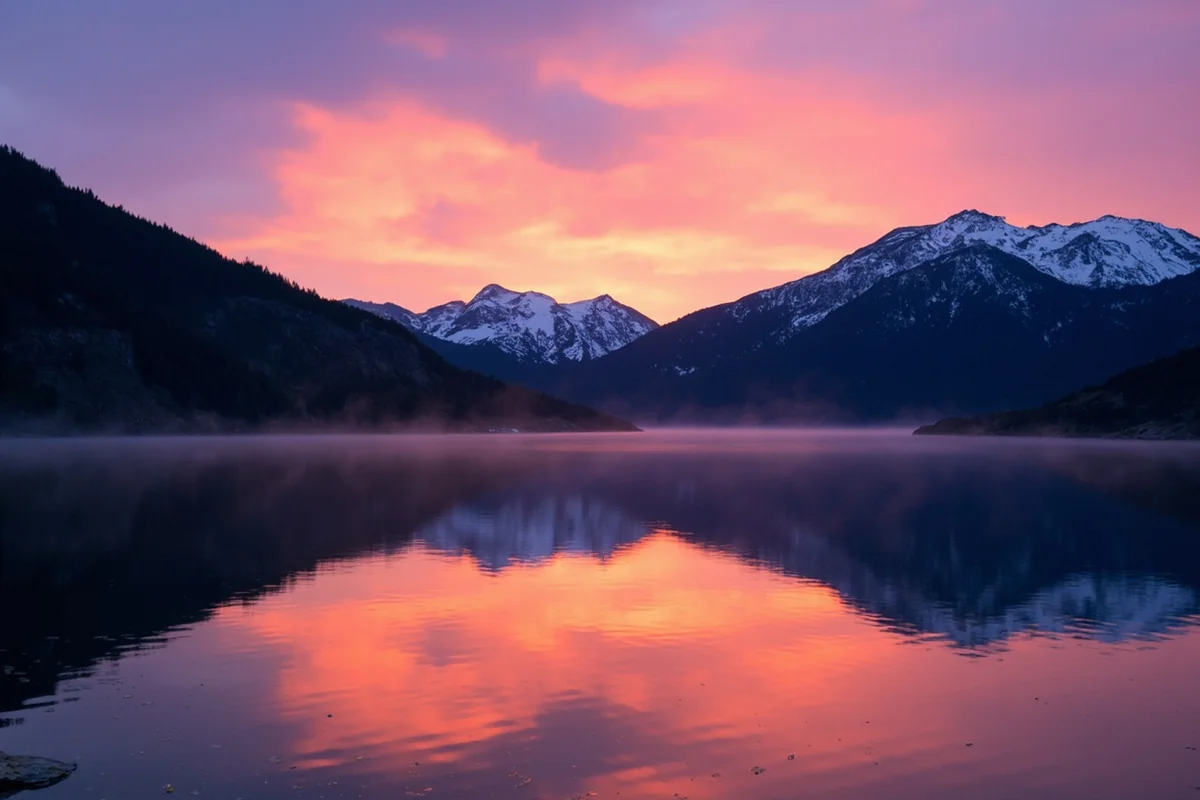
Canyon Ferry Lake is the largest reservoir in Montana, stretching about 35 miles along the Missouri River east of Helena. The lake is a major recreation hub for boating, sailing, fishing, and camping, with multiple state park units managed by Montana Fish, Wildlife & Parks along its shores.
The west shore — accessible via Canyon Ferry Road from Helena — is the busier, more developed side. The east shore, reached via Townsend in Broadwater County, is quieter and worth the extra drive if solitude is the goal.
Bald eagle viewing in late fall and early spring is outstanding along the upper reservoir — a detail that most visitors don’t know until someone local mentions it. According to Montana Fish, Wildlife & Parks, Canyon Ferry regularly hosts one of the largest concentrations of bald eagles in Montana during migration periods.
Suggested Itinerary
A weekend gives you enough time to cover Helena’s highlights and get out into the county’s natural areas. Three days is better, but two days done well beats three days done scattered.
Day 1: Helena History and Downtown
Start the morning at the Montana Historical Society Museum, arriving when it opens to beat school groups. Allow 90 minutes to two hours, focusing on the Charles Russell Gallery and the main Montana history exhibits.
From there, walk up the hill to the State Capitol for a tour — the free guided tours are worth the slight schedule constraint. Afterward, cut through the Capitol grounds and walk down toward Last Chance Gulch for lunch at one of the independent restaurants along the pedestrian mall.
Spend the afternoon at the Cathedral of Saint Helena (worth more time than most visitors give it), then walk down to Reeder’s Alley before the shops close in the early evening. End the day with dinner in downtown Helena — the restaurant scene has improved significantly in recent years, with solid options for burgers, craft beer, and upscale Montana cuisine.
Day 2: Gates of the Mountains and the Missouri
Check the Gates of the Mountains boat tour schedule before you leave — tours are typically mid-morning and early afternoon. A 10 a.m. departure gives you time for a quick breakfast without rushing.
After the boat tour, drive north a few more miles to Holter Lake for a picnic lunch at one of the BLM recreation sites. If fishing is on the agenda, the Missouri River access points downstream from Holter Dam are worth the detour.
On the return to Helena, consider stopping at Mount Helena for a late afternoon hike if energy allows — the sunset light from the summit is worth timing it right. The 1906 Trail back down in fading light, with the city below, is genuinely memorable.
Where to Stay in Lewis and Clark County
Helena’s accommodation options have expanded as the city has grown — Helena is among Montana’s faster-growing communities, and the hotel stock reflects that. Options range from national chain hotels near the interstate to boutique properties and historic bed-and-breakfasts in the older residential neighborhoods.
Expect to pay roughly $120–$200 per night for a mid-range hotel during summer peak season, with boutique and historic properties generally at the higher end of that range. Legislative session months (January through April in odd-numbered years) are surprisingly busy and can push rates up — a quirk that catches visitors off guard.
Camping is excellent and affordable throughout the county. Canyon Ferry State Park campgrounds book up well in advance for summer weekends, so reservations through Montana Fish, Wildlife & Parks online system are essential. Holter Lake BLM campgrounds are slightly less competitive but still require planning.
Where to Eat in Helena
The dining scene in Helena is better than its size suggests. For a proper Montana breakfast, the local diners around downtown open early and cater to state workers and ranchers on their way through — portions are honest and coffee is always on.
For dinner, Last Chance Gulch and the surrounding blocks offer farm-to-table options, pizza, craft beer bars, and a few places doing creative takes on Montana ingredients like bison and huckleberry. The Helena craft brewery scene is small but genuine — worth an evening exploring.
One honest note: on a recent trip, service times in the busier restaurants ran longer than expected, especially during busy summer weekends. Building in extra time for dinner before an evening activity is the smart move.
What Most Visitors Get Wrong About Lewis and Clark County
Underestimating the distances. The county covers over 3,000 square miles, and attractions like the Elkhorn Mountains, Gates of the Mountains, and Canyon Ferry Lake are not clustered together. A lot of visitors plan to hit all three in a day and end up rushing each one. Pick two geographic areas per day, maximum.
Ignoring shoulder seasons. Summer is popular, but May and September are arguably better for most activities. Temperatures are cooler, campgrounds have space, and the crowds at popular spots like the Gates of the Mountains boat tour are manageable without advance booking stress.
Skipping the history. Many outdoor-focused visitors blow through Helena’s museums and historic architecture to get to the trails faster. That’s understandable, but it means missing the context that makes the landscape meaningful. Lewis and Clark didn’t just pass through here — they named things, camped here, nearly failed here. Knowing that story changes how the canyon looks from the boat.
Not checking road conditions for mountain access. Gravel roads to places like Elkhorn Ghost Town or deep into the Big Belt Mountains can be rough or impassable depending on season and recent weather. The Montana Department of Transportation road condition site (511.mt.gov) is genuinely useful and worth checking before any off-highway trip.
Assuming Helena is purely a pass-through stop. This was my own first mistake, years ago — I stopped for one night intending to move on and ended up staying three. The city rewards the visitors who treat it as a destination rather than a waypoint.
Practical Information
| Category | Details |
|---|---|
| County Seat | Helena |
| County Size | Approx. 3,461 square miles |
| Nearest Major Airport | Helena Regional Airport (HLN) |
| Best Months to Visit | May–September (peak); September–October (fall colors); December–March (skiing) |
| Average Summer High (Helena) | Typically around 85–90°F in July |
| Average Winter Low (Helena) | Often below 15°F in January |
| Key Recreation Manager | Montana Fish, Wildlife & Parks; Bureau of Land Management |
| Cell Coverage | Good in Helena; patchy in mountain and canyon areas |
| Gas and Services | Full services in Helena; limited in outlying areas |
| Road Conditions | Check 511.mt.gov before driving mountain or gravel roads |
Nearby Counties Worth Adding to Your Trip
Lewis and Clark County sits in a geographically rich part of Montana, and several neighboring counties are worth adding to an extended road trip.
Broadwater County to the east is a natural pairing — the southern end of Canyon Ferry Lake spills into Broadwater, and the charming small town of Townsend is worth a stop.
Jefferson County to the southwest contains the remarkable Lewis and Clark Caverns, one of the largest limestone cave systems in the Northwest and easily the most underrated day trip from Helena.
For travelers heading south, Beaverhead County offers incredible backcountry and fishing along the Beaverhead River. Going north, Cascade County and Great Falls offers the Upper Missouri River Breaks and another major stretch of Lewis and Clark history.
Explorers heading east toward the high plains might consider Chouteau County or Blaine County for a genuine taste of Montana’s big-sky prairie landscape.
For those building a longer Montana circuit, Carbon County, Big Horn County, Custer County, and Flathead County each offer distinct Montana experiences well worth building into an itinerary.
Even lesser-known corners like Garfield County, Dawson County, Daniels County, and Fallon County reward travelers willing to venture off the main routes.
For dramatic geology and wide-open spaces, Carter County, Golden Valley County, and Fergus County are all worth a look on a longer trip. The Lewis Range to the northwest is a dramatic natural boundary worth understanding if you’re planning anything near Glacier country.
Final Thoughts
Lewis and Clark County rewards visitors who arrive with curiosity rather than just a checklist. The combination of genuine western history, an underappreciated capital city, world-class river scenery, and honest outdoor recreation makes it one of the most complete Montana destinations — and one of the most consistently overlooked.
What makes this place stick with you is the layering: the gold rush architecture visible from a trailhead parking lot, the bald eagles over a state capital reservoir, the exact stretch of river where a famous expedition noted the mountains seemed to open like gates. It doesn’t feel performed or packaged. It just feels like Montana.
If you’re planning a first trip, commit to at least two full days — more if fly fishing or mountain hiking are priorities. Come back in a different season and you’ll find a completely different county waiting for you.
How We Researched This Guide
This guide is based on multiple visits to Lewis and Clark County across different seasons, including summer, fall, and winter trips spanning several years of firsthand exploration.
Key attractions including the Gates of the Mountains boat tour, Mount Helena trail system, Canyon Ferry Lake, Elkhorn Ghost Town, and Helena’s historic downtown were all visited in person.
Practical details were verified with the Montana Historical Society, Montana Fish, Wildlife & Parks, the Bureau of Land Management (Butte Field Office), and the Montana Department of Transportation’s road conditions service.
Local outfitters, accommodation staff, and Helena-area guides contributed additional on-the-ground context.
Frequently Asked Questions
What is the best time of year to visit Lewis and Clark County, Montana?
The best time to visit Lewis and Clark County is from late June through September, when temperatures in Helena are mild (60s–80s°F) and most hiking trails, state parks, and outdoor attractions are fully accessible. If you want to avoid crowds and don’t mind cooler weather, early June and October offer great value with fewer tourists. Winter visits can be rewarding for skiing at Great Divide Ski Area, but mountain roads may require 4WD or chains.
What are the top things to do in Lewis and Clark County, Montana?
Lewis and Clark County is home to Montana’s capital city, Helena, giving you a mix of history, outdoor adventure, and culture all in one destination. Top activities include exploring the Gates of the Mountains Wilderness, touring the Montana State Capitol, hiking the Mount Helena City Park trail system, and visiting the Cathedral of Saint Helena. History buffs will also love tracing the actual Lewis and Clark Trail along the Missouri River, which runs right through the county.
How far is Lewis and Clark County from major Montana cities?
Helena, the county seat of Lewis and Clark County, sits roughly 115 miles north of Bozeman, about 100 miles south of Great Falls, and approximately 185 miles east of Missoula — all easy drives on I-15 or US-12. If you’re road-tripping from Billings, plan on around 230 miles, which takes about 3.5 hours. Helena makes a convenient base for exploring central Montana without requiring long daily drives.
How much does a trip to Lewis and Clark County, Montana typically cost?
A budget-conscious traveler can expect to spend around $100–$150 per day in Helena, covering a mid-range hotel ($90–$140/night), meals at local restaurants ($15–$30 per meal), and mostly free or low-cost outdoor attractions. Many of the best activities — like hiking Mount Helena or visiting the state capitol — are completely free. Peak summer weekends can push lodging prices higher, so booking 4–6 weeks in advance is a smart move.
What should I pack for a trip to Lewis and Clark County, Montana?
I’d recommend layering clothing regardless of season, since Montana weather can shift quickly — mornings in Helena can be cool even in July, while afternoons warm up fast. Pack sturdy hiking boots if you plan to hit the trails around Mount Helena or the Big Belt Mountains, along with sunscreen, a reusable water bottle, and bear spray if you’re venturing into backcountry areas. A light rain jacket is always a good call, especially for late-summer afternoon thunderstorms.
Is Lewis and Clark County a good destination for outdoor recreation in Montana?
Absolutely — Lewis and Clark County offers exceptional outdoor recreation ranging from day hikes and mountain biking in Mount Helena City Park to boating and fishing on Hauser and Holter Lakes along the Missouri River. The Gates of the Mountains Wilderness area, named by Meriwether Lewis himself, offers boat tours and backcountry hiking just 20 miles north of Helena. With over 70 miles of trails within the city limits alone, Helena consistently ranks as one of the best trail towns in the American West.
Are there family-friendly activities in Lewis and Clark County, Montana?
Lewis and Clark County is a great choice for families, with kid-friendly highlights including the Montana Historical Society Museum (free for children under 18), the Gates of the Mountains boat tour, and the interactive exhibits at the Original Governor’s Mansion. Outdoor families will love the accessible trails at Spring Meadow Lake State Park, which also has a swimming beach that’s free to use. Helena’s compact, walkable downtown makes it easy to explore with kids without spending a lot of money.