Most travelers planning a Montana trip never get past Glacier and Yellowstone. That’s a mistake — and the 55 state parks scattered across the state are the reason why.
TL;DR: Montana has 55+ state parks managed by Montana Fish, Wildlife & Parks. They range from world-class destinations that rival national parks (Makoshika’s dinosaur badlands, Lewis & Clark Caverns’ limestone caves, Bannack’s gold rush ghost town) to small, free, locally-loved spots most visitors never see. Montana residents enter all state parks for free with their vehicle registration. Non-residents pay a modest day-use fee or can buy a $9 annual pass. This guide covers the seven essential state parks worth a full visit, plus the broader landscape of what’s out there and how to pair state parks with a national parks trip.
I’m Robert Hayes, and I’ve been driving Montana’s back roads chasing history, geology, and quiet for the better part of two decades. The state parks are where I’ve spent the most time.
Glacier and Yellowstone get the magazine covers, but the state parks are where Montana’s actual story lives — the territorial-era gold rush in Bannack, the 2,000-year-old rock art at Pictograph Cave, the dinosaur fossils still eroding out of the badlands at Makoshika, the limestone caverns at Lewis & Clark.
This is the pillar for everything Montana state parks on RoamingMontana — the broad landscape, plus deep-dive links to the individual parks that deserve dedicated coverage.
For the federal-lands counterpart, see my Montana national parks pillar guide, which covers Glacier, Yellowstone, and all eight other NPS-managed sites in the state.
Liked this article?
Add Roaming Montana as a preferred source so you see more of our articles and guides on Google.
Quick Facts: The Montana State Parks System
| Stat | Detail |
|---|---|
| Total state parks | 55+ [verify current 2026 count via Montana FWP] |
| Managed by | Montana Fish, Wildlife & Parks (MFWP) |
| Largest park | Makoshika (11,538 acres) |
| Smallest park | Several under 50 acres |
| Resident fee | $9 annual via vehicle registration |
| Non-resident day fee | $8 per vehicle [verify 2026] |
| Non-resident annual | $9 annual pass [verify 2026] |
| Best month overall | June through September |
| Year-round parks | ~12 of 55 |
| Camping options | Tipis, yurts, cabins, RV, tent (varies by park) |
The Seven Essential Montana State Parks
These are the state parks worth treating as a destination — each one anchors a real trip, each one I’d return to without hesitation, and each one I’ve written or am writing a dedicated guide for. They’re organized geographically here, west to east.
1. Lone Pine State Park — Kalispell
The closest state park to Glacier National Park, and a frequently-overlooked gem. Lone Pine sits on a ridge above Kalispell with panoramic views of the Flathead Valley, Mission Mountains, and the Whitefish Range. The trail system, visitor center, and easy access from town make it the perfect rest-day stop during a Glacier trip.
Best for: Glacier visitors wanting an off-day, families, easy walking.
Pair with: A Glacier National Park trip; you’re staying in Kalispell anyway.
Deep-dive: See my full Lone Pine State Park guide for trail breakdowns, visitor center details, and seasonal notes.
2. Lewis & Clark Caverns State Park — Whitehall
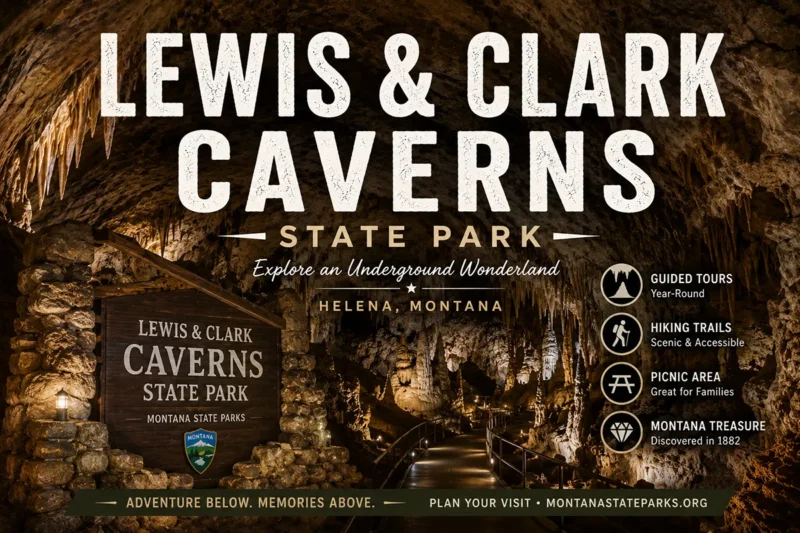
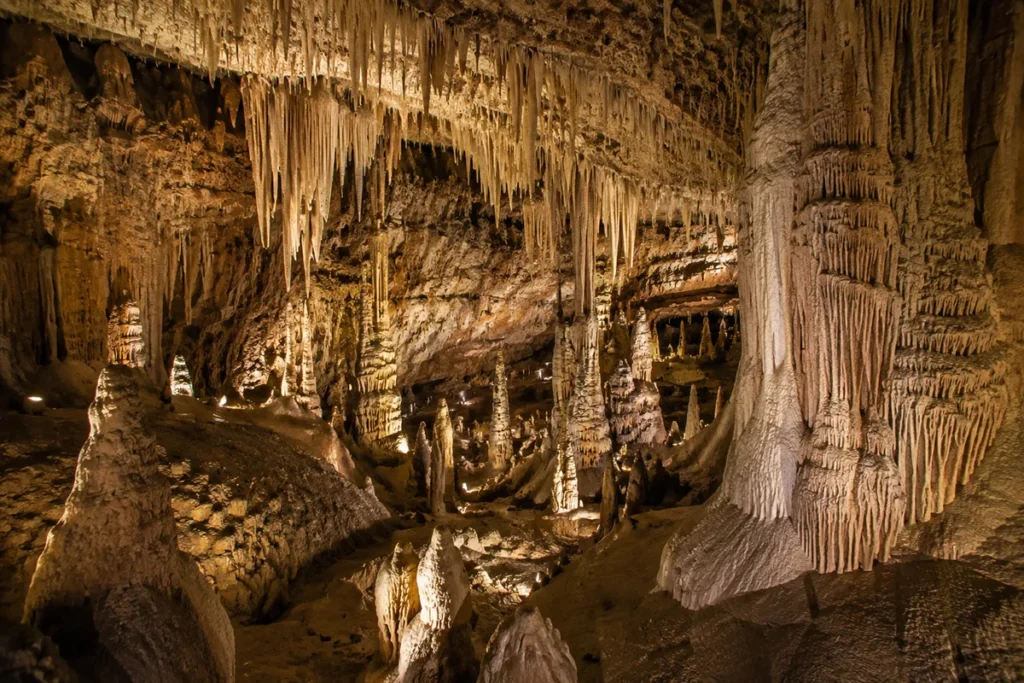
Montana’s first state park (established 1935) and home to one of the largest known limestone caverns in the Northwest. The guided tour is roughly two hours, descends through a series of chambers with stalactites, stalagmites, and a natural slide (yes, on your butt), and emerges through a different entrance after a stiff climb. The candlelight tours offered in December are something else entirely.
Best for: Travelers between Glacier and Yellowstone, families with kids 6+, history buffs.
Location: Near Whitehall, an easy detour off I-90 between Bozeman and Butte.
Pair with: A Glacier-to-Yellowstone road trip — the natural midpoint stop.
Deep-dive: See my full Lewis & Clark Caverns guide for tour types, what to wear, and the candlelight tour booking strategy.
3. Sluice Boxes State Park — Belt
A long, narrow limestone canyon along an old railroad bed that follows Belt Creek through a slot in the Belt Mountains. Almost entirely undeveloped, almost no crowds, and one of the best off-the-radar hikes in central Montana. The trail follows the old Great Northern railroad grade for miles, crossing the creek multiple times.
Best for: Solitude-seekers, day-hikers, photographers, history travelers interested in Montana’s railroad past.
Location: About 30 miles south of Great Falls, near the small town of Belt.
Pair with: A Great Falls trip including Giant Springs State Park and the Lewis & Clark Interpretive Center.
Deep-dive: See my full Sluice Boxes State Park guide for trail conditions, creek-crossing realities, and access notes.
4. Giant Springs State Park — Great Falls
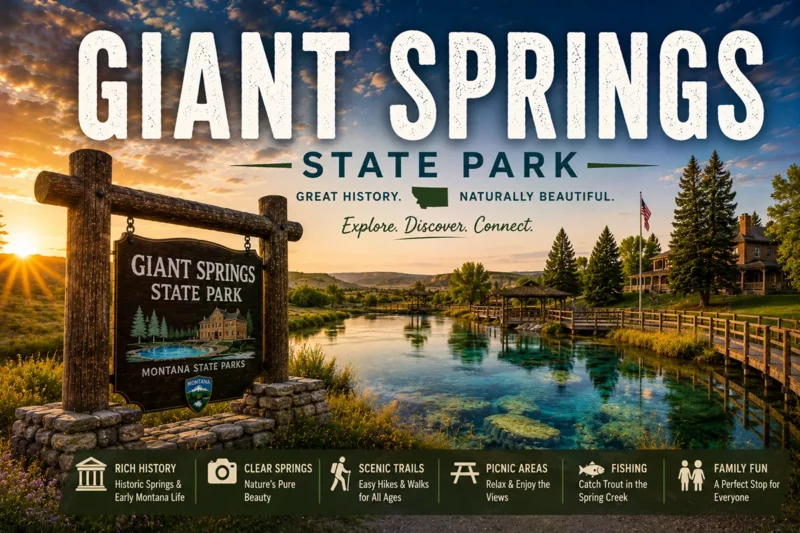
One of the largest freshwater springs in the United States, pumping out roughly 156 million gallons per day at a constant 54°F. Co-located with the Lewis & Clark Interpretive Center and adjacent to the River’s Edge Trail along the Missouri. Also home to the Roe River, which Guinness once recognized as the world’s shortest river (at 201 feet).
Best for: Families, day-trippers, anyone in Great Falls for any reason.
Pair with: The Lewis & Clark Interpretive Center next door, Sluice Boxes State Park for a longer central Montana loop.
Deep-dive: See my full Giant Springs State Park guide for the trout hatchery, the Roe River, and the cycling network.
5. Bannack State Park — Dillon
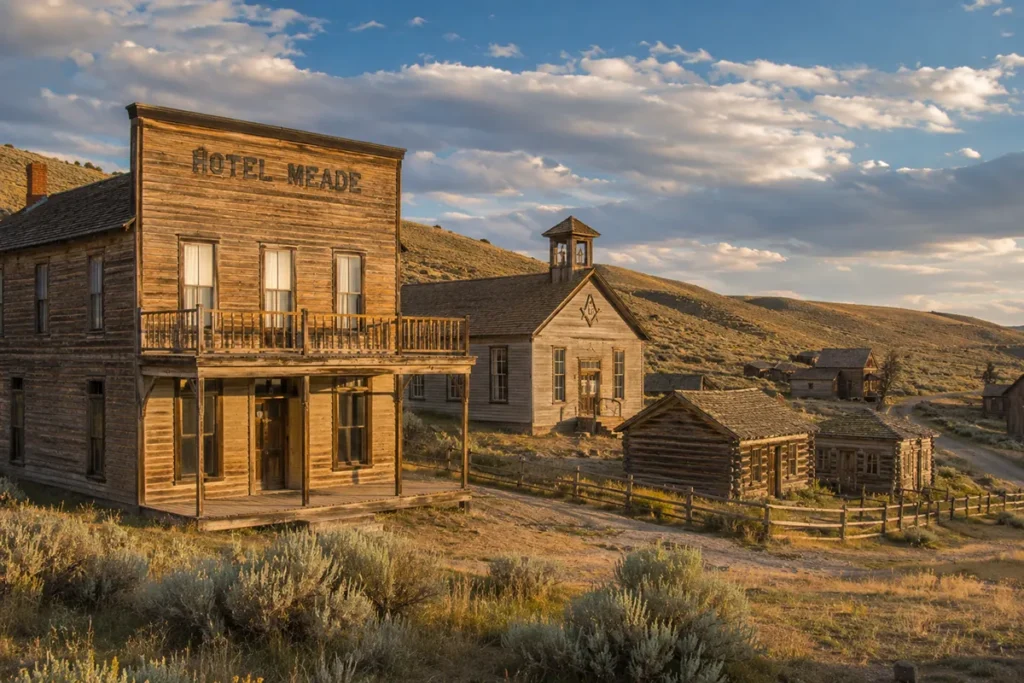
Montana’s first territorial capital (1864) and the site of the 1862 gold strike that launched the Montana gold rush. Over 60 buildings still stand — the Hotel Meade, the Masonic lodge, the church, the jail where Sheriff Henry Plummer was infamously hanged by vigilantes. The annual Bannack Days in late July features 1860s reenactments, gold panning, and period demonstrations.
Best for: History travelers, ghost-town enthusiasts, photographers, anyone interested in Montana’s gold rush story.
Location: About 25 miles west of Dillon, in deep southwestern Montana.
Pair with: Big Hole National Battlefield (60 miles north), Virginia City and Nevada City (an hour east).
Deep-dive: See my full Bannack State Park guide for the Plummer story, Bannack Days planning, and the camping options (including tipis).
6. Pictograph Cave State Park — Billings
Ancient rock art going back roughly 2,000 years, painted by Indigenous peoples on the walls of three sandstone caves on a south-facing bluff outside Billings. The site was excavated by archaeologists in the 1930s and 1940s and remains one of the most significant prehistoric sites in the Northern Plains. A short interpretive trail leads to each cave with viewing platforms.
Best for: History travelers, anyone in Billings, travelers headed to or from Little Bighorn.
Pair with: Little Bighorn Battlefield National Monument (an hour east), Pompeys Pillar (30 minutes east of Billings).
Deep-dive: See my full Pictograph Cave State Park guide for what’s visible at each cave, the archaeology, and the viewing logistics.
7. Makoshika State Park — Glendive
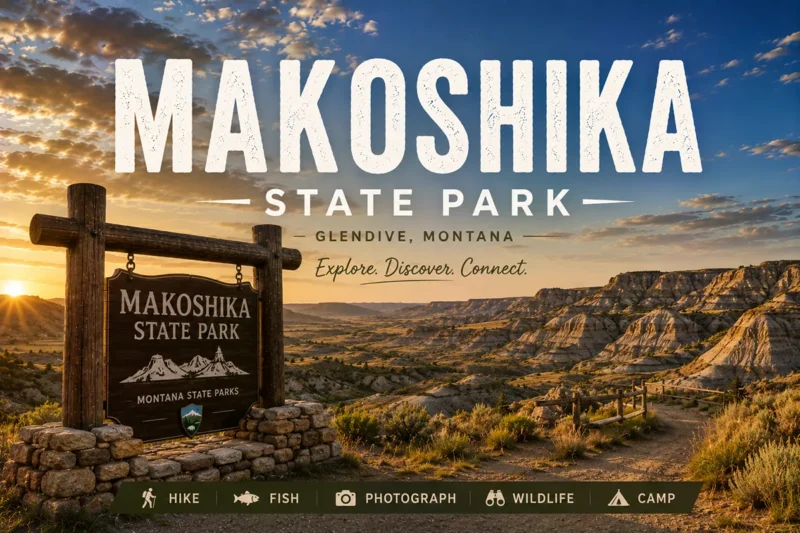
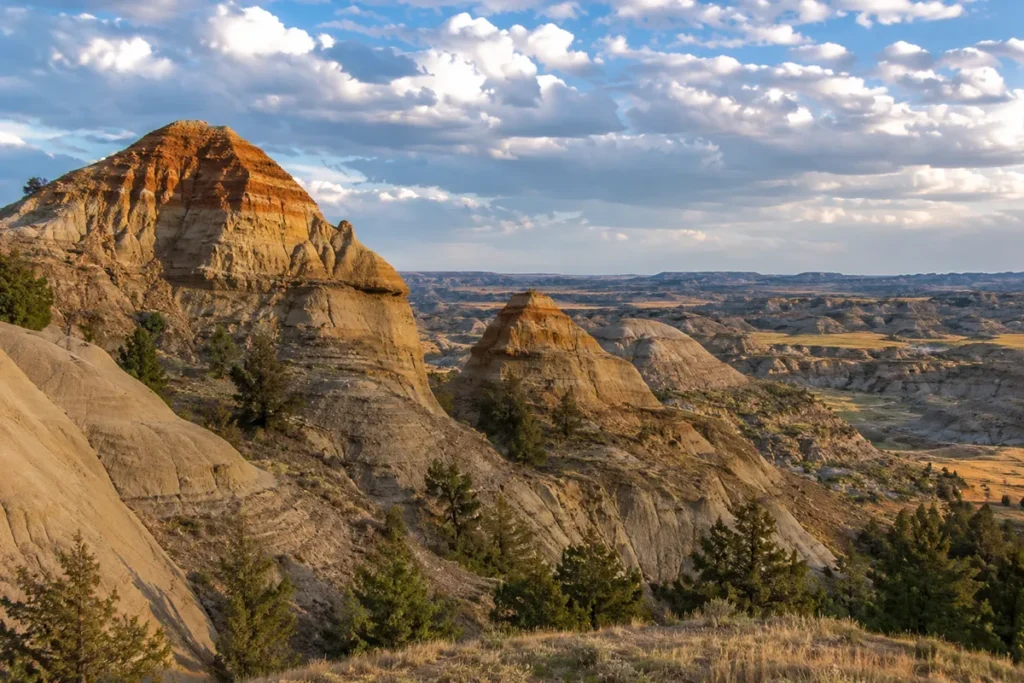
Montana’s largest state park at 11,538 acres, and one of the most productive dinosaur fossil sites on the continent. The badlands formations — eroded sandstone in tan, gray, and rust tones — look like they belong in Utah or South Dakota. T. rex and Triceratops fossils have come out of these hillsides, and you can still see exposed bones in some areas (looking only — no collecting). The visitor center is genuinely good.
Best for: Paleontology enthusiasts, badlands photographers, solitude-seekers willing to drive to far-east Montana.
Location: Just south of Glendive — and yes, the drive out here is long.
Pair with: Fort Union Trading Post NHS (90 minutes northeast) for a complete far-east Montana itinerary.
Deep-dive: See my full Makoshika State Park guide for the scenic drive route, the fossil viewing protocol, and the camping options.
Other Notable Montana State Parks Worth Knowing
The seven above are the destinations. These are the rest of the system — the ones worth knowing about even if they don’t anchor an entire trip.
Historic / Cultural
- First Peoples Buffalo Jump (near Great Falls) — One of the largest and best-preserved buffalo jump sites in North America. Indigenous peoples drove bison off these cliffs for over a thousand years.
- Chief Plenty Coups (Pryor) — The home of Crow Chief Plenty Coups, preserved as he left it. The visitor center tells the story of one of the most consequential Native American leaders of the early 20th century.
- Missouri Headwaters (Three Forks) — The exact spot where the Jefferson, Madison, and Gallatin rivers merge to form the Missouri. Lewis and Clark camped here in 1805. Genuine American historical bedrock.
- Travelers’ Rest (Lolo) — A Lewis & Clark campsite with verified archaeological evidence of the expedition. One of the only such verified sites on the entire 4,900-mile trail.
- Madison Buffalo Jump (Three Forks area) — Another major buffalo jump site, less developed than First Peoples but equally significant.
Geological / Scenic
- Smith River (central Montana) — Not a traditional drive-up state park. It’s a 59-mile float trip on a permitted river with limited launch dates — one of the most coveted floats in North America. Apply for permits in February.
- Painted Rocks (Bitterroot Valley) — Reservoir and surrounding hills near the Idaho border. Good camping, decent fishing.
- Lost Creek (near Anaconda) — Dramatic limestone cliffs and a creek-side trail; usually empty.
- Hell Creek (Garfield County) — On Fort Peck Reservoir, accessing remote Missouri Breaks country.
Water-Based / Recreation
- Flathead Lake State Park complex — Includes Wayfarers, West Shore, Big Arm, Yellow Bay, Wild Horse Island, and Finley Point — six separate units around Flathead Lake. Wild Horse Island is the standout; it’s accessible only by boat and offers genuine solitude with mountain views.
- Salmon Lake and Placid Lake (Seeley-Swan Valley) — Lake-based camping in the forested heart of western Montana.
- Beavertail Hill (near Missoula) — Easy access from I-90, tipi camping, good first stop for travelers driving in from the west.
- Cooney (near Roberts) — Reservoir for boating and fishing, popular with Billings-area families.
- Tongue River Reservoir (near Decker) — Eastern Montana boating and fishing; tournament-level walleye fishery.
Newer / Niche
- Milltown State Park (near Missoula) — Montana’s newest state park, created after the 2008 removal of the Milltown Dam at the confluence of the Blackfoot and Clark Fork rivers. A working example of conservation-driven river restoration.
- Anaconda Smoke Stack (Anaconda) — The 585-foot smelter smokestack from the Anaconda Copper Mining Company. A monument to Montana’s industrial era. Viewable but not accessible.
Pairing Montana State Parks with Your National Parks Trip
Most travelers plan their Montana trip around Glacier or Yellowstone (or both) and then wonder what else to add. State parks are the answer. Here’s how I’d pair them:
| If you’re visiting… | Add this state park | Why it works |
|---|---|---|
| Glacier National Park | Lone Pine State Park | Right in Kalispell — easy rest-day stop |
| Glacier (eastern approach) | First Peoples Buffalo Jump (Great Falls) | On the route from Great Falls to East Glacier |
| Yellowstone National Park | Lewis & Clark Caverns | Between the Three Forks–Bozeman corridor and Yellowstone |
| Glacier-to-Yellowstone road trip | Missouri Headwaters | The natural Three Forks midpoint |
| Little Bighorn Battlefield | Pictograph Cave | Layered Native American history, same Billings corridor |
| Big Hole National Battlefield | Bannack State Park | Both tell the southwest Montana 1860s story |
| Fort Union Trading Post | Makoshika State Park | The two essentials of far-east Montana |
| Lewis & Clark NHT (Great Falls) | Giant Springs | Adjacent to the Interpretive Center; on the trail itself |
| Bighorn Canyon NRA | Pictograph Cave | Both near Billings; ancient art + dramatic geology |
| Grant-Kohrs Ranch NHS | Bannack State Park | Both tell southwest Montana’s 1800s economic story |
Fees and Access: The Real Story
Here’s where every guide gets confusing. The actual answer:
If you’re a Montana resident: You paid the $9 state parks fee when you registered your vehicle. You can enter all state parks for free year-round. If you opted out at registration, you can pay individually.
If you’re a non-resident: You have two options:
- Day pass: $8 per vehicle per day [verify 2026]
- Annual pass: $9 per year [verify 2026] — pays for itself if you’ll visit two or more parks
A handful of state parks charge separate fees beyond the day-use pass:
- Lewis & Clark Caverns guided tour: $15/adult [verify 2026]
- Smith River float permit: variable, lottery-based
- Some camping reservations
For the full breakdown of camping fees, cabin rentals, and tipi reservations, the Montana FWP website is your source of truth. Reservations for popular sites (especially Lewis & Clark Caverns cabins and Bannack camping during Bannack Days) book months in advance.
Personal Tips: What I Wish I’d Known
Lessons from two decades of state park visits:
Resident pass is the best $9 in Montana. If you live here, never opt out at vehicle registration. The pass pays back the first time you stop at a state park.
Bannack Days is the time to visit Bannack — and the time to not visit Bannack. Third weekend in July, with reenactments, gold panning, and 1860s-style events. Crowded and magical. If you want the empty-ghost-town experience, visit literally any other week.
Makoshika in October is the move. Cool weather, dramatic light, almost no other visitors. The fossils don’t go anywhere.
Lewis & Clark Caverns is genuinely strenuous. The cavern tour involves stooping, ducking, and a downhill slide. Wear sturdy shoes and bring a jacket — it’s 50°F inside year-round.
Camping fills up fast at the well-known parks. Lewis & Clark Caverns cabins, Bannack tipis, Beavertail Hill, and Flathead Lake parks all book months ahead in summer.
Cell service is unreliable at every eastern Montana park. Download offline maps before you head out to Makoshika, Hell Creek, or anywhere near Fort Peck.
The bug season matters. Montana’s bug season guide is worth reading before any June or early July visit. Mosquitoes can be aggressive around lake-based parks.
Bear country rules still apply. State parks in western Montana are bear habitat. Bear spray on belts at Lone Pine, the Bitterroot parks, and anywhere in the Bob Marshall corridor. My Montana bear guide covers the specifics.
State Parks vs. National Parks: The Honest Comparison
If you’re a first-time Montana visitor with limited time, what’s the right balance?
National parks deliver: The signature destinations (Glacier, Yellowstone), the biggest scenery, the dense visitor infrastructure, and the brand-name experiences. They’re also crowded, expensive, and require advance planning. See my Montana national parks pillar guide for the full landscape.
State parks deliver: Specific, focused experiences (caverns, ghost towns, badlands, ancient rock art) with minimal crowds, low fees, and easier logistics. They tell the Montana story in pieces that the national parks don’t — the territorial era, the Indigenous past, the dinosaur paleontology, the gold rush economy.
My honest take: If you have 7 days, do Glacier + 2 state parks (Lewis & Clark Caverns midway, Lone Pine in Kalispell). If you have 10 days, add Yellowstone with Lewis & Clark Caverns as the natural midpoint. If you have 14 days, build in an eastern Montana loop covering Makoshika, Pictograph Cave, and Bighorn Canyon. The state parks make a Montana trip feel complete in a way that two national parks alone don’t.
Practical Info Box
| Topic | Quick Answer |
|---|---|
| How many Montana state parks? | 55+ (managed by Montana FWP) |
| Resident fee | $9 annual via vehicle registration |
| Non-resident fee | $8 day-use or $9 annual pass [verify 2026] |
| Largest park | Makoshika State Park (11,538 acres) |
| First state park established | Lewis & Clark Caverns (1935) |
| Best for ghost town | Bannack State Park |
| Best for fossils | Makoshika State Park |
| Best for caves | Lewis & Clark Caverns |
| Best for rock art | Pictograph Cave State Park |
| Best for kids | Giant Springs State Park |
| Best for solitude | Sluice Boxes State Park |
| Best near Glacier | Lone Pine State Park |
| Year-round access | Lone Pine, Giant Springs, Pictograph Cave (limited winter access at most others) |
Conclusion: The Half of Montana Most Travelers Miss
Montana’s 55 state parks are the half of the state most travelers miss entirely. They’re the places I’d send a friend who wanted to actually understand Montana — not just see it, but understand the gold rush, the dinosaurs, the Indigenous history, the geological strangeness, the territorial-era stories that made this state what it is.
My advice for your trip: pick at least one state park alongside whichever national park anchors your Montana visit. If you’re a first-timer, make it Lewis & Clark Caverns — the most accessible, most family-friendly, and most genuinely impressive of the system.
If you have repeat-visit time, push out to Makoshika or Bannack. The Montana that emerges from these visits is fuller, stranger, and more rewarding than the one you’d find on Glacier and Yellowstone alone.
This post is the pillar. For the deep-dives, here are the seven essentials:
- Lone Pine State Park — Kalispell
- Lewis & Clark Caverns — Whitehall
- Sluice Boxes State Park — Belt
- Giant Springs State Park — Great Falls
- Bannack State Park — Dillon
- Pictograph Cave State Park — Billings
- Makoshika State Park — Glendive
For the broader Montana context:
- Montana national parks pillar guide — the federal counterpart
- Glacier National Park guide — the most-visited Montana park
- Yellowstone National Park guide — the other big one
For broader trip planning, see my Montana trip planning guide, things to do in Montana, and the Montana bucket list. Pin this post for your planning, and drop any questions about a specific park in the comments — I’ll answer from experience.
FAQs About Montana State Parks
How many state parks are in Montana?
Montana has more than 50 state parks spread across the state. These parks protect a variety of landscapes, including mountains, lakes, rivers, historic sites, caves, and wildlife habitats.
What is the most visited state park in Montana?
Flathead Lake State Park is often among Montana’s most visited state parks due to its beautiful lakeside recreation opportunities, camping facilities, boating access, and proximity to popular tourist destinations.
Are Montana State Parks free to enter?
Montana residents generally receive state park access through the state parks fee included in vehicle registration. Non-residents typically pay a daily entrance fee or can purchase an annual Montana State Parks Pass.
What is the best state park in Montana?
The best Montana state park depends on your interests. Popular choices include Makoshika State Park for badlands scenery, Flathead Lake State Park for water recreation, Lewis and Clark Caverns State Park for cave tours, and Giant Springs State Park for family-friendly outdoor activities.
Can you camp in Montana State Parks?
Yes. Many Montana State Parks offer campgrounds with tent sites, RV sites, picnic areas, restrooms, and other amenities. Reservations are recommended during the busy summer season.
What is the largest state park in Montana?
Makoshika State Park is Montana’s largest state park, covering thousands of acres of rugged badlands terrain. It is known for its dinosaur fossils, unique rock formations, and scenic hiking trails.
Are pets allowed in Montana State Parks?
Pets are allowed in most Montana State Parks as long as they are kept on a leash and owners follow park regulations regarding cleanup and wildlife protection.
What activities can you do in Montana State Parks?
Visitors can enjoy hiking, camping, fishing, boating, swimming, wildlife viewing, photography, kayaking, paddleboarding, cave tours, picnicking, and educational programs depending on the park.
What is the best Montana State Park for hiking?
Lewis and Clark Caverns State Park, Makoshika State Park, Lone Pine State Park, and Chief Plenty Coups State Park offer some of Montana’s most popular hiking opportunities, with trails ranging from easy walks to more challenging routes.
Are Montana State Parks open year-round?
Many Montana State Parks remain open throughout the year, although services, campgrounds, visitor centers, and road access may be limited during winter months.
Do Montana State Parks require reservations?
Day-use visits typically do not require reservations. However, campsites, cabins, yurts, and guided cave tours at certain parks often require advance reservations, especially during peak travel seasons.
What is the best state park near Glacier National Park?
Flathead Lake State Park and Lone Pine State Park are popular options near Glacier National Park. Both offer scenic views, outdoor recreation, and convenient access to northwestern Montana attractions.
Which Montana State Park has caves?
Lewis and Clark Caverns State Park is Montana’s most famous cave park. It features one of the largest known limestone caverns in the Northwest and offers guided tours through impressive underground formations.
What is the best Montana State Park for families?
Giant Springs State Park is one of the best family-friendly parks in Montana thanks to its easy walking trails, fish hatchery, picnic areas, and educational opportunities for visitors of all ages.
When is the best time to visit Montana State Parks?
The most popular time to visit Montana State Parks is from late spring through early fall, typically May through September, when weather conditions are ideal for hiking, camping, boating, and sightseeing.
Written by Robert Hayes, who has driven the back roads of every Montana region tracking down state parks, gold rush sites, fossil beds, and rock art for the better part of two decades