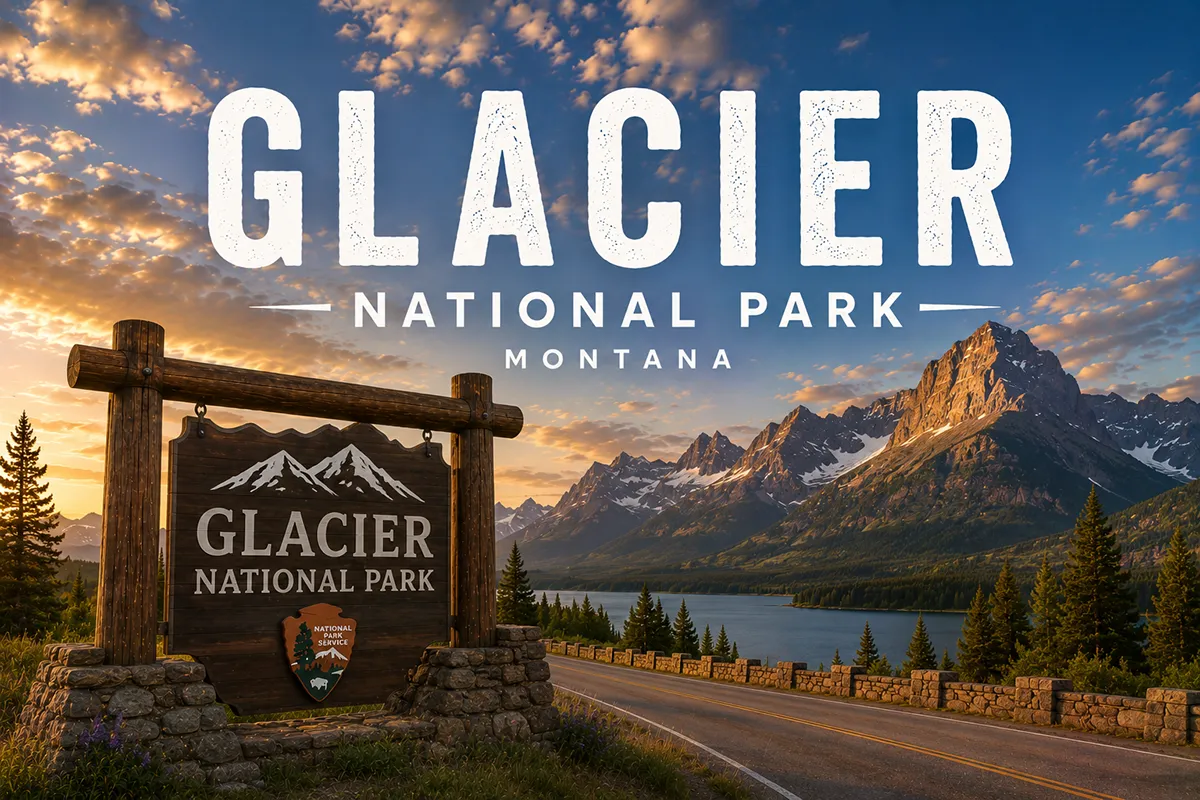
When I first visited Glacier National Park in 2016, there were 26 named glaciers within its boundaries. Today, by the U.S. Geological Survey’s count, there are roughly 25. By the time my future kids are old enough to hike the Highline Trail, scientists predict there may be none left.
TL;DR: Glacier National Park covers just over one million acres in northwest Montana along the Canadian border — the U.S. half of the world’s first International Peace Park. It’s one of just two true National Parks in Montana (the other is Yellowstone), and it’s the one I’d send a first-timer to without hesitation. The park has five functional entrances, one iconic scenic drive (Going-to-the-Sun Road), more than 700 miles of trails, and a wildlife density that genuinely matches the brochure. This guide covers the entrances, when to come, where to base, the 2026 reservation reality, and the honest tradeoffs no tourism site will tell you.
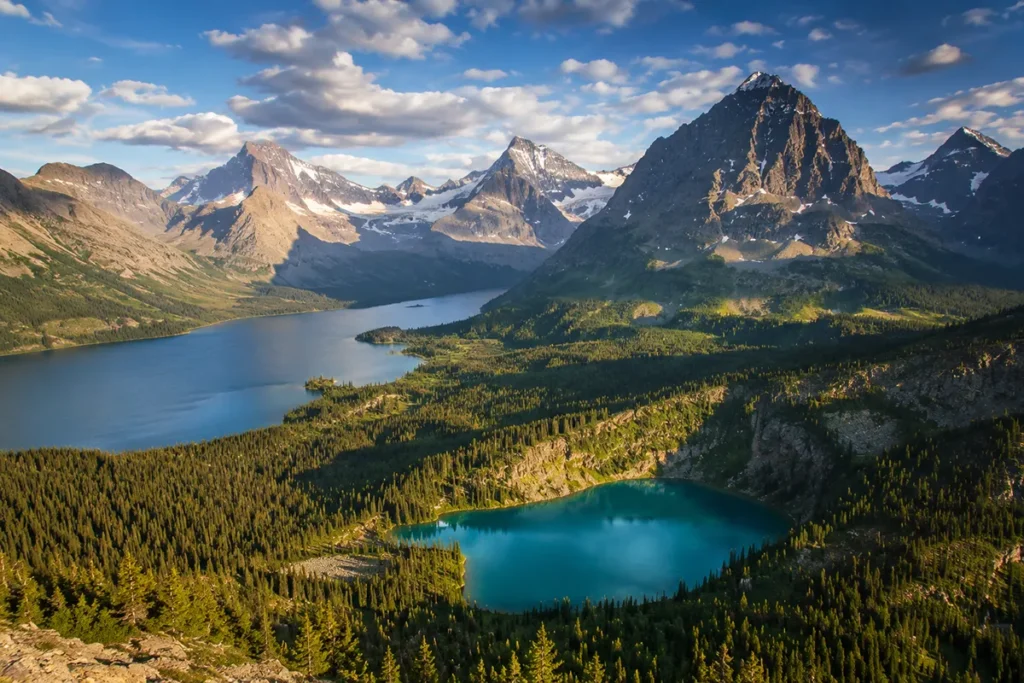
I’m Sarah Bennett, and I’ve been driving up to Glacier from my home in the Flathead Valley for the better part of a decade.
I’ve watched the Going-to-the-Sun Road open in June with 80-foot snow walls still standing at Logan Pass, and I’ve hiked the Highline in late September with the larches turning gold and the crowds gone.
I’ve also sat in two-hour traffic backups at the West Entrance in July, slept in my car when a campground reservation fell through, and learned which gateway towns are worth the extra drive.
This is the kind of guide I wish I’d had on my first trip. It’s the hub for everything Glacier on RoamingMontana — the broad strokes, plus links to the deep-dives I’ve written on the individual topics that deserve their own posts.
For the wider context on how Glacier fits into Montana’s federal lands more broadly, see my Montana national parks pillar guide, which covers all ten NPS-managed sites in the state.
Liked this article?
Add Roaming Montana as a preferred source so you see more of our articles and guides on Google.
Quick Stats: What You’re Working With
| Stat | Detail |
|---|---|
| Designation | National Park (one of 63 in the U.S.) |
| Established | May 11, 1910 |
| Size | 1,013,322 acres (~1,583 square miles) |
| Named glaciers remaining | ~25 [verify USGS 2026 count] |
| Annual visitors | ~3 million [verify 2025 figure] |
| Highest point | Mount Cleveland, 10,466 feet |
| Number of lakes | 700+ |
| Trail miles | 700+ |
| Entry fee [verify 2026] | $35 per vehicle (7-day) |
| Annual pass | $80 America the Beautiful Pass |
| Nearest major airport | Glacier Park International (FCA), Kalispell |
The Five Entrances of Glacier — And Which One Is Right for Your Trip
Most first-time visitors don’t realize Glacier has five functional entry corridors, and choosing the wrong one can cost you a day. Here’s the honest breakdown.
1. West Glacier Entrance (West Side) — The Default
The most popular and most developed entrance. This is where the western terminus of Going-to-the-Sun Road begins, where Lake McDonald (the park’s largest lake) sits, and where the West Glacier village hosts the bulk of park infrastructure — Apgar Visitor Center, the Lake McDonald Lodge, restaurants, shuttle stops.
Best for: First-timers, Going-to-the-Sun Road drivers, anyone flying into Glacier Park International (FCA) in Kalispell.
Gateway towns: Columbia Falls, Whitefish, Kalispell — all within 30–45 minutes.
The honest tradeoff: It’s also the most crowded entrance. In July and August, expect entry-line waits at peak hours (10 a.m. – 2 p.m.). Arrive before 7 a.m. or after 4 p.m. if you can.
2. St. Mary Entrance (East Side) — The Quieter Front Door
The eastern terminus of Going-to-the-Sun Road. Smaller than West Glacier in terms of services, but with arguably the more dramatic introduction to the park — you’re immediately at St. Mary Lake with Wild Goose Island in view. The east side gets significantly less foot traffic than the west.
Best for: Travelers driving in from the east (from Great Falls, Helena, or beyond), photographers, anyone who wants Going-to-the-Sun Road without the West Glacier crowds.
Gateway towns: East Glacier Park Village, Browning on the Blackfeet Reservation.
The honest tradeoff: Limited services. Plan to fuel up and stock food in Browning or before you arrive.
3. Many Glacier Entrance — The Wildlife Heart
If you came to Glacier to see grizzlies, mountain goats, and bighorn sheep, this is where you go. The Many Glacier valley is the park’s wildlife corridor, the trailhead for Grinnell Glacier and Iceberg Lake (two of the park’s signature hikes), and home to the historic Many Glacier Hotel.
Best for: Wildlife photographers, serious hikers, anyone with a flexible itinerary.
The honest tradeoff: Many Glacier has been impacted by major infrastructure work in recent years (road reconstruction, lodge renovations). Always check current conditions on NPS.gov before you commit. [verify 2026 Many Glacier road and lodge status]
4. Two Medicine Entrance — The Locals’ Pick
Two Medicine is what Many Glacier was 40 years ago — dramatic peaks, a deep glacier-carved lake, world-class hiking, and a fraction of the crowds. There’s no lodge, just a small store and campground. The trails (Pitamakan Pass, Scenic Point, Cobalt Lake) are punishingly beautiful.
Best for: Return visitors, backpackers, anyone who wants to feel like they’re in actual wilderness.
The honest tradeoff: Limited cell service, no major lodging, basic dining. This is a “pack your own lunch” entrance.
5. Polebridge / North Fork — The Off-Grid Corner
The most remote and least-visited corner of Glacier. The road in from Polebridge is gravel, washboarded, and notorious for blowing out tires.
The Polebridge Mercantile bakes huckleberry bear claws that are worth the drive on their own. Inside the park boundary, Bowman Lake and Kintla Lake are the deepest, most isolated lakes in Glacier.
Best for: Adventurous travelers, return visitors, people who want zero cell service and zero crowds.
The honest tradeoff: No services inside this corridor. Cell signal disappears miles before you arrive. The road can be impassable in spring and after heavy rain.
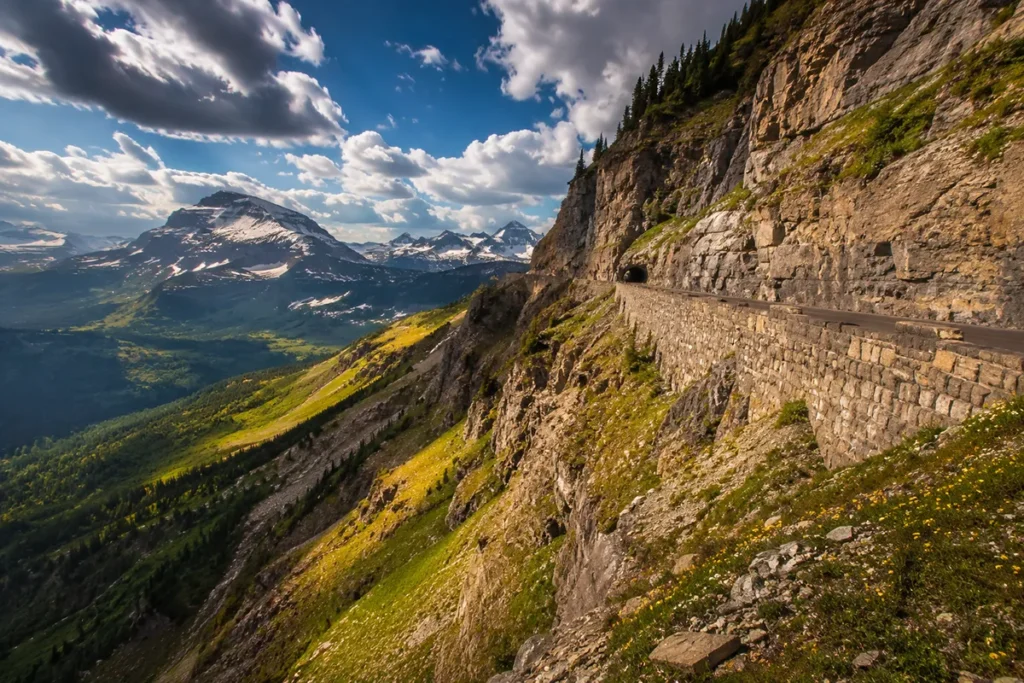
Going-to-the-Sun Road: The Park’s Main Artery
Going-to-the-Sun Road is the 50-mile scenic drive that bisects Glacier from west to east, crossing the Continental Divide at Logan Pass (6,646 feet). It’s a National Historic Landmark and one of the great engineering feats of the American 20th century — 11 years to build, completed in 1932, and still terrifyingly narrow in places.
The full road typically opens in mid-June to early July (it varies by snowpack year), and closes by mid-October. Plan a full day to drive it one-way with stops; two days if you want to actually hike the trailheads it accesses.
2026 reservation reality: Vehicle reservations are NOT required for Going-to-the-Sun Road for 2026, but Logan Pass parking is now limited to 3 hours starting July 1, and the park shuttle has shifted to a reservation-only express service. The specifics matter enormously to your trip planning.
For the full breakdown — every viewpoint in driving order, every major trailhead, the 2026 shuttle rules, the historical opening-date tracker, and which direction to drive — see my complete Going-to-the-Sun Road driving guide.
Best Hikes: The Short Version
Glacier has 700+ miles of trails. Most visitors hike fewer than three of them. Here’s the quick orientation:
For first-timers (easy / scenic):
- Trail of the Cedars — 1.0 mile loop, wheelchair-accessible, ancient rainforest feel
- Hidden Lake Overlook — 2.7 miles round-trip from Logan Pass, the iconic introduction
- Avalanche Lake — 5.9 miles round-trip, waterfall lake in a hanging valley
For day-hikers in good shape:
- Highline Trail (Logan Pass to The Loop) — 11.8 miles one-way with shuttle
- Iceberg Lake — 9.6 miles round-trip, turquoise lake fed by an active glacier
- Grinnell Glacier — 10.6 miles round-trip, the park’s signature glacier hike
For experienced hikers:
- Grinnell Glacier Overlook (off Highline) — strenuous side spur with the best view in the park
- Pitamakan Pass (Two Medicine) — 17-mile loop, demands a full day
For the full breakdown of all 16 must-do trails, difficulty ratings, what to expect at each, crowd patterns, and which to skip — see my 16 best hikes in Glacier National Park guide.
Glacier is also a waterfall lover’s park. The trails to Running Eagle Falls, Saint Mary Falls, Hidden Falls, Redrock Falls, and Ptarmigan Falls are all moderate hikes worth your time. Backcountry travelers chasing Mokowanis Cascade Waterfall or Miche Wabun Falls are operating in serious wilderness.
Where to Stay: The Strategic Choice
Where you base for Glacier is the single most important logistical decision of your trip. The wrong choice can add an hour-plus of driving each direction every day.
The three main options:
- Inside the park — Historic lodges (Many Glacier Hotel, Lake McDonald Lodge, Rising Sun Motor Inn) and campgrounds. Books out 12+ months in advance. The most magical, the most expensive, the most stressful to book.
- In a gateway town — Columbia Falls, Whitefish, Kalispell on the west side; East Glacier Park Village on the east side. Easier booking, more flexibility, 20–45 minute drive to the park entrance.
- RV / camping outside the park — Significantly cheaper, often more available. See RV parks in Columbia Falls and West Glacier and Montana’s best RV parks for the breakdown.
For the full lodging strategy — including which lodge to book if you want the historic experience, which gateway town suits which trip type, and how to handle east-side vs. west-side sleeping arrangements — see my where to stay in Glacier National Park guide.
When to Visit: Month by Month
Glacier’s “open season” is shorter than people expect. The high country (Going-to-the-Sun Road, Logan Pass, most alpine trails) is only fully accessible from roughly early July to mid-October.
May: Cold, wet, most of the park inaccessible. Lake McDonald area open. Skip this month unless you specifically want solitude and don’t care about the alpine. See Montana in May
June: Going-to-the-Sun Road still being plowed for most of the month. Wildflowers starting. Crowds light. See Montana in June for the broader picture.
July: Full road access by mid-month. Peak wildflower season. Peak crowds also begin. Montana in July covers the trade-offs.
August: The classic Glacier experience. Warm, busy, dry. Smoke from regional wildfires is a real risk in some years. See Montana in August.
September: My personal favorite month. Crowds drop by 70% after Labor Day, the larches start to turn, wildlife is active. Montana in September is worth reading before you book.
October: Going-to-the-Sun Road typically closes mid-to-late month. Lower elevations still accessible. Cold mornings, gorgeous light. See Montana in October
November–April: Park is essentially closed to most visitors. Limited cross-country skiing access from Apgar. See Montana winter weather for context.
For the broader Montana seasonal calendar, best time to visit Montana covers what to expect statewide.
Wildlife: What You’ll Actually See
Glacier’s wildlife reputation is earned. The park sits at the convergence of three major ecosystems and supports the densest grizzly bear population in the Lower 48 outside of Yellowstone.
Animals you’ll likely see on any visit:
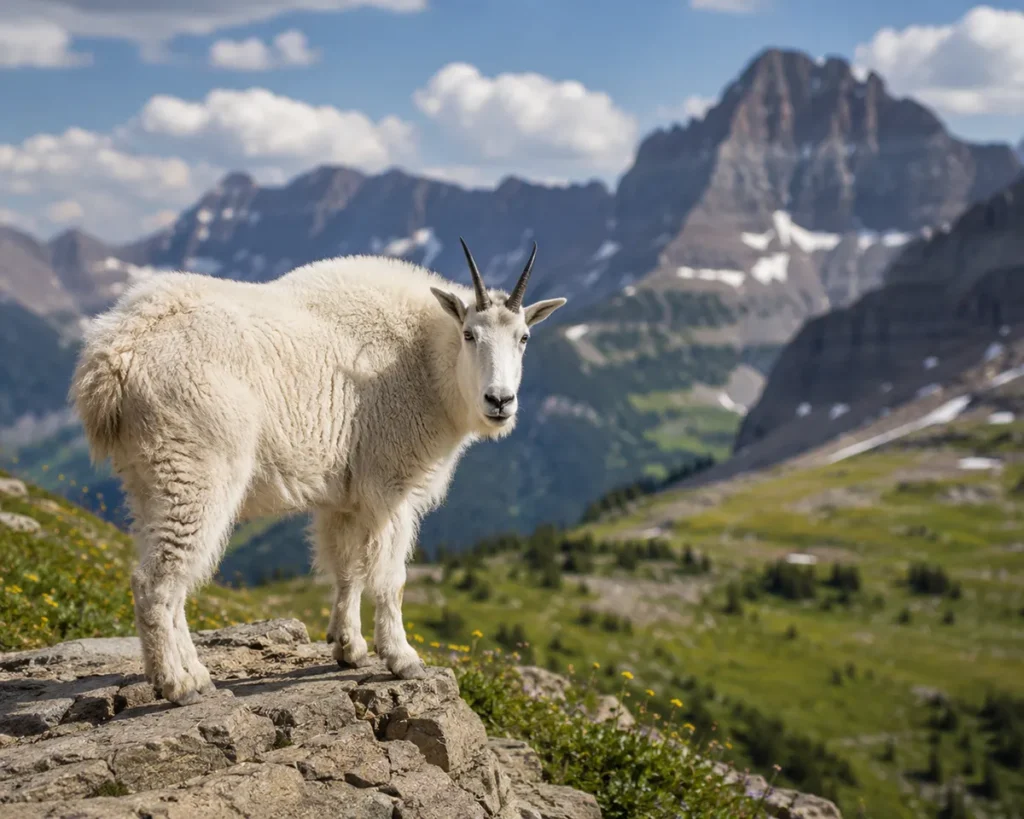
- Mountain goats — Logan Pass parking lot, Hidden Lake trail
- Bighorn sheep — Many Glacier, Logan Pass
- Black bears — Going-to-the-Sun Road shoulders, especially early morning
- Mule deer — everywhere
- Marmots — alpine zones above tree line
Animals you might see if you’re lucky and patient:
- Grizzly bears — Many Glacier valley, Two Medicine, Polebridge
- Moose — Two Medicine, Bowman Lake
- Mountain lions — almost never seen
- Wolverines — almost never seen
- Wolves — rare; more common in Yellowstone
Bear safety is non-negotiable here. Carry bear spray, hike in groups, make noise, never approach wildlife. My complete Montana bear guide covers exactly what to carry and how to use it. This is the one piece of preparation you absolutely cannot skip.
For broader Montana wildlife context, endangered and threatened species in Montana covers the species making their way back to the ecosystem.
2026 Reservations, Fees, and the Stuff You Need to Know Before You Book
This is where most outdated Glacier guides will steer you wrong. Here’s the current state of play.
Entry fees [verify 2026 NPS.gov]:
- 7-day vehicle pass: $35
- 7-day motorcycle pass: $30
- 7-day individual (foot/bike) pass: $20
- Annual Glacier pass: $70
- America the Beautiful Pass (covers all federal lands for 12 months): $80
Going-to-the-Sun Road: No vehicle reservation required for 2026. Logan Pass parking limited to 3 hours starting July 1. Shuttle service is reservation-only express. See my Going-to-the-Sun guide for the full operational picture.
Camping: In-park campgrounds (Apgar, Fish Creek, Sprague Creek, St. Mary, Rising Sun, Many Glacier, Two Medicine, Bowman Lake, Kintla Lake) open on staggered schedules. Most book months in advance through recreation.gov.
Cell service: Spotty at best. Reliable around Apgar/West Glacier. Limited at Logan Pass, Many Glacier, and St. Mary. Nonexistent in North Fork and most backcountry.
Personal Tips: What I Wish I’d Known Before My First Visit
A few hard-won lessons from a decade of Glacier trips:
Drive in before 7 a.m. or after 4 p.m. The entry lines from 8 a.m. to 4 p.m. in July and August can add 90 minutes to your day. Park rangers will tell you this; tourism sites won’t.
Pack layers for the Highline Trail even in August. Logan Pass can be 40°F at 9 a.m. and 75°F at 1 p.m. I’ve shivered on the Highline in shorts more times than I’ll admit.
The east side is the better side for sunrise. Wild Goose Island and the St. Mary Lake area face east — sunrise hits the peaks straight on. The west side faces away from morning light.
Polebridge is a half-day commitment. People wildly underestimate how long the drive in is. From Columbia Falls, allow at least 90 minutes each way on the gravel road, plus your time at Bowman Lake. Pack everything you need.
Many Glacier Hotel breakfast is worth the drive. Even if you’re not staying there. The dining room overlooks Swiftcurrent Lake; the breakfast buffet is reasonable; the experience is genuine 1915-vintage National Park lodge.
Bring binoculars. Mountain goats and bighorn sheep are everywhere; you just can’t see them with the naked eye half the time. A cheap pair of 8x42s changes the trip.
The bug season is real. Montana’s bug season guide is worth reading before any June or early-July trip. Mosquitoes can be aggressive at lower elevations and around lakes.
Bear spray must be accessible. Not buried in your pack. Holstered on your belt. I cannot stress this enough. Montana bear guide covers proper carry technique.
Glacier vs. Yellowstone: Which One Should You Visit?
This is the question I get most from first-time Montana travelers. Here’s my honest answer.
Pick Glacier if you want:
- Dramatic alpine scenery and big mountain hiking
- A more compact, walkable park experience
- Cooler summer temperatures (high country stays in the 60s–70s)
- The “Crown of the Continent” aesthetic — peaks, lakes, glaciers
- A one-week trip that doesn’t feel rushed
Pick Yellowstone if you want:
- Geothermal features (geysers, hot springs, mud pots) — Glacier has none of these
- The best wildlife viewing in the Lower 48 (wolves, large bison herds, more bears)
- A bigger, more sprawling park you’ll cover by vehicle more than by foot
- Hot weather (Yellowstone’s summer is genuinely hot)
For the deep comparison and to plan Yellowstone, see my Yellowstone National Park guide. For the broader Montana parks landscape, the Montana national parks pillar covers all ten NPS sites and which ones to combine.
My personal recommendation for first-time Montana visitors: Do Glacier first. Yellowstone is incredible but spread across three states and easier to mismanage. Glacier rewards a focused 5–7 day visit and gives you the more “Montana” feel.
Practical Info Box
| Topic | Quick Answer |
|---|---|
| Best months overall | Mid-July through early September |
| Best month for solitude | September (after Labor Day) |
| Best month for wildflowers | Mid-July |
| Entry fee | $35/vehicle (7-day) [verify 2026] |
| Reservation required? | Not for the road in 2026, but Logan Pass parking is limited and shuttle is reservation-only |
| Closest airport | Glacier Park International (FCA), Kalispell — see Montana airports |
| Closest gateway towns | West side: Columbia Falls, Whitefish, Kalispell. East side: East Glacier Park Village, Browning |
| Best entrance for first-timers | West Glacier |
| Best entrance for wildlife | Many Glacier |
| Best entrance for solitude | Polebridge / North Fork |
| Must-bring gear | Bear spray, layers, water, binoculars, paper map |
| Cell service | Spotty; download offline maps before arrival |
| Pair this trip with | Yellowstone National Park, Lone Pine State Park, or Lewis & Clark Caverns |
Conclusion: A Park That Genuinely Lives Up to Its Reputation
Most “must-visit” travel destinations don’t deliver on the promise. Glacier does. The scale is real, the wildlife is real, the wildness still feels real even with three million annual visitors.
I’ve been seventeen times and I’m still finding trails I haven’t hiked, viewpoints I haven’t watched the sun rise from, corners of the park I haven’t explored.
My advice for your trip: pick one corner of the park and go deep rather than trying to see it all. Glacier rewards depth.
Stay at least four nights, drive Going-to-the-Sun Road in both directions, hike one signature trail per day, and leave at least one afternoon completely unscheduled to wander. If you do that, you’ll leave already planning your return trip — the same way I did the first time.
This post is the hub. For the deep-dives:
- Going-to-the-Sun Road complete driving guide
- 16 best hikes in Glacier National Park
- Where to stay in Glacier National Park
For the broader Montana context:
- Montana national parks pillar guide — how Glacier fits into the ten federally-managed sites in the state
- Yellowstone National Park guide — the natural counterpart trip
- Montana state parks pillar guide — the state-managed sites that complement Glacier
For broader trip planning, see my Montana trip planning guide, things to do in Montana, and the Montana bucket list. Pin this post for your planning, and drop any specific questions in the comments — I’ll answer from experience.
FAQs About Glacier National Park
What is Glacier National Park famous for?
Glacier National Park is famous for its spectacular mountain scenery, pristine alpine lakes, diverse wildlife, and the iconic Going-to-the-Sun Road. The park is often called the “Crown of the Continent” because of its breathtaking landscapes and ecological significance.
Where is Glacier National Park located?
Glacier National Park is located in northwestern Montana along the U.S.-Canada border. It shares an international boundary with Canada’s Waterton Lakes National Park, together forming the Waterton-Glacier International Peace Park.
What is the best time to visit Glacier National Park?
The best time to visit Glacier National Park is from late June through September when most roads, hiking trails, lodges, and visitor facilities are fully open. July and August offer the warmest weather and the widest range of activities.
Do I need a reservation to enter Glacier National Park?
All visitors need a park entrance pass. Depending on the season and the area you plan to visit, vehicle reservations may also be required for certain sections of the park. Check the National Park Service website for current reservation requirements before your trip.
How many days should I spend in Glacier National Park?
Most visitors spend 3–5 days exploring Glacier National Park. This allows enough time to drive Going-to-the-Sun Road, hike popular trails, enjoy scenic viewpoints, and experience both the east and west sides of the park.
What wildlife can I see in Glacier National Park?
The park is home to grizzly bears, black bears, mountain goats, bighorn sheep, moose, elk, wolves, and numerous bird species. Wildlife viewing opportunities are common, especially during early morning and evening hours.
Can you drive through Glacier National Park in one day?
Yes, you can drive through Glacier National Park in a single day using Going-to-the-Sun Road, but you’ll only experience a small portion of what the park offers. Spending multiple days allows for hiking, wildlife viewing, boat tours, and exploring less-visited areas.
Is Going-to-the-Sun Road worth it?
Absolutely. Going-to-the-Sun Road is considered one of the most scenic drives in North America. The route crosses the Continental Divide at Logan Pass and provides stunning views of mountains, waterfalls, glaciers, and alpine valleys.
Are there glaciers still remaining in Glacier National Park?
Yes, glaciers still exist in the park, although their number has declined significantly due to climate change. Visitors can view several remaining glaciers from hiking trails and scenic overlooks throughout the park.
Can I camp inside Glacier National Park?
Yes. Glacier National Park offers multiple campgrounds ranging from developed sites with amenities to more primitive camping options. Some campgrounds accept reservations, while others operate on a first-come, first-served basis.
What are the best hikes in Glacier National Park?
Popular hikes include Highline Trail, Grinnell Glacier Trail, Hidden Lake Overlook, Avalanche Lake Trail, Iceberg Lake Trail, and Ptarmigan Tunnel. Hikes range from easy family-friendly walks to challenging backcountry adventures.
Is Glacier National Park family-friendly?
Yes. Families can enjoy scenic drives, short nature trails, boat tours, wildlife viewing, ranger programs, and accessible viewpoints. Many activities are suitable for children of all ages.
What airport is closest to Glacier National Park?
The nearest major airport is Glacier Park International Airport (FCA) in Kalispell, Montana, located near the park’s west entrance. Rental cars and shuttle services are available from the airport.
Can I visit Glacier National Park in winter?
Yes, but many roads and facilities close during winter. Winter visitors can enjoy snowshoeing, cross-country skiing, photography, and peaceful snowy landscapes, though access is more limited than in summer.
Why is Glacier National Park called the Crown of the Continent?
The park earned this nickname because it contains one of North America’s most intact ecosystems and serves as the headwaters for rivers flowing to the Pacific Ocean, Atlantic Ocean, and Hudson Bay.
Written by Sarah Bennett, who has lived in Montana’s Flathead Valley for over a decade and still considers Glacier her home park.