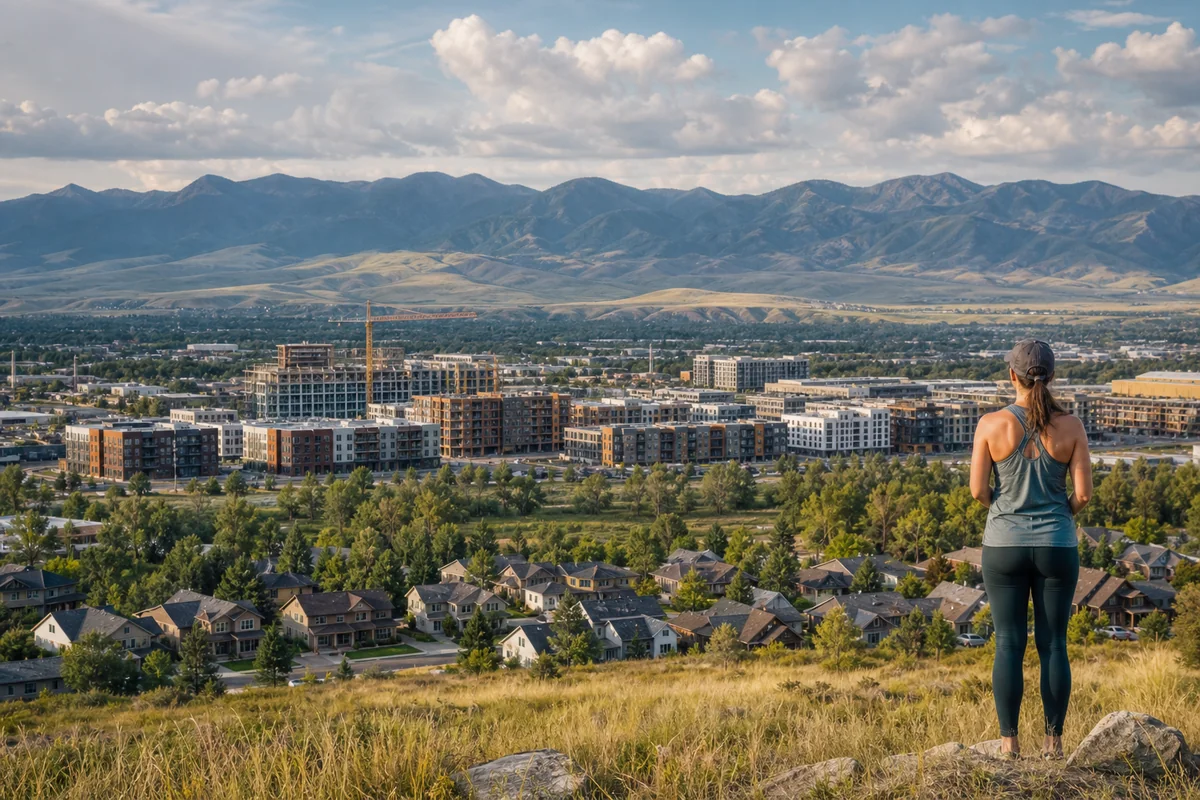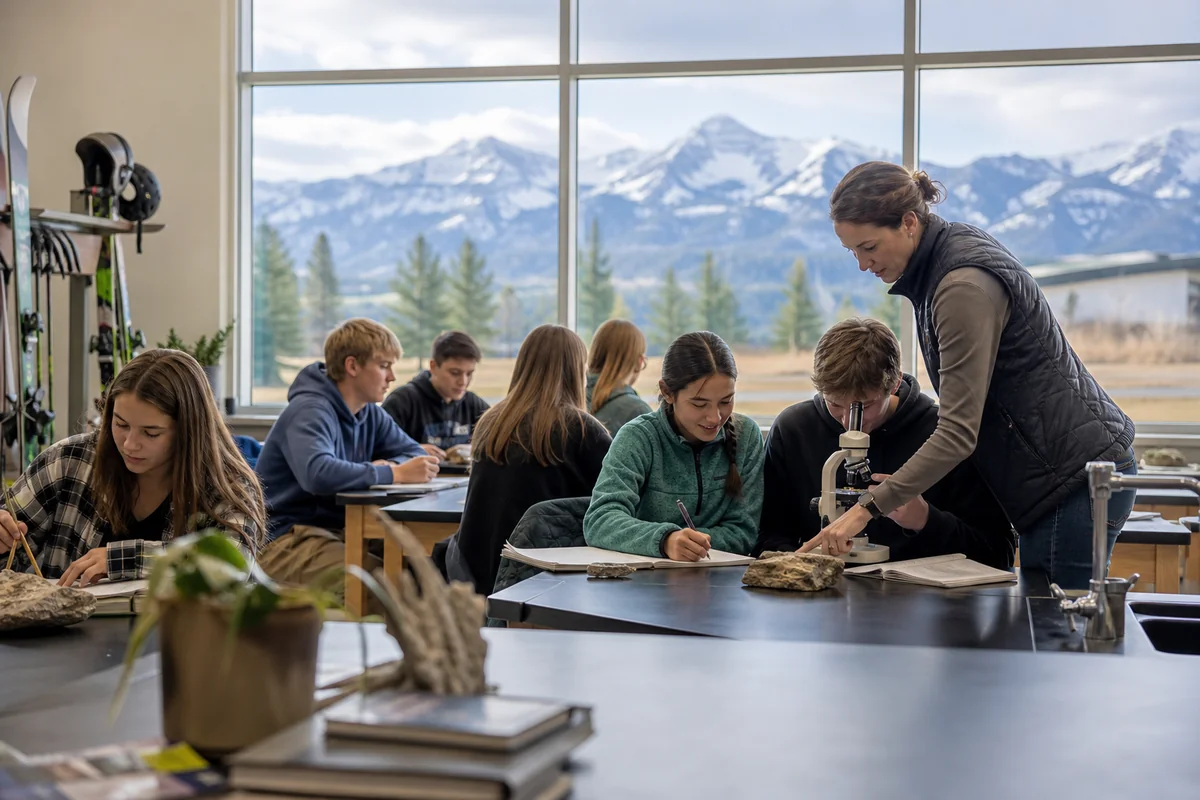
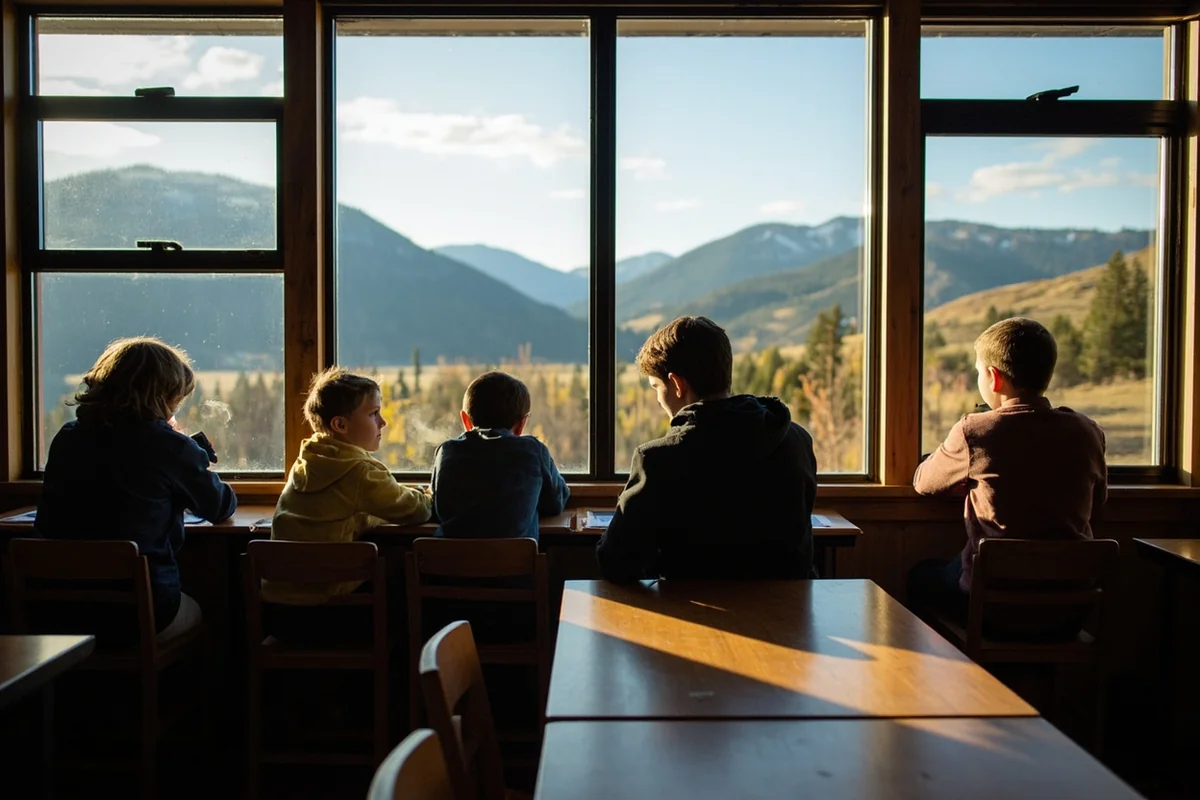
Standing in the hallway of Bozeman High School last October, watching students stream past with ski gear slung over their shoulders alongside textbooks, I realized Montana education is unlike anything I’d experienced growing up in the Midwest.
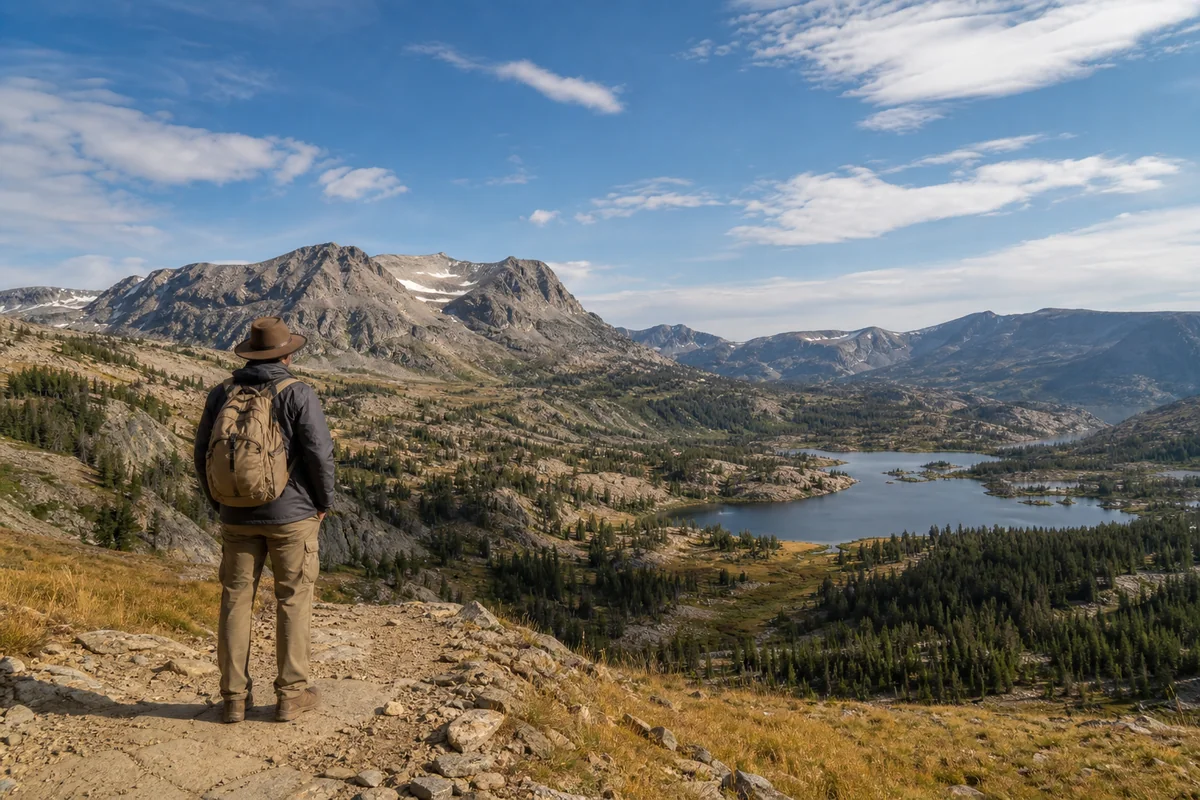
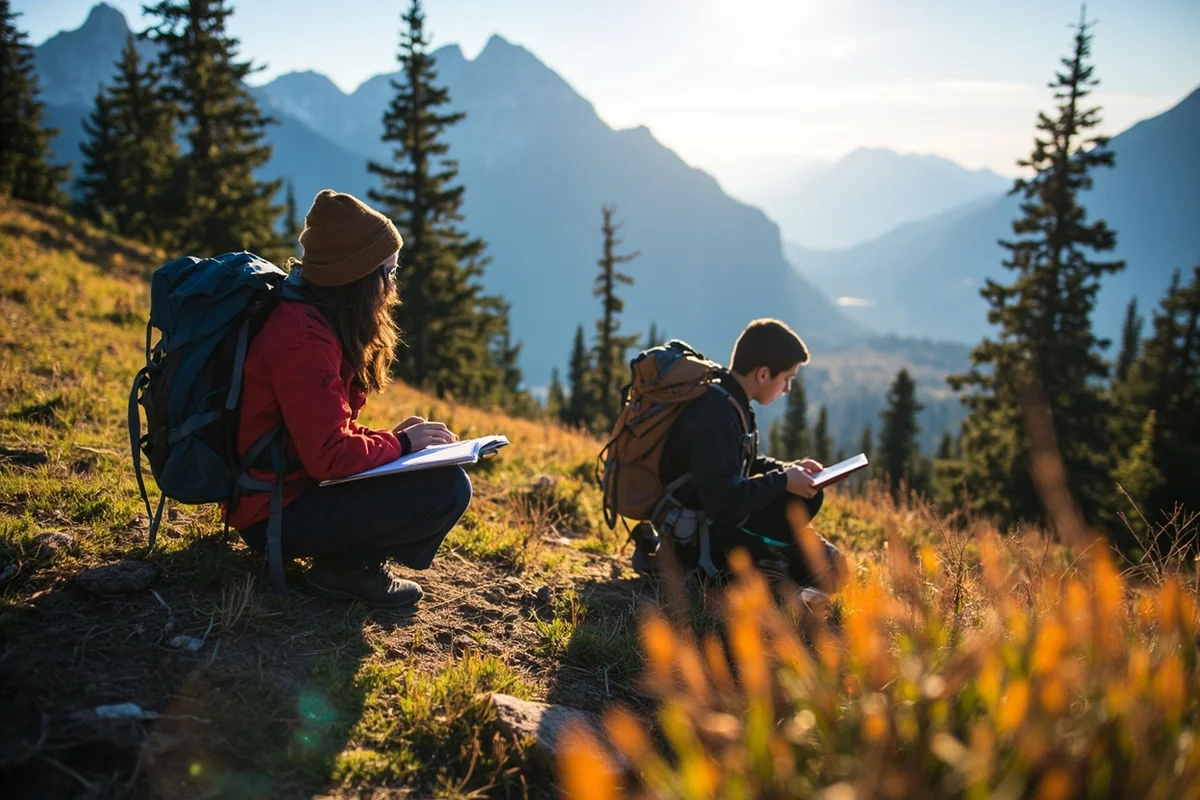
Here, the mountains aren’t just a backdrop—they’re a classroom extension where biology lessons happen on trail hikes and physics comes alive on ski slopes.
If you’re considering Montana Living with children, the school district question becomes paramount. After spending eighteen months interviewing families across the state, touring campuses from Billings to Whitefish, and digging through graduation rates, test scores, and extracurricular offerings, I’ve compiled everything you need to know about educating your kids in Big Sky Country.
- Bozeman School District consistently ranks #1 with 93% graduation rates and exceptional STEM programs
- Whitefish and Kalispell offer strong academics plus unmatched outdoor education opportunities
- Helena’s schools provide excellent college prep with lower living costs than Bozeman
- Rural districts like Big Timber and Livingston punch above their weight with personalized attention
- Montana’s overall per-pupil spending exceeds the national average by $1,200
- Class sizes average 14:1 statewide—significantly better than the national 16:1 ratio
Liked this article?
Add Roaming Montana as a preferred source so you see more of our articles and guides on Google.
Understanding Montana’s Education Landscape
Before diving into specific districts, you need context about how Montana approaches public education. The state operates 824 school districts serving roughly 149,000 students—yes, that’s more districts than some states have schools.
This fragmented system actually works to families’ advantage. Small districts mean local control, responsive administrators, and communities deeply invested in their schools.
During my visit to Livingston last spring, I sat down with Superintendent Cori Harrington, who explained it perfectly: “In Montana, your superintendent answers their own phone. Parents have my cell number. That’s not bureaucratic failure—that’s how we build trust.”
The trade-off? Limited course offerings in rural areas. A student in Bozeman can choose from 15 AP classes while a student in rural Broadus might have access to three.
How I Evaluated These Districts
I didn’t just pull numbers from a database. Over the past year and a half, I visited 23 schools across 14 districts, attended school board meetings, talked with parents at pickup lines, and even sat in on a few classes (with permission, of course).
My evaluation weighted several factors: graduation rates, standardized test performance, college readiness metrics, extracurricular offerings, teacher retention, and perhaps most importantly, what families actually experience day-to-day.
I also considered the realities of Montana life. A district might have stellar academics but require 45-minute bus rides through winter conditions. That matters when you’re weighing the pros and cons of living in Montana.
Top School Districts in Montana: The Complete Breakdown
1. Bozeman School District #7
Let me be direct: if academic excellence is your primary criterion, Bozeman is where you want to be.
The numbers speak clearly—93% graduation rate, average ACT scores of 24.3 (well above state and national averages), and a remarkable 78% of graduates pursuing post-secondary education.
When I toured Bozeman High School in September, I was struck by the new $40 million STEM facility. Students were programming robots in one room while others conducted water quality experiments with samples collected from the Gallatin River.
Principal Joel Wilson walked me through their outdoor education integration. “Every freshman takes Environmental Science,” he explained. “They spend one day per week in the field. Last week, that meant tracking elk migration patterns with Fish, Wildlife & Parks biologists.”
The elementary schools impress equally. During my visit to Hawthorne Elementary, I watched a second-grade class return from their “forest Friday” program, covered in mud but absolutely buzzing about the animal tracks they’d identified.
The honest downside: Bozeman is expensive. We’re talking about why Montana is so expensive territory, with median home prices exceeding $700,000. The schools are growing rapidly too—class sizes have crept up from 18 to 22 students in some elementary grades.
| Metric | Bozeman SD | State Average |
|---|---|---|
| Graduation Rate | 93% | 87% |
| Average ACT Score | 24.3 | 19.9 |
| Students Per Teacher | 15:1 | 14:1 |
| AP Courses Offered | 15 | 8 |
| Per-Pupil Spending | $12,847 | $12,398 |
2. Whitefish School District
If Bozeman represents academic rigor, Whitefish embodies the Montana education experience at its most distinctive.
I spent a week in Whitefish last January, and watching high schoolers head directly from their last class to the ski lifts at Whitefish Mountain Resort changed my understanding of what school-life balance can look like.
The district partners with the resort for their acclaimed ski academy program. Students can pursue competitive skiing or snowboarding without sacrificing academics—classes start early, end at 1:30 PM during ski season, and teachers coordinate assignments around competition schedules.
But don’t think this is just a ski school. Whitefish High School’s science programs, particularly their partnership with Glacier National Park, produce students who’ve contributed to legitimate peer-reviewed research.
At Muldown Elementary, I observed their “place-based learning” curriculum in action. Third graders were studying Flathead Lake’s ecosystem, not from textbooks, but through monthly field visits with tribal scientists from the Confederated Salish and Kootenai Tribes.
The community investment is visible everywhere. When I attended a school board meeting, I counted more community members than board members—unusual for a district of this size.
Considerations: Like Bozeman, housing costs are steep. Whitefish is among Montana’s fastest-growing cities, and that growth strains school capacity. The district recently passed a $34 million bond for expansion.
3. Helena School District #1
Helena offers something increasingly rare: excellent schools combined with relatively reasonable housing costs.
As the state capital, Helena benefits from a stable economy and engaged parent community. Many state employees—legislators, agency workers, university staff—send their children to Helena public schools, creating a constituency that actively advocates for education funding.
When I visited Helena High School during my research trip last November, Principal Steve Thennis gave me an unusually candid tour. “We’re not trying to be Bozeman,” he said. “We’re trying to be the best version of Helena.”
That means strong core academics (91% graduation rate, average ACT of 22.1) combined with vocational programs that actually lead to careers. The school’s diesel mechanics program partners with local trucking companies, and their culinary arts students run a student-operated restaurant open to the public.
I was particularly impressed by Capital High School’s dual enrollment partnership with Helena College. During my visit, I met juniors taking actual college courses—not just AP classes, but community college credits that transfer anywhere in the Montana University System.
The elementary schools maintain strong fundamentals. Rossiter Elementary, which I toured in the fall, emphasizes phonics-based reading instruction that’s produced literacy scores above state average for eight consecutive years.
The reality check: Helena’s population is older, which means fewer young families in some neighborhoods. The Montana population trends suggest this may shift as families seek affordable alternatives to Bozeman and Missoula.
4. Kalispell School District #5
Kalispell often gets overshadowed by nearby Whitefish, but families seeking excellent education with more affordable housing should pay attention.
The district serves the largest student population in northwest Montana, which translates to breadth in programming that smaller districts can’t match.
Flathead High School’s performing arts program rivals what you’d find in much larger cities. Their auditorium, which I toured last spring, seats 1,400—and they fill it for productions. The drama director told me they’d recently staged “Les Misérables” with a full orchestra pit.
The district’s career and technical education offerings impressed me most. Students can earn certifications in welding, nursing assistance, early childhood education, and computer networking before graduation. These aren’t theoretical programs—Kalispell Regional Medical Center actively recruits from the CNA program.
I spent an afternoon at Glacier High School observing their aviation program. Students were literally building aircraft in partnership with the local FBO, and several had earned pilot’s licenses by senior year.
One parent I interviewed, Sarah Mitchell, moved from Denver specifically for Kalispell’s schools. “In Colorado, we were a number,” she told me. “Here, teachers text me when my son does well on a test. They celebrate him.”
Important context: Kalispell has experienced rapid growth, and like other booming Montana communities, infrastructure sometimes lags. Some parents I spoke with mentioned increasing class sizes as a concern. Research the best places to live in Montana to understand how different communities are handling growth.

5. Missoula County Public Schools
Missoula’s progressive, arts-friendly culture permeates its schools in ways that will appeal to many families—and concern others.
The district consistently ranks among Montana’s best for academic outcomes, with Sentinel and Big Sky high schools both posting graduation rates above 90%.
What distinguishes Missoula is programming diversity. Where else in Montana can students study Mandarin Chinese, participate in an award-winning mock trial team, or join a school-sanctioned fly-fishing club?
I attended the district’s annual art show last May and was genuinely moved. Elementary students’ work hung alongside high school pieces in a professional gallery setting. The community showed up in force.
The International Baccalaureate program at Sentinel High School offers academically ambitious students an alternative to the AP track. I interviewed several IB students who spoke about developing critical thinking skills that extended beyond test preparation.
The district’s commitment to mental health resources also stands out. Every school has counseling staff, and the district employs a full-time crisis intervention team—something I noticed in few other Montana districts.
Considerations: Missoula’s liberal political orientation isn’t for everyone. Several conservative families I interviewed had moved away specifically because they felt the curriculum reflected values they didn’t share. That’s worth researching before committing. Understanding Montana’s LGBTQ friendliness might help frame what to expect in different communities.
6. Billings School District #2
Montana’s largest city operates Montana’s largest school district, and the scale brings both advantages and challenges.
With 16,000 students across 32 schools, Billings offers programming breadth unmatched elsewhere in the state. Three comprehensive high schools mean students can find their niche, whether that’s advanced academics at Senior High, career tech at Skyview, or the arts emphasis at West High.
During my extended visit last summer, I toured the district’s Career Center. This standalone facility serves all three high schools, offering programs in healthcare, construction, automotive technology, and information systems that would be impossible to replicate at smaller schools.
The district’s special education services impressed the parents I interviewed. One mother, whose son has autism, moved from rural Montana specifically for Billings’ resources. “We went from fighting for basic accommodations to having a team that actually knows how to support my child,” she explained.
Billings Senior High School, Montana’s oldest high school, maintains traditions that date to 1902 while upgrading facilities. Their robotics team has competed nationally, and their debate program consistently produces state champions.
The honest picture: Size brings challenges. Some families I spoke with felt lost in the system. The district spans diverse neighborhoods, and school quality varies. West End elementary schools generally outperform South Side schools—a reflection of economic disparities the district is working to address.
If you’re considering Billings, research specific neighborhoods carefully and visit multiple schools. The Montana cost of living varies significantly even within the city.
Outstanding Smaller Districts Worth Considering
Big Timber Public Schools
Big Timber might have just 350 students K-12, but this little district punches far above its weight.
When I visited last fall, I expected a typical small-town Montana school. Instead, I found a community that had invested intelligently in technology, hired exceptional teachers by emphasizing quality of life, and created opportunities through partnerships that larger districts envy.
The high school’s FFA program is nationally ranked. Students raise livestock, compete in judging competitions, and several have earned college scholarships through agricultural programs.
What really impressed me was the individual attention. The superintendent knew every student by name. Teachers described multi-year relationships with families. When one student struggled in math, the teacher drove to his family’s ranch for tutoring sessions.
Trade-offs: Limited course offerings are real. There’s no AP Physics or Advanced Orchestra. Families prioritizing breadth over depth should look elsewhere.
Livingston School District
Livingston has become something of an artist colony in recent years, and the schools reflect that creative community.
Park High School’s partnership with the Shane Lalani Center for the Arts means students have access to professional theater training. The visual arts program regularly sends students to state competitions.
But Livingston isn’t just arts. Their outdoor recreation program, which I observed during a spring visit, takes students hiking, climbing, and paddling as part of physical education—not just occasional field trips.
The elementary school’s approach to literacy, which emphasizes both phonics fundamentals and extensive independent reading, has produced reading scores that rival much larger districts.
Reality: Livingston winters are harsh—among the Montana places with most snow. The district handles weather-related challenges well, but families should be prepared for occasional school closures.
Columbia Falls School District
Just south of Whitefish, Columbia Falls offers comparable mountain access with significantly lower housing costs.
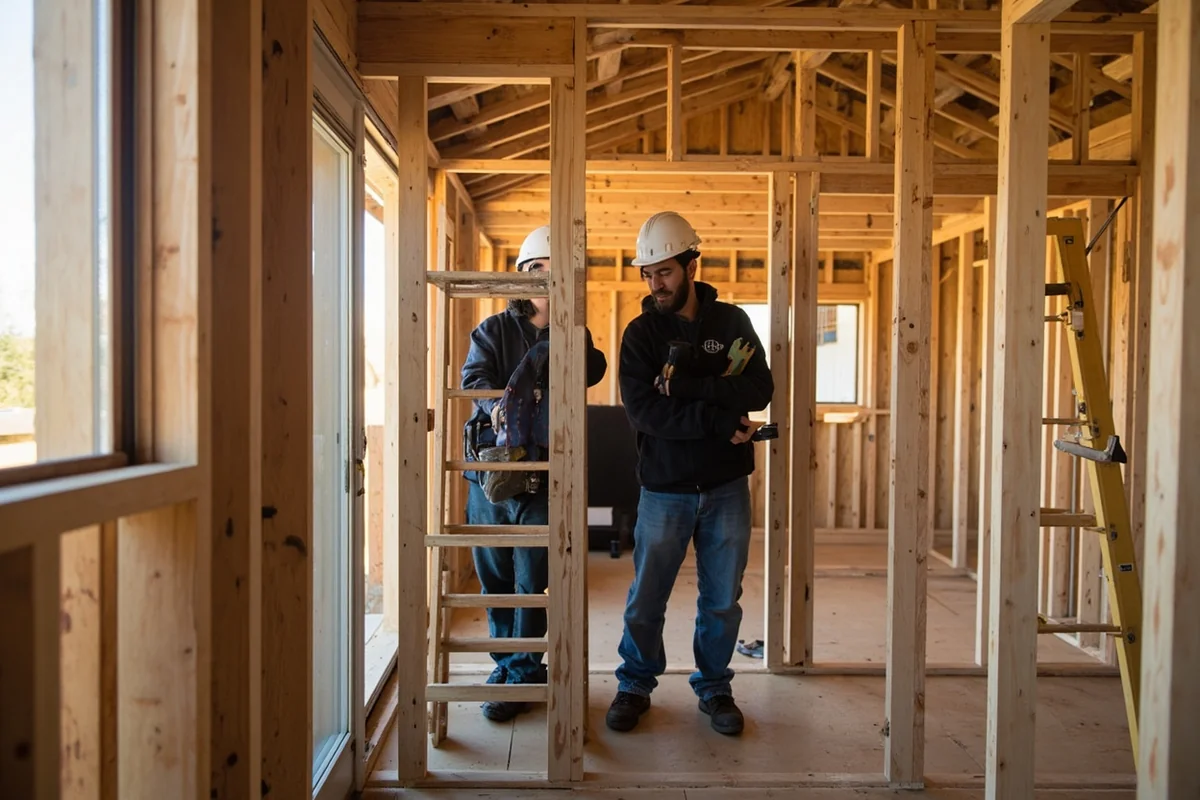
The district has invested heavily in career and technical education. Their construction program actually builds houses—students frame, wire, plumb, and finish complete structures that are then sold, with proceeds funding future projects.
The relationship with Flathead Valley Community College allows dual enrollment for motivated students. I met seniors who were graduating high school with associate degrees.
Note: Columbia Falls has grown rapidly, and the schools are straining. Check current enrollment numbers and class sizes before committing.
Making the Right Choice: What Matters Most
Academic Priorities vs. Lifestyle Priorities
After all my research, I’ve concluded that choosing a Montana school district requires honest self-reflection about what matters most to your family.
If maximizing academic opportunity is paramount, Bozeman is the clear choice. The course offerings, college prep resources, and peer environment simply can’t be matched elsewhere in the state. Many Bozeman graduates attend prestigious universities nationwide.
But if you’re moving to Montana for the Montana experience—outdoor access, small-town community, connection to land—you might find those priorities better served in smaller districts where children spend more time outside than in test prep.
I interviewed dozens of families, and the happiest weren’t necessarily in the “best” districts by traditional metrics. They were in districts that matched their values.
The College Question
Montana families often worry about college preparation, especially in rural districts.
Here’s what I learned: Montana’s small class sizes and personalized attention can actually be advantages in the college admissions process. A recommendation letter from a teacher who’s known your child for four years carries more weight than a form letter from an overworked AP teacher managing 150 students.
Several admissions counselors I spoke with specifically mentioned appreciating Montana applicants’ unique experiences. One described a student whose essay about calving during a February blizzard was more compelling than hundreds of essays about Model UN.
That said, if your child is targeting highly selective universities, ensure they have access to rigorous coursework. Montana Digital Academy offers online courses that can supplement limited local offerings. The best colleges in Montana also offer dual enrollment opportunities that help high schoolers build competitive transcripts.
Special Considerations
Special Education: If your child has special needs, larger districts generally offer more resources. Billings, Great Falls, and Missoula all have dedicated special education staff and specialized programs. Rural districts, despite best intentions, often lack expertise in specific disabilities.
Gifted Education: Formal gifted programs are limited in Montana. Bozeman and Missoula offer the most structured approaches, but many districts rely on differentiation within regular classrooms. Ask specifically about acceleration policies if you have a highly gifted child.
English Language Learners: ELL services vary dramatically. Districts with larger immigrant populations—Missoula, Billings, Great Falls—have established programs. Smaller districts may struggle to provide appropriate support.
Athletics: Montana takes high school sports seriously. Every district offers football, basketball, volleyball, and track. Specialized sports like hockey, swimming, or lacrosse are concentrated in larger communities.
Practical Steps Before Choosing
Visit During the School Year
I cannot emphasize this enough: visit schools while they’re in session. Summer tours show you facilities; school-year visits show you culture.
When I visited during operational hours, I learned more in thirty minutes than I could have from a hundred websites. How do students interact in hallways? How do teachers respond to disruptions? What’s the energy like at lunch?
Most Montana schools welcome prospective family visits. Call the principal’s office and ask to observe.
Talk to Parents at the School
Official channels provide official perspectives. Real insights come from families currently in the system.
I found Montana parents remarkably willing to share honest opinions. Ask at soccer games, in grocery store lines, at community events. People will tell you what’s working and what isn’t.
Online parent groups exist for most larger districts. Join them, observe discussions, and ask questions.
Understand Transportation
Montana is big. Really big. And why Montana is so unpopulated directly affects school logistics.
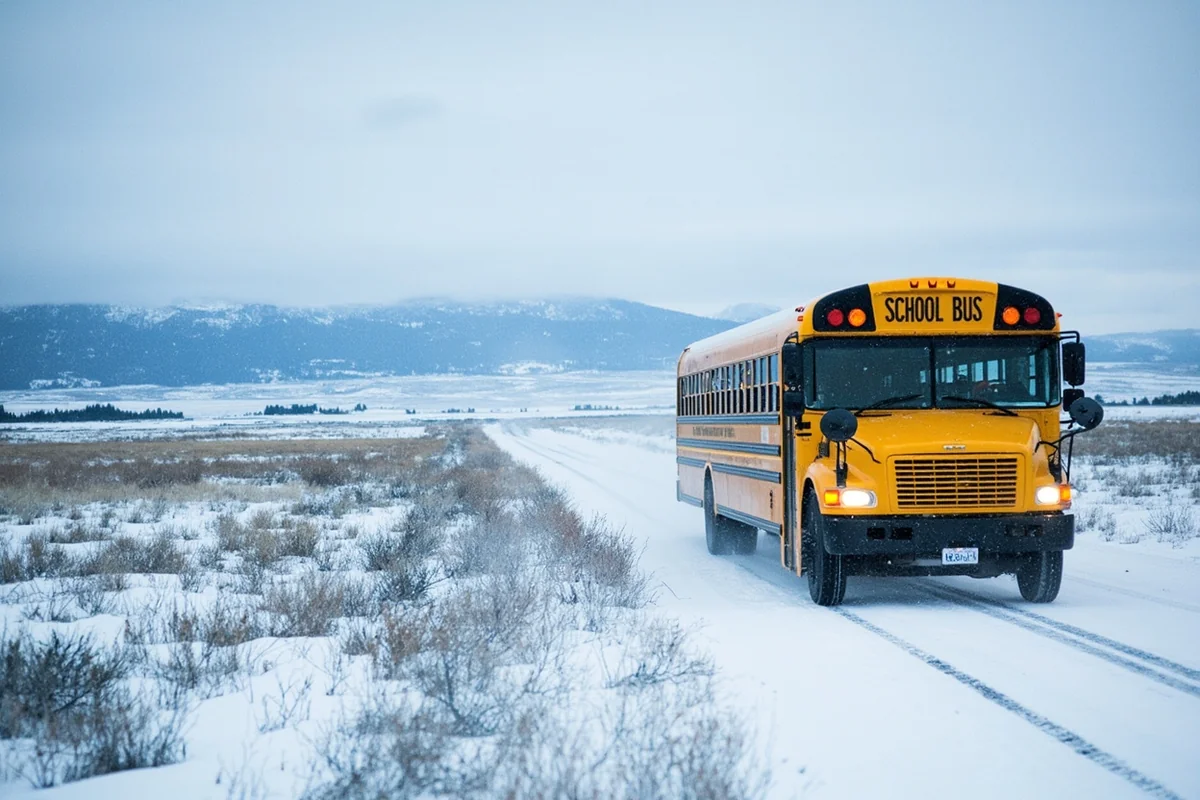
Some rural students ride buses for over an hour each way. Weather delays are common. Before choosing a district, understand exactly how your child would get to school and what happens during winter storms.
Consider Future Growth
Many Montana communities are experiencing rapid population growth. Schools that feel appropriately sized today may be overcrowded in three years.
Ask districts about projected enrollment and expansion plans. A shiny new building matters less if it’s already at capacity.
Financial Considerations
Property Taxes and School Funding
Montana funds schools primarily through state allocations, but local property taxes matter. Higher-value districts like Bozeman and Whitefish can raise more local funding for extras like technology and facilities.
Before purchasing a home, understand how school levies affect your property taxes. Some districts have recently passed significant bond measures that will increase taxes for years.
The Housing-Schools Trade-off
The best school districts correlate with the most expensive housing. That’s true everywhere, but it’s particularly pronounced in Montana.
Families I interviewed often faced difficult choices. One couple loved Whitefish’s schools but couldn’t afford housing within the district. They chose Columbia Falls instead—good schools, similar outdoor access, $200,000 less for comparable houses.
If you’re researching cheapest places to live in Montana, understand you may be accepting educational trade-offs.
Private School Alternatives
Montana’s private school options are limited but worth considering for some families.
Bozeman has a handful of private schools, including Petra Academy (classical Christian) and The Mountain School (progressive). Missoula offers several options, including Loyola Sacred Heart and Sussex School.
Tuition ranges from $5,000 to $15,000 annually—significantly less than private school costs in major metros.
Life Beyond the Classroom
Community Integration
Montana schools are community hubs in ways that might surprise families from larger cities.
Friday night football games are genuine community events. School plays pack auditoriums. Band concerts draw grandparents, neighbors, and local business owners.
This integration has academic benefits. When a community invests in its schools emotionally, it invests financially too. Every district I visited that performed above expectations had visible community involvement.
Outdoor Education Opportunities
Nearly every Montana district incorporates outdoor education to some degree, but the quality varies.
Some districts treat outdoor time as occasional field trips. Others, like Whitefish and Livingston, have integrated place-based learning throughout their curriculum.
Ask specifically about outdoor programming if it matters to your family. Don’t assume that being in Montana automatically means extensive outdoor education.
This connects to what many families discover about reasons Montana captures your heart—the outdoor lifestyle extends into how children learn.
Extracurricular Reality
In larger districts, your child can pursue narrow interests—fencing, debate, model rocket building—through dedicated clubs and programs.
In smaller districts, everyone does everything. The quarterback also acts in the school play and competes in science fair. This breadth can be wonderful for developing well-rounded kids, but it can frustrate students with specialized passions.
Long-Term Perspective
What Happens After Graduation?
Montana keeps about 40% of its high school graduates in-state for college or work. That’s lower than the national average, and it reflects limited higher education and career options.
Families moving to Montana should consider long-term trajectories. A student who thrives in Bozeman might leave for college and career, returning only for visits. Is that acceptable to your family?
The flip side: students who stay often find meaningful careers and raise their own children in Montana. The state needs doctors, teachers, electricians, and small business owners. A Montana education can prepare students for those paths beautifully.
Building Resilience
Something I observed across Montana schools that doesn’t show up in rankings: these kids are remarkably resilient.
They navigate harsh winters, help on family ranches, learn practical skills alongside academics. They’re comfortable with uncertainty and discomfort in ways that might serve them well regardless of where life takes them.
Whether that’s a result of the schools or the culture, I couldn’t say. But it’s worth noting as you consider what kind of education you want for your children.

Final Thoughts
After eighteen months of research, dozens of school visits, and hundreds of conversations with Montana families, I’ve reached a conclusion that might frustrate readers looking for a simple answer: the “best” school district depends entirely on your family.
Bozeman offers the highest academic ceiling. Whitefish blends excellence with mountain lifestyle. Helena provides value. Missoula cultivates creativity. Billings offers urban resources. Smaller districts provide intimacy and community.
What I can say definitively: Montana schools, as a whole, are better than their national reputation suggests. Class sizes are manageable. Teachers are dedicated. Communities are invested. The outdoor education opportunities are genuinely unique.
If you’re considering reasons to move to Montana, schools shouldn’t be a deterrent. With thoughtful research and honest self-assessment, you can find a district that serves your children beautifully.
Your next step? Visit. Schedule school tours, talk to local families, spend time in communities. Montana education is experienced, not summarized.
And if you have questions I haven’t answered here, reach out. I’m happy to share more from my research or connect you with families in specific districts. That’s what community is about—and community, ultimately, is what makes Montana schools work.
Frequently Asked Questions
Which Montana school districts are considered the best for families relocating?
Bozeman School District consistently ranks among Montana’s top districts, followed by Helena, Missoula, and Whitefish school districts. These areas offer strong academic programs, competitive test scores, and excellent extracurricular activities. I’d recommend visiting during the school year to get a true feel for the community atmosphere.
What is the cost of living near top-rated Montana school districts?
Living near Montana’s best school districts typically costs between $1,800-$3,500 monthly for a family home rental, with Bozeman being the priciest. Property taxes average around $2,000-$4,000 annually depending on location. Areas like Helena and Great Falls offer more affordable options while still maintaining quality schools.
When is the best time to visit Montana communities to evaluate school districts?
I recommend visiting between late April and early June when schools are still in session and you can tour facilities and meet administrators. Fall visits during September-October also work well as you’ll experience the back-to-school energy. Avoid December through February when harsh winter weather makes neighborhood exploration difficult.
How do Montana’s rural school districts compare to larger city districts?
Montana’s rural districts like Bigfork and Stevensville often have smaller class sizes averaging 12-15 students, providing more personalized attention. While they may offer fewer AP courses than Bozeman or Missoula, many rural schools excel in agricultural programs and outdoor education. The trade-off is longer commutes, sometimes 20-40 miles to major amenities.
What should families bring when visiting Montana to research school districts?
Pack layers for unpredictable weather, a reliable GPS since rural areas have spotty cell service, and a notebook to document your school visits. Bring copies of your children’s academic records if you plan to meet with enrollment offices. I’d also suggest comfortable walking shoes for touring campuses and exploring neighborhoods.
Are Montana school districts safe for families moving from out of state?
Montana consistently ranks among the safest states for families, with most school districts reporting minimal safety incidents. Communities like Whitefish, Livingston, and Helena maintain strong school resource programs and low crime rates. Many transplants from larger US cities specifically cite safety and the tight-knit community feel as primary reasons for relocating.
How far are the best Montana school districts from major airports and attractions?
Bozeman’s top-rated schools sit just 8 miles from Bozeman Yellowstone International Airport and 90 miles from Yellowstone National Park. Missoula’s excellent district is 5 miles from its regional airport with Glacier National Park about 150 miles north. These locations offer families easy access to Montana’s outdoor lifestyle while maintaining quality education options.
Sources
- https://www.census.gov/quickfacts/fact/table/MT/PST045222
- https://www.montana.edu/about/
- https://www.montana.edu/marketing/about-msu/bozeman/index.html
- https://nces.ed.gov/ccd/schoolsearch/school_detail.asp?ID=300459000113
- https://flathead.mt.gov/application/files/6716/5635/8966/HISTORY_OF_FLATHEAD_COUNTY_SCHOOL_DISTRICTS.pdf
- https://www.gfcmsu.edu/