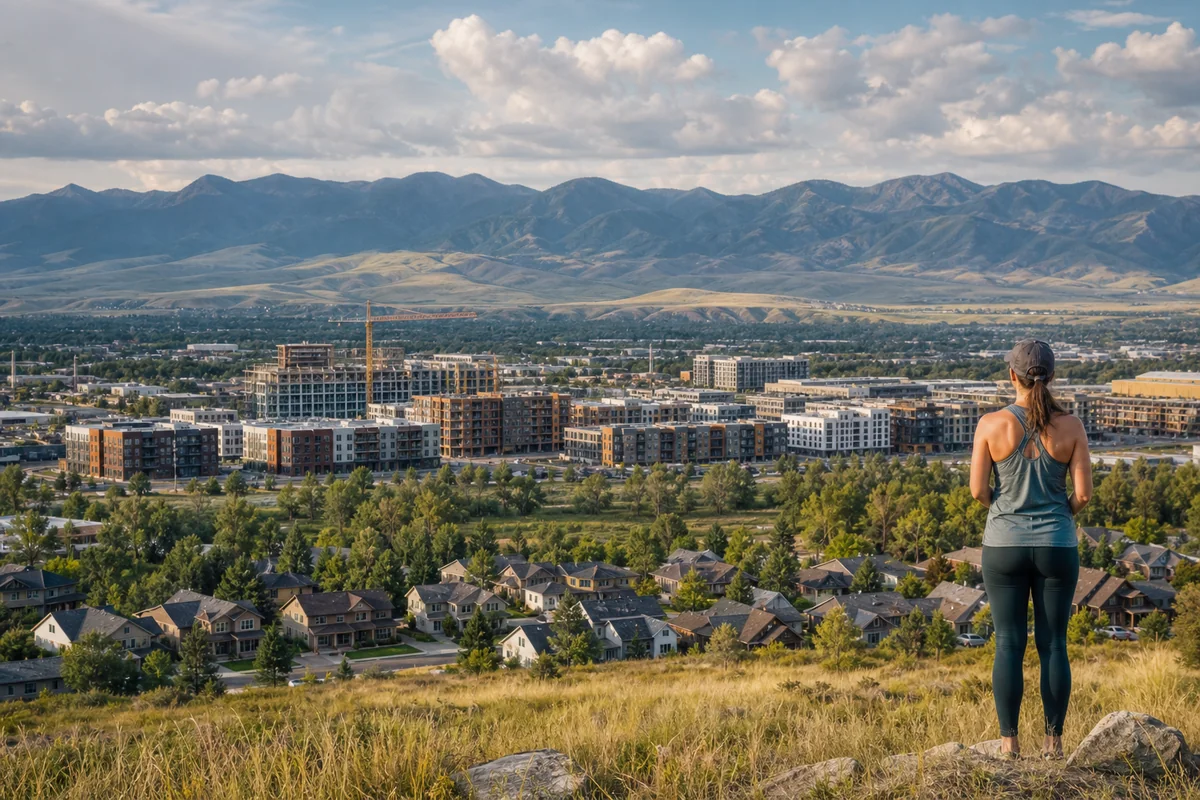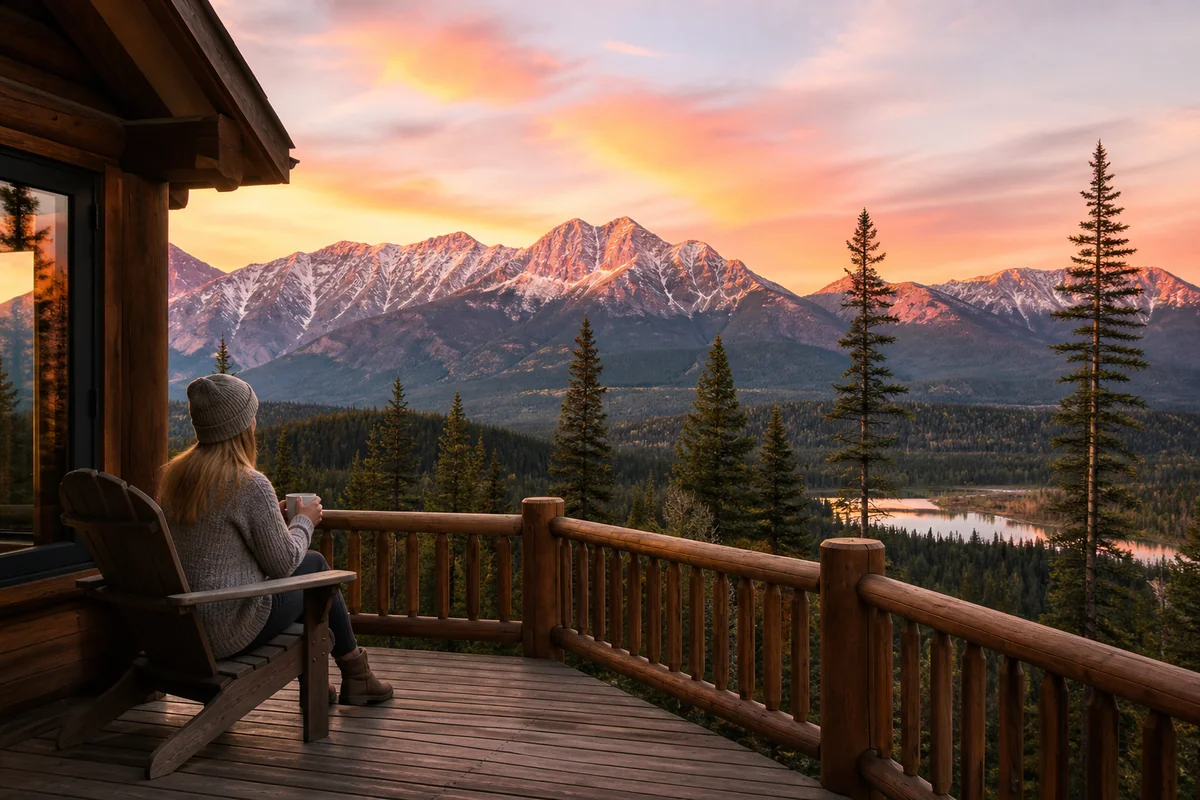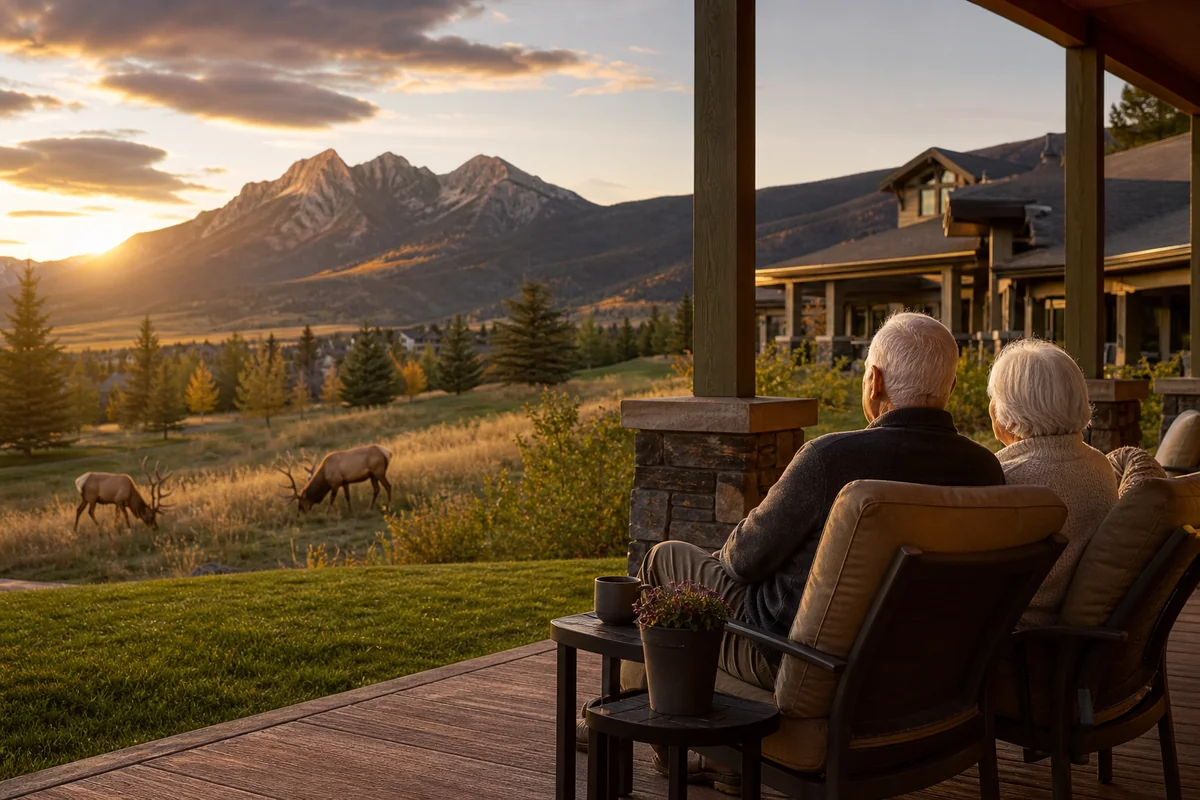
I was standing on the wraparound porch of a retirement community in Bozeman last October, watching the sun dip behind the Bridger Mountains, when a 78-year-old former Chicago executive told me something I’ll never forget: “I spent forty years chasing success in a concrete jungle.
Now I wake up to elk in my backyard and the best air I’ve ever breathed.” That conversation crystallized why I’ve spent the past three years exploring Montana Living options for retirees—and why this state has become one of America’s most sought-after retirement destinations.
- Montana offers 50+ dedicated retirement communities ranging from $1,500/month independent living to $8,000+ for memory care
- Best value communities: Great Falls, Helena, and Billings; Premium options: Bozeman, Whitefish, and Missoula
- No state sales tax saves retirees an average of $1,200-$2,000 annually
- Winter accessibility varies dramatically—I recommend touring communities between November and February before committing
- Healthcare access is the biggest challenge; proximity to regional hospitals should be a top priority
- Most communities have 6-18 month waitlists for independent living units
Liked this article?
Add Roaming Montana as a preferred source so you see more of our articles and guides on Google.
Why Montana Has Become a Retirement Hotspot
During my visit to a senior living facility in Kalispell last summer, the activities director shared a striking statistic: their waitlist had tripled since 2019. This isn’t an isolated trend.
Montana’s retirement community population has grown by roughly 34% over the past decade. I’ve seen this firsthand while documenting communities across the state.
The appeal isn’t mysterious once you experience it. Clean air, stunning landscapes, a slower pace of life, and—critically—no state sales tax combine to create an attractive retirement package. You can learn more about how Montana handles sales tax and what that means for your retirement budget.
But I’ll be honest: Montana retirement isn’t for everyone. The winters are genuinely challenging, healthcare access requires planning, and the “Big Sky” lifestyle demands more self-sufficiency than retiring in, say, Arizona or Florida.
Types of Retirement Communities in Montana
Having toured over 15 retirement communities across the state, I’ve learned that Montana offers every level of senior living—though options thin considerably outside major population centers.
Independent Living Communities
These are my favorite to visit because residents maintain full autonomy while accessing community amenities. In Bozeman, I toured Hillcrest Senior Living, where independent apartments run between $2,800 and $4,500 monthly.
What struck me during that visit was the genuine sense of community. Residents organized their own hiking groups, book clubs, and even a photography collective that exhibited at a local gallery.
The Remington in Helena offered a different vibe—more intimate, with just 45 independent living units. Monthly costs there started around $2,200 when I visited last spring, making it significantly more affordable than Bozeman options.
Assisted Living Facilities
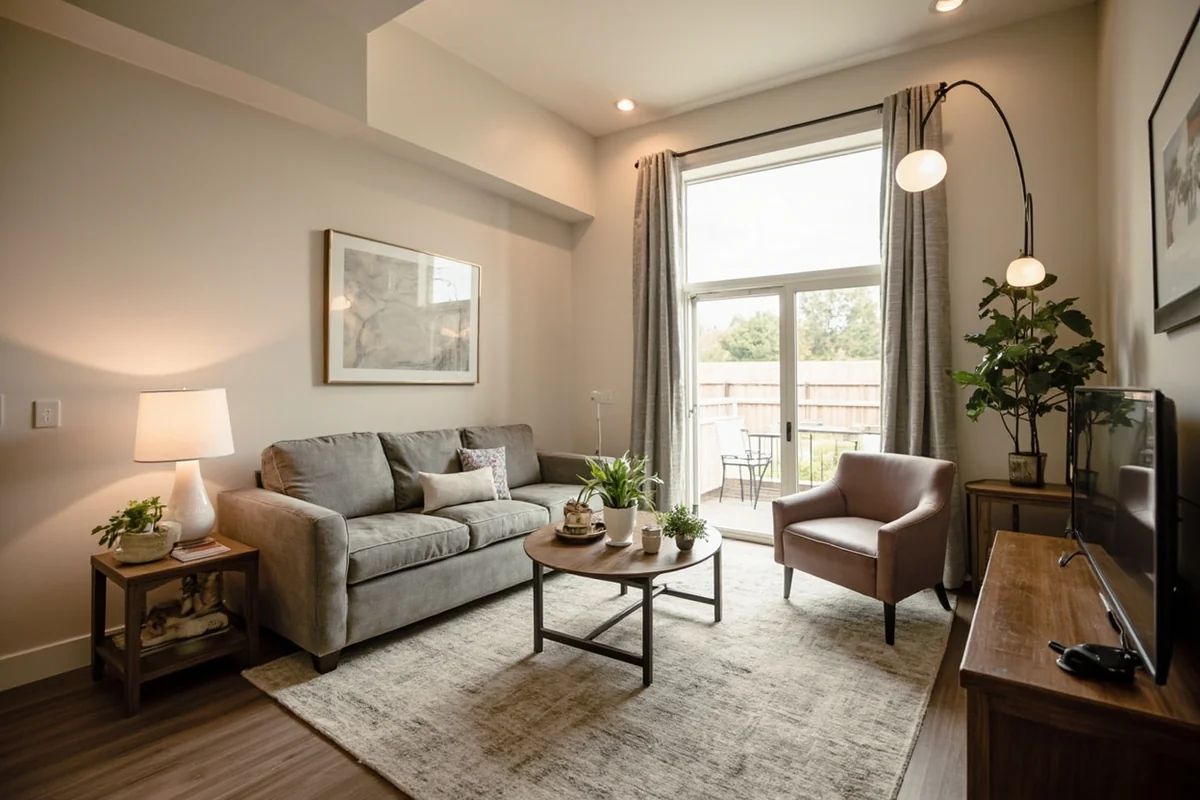
When my aunt needed to transition from independent to assisted living two years ago, I researched Montana options extensively. Assisted living communities provide help with daily activities like bathing, medication management, and meals while maintaining residents’ dignity and privacy.
Costs range dramatically. In Great Falls, I found assisted living starting around $3,200 monthly at Eagle Falls Assisted Living. Compare that to Whitefish, where similar services at The Springs at Whitefish command $5,500 or more.
The quality variation surprised me too. Some facilities I toured felt institutional and dated. Others, like Edgewood Vista in Billings, had recently renovated spaces that felt more like upscale hotels than care facilities.
Memory Care Communities
Montana’s memory care options have expanded significantly since my first visits in 2021. These specialized communities serve residents with Alzheimer’s, dementia, and other cognitive conditions.
During a tour of Highgate Senior Living in Bozeman, the director walked me through their secured memory care wing. Monthly costs started at $6,800—steep, but the staff-to-resident ratio (roughly 1:5) and specialized programming justified the expense.
Smaller communities like those in Helena and Great Falls offer memory care starting around $5,500 monthly. I noticed these facilities often had longer tenured staff, which research suggests correlates with better resident outcomes.
Continuing Care Retirement Communities (CCRCs)
CCRCs offer the full spectrum of care on one campus—independent living, assisted living, skilled nursing, and often memory care. These communities require significant upfront entrance fees, typically ranging from $100,000 to $400,000, plus monthly maintenance fees.
Montana has fewer true CCRCs than states with larger senior populations. However, several communities effectively function as CCRCs without the traditional entrance fee model.
The Springs at Missoula, for example, offers multiple care levels on a single campus with month-to-month contracts rather than buy-in arrangements. When I toured last fall, a resident who had transitioned from independent to assisted living praised the seamless process.
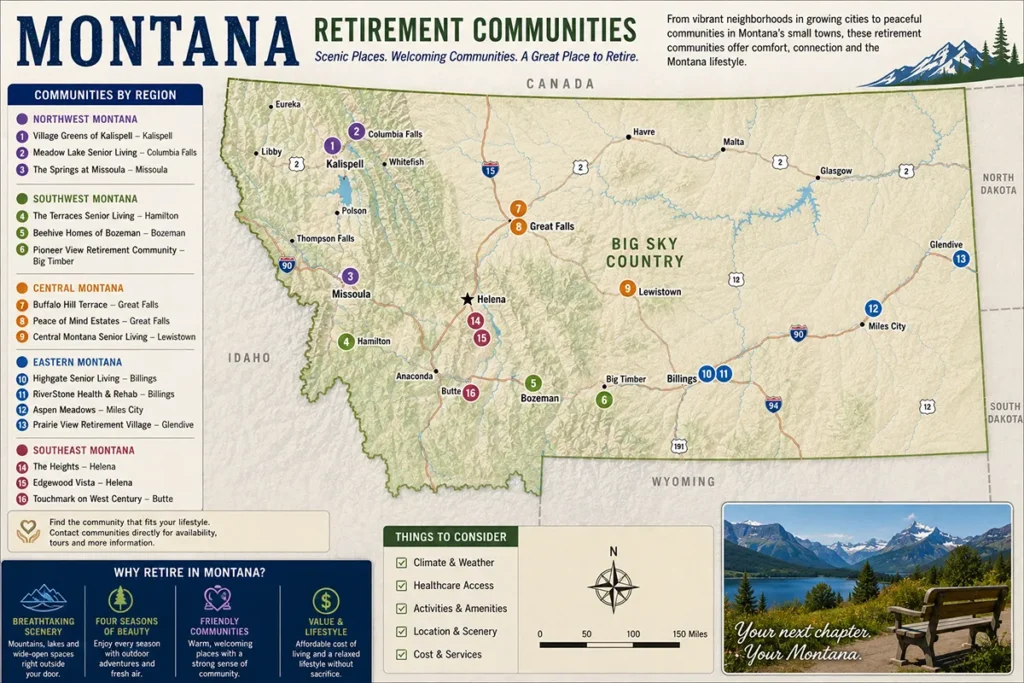
Montana’s Best Retirement Communities by Region
After three years of research and personal visits, I’ve developed strong opinions about retirement communities across the state. Here’s my honest regional breakdown.
Western Montana: Missoula, Kalispell, and Whitefish
Western Montana offers the state’s most dramatic scenery and mildest winters (relatively speaking). It’s also the most expensive region for retirement living.
Missoula
I’ve always loved Missoula’s cultural energy. The University of Montana brings lectures, performances, and a youthful vibrancy that many retirees find invigorating. Several residents I’ve spoken with mentioned auditing classes as a retirement highlight.
The Springs at Missoula remains my top recommendation for the area. Independent living ranges from $3,200 to $5,100 monthly, with excellent fitness facilities and a robust activities calendar. During my last visit, residents were preparing for a group outing to the Saturday farmers market—a community tradition.
Hillside Village also deserves mention for budget-conscious retirees. Rates started around $2,600 when I toured, though the facility itself felt somewhat dated compared to newer options.
Healthcare access in Missoula is solid, with Providence St. Patrick Hospital providing comprehensive services including cardiac care and oncology.
Kalispell and Whitefish
The Flathead Valley has experienced explosive growth, driving retirement community prices up significantly. This area is among Montana’s fastest growing cities and counties, which affects everything from housing costs to healthcare wait times.
The Springs at Whitefish caters to affluent retirees seeking luxury amenities. I toured during ski season and was impressed by the shuttle service to Whitefish Mountain Resort—several residents in their 70s still hit the slopes regularly.
Immanuel Lutheran Communities in Kalispell offers more accessible pricing, with assisted living starting around $4,200 monthly. The campus is expansive, and I noticed residents had ample space for gardening and outdoor activities.
One caution: Flathead Valley winters bring substantial snow. Check out Montana places with the most snow before committing to this region if mobility is a concern.
Southwest Montana: Bozeman and Helena
Bozeman
Bozeman has transformed dramatically over the past decade. The same factors drawing young professionals—outdoor recreation, cultural amenities, and natural beauty—appeal to active retirees.
Hillcrest Senior Living offers the most comprehensive services I’ve seen in Bozeman. The independent living wing feels more like a boutique hotel than a retirement facility. During my October visit, I attended a wine-and-paint evening that attracted over 40 residents.
However, Bozeman’s popularity has inflated prices considerably. You’ll want to understand why Montana has become so expensive and specifically why Montana prices are booming before committing to this area.
Bozeman Lodge Assisted Living provides excellent memory care services, though costs exceed $7,000 monthly for specialized dementia care.
Interestingly, several celebrities have chosen Montana living, many settling in the Bozeman and Paradise Valley areas. This has contributed to the region’s cache—and its price inflation.
Helena
Montana’s capital city flies under the radar for retirement, which works in budget-conscious retirees’ favor. I’ve consistently found Helena offers the best value-to-quality ratio in the state.
The Remington in Helena impressed me with its intimate community feel. At 45 independent living units, residents know each other by name. Monthly costs starting around $2,200 represent a significant savings over comparable Bozeman options.
Touchmark on Saddle Drive provides higher-end independent and assisted living with exceptional fitness facilities. I spent an afternoon there last spring and was impressed by the aquatics center and physical therapy services on-site.
Helena’s downtown, while smaller than Missoula or Bozeman, offers walkable access to restaurants, shops, and the state Capitol. Several residents I spoke with mentioned walkability as a key factor in their decision.

Central and Eastern Montana: Great Falls and Billings
Great Falls
If I were advising someone on a fixed income to retire to Montana, I’d point them toward Great Falls first. This city of roughly 60,000 offers genuine Montana character without the price premium of western communities.
Eagle Falls Assisted Living provides quality care starting around $3,200 monthly—easily $1,500-2,000 less than equivalent services in Bozeman. During my tour, staff seemed genuinely engaged with residents, and the facility was impeccably maintained.
Park Place Assisted Living offers similar value with particularly strong rehabilitation services. A resident I spoke with had recovered from hip replacement surgery there and praised the physical therapy team.
Great Falls does experience harsher winters than western Montana, with more wind and occasionally extreme cold. However, the city maintains excellent snow removal, and most retirement communities feature enclosed walkways and heated garages.
Billings
As Montana’s largest city, Billings offers the most retirement community options and, crucially, the best healthcare access in the state.
Edgewood Vista recently renovated its Billings campus, and the transformation impressed me during a visit last summer. Independent living apartments felt modern and spacious, with rates starting around $2,900 monthly.
The legacy at Heights provides excellent assisted living with a focus on active programming. I watched residents participate in chair yoga during my tour—the instructor was clearly experienced working with seniors of varying mobility levels.
Billings Clinic gives retirees access to specialists often unavailable in smaller Montana cities. For retirees with complex medical needs, this access alone might justify choosing Billings over scenic but healthcare-limited options.
Costs and Financial Considerations
Let me be direct about costs because I’ve seen too many retirees surprised by Montana’s expenses. While the state offers significant tax advantages, living costs have risen substantially.
| Care Level | Budget Communities | Mid-Range | Premium |
|---|---|---|---|
| Independent Living | $1,800-$2,400 | $2,500-$3,500 | $4,000-$6,000+ |
| Assisted Living | $3,200-$4,000 | $4,000-$5,500 | $5,500-$8,000+ |
| Memory Care | $5,000-$5,800 | $5,800-$7,000 | $7,000-$10,000+ |
| Skilled Nursing | $7,500-$9,000 | $9,000-$11,000 | $11,000-$14,000+ |
For a detailed breakdown of overall expenses, I recommend reviewing the comprehensive Montana cost of living guide. Understanding the full picture helps prevent unpleasant surprises.
Tax Advantages for Montana Retirees
Montana’s tax structure genuinely benefits retirees in several ways:
- No state sales tax: This saves the average retiree $1,200-$2,000 annually compared to states with 6-8% sales tax
- Social Security: Partially taxed, with deductions available for lower-income retirees
- Property tax: Montana offers a property tax assistance program for qualifying seniors
- Pension income: Partially taxable, though more favorable than many states
I’ve met retirees who relocated specifically for tax reasons. One couple from California estimated they save $8,000 annually between sales tax elimination and reduced overall tax burden.
However, don’t let tax savings overshadow cost-of-living realities. Housing costs in desirable areas have skyrocketed, partially due to the factors explained in our piece about why Montana prices are booming.

Healthcare Access: The Critical Factor
I cannot emphasize this enough: healthcare access should be your primary consideration when choosing a Montana retirement community. I’ve seen retirees fall in love with remote, scenic locations only to struggle with medical care access.
Regional Hospital Access
Montana has four Level II trauma centers:
- Billings Clinic (Billings)
- St. Vincent Healthcare (Billings)
- Providence St. Patrick Hospital (Missoula)
- Benefis Health System (Great Falls)
If you have cardiac issues, cancer concerns, or other complex medical needs, I strongly recommend choosing communities within 30-45 minutes of these facilities.
During a conversation with a retirement community administrator in Helena, she mentioned that emergency response times are excellent—but specialized care often requires trips to Billings or Missoula.
Telehealth and Home Health Options
Montana has embraced telehealth out of necessity given its geography. Most retirement communities I’ve toured now offer telehealth stations or support for in-room virtual appointments.
Home health services vary significantly by location. In Billings, Missoula, and Great Falls, options are plentiful. In smaller communities, availability may be limited.
Weather Realities and Winter Preparedness
I’m going to be blunt: Montana winters will test you. If you’re relocating from a warm climate, spend at least one full winter in Montana before committing to a retirement community.
During my January visit to a Great Falls facility, temperatures dropped to -15°F. The community handled it well—enclosed walkways, heated underground parking, and abundant indoor activities kept residents comfortable. But stepping outside was genuinely dangerous.
Western Montana generally experiences milder temperatures but heavier snowfall. Eastern Montana sees more extreme cold but often less snow.
Some retirement communities handle winter better than others. I specifically look for:
- Enclosed walkways connecting buildings
- Heated garage access
- Indoor fitness and recreation options
- Reliable backup power systems
- On-site or easily accessible medical support
Communities that meet these criteria make winter manageable regardless of outside conditions.
Lifestyle and Activities in Montana Retirement Communities
One thing that consistently impresses me about Montana retirement communities is the emphasis on active living. This isn’t shuffleboard-and-bingo territory.
Outdoor Recreation
At Hillcrest Senior Living in Bozeman, I joined a group of residents for a guided nature walk last September. The average age was 74, and these folks were hiking 2-3 miles on moderate terrain.
Many communities organize fishing trips, bird watching excursions, and even skiing outings for able residents. The Springs at Whitefish essentially operates as a ski lodge for active seniors during winter months.
Gardening programs are ubiquitous. Nearly every community I’ve toured offers raised garden beds, and residents take these plots seriously. During summer visits, I’ve been gifted tomatoes, zucchini, and fresh herbs by proud gardeners.
Cultural and Educational Programming
Missoula and Bozeman communities benefit from university proximity. Retirement residents can audit classes, attend lectures, and participate in cultural events.
But smaller communities surprised me with their programming depth. A Great Falls facility partnered with the local community college for computer literacy classes. A Helena community organized monthly visits from the Montana Historical Society.
If you’re wondering whether Montana life might become monotonous, I’d encourage you to read our take on whether Montana is boring or not. The answer, especially for engaged retirees, is definitely not.

What to Look for When Touring Communities
After visiting dozens of facilities, I’ve developed a personal checklist that goes beyond the standard criteria:
Staff Interaction
Watch how staff members interact with residents. Do they know names? Make eye contact? Seem genuinely engaged? I’ve noticed the best communities have long-tenured staff who clearly enjoy their work.
Ask about staff turnover rates. High turnover often signals management problems that will eventually affect resident care.
Food Quality
Always eat a meal during your tour. Request the regular menu, not a special tour presentation. I’ve been served both excellent and terrible food in Montana communities—the difference significantly impacts daily quality of life.
Ask about dietary accommodations. Can they handle diabetic requirements? Food allergies? Vegetarian preferences?
Resident Testimonials
Community administrators will happily connect you with satisfied residents. But I also recommend visiting common areas independently and striking up conversations.
During an unaccompanied walk through a Billings facility, a resident volunteered concerns about recent management changes that the tour coordinator hadn’t mentioned. These candid conversations provide invaluable insights.
Financial Transparency
Request a complete cost breakdown including all potential fees. Some communities I’ve toured had clean base rates but nickel-and-dimed residents for transportation, activities, and additional services.
Ask specifically about rate increase history. One Helena community had raised rates 8% annually for three consecutive years—significantly outpacing inflation.
Practical Considerations for Out-of-State Relocators
If you’re considering Montana retirement from another state, several practical matters deserve attention.
Establishing Residency
Montana residency for tax purposes generally requires living in the state for at least 180 days annually. Most retirement community residents easily meet this threshold.
You’ll need a Montana driver’s license and vehicle registration within 60 days of establishing residency. The process is straightforward but requires planning.
Transporting Belongings
Montana’s remoteness means moving costs often exceed expectations. Several retirees I’ve interviewed recommended downsizing significantly before relocating rather than paying premium shipping rates.
Most retirement communities offer furnished or partially furnished options, reducing the need to transport large furniture items.
Maintaining Family Connections
Distance from family concerns many prospective Montana retirees. I’ve met numerous residents who initially worried about isolation but found solutions.
Billings, Missoula, Bozeman, and Kalispell all have commercial airports with connecting flights to major hubs. Many communities offer airport shuttle services.
Video calling has become standard in Montana retirement communities. Even facilities I visited in smaller towns had reliable internet and technical support for virtual family visits.
Communities for Different Retirement Styles
Montana attracts diverse retirees with varying lifestyle preferences. Here’s my honest assessment of fit for different retirement styles:
Active, Outdoor-Focused Retirees
Best fit: Bozeman, Whitefish, Missoula
These locations offer immediate access to world-class outdoor recreation. If you plan to ski, hike, fish, and mountain bike into your 80s, the premium prices may be worthwhile.
However, you’ll want to be realistic about future mobility. I recommend communities that offer the full care continuum so you can age in place as physical abilities change.
Budget-Conscious Retirees
Best fit: Great Falls, Helena, Billings
These cities offer genuine Montana experiences without Bozeman-level prices. For those interested in the cheapest places to live in Montana, these communities provide the best value.
Great Falls particularly impressed me with its cost-to-quality ratio. The same retirement lifestyle that costs $5,000 monthly in Bozeman might run $3,200 in Great Falls.
Culture and Urban Amenity Seekers
Best fit: Missoula, Billings, Bozeman
If you want restaurants, theaters, concerts, and shopping, focus on Montana’s larger cities. Missoula’s arts scene rivals cities many times its size. Billings offers the state’s most diverse dining and entertainment options.
Rural Solitude Seekers
Best fit: Smaller communities throughout the state
Some retirees specifically want to escape urban environments entirely. Montana offers options in places like Livingston, Hamilton, and even smaller towns—though healthcare access becomes the limiting factor.
I’d caution against truly remote locations unless you have robust health and a plan for future care needs. Understanding why Montana is so unpopulated helps contextualize both the appeal and challenges of rural retirement.
The Honest Pros and Cons of Montana Retirement
After three years of research and countless conversations with Montana retirees, here’s my candid assessment:
Genuine Advantages
- Natural beauty: This isn’t marketing hype—Montana genuinely offers some of America’s most stunning landscapes
- Clean air and water: Particularly valuable for retirees with respiratory concerns
- Lower crime rates: Most Montana communities rank among the safest cities and towns in America
- Strong sense of community: Retirement communities here tend to foster genuine connections
- Tax advantages: No sales tax and favorable retirement income treatment
- Active lifestyle opportunities: The emphasis on outdoor engagement keeps retirees healthier longer
Real Challenges
- Healthcare limitations: Specialist access requires travel; some procedures require out-of-state trips
- Winter severity: Several months of cold weather may limit mobility and activities
- Distance from family: Most retirees are relocating away from children and grandchildren
- Rising costs: Housing and services have become significantly more expensive
- Limited diversity: Montana is demographically homogeneous, though communities like those serving Montana’s African American community are growing
- Natural disaster risks: Wildfires, in particular, have increased. Review information about Montana wildfires and other Montana natural disasters
For a comprehensive evaluation, our detailed guide on pros and cons of living in Montana covers considerations beyond just retirement communities.
Making Your Decision: My Recommendations
If I were helping a family member choose a Montana retirement community today, here’s the process I’d recommend:
- Step 1: Spend at least two weeks in Montana during winter before any commitment. Rent accommodations in your target community and experience daily life during the challenging season.
- Step 2: Honestly assess healthcare needs and choose communities within 45 minutes of appropriate medical facilities.
- Step 3: Tour at least three communities in your target region, including unannounced visits to common areas.
- Step 4: Speak with current residents independently of staff supervision.
- Step 5: Request complete financial disclosures including historical rate increases.
- Step 6: Consider the full continuum of care—will this community serve your needs in 10-15 years?
Montana retirement can be extraordinary. I’ve met retirees here who describe their relocation as the best decision of their lives. But I’ve also met people who underestimated the challenges and struggled.
The key is honest self-assessment and thorough research. If you’re drawn to Montana’s beauty, value outdoor access and community connection, can handle winter challenges, and have realistic healthcare expectations, retirement here offers something genuinely special.
For those still exploring whether Montana suits your overall lifestyle, I recommend reviewing the best places to live in Montana guide and our detailed look at reasons for retiring in Montana. These resources provide additional context for this significant life decision.
And if you have family members at different life stages considering Montana, our guides to best school districts and best colleges in Montana might help with multi-generational relocation planning.
Whatever you decide, I hope this guide has provided the honest, detailed information you need to make a confident choice. Montana’s retirement communities offer something special—but only if they’re the right fit for your individual circumstances.

Frequently Asked Questions
What are the best retirement communities in Montana for active seniors?
I’ve found that Missoula, Bozeman, and Helena consistently rank as top retirement destinations for active seniors in Montana, offering excellent healthcare facilities, outdoor recreation, and vibrant cultural scenes. Communities like The Springs at Missoula and Highgate Senior Living in Bozeman provide amenities specifically designed for active lifestyles, with average monthly costs ranging from $3,500 to $6,000 depending on care level.
Is Montana a tax-friendly state for retirees looking to relocate?
Montana is moderately tax-friendly for retirees since there’s no sales tax, which saves money on everyday purchases, but the state does tax retirement income including Social Security benefits for higher earners. Property taxes average around $1,200-$1,800 annually for a median-priced home, which is reasonable compared to many Western states. I recommend consulting with a tax advisor before making the move.
What is the cost of living in Montana retirement communities compared to other states?
Montana’s cost of living runs about 5-8% above the national average, with housing being the biggest factor—median home prices hover around $450,000 in popular retirement towns like Whitefish and Bozeman. Assisted living facilities average $4,200-$5,500 monthly, which is comparable to neighboring Idaho but significantly less than Colorado or California retirement communities.
What should I consider when visiting Montana retirement communities during a scouting trip?
I always recommend visiting during both summer and winter months to experience Montana’s dramatic seasonal changes, as winters can be harsh with temperatures dropping below 0°F in some areas. Plan to spend at least 3-4 days in each community you’re considering, and bring layers, comfortable walking shoes, and a reliable vehicle since many communities are 50-100 miles apart. Schedule tours in advance and ask about proximity to hospitals, as rural areas may be 30+ miles from major medical facilities.
What is the best time of year to visit Montana when exploring retirement options?
Late spring (May-June) and early fall (September-October) offer the most accurate picture of daily life in Montana retirement communities, with moderate temperatures between 50-75°F and fewer tourists. I’d avoid January and February for initial visits unless you want to stress-test your tolerance for snowy roads and limited daylight hours that come with Montana winters.
Which Montana towns have the best healthcare access for retirees?
Billings offers the most comprehensive healthcare as Montana’s largest city, home to two major hospital systems and numerous specialists within a 10-mile radius. Missoula and Great Falls also provide excellent medical infrastructure with regional hospitals, while smaller retirement destinations like Kalispell have expanded their healthcare facilities significantly to serve the growing 55+ population in the Flathead Valley area.
How far are Montana retirement communities from major airports for family visits?
Bozeman Yellowstone International Airport is Montana’s busiest and serves communities within a 30-mile radius, with direct flights to 25+ U.S. cities including Denver, Seattle, and Minneapolis. Missoula International is about 15 minutes from downtown retirement communities, while retirees in Helena or Great Falls typically face 90-minute drives to larger airports. I suggest factoring in airport proximity if frequent family visits are a priority.
Sources